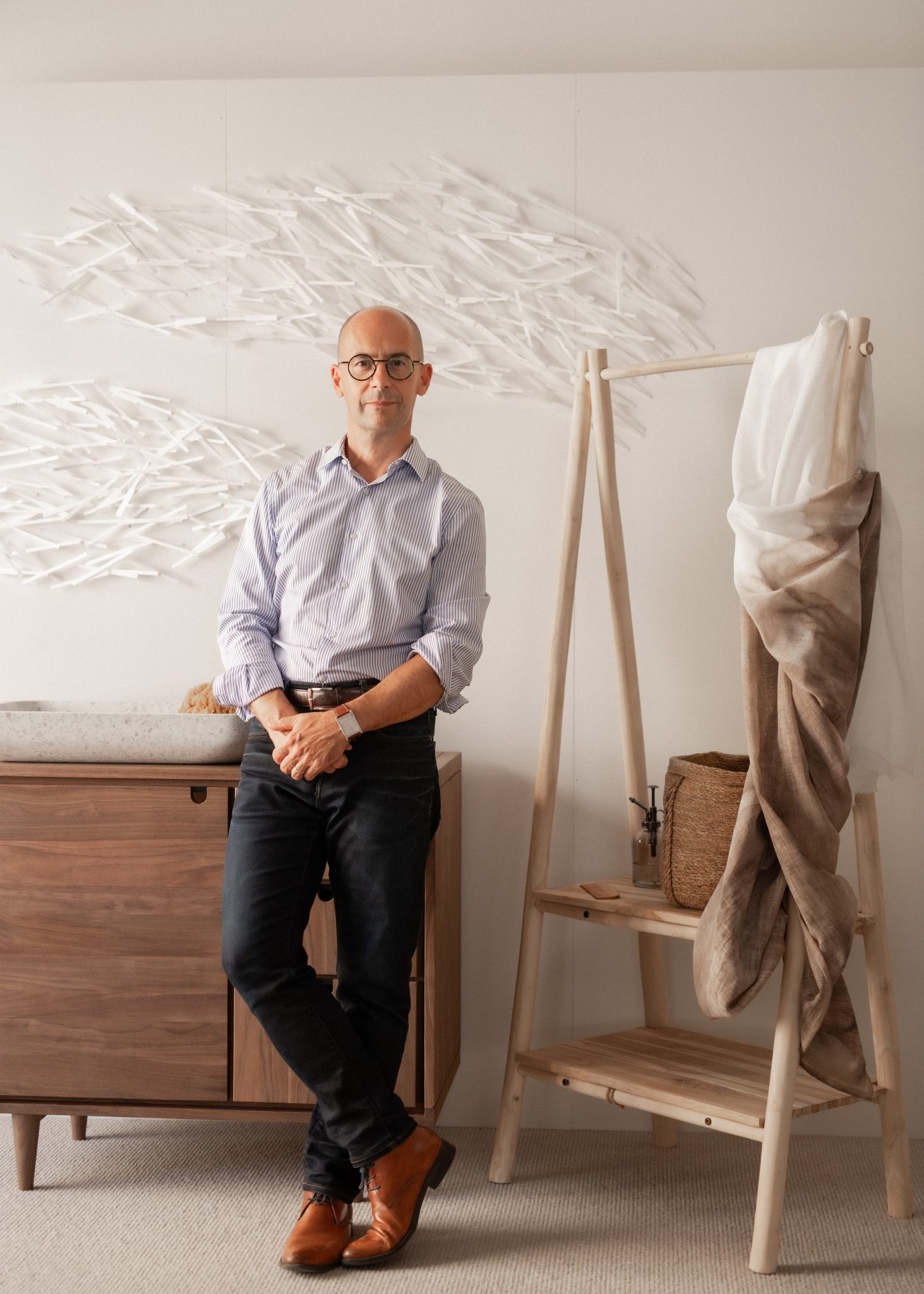
Tikamoon sells solid-wood furniture, but its CEO, Arnaud Vanpoperinghe, doesn’t talk about it like a typical furniture seller. He’d rather sell one sideboard to five different customers than five sideboards to one.
“I’m not obsessed with selling new stuff,” he says. “A plank of wood is sacred. It’s carbon captured over decades by the tree.” That carbon stays locked away as long as the wood isn’t burned or left to rot, and keeping it there is the ethos the company is built around.
“Our priority is that it’s not given back to the atmosphere.”
Tikamoon began as an online brand of solid-wood furniture, and like any startup, its first years were about survival. Arnaud, one of three cofounders, describes that stretch as “structuring, building the company, and scaling up.” Sustainability was there from the start, though. He tells me he loves both wood and the outdoors, and says the company was already tracing its wood and replanting before green marketing became fashionable in Europe.
When it did, competitors rushed to claim virtue they hadn’t earned. Arnaud wanted Tikamoon to be able to back up every claim, and the stakes felt real to him.
“Biodiversity is collapsing, the world is polluted, and climate change is accelerating,” he says. “We had some level of awareness in the boardroom from the start.”
Arnaud had also long admired the outerwear clothing brand Patagonia, and says he had hoped to build the furniture version of it. Out of that idea, Tikamoon’s Tik Green came to be: a program Arnaud designed to be “unbeatable on the facts and figures of how to be a virtuous company, but with the proofs rather than speeches.” The company had its carbon footprint and product life-cycle analysis officially measured, partnered with WWF, and certified its wood with FSC.
Once the certifications were in place, Arnaud realized there was no way for the company to have a positive impact if its furniture didn’t last at least as long as it takes a replanted tree to grow back. So Tikamoon set itself a target of making furniture that would last 100 years. It took years to get there, he says, because it meant rethinking how each piece was built, from the thickness of the wood to the treatment, the drawers, and the metal hardware.
Then came a realization: furniture built to last a century isn’t much use if no one wants to keep it that long. Tastes change and people move, and a table that outlasts its owner has to be able to go somewhere. So Tikamoon set out to let its pieces travel, passing from one home to the next with help along the way to maintain, customize, and hand them on. That became its Circle program.
Through Circle, customers can buy a piece new, secondhand, or even third- or fourth-hand, then return it or rent it when their needs change.
“Except for with Patagonia, nobody buys for the planet,” he says. “People buy for their taste and for their price range.” He didn’t want a program that only appealed to people who already cared, so he went looking for something that would draw earth lovers and pragmatists. It had to give customers a concrete advantage, be easy to explain, and be hard for competitors to copy without losing money. It took about a year to build.
Today, customers can return a Tikamoon piece at any age for a voucher worth 60% toward a new one. The program is also live in Italy, so a piece bought there can come back decades later.
The work happens at hubs in northern France, each pairing a workshop with a shop right next door. A team of six to eight woodworkers takes back and repairs roughly 7,000 to 8,000 used pieces a year, assessing each one as it arrives. A nearly new return, say one sent back a week after delivery, can go straight back into inventory. Others are stripped for parts and join what Arnaud calls a spare-parts bank for the next repair, and whatever’s left can go to charities or woodworking schools. The repaired pieces then sell for half the price of new.
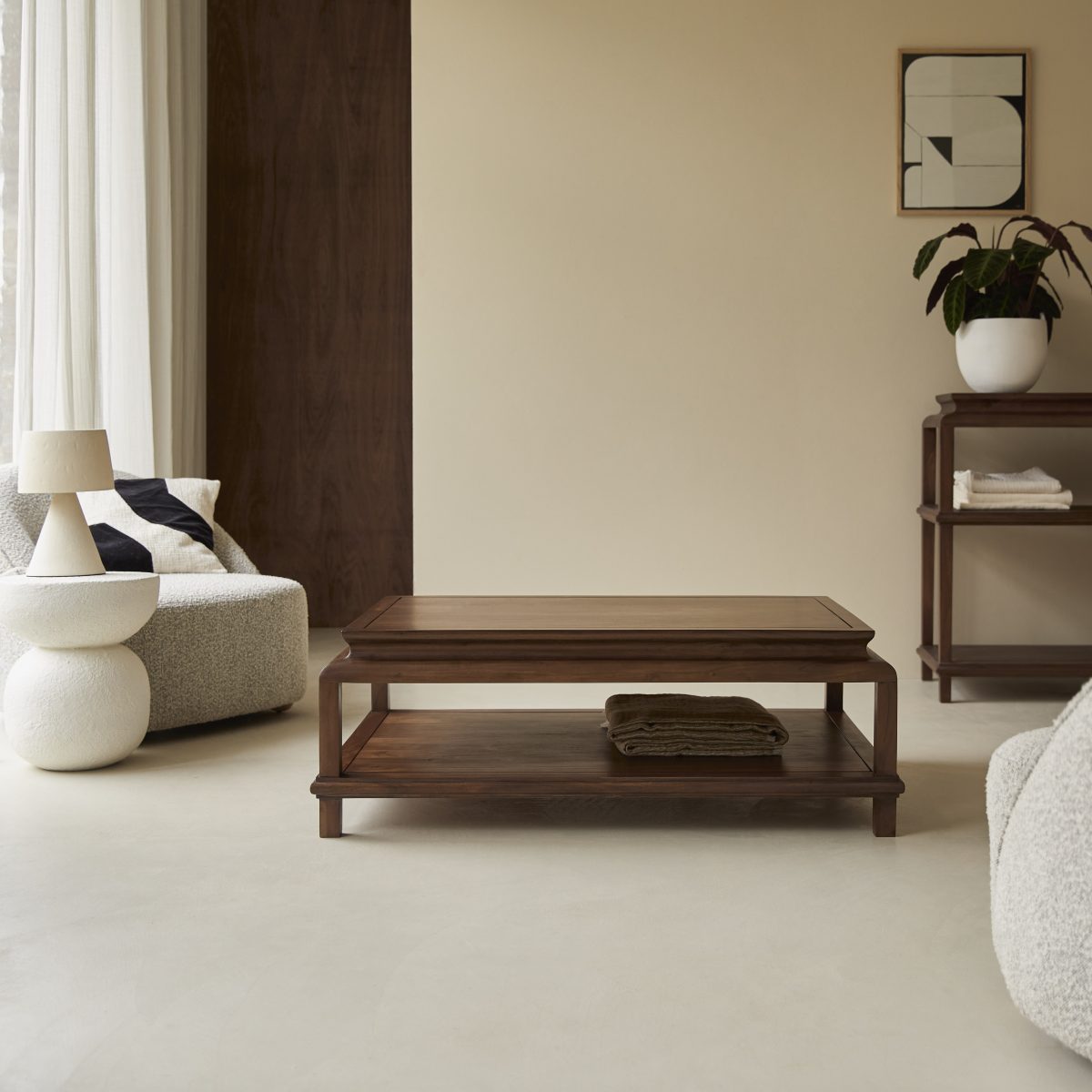
The buyers are a mix. Some love the brand but couldn’t afford it at full price, and others have money and simply like the idea of buying secondhand. A few drive up to 100 miles to get to the shop.
That local model is a large part of why Circle works in France. The US is a different question. Tikamoon has sold there for about two years, with a warehouse in Burlington, New Jersey, and a team in Princeton, and it can ship within five days. But Arnaud calls Circle “a question mark” in the States. Moving bulky used furniture across a country is expensive, and a buyer who doesn’t like a repair can send it back. If Circle does launch, he sees the East Coast as the place to start, collecting and repairing there and selling locally in New Jersey.
In Europe, the plan is to open circular hubs in more major cities, since secondhand pieces don’t travel well. He’s also developing Refresh, a program that would refurbish furniture and send it over long distances.
“We have many ideas to make furniture a service instead of an ownership.”