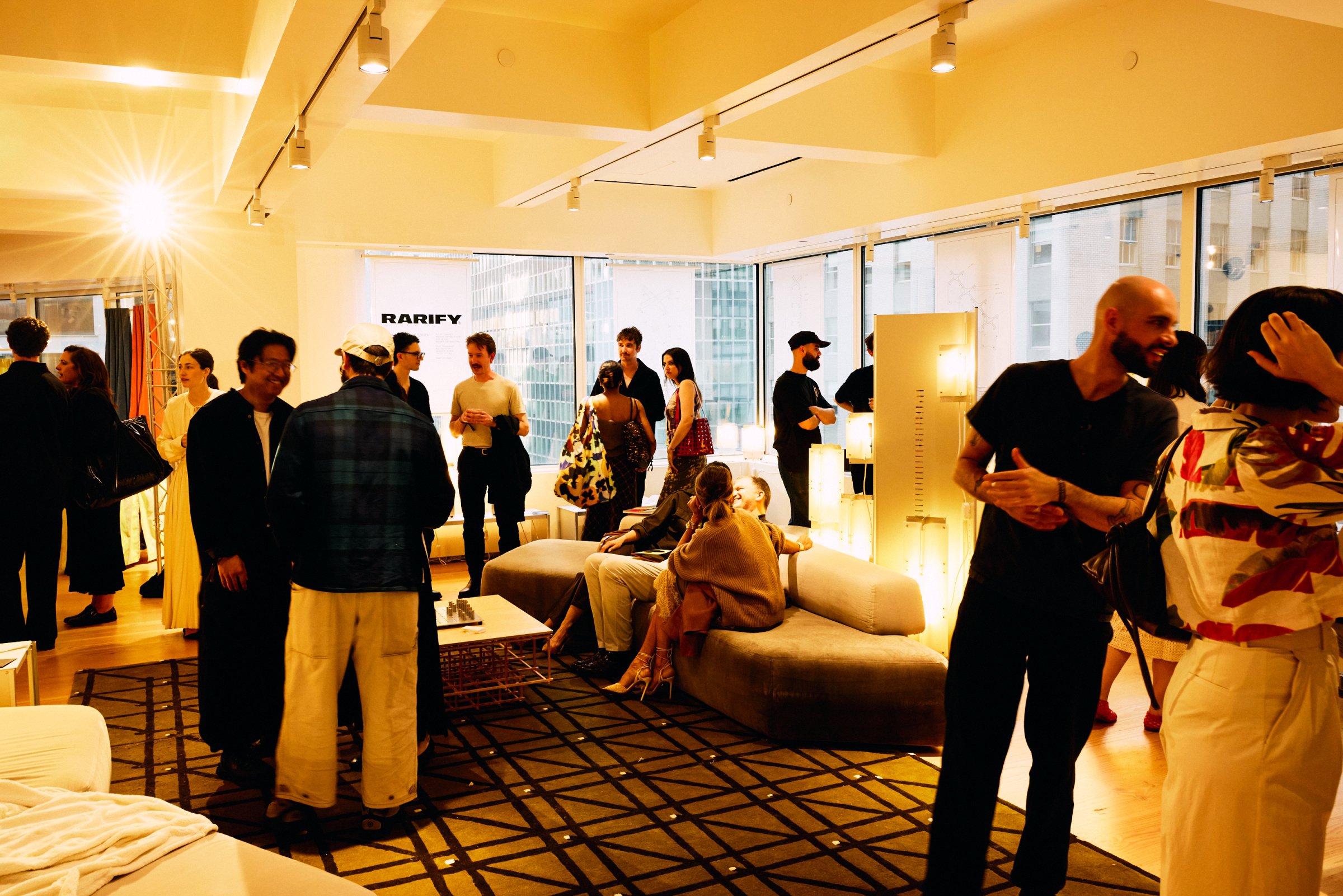
There is a particular moment Minya Quirk keeps coming back to when she talks about Afternoon Light. It has nothing to do with the show floor. Picture being home alone by accident, or for work, freshly woken from a nap you didn’t feel guilty about, well rested because it wasn’t too long or too short. The apartment is at a perfect temperature. The last of the day’s sunlight is pouring through a window, and everything in the room looks a little more forgiving because of it.
“That’s the world we want to create,” Minya says.
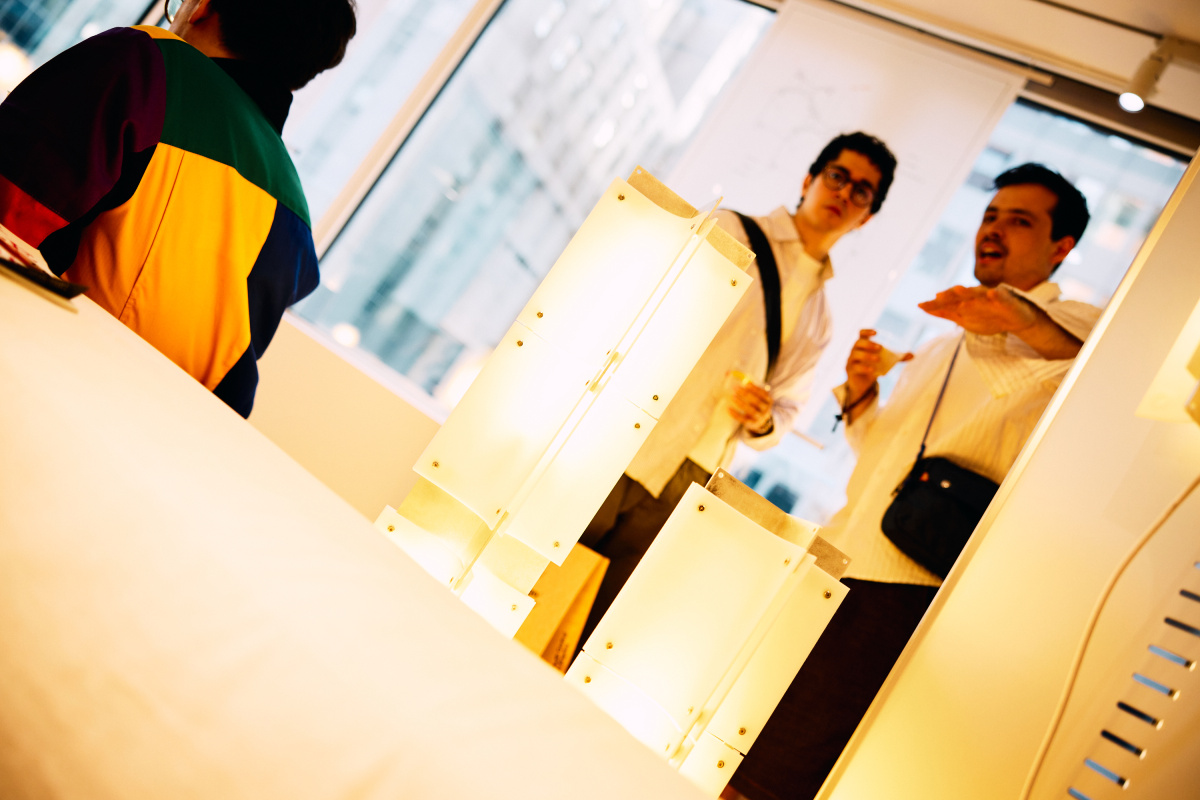
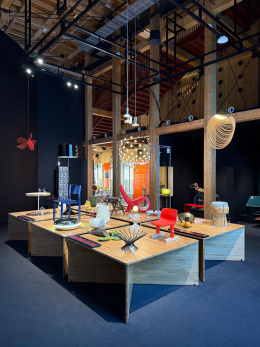
Now in its second edition, the fair brought together more than 75 furniture, lighting, object, and material brands during NYCxDesign/New York Design Week. Above: Gantri and Rarify debuted the MLS-01 Tangent lamp designed by Christian Borger during this year’s Afternoon Light.
It’s an unusual reference point for a design fair, but Afternoon Light has never been a conventional one. Minya and her longtime business partner Deirdre Maloney spent years running Shoppe Object, the homewares and gift trade show with editions in New York and High Point, before turning their attention to a problem they kept running into as buyers and journalists: home decor brands were scattered across too many platforms, and discovery felt like work.
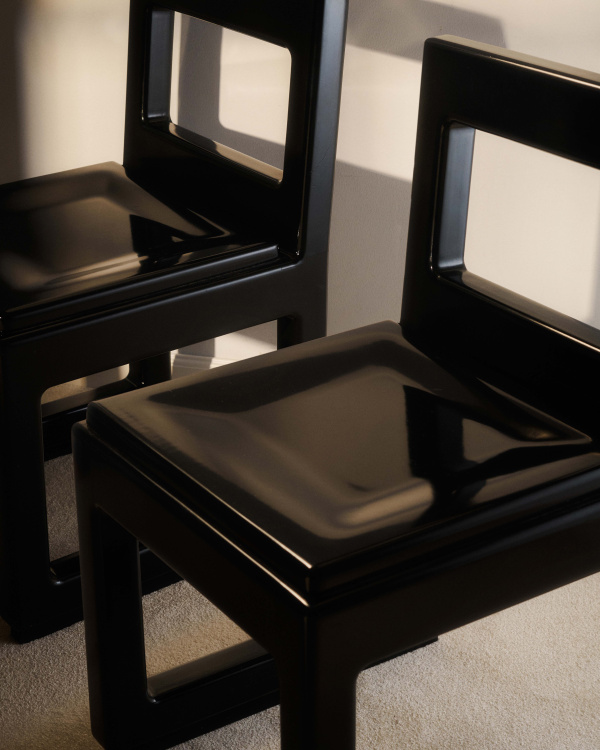
Ben Willett’s Popo Chair was on full display during Afternoon Light. The name “Popo” carries the essence of this vision. Short for popolare—Italian for “popular”—it reflects Willett’s ambition to create a chair that fits in various scenarios.
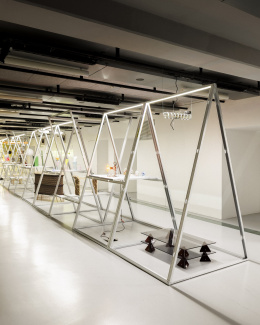
Afternoon Light began as their answer, a curated online marketplace built to solve that, before evolving into something bigger. The pair staged a first physical version of the concept as Shelter in 2025 at the Starrett-Lehigh building in West Chelsea, then relaunched it this past May as Afternoon Light Design Fair, now occupying two sunlit floors of the WSA Building in the Financial District, with views of the East River and the Brooklyn Bridge behind more than 75 exhibiting brands.
What sets the fair apart from most of what happens during New York Design Week is not the venue, though the light pouring through the WSA’s floor to ceiling windows doesn’t hurt. It’s the structural bet underneath the whole operation: a show built with the trade in mind that refuses to close its doors to the public.
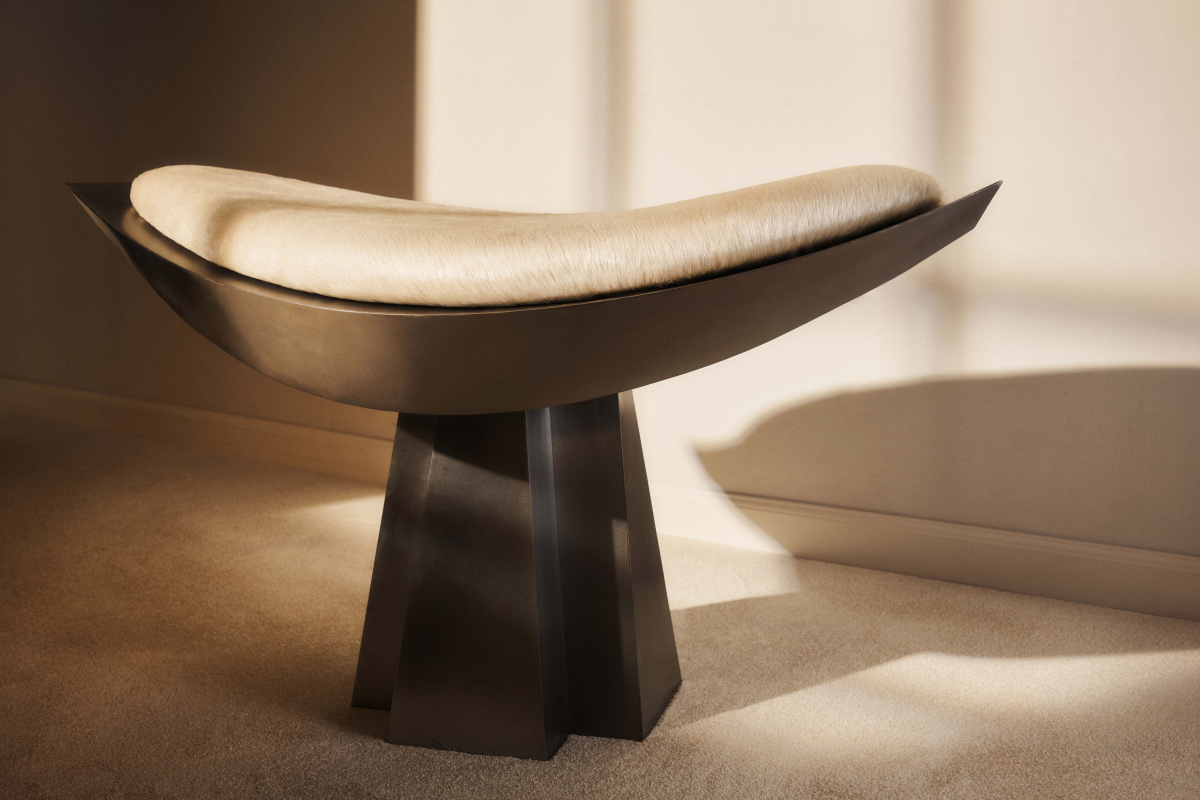
Brooklyn Studio Ollin presented squat cow-hide upholstered stools and footrests meant for lounging low to the ground.
“Our goal is to create a space that’s as interesting and productive to an interior designer or architect as it is to someone who just bought a new home and wants to gather inspiration for furnishing it, and to an aspiring designer,” Deirdre says. She traces the instinct to a different corner of the culture entirely.
“We like art fairs, book fairs, antique, and craft fairs. We think the ones exhibiting things that people use and are meant to live with should be open to everyone.”
That same instinct shapes who gets a booth in the first place. When I walked the floor, I found names like Carl Hansen & Søn and Anglepoise a few steps from designers showing publicly for the first time.
“We’ve always been big fans of a democratic approach to the show floor,” Minya says. “It should be about what people are showing, not how much they paid to show it.” She credits the design world itself for making that kind of mixing possible in practice. “Designers are really encouraging and supportive of each other in this industry. It’s really wonderful to be a part of that communal energy.”
Deirdre frames it more simply as a reflection of how people actually furnish their homes.
“It’s our formula for curating a show,” she says. “Some big recognizable brands, some one-of-a-kind pieces, and some up-and-coming designers that caught the buyer’s eye.”
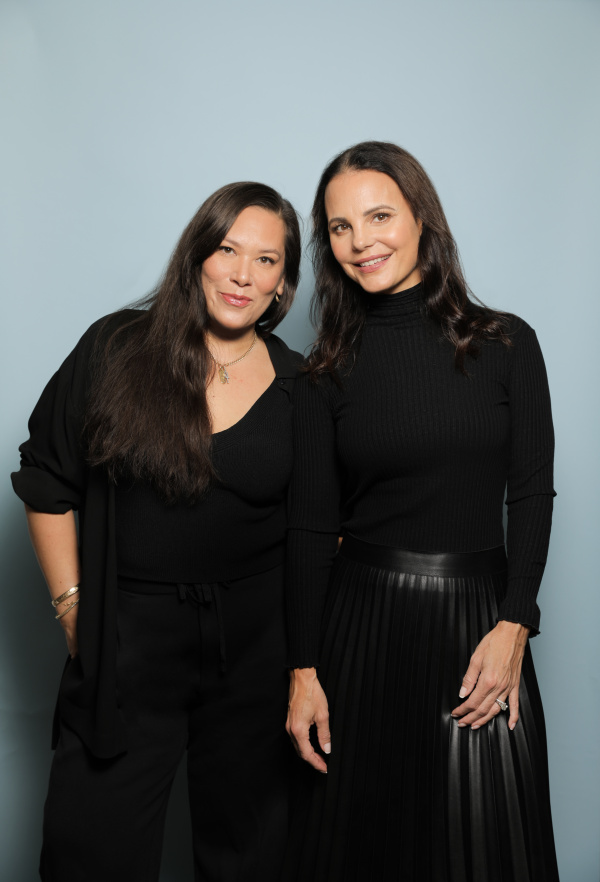
Founded by Shoppe Object alums Deirdre Maloney and Minya Quirk, Afternoon Light started as an online design marketplace before evolving into a full trade show, a reversal of its original model.
The inaugural edition was staged under the banner Mart Nouveau.
“It was a little wink, a way of planting our flag and having some creative fun,” Minya says. “But the theme isn’t what people walk in for. They walk in for the brands, the makers, the conversations on the floor.”
For both founders, a theme is a tool for the people producing the show, not the visitors experiencing it.
“A theme can be a nice starting point to play with as show producers,” Minya says. “But the brands and their products and the designers and their energy, the conversations and the business, are really what shape the experience.”
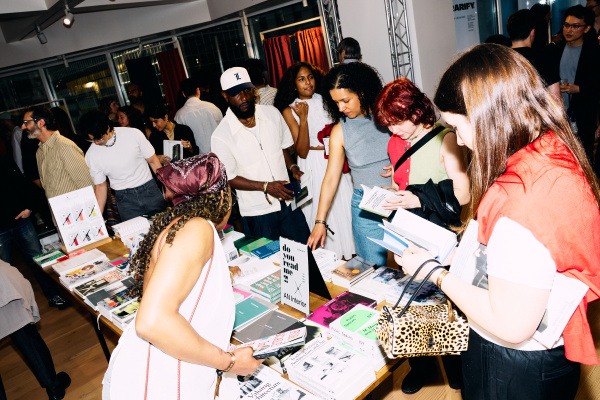
Tucked between the furniture and lighting displays, a pop-up book store gave visitors somewhere to browse design publishing alongside the show.
That distinction matters more this year than in most, given how much the surrounding design week calendar has shifted. ICFF, one of the city’s longtime tentpole design events, recently announced it would move to the fall in 2027, leaving a hole in what has traditionally been a packed spring schedule. Against that backdrop, Deirdre sees the fair’s particular scale as its advantage rather than a limitation.
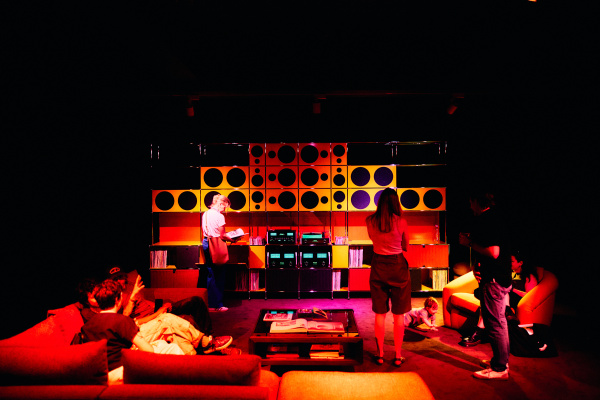
Modular furniture manufacturer USM partnered with audio brand Symbol to introduce the USM Haller Soft Panel system inside a moody, 1970s-inspired hi-fi listening lounge built around Symbol’s speaker and living room collections.
“It comes down to the mix,” she says. “Bringing established brands and emerging studios into the same room creates a sense of discovery. You know you’ll see things you recognize, but also things you haven’t seen before.”
Size matters too, but only up to a point.
“We’re big enough to feel energetic and worth the trip, but not so big that you’re searching for a needle in a haystack,” she says. “With over 70 brands, there’s a lot to engage with without it feeling overwhelming.”