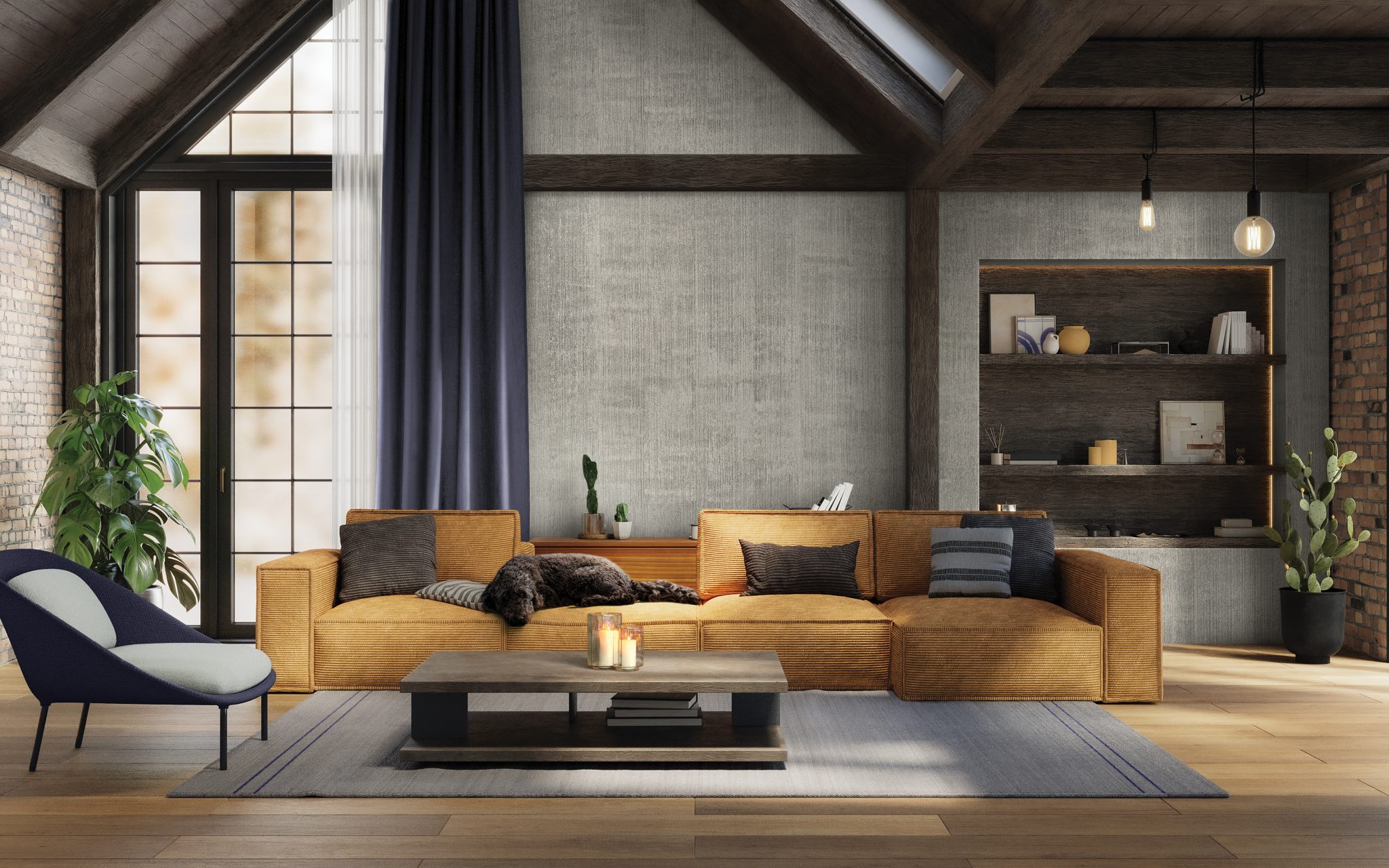
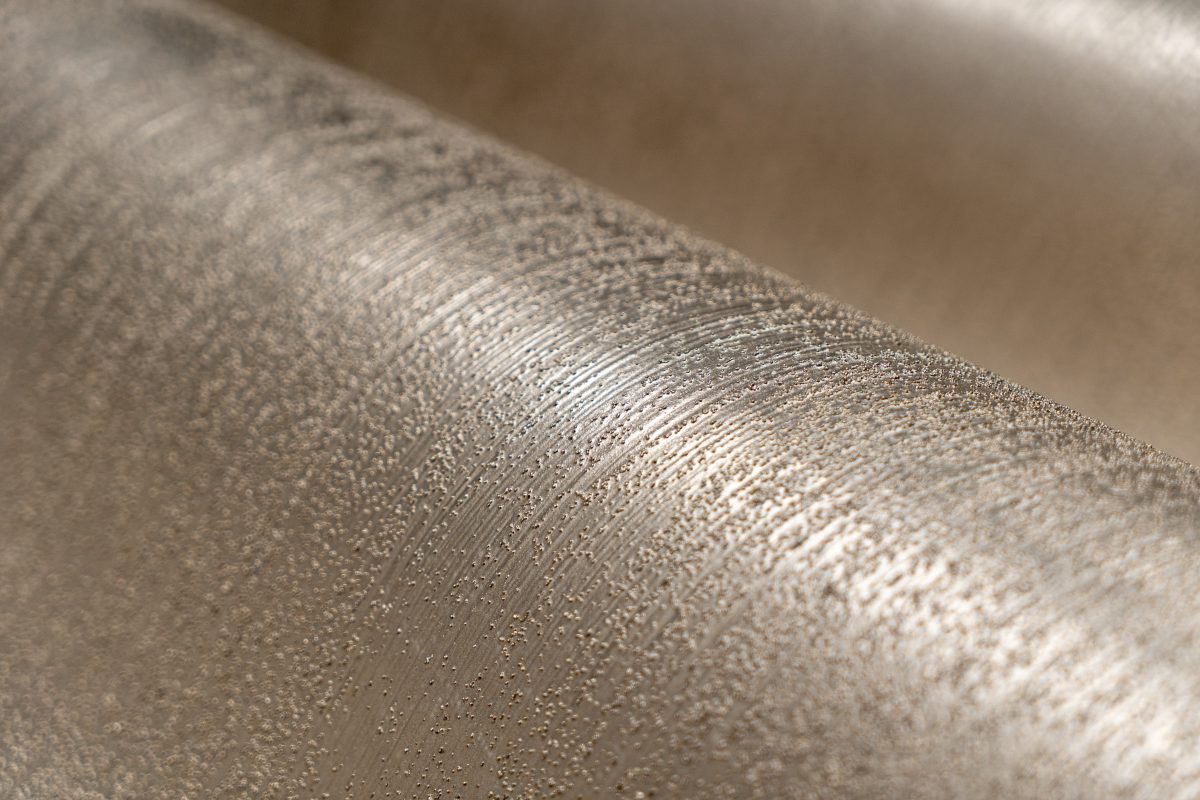
A panel lies flat on a worktable in Maya Romanoff‘s Chicago studio, a sheet of sturdy backing coated in a thick, pale compound. Suspended in it are thousands of tiny glass beads. An artisan sets a brush at the top edge and pulls it straight down, slowly, in one steady stroke. Where the bristles pass, the compound parts into a fine vertical line and the beads tilt with it, catching the light. Then comes the next stroke, and the next, each one right beside the last, until the whole panel is covered in soft, glittering lines.
This is Zen Kanso, half of Ananda, the company’s Fall 2026 collection. Ananda is a Sanskrit word borrowed from yogic philosophy that describes a “deep, settled kind of joy.”
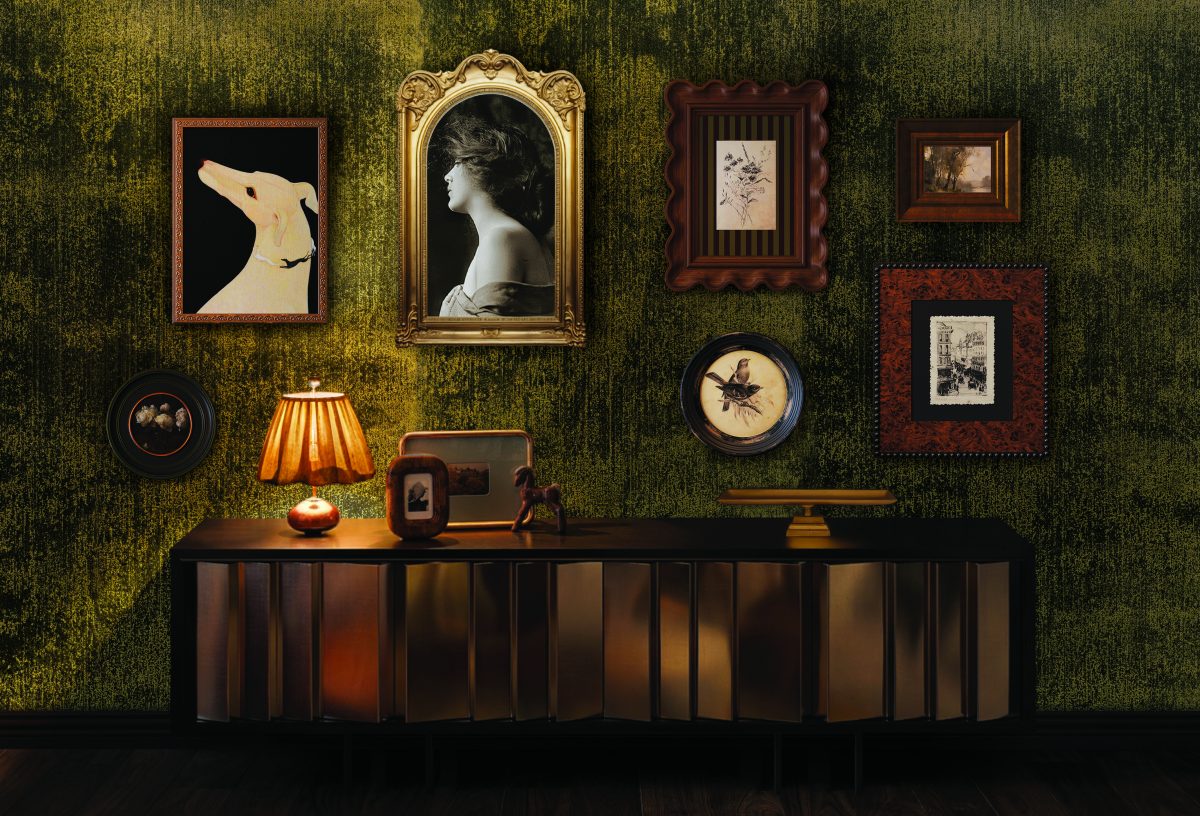
“In a world that can often feel chaotic and overwhelming, we felt there was a real need to create more moments of calm, beauty, and bliss,” says chief creative officer David Berkowitz.
The collection answers that need with two wallcoverings: Tenona II, a machine-produced Type II vinyl inspired by the beauty of woven natural fibers, and Zen Kanso, a handcrafted wallcovering that celebrates the quiet elegance of Japanese minimalism. Each has its own look and its own way of being made, but together they point at the same goal: environments that encourage pause, presence, and serenity.
Maya Romanoff’s creative team often begins working on a collection by asking themselves how it feels, how it moves, and how it holds light. Ask how long one panel takes and you’ll find there isn’t a specific timeframe. The answer can only be found in the experiments, the misses, and the years it takes to learn how these materials behave.
That pressure comes with a history. “Maya Romanoff established a level of craftsmanship that our clients and designers have come to expect from us,” David says. “We feel a responsibility to uphold that standard with every panel we produce.”
Maya Romanoff was a Berkeley student when he discovered dyeing after seeing a tie-dyed tShirt at Woodstock. He founded the company in 1969, and it began as a fashion label. He went on to make hand-dyed leather garments, theater curtainsm and large-scale installation art after spending years studying the craft of dyeing in Japan. In 1988, his hand-dyed installation filled the Sun-Times Building in Chicago. By the time he turned to wallcoverings, he was known for working tactile materials like glass beads, sea shells, gold leaf and stitching into them.
Glass beads, in other words, are familiar ground here. The company’s Beadazzled collection, a flexible glass bead wallcovering, is made with a dense hand inlay of genuine glass beads. Zen Kanso takes the same material in a unique direction.
“The glass beads create texture, dimension, and a sense of movement across the surface,” says associate studio creative director Jacqueline Nuzzo. As the light shifts (or the viewer does), the wall shifts too.
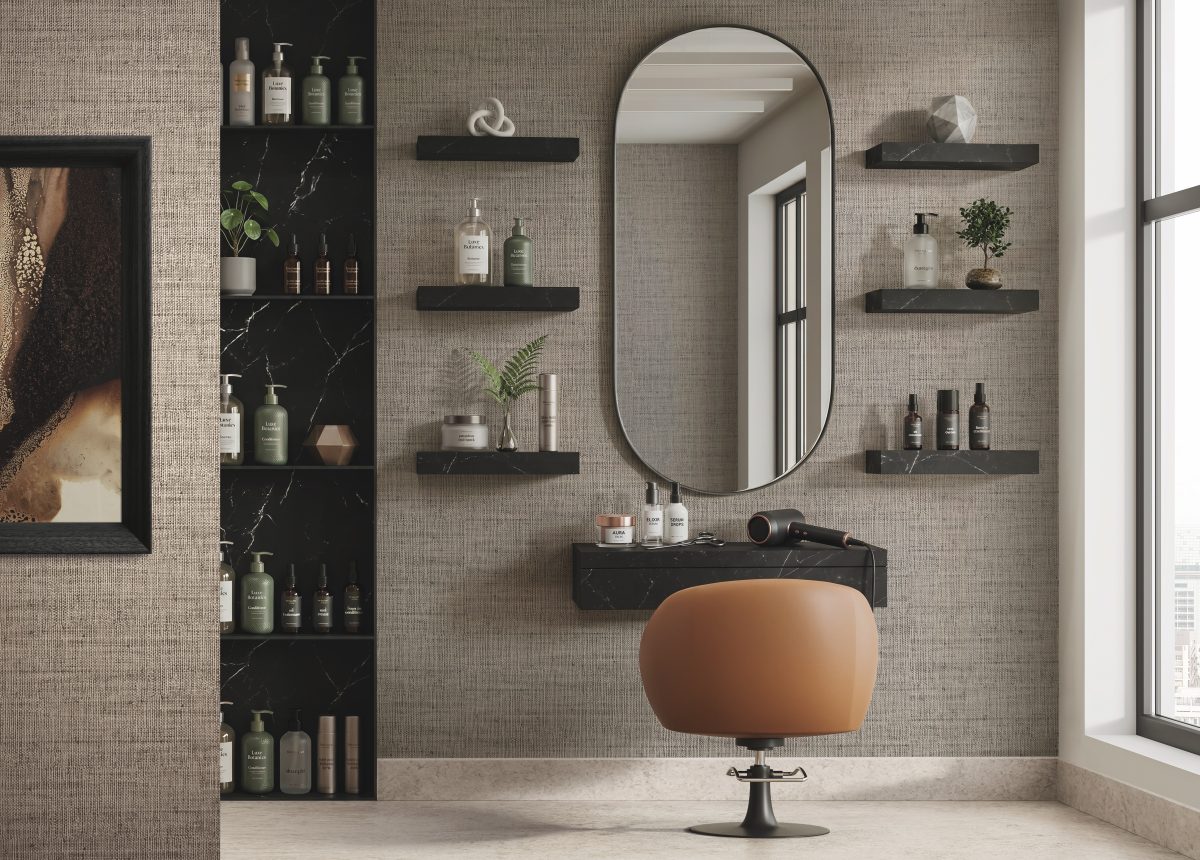
The other half of the collection is built the opposite way. Tenona II is made by machine, a Type II vinyl modeled on centuries-old Japanese paper weaving, a softly textured basketweave in the spirit of grasscloth. It comes in 12 nature-inspired colorways and is tough enough for commercial interiors. The team studied what natural materials do on their own, the slight irregularities and uneven places in a handmade weave, and built those imperfections in on purpose.
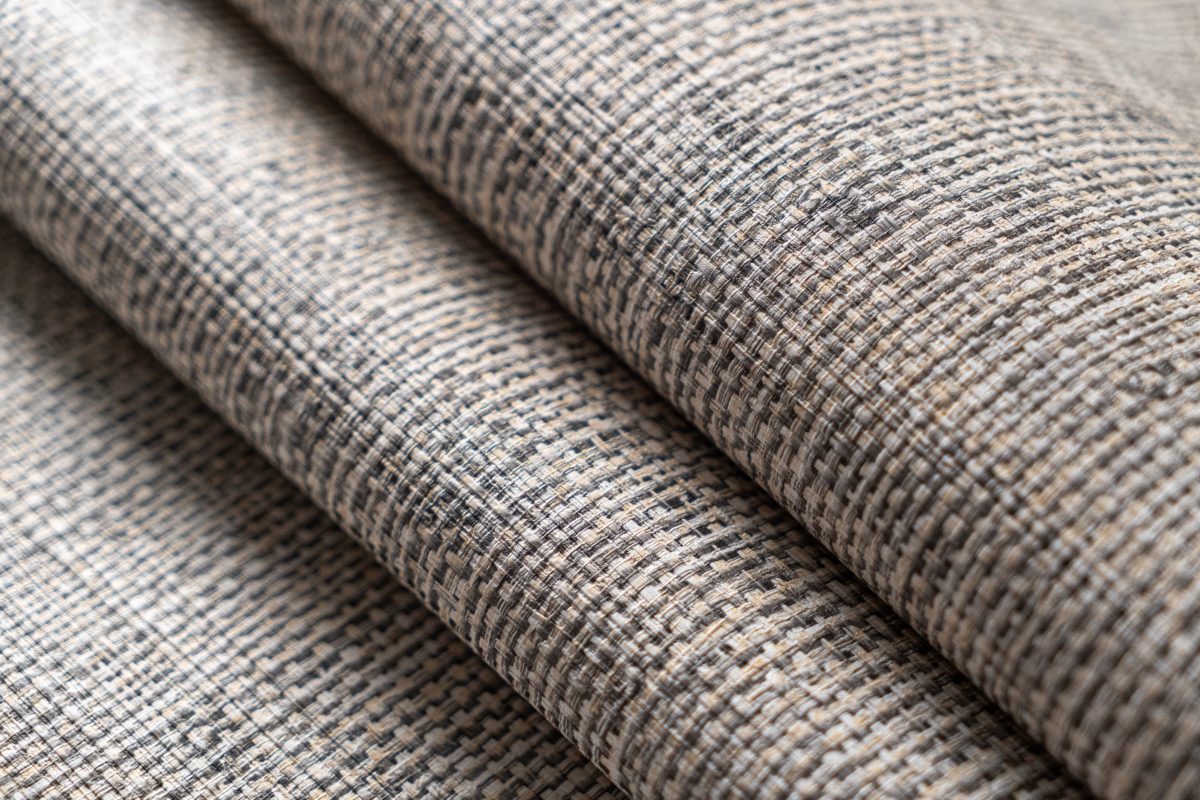
“Incorporating those small imperfections was important because they give the surface character and prevent it from feeling overly uniform or manufactured,” Jacqueline says.
From across a room, Tenona II reads as a calm woven field. You might recognize it as machine-made at first, but the closer you get, the more intentional detail you find. It carries the performance and consistency of a Type II vinyl without giving up the richness of something woven.
“At its core, Ananda is about creating a moment of peace and tranquility,” David says. “We wanted to provide a small sense of solitude and calm within what can often be a very busy world. We hope people discover something new the closer they look.”