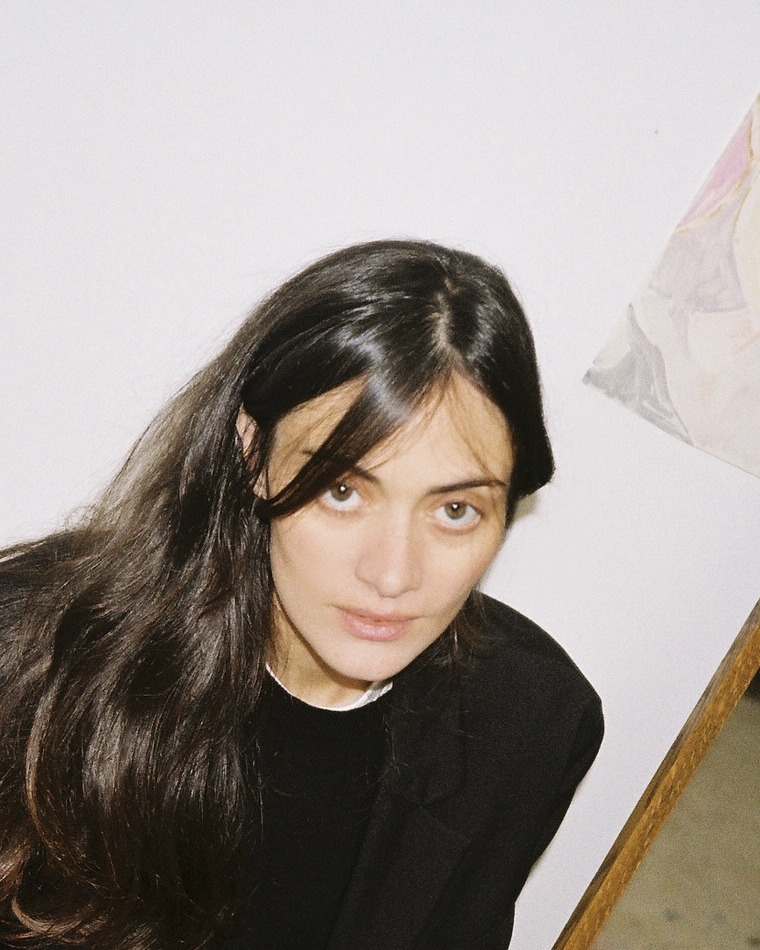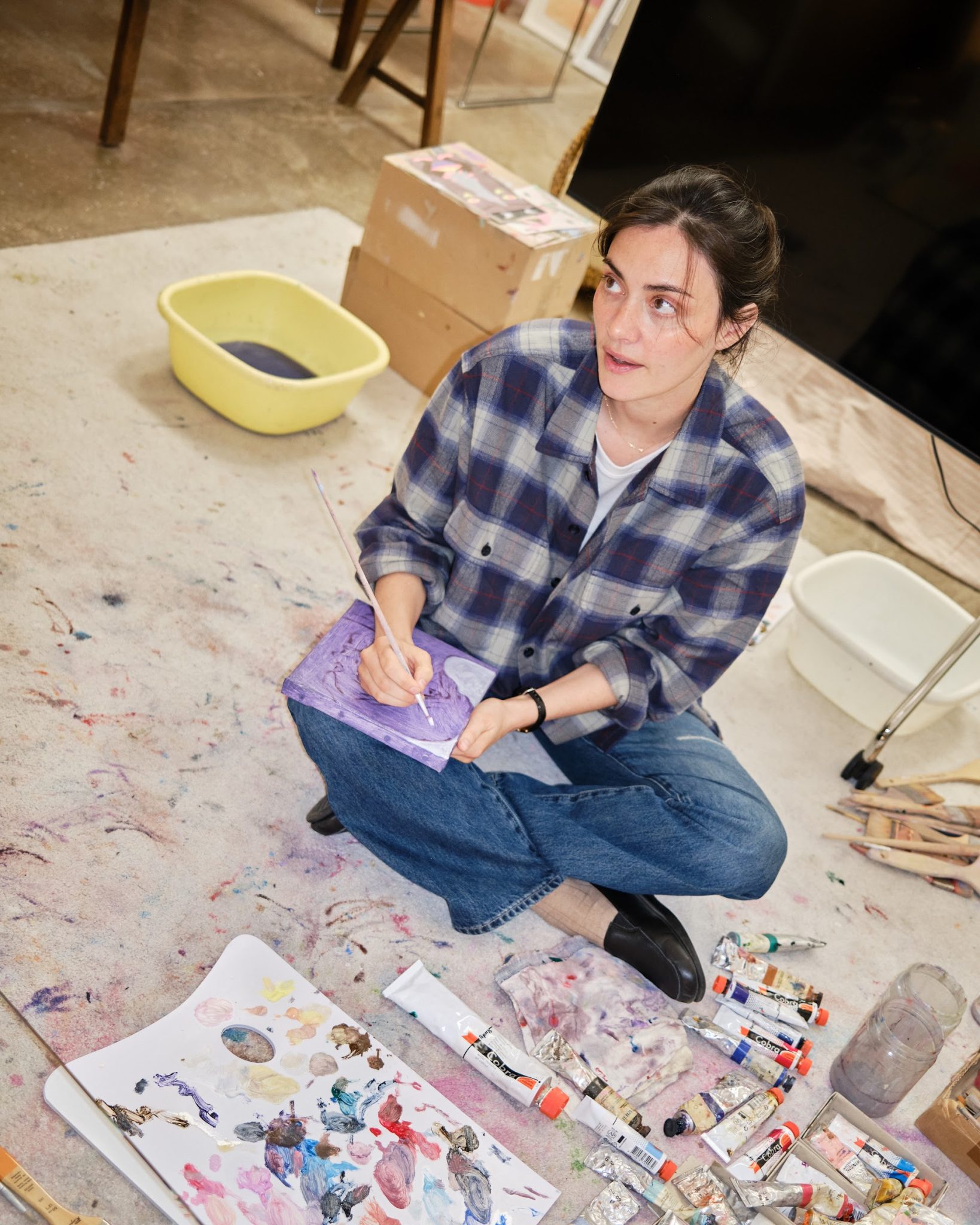
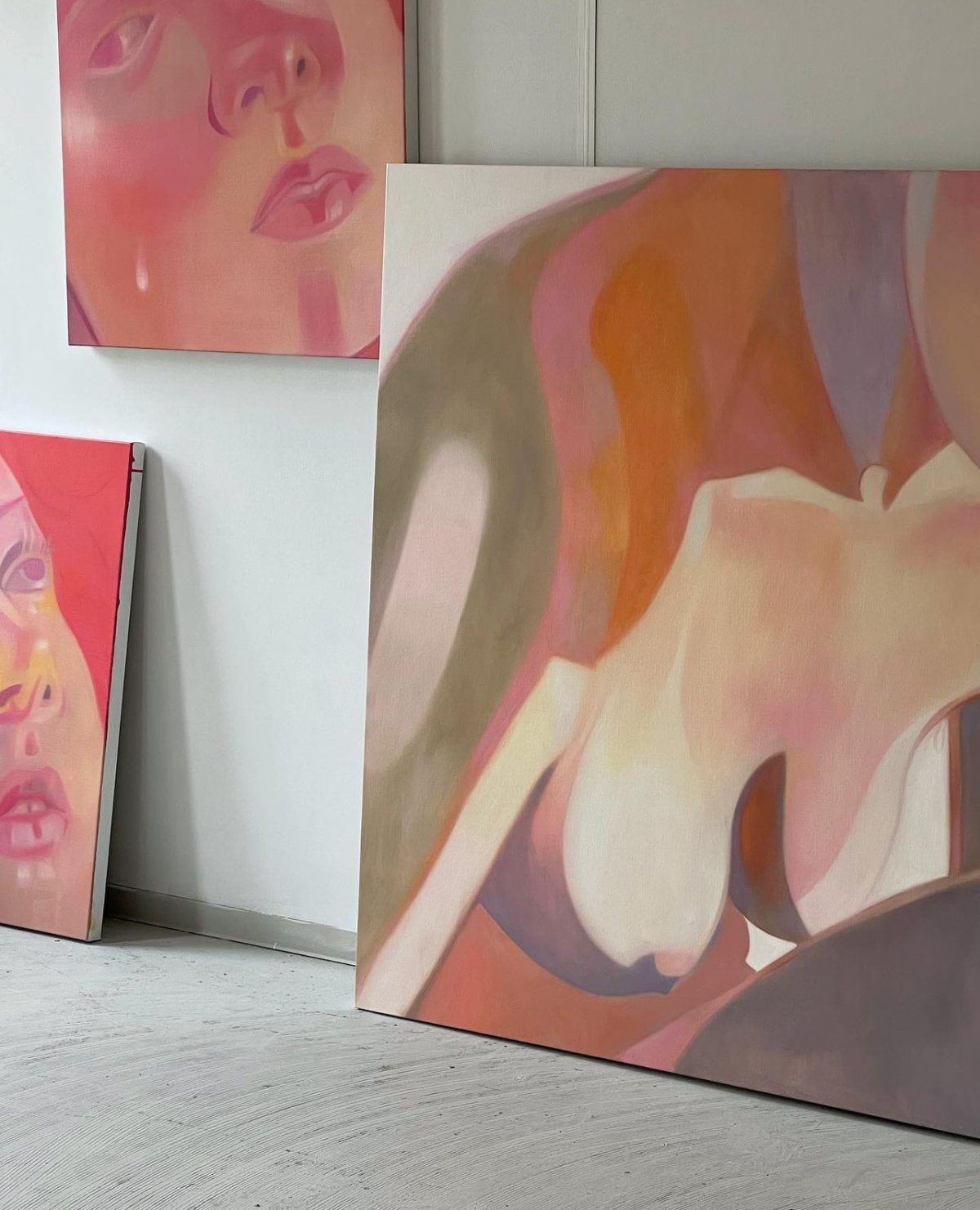
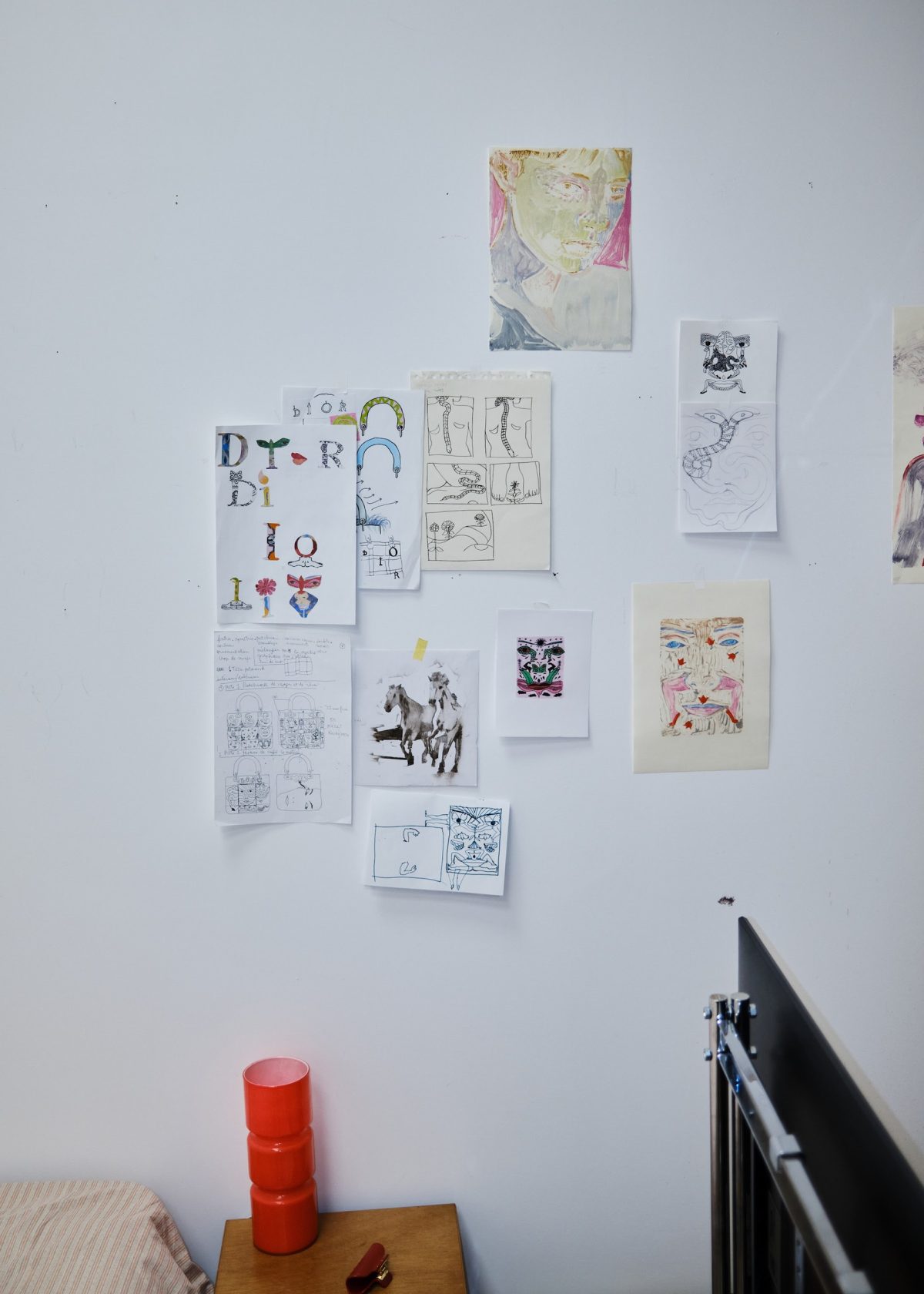
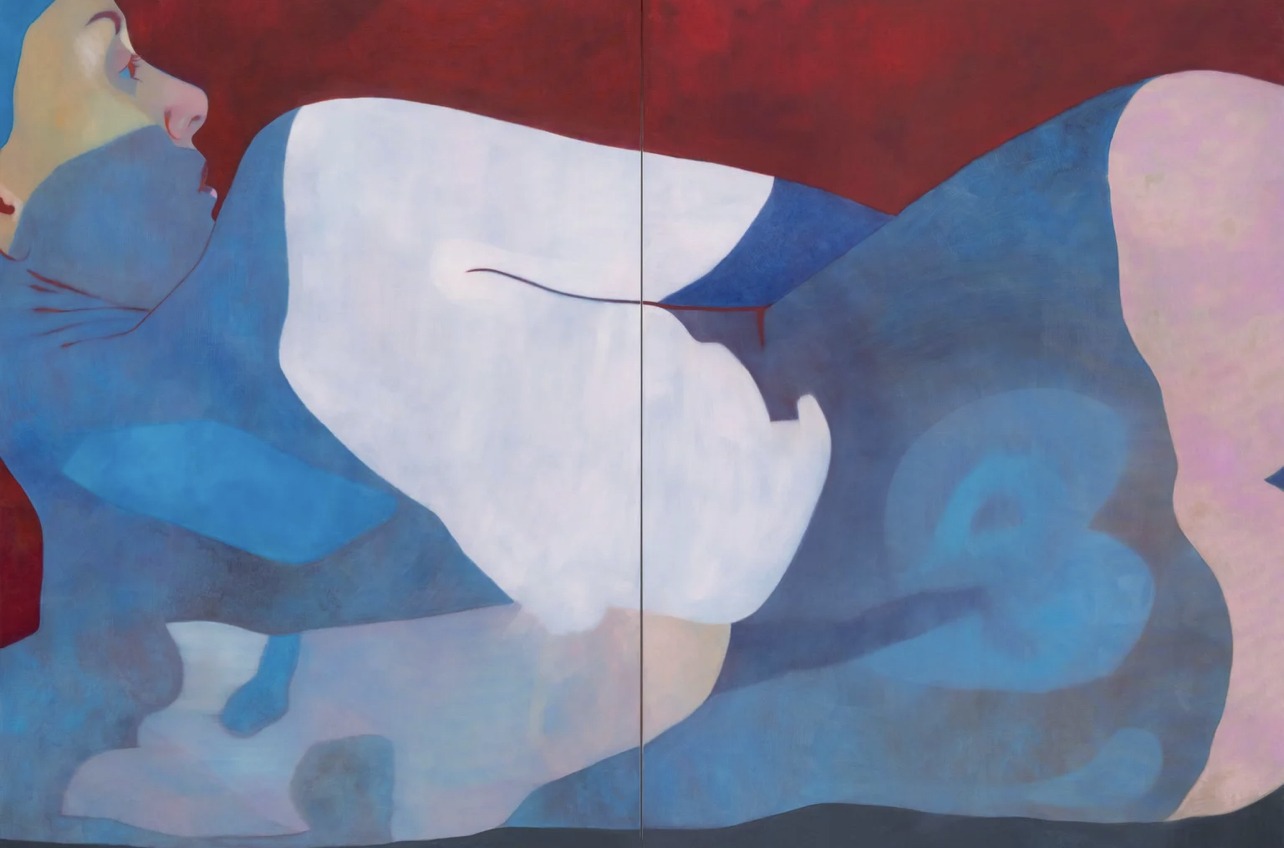
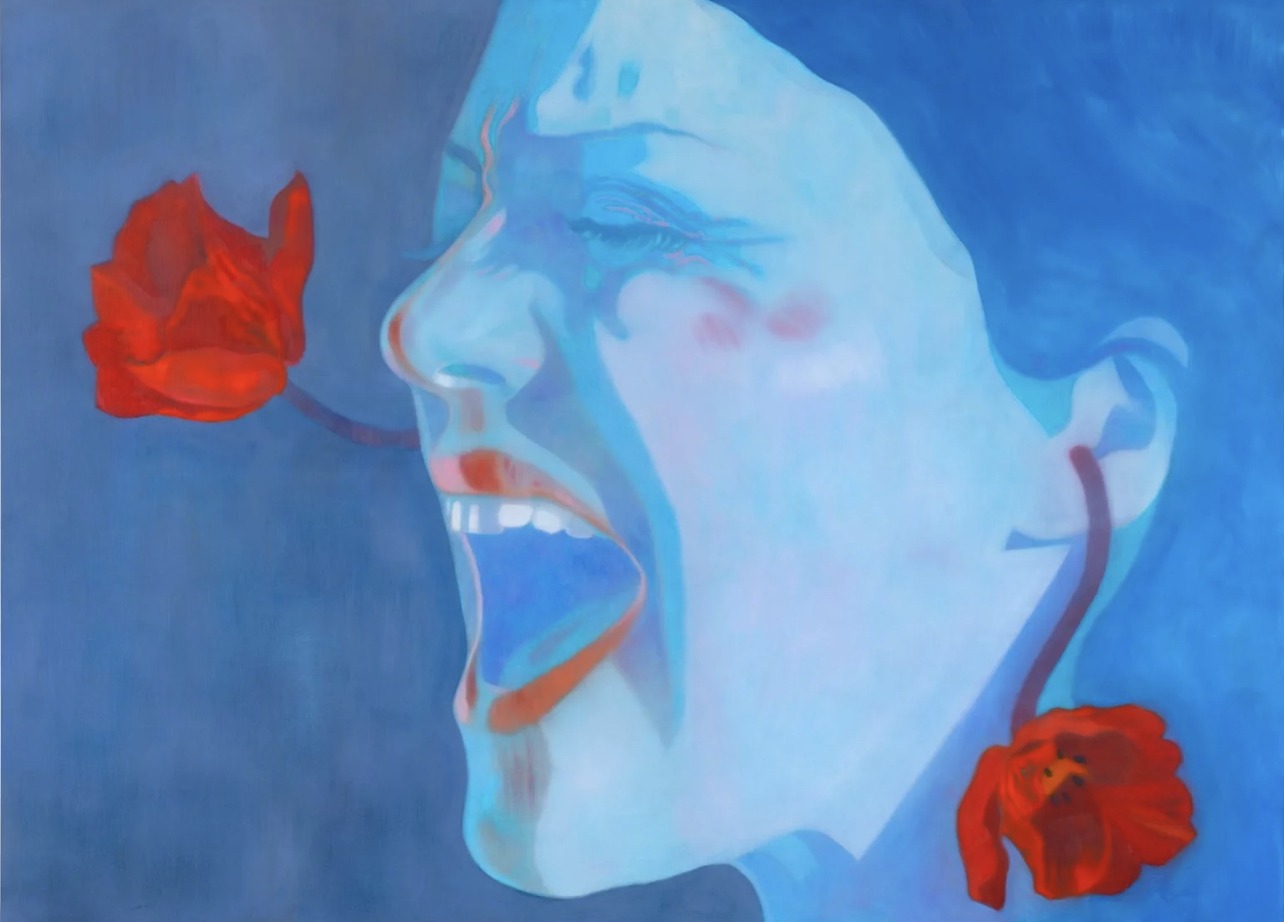
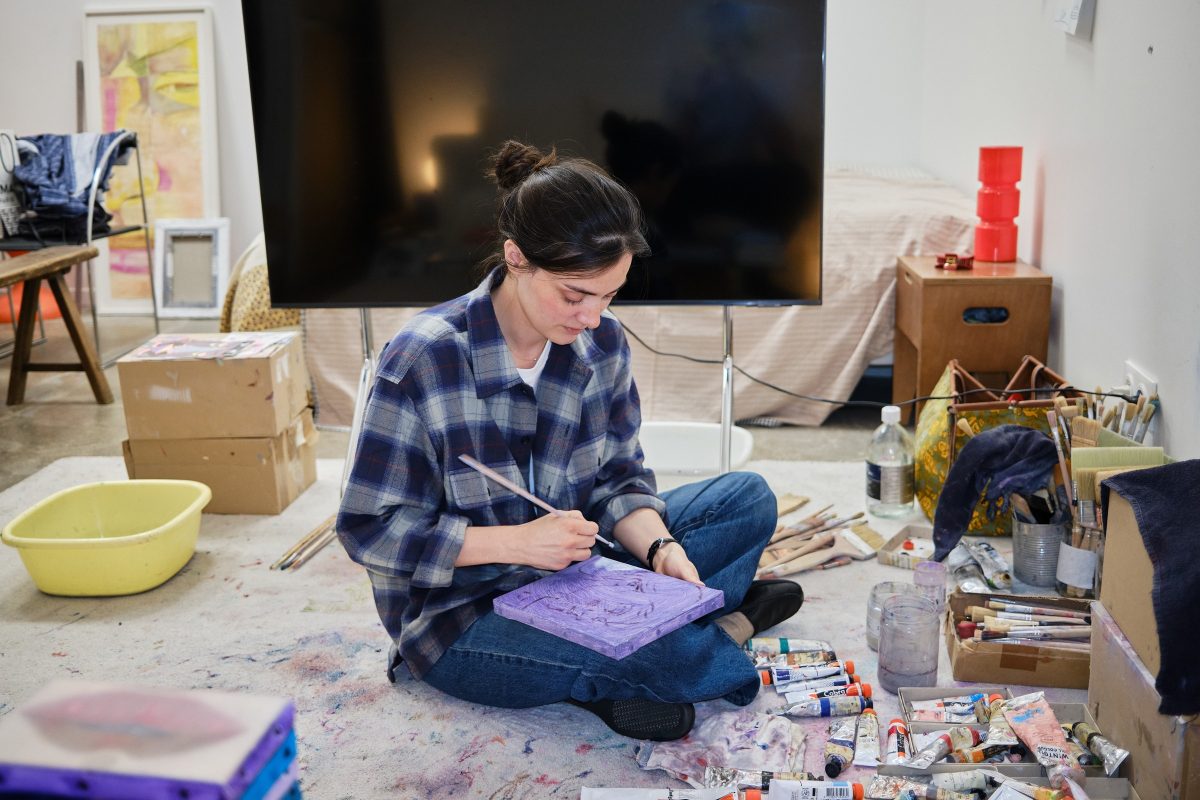
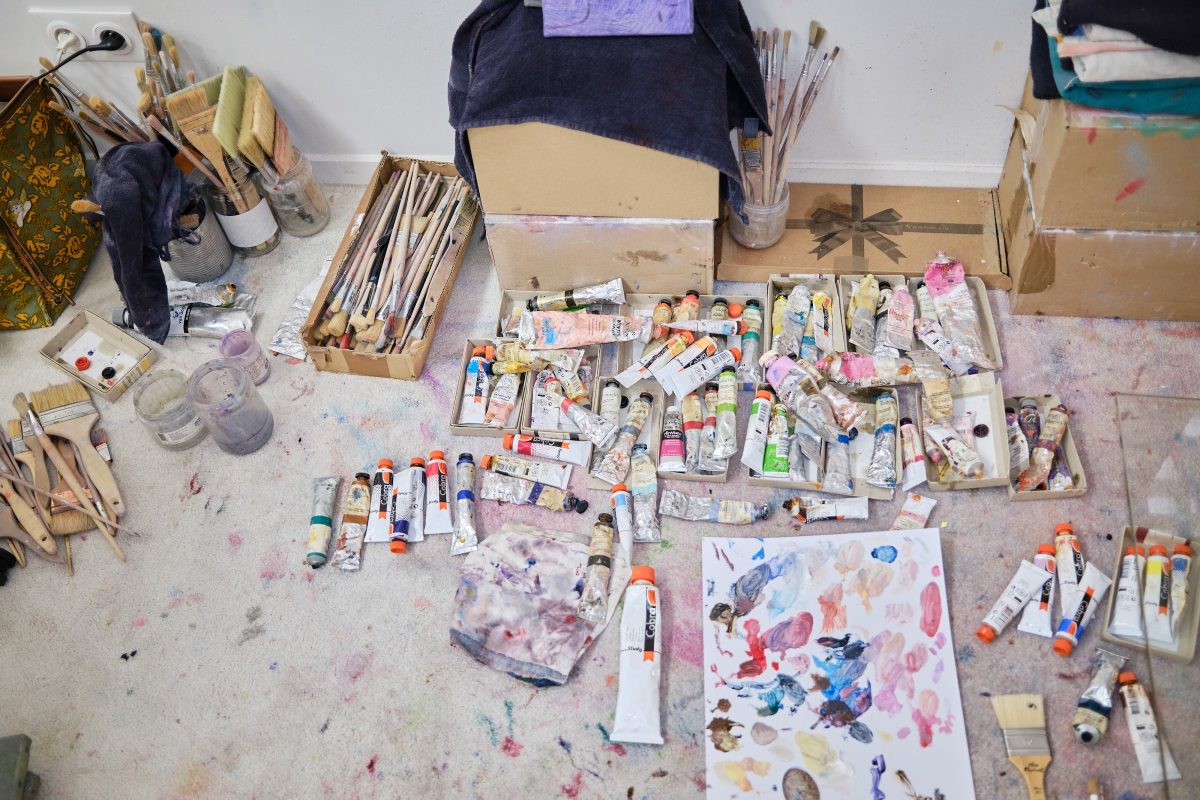
Inès Longevial’s studio in Paris has a wall of small paintings, some of them three years old, hung close together so she can see whether they get along. She points at them when I ask about the show she is putting together. “I make a lot of small paintings, and I always put them on the wall and see if they would live together,” she says. The show is called In Your Pocket. It opened at Ketabi Bourdet on October 22 and runs through November 21, and most of it is small works on canvas. Faces and bodies, fragments of both, a mix and match. When I visit in September she can’t fully explain the show, because she hasn’t finished choosing the final group of paintings. “I’m still in the process.”
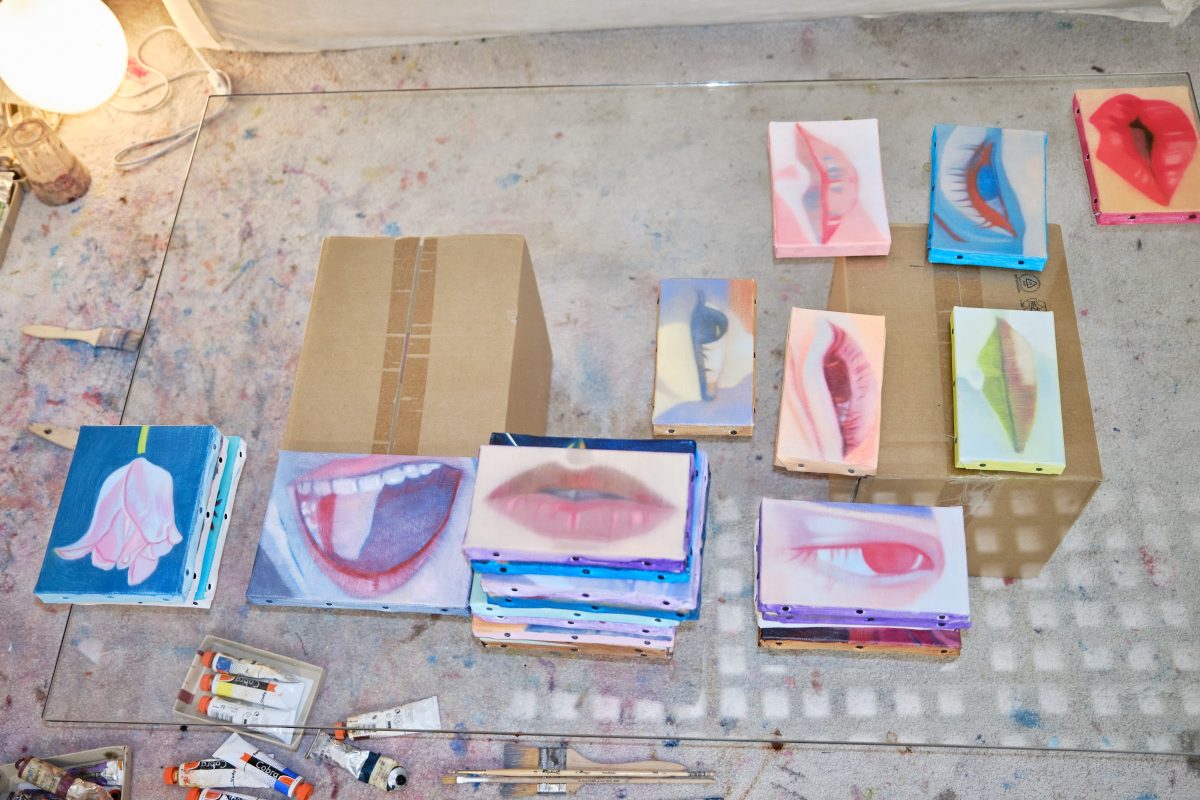
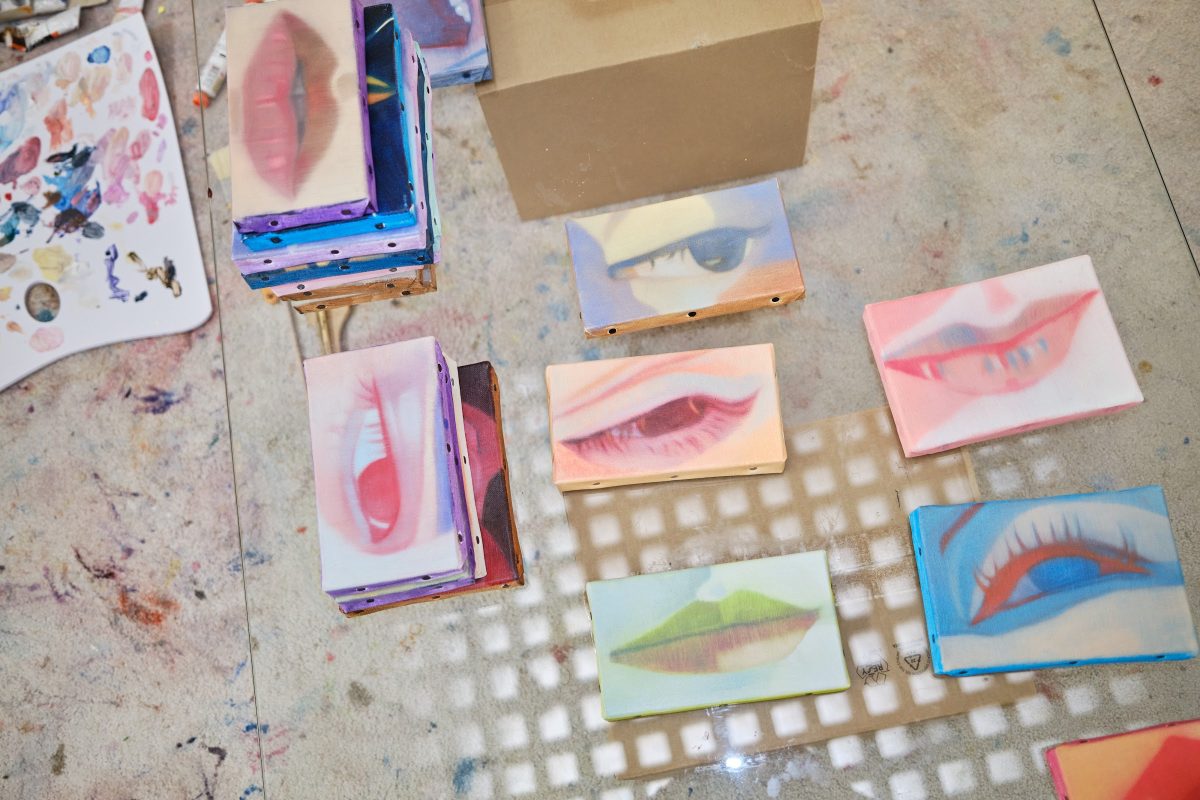
The grouping instinct runs in the family. “My grandmother actually did a lot of patchwork,” she tells me, and she thinks she has always worked that way, even on the larger canvases she calls more classical. “There is this kind of idea of a lot of pieces together.” The faces are hers, up to a point. She doesn’t paint from a mirror; sometimes she works from photographs. “It’s a portrait, but I don’t recognize me when I’m painting.”
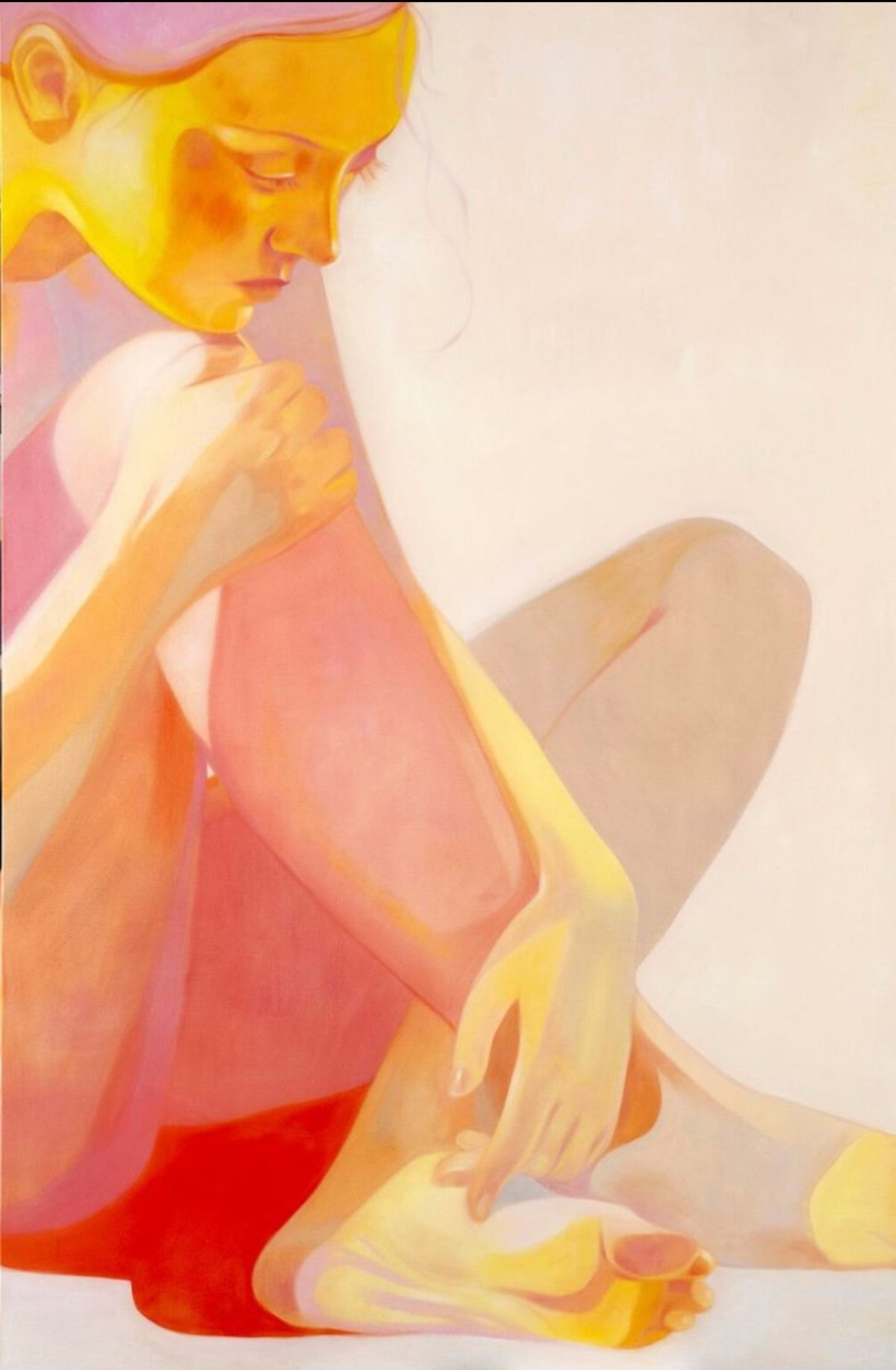
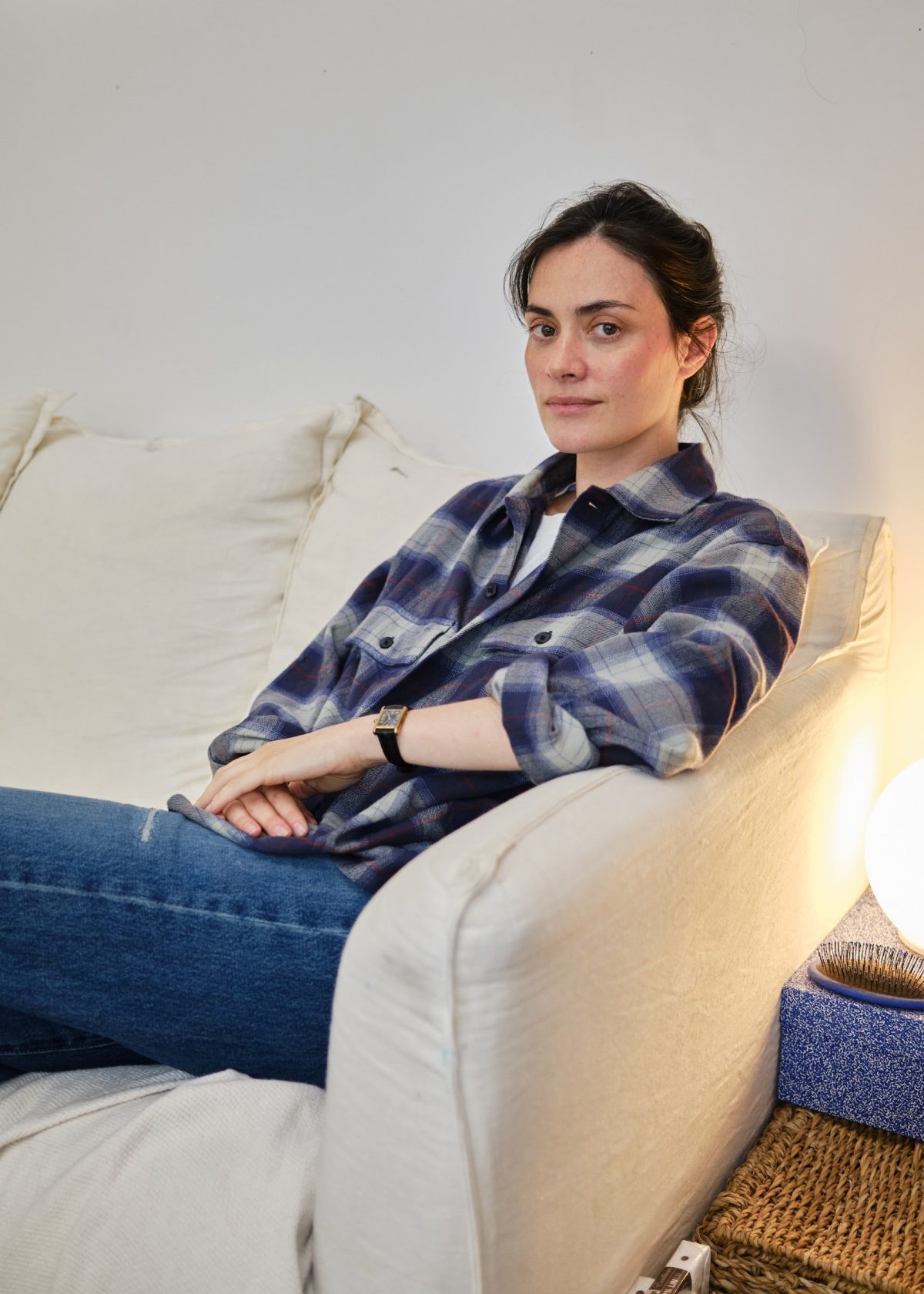
Inès was born in Agen in 1990 and grew up in the countryside of the southwest, a little bit no man’s land, she says, sun in the morning and not much else. Art school was in Toulouse, where her aunt lived and where she made most of her friends. She studied design there, graphic design for advertising and some objects, and painted for herself the whole time, knowing that was the thing she wanted to do forever. She graduated in 2013 and went straight to Paris.
“I didn’t know the art world at all,” she says. “I think it was good to not know this world at this time.” She rented a tiny apartment in a part of Paris where there was nothing, not even a good café, which is why she could afford it, and painted all day. Money came from collaborations, with Levi’s and Sézane among them, on her terms. “I never accepted something I didn’t like.” The break came through a local nightclub. She made its flyers, each one a small painting, and the owner knew people. One of them was Tyler Gibney, the Canadian who runs HVW8 Gallery in Los Angeles, and he offered her a show.
In the States, a painter straight out of school looks for a teaching post or a studio job. Keeping a full-time practice from day one is rare, and I ask what gave her the nerve. “I think I was really naive,” she says. “Painting is my life. I made a little amount of money and I was like, okay, I will do with that. I don’t know why it worked at this time, but it worked.”
Her first solo show, Sous le soleil, opened at HVW8 in October 2017. She painted the whole thing in the apartment with the sofa pushed against the wall, then took every canvas off its stretcher, rolled it, and shipped the lot with no crate or protection. “It was crazy to do it like that,” she says. The gallery restretched them in LA and they came out fine. At the opening she met Mark Maggiori, the French painter who moved to America to paint cowboys and whose work she had loved as a kid. He asked how she had shipped the paintings. “I was like, ‘I just rolled them.’ He was shocked.” Tyler she describes as a character, like someone out of a movie. “It was crazy to discover Los Angeles through his eyes.”
She has been to New York about 10 times since and would move there if a visa weren’t so hard for a European to get. Instead the work travels: Chandran Gallery in San Francisco in 2018 and in New York in 2019, a Rizzoli monograph in 2023, the Musée d’Orsay’s Le Jour des peintres in 2024, and last summer Skin of a Storm at Almine Rech in Tribeca, which also shows her in London and Shanghai.
Paris came around in 2021. Charlotte Ketabi-Lebard had just left her sales director post at Galerie Nathalie Obadia to start Ketabi Projects, and she found Inès on social media. Ketabi Projects’ first exhibition was Inès’s Before the sun sinks low at Les Grandes Serres de Pantin, where Inès had her studio at the time. It opened in January 2021. “A lot of people came, but everybody was masked. It was a special time.”
Ketabi Projects became Ketabi Bourdet, which hangs painters next to Philippe Starck, Elizabeth Garouste, and the Robert Wilson estate, and I tell her I like that the gallery is not the usual big white room. I have been to Garouste’s studio, where every lamp and the dining table are things she made. “There are a lot of people who are different ages, different everything,” Inès says. “I think the gallery is good in Paris.”
Paris itself she is harder on. “It’s more snobby. It’s a small world. Everybody is working for themselves. There is no teamwork. I think it’s a French thing.” Studio buildings full of painters, the kind she has visited in New York, barely exist here. “There isn’t enough spaces to do things like that. This town is not built for that.”
Her gallerist is supportive and doesn’t tell her what to make. No sizes, no more of this and less of that. “She can ask me for a fair, I need a small painting or a big painting, but I’m always free to do it or not.” The market gets the same distance. “It’s a world where I am living sometimes with closed eyes,” she says. “I don’t really know the market, because it could blow my desire about painting. I try to focus on work and what gives me the joy.”
A designer can’t do that, I say, and she knows it better than most, having trained as one. “A designer has to answer to a demand. He has to please. It’s not the work of an artist,” she says. “I’m so happy to not be in that kind of world.”
Inès still hangs the small ones on the wall first and waits to see which of them get along 13 years in. The rest is somebody else’s job.