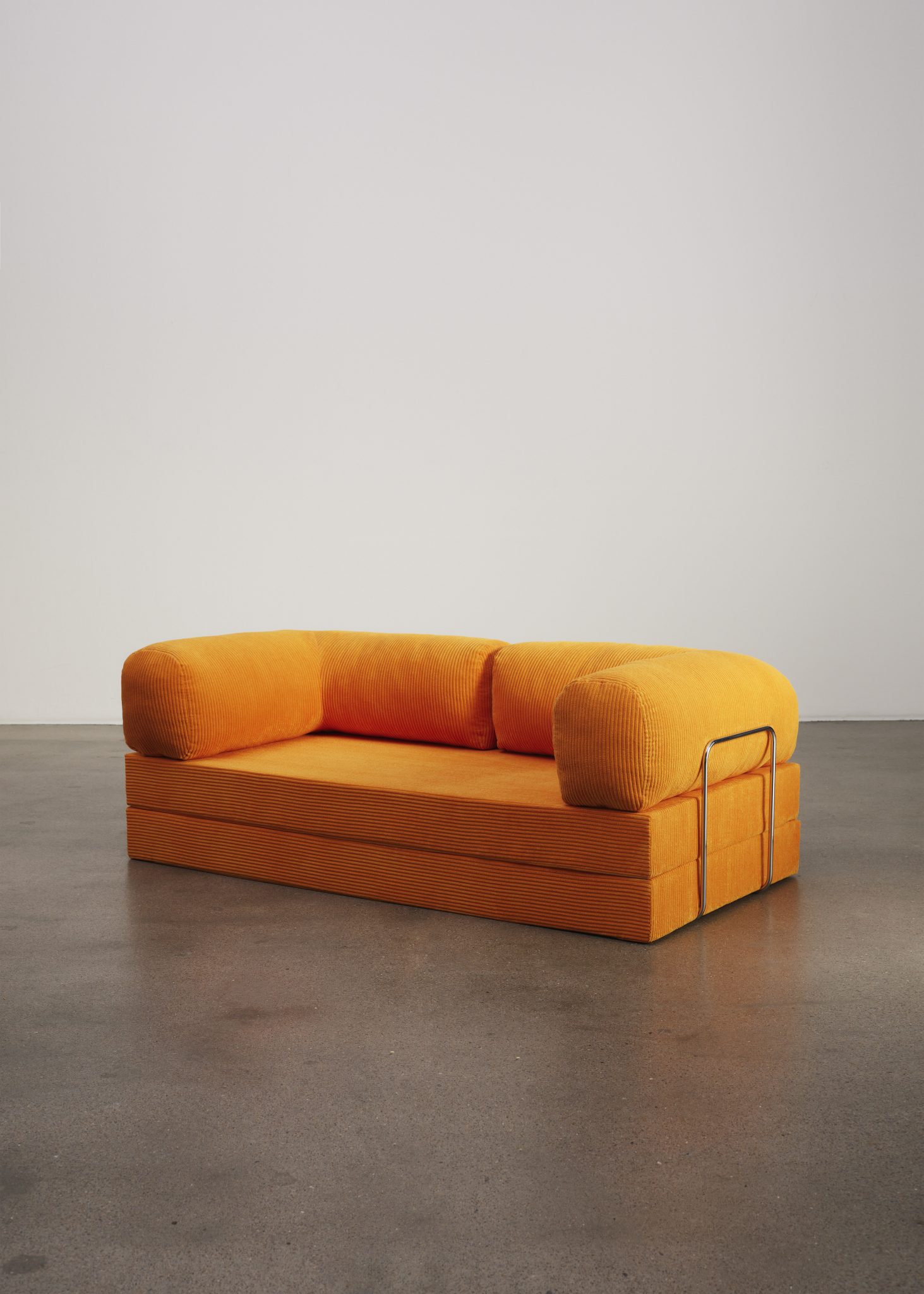
If you’ve spent any time online in the past few years, you’ve seen the TEDDY: the plush, boneless, modular sofa from Copenhagen-based brand OMHU that became one of the most recognizable pieces of furniture on the internet. You’ve probably also seen its imitators. Across Temu, Etsy, and beyond, thousands of knockoffs share the same silhouette and carry different names and a fraction of the price tag.
Most brands facing this problem send lawyers after the copycats. OMHU decided to make a joke of it.
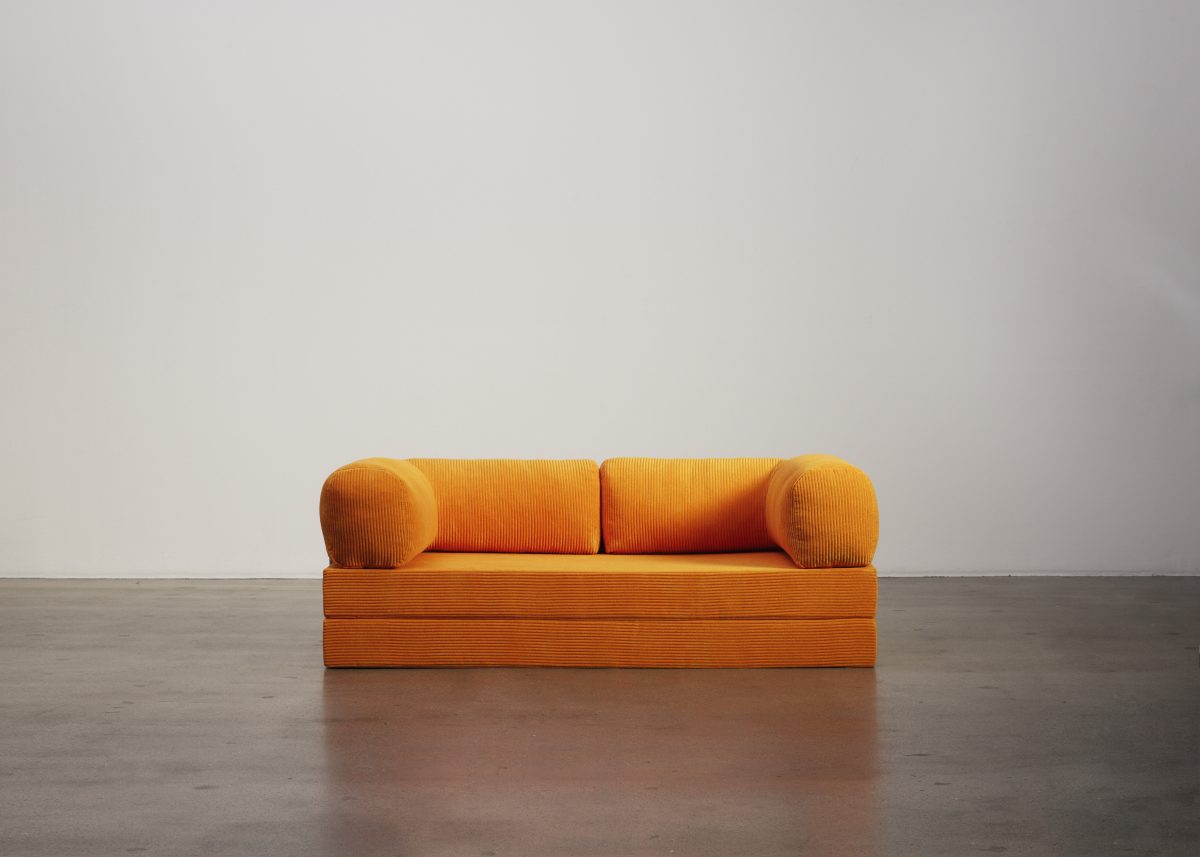
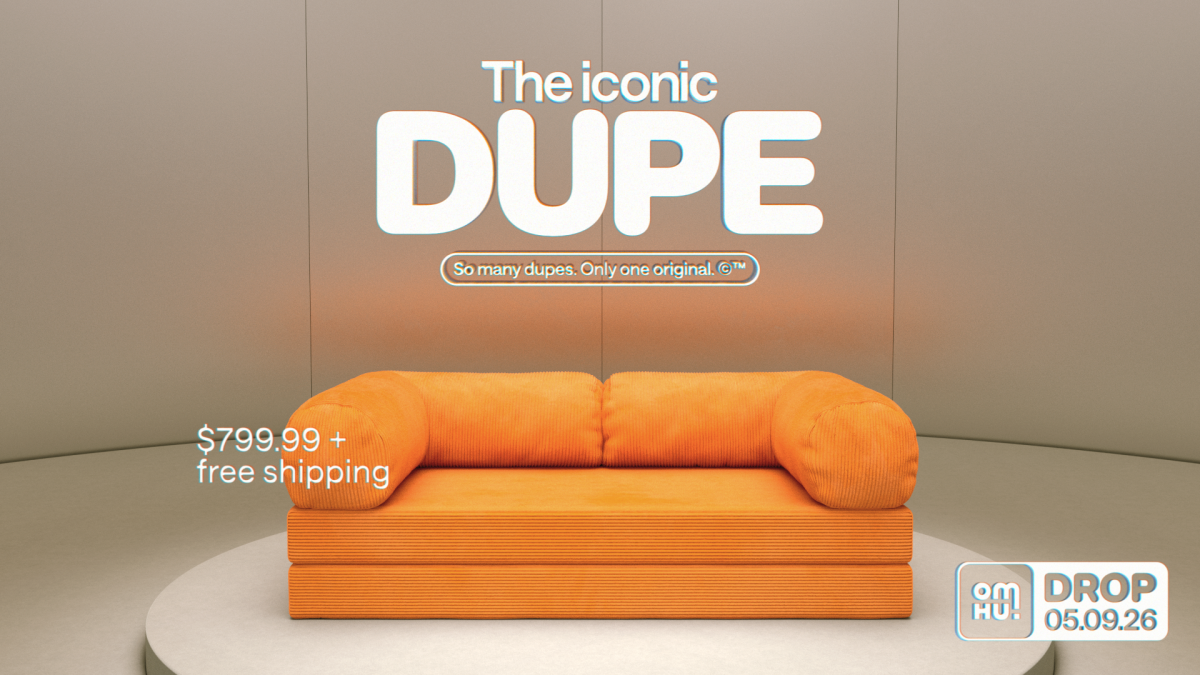
On September 5, the brand released the TEDY, a “dupe” of its own sofa, deliberately misspelled the way knockoffs often are. It’s built with the same materials, quality, and construction as the original, but in a “dupe-orange” colorway at a “dupe price” of $799. Only 50 units were made, and they were sold exclusively on the knockoffs’ home turf: Temu, Etsy, and Dupe.com.
“There’s nothing that is different from the original sofa but the color,” says Christine Smith, OMHU’s creative director. “It looks like a dupe, but when you get it, it’s great quality, and you’re not in doubt that it’s an original.” To prove it, OMHU sent the sofa to influencers who own the cheaper copies and asked them to test the two side by side. In Christine’s telling, the dupes tend to fall apart under scrutiny, fabric included, while the original stays put.
The idea began as a hiring test. When OMHU went looking for a copywriter, Christine wrote a brief asking candidates to come up with a concept that could solve the brand’s problem of being duped so often. The writer who got the job pitched the seed of the campaign: an orange sofa for sale on Temu.
Competitor research had shown the team that its biggest rival wasn’t another furniture company but the dupes themselves, and a lawsuit would have played out behind closed doors. A public campaign on the other hand, could start a conversation, and it would give a young brand whose most famous product is better known than its name a chance to introduce itself.
“They’re duping us and now we’re duping them,” Christine says. “Even that is a story in itself.”
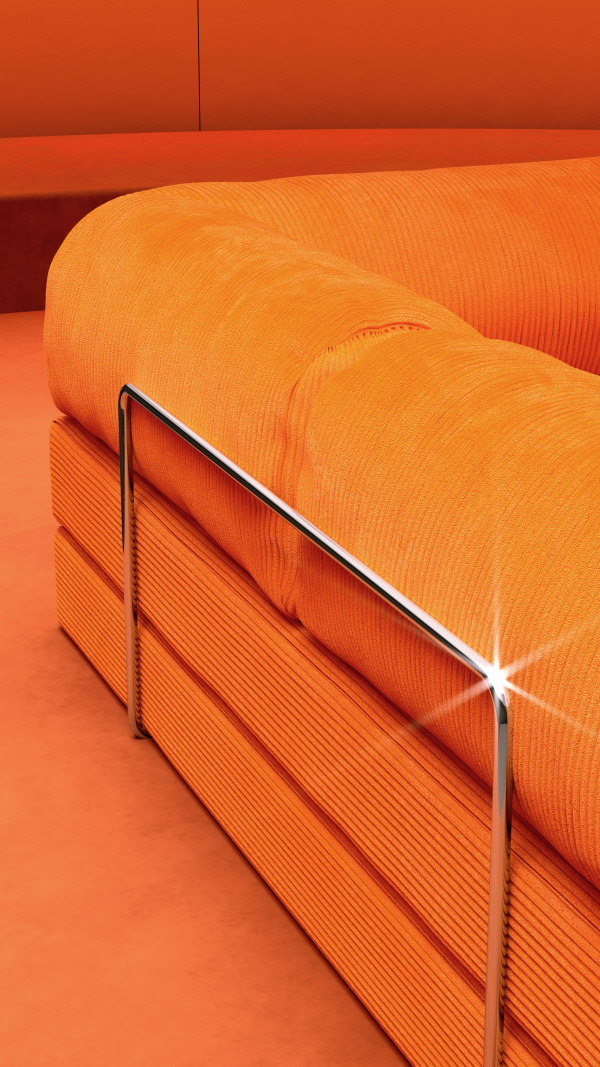
The campaign borrowed heavily from the visual language of the knockoff economy. The label on the sofa and the campaign logo mimicked the misspelled branding found on counterfeits, and the key visuals copy the flashy look of marketplace ads. OMHU also tapped a cultural moment, the rise of the lookalike competition, by enlisting what it calls “dupluencers,” celebrity doubles who have won or entered such contests. They include the winner of a Timothée Chalamet lookalike contest and doubles of Anne Hathaway, Jacob Elordi, and Hailey Bieber.
Rather than posing as the stars they resemble, they talk openly about what it means to be a dupe.
“You don’t really hear their backstory,” she says. “They have won these competitions and then do branded partnerships pretending to be the one they’re a dupe of, but they’re not sitting there saying, ‘I’m a dupe, and this is what it feels like.’”
The rollout began with a three-day tease, from September 3-5, before the launch. The website iconicdupe.com listed where to buy and ran a product-demo-style video that turned out to be a pointed list of everything the dupes lack: factories with real addresses, adult workers who are paid, and certified materials that are safe for your skin.
Beneath the humor is a serious point. The dupe industry is enormous, with estimates reaching $1.79 trillion by 2030, but its costs are rarely discussed: where products are made, under what working conditions, with which materials, and at what environmental cost. Christine points to unknown risks like funding criminal networks and child labor, and she is struck by how normal buying a copy has become, particularly among young shoppers priced out of the originals.
“Why have we become a society that doesn’t care if it’s an original anymore, when a lot of people are suffering from it?” she asks. The hope is to raise the question lightly, “tongue in cheek and not too heavy,” in a way younger audiences will respond to.