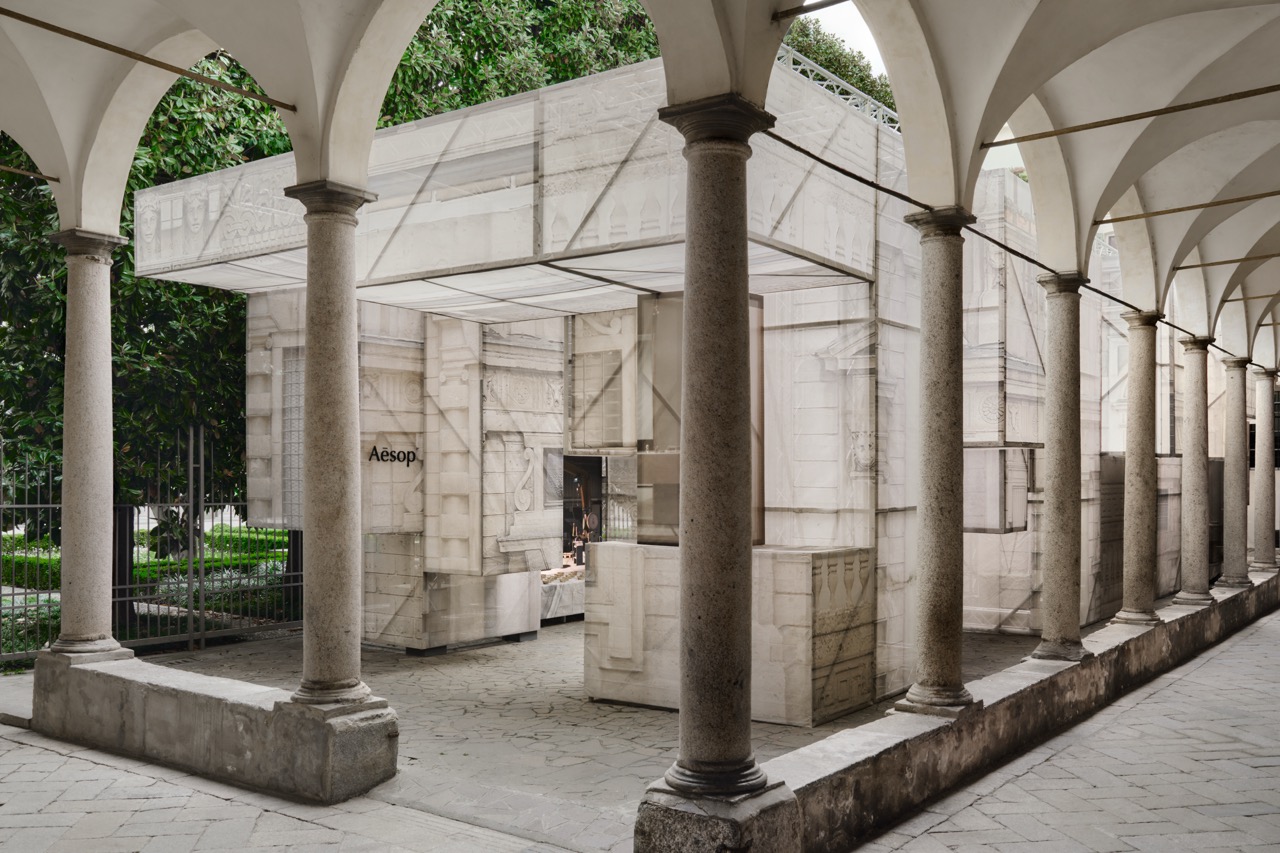
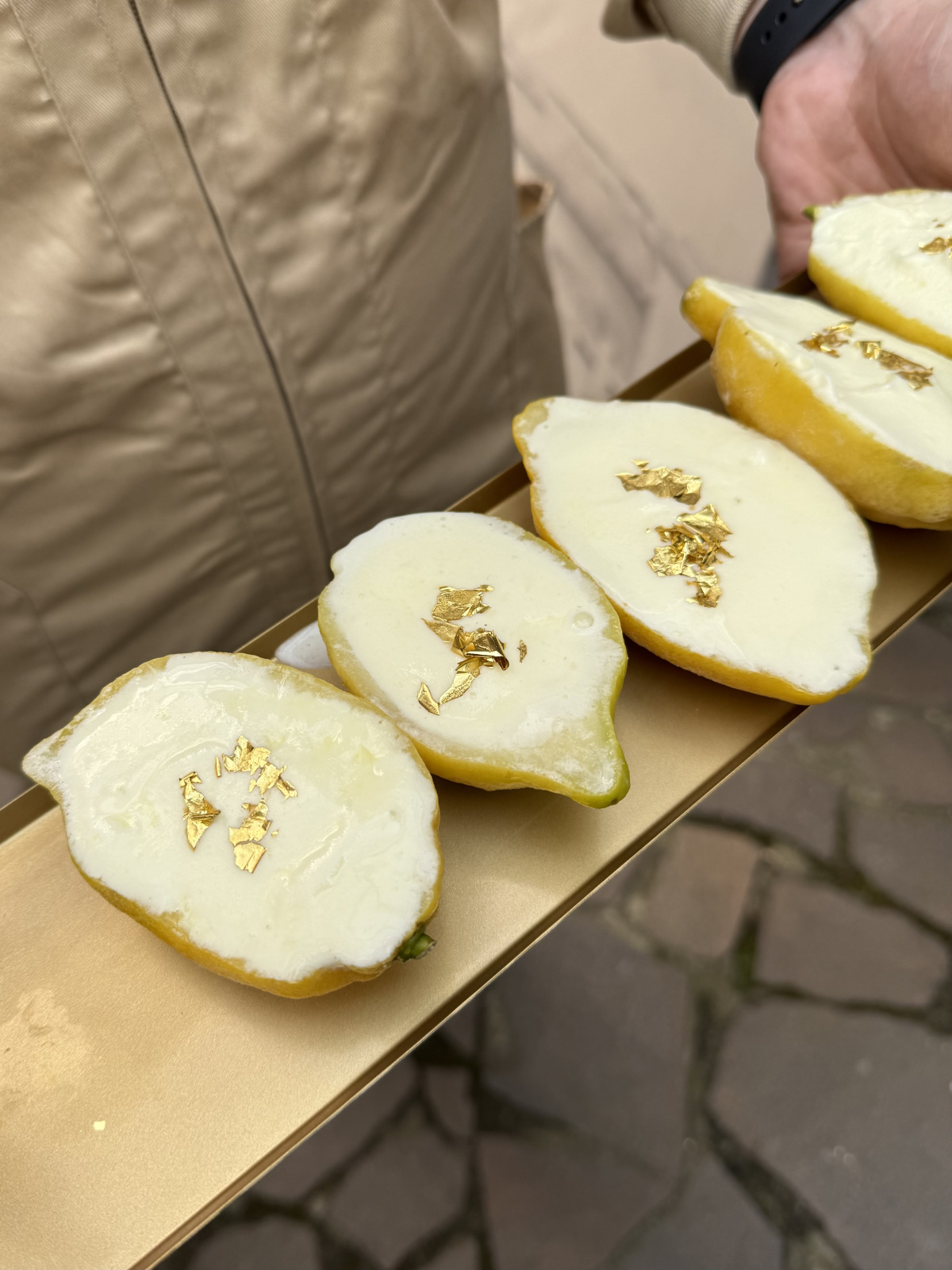
You step out of the noise of Brera into the cloister of Santa Maria del Carmine, and before you’ve taken in the scaffolding wrapped in trompe-l’œil tarpaulin, before the lemon sorbet, before the four films of artisans turning brass on lathes, Aesop has already done the thing it does in every store. It has slowed you down by giving you a place to wash your hands.
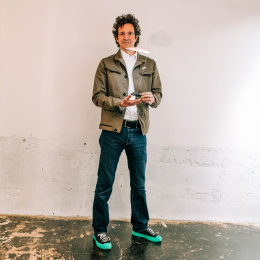
The Factory of Light is the third year Aesop has shown at Salone, and the second time it has taken over Santa Maria del Carmine. The architecture this time is by Rodney Eggleston of March Studio in Melbourne. He has been designing Aesop stores for 20 years. This is his 23rd project with the brand, and his first Salone.
“I thought I’d enter with a bang,” Rodney told me, deadpan, after walking me through.
The structure he built inside the cloister is, on first read, simple. A translucent room held up by scaffolding. It’s the materials that matter. The scaffolding itself, Rodney explained, is part of “the trade show ecosystem of Milan.” It will be dismantled after Salone and built into something else next week.
The fabric stretched over it has the better story. Anyone who has spent a week in Milan knows the printed tarps that get draped over palazzi during façade restoration, the ones that show you a flatter, prettier version of the building behind. Rodney was struck by them on his walks through the city. He was also struck by what they did with light.
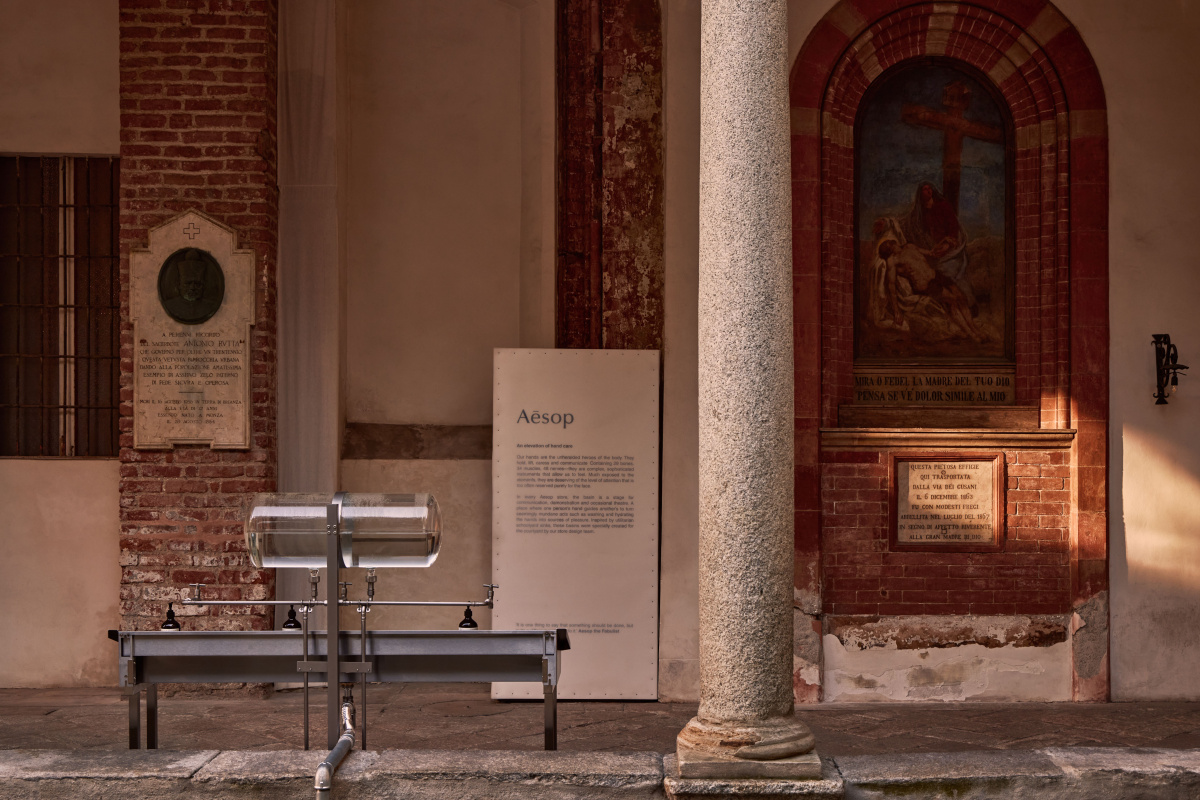
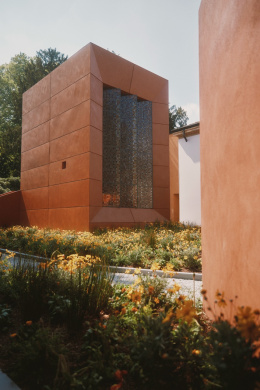
The basin at the threshold of the installation, modeled on a utilitarian schoolyard sink and built specifically for the courtyard at Santa Maria del Carmine. Photo courtesy of Aesop
“You get the sun hitting the back of the fabric and getting these incredible shadows and interplay of light,” he said. “We thought that was a great starting point.”
The tarps inside the cloister are real, salvaged from Milanese restoration sites. Otherwise they would have been turfed. Cut up and reassembled, they form a kind of fantasy Milan around you, soft and ochre and recognizable, the same tonal range as the city outside. “It feels like it should have always been there,” Rodney said. “That’s a really nice feeling.”
Inside the structure are four rooms, each devoted to one stage of making the new Aposē lamp, and each tied to one of the senses. Hear is the lathe in Scorzè, in northern Italy, where a single disc of brass a few millimeters thick gets pressed into the lamp’s shell. See is the glass-blowing in Veneto, where the frosted crown is shaped at 1,500°C by the breath of an artisan. Touch is the German foundry, family-run since 1874, which sand-casts the brass plinth at 900°C. Smell is the assembly room in Brescia, where the parts come together and the lamp is switched on for the first time, the air carrying the scent of Aesop’s Oil Burner Blends, marking the move from factory floor to home.
It’s the full bore, very “Salone,” romantic play and it works.
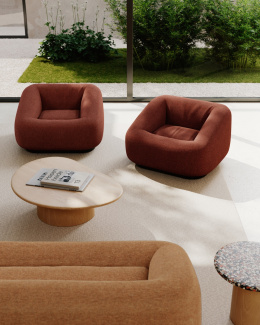
Aposē is the first lighting fixture Aesop has made. The name is an anagram of Aesop and a wink at the French à poser. It was designed by Aesop’s in-house architecture team, who started with an aluminum tube, the kind that holds some of their formulations. They chopped it through, scaled it up, and arrived at a confident, slightly odd object. 50 centimeters wide, 36 centimeters tall. A brass plinth, a brass shell, a glass crown that filters light the same way Aesop bottles do.
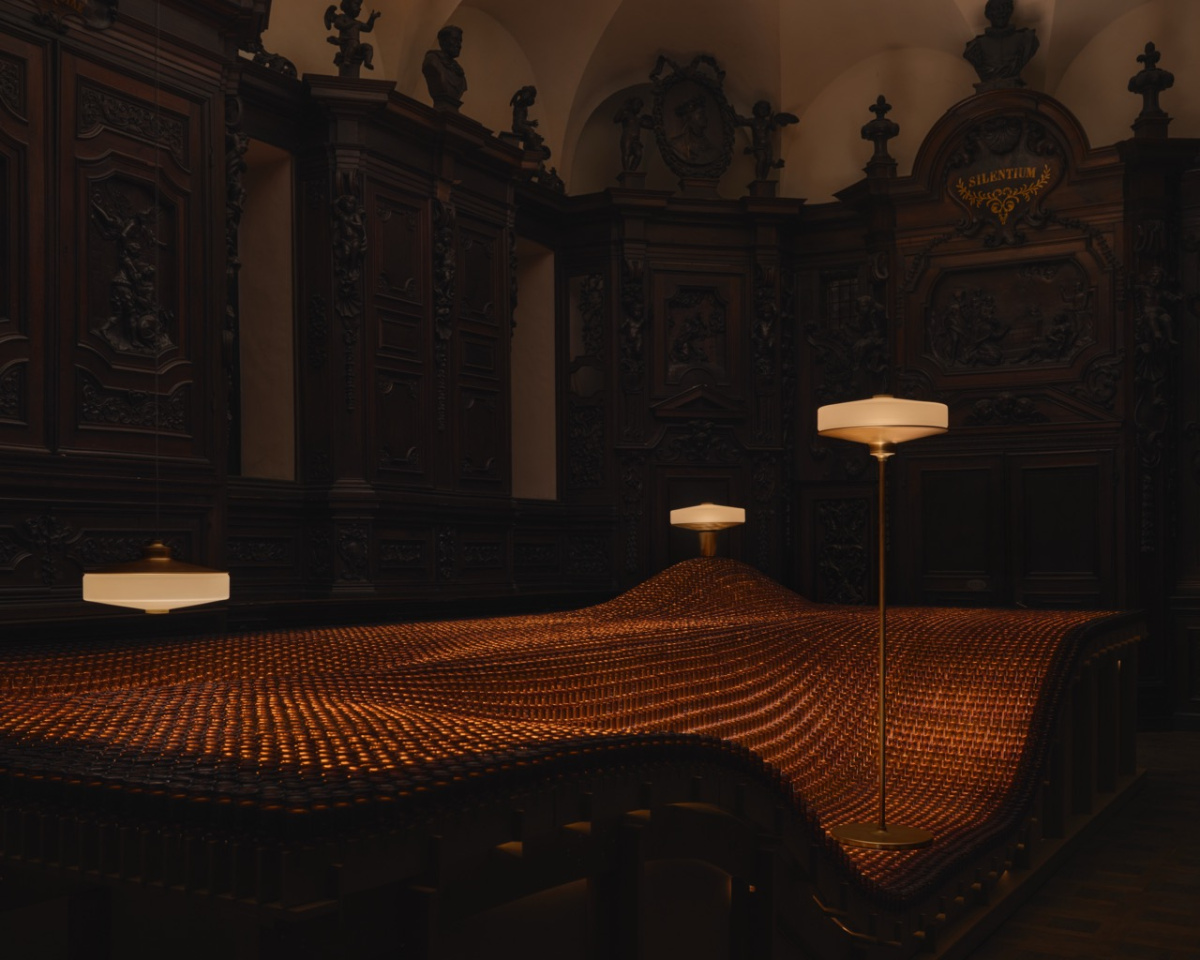
The Aposē trio, table, floor, and ceiling, revealed for the first time atop a wave of 10,826 dead-stock fragrance bottles in the sacristy of Santa Maria del Carmine. Photo courtesy of Aesop
Marianne Lardilleux, Aesop’s global retail design director, joined us through the walkthrough. Her team designs stores every day. Designing an object for the home was, she said, “a bit of a dream.” Aposē launches as a trio of forms: table, floor, and ceiling. Only the table version is on sale right now. The other two arrive later.
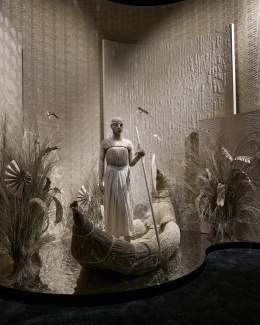
The sacristy at the back of the cloister is where the lights are revealed. The room is carved timber paneling, dim and saturated and very old. Rodney has filled the floor with a horizontal wave made of 10,826 amber bottles. They are dead stock, bottles Aesop ordered with one nozzle design, then no longer needed when the design changed. Rather than throw them away, the brand stored them, and Rodney’s team built a sea out of them. The Aposē trio sits on top, glowing.
-
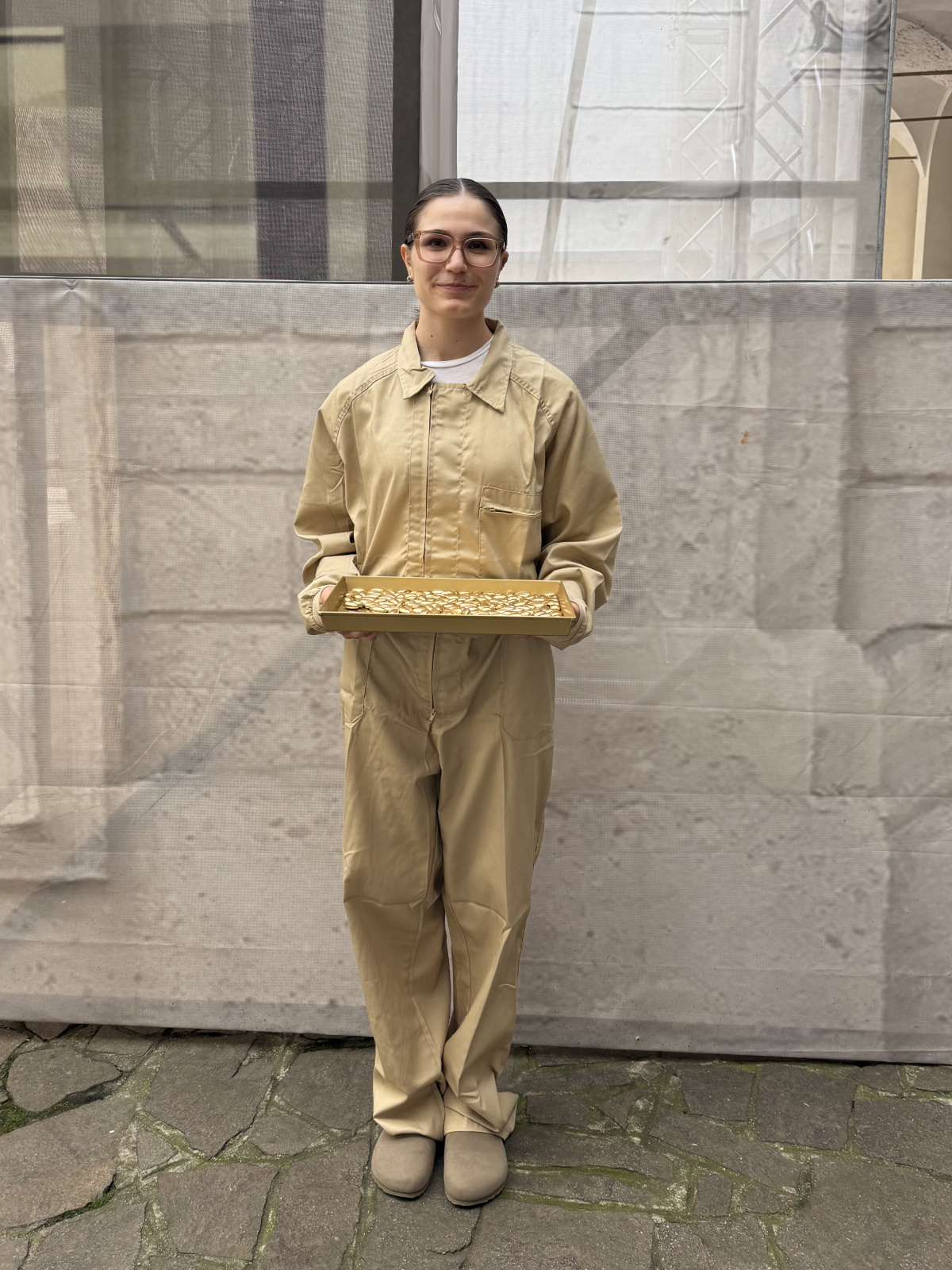
- Lemon sorbet served in hollowed-out lemons, topped with edible gold leaf, offered by an attendant in head-to-toe khaki at the entrance to the cloister.
-
- Photos by Chris Force
“It’s a mediating design,” Rodney said, “to mediate between the beauty of the carved timber and the sacristy, and the three lights.” A faint trace of Aesop’s Above Us, Steorra Eau de Parfum hangs in the air.
Walk through enough installations during Milan design week and a pattern emerges. Lifestyle brands tend to use Salone the way airports use duty-free, as a chance to put their logo on as many surfaces as possible. The exhibitions are loud, expensive, and a few days later, in a dumpster. Aesop, by going the other way, has built something genuinely useful to the week. A clean towel. Sorbet. A point of view about light, made out of materials that were already on their way somewhere else.
It also makes the case, quietly, that this kind of work is who Aesop is. 20 years and 23 projects with one architect from Melbourne is not a marketing relationship. It is a design practice. The lamp at the end of the cloister is the proof of concept.
I asked Rodney, at the end of the walkthrough, how he felt seeing it built. He says it had come together “better than I imagined, to be honest.”