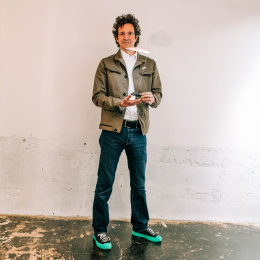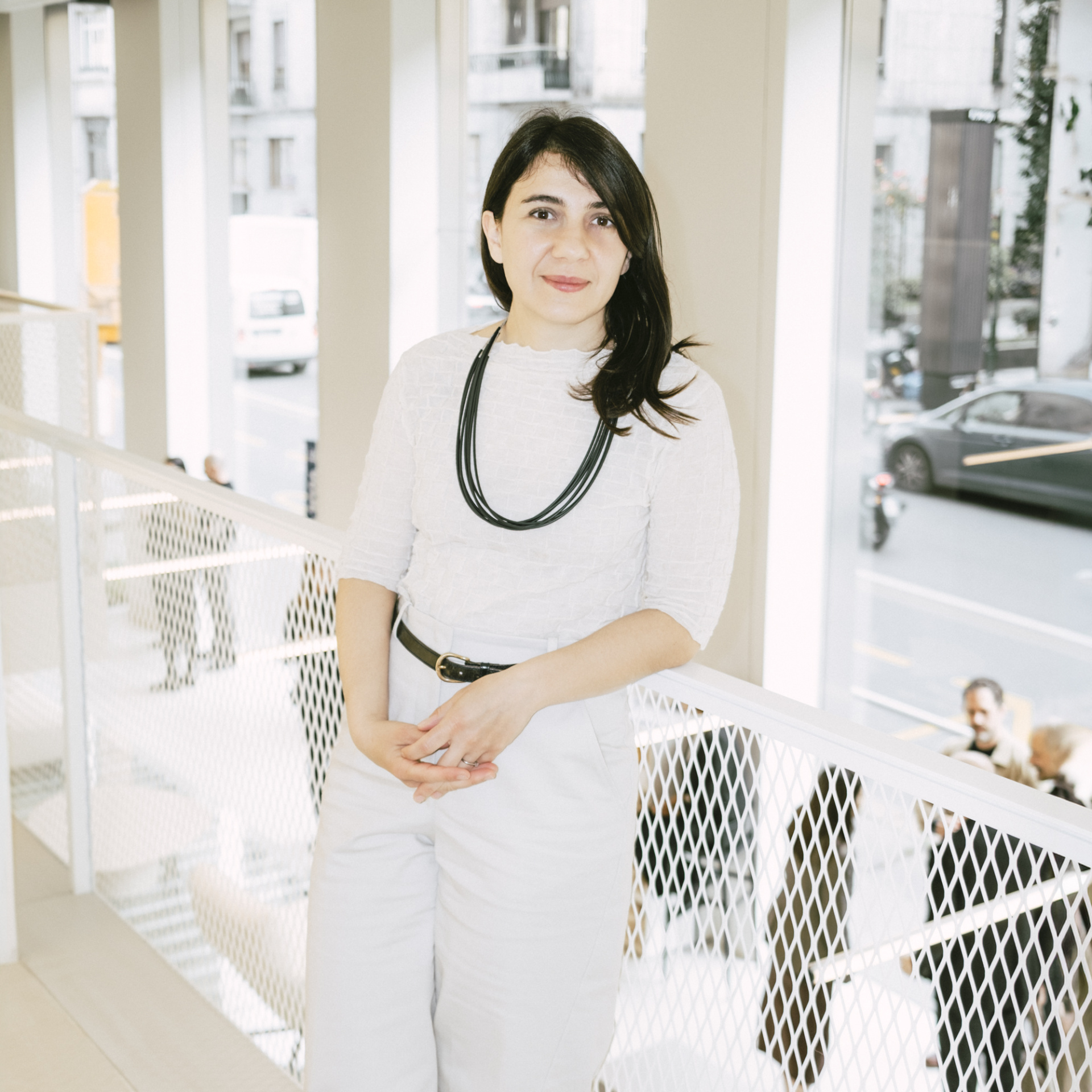
The first meeting I like to take every year at Milan Design Week is with Maria Porro. She is the powerhouse President behind Salone del Mobile and has wonderful insight into what is truly happening with the fair and design week. Every year she makes opening remarks at the famed Teatro alla Scala, and this year we’re discussing what she’ll be wearing. She tells me that just yesterday she walked into an Armani store, bought something off the rack, took it home, and tailored it herself before presenting at La Scala that evening (she trained as a seamstress before returning to her family’s furniture business).
It’s a small thing to open a conversation with, but it tracks with everything else she says over the next hour at the Porro showroom. Maria is a fourth-generation member of a family that has been making furniture in Brianza since 1925, and she has the conviction of someone who grew up in a workshop. She is also, as the President of Salone del Mobile, the person most responsible for what Milan looks like this week.
“The city right now is overwhelmed by the idea of consumption,” she tells me. “I am not interested in consumption.”
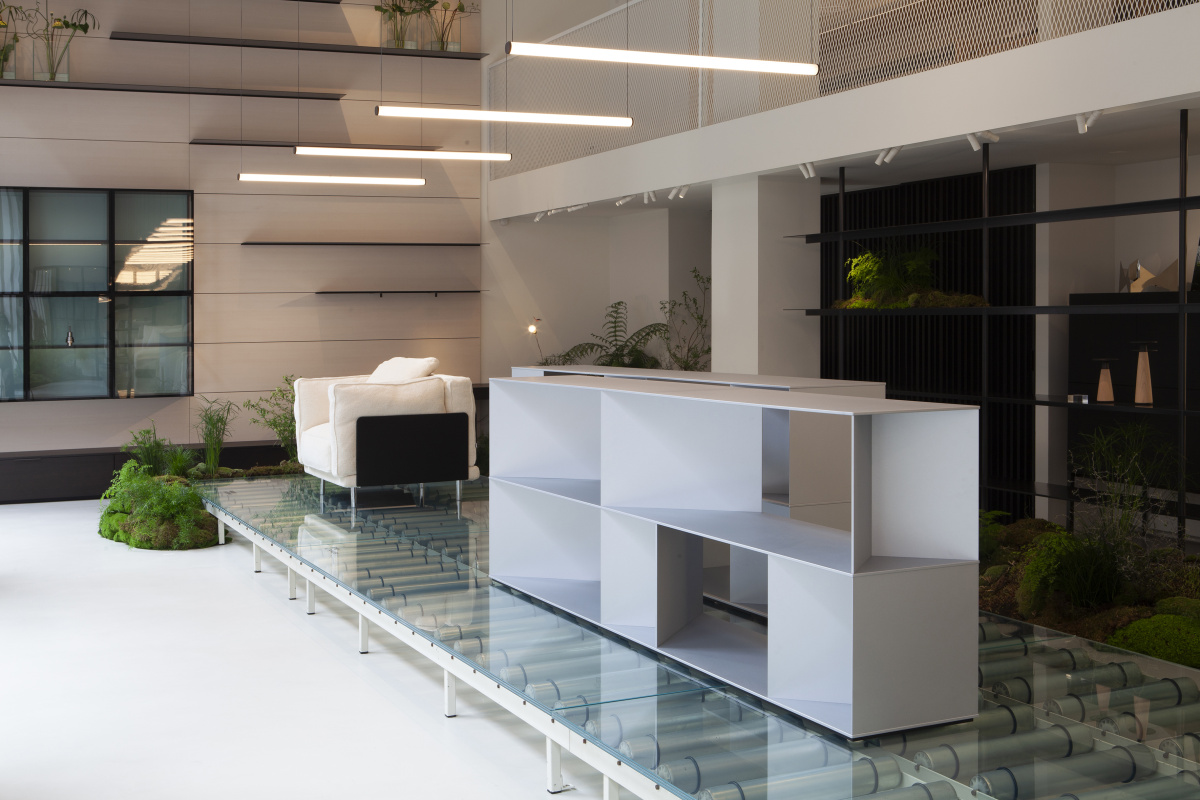
Ryo, Nao Tamura’s new bookcase for Porro, folded from a single sheet of solid aluminum into triangular supports that read closer to sculpture than storage. Photo courtesy of Porro
This is the argument she wants to make, politely, and she makes it plainly. Fuorisalone, in her view, has drifted. She worries the downtown spectacle is leaning into commercial theater, thin on quality, long on activations. Salone, by contrast, is still about furniture, quality, and research. Objects that are expensive because they are made well, and that stay in your life because they are worth keeping. It’s why Salone Raritas, the antiques component, matters to her. A chair that has survived a century is evidence that furniture isn’t supposed to be disposable. It’s a clear argument for investing in objects.
She is just as protective of the other end of the timeline. SaloneSatellite gives emerging designers a structured platform at the fair, with curation, context, and the kind of visibility that can launch a career. Downtown offers no such scaffolding. The heavy commercial activations crowd out the smaller voices, and the designers who represent the future of the field get lost in the noise. Maria worries that without a real strategy to protect them in the city, the next generation of talent will struggle to be seen at all.
It’s a position that sounds almost quaint in 2026.
The showroom is full of evidence. At the front is Nao Tamura’s new Ryo, a bookcase made by folding a single sheet of solid aluminum into a shimmering set of triangular supports, closer to sculpture than storage. There is a teardrop-topped concrete side table from the in-house CRS Porro team called Guitar, and a small serving table called Share with a solid wood top that lifts off to become a tray. Piero Lissoni, the company’s art director since 1989, has extended his Biscuit family into an armchair in bruno-stained ash and reworked his Frank chair into a new wooden version called Brezza.
-
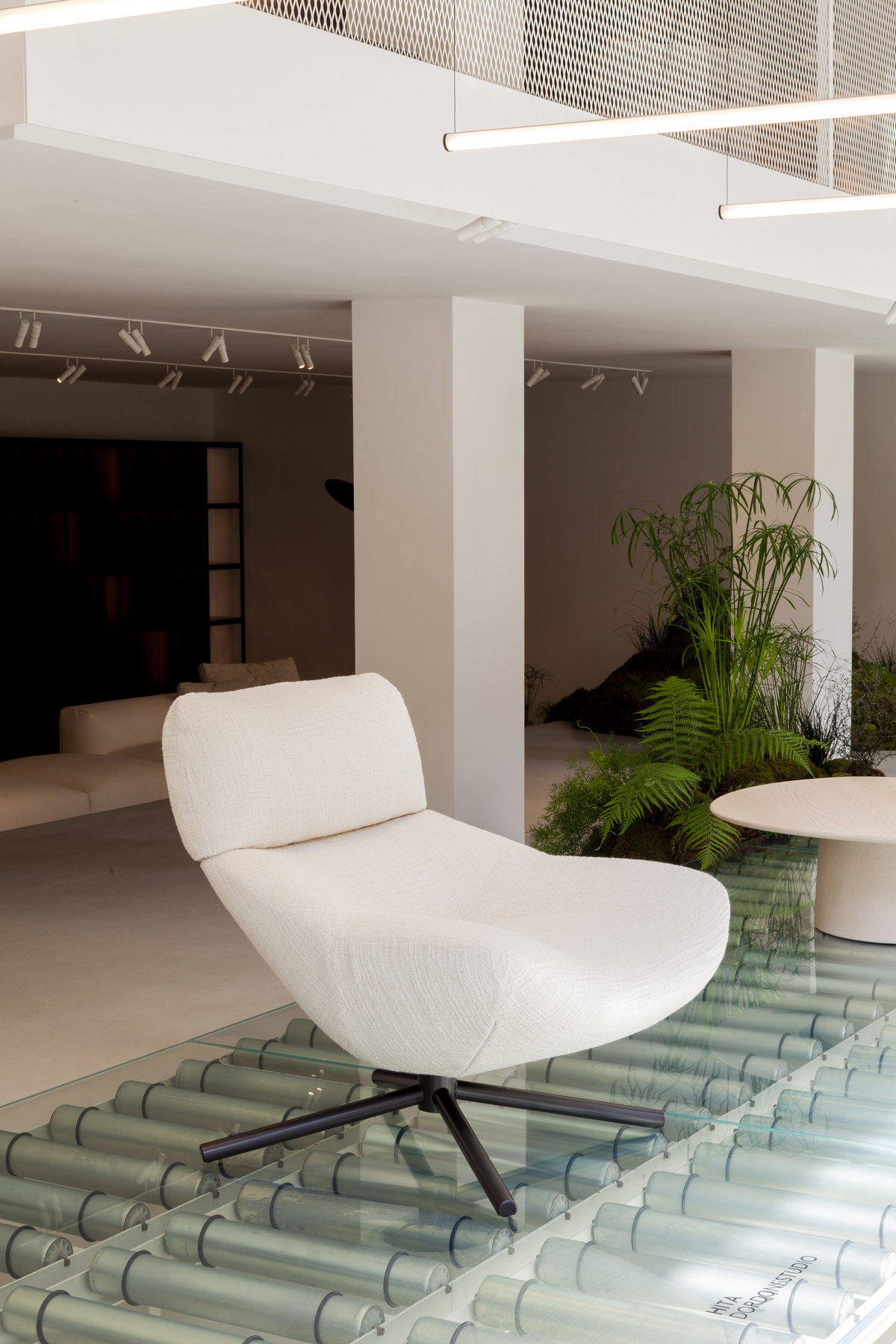
- The Hita lounge chair by Dordoni Studio, originally proposed as a three-seat sofa before being reworked into a cocoon silhouette on an asymmetrical, swiveling conical wooden base.
-
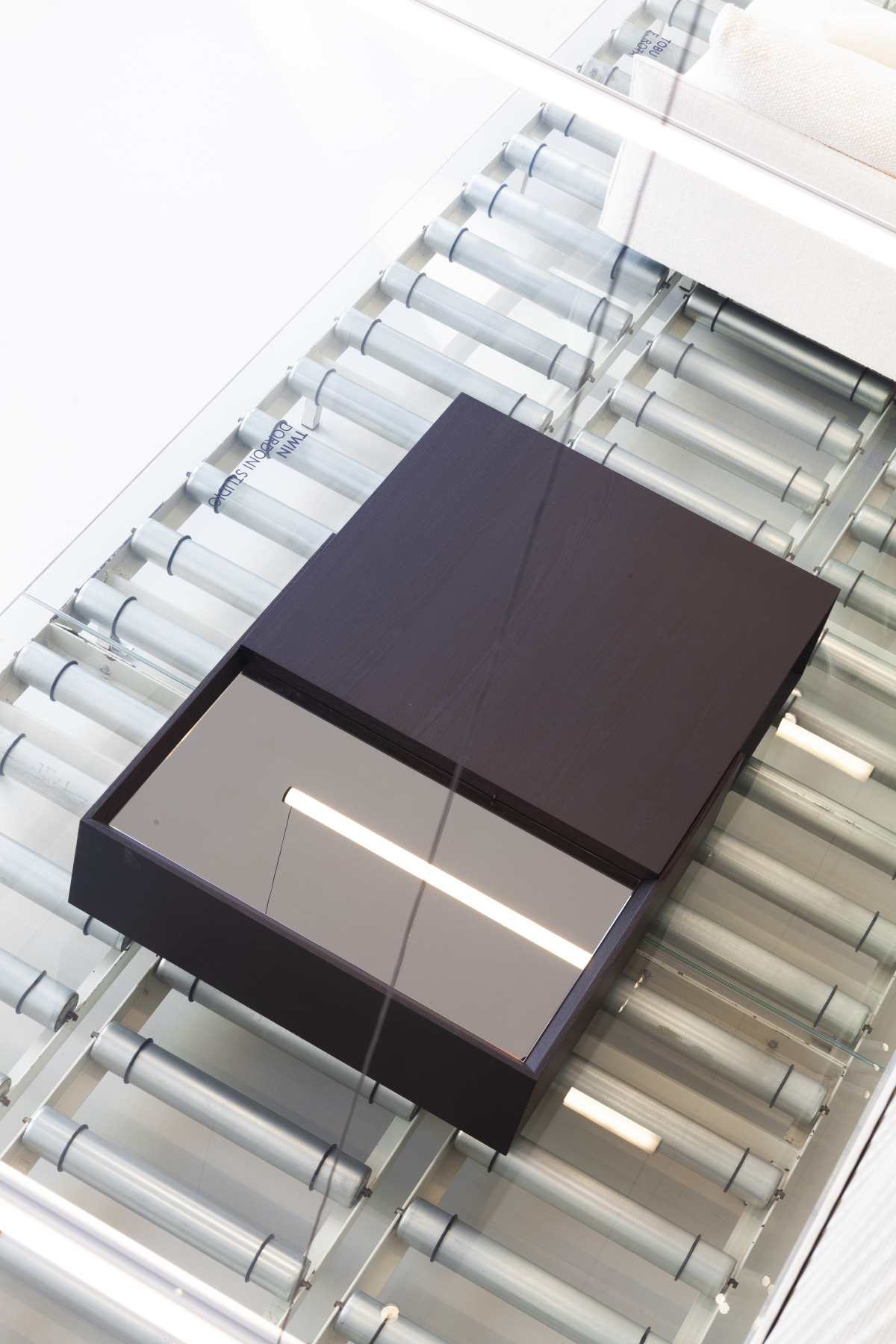
- The Twin low table by Dordoni Studio, an extension of the Twin sideboard that debuted with Porro last year. Photos courtesy of Porro
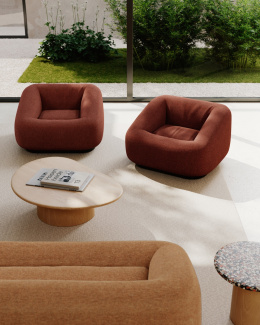
The most interesting corner belongs to Dordoni Studio. Rodolfo died in 2023, but the studio has kept going, because the team, Luca Zaniboni and Alessandro Acerbi, who co-founded the practice with him back in 2005, understood not just his voice well enough to carry it but the system and style in which he worked. Their debut last year as Dordoni Studio was the Twin sideboard. This year they have added a low table in bruno-stained ash with a travertine top, and the Hita lounge chair, a cocoon of taut fabric stretched over a rigid outer shell, a deep and forgiving seat cushion inside. The Hita was originally proposed as a three-seat sofa, but after several rounds between Dordoni Studio, Maria, and her father, Lorenzo, it became the restrained chair on the floor.
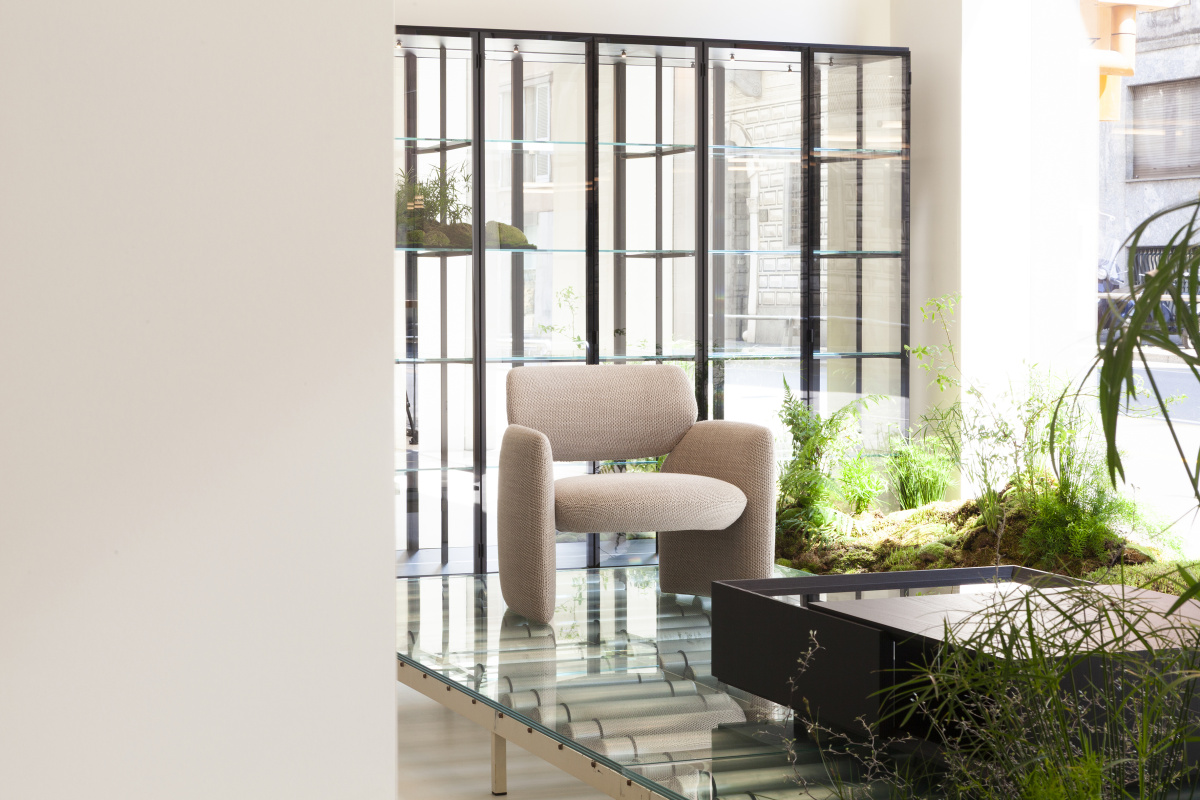
The Arnaldo armchair by Yabu Pushelberg, the Toronto and NYC-based studio’s first design for Porro, with a suspended seat set between the armrests and backrest. Photo courtesy of Porro
Yabu Pushelberg made their Porro debut this year with Arnaldo, an upholstered armchair built from four essential elements joined into a single compact composition, a possible play for the hospitality market, where George and Glenn have spent most of their careers. Maria is unapologetic about that side of the business. The contract division has grown. Wardrobes in residential developments, modular systems orchestrating retail interiors—she sees no contradiction between that and her argument about craft. If anything, it’s the proof.
“The price is high, but the value stays,” she says.
It’s the kind of line a furniture executive is supposed to say, except Maria means it in a way that cuts the other direction. She isn’t defending a luxury markup; she is saying that a dress you tailor yourself, a chair you argue over for a year, a bookcase folded from a single sheet of metal, are all the same thing. A bet that craft is worth paying for, and worth keeping. In a week when the rest of the city is selling product, Porro is still selling furniture.