Enrico Colzani is clipping a lav mic to his shirt amid the chaos of the Arper booth at Salone, and we’re already running late, the way every Salone meeting does. He doesn’t seem fazed. After almost 30 years at Knoll, including a stretch as president of KnollTextiles, the man has been to enough furniture fairs to know the schedule is a suggestion.
He has been the CEO of Americans for Arper for almost exactly a year. He started on the first day of Salone 2025. After the MillerKnoll acquisition, he says, there was a lot of change, and at some point it was his turn to change. He had known Arper since the very beginning of his professional life. His first job out of college was in Germany in the early ’90s with a furniture distributor that carried Arper. Even then, he remembers, the brand stood out for its attention to international markets. That, he says, is not always the case for Italian companies.
It’s the central idea I want to talk to him about. Arper is an Italian company. Family-owned, founded in 1989 in Treviso by Luigi Feltrin and his sons Mauro and Claudio, the latter still president. It’s about as Italian as Italian gets, but they don’t behave that way, especially in the United States.
Most Italian heritage brands lead with their Italian-ness. The first message is that they are Italian. Then comes the legacy, the archive, the great-grandmother stitching upholstery in some hill town. In Europe, this works. In the American market, it falls apart. Heritage brands, with their insane archives and decades of design legacy, end up competing on price with Restoration Hardware because the American buyer can’t read the difference. The translation gets lost on the way across the Atlantic.

Enrico Colzani, Arper’s CEO of the Americas. He spent almost 30 years at Knoll before joining last year, with a long stretch as president of KnollTextiles. Photo courtesy of Arper
Arper’s US business has been built to avoid this problem. The company opened a roughly 100,000-square-foot production facility in High Point, North Carolina in 2018. Italy ships shells, legs, and component parts to High Point, where everything is finally assembled. Textiles are bought from American mills, because Americans don’t share the European appetite for natural fibers, particularly wool. Customer service runs out of High Point. A dealer in Kansas City calls a number in North Carolina and gets an answer the same day instead of waiting until Italy wakes up.
Their sustainability story has been built for the same audience. While other Italian brands talk about longevity and craft, the things Italians and Europeans understand intuitively, Arper speaks the language of the American contract interiors community: recycled content, cradle-to-cradle, carbon, life cycle assessments. The company has had an in-house environmental department since 2005, and has been publishing sustainability reports since 2022. Catifa Carta, the 2024 evolution of its best-selling chair, uses a shell made from PaperShell, a Swedish material derived from wood industry waste that can be converted into biochar at end of life through pyrolysis. Arper claims it as the first carbon-negative product in the furniture sector. The new Aom sofa from Jean-Marie Massaud, launched at Salone 2026, eliminates polyurethane entirely. Two interlocking pieces. An expanded polypropylene frame and BREATHAIR cushioning, a recyclable polyester elastomer. Arper says the sofa hits roughly 80% recyclability at end of life.
It is, in other words, a very un-Italian Italian brand. And Enrico, who is himself from the Brianza furniture belt north of Milan, where he says everyone in his family is in the industry (“the family curse”), is the right person to translate it.
We talked about all of it.
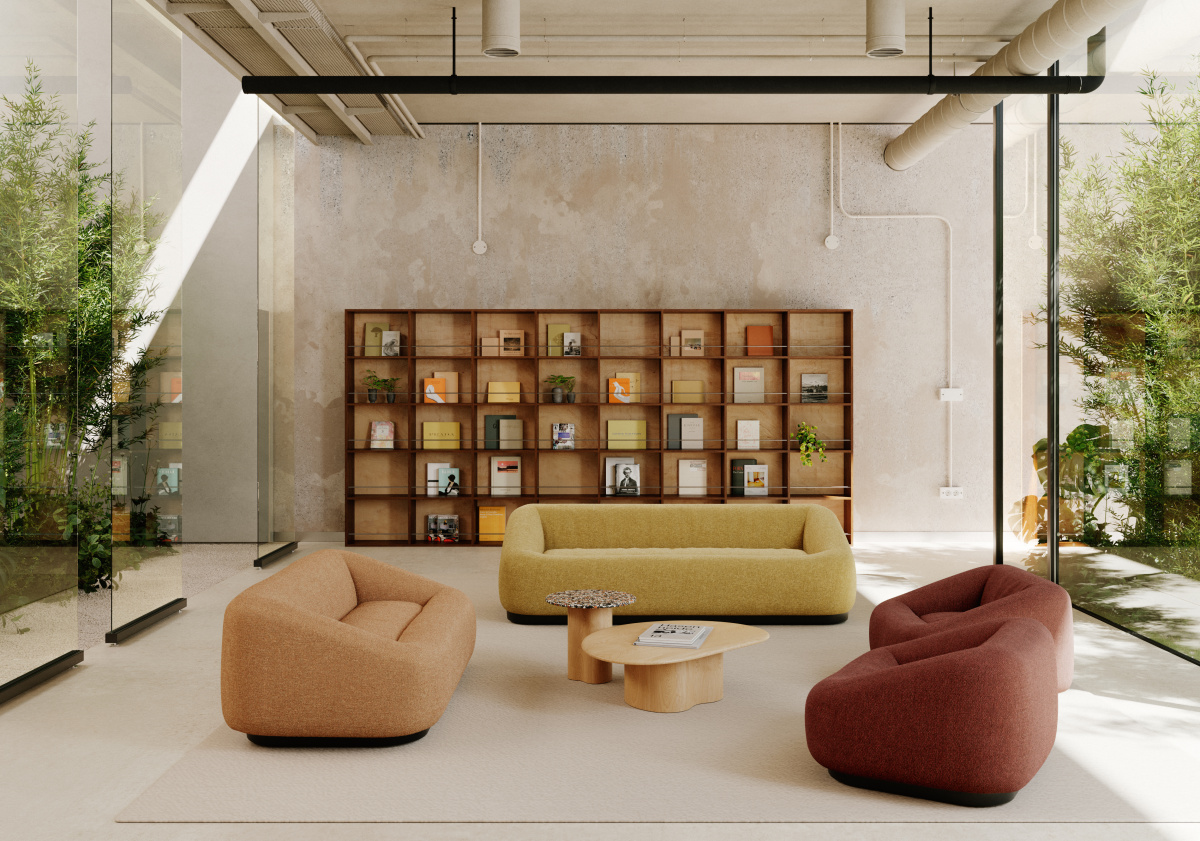
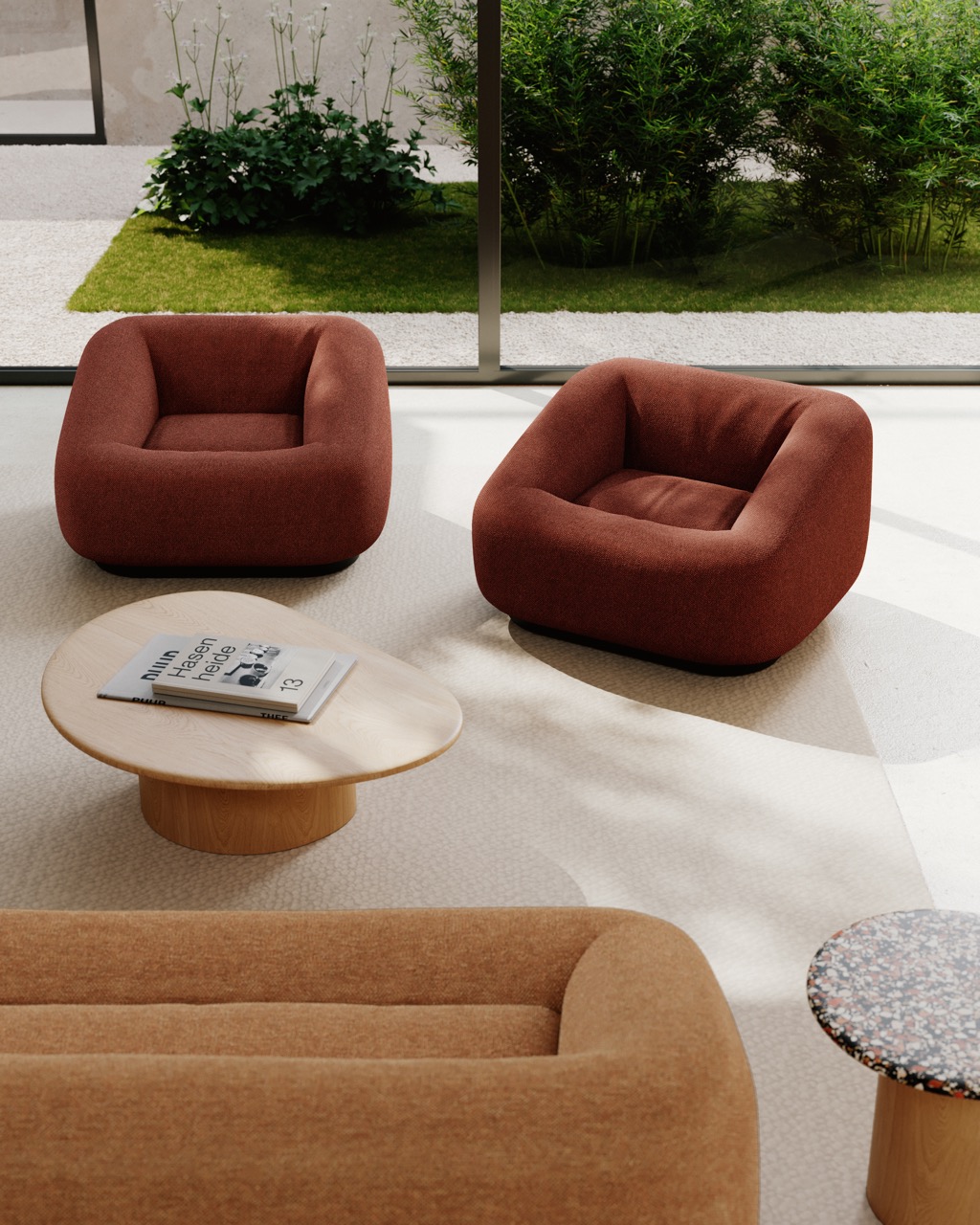
Aom in three configurations: a one-seater, two-seater, and three-seater. The lightweight expanded polypropylene frame and BREATHAIR cushioning let the pieces move easily between indoor and outdoor settings. Photo courtesy of Arper
Chris Force: The name “Arper” doesn’t scream Italian, which is where I want to start. With most Italian heritage brands, the first message is that they’re Italian. Then comes the legacy. Italians and Europeans understand that. The American market, in my experience, doesn’t. Why is Arper different in the US?
Enrico Colzani: It’s one of those things. In our industry, the structure of distribution is just as important as the manufacturer and the brand. The structure of distribution in the US is very different. Even in Europe, in the world of contract interiors, there aren’t as many specialized dealers. Most of them play a hybrid role. Residential and contract, sometimes going into the operational office stuff. So if your dealer carries a line that is more residential in nature, they can develop that appreciation, and then when it’s the right moment, sell it into a contract setting. In the US, those are two different worlds.
Walk me through how the operation works here. The US business doesn’t really run like a European brand.
There’s been a CEO of the US position for a long time now. There’s a marketing function here that complements what happens in Italy. There’s a sales team here. We have three showrooms: New York, LA, and Chicago. We have a manufacturing facility in North Carolina. The model that allows us to play is, instead of bringing finished products from the Italian factory, Italy is our component supplier. They send shells and legs and component parts, but they’re not assembled. We do all the final work in North America, which lets us reduce lead times compared to other European brands. We buy the textiles in the US, because there’s a lot of taste and material differences between textile choices in the US and in Europe. Europeans tend to favor natural fibers, they’re totally fine with wool. Americans really don’t like that. So we can have the relationship on that last layer of material directly with American suppliers, with American clients. We really behave like an American company while bringing the inspiration of Italian design and Arper’s point of view on design and sustainability. We have customer service in High Point. It was an investment the company made in a few markets, and the US is the largest. It really allows us to operate as an American company.
Sustainability is the place where this difference shows up most clearly. The Italian conversation is heritage and longevity. Arper’s is technical, almost academic. Recycled content, life cycle, end of life. That’s the American contract conversation.
The Arper approach is completely aligned with the requirements of the American contract interiors community. They totally understand it. They speak the same language, from recycled content to cradle, to carbon, all of that. Coming from a much larger company to one this size, the sophistication of the sustainability effort at Arper has nothing to envy from the large players. It’s something the company has developed over the years, and it’s really accelerated over the last 10.
What I think is unique about the work we do is, you often discover a new process or material in the course of making new products. What Arper does is then look back at the existing catalog and ask, is there room for this material in our existing products where we have volume? It’s a way to respect that the customer has invested in our product, so we can continue to invest in the product. When you go through our catalog and see RE or 02 in a name, that means at some point in that product’s life, there was a material innovation toward sustainability, and the company decided, okay, we’re going to take this high-volume piece, inject this innovation into it, make a new version. Dimensionally the same, functionally the same. The one difference is an improvement in the sustainability footprint. That’s really unique. Even the companies that do pay attention to sustainability tend to do it on a forward-looking basis only, because it’s easier. Going back, re-machining inventory, that’s complex.
-
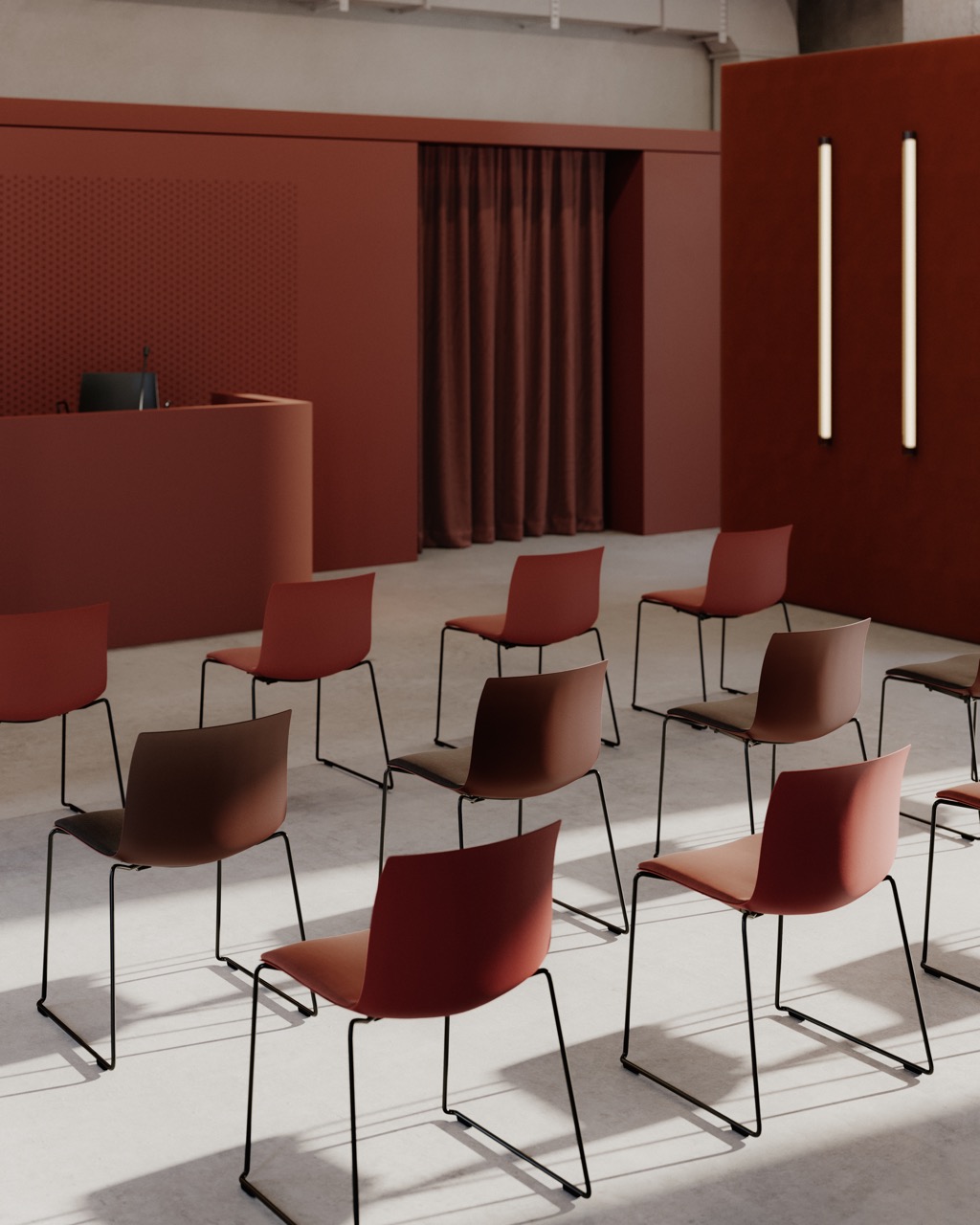
- Catifa (RE) 46, a 2026 update to the Lievore Altherr Molina chair Arper first launched in 2004. The new shell is made from 100 percent recycled plastic, blending post-consumer and post-industrial material, and comes in eight shades.
-
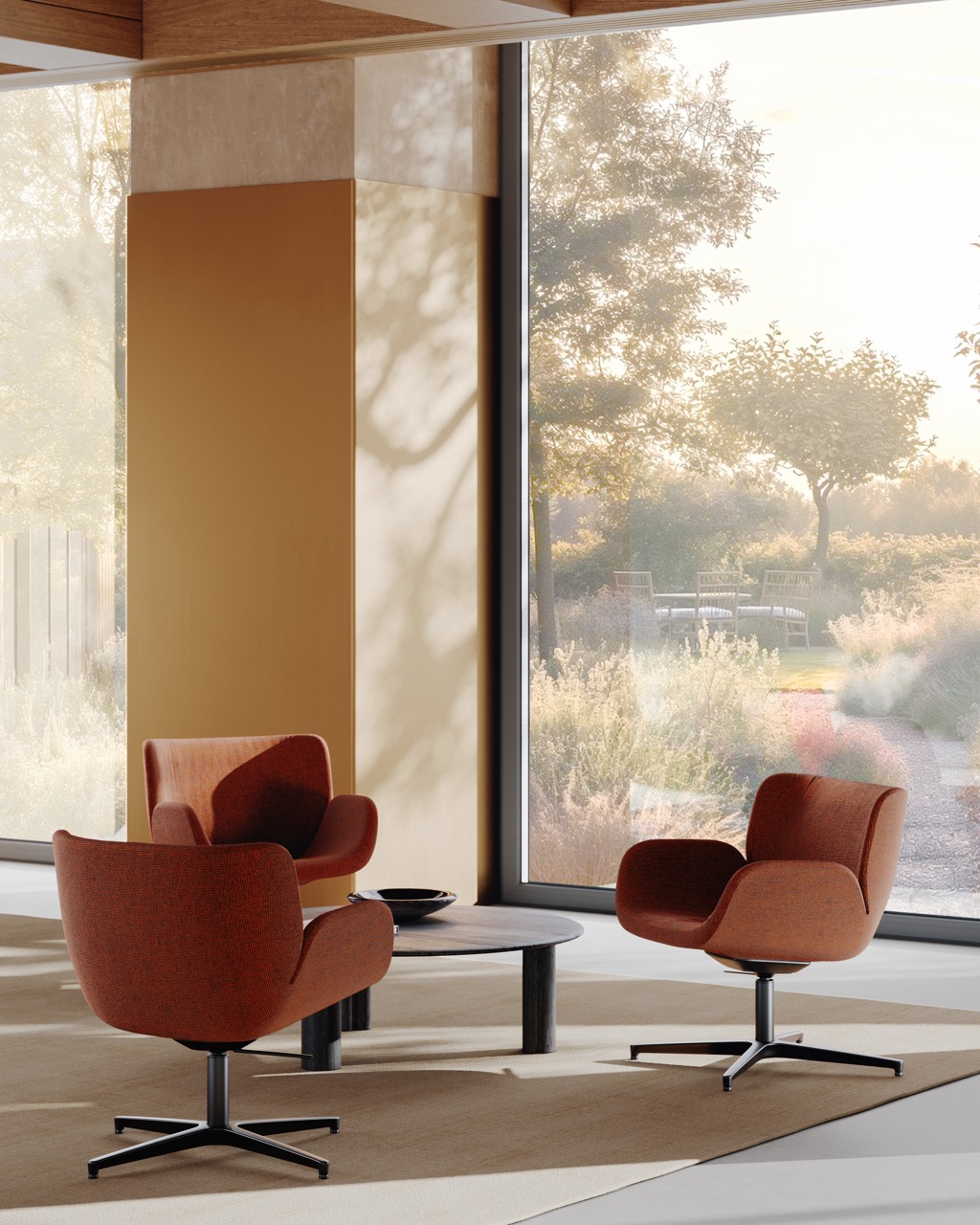
- Cari, a new lounge chair from Doshi Levien that launched at Salone 2026. The shell is made from recycled and recyclable polypropylene, and the upholstery is assembled without glue so the cover can be unzipped, removed, and replaced. Photos courtesy of Arper
How much of the sustainability push is being driven by the company’s own goals versus what customers and clients are actually asking for?
It’s a nice match of the two. The company has realized there’s a demand. Sustainability has become part of the performance profile of products. Nobody really makes a buying decision based on one criteria. They weigh three, four, five criteria. Does anybody buy something just because it’s recyclable? I think the answer is no. Design is still part of it. Price is still part of it. Performance is still part of it. But the aspects of sustainability have become part of the conversation every day.
The new Aom sofa from Jean-Marie Massaud seems to have developed its design and sustainability hand in hand, instead of one getting tagged onto the other.
Usually, if you’re lucky, there’s a design concept, or a styling concept, and then everything has to catch up to it. With this piece, the design and the sustainability thinking went hand in hand from the beginning to the finish line. There were very specific choices made on the design side that allowed the use of specific materials. We’re not forcing the materials into the styling aspects of the piece.
There’s this material called BREATHAIR, which is not a new material, but what’s new is the application in furniture. The company started working with it six years ago, originally with the idea of seat cushions. Can we get rid of foam basically? You take this thing, you press it, you shape it. And now in the sofa, it’s massive blocks of it. The ability to think about innovation that way, to take a material meant for a very specific application and imagine it can have a completely radically different application at a different scale, and figure out how to make it work.
What’s on your radar at Salone this year? When I’m walking these halls, I keep thinking the world doesn’t necessarily need more chairs. So what are brands adding? Is it valuable to the industry and actually worthwhile?
It’s oversimplifying here, but it’s really about supply and demand. I can tell you, more than half the people walking in here today are going to walk up to someone and say, “show me what’s new.” So that demand, that question, still comes out. But I do think it’s going to evolve.