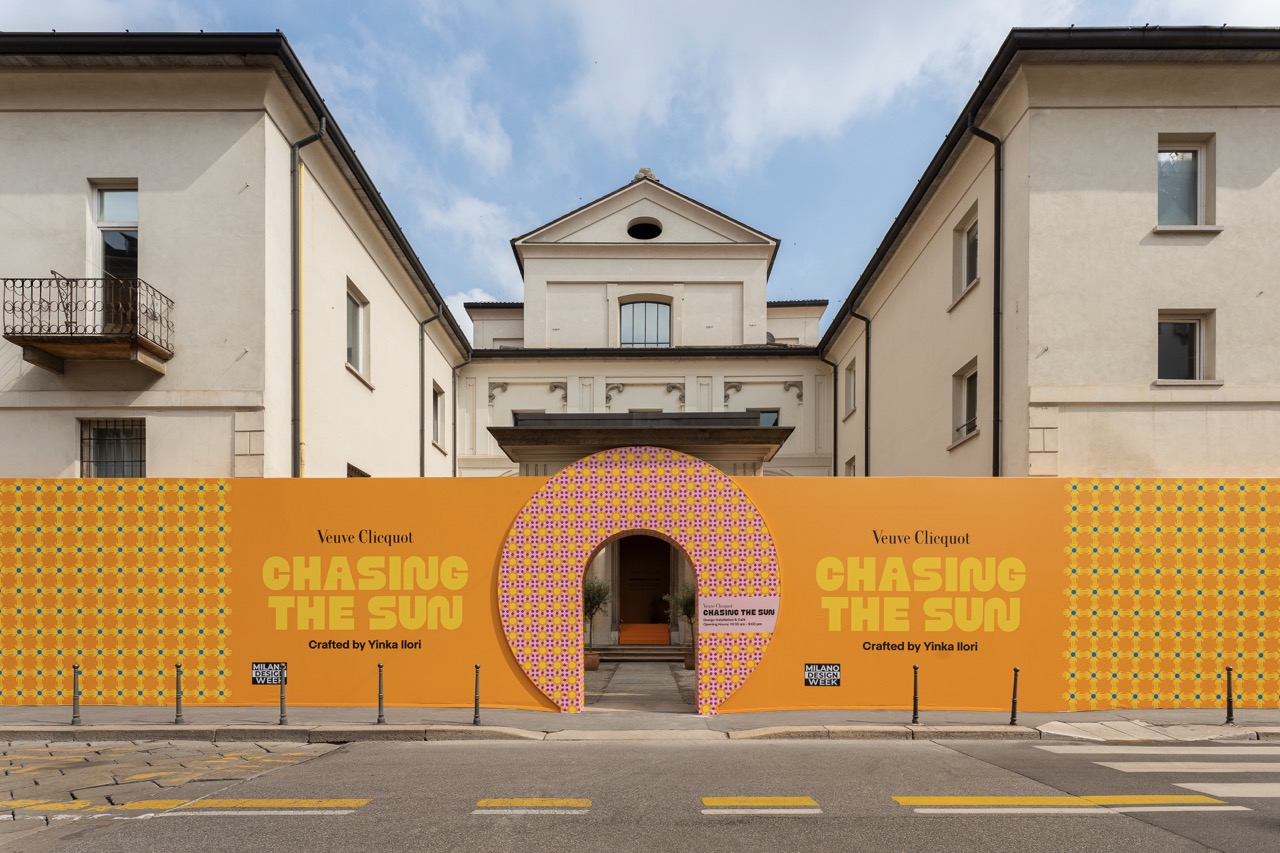
The room I’m standing in used to be a baroque church. Now it is bathed in a single shade of orange, the shade Veuve Clicquot has been calling Clicquot Yellow on its labels since 1877, and which Yinka Ilori has decided is, in fact, the color of the sun. Above me, a globe glowing that same warm shade hangs from the ceiling, big enough that nobody can pretend not to notice it. Below it, a half-circle of monochrome seating curves around the floor. People are leaning back. People are looking up. No one is looking at their phones.
This is Chasing the Sun, Yinka’s collaboration with the 254-year-old brand, installed at the Mediateca Santa Teresa, built in the 17th century. It is the kind of thing that, on paper, should be insufferable. Champagne house, star designer, immersive installation, limited-edition gift collection in the boutique just past the seating area, café with a sun-themed all-day menu by Andrea Mattasoglio paired with Yellow Label and Rosé. You have read this press release before. You have skipped this event before.
But here, it works. Yinka is sitting on a low bench in the café’s courtyard, talking quietly about chasing the sun as a kid. The story has the pacing of something he has told himself a hundred times and never gotten tired of. The light, the running, the looking up, the parable his Nigerian parents told him about reaping what you sow. His line for the whole thing: “In this world, you are the sun that you chase.”
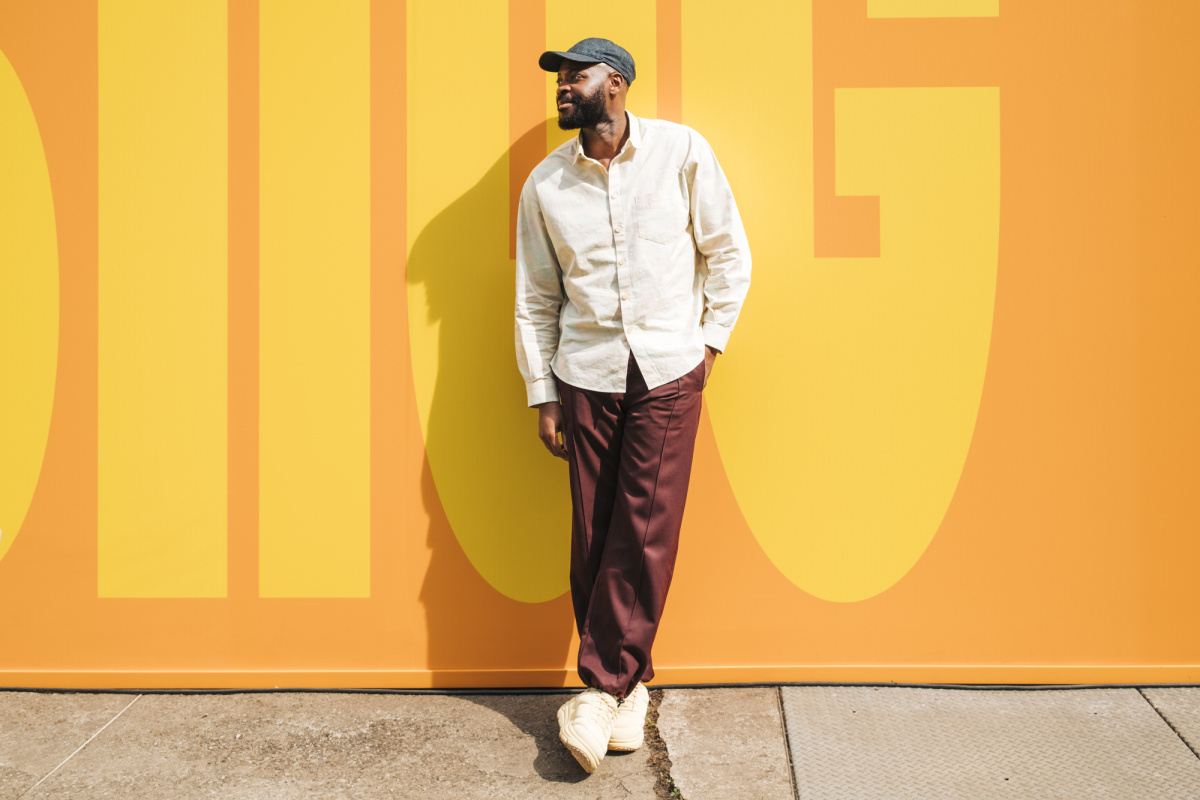
Yinka Ilori in the café at Mediateca Santa Teresa. “In this world, you are the sun that you chase.” Photo by Chris Force
Yinka’s nickname in the press is “the architect of joy,” which is a phrase that should age the way most marketing nicknames age. The thing is, in this room, surrounded by objects he has clearly thought about for a long time, the nickname is just accurate. “I feel like I’m creating my best work right now,” he tells me. “Because I’m really creating space for different mediums. I’m giving things time to breathe.”
You can see the breathing. Around the central dome, a series of orange columns stand at attention, each topped with a small light cradled in two open hands. The hands recur throughout: on a bottle stopper that holds a tiny sun in its palms, on the curved Sun Holder champagne bucket whose form Yinka pulled from the calabash, the West African gourd central to his heritage. The Clicquot Arrow gift boxes, the maison’s signature road-sign-shaped packaging that prints the distance from anywhere to Reims, get three new patterns. There are Sun Totems, portable drinking vessels in 3D-knitted recycled material that look more like sculpture than drinkware. Each piece carries the same visual language. Each piece carries an actual story, not just a logo.
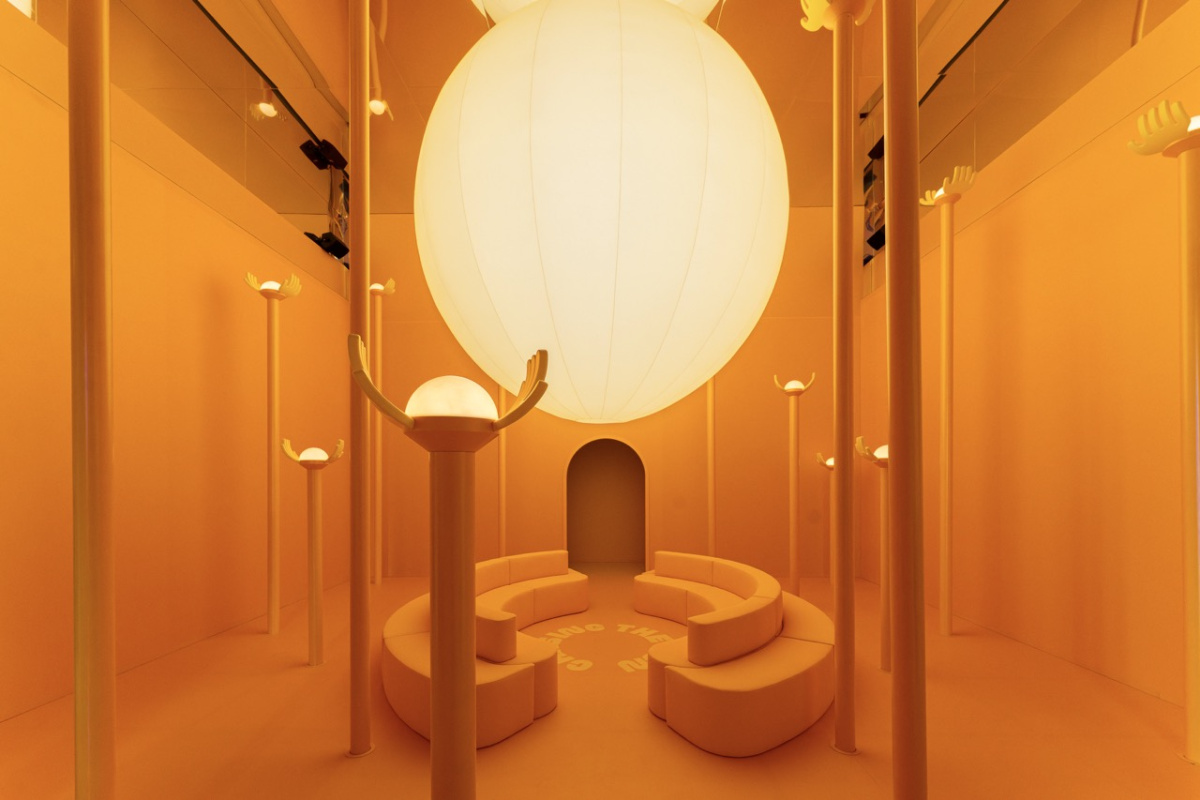
The central dome of Chasing the Sun, the visual anchor of an installation built inside a deconsecrated 17th-century church. Photo courtesy Veuve Clicquot
Yinka knows the version of this collaboration that doesn’t carry the story. “You see a lot of champagne houses and brands. They do these collaborations every year with people like Murakami,” he says. “Sometimes it can feel a bit empty. You’re not connecting to this, it’s just luxury.” He’s not throwing shade so much as being honest about a category of work he has watched devour artists he respects. “I respect those guys, but they just take their language and put it onto a bottle. Again, it works. But for me, in every project, I want to tell a new story.”
The story he wanted to tell here is the calabash, which is what got him in. “If you look at the calabash, they were able to let me bring in my heritage,” he says. That’s what flipped the deal. Veuve didn’t ask him to slap his pattern on a tote and call it art. They built a champagne bucket whose silhouette quotes a gourd from Lagos.
-
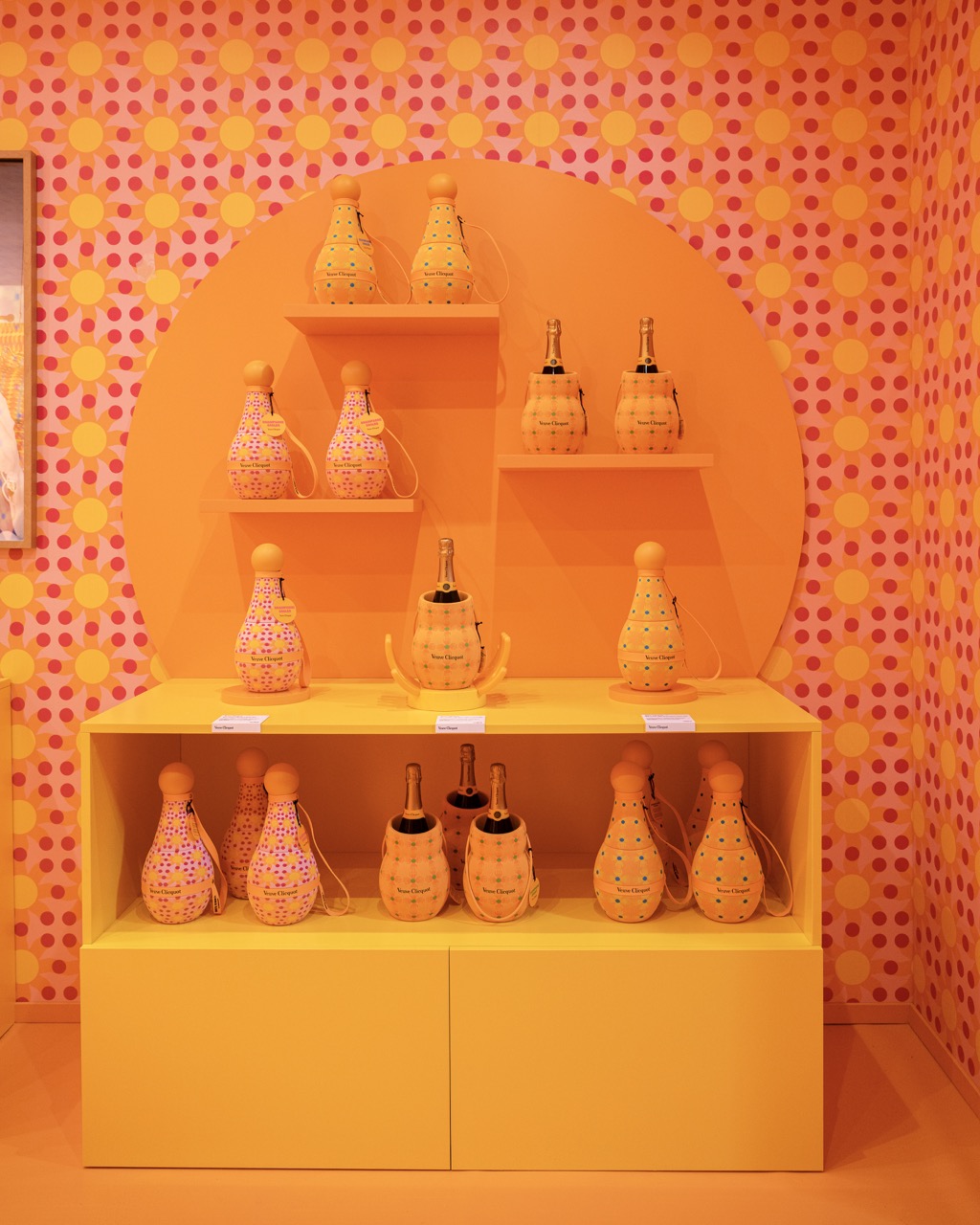
- The Sun Holder, Yinka Ilori’s reinterpretation of the champagne bucket, its silhouette pulled directly from the West African calabash. Photos courtesy Veuve Clicquot
-
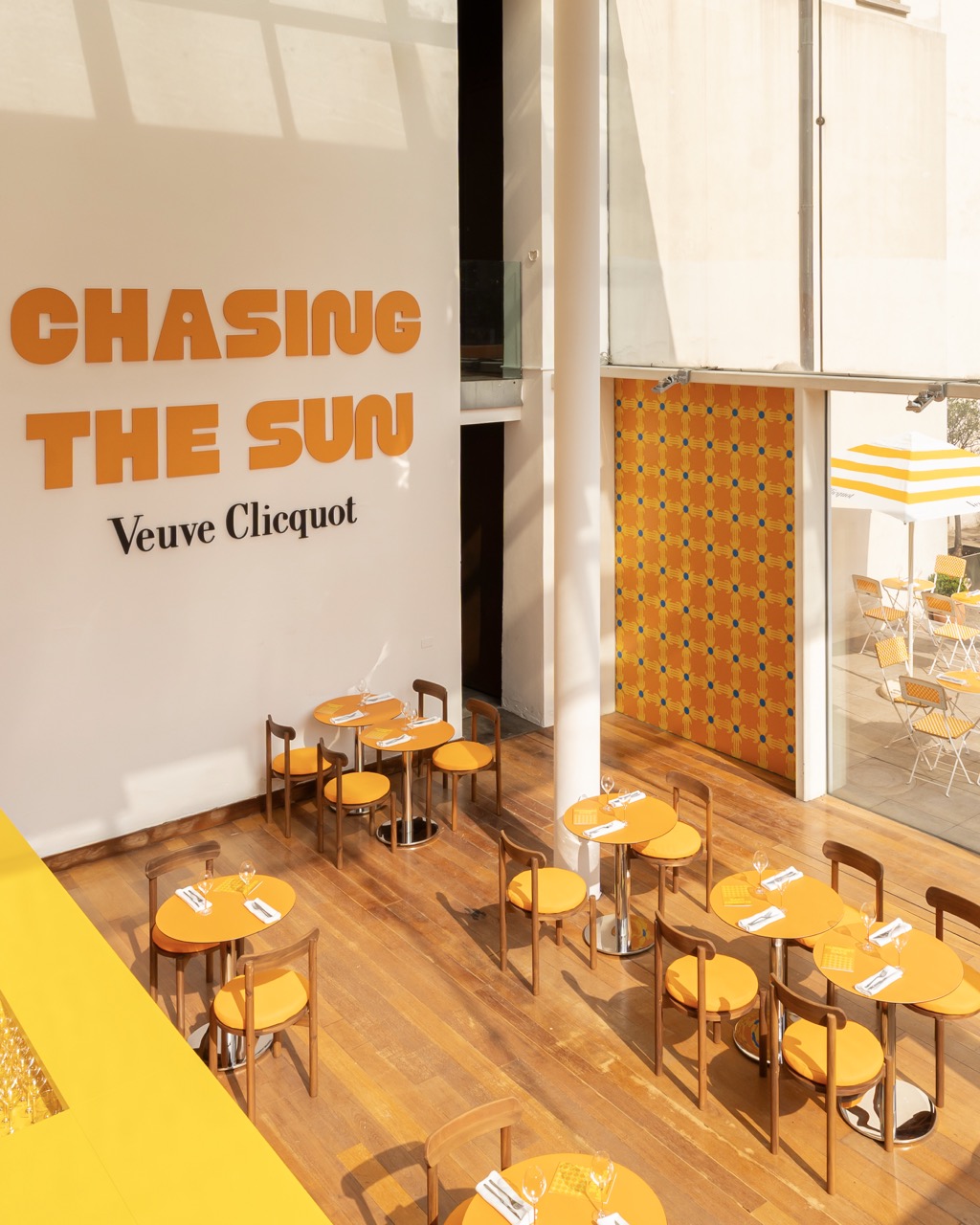
- The Clicquot Café, where Andrea Mattasoglio’s sun-themed menu extends the installation’s palette onto the plate.
Sit with him for a minute and you understand why he is still saying yes to projects like this and turning down most of the others. He has spent the last few years actively refusing to scale his studio. He saw a version of himself running a much bigger operation and walked away from it. He was named a Royal Designer for Industry last year, and launched the Yinka Ilori Foundation in the same stretch. “I saw the danger of that,” he says. “Where I’d become just a kind of cash cow and a machine. The reason why I do it is because I get joy from it. Once that joy is killed off, what’s the point?”
You exit Chasing the Sun through the boutique, which is the laziest format in modern brand exhibitions and is also, here, somehow not lazy. Banksy made a whole movie about how cynical this layout can be. Yinka has just filled it with beautiful objects.
It is the rare commercial activation at Salone where the commerce feels like the byproduct, not the point. That is harder to do than it looks. Most champagne houses don’t bother trying.