Wieki Somers graduated from Design Academy Eindhoven in 2000 and founded Studio Wieki Somers in Rotterdam three years later alongside Dylan van den Berg, her long-term collaborator and partner. For more than two decades the studio has found the extraordinary in the everyday, working across objects, installations, and interiors with a restless curiosity about materials, ritual, and the poetry of ordinary life. Their work is held in the collections of MoMA, the Centre Pompidou, the V&A, and the Stedelijk Museum in Amsterdam, and has been the subject of solo exhibitions at Galerie Kreo in Paris and a retrospective at Museum Boijmans Van Beuningen and mudac in Lausanne. Wieki is currently a professor of product design at the Hochschule für Gestaltung Karlsruhe.
Wang & Söderström is a Copenhagen-based artist and design duo: Anny Wang, who studied spatial and furniture design at HDK-Valand in Gothenburg, and Tim Söderström, who studied architecture at the Royal Danish Academy of Fine Arts. Founded in 2016, their practice moves between 3D animation, sculpture, and large-scale installation, and asks what the digital world would look like if it were treated with the same care as physical making. They have shown work at the Design Museum London, Ars Electronica, the Cooper Hewitt Smithsonian, ArkDes, and MMCA Seoul, and their 2024 solo exhibition “Techno Mythologies” received the Annual Exhibition Award from the Danish Arts Foundation.
In this conversation, Wieki sits down with Anny and Tim to talk about what it means to bring a human sensibility to the digital, why the future doesn’t have to look like a spaceship, and what a colony of ants can teach us about the internet.
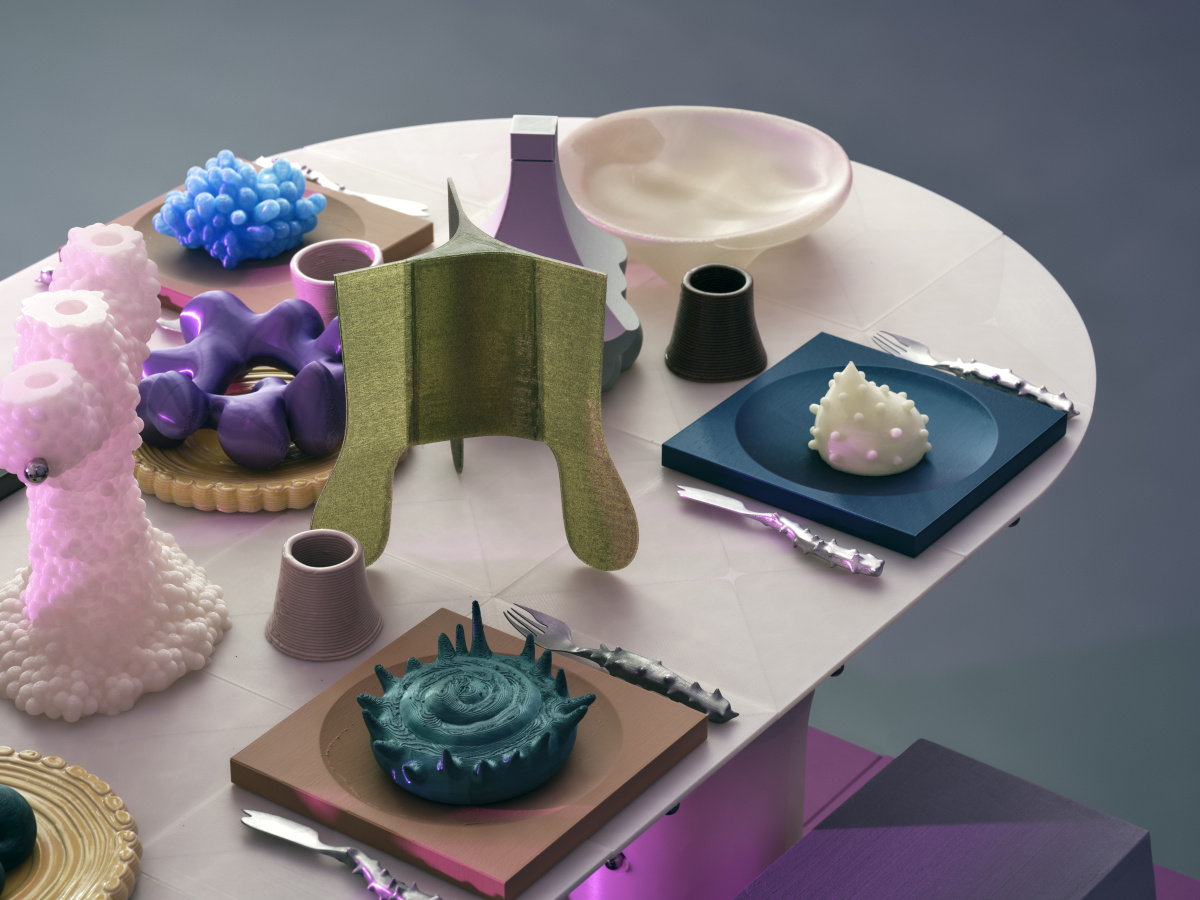
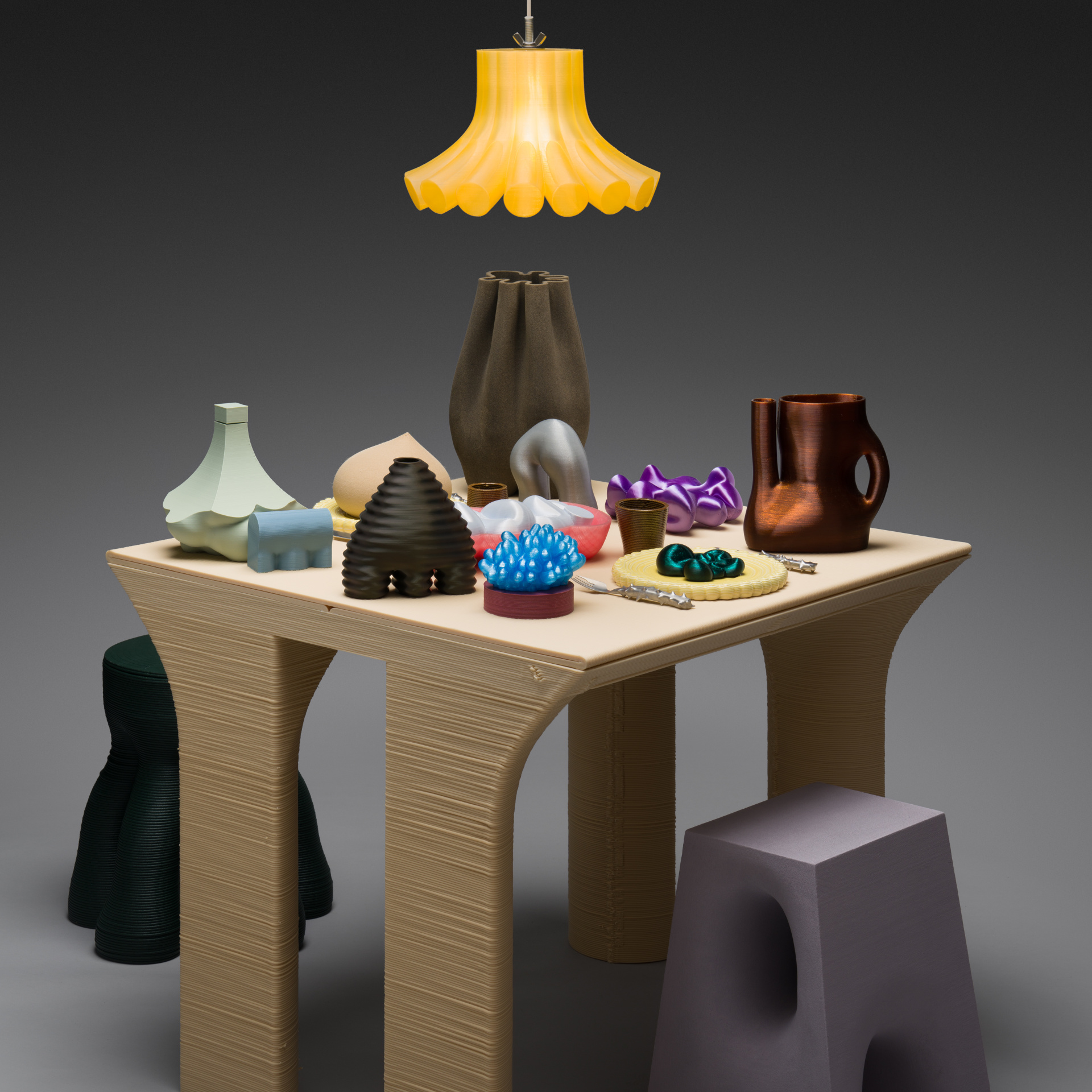
“The Liminal Eatery,” by Wang & Söderström explores the digital shift of our sensory encounters as activities like dining, writing, and socializing evolve into online routines. Every element from table to cutlery, seating to lamp, is made via 3D printing techniques. Photo by Carl Ander
Wieki Somers: What fascinates me about your work is that so much digital art feels disembodied, yet your installations feel tactile and alive, even at a huge scale and in very different forms. In my own work I’m interested in using technology the way crafts are used: technology that innovates but echoes traditional craft to get that same sensibility. I call it “digital craft,” though it’s a very different approach from yours.
I don’t see the digital and physical as two entirely separate worlds either, and I’m very curious how you balance the material and the immaterial in your installations. How do you give digital materials that sense of life and presence? How do you make that digital world feel more human? That’s my main interest, and the beauty of your work.
Anny Wang: We also see the digital not as a replacement for the physical, but as an extension of it. If we could put the same care into the digital world that we’ve long brought to physical making, perhaps we can introduce more of that care, that intent, that considered thinking into the digital space as well.
Treating analog craft and digital craft equally might bring new hybrids and new ways of thinking about how we approach the digital as something part of our sensory world, part of our bodies, and part of nature.
It almost doesn’t make sense anymore to talk about digital technology as something separate from nature, because technology has become so enmeshed and interconnected with everything we do, and with nature itself. It relies on water, energy, physical cables, and data centers; the so-called “immaterial” technology is, in real life, very physical.
The more we can infuse these things together, the more we can start treating technology as what it actually is: something that is part of us.
Tim Söderström: I think something else that drove us toward this territory was a kind of revolt against what “digital design” had come to mean when we were students, around 2010. When you’re in school what you tend to revolt against is the last big thing. At the time there was a very algorithmic, mathematically precise, structurally rigid kind of digital design. That was what defined the field, or at least it felt that way.
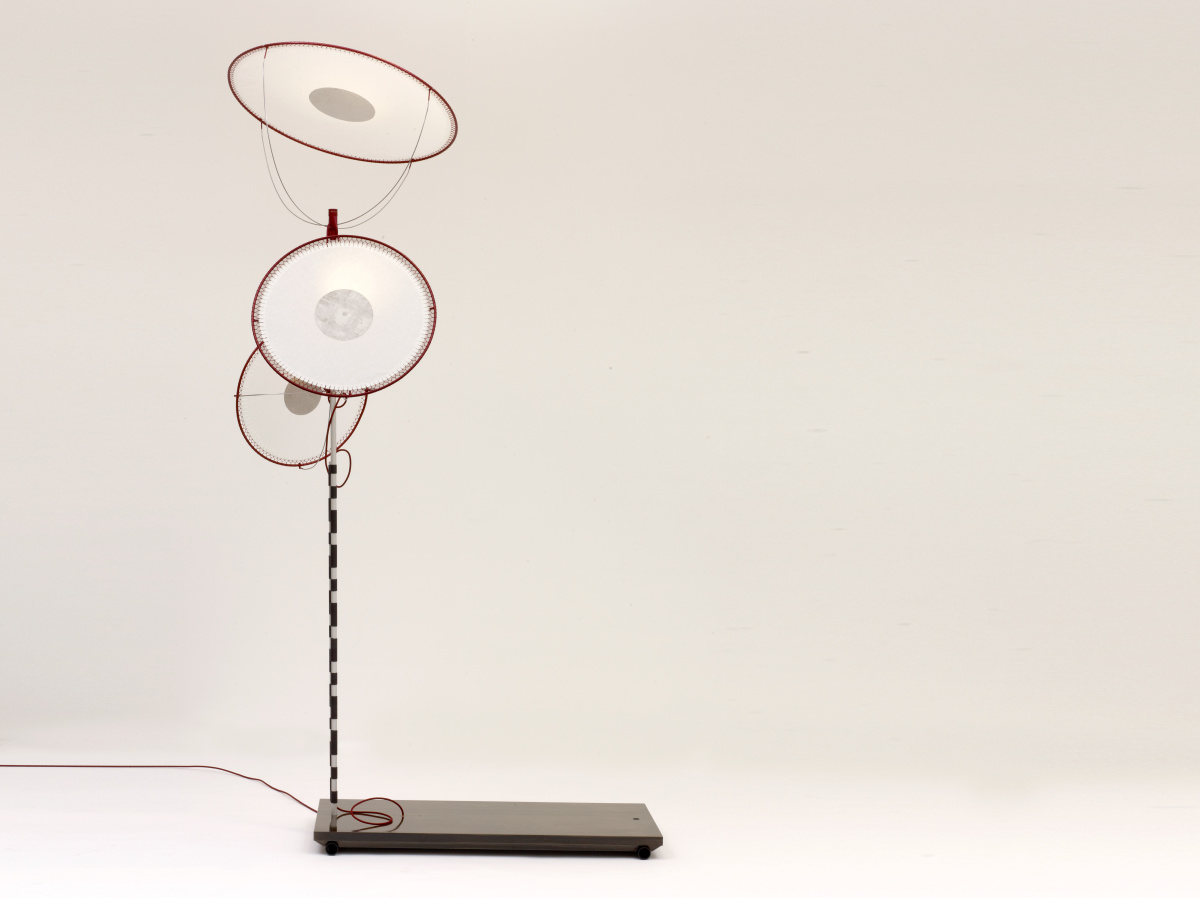
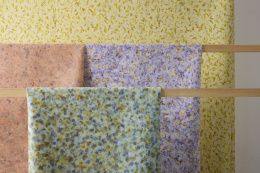
Rei, a “shields lamp,” features three ring shaped “shields” made of Ayagami Kozo paper gilded with white gold, and three LED spotlights. Photo courtesy of Wieki Somers
Anny: 3D printing was relatively new for students to use, and the language around it was all about efficiency: rapid prototyping, geometric structure. Nothing soft or experimental.
Wieki: I graduated around 2000 when I was 22 years old, and it was right at the beginning of the internet and the digital world. My whole education contained almost nothing about digital tools—no 3D printing, no AI obviously, not even mobile phones really. We went to the copy shop and made everything by hand. I’m very happy I had that education, but sometimes it’s hard to move into a new world and adapt to new rules.
Tim: But I think the toolbox you arrive with, the skills you already have, combined with the courage to try new techniques is going to create something new rather than something produced by someone who only knows those new tools.
I think that’s something we can see in your work. You dare to test new techniques and materials. Everything is so new and it gets newer every week. I think you should just jump into it. If you know something too well, that can actually be a limitation. It’s a good thing to use new technology the “wrong” way, or not use it as it’s expected to be used. That can lead you somewhere new.
Wieki: I love that contrast of it—the making by hand that teaches a sensibility. That sensibility is what we don’t often see in digital work but do see in yours. That tactile, lively quality. That’s very special.
Tim: We see so many inspiring young designers trying all kinds of things with new tools, and it’s wonderful. But at the same time there’s this retro-futurist visual language that still seems to define what “the digital future” is supposed to look like. Something out of 2001: A Space Odyssey, or some idea of the future that was decided in the 1960s. It makes such a strong impact, and we really need to get out of that groove because the possibilities are so much wider. The digital could look so different from that.
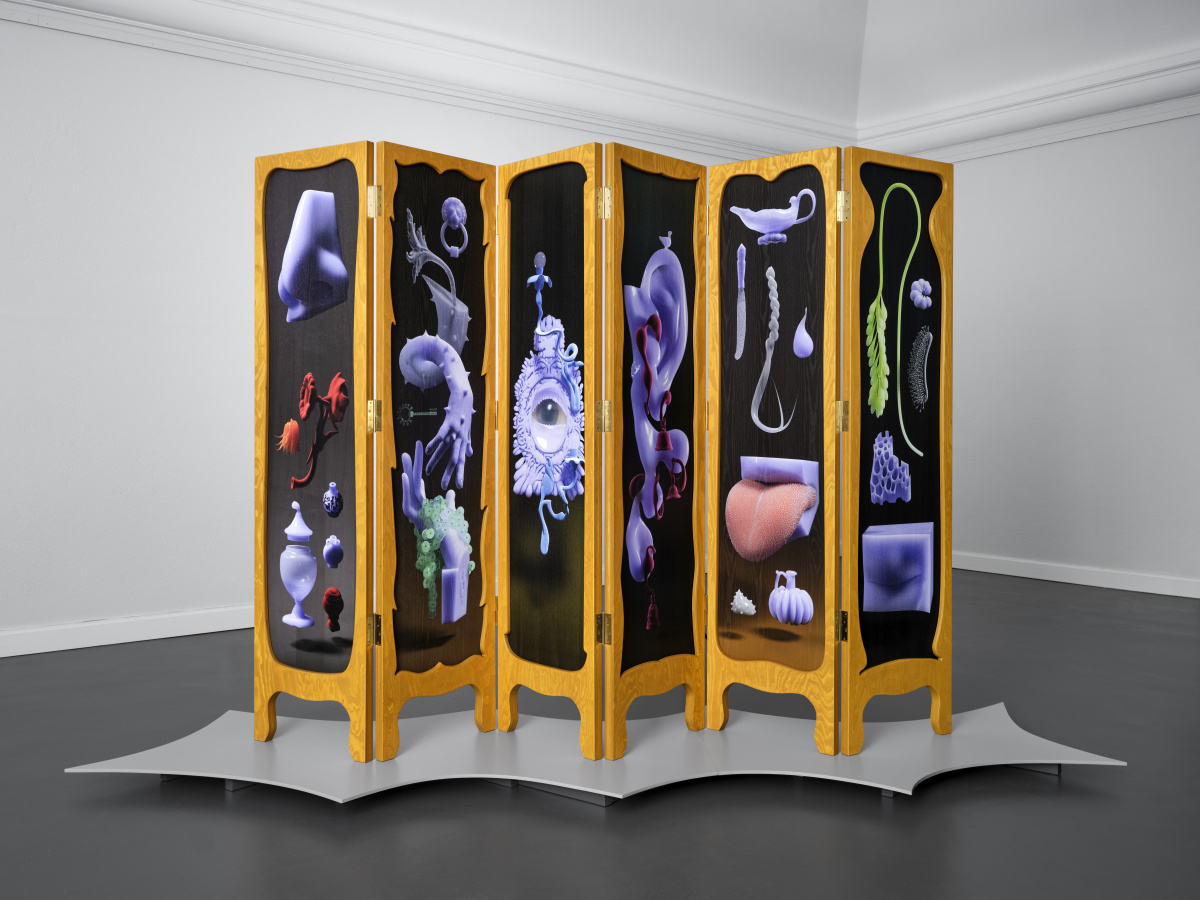
“5+sinnen,” 2025, by Wang & Söderström. Photo by Carl Ander
Maybe one of our core missions is to help keep that portal of imagination open: to show that it doesn’t need to look like Apple designed it even if it’s high-tech. Because it’s not as if these things have been tried so many times. There are so many small parts within them, so many possibilities, and it’s a problem that only a very few big companies are putting those parts together and deciding what the result looks like.
These digital layers of our lives have so much potential, and it’s important that we imagine other ways they could be part of our lives.
Wieki: Questioning reality is always the starting point in my practice. We always absorb daily situations and customs, look at how people relate to things, and what kinds of associations objects carry. And then we let our imagination run free.
We make the ordinary extraordinary in a subtle way. That’s actually the title of one of our books, Out of the Ordinary, and it’s based on that idea, but it’s still very much our method today.
You can also ask yourself: “what is ordinary nowadays?” In a world of constantly changing rules where things have never felt so fragile, that question is more essential than ever. Being aware of the narratives behind objects can really change how you experience your surroundings.
Those little twists, the playful observations that make you look at something differently than you’d expect, a kind of poetry in the everyday. That’s where the work begins.
Increasingly our focus is not so much on digital materials, but on what I would call “socio-material design,” or how materials and objects shape behavior and our environment. I approach sustainability less as a purely technical issue and more as a cultural and tactile question: how we value what things are made of, and how design can shift that perspective.
“I’m interested in using technology the way crafts are used: technology that innovates but echoes traditional craft to get that same sensibility.” -Wieki Somers
In projects like One Square Meter Berber, which looks at fair pay and recognition for female Berber weavers in Morocco, or the Japanese tea sets for Arita 2016, I explore design that carries both social and material meaning. In collaborations with companies like Moroso or an Italian glass recycling company, I looked for more responsible ways of working with materials and production cycles.
For me, design is a way of asking questions. Through materials and objects, you can uncover stories about use, care, and value.
Anny: We try to use playfulness to lower the threshold or to make it easier to connect with digital technology. Or with everyday things, to approach big topics and serious questions with a bit of humor, and to open that childlike playfulness in the right hemisphere of the brain that we rarely use today.
We use the left brain a lot for problem-solving. The right brain is where imagination and fantasy live. The more we can activate that, the more we open new worlds of possibility.
Tim: We’ve been saying recently that we want some of our works to function as portals of imagination. Because as you say, this is a time of uncertainty, and so much of the technology that shapes our lives feels unapproachable. It feels like everything is decided on some server somewhere and you don’t really have any power over it.
Wieki: What do you think about open source, and about ownership of your designs and your work?
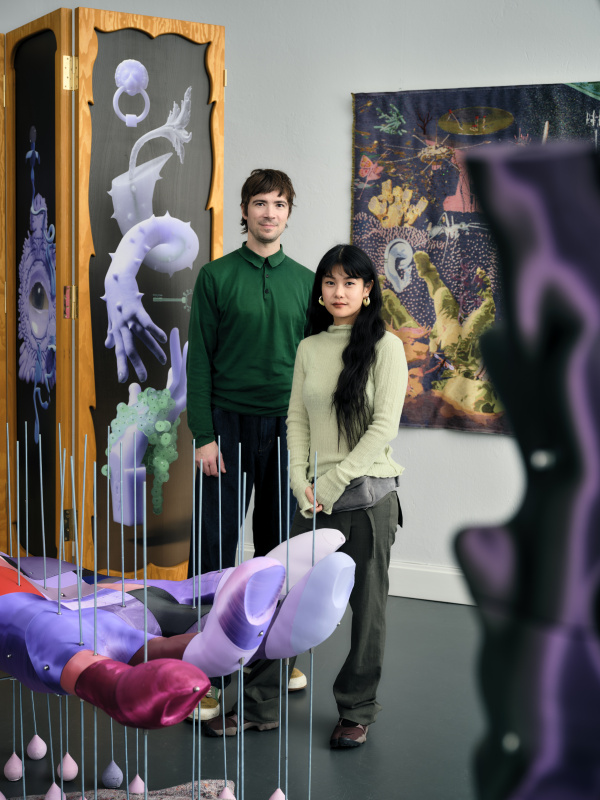
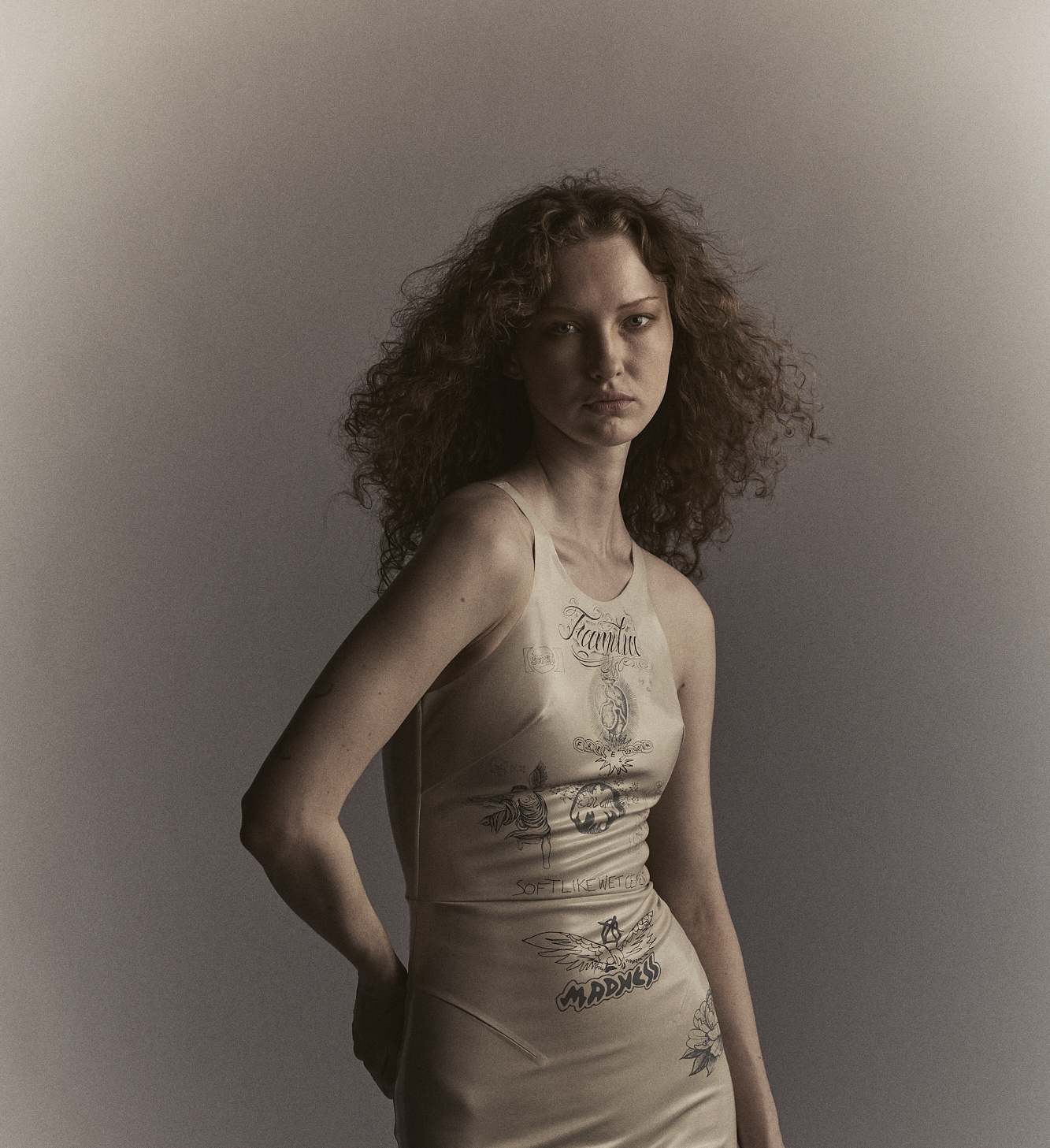
Photo and portrait by Carl Ander
Anny: Open source has shaped us a lot. We use 3D software as our fundamental tool today, and we came to it during university and design school. But we really learned it ourselves during weekends and nights through play, YouTube tutorials, and the generosity of online communities. We could probably do more to contribute back, and we hope that teaching is part of that.
One thing we remember very vividly from being students is the feeling of having a place in the workshop: not just access to the tools, but the sense that you’re allowed to use them and that you belong there, even if you’re not an expert. In whatever creative field you’re in, it’s rare to truly feel that permission. And that’s part of what we try to give students when we teach.
Wieki: But you two came from quite different educational backgrounds—architecture and spatial design. How do those different backgrounds create tension or play off of each other in your work?
Anny: Honestly after 10 years of working together, we’ve become one species. We think a lot alike and agree a great deal. At this point it’s hard to say how we shaped each other’s taste because it’s been so gradual.
Tim: Even though we worked at different scales, both of us were ultimately working in relation to the human body. Both of us were already interested in the digital too. And we were both, in our own ways, revolting a little against what digital design was supposed to be at the time.
Anny: We found common ground very easily in working with material, scale, light, and space, because those 3D tools are built on physical parameters you already understand from your training. And then this digital layer appeared where all physical rules, material costs, and hierarchies seemed to vanish. You could just play. There were no constraints of that kind, and we got a little mesmerized by that.
“One of our core missions is to help keep the portal of imagination open: to show that it doesn’t need to look like Apple designed it even if it’s high-tech.” -Tim Söderström
Becoming a duo as an artistic practice and not just as designers also happened gradually. We had always been interested in the digital, but perhaps more as consumers or users responding to what companies gave us to work with. Becoming more explorative, daring to ask bigger questions, and using design as a mirror of society: that happened as the digital became more and more enmeshed in daily life.
Wieki: And your skillsets have grown closer and closer together because of that toolbox. It’s so nice to be a duo for that reason. To have someone who challenges you, who you have to argue your ideas to.
I should mention my own collaborator, Dylan, who is a somewhat mysterious but very present force behind our studio. He’s deeply involved in the research and design process; we met at the Design Academy a long time ago, and our collaboration is a continuous dialogue just as yours seems to be.
He’s more the engineer and I’m more the dreamer; he focuses on the details and I bring them together into the bigger picture. He prefers to work behind the scenes but he’s very much there.
Tim: People always ask us “who does what,” and there are some concrete answers, but what we always come back to is that it’s more like a single thought passing through two brains.
Not that we always think the same; the disagreeing is actually the motor. It makes you more critical and more aware.
Anny: You have to learn to argue your ideas, and together you arrive somewhere better.
Wieki: I’ve always believed that kind of critical dialogue makes the work stronger.
Anny: It’s not the easy path, but it’s one more filter before you show your work to the world.
Tim: Over the years you’ve worked with so many different materials and techniques, combining them in interesting ways with a great sense of detail. How do you navigate not being a master of one single thing or not having one fixed practice or style?
Wieki: It’s definitely not the easiest way to work. It means constantly trying to reinvent things. But it’s in our nature; we’re driven by curiosity and by research. I’ve always loved the word serendipity: you start without knowing where it will take you, and along the way you come across something surprising that you weren’t looking for. That’s the true meaning of the word. We don’t stick to one material or a fixed style, though there are recurring themes and topics in our work.
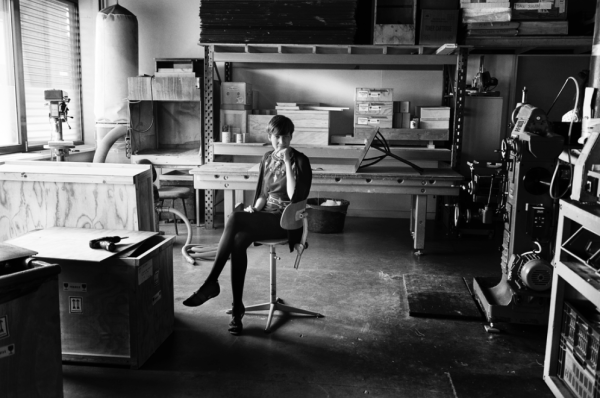
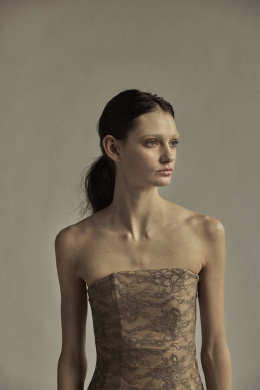
Portrait by Anne Timmer
Every brief or question you have gives a different answer, and that’s also what makes it exciting. Not knowing also keeps things open. It lets you break away from established rules.
Anny: If you come to them without the prejudices of someone who has been steeped in the existing vocabulary, you’re less bound by the already-carved paths. You might carve another one entirely just by combining the new tool with something it wasn’t expected to meet.
People always ask us, “Are you artists? Designers? Sculptors? Animators?” And we’ve become more and more comfortable simply saying we’re in between everything, and we think that’s actually an important place to be.
We’re trying to raise a voice about what the digital can mean, what it can look like, what it can be. Whether it’s art or design doesn’t really matter.
What kind of digital world would you actually want to live in?
Anny: We love the ant researcher Deborah M. Gordon. She uses ants as a reference because they work with local-scale connections within a larger network, and she describes how we are surrounded by networks everywhere: our bodies are networks, the cells within us are a network, the internet is a network.
And the internet isn’t big just because of its scale alone; it’s big because everyone can make small, local connections and links within it. That’s how an ant colony works too: ant-to-ant connections build this larger society and yet no one is in central control.
In terms of a digital world we’d want to live in, I think we can learn a lot from how ants organize. They live in a society driven without a top-down hierarchy, unlike how many of our tech companies work today, controlling the narratives and determining how we use technology. But there’s another part of the ant model that’s equally important: one ant occasionally needs to break from the trail to find a new food source.
If every ant always goes to the same place, eventually there’s no food left and the whole colony collapses. So one ant has to deviate, and that deviation changes the whole network. It’s a comforting thought when the scale of our problems feels too big. Change can come from a single local change.
Tim: That’s also what we love about the internet at its best. Growing up when the internet was new, we were immediately addicted to those connections. Finding music from Holland in a small town in Sweden that no one else around you was listening to or being inspired by something from the other side of the world. That feeling of connectedness is the wonderful future of the digital.
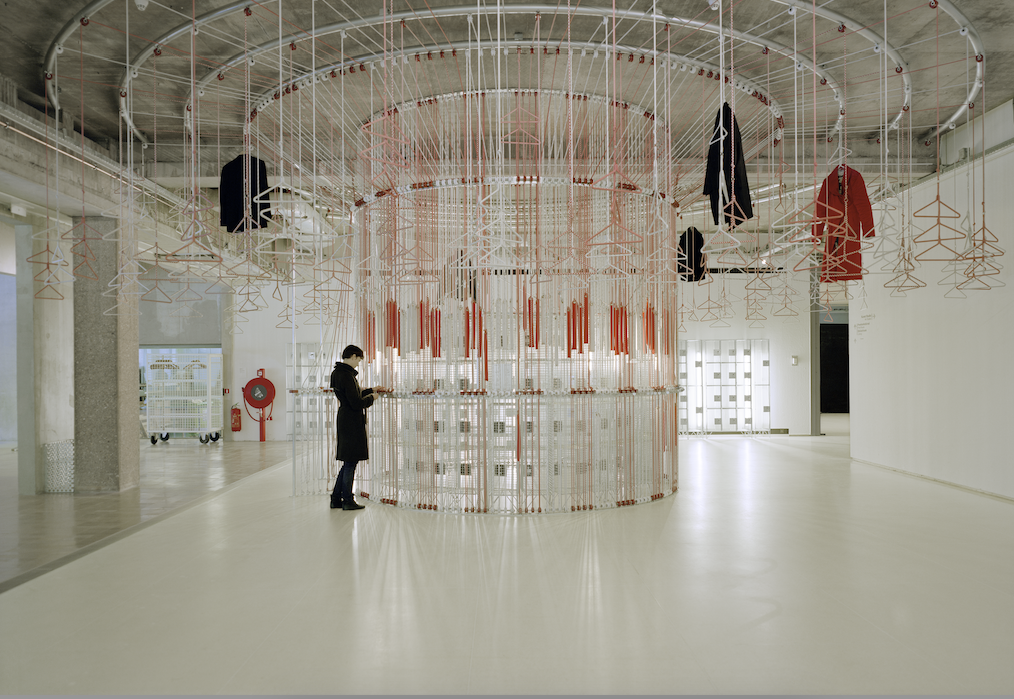
The “Merry-Go-Round Coat Rack,” designed by Wieki Somers for the entrance of the Museum Boijmans Van Beuningen in Rotterdam. Photo by Elian Somers
Wieki: I also like to think about it as a network of fungi, or how the trees speak with each other and communicate.
Nature has always been a big inspiration for us. It has predictable shapes, everything has a purpose, and yet sometimes things look completely illogical. What fascinates me most is our ambiguous, complicated relationship with nature as humans. A lot of our work is about that friction, but also about the beauty of it. We love to copy nature because there is simply no better designer.
A lot of my work starts with everyday observations and natural phenomena. Our “Frozen in Time” project for example, came from a historical ice storm in the Netherlands in the 1990s. It was March, already spring, and overnight everything froze solid. Cars were stuck to the roads, trees bent and split under the weight of ice. It was a historical day and everyone seemed to have photographed it.
I found a book of those photographs at a flea market years later, and I became fascinated with how ice stops time: how it translates the qualities of a moment, a kind of serenity, into something physical. We then found a UV-reactive resin that, when dipped and exposed to sunlight, freezes in a thick solid layer. It’s actually the opposite of ice in that it’s durable, but it captures that same quality of suspension. We built an entire collection around it and showed it through Galerie Kreo in Paris.
Our design process often starts with a concept like that, followed by an intuitive way of working with shapes and materials. Finding the right material is a very important part of our research: the quality of a material can really strengthen a person’s connection to an object and contribute to the message you want to convey.
Tim: I’d also love to imagine the future internet as a forest with a fungi system rather than a square spaceship server. Something living and interconnected rather than something cold and centralized.
I’d also love to ask about teaching, since you’ve both been working in academia for some time. What’s your favorite part of it, and how did you come to see it as part of your practice?
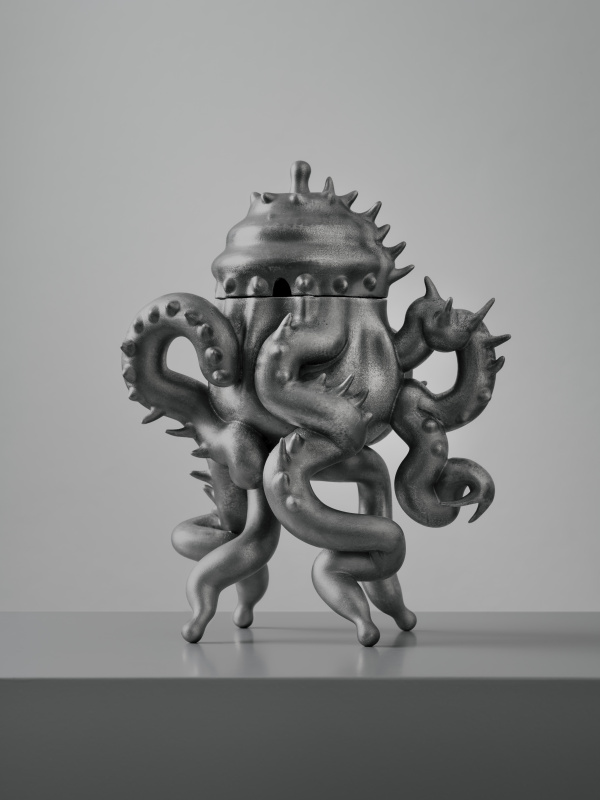
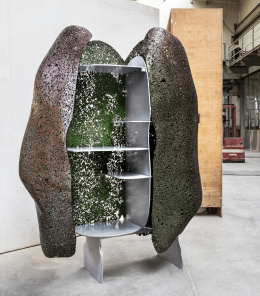
Wang & Söderström’s “Snake Oil,” a 3D-printed aluminum urn, draws on a term historically associated with fraudulent remedies and misleading marketing. In this work “Snake Oil” reflects AI’s dual nature: the serpent symbolizes both healing and destruction as well as deception and temptation. Photo by Carl Ander
I see it as a kind of extension of my work as a designer. I’ve been teaching at the Design Academy Eindhoven and ECAL in Switzerland, and now for three years at Karlsruhe as a professor of product design. I’ve always seen teaching and my practice as deeply intertwined; they constantly inform and challenge each other.
And the gap is becoming bigger and bigger because of age: the students stay young and I grow older. But that’s also what’s interesting about it. It keeps you very sharp on what’s happening in the design world, on what’s in the mind of young designers, on what their new role is and how they see themselves as future designers. I find it very interesting to talk with them about how to imagine and design a world in the future.
Tim: Can you see a revival of slower, more handcraft-based work happening among your students right now?
That’s been happening for a long time already, I think. At this year’s Collectible fair you could see a lot of handcraft work, but also a lot of 3D printed things and worlds coming together. I really believe craft will always be valued.
It’s very sad that it’s disappearing in the Western world. I often go to Japan and other Asian countries to visit craftspeople and to really see the soul of making. I always think of Richard Sennett’s book The Craftsman when I’m there. Craft should always stay important, and we should preserve it and use it alongside the digital world.
Tim: Not only alongside but intertwined with it. What traditional handcraft needs is exactly this friction you were talking about earlier to stay relevant. That space where the two meet is one of the most interesting spaces in design right now. The challenge is finding people who can actually teach those craft skills; that’s becoming less and less common.
There’s also something about speed there. We’ve tried to explore the different speeds of old and new techniques, and that difference in pace is a kind of friction in itself. With younger generations attention moves very quickly; the visual stimulus has accelerated.
I think it’s important to have different layers of speed simultaneously. There’s still space for the slow.
A version of this article originally appeared in Sixtysix Issue 16.