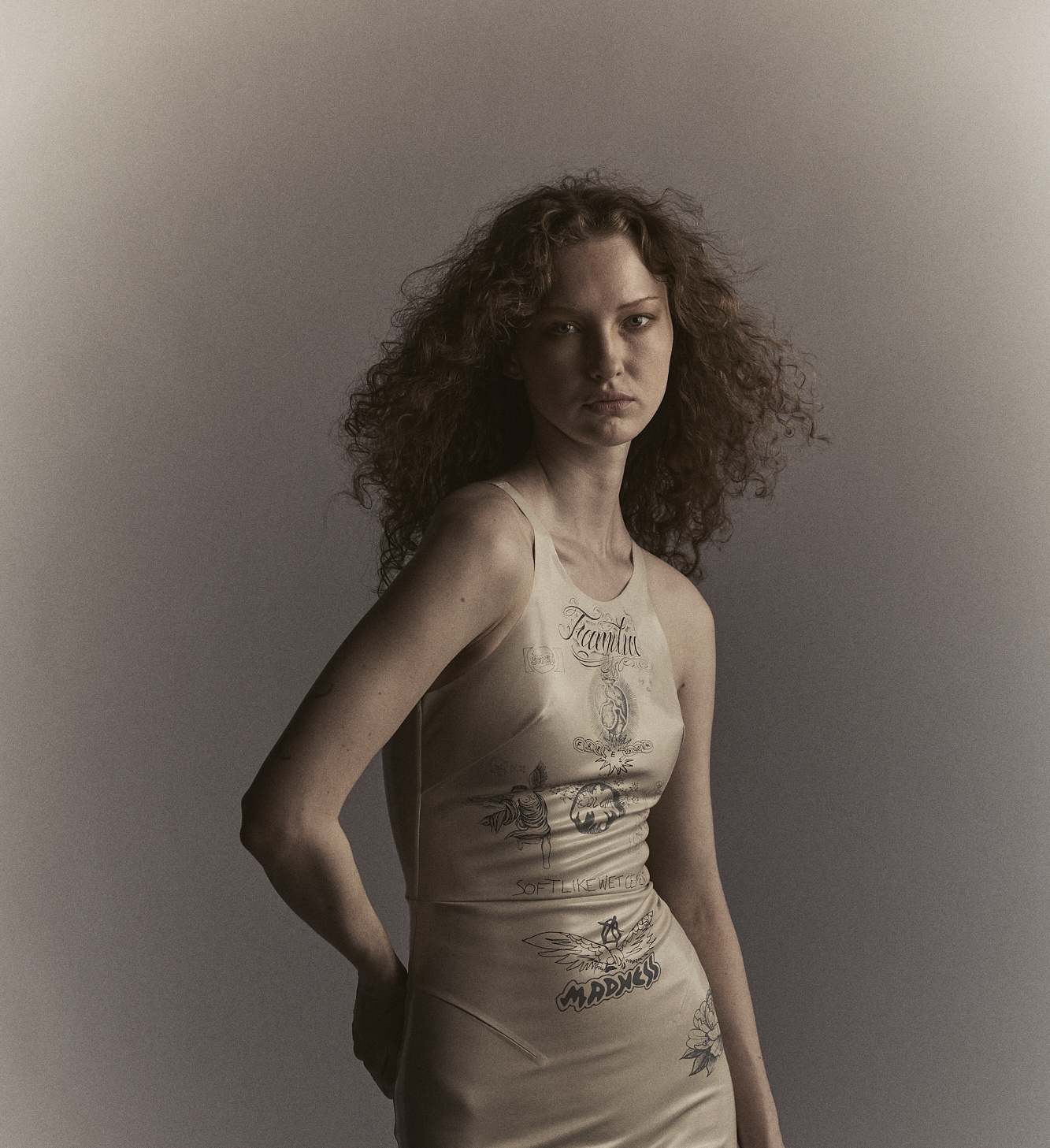
Stefan Scholten graduated from the Design Academy Eindhoven in 1995 and began his practice immediately, working through the height of the Dutch design movement before co-founding the internationally recognized studio Scholten & Baijings in 2000. Over nearly two decades the partnership produced work across furniture, textiles, and tableware for institutions including the Cooper Hewitt, the Victoria & Albert Museum, and the Rijksmuseum, as well as manufacturers like Cappellini, Moroso, and HAY. Following the studio’s dissolution in 2019, Stefan established his own Amsterdam-based office, where he continues to work as a colorist and designer, known for a reductionist approach and a singular command of color.
Marina Dragomirova and Iain Howlett met at the Royal College of Art and founded Studio Furthermore in London in 2015. Now based in Hove, England, their practice is built on material research: the studio develops its own processes in glass, ceramic, and metal. Their work is held in the permanent collections of the Vitra Design Museum, the MAK Museum of Applied Arts in Vienna, and CID Grand-Hornu in Belgium, and has been presented at Design Miami, PAD London, and Salon Art + Design in New York.
In this conversation Stefan sits down with Marina and Iain to discuss what it means to build a practice around material invention, what survives a partnership and what doesn’t, and why the design industry’s relationship to risk has changed more than most people admit.
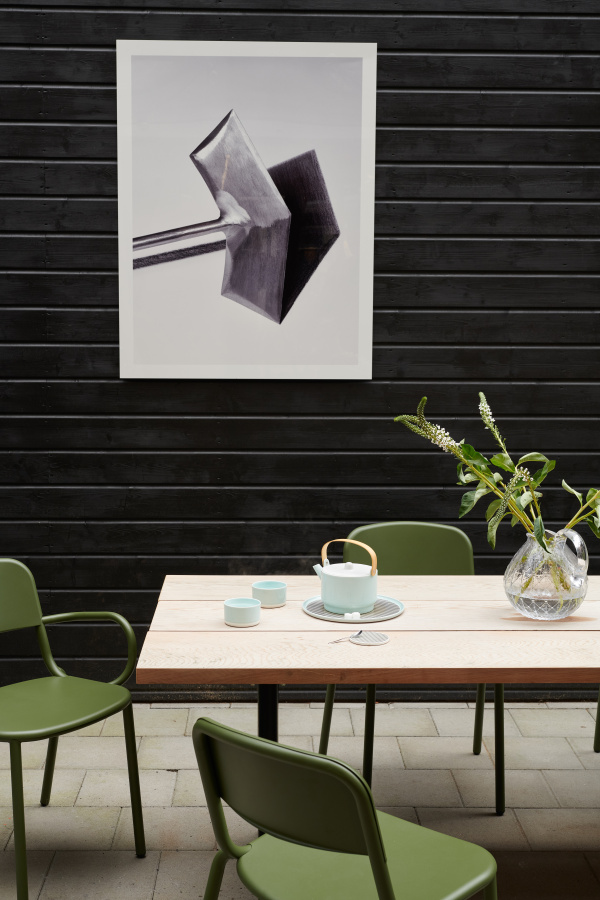
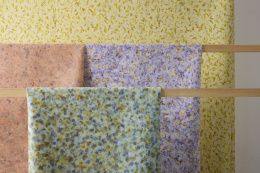
Stefan’s studio in Amsterdam. Tea set from the Scholten & Baijings “Colour Porcelain” series. Loop chairs by Stefan Scholten. Photo by Elmer Driessen
Gianna Annunzio: Let’s start the conversation somewhere unexpected: what’s the last accidental discovery you made in your studio?
Marina: One time, something went wrong during a rendering and it ended up combining two elements in a way we never would have planned. We were working on a wooden project and a metalwork element ended up sitting on top of it, and where they met they cut into each other unexpectedly. Normally we’d keep wood and metal very separate. But the way they came together was far more organic than anything we’d have designed intentionally!
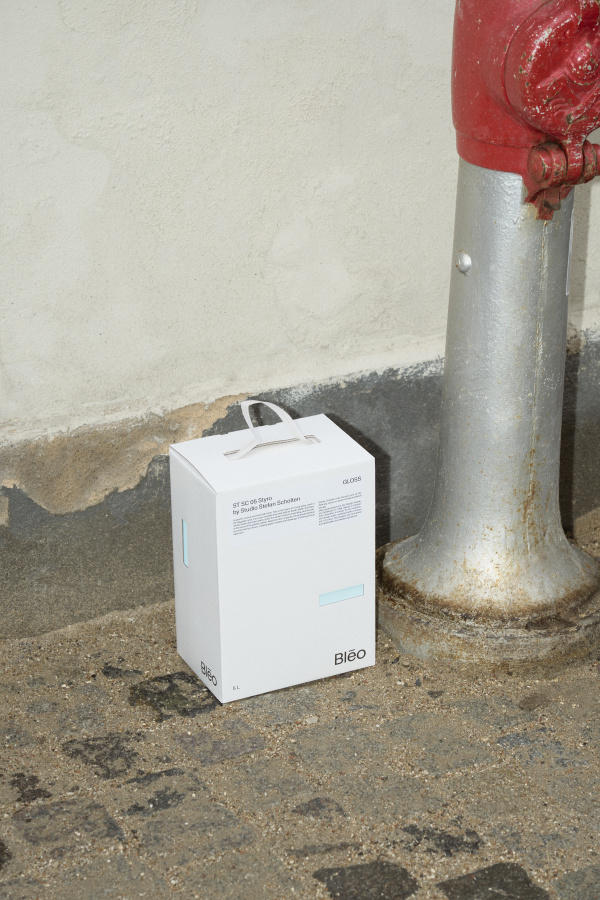
Stefan Scholten: For me it was connected to our new studio here in Amsterdam. I’m a colorist as well as a furniture designer, and my mantra has always been, “don’t be afraid of color, because you can always repaint.” So I decided to paint the entire studio—walls, ceiling, everything—in a single color. It’s called ST SC 12 Nogal and was originally designed for BLEO, a Danish company.
When I arrived after the painter finished, I was totally shocked. I kept thinking, “Did I make a terrible mistake?” We’d had samples, a maquette, renders. But when you paint everything including the ceiling you get this complete enveloping box, and it hits differently.
I’m very happy with it now. It’s a warm Italian-toned color, much warmer than the Scandinavian palette most studios up here use. But it was a humbling experience, even for someone whose whole practice is about color.
Iain Howlett: It’s reassuring to hear that can happen to someone who really focuses on color!
Marina Dragomirova: Did the space feel bigger or smaller afterward?
Stefan: It became undefined, which is what we wanted. It’s not a large space—only a little over 950 square feet—but the effect was that it became unanchored from itself in a way that works.
We’re in the center of Amsterdam surrounded by fashion stores and pop-ups that are all painted white, all letting the product do the job. We have a separate workshop outside the city, we call it “the dirty spot,” where we do all the physical work, archive, and workshop combined. The studio here is more for thinking and meeting.
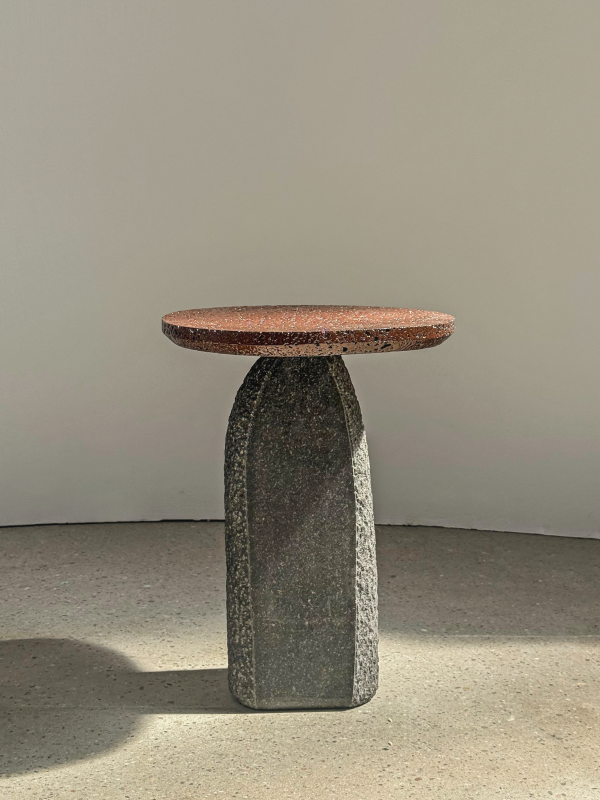
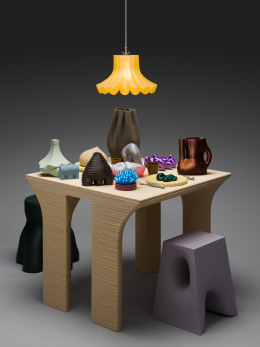
Mohdern Lahar table by Studio Furthermore
We needed to make a difference from everything around us, and the warmth of that color does it.
Iain: We inherited the color of our previous studio, somewhere between blue and gray, and we’ve always meant to do something about it. That instinct to follow something even when the outcome isn’t guaranteed seems to run through both of our practices.
I know your original practice split in 2019. Was there a period where you didn’t know what your work looked like without your previous design partner Carole’s influence?
Stefan: To answer that question, I feel I have to start at the beginning.
I studied at the Design Academy Eindhoven, graduated in 1995, and started my own practice immediately. Dutch design in the late ‘90s and early 2000s was very experimental, very exciting. There was a real energy to it. It had a particular confidence in conceptual thinking, and being inside that was formative.
I had my own voice and I knew what it meant to develop it. Then Carole joined in 2000, and for 19 years we worked together. It was a chapter, and it was a full one. We did a serious body of work: textiles, furniture, collaborations across a lot of different territories.
But after that long you need to innovate on yourself. That became clear. The first year after the split we still collaborated on a few projects, so nothing was ever completely severed. But of course after working so closely for so long, you do have to literally find your own way again.
The market had also shifted during that time. Gradients and patterns were everywhere at one point, and then slowly the whole direction of color changed. So it was also a very good moment to step back, study, work on new colors and new concepts, and renew ideas. Looking back now seven years later, it was exactly the right moment.
For Studio Furthermore, that question of identity within a partnership is something you’re still living inside. If one of you left tomorrow, what goes with each of you and what stays?
Marina: It would be very hard to even begin answering that. The two of us have been so woven together over 10 years that trying to separate it would be crippling. I’m not sure I can measure what would fall down or what would stand up.
Iain: I think about it like getting on a plane. You assume it’ll land where it’s supposed to, but there are contingency plans. They’re not great plans, but they exist. Neither of us spends any time thinking about it.
We disagree on a lot of things, but the way we operate and think is quite aligned. If it happened, you’d adapt. There’d probably be a certain freedom in it too. Marina is much more digital, I’m much more hands-on, so we’d probably just retreat to our own corners and stop having to agree on the final result.
Stefan: It’s the same with identity as a duo. When you work together long enough, the outside world starts trying to pin down who is which. The identities merge perfectly at certain moments and less so at others, and that’s just how it works.
But what I’d say is that if you want to stand tall in this business, whether alone or together, you have to have a very strong identity, because maintaining your goals, your vision, your dreams, that’s already difficult enough. It’s a tough business at the moment.
Before we get into the broader business of design, I wanted to ask about the work itself. Some of what you make is limited edition or one-off. Is everything produced that way, or do you also do serial production?
Iain: The cast metal work is one-off or limited edition, usually an edition of 12 plus artist’s proofs. Our work is very specific. In some cases I’m not sure the world needs more than 12 of a given piece, or even one. They’re somewhere between a prototype and a vision realized as a one-off. We’ve also done some product work with a few brands, accessories, tables, things like that, but nothing in big runs.
Marina: Since we graduated the industry has really fractured into very different activities. We like the idea of operating in both fields, but you very quickly get pigeonholed into one, and then people know you for that.
We do talk with manufacturers and bigger brands, and sometimes those conversations go somewhere, but it’s such a long process just to get to the point where someone says, “OK, let’s start.” Then when that starts, we’ve had projects get to near-launch, and then maybe within the company there’s a change in marketing direction, your main contact moves to another company, and two years of effort just dissolves. For anyone starting out, that’s a brutal amount of time and energy to invest without any return.
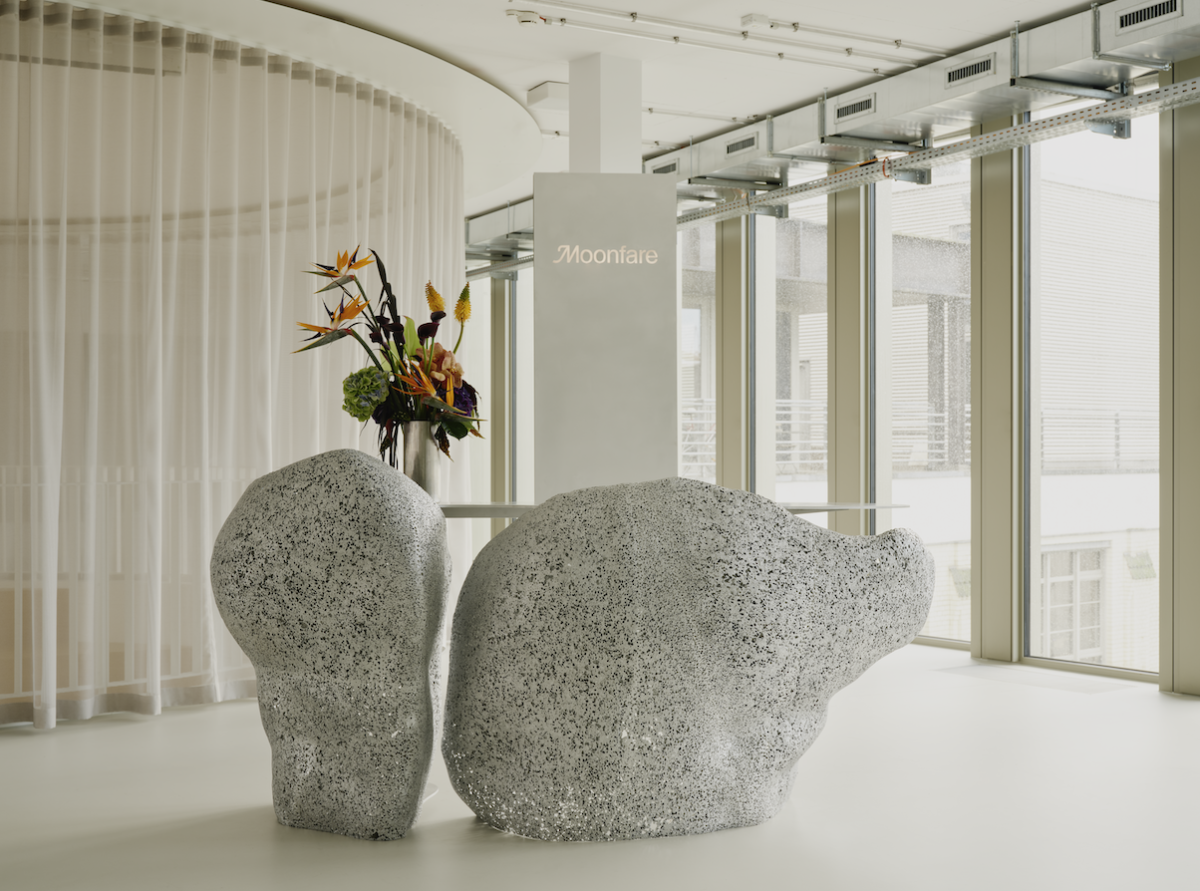
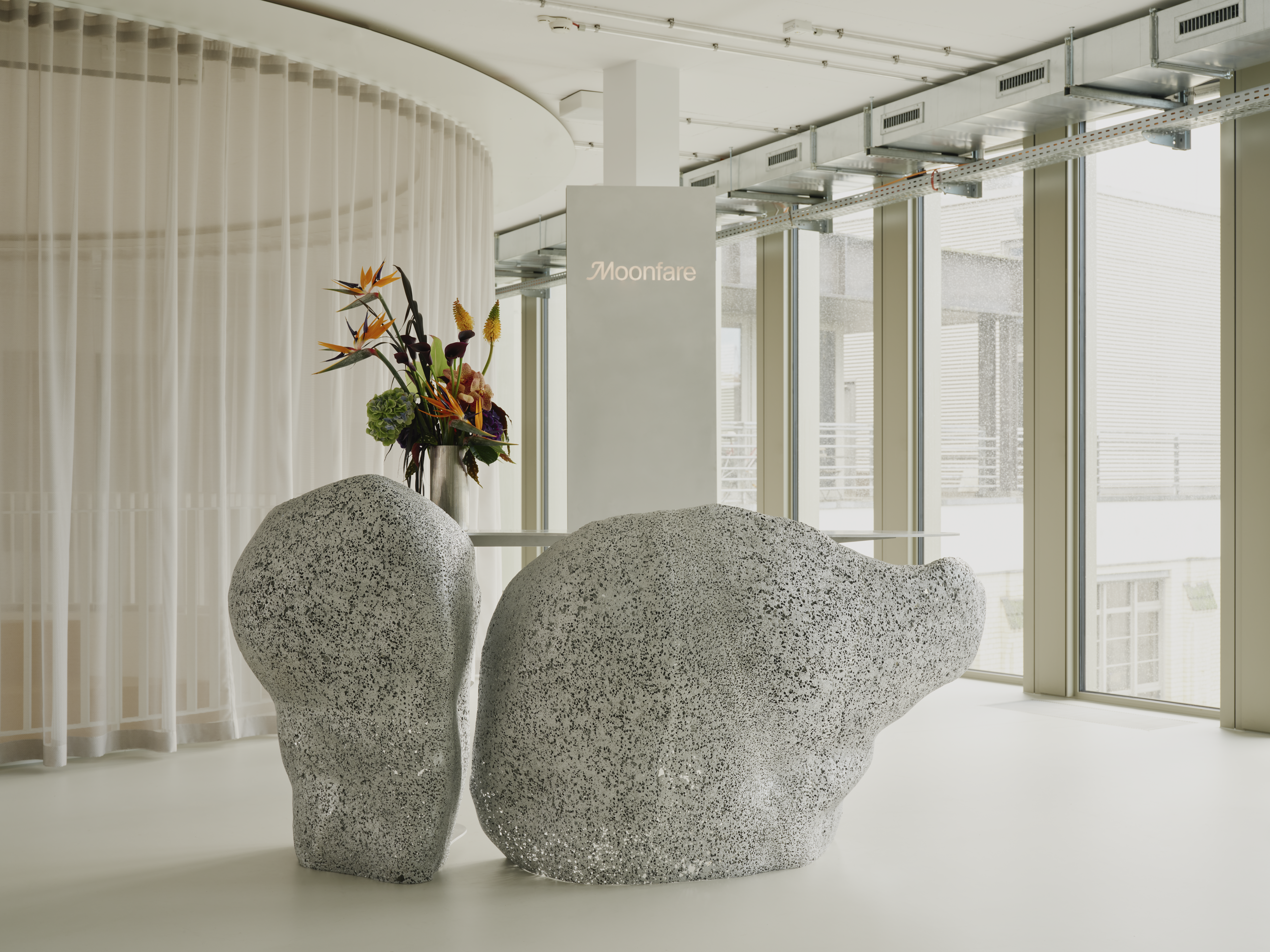
Moonfare’s new Berlin headquarters. Desk by Studio Furthermore
Iain: The gallery side is tenuous too, but differently. You put four months into a single piece and then you sell it. That already seems safer in some ways than royalty-based production work, which needs serious volume to make sense. And even a big brand with the best intentions can’t know if something will be one of their big sellers or a footnote. So you’re always absorbing that uncertainty on your end.
Marina: But Stefan, you’ve also watched the industry shift from the inside for 30 years. How does it feel now compared to when you started?
Stefan: When I started there weren’t many Dutch furniture or design brands to speak of, so I went abroad early. The goal was Milan working with the Cappellinis of the world, the Italian houses that were embracing designers and elevating them. That was a real thing.
Giulio had a vision of what design should be, and when you worked with him you had to catch up with that vision and find a dialogue within it. That was exciting. The same energy still exists with designers like Rolf Hay. But most companies now are stock market entities with business models and quarterly pressures. They need to go for “safe.” The risk of doing something daring, something strange, and trying it on the market is simply less present than it was. That has definitely changed.
And then over the years more brands entered the market. The big brands aren’t so big anymore. They’ve become smaller, more fragmented, more competitive. I think there’s a new shift coming. There are simply too many companies and too much output, and that has to be compensated somehow. Some will merge and some will disappear.
What worries me is how the new generation navigates it. The old royalty model, three years of work, a prototype, a production deal—those numbers just don’t hold the way they did. In the past a designer could have three or four furniture pieces in production and live well. Dieter Rams stayed with Braun for decades. That kind of relationship hardly exists anymore. Now you probably need 10 or 20 relationships just to run a studio and get back to an average. That’s a completely different reality, and we should all be honest about it.
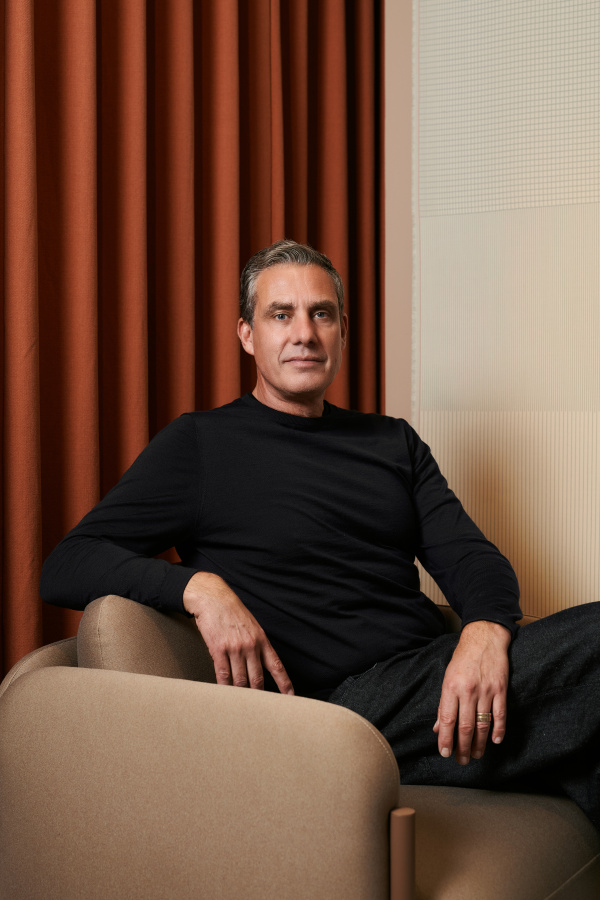
Portrait by Elmer Driessen
Iain: You need a whole portfolio of products if you’re relying on royalties, and that takes years to build. The math just doesn’t work the way it used to.
Stefan: Exactly. And separate from all of that, there’s the creative part—how you take your own path, how you decide to market your work, how you want to present it, how you want to see it come back into the world. That’s where I think you two have done something interesting, by designing that path yourselves rather than waiting for someone else to define it for you.
Does that leave you with any pull toward mass production, or does it feel at odds with where you are right now?
Marina: We like the idea of bigger numbers because it forces you to solve different problems. When you design something that will be produced more than 10 times, you face real-world constraints you just don’t encounter when your main logistics challenge is shipping something that weighs 200 kilos. But right now it does feel like a very different universe from where we are. Almost like an accessory to fashion rather than to what we actually do.
Iain: Earlier on we were naive about the whole thing. You choose a direction and that’s it, no deviating. But design is really a knowledge practice at its core. It’s about ideas and thinking, even when it’s very physical. And if you have clarity in your thinking, it should be translatable to different objects at different scales.
What always surprised me was how rarely design professionals, gallery people, platform runners, and manufacturing brands actually see it that way. We have a few tables, and it surprises people to imagine us making a chair—so we end up just making more tables.
Unless you go and demonstrate that you can do something else, no one makes that connection for you. That always fascinated me. The joining of dots isn’t very common within the world of design. We do talk with some larger brands and we’re working toward a few things, but we also know it can evaporate. So we stay open without building our whole plan around it.
By nature we like to challenge things. Even when we do lighting, we always try to put something inside that hasn’t been done before, and that always creates a problem with manufacturing.
We created a light for Nilufar about 10 years ago, with LED and a copper tape power supply running along the surface. People wanted to produce it, but when they faced the manufacturing problem, the solution was to remove that element. And when you remove it, it’s not the same project anymore. It changes the language of the whole thing.
We tried to share our ceramic process with producers too, but we’d have had to give them the recipe, and that was too difficult to manage.
Stefan: Do you see yourselves more as designers or artists?
Iain: We’re really on the boundary. The way we conceive ideas is through design, but the outcome is collectible. We developed the material we work with, so our process takes twice as long, but now we can do a great deal with it. It very much started as design research into materials and processes.
By the time we’d found a way to make a studio and a living out of it, it became clear it’s not a mass production thing. A lot of our everyday is more like a sculptor’s. We have gallery representation, small editions, one-offs. But I don’t think art and design are the same thing. Our pattern of work is more like an artist’s, but our thinking absolutely came out of design.
Stefan: I think the stronger a designer’s identity, the less the label matters. The work speaks. What I’ve noticed is that the studios and brands gaining real traction now are the ones who commit entirely to one material in one territory and go deep. It limits the perception from the outside, yes, but it builds a gravity that attracts the right collaborators and the right designers.
“I think the stronger a designer’s identity, the less the label matters.” -Stefan Scholten
When you look at a brand and try to understand the binding factor between everyone working with it, it’s so much clearer with a personal, focused company. A brand known only for sofas. A studio known only for porcelain. If you try to do differently, people find it strange. That’s how perception works.
That focus has become its own kind of marketing, which is a word I used to keep at arm’s length but have made peace with. The logic of why people want things, why they return to a particular voice—that logic is worth understanding. The studios I most respect have stopped producing a lot of things that together make a nice interior and started protecting a voice. That’s the shift I see.
Marina: It connects to how people experience design now too. More and more people rent rather than own their homes. They move frequently. Owning furniture, owning design, it’s a different world from 10 or 20 years ago. The relationship to objects is changing.
On the making side there’s more access to manufacturing and rapid prototyping, which means more designers are engaged in their own personal direction, doing small production, and following their own thinking. The designer as author is becoming more common, not less.
Stefan: I think ownership on the company side is changing too. The values have shifted. People aren’t just buying an object anymore, they’re buying into a position. Which means the voice a studio projects matters more than ever.
Your studio has built entire processes around found or waste materials. I know much of your furniture and objects begins as recycled aluminum and discarded car wheels. What draws you to that kind of open-ended, process-first way of working where the answer isn’t predetermined?
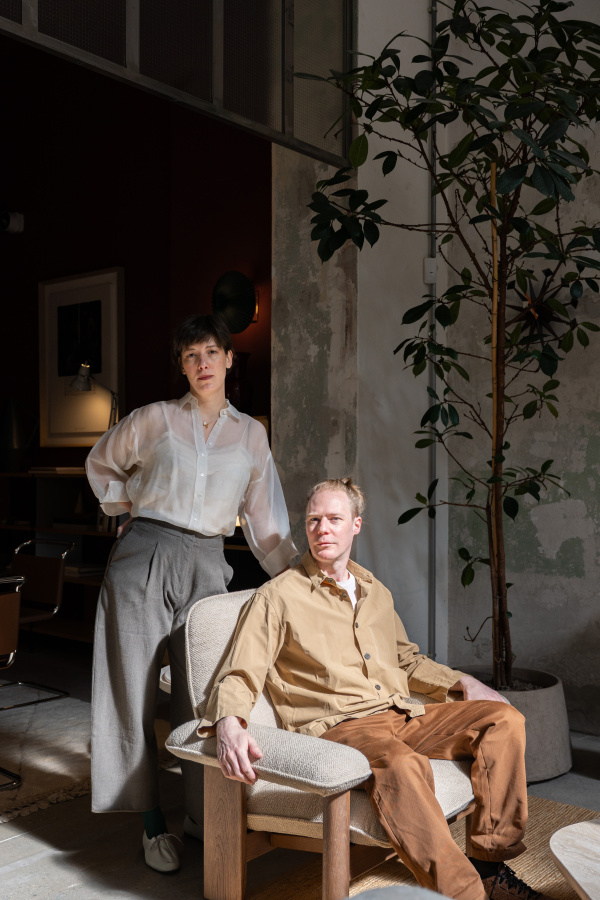
Portrait courtesy of Studio Furthermore
Iain: The aluminum project is probably two-thirds of our time now, and it started in a pretty accidental way, which feels fitting given how we started this conversation.
For the lighting project with Nilufar, the glass was being made in Czech Republic and we wanted something we could make in the studio ourselves. So we got a kiln off eBay and started doing ceramics. We were spectacularly naive. But we stumbled onto something interesting with ceramic forms, and that grew into museum acquisitions, some products, and a real body of work.
Then we hit a fork. We could become a proper ceramic studio with kilns and real ceramic knowledge, or we could follow something else that had started pulling at us: metal experiments and aluminum foam. We went that way. And just like the ceramics, it grew bigger the more we worked with it. We started designing the material itself, then figuring out what to do with it afterward.
The car wheels came in because we were never trying to set up a recycling project from the start. That would have killed it immediately. We’d have said we don’t know if recycled material will sheet properly and stopped before we began.
Instead we had two pieces in our hands and just tried welding them together, and it worked out surprisingly well. When you weld recycled material there are more things that can go wrong—it doesn’t behave as predictably as new material, but there’s a real difference between setting yourself the goal of making it work versus just having the pieces in front of you and seeing what happens. Each step had its own problem but took us further down the path.
Marina: In a way it’s the opposite of designing a chair, where you know it needs to fit a particular purpose. We were following where the recipe would bring us rather than having a fixed destination.
The end result was never defined, which is what allowed us to use the car wheels in the first place. If we’d been set up to recycle from the beginning, it would have been a no immediately. We wouldn’t have known if we could do it. It really came out of design thinking and curiosity, but the result is definitely not a classical design brief.
“Owning furniture, owning design, it’s a different world from 10 or 20 years ago. The relationship to objects is changing.” -Marina Dragomirova
Stefan: Stone was entirely new territory for me too. I did a series of tables cut from a single block of stone with the company Luce di Carrara. when you do that, you realize very quickly how much material gets left behind. You need a whole block and you bring it down to that table shape, and the waste is extraordinary.
We preferred to call it upcycling at the time, but now we just say “waste,” because being direct about it is better. That first project was in 2013, and slowly we started seeing more and more possibility in those offcuts—beautiful marbles in all kinds of colors. The Italian tradition of terrazzo has been doing this for centuries, broken pieces bound together with mortar or cement.
But we wanted to push the thinking further, make it more considered and more contemporary. The challenge is that the moment you start combining stone with another material, even cement, you compromise the sustainability logic. You add something. So the real question became, “what is the most honest, most sustainable way to make something entirely from what’s already there?”
That project grew into something larger. I’m now launching a small brand called Matera, and the idea is to create a more collective way of working. We invited 10 artists and designers and asked them basically the same question I faced 10 years ago: here is a block of stone of a certain size, here is a limited palette of stone colors, what can you make from it? No other restrictions.
The outcomes are remarkably diverse. Artists tend toward pure sculptural necessity. The object just needs to exist in stone, and that’s enough of a reason. Designers always carry a kind of public necessity with them, asking, “who needs this and what problem does it resolve?” Both impulses together produce something really alive.
We’re presenting it this year at Salone del Mobile in a new section called Salone Raritas designed by Formafantasma. It’s the fair’s answer to all the satellite exhibitions pulling people away, an invitation to galleries and collectives to present within the fairgrounds itself.
We’re not a gallery, my wife and I run it together, she has her own business in stone and I have my studio. But we did the application for Matera and they responded very well to it. It’s the first year, so I’m curious and excited about what it becomes.
Iain: We similarly started working with lava stone ourselves through a company called Ranieri. They only work with lava taken from the surface of an active volcano, which makes it renewable if you don’t take more than what’s being produced.
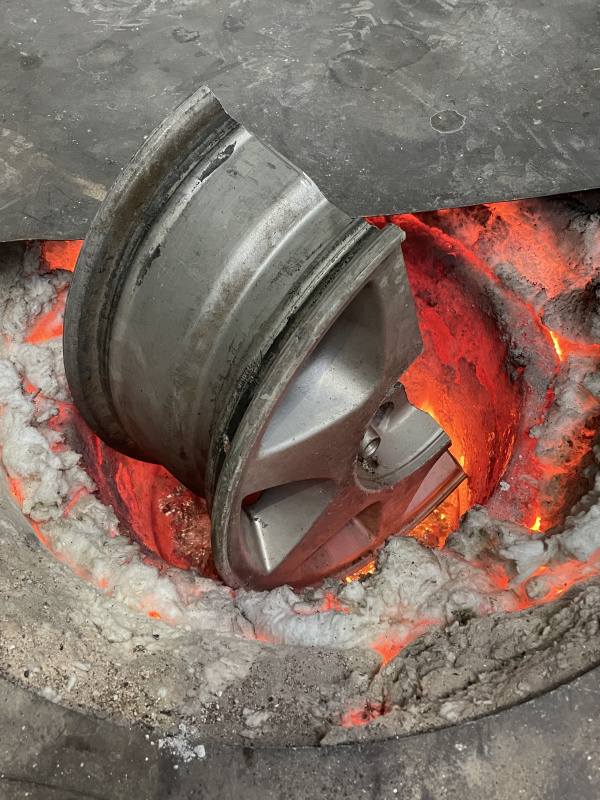
Studio Futhermore’s Space Lava is the result of an adaptation to the studio’s metal process so that 100% recycled alloy sourced from car wheels becomes the sole feed material and no virgin metal is required. Photo courtesy of Studio Furthermore
They have a very unique way of collecting from the surface so there’s no digging or mining. They found our work online because it has a lava-like quality to it. In a funny way, we spent years inadvertently mimicking lava with our metal, and then actually starting to work in lavastone felt like a kind of homecoming. It’s something we want to do much more of.
Stefan: You should come to Carrara. The textures in your work, the way they go deep rather than just sitting on the surface, it’s designed all the way through. I think there’s something there with stone that could open an entirely different source of material for you.
Not to translate what you’re doing, but as an opening. The techniques in Carrara have developed enormously over the years. There are ways of working with marble that could express exactly the kind of identity your studio has built.
Iain: We’d love that. It connects to something we’re working on in Japan at the moment too. We were invited there last year and started working with wood craftsmen, which is funny because wood is something we’ve actively avoided since student days. Woodworking for its own sake has never really appealed to us.
Putting wood into our thinking process, treating it the way we approach any material, following where it leads rather than relying on what you already know about it has become interesting.
Stefan: The appetite for daring ideas like that has lessened overall throughout the industry. There are simply too many companies producing too much output. Some will need to merge or disappear.
I’ve been lucky, always working internationally, always able to catch the right train in the right market. But I do wonder how the new generation is supposed to invest three years in an idea, prototype it, go through the royalty model, and make a living from it. The numbers aren’t what they were.
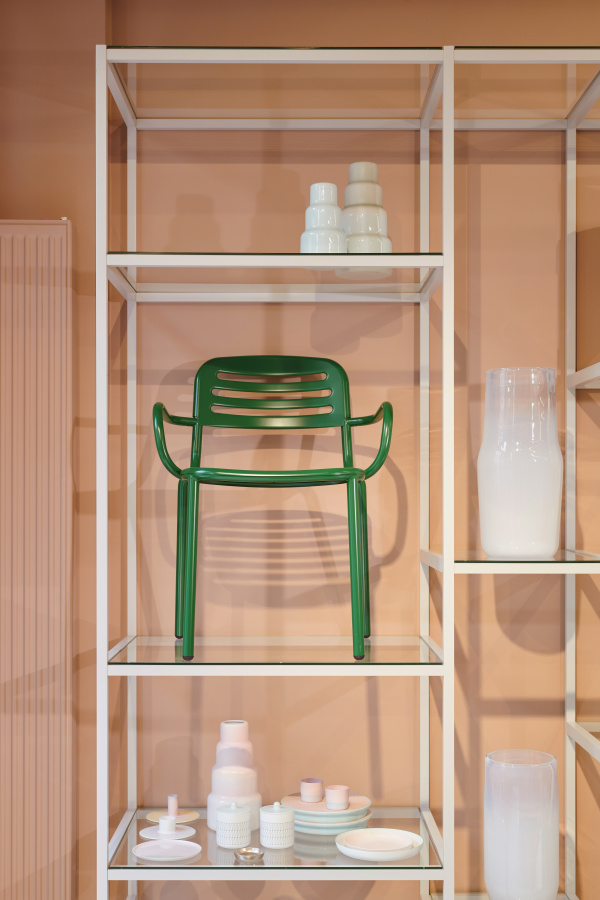
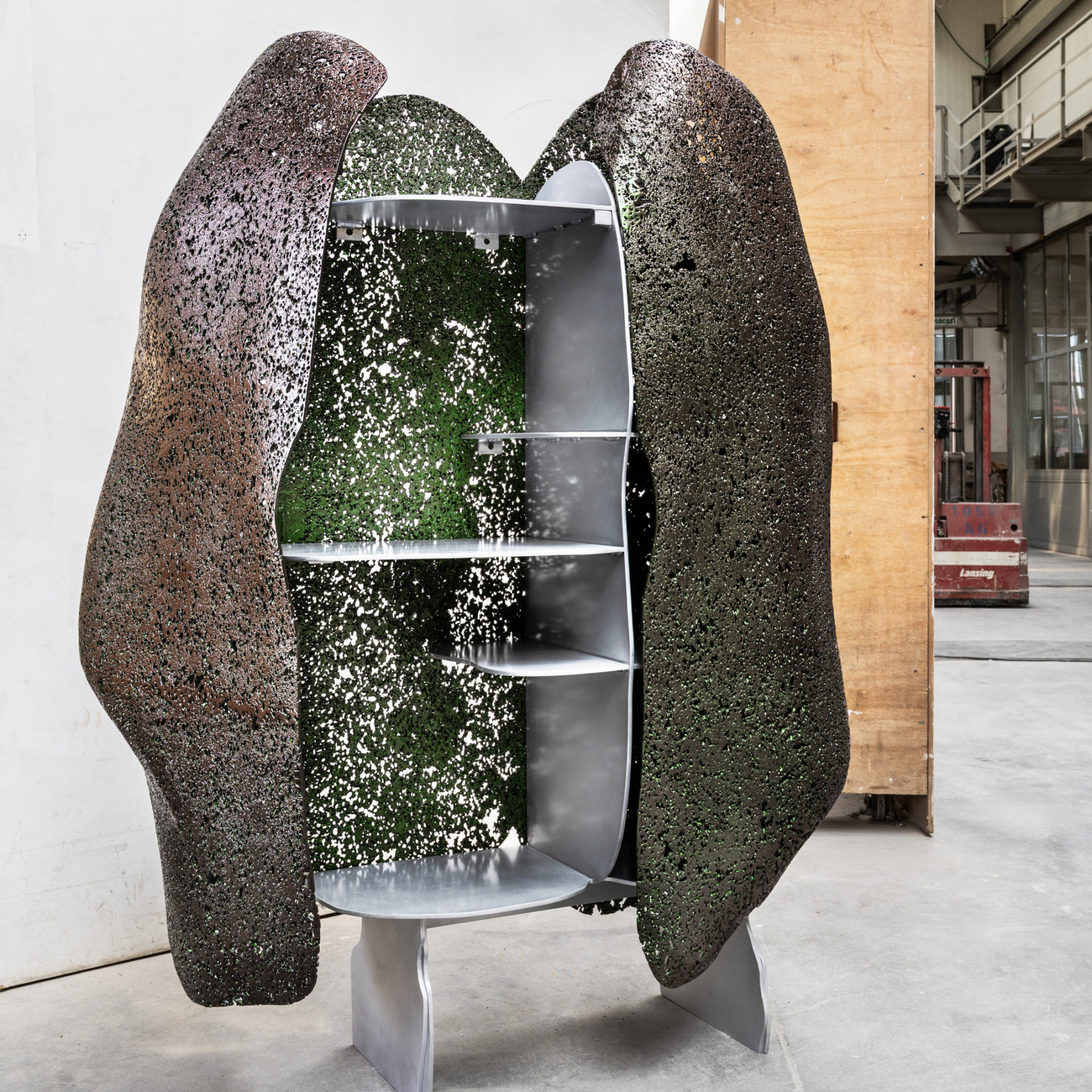
A Studio Cabinet in Stefan’s Amsterdam studio. Photo by Elmer Driessen
Brands that really focus on one material or one subject are very strong right now. You look at a brand and immediately see the binding factor between all the designers they work with. And what’s changing is why people buy things. It’s less about furnishing an interior, more about a clear voice that doesn’t deviate. It’s very connected to how fashion operates.
Iain: We used to see marketing as something we’d have to deal with eventually; not exactly the enemy, but not our friend either. More and more the logic of why people do what they do has become a real part of why we create new work. The companies we most want to work with have a very clear voice and they protect it.
Stefan: I think design always has been and will continue to be a powerful tool for creating new opportunities and new ways of thinking. Markets change, yes, but they also open in new directions. The furniture market isn’t the only place design is needed, and that’s what keeps it relevant. I still see it positively.
Something I’ve learned over 30 years and something I think we all deal with: the rush. It’s been there my whole career. I’ve become more confident lately in saying, “that’s too short a timeline, I need more time.” Not to say “no,” but to ask for the right conditions.
Designers are often afraid to do that, afraid of losing the momentum or missing the introduction or the window. I recognize that feeling completely. But we’d all make better work if we pushed back a little more, collectively. It’s worth it.
A version of this article originally appeared in Sixtysix Issue 16.