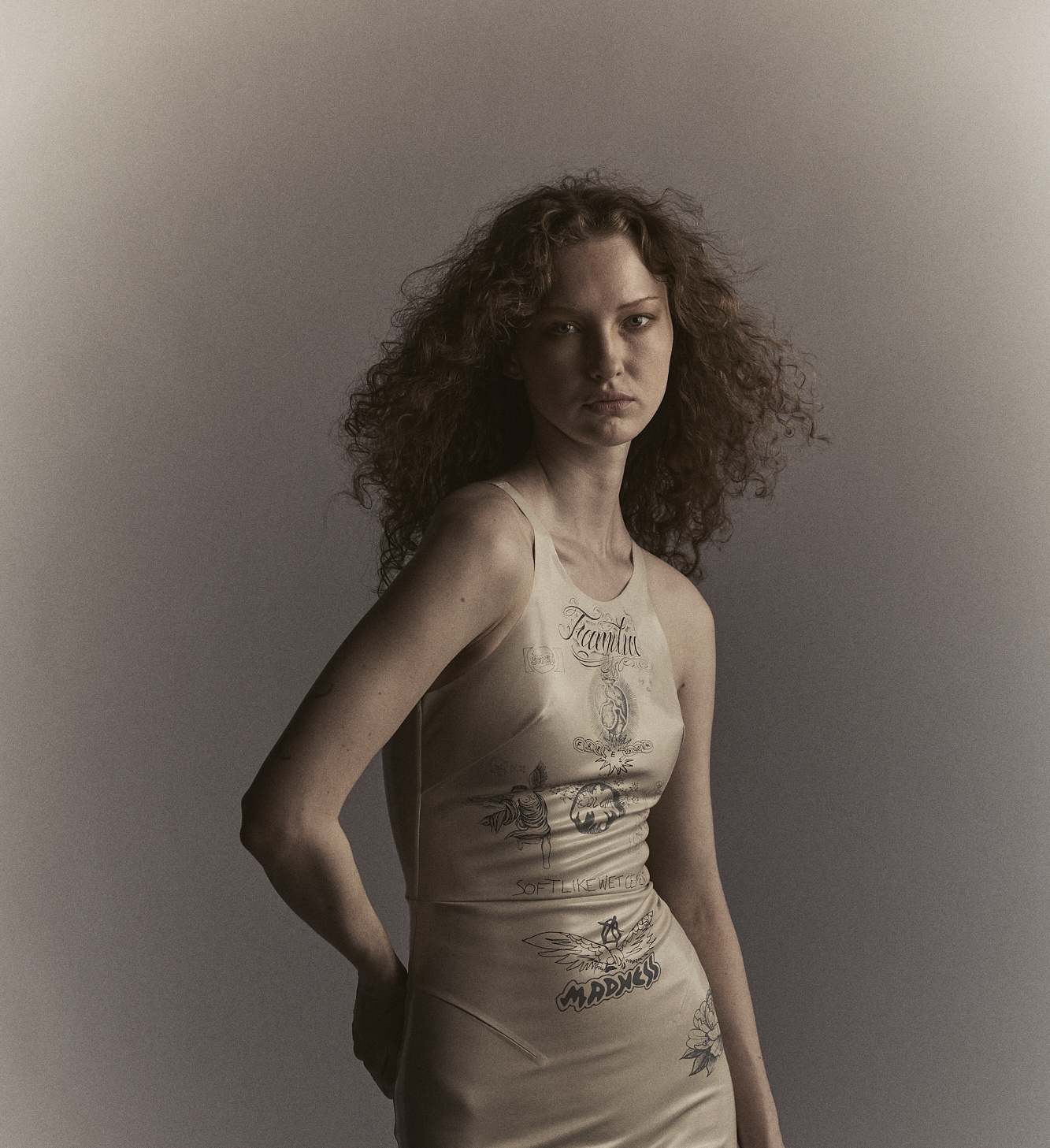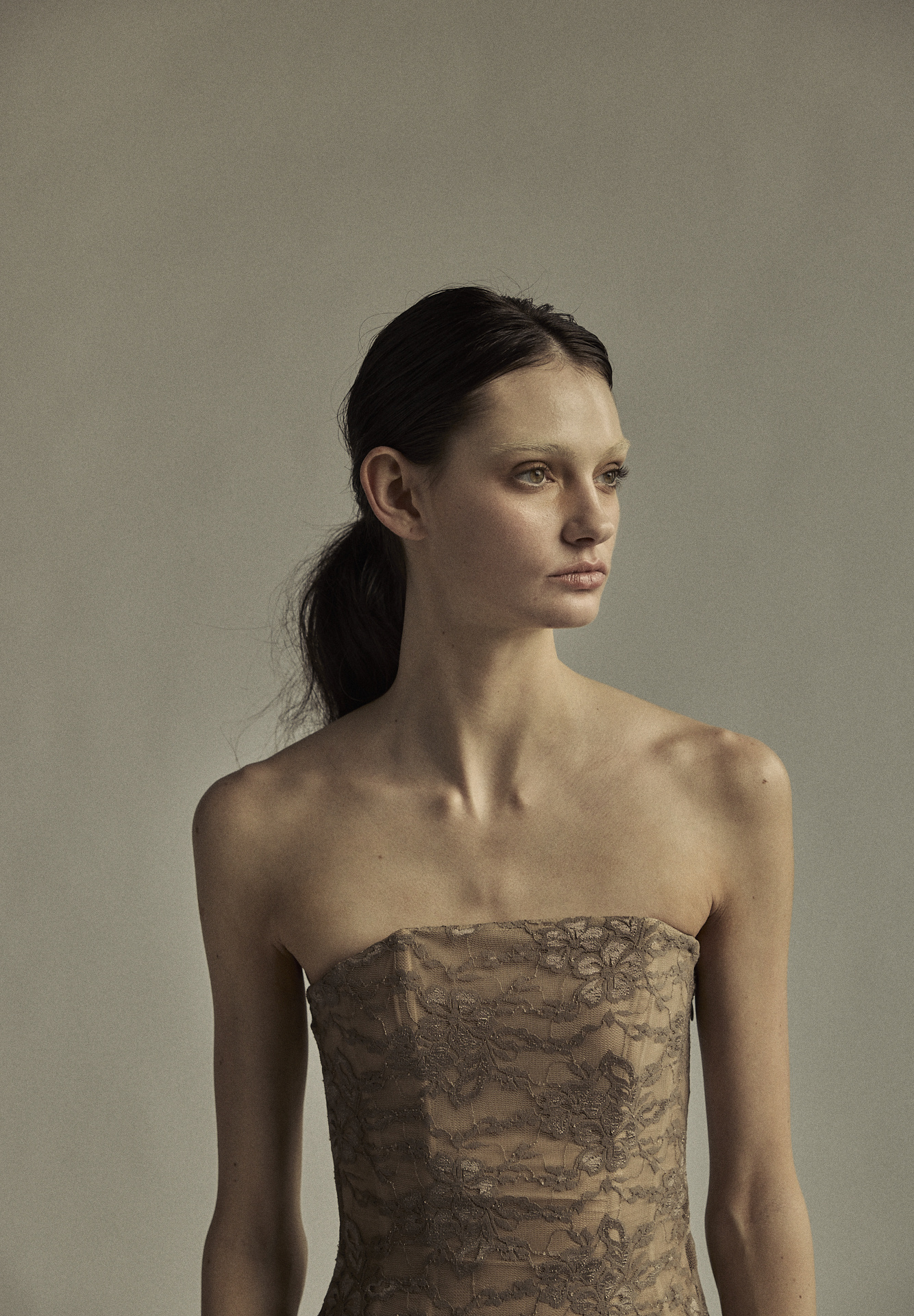
There’s a corset hanging in a studio in Ostuni, a hilltop town in Puglia that the Italians call “La Città Bianca,” or the White City. The corset started as a graduate collection piece, built from deconstructed Russian police uniform elements, Marina Eerrie’s way of taking the visual language of state violence and remaking it as feminine armor.
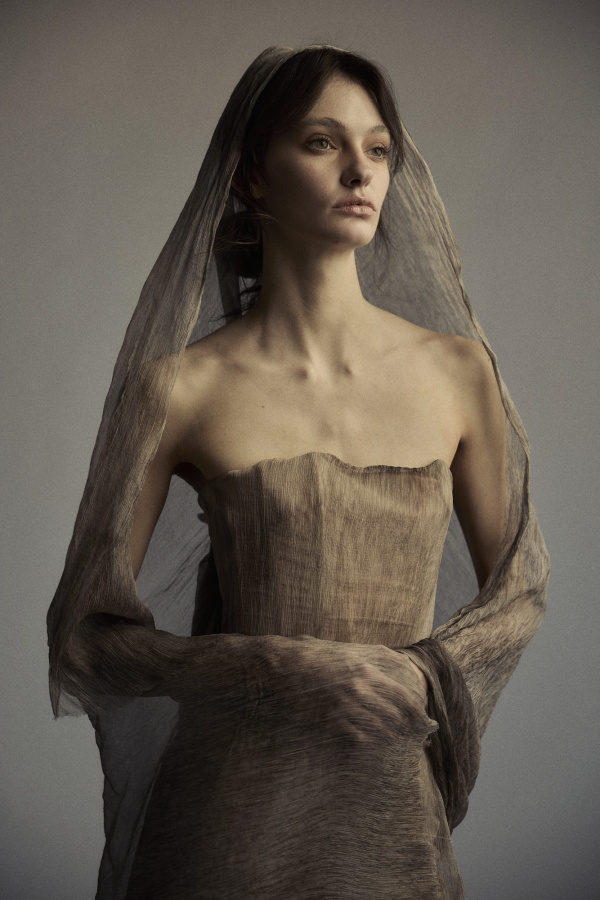
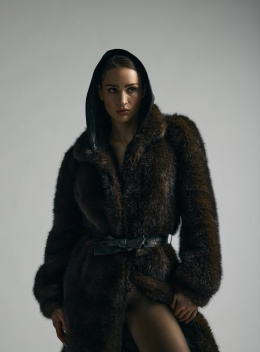
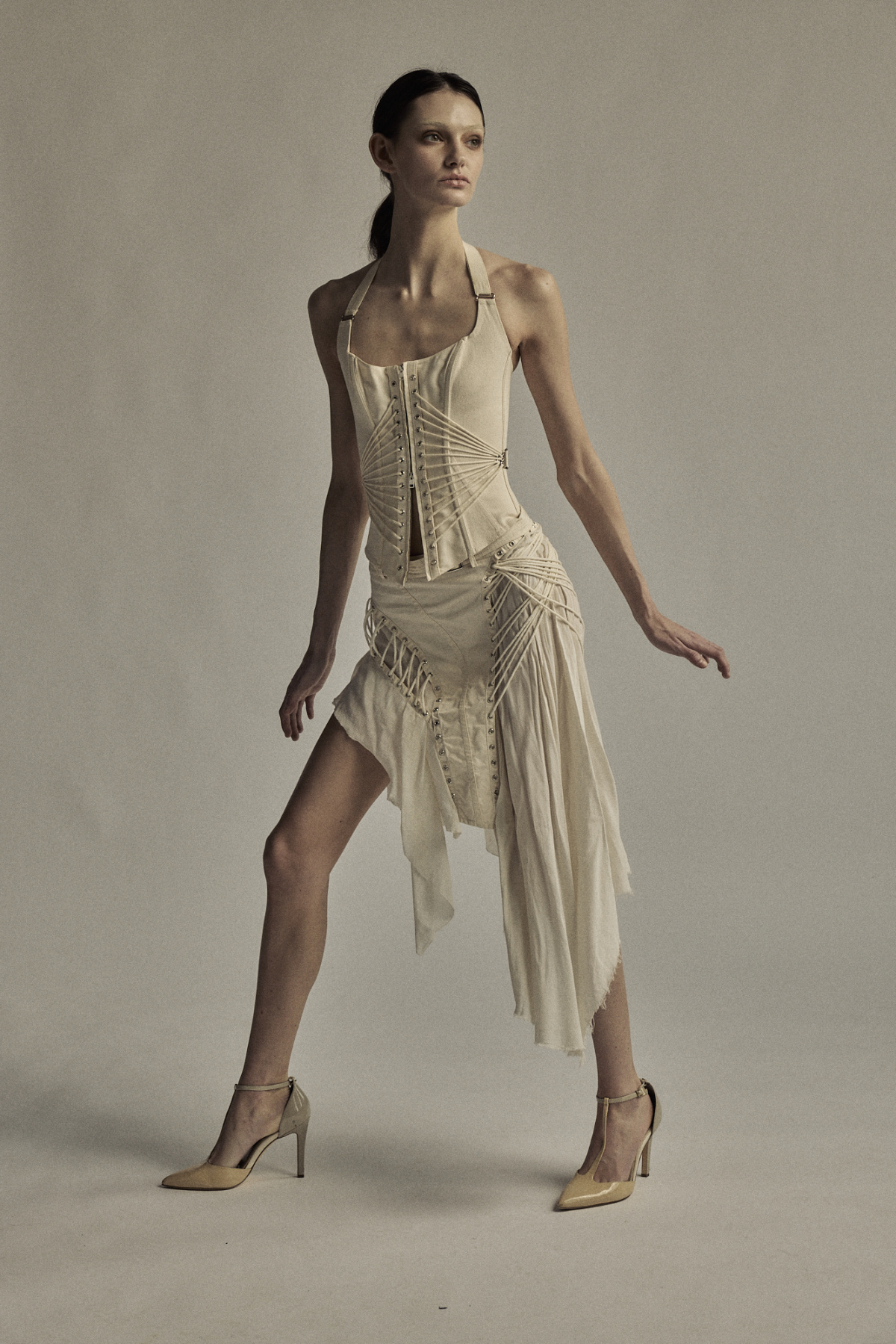
That’s the entry point into Marina Eerrie, a made-to-order fashion label run by Marangoni London graduate designer Marina Timonova out of her six-person Italian atelier. The work is exquisite. Hand-draped silk, cording stitched line-by-line, fan lacing pulled from centuries of European costume history, and corset bodices constructed with the kind of interior architecture you rarely see outside couture houses with ten times the budget. It’s this collision of soft gothic darkness and almost celestial purity, filtered through references that span Slavic folk costume, Japanese street fashion, Victorian vampirism, and the bleached stone textures of the Puglian landscape surrounding her studio. On paper, that sounds like a mess. In the garments, it’s completely coherent. The reason it works becomes obvious once you hear Marina talk about where she comes from.
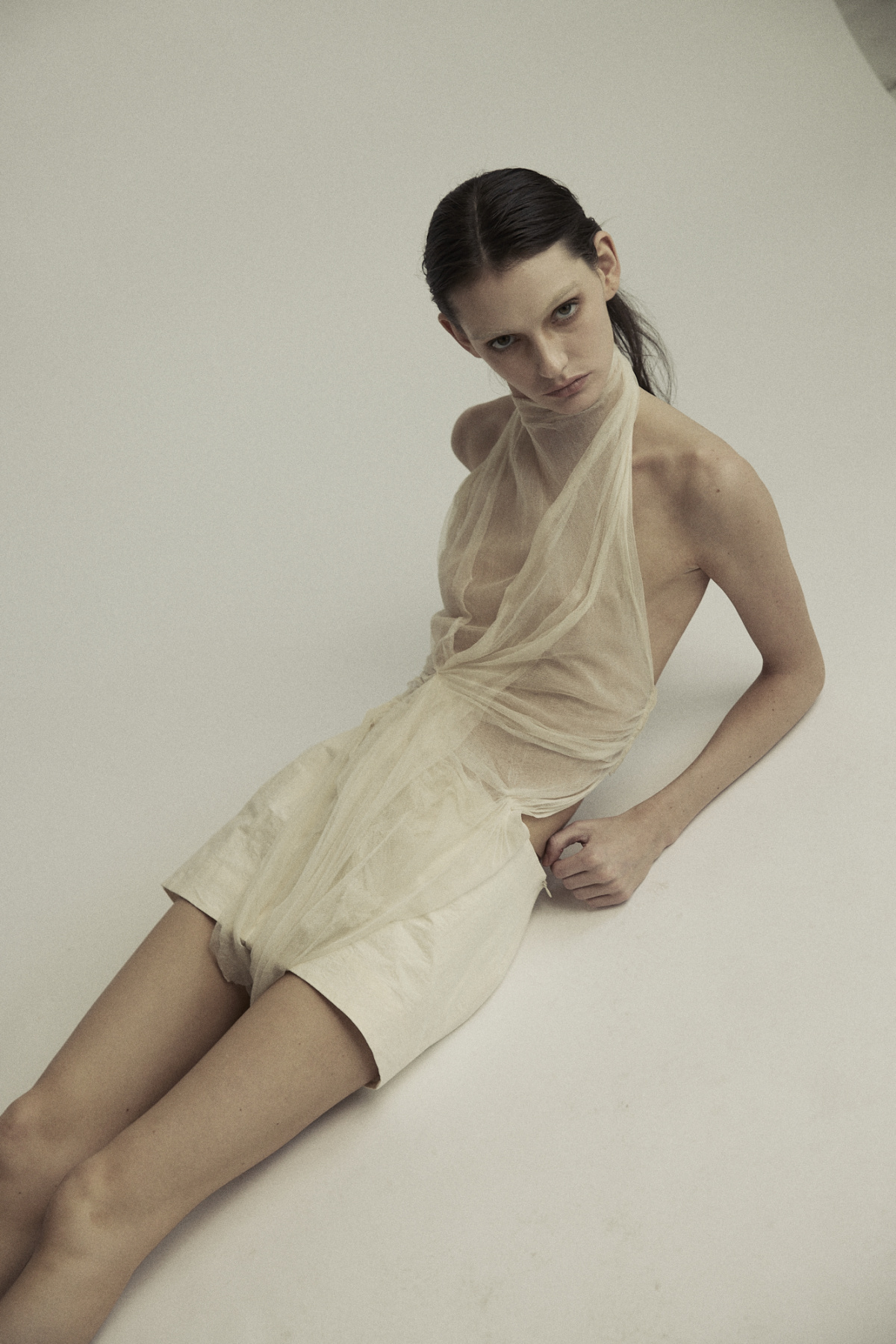
She grew up on Sakhalin, a Russian island closer to Japan than to Moscow. “I started working with fabrics when I was about six years old,” she says. “My mom noticed it. She brought me to the only class that was available there because it’s a very small city.” She lived in Japan for two years as a child, right around 2000, when Tokyo street fashion was at peak insanity. When she came back to Russia, she says, “I was missing that somehow, subconsciously.”
But fashion design felt like a fantasy, not a career. “Being a fashion designer, especially in Russia, it’s like some kind of dream. And what are you going to do with that?” She went to law school instead, earning a degree in international law. “All this time I felt like something was missing. I had so much more to say and so much more to express.” She kept drawing through all four years of law school. Eventually, with the support of her now-husband Michele, she left for school in London, where she says the city “formed my aesthetics and the style I chose in the end.”
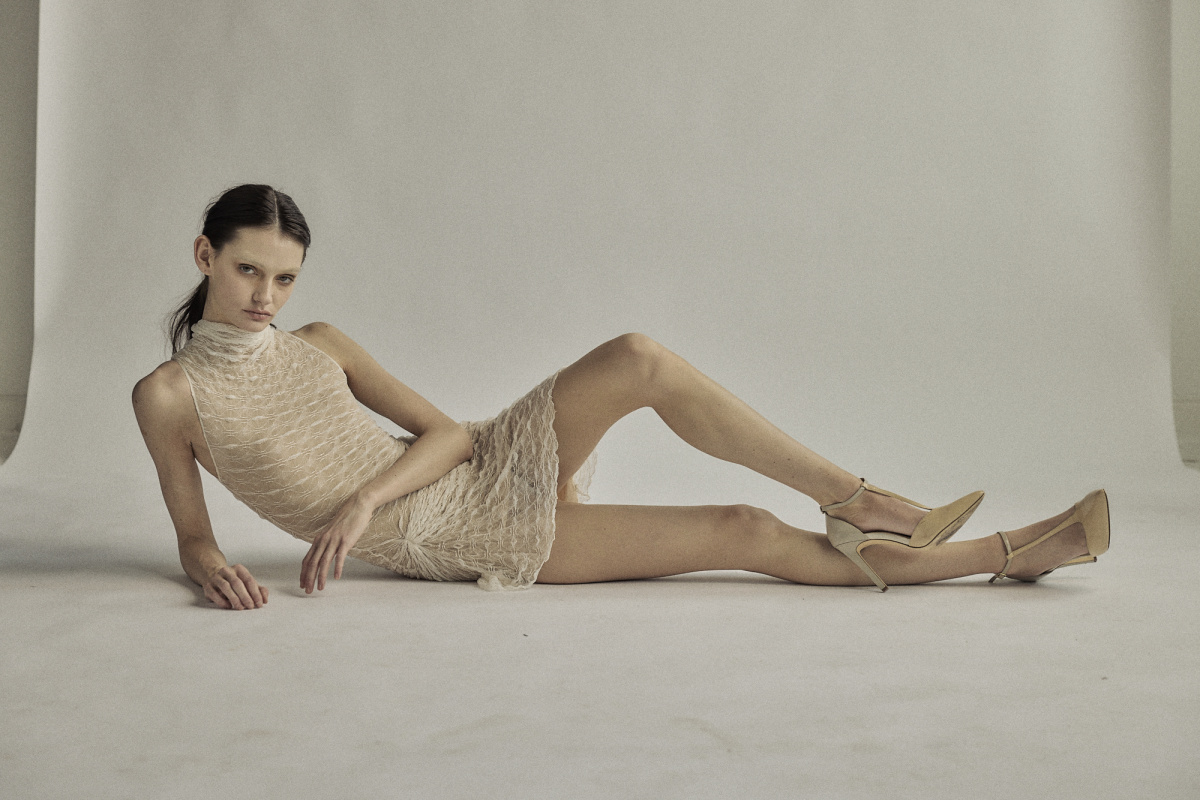
Her graduate collection is where the work gets heavy. It was 2018-2019, and Marina chose to confront what she’d been watching unfold in Russia for years. “The war hadn’t started yet. But when it did start, there was no surprise. There was so much violence, so much police brutality, so many people already in prisons for freedom of speech.” The collection imagined Anastasia Romanova, the executed Romanov princess, returning to modern-day Russia as a kind of armored avenger. Marina mixed traditional Slavic costume with deconstructed police uniforms, wove braids into garments as symbols of feminine strength, and built corsets that functioned as literal armor. “When you take a topic this deep, it’s like psychotherapy in a way.”
Her first commercial collection was called Escapism. “I wanted to create something more visual and light that could give hope.” She graduated into COVID, moved to Puglia with Michele, and started building the brand from scratch, doing everything herself: patterns, tailoring, packaging, website. The only thing she brought in help for was the final construction of the first garments to sell.
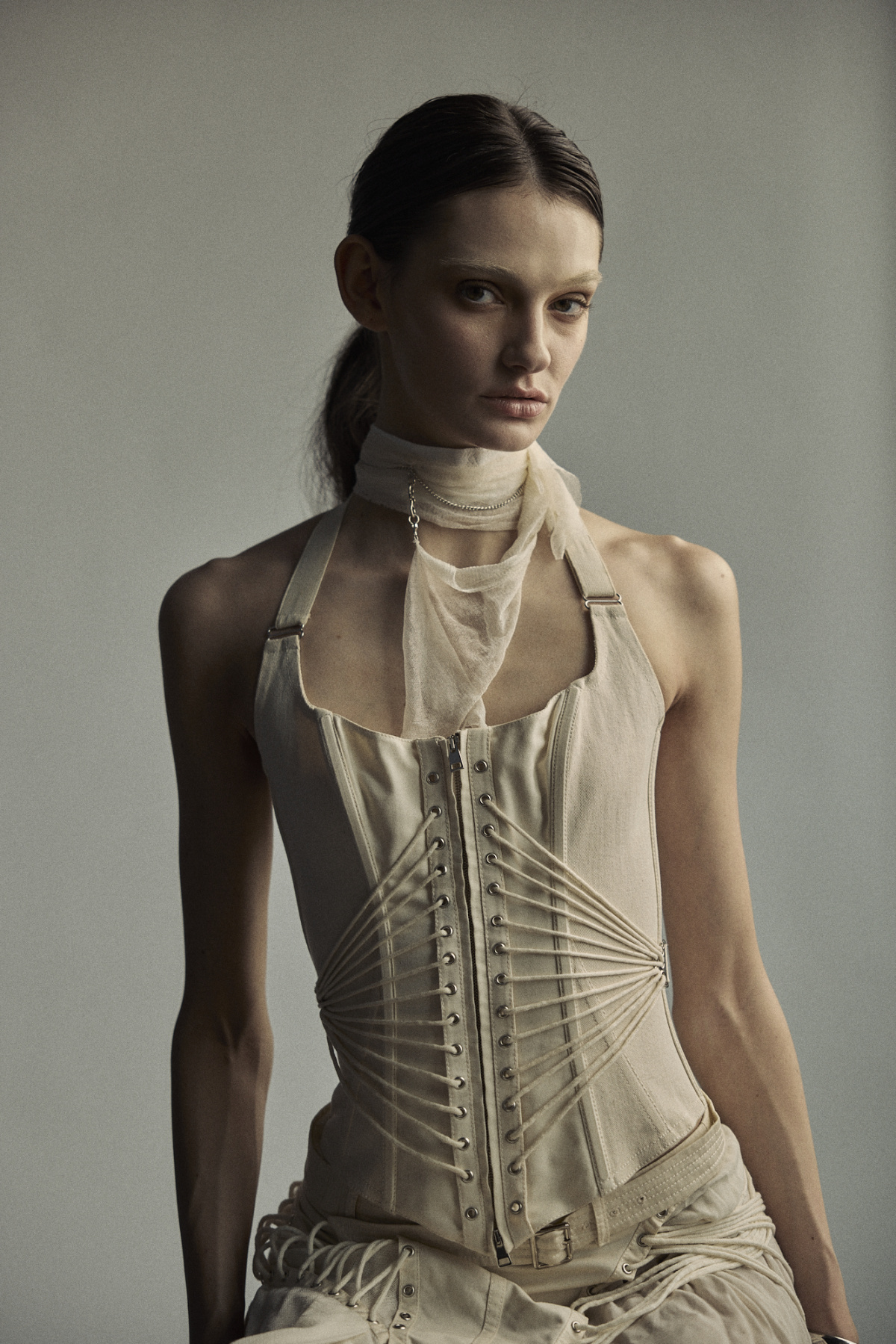
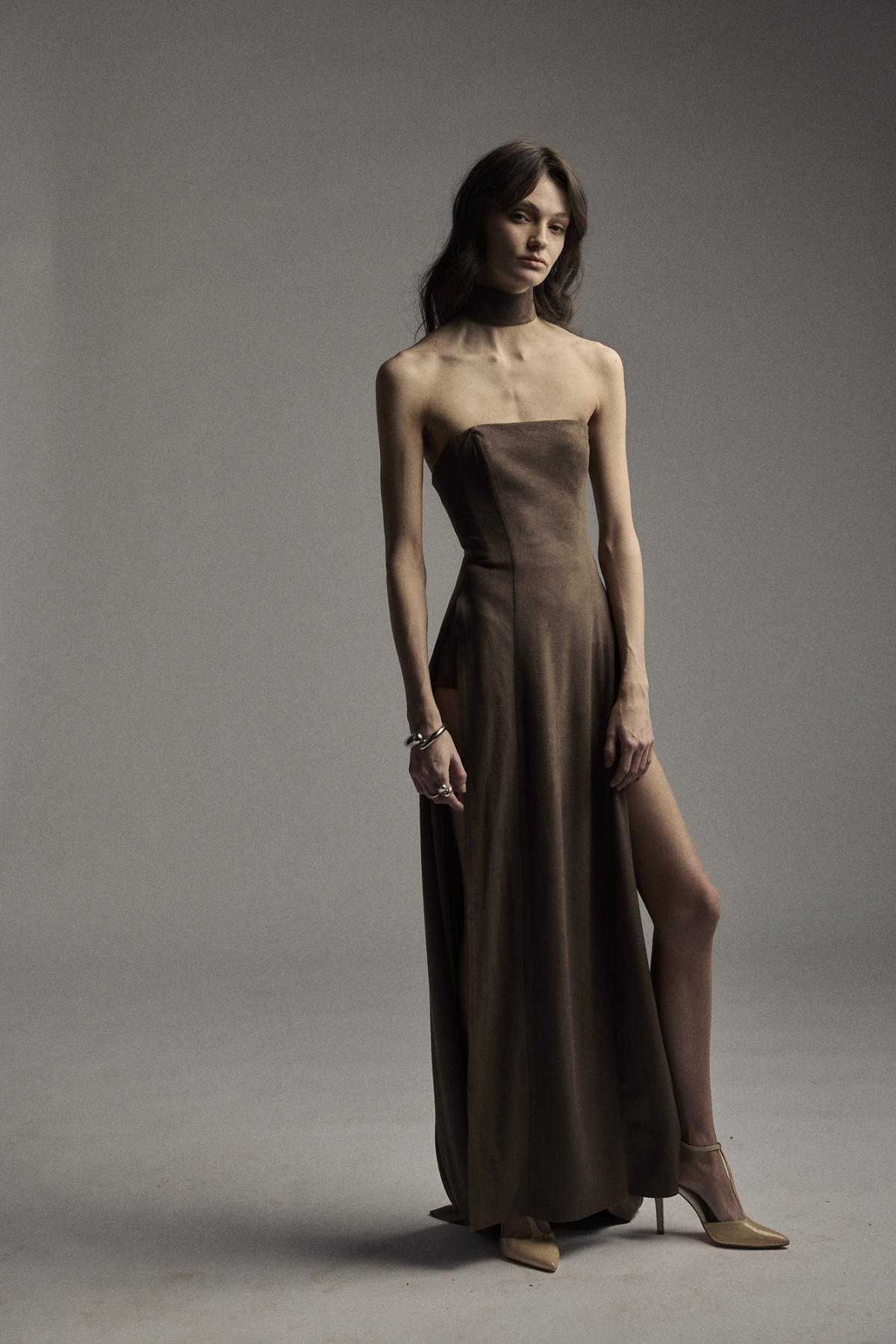
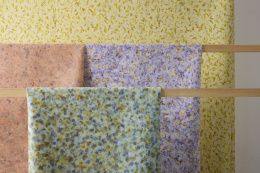
Now in Ostuni, her process begins with sourcing deadstock fabric, often from Italian suppliers who work with houses like Prada and Rick Owens. She puts on music. She drapes the fabric on herself while wearing a nude corset, takes about 50 photos on her phone, and chooses the best one. “I find a fabric that inspires me and I let it lead the design,” she says. “I stopped working in a way where I sketch first. Materials inspire me much more easily and better.” The silk top from her current collection, “Pixie Hollow and Purgatory,” is almost entirely hand-stitched with barely any machine work. Every piece is made to order with two seamstresses, one of them Ukrainian, executing the designs Marina patterns herself.
The music that drives this process is a deep rotation: Massive Attack, Rammstein, She Wants Revenge, Nirvana, Crystal Castles, alongside Russian artists who’ve fled the same political landscape she has, and Ukrainian artists she admires deeply. She collaborated with the Ukrainian singer Luna after designing garments while listening to her music on repeat. “One of the dresses is even called the Moon Dress because Luna means moon in Italian,” Marina says. “I was thinking about this artist and what she would wear in a music video while designing the collection, and she ended up reaching out and using some of the garments for a photo shoot and concert.”
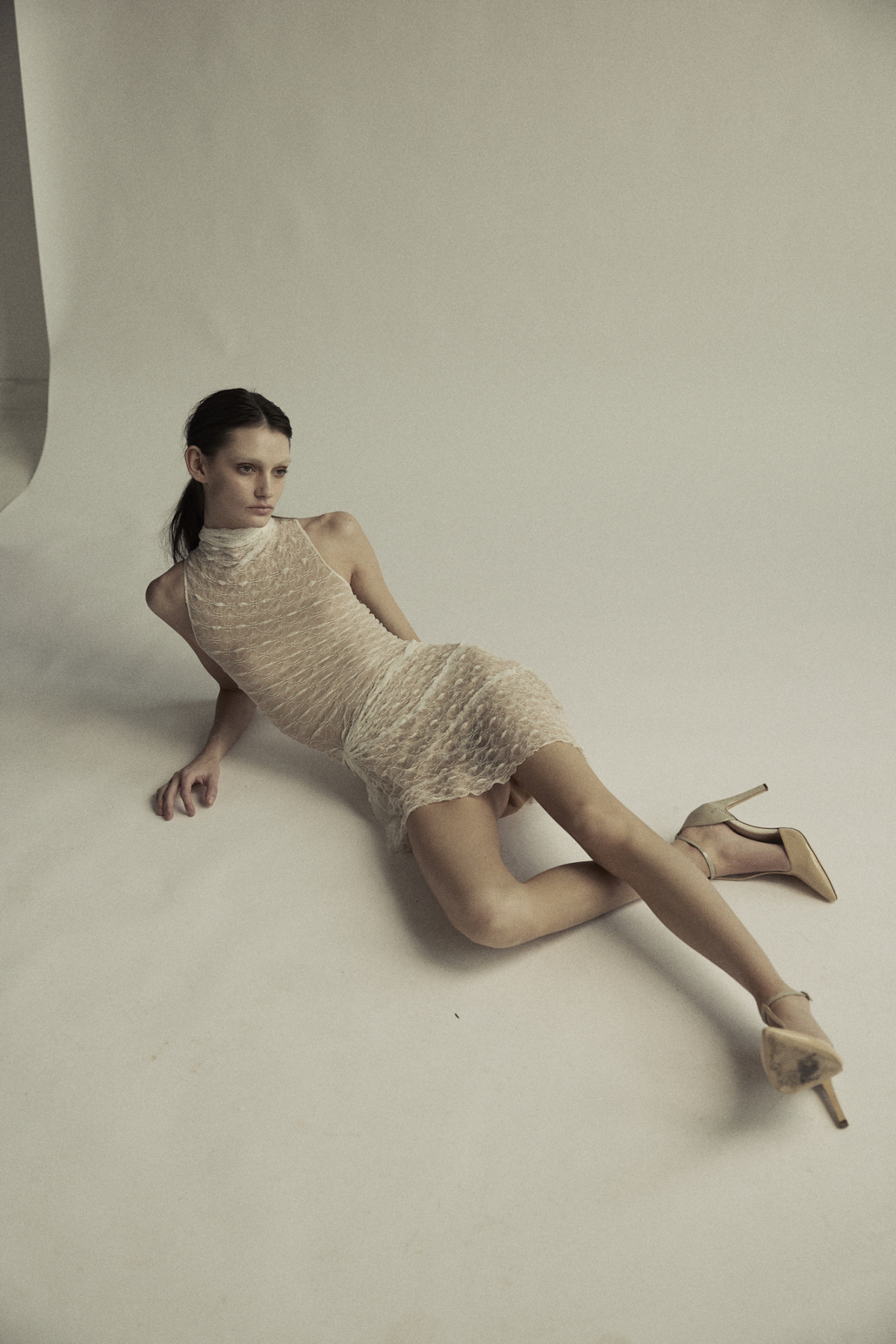
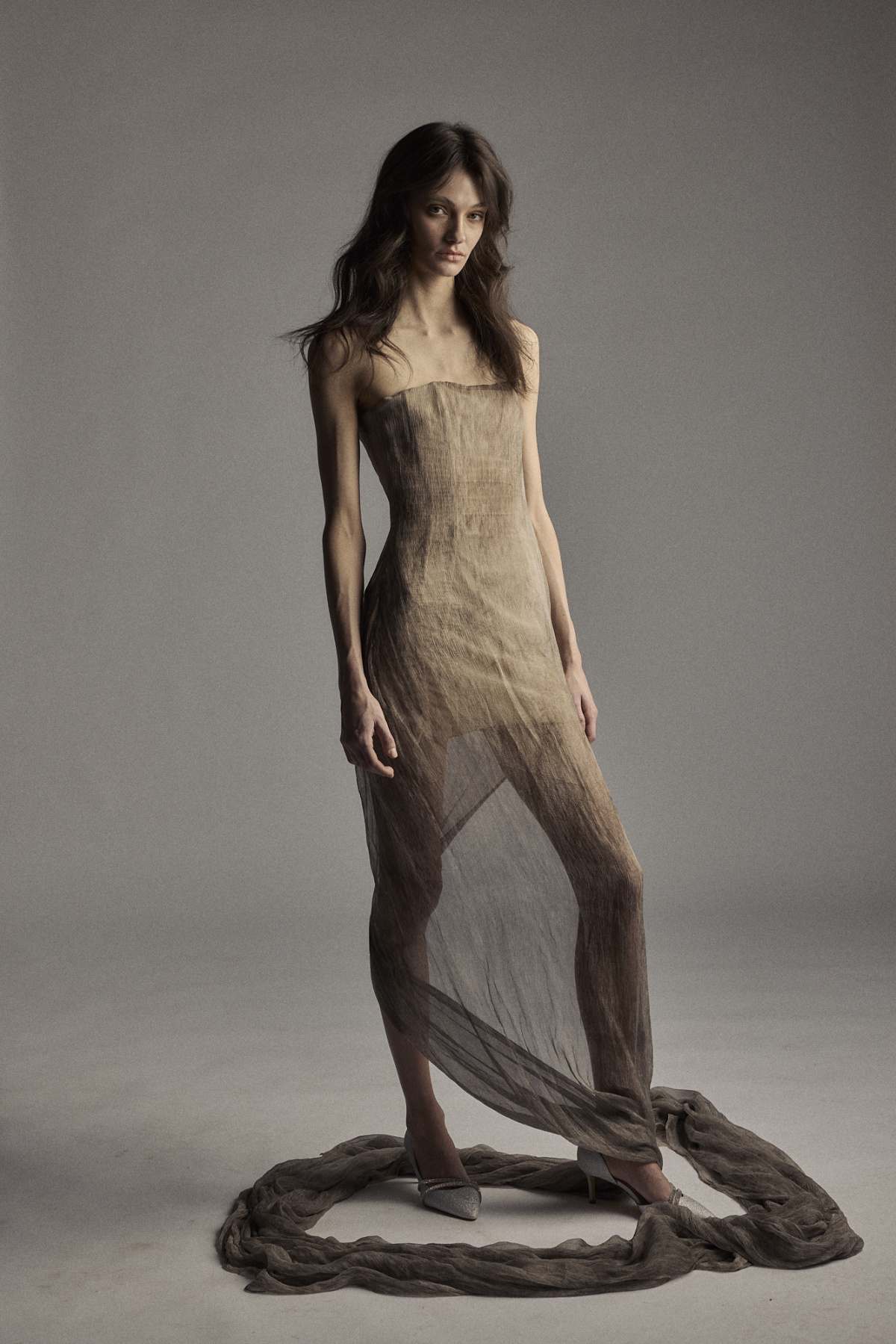
When asked about the gothic undertones, she’s matter-of-fact. “Since I was a teenager, I was goth and I think I still am. It’s like once you are, it just lingers through your life in different ways. Every time I go to this darkness, it’s where I feel so comfortable and so empowered.” But she’s careful about the line between mood and costume. “There is a very cliché subculture for goth people. Maybe what I want in the new collection is to go more dark and modern, but without going into too much costuming.”
She wants to stay small, maybe do a fashion show someday, but only when it can be a piece of art, not a sales exercise. Maybe a showroom in New York or London. For now, the work stays in the studio in Ostuni where they ship mostly to women in LA and New York, and where the weekly undifferentiated waste from production fits in a bag you could hold in one hand.
A version of this article originally appeared in Sixtysix Issue 16.
Additional reporting by Gianna Annunzio. Hair & makeup by Celena San Juan, LAB Artists Agency. Model: Chloe Fox, Ford Models