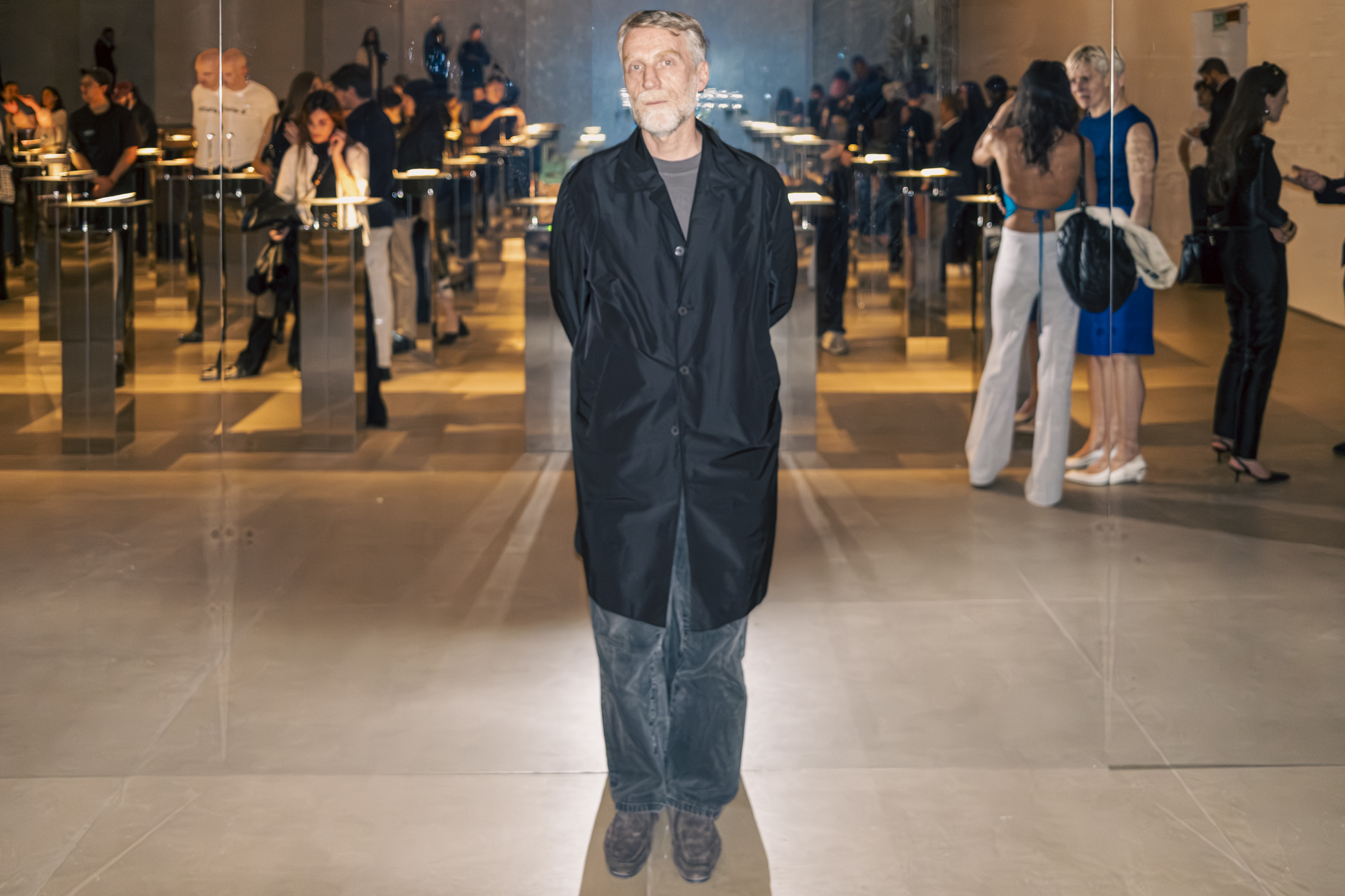
The fountain in front of Castello Sforzesco is catching the late afternoon light when I walk over to Via Luca Beltrami, where a line has already formed outside Jil Sander’s Milan headquarters. Despite the cocktails and DJ down the hall, the exhibition room is quiet in a way Milan Design Week rooms almost never are. There are no products on the walls, no seating collection to debut, no collaboration with a furniture house to unveil. Instead, 60 chrome lecterns rise from the floor in a mirrored room, each holding a single book. Visitors were meant to be handed white gloves at the door, but they were absent during the reception, perhaps a wise attempt to avoid dropping a champagne flute.
This is Reference Library, the first project Simone Bellotti has done for Milan Design Week since taking over Jil Sander last March. Developed with Apartamento magazine and the Milanese architecture practice Studioutte, it is an exhibition of 60 books chosen by 60 creatives across disciplines: Lykke Li, Sofia Coppola, Celine Song, Faye Toogood, Nifemi Marcus-Bello, and Simone himself. Each title comes with a short note from the person who picked it. Visitors move slowly, heads bent down to read. It is, for a design week opening, almost eerily focused.
I met Simone at the back of the exhibition. He is 47, born in Giussano and raised in Milan, a graduate of Istituto Secoli. He spent his early career at A.F. Vandevorst in Antwerp before cycling through Gianfranco Ferré, Dolce & Gabbana, Bottega Veneta, and a 16-year run at Gucci under both Frida Giannini and Alessandro Michele. Then Bally, where he was promoted to creative director in 2023 and ran four seasons before being tapped to succeed Luke and Lucie Meier at Jil Sander last spring. This is his first extended public gesture outside of a runway.
-
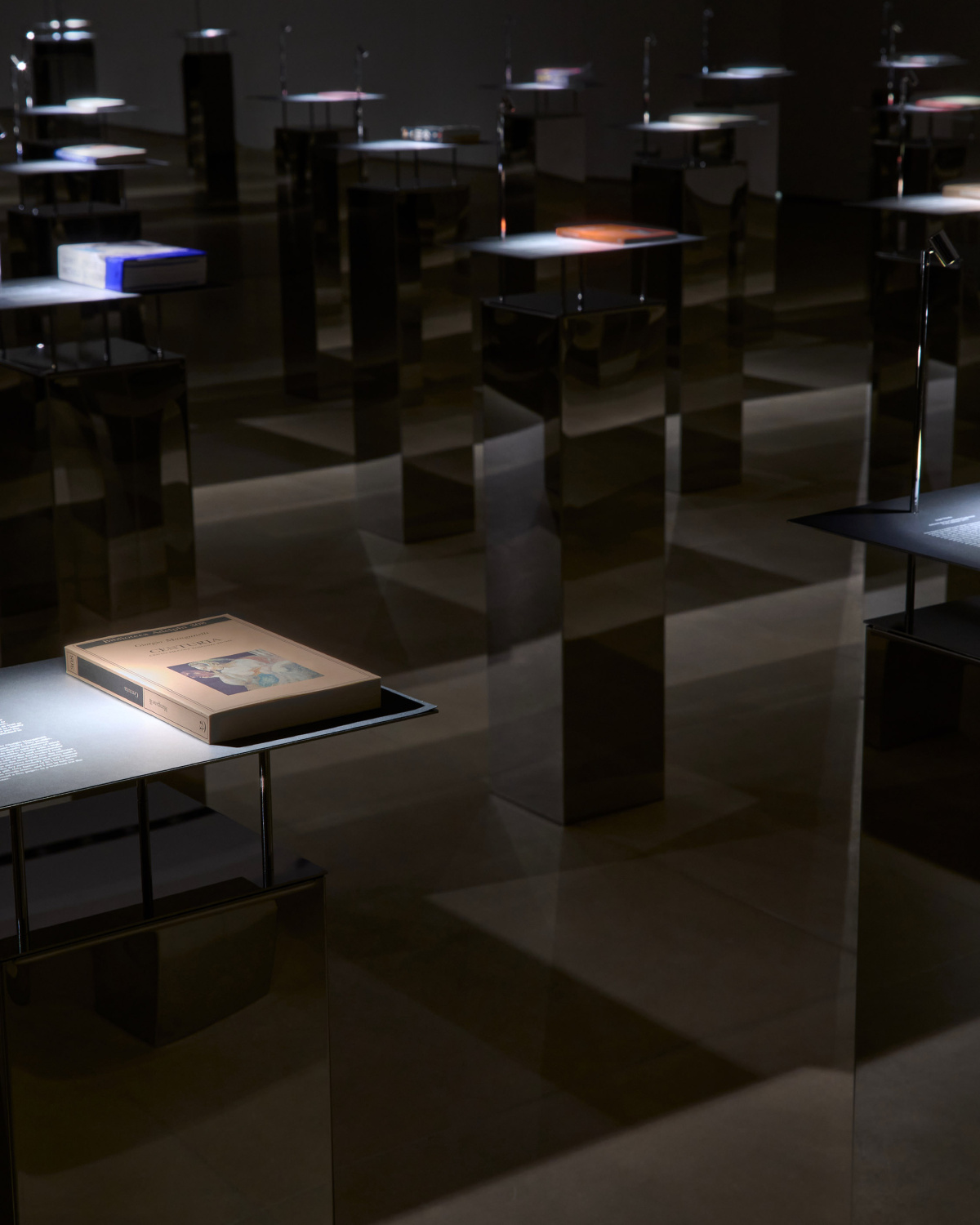
- 60 chrome lecterns hold 60 books, each chosen by a different creative, at Jil Sander’s Reference Library.
-
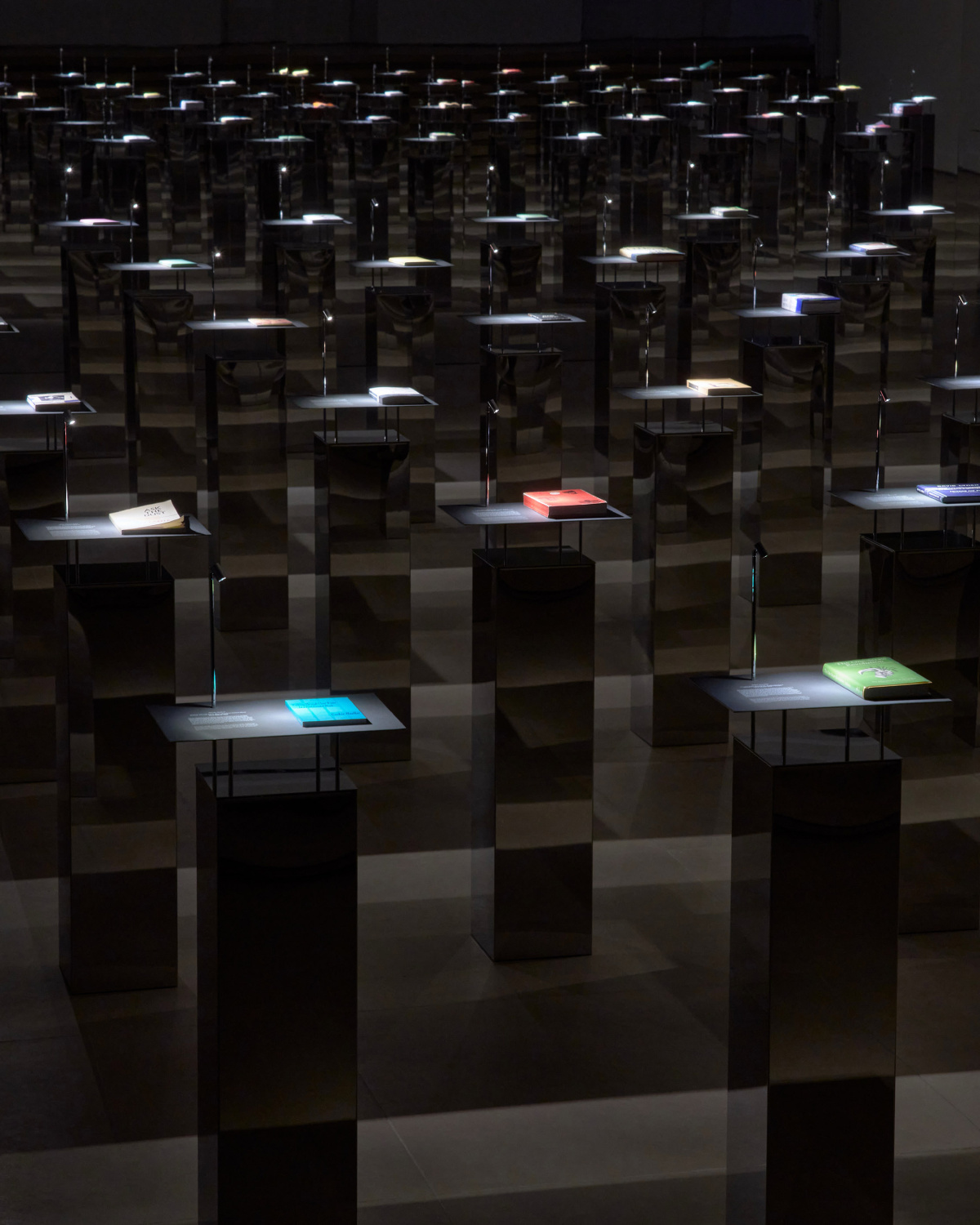
- Contributors ranged from Sofia Coppola and Lykke Li to Faye Toogood and Nifemi Marcus-Bello, each paired with a short note on the book they picked. Photos courtesy of Jil Sander
“Our conversation for this exhibit began last September,” he tells me. He and Marco Velardi, one of Apartamento’s founders, have known each other for years. “They proposed this project and I thought it was a great idea. I’m very happy to see the results, and to see all these people that are here, taking their time, reading old books.”
The premise is simple. At a design week that tends to reward spectacle, the oversized, the inflated, the colorful, this approach came off as oddly radical. No celebrity ribbon-cuttings. No craft fetishism. No product. Just 60 books, a mirrored room, and an invitation to slow down for 15 minutes.
“When you put a book that influenced your life, your work, you are doing an act of kind of revealing something from you,” Simone says. “I like this feeling of intimacy.”
He tells me about a moment from that morning where he stopped at Sofia Coppola’s selection, a novel by the Japanese writer Yukio Mishima. Simone didn’t know the book. “The writer had a very intense life, and it was something that I didn’t know. This is what this exhibition is about. It’s about discovering something, sharing something. You’re learning.”
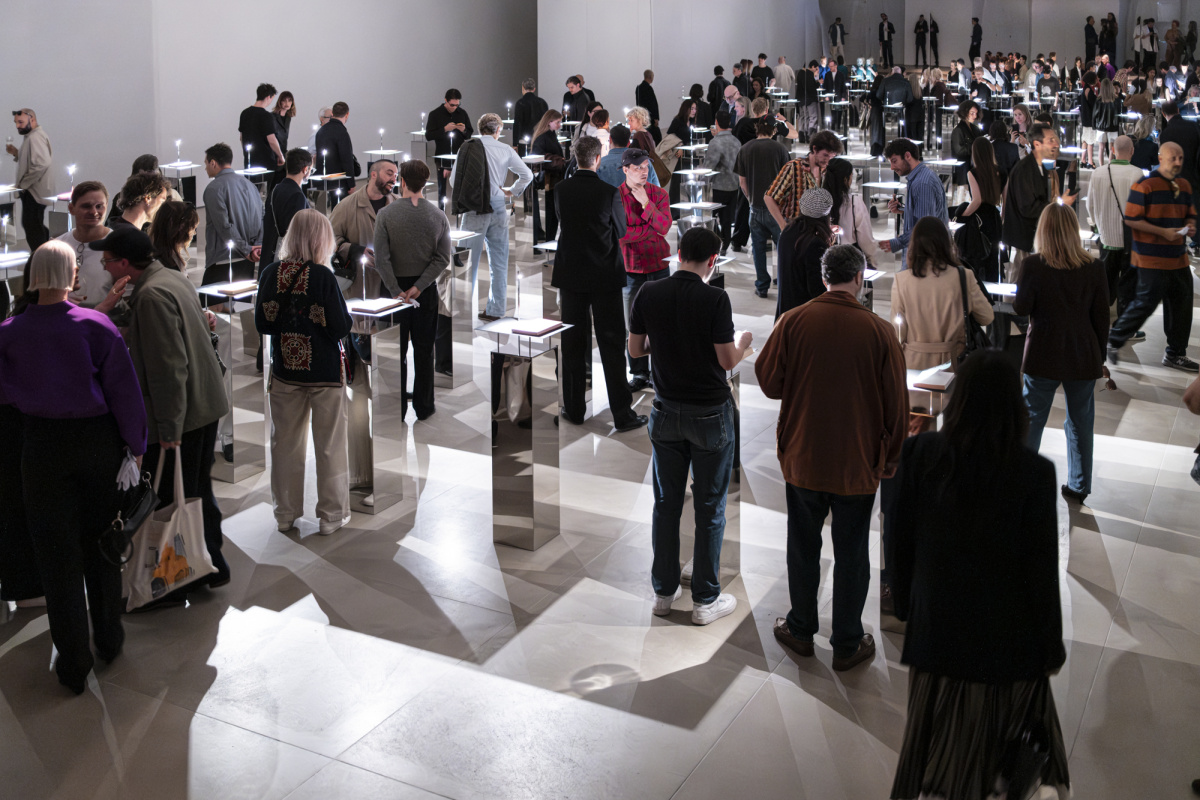
At the opening cocktail, visitors settled in to read, an unusual sight for a Milan Design Week reception. Photo by Chris Force
He connects the concept back to his first Jil Sander collection, which he showed in September. “My first show at Jil also dealt with the idea of learning. This is a brand that needs to be studied,” he says. “I felt a kind of connection between that first step and this. It’s still a way to represent this feeling, and this envy to learn and go deeper.”
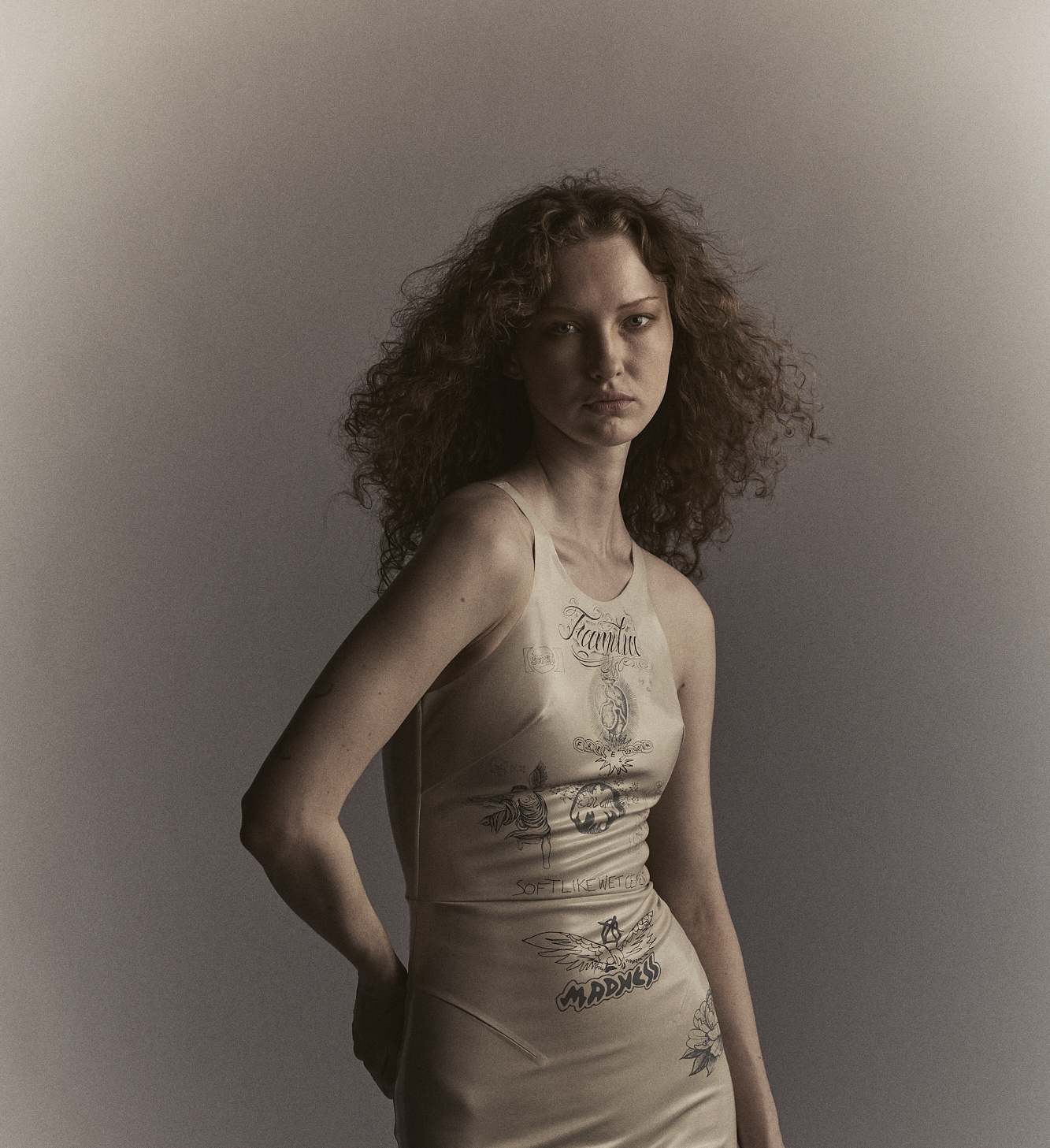
Jil Sander has always been built on restraint. Jil herself founded the house in Hamburg in 1968 as a study in minimalism and control. Simone’s first collection was about pushing against that. He told me the first question he asked was, “how do you add to a brand that is built on restraint?” So he let the body out. Shirts and pencil skirts came cut with diagonal openings, Fontana-esque slashes revealed stripes of skin. Waistbands on trousers were sliced open. Shift dresses had round portholes carved into the front, framing matching bras in the same suiting fabric. Sheer overlays wrapped the body.
-
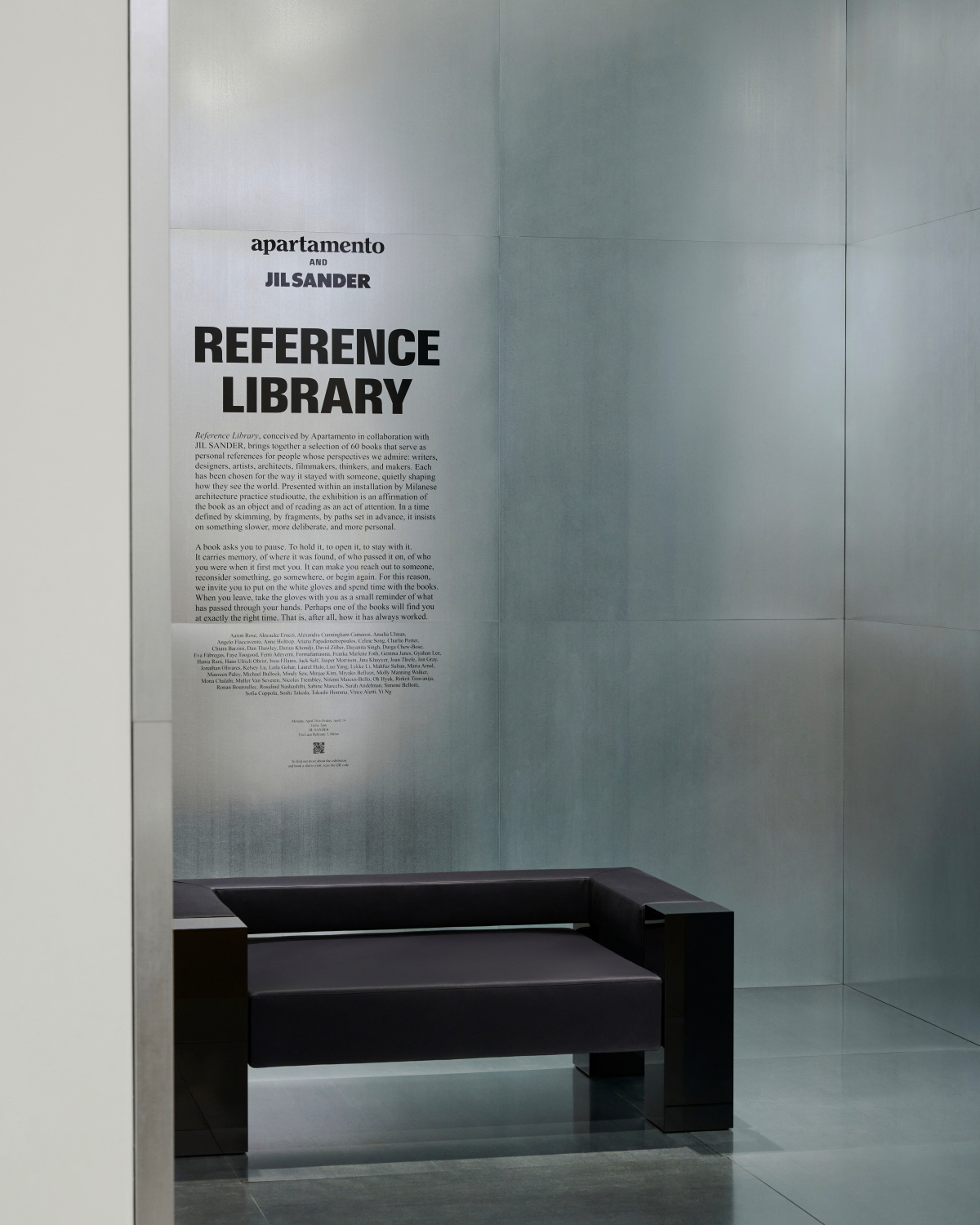
- The entrance to Reference Library, the concept developed by Simone Bellotti with Apartamento magazine and Milanese practice Studioutte.
-
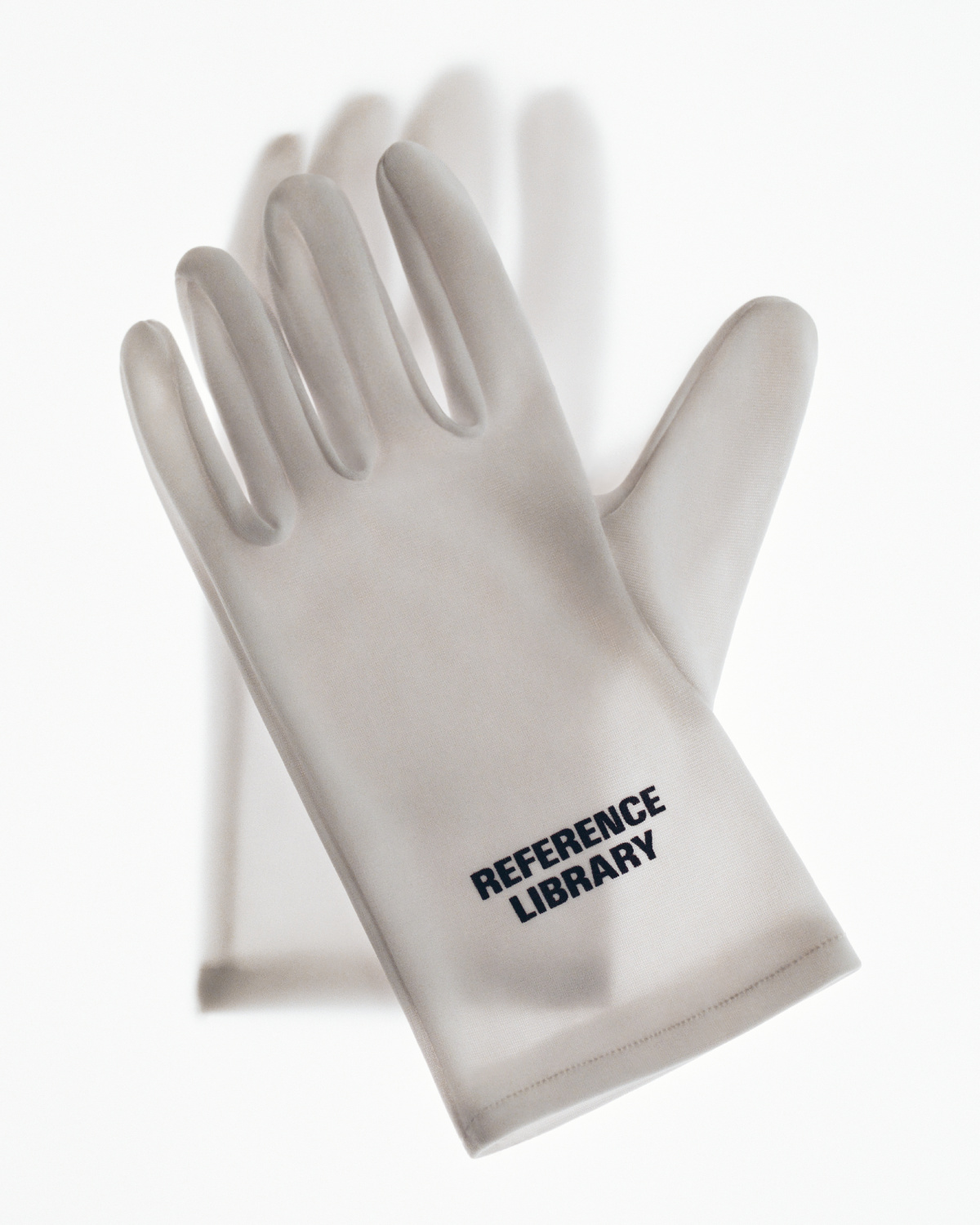
- White cotton gloves were offered at the door, a quiet instruction on how to handle the books.
The second collection was the opposite move. Extra folds of fabric, decoration, as a test of what happens when you introduce what the house has spent 60 years refusing. You have to know the rule cold before you can break it. You have to study the brand. Reference Library, read this way, is a slightly different version of the same exercise.
It is also an argument about where luxury is heading. Most houses during design week reach for the obvious lever: a celebrity, a heritage craft demonstration, a limited-edition collaboration that gets photographed and posted and forgotten by Friday. This does none of that. When I raise the anti-celebrity read, Simone doesn’t quite accept it but he doesn’t duck it either. “Fashion is very related to this world of celebrity, that became part of the game. But this is a moment where even celebrities take their time to share something.”
He is just back from Florence, where he spent Easter at Palazzo Strozzi seeing Mark Rothko’s major retrospective, curated by the artist’s son Christopher Rothko and Elena Geuna. He bought the catalog of Rothko’s collected writings, the letters and manifestos, including the one Rothko sent to the New York Times explaining what his paintings were doing. Simone starts describing the show and slips into a register that does not sound like he is only talking about Rothko anymore.
“That show is like walking through his mind,” he says. “It’s so powerful. You can see everything happening. It’s really strong.”