Rimowa has spent over a century making luggage for people on the move. Its Design Prize, now in its fourth edition, is doing something more ambitious: asking the next generation of designers to rethink what mobility means entirely.
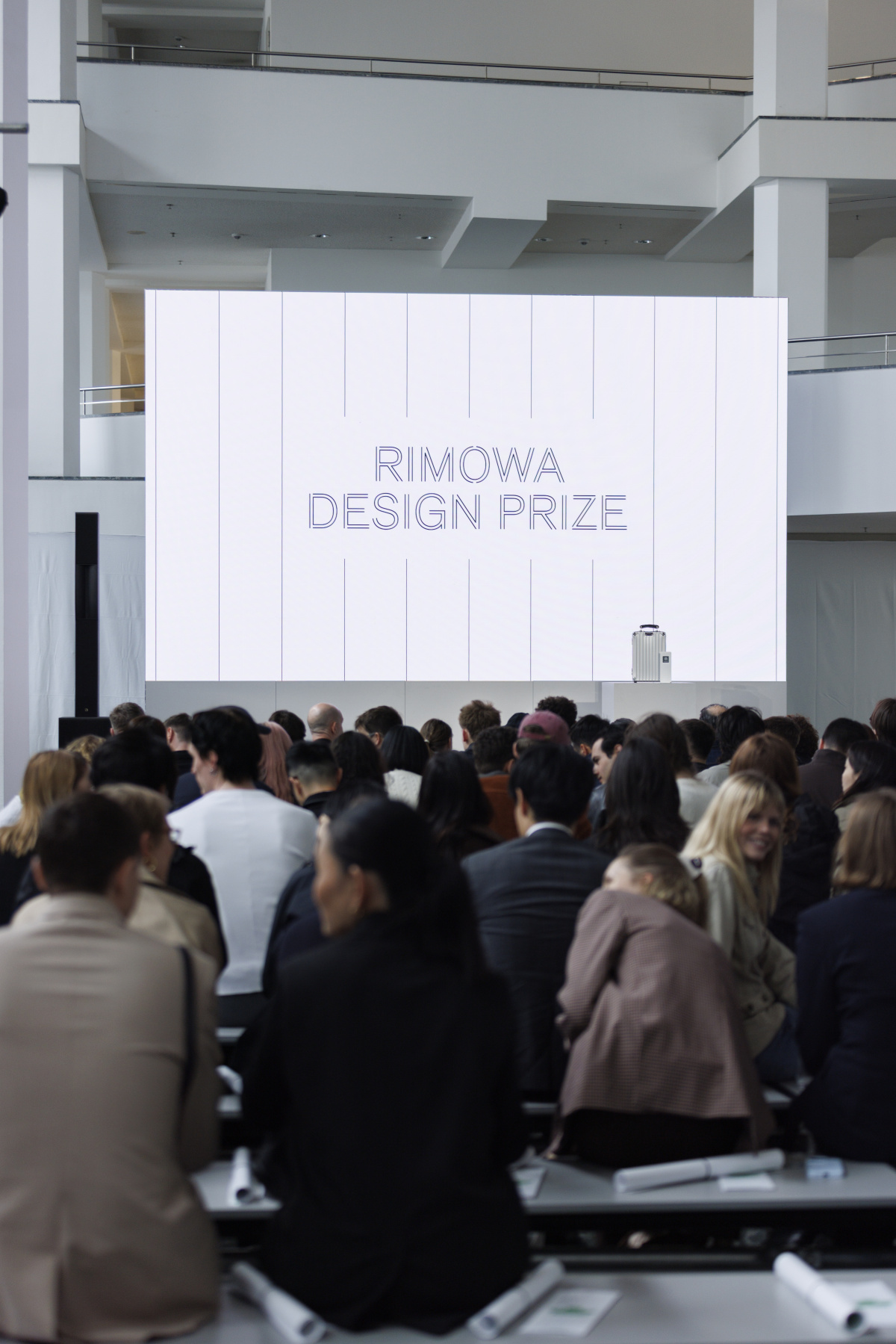
The fourth edition gathered emerging designers, industry leaders, and cultural figures at Berlin’s Kulturforum on May 11, around projects with the potential to drive meaningful change. Open to students from more than 40 universities across Germany, the prize has grown considerably since its launch in 2023 when just 15 institutions took part. The theme, “mobility,” is deliberately broad, encouraging entrants to look beyond transport and consider how people move through physical, social, and digital spaces.
-
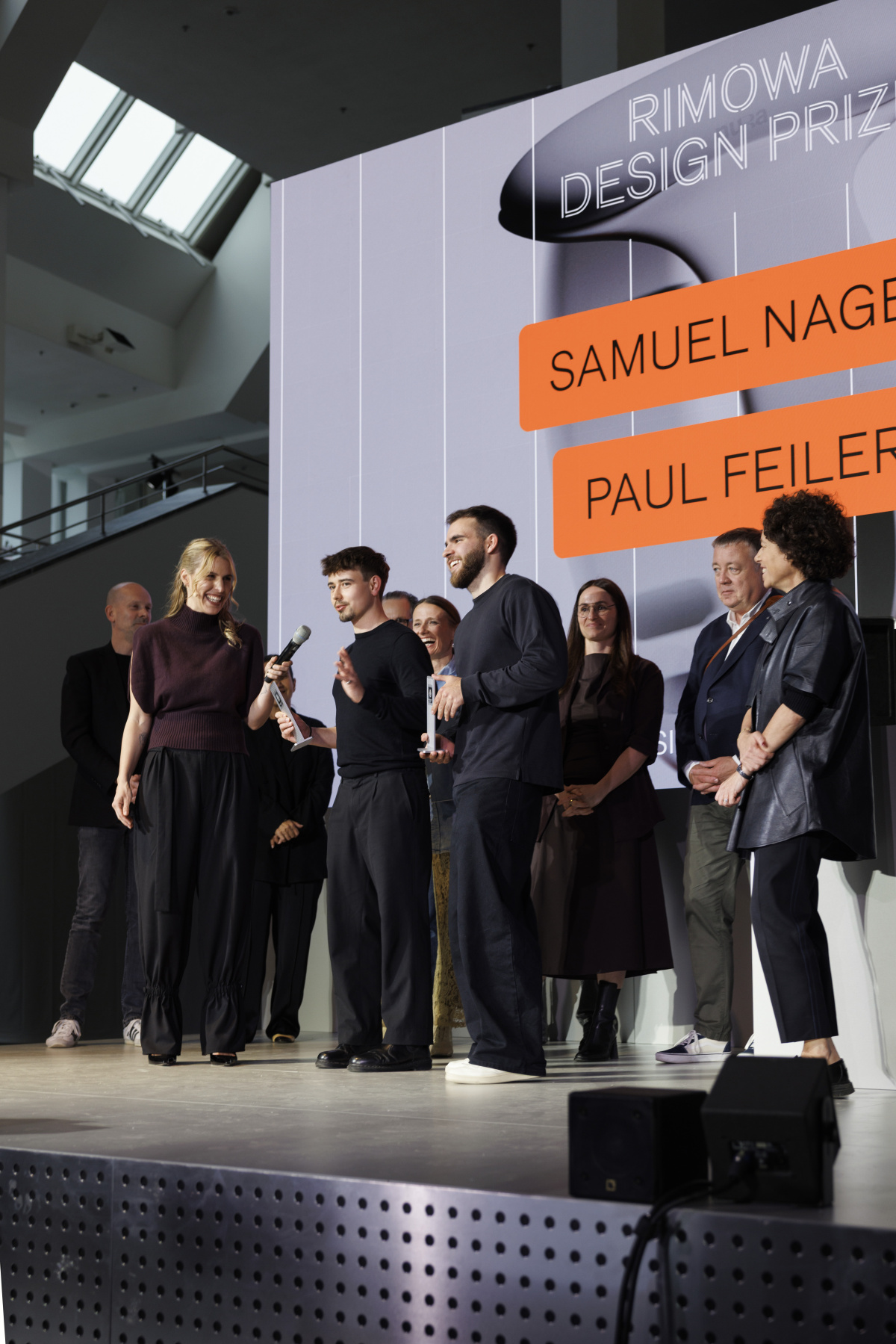
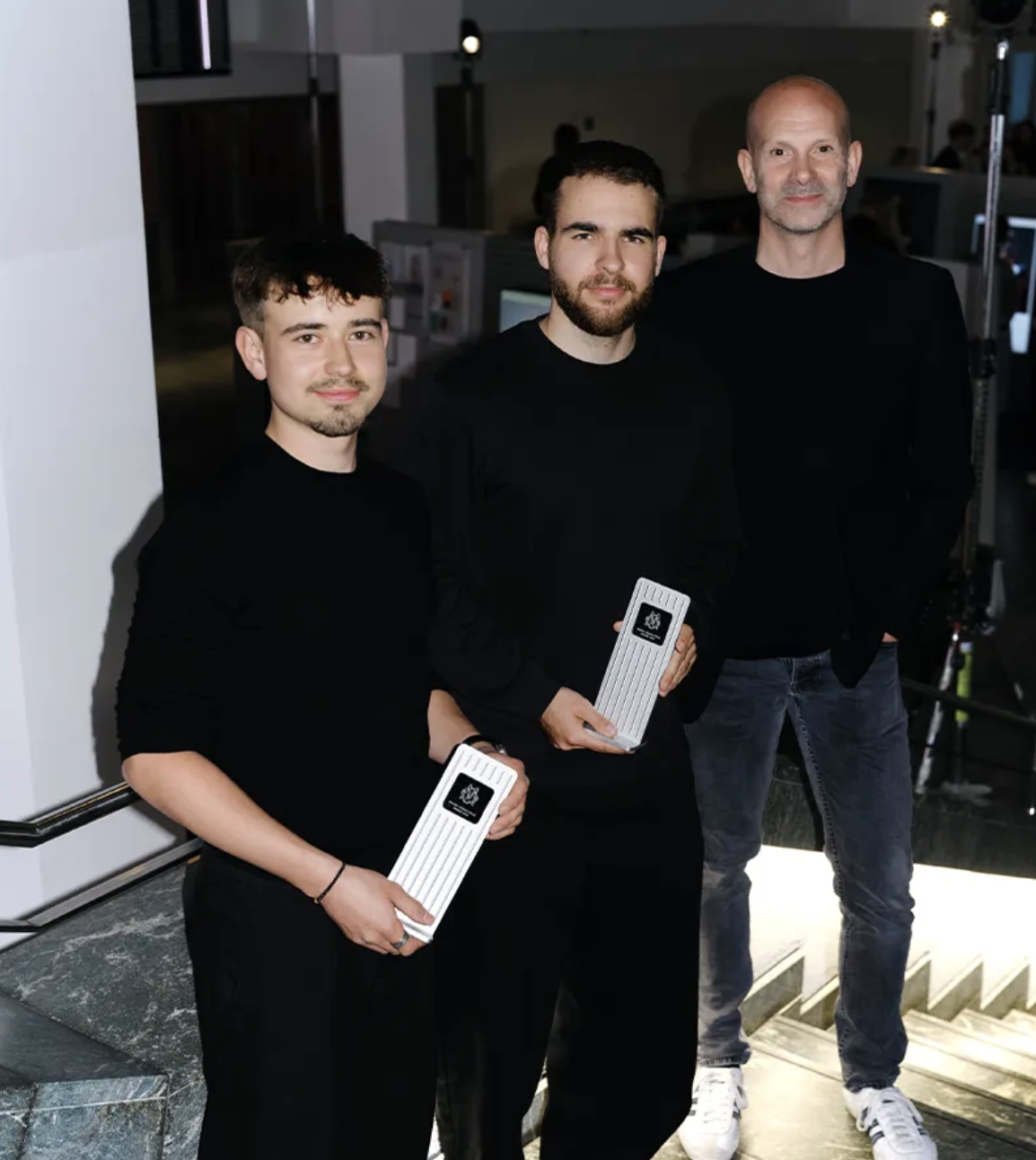
- The first prize of €20,000 went to Samuel Nagel and Paul Feiler for Nura, a wearable bracelet that bridges communication between deaf and hearing people.
-
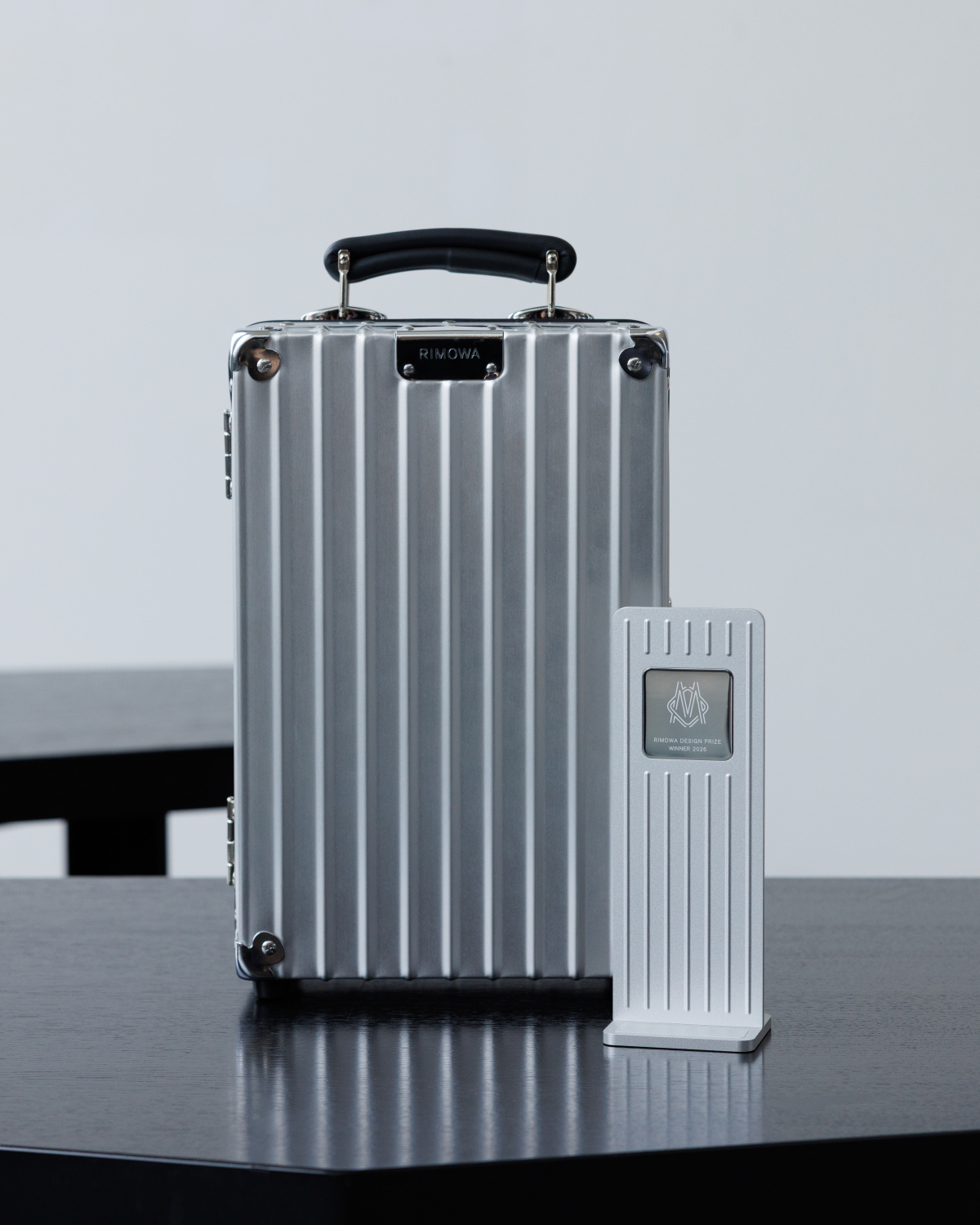
- For deaf users, spoken words are transcribed and displayed through a visible dot interface.
Seven finalists presented their work to an international jury that included designer Konstantin Grcic, e15 partner and art director Farah Ebrahimi, transdisciplinary practitioner Matylda Krzykowski, Studio Hanne Willmann founder Hanne Willmann, ignant creative director Clemens Poloczek, and Tim Richter, alongside Rimowa CEO Beatrice Monguidi and chairman Alexandre Arnault.
The first prize of €20,000 went to Samuel Nagel and Paul Feiler for Nura, a wearable bracelet that bridges communication between deaf and hearing people. The device uses EMG sensors to read muscle activity in the forearm and translate sign language into spoken words, while an integrated camera analyses facial expressions to support accurate interpretation.
For deaf users, spoken words are transcribed and displayed through a visible dot interface. Developed under the mentorship of Tim Richter, head of industrial design at Siemens Healthineers, the bracelet draws its aesthetic from the flowing shape of a manta ray, reimagining what an assistive device can look and feel like.
-
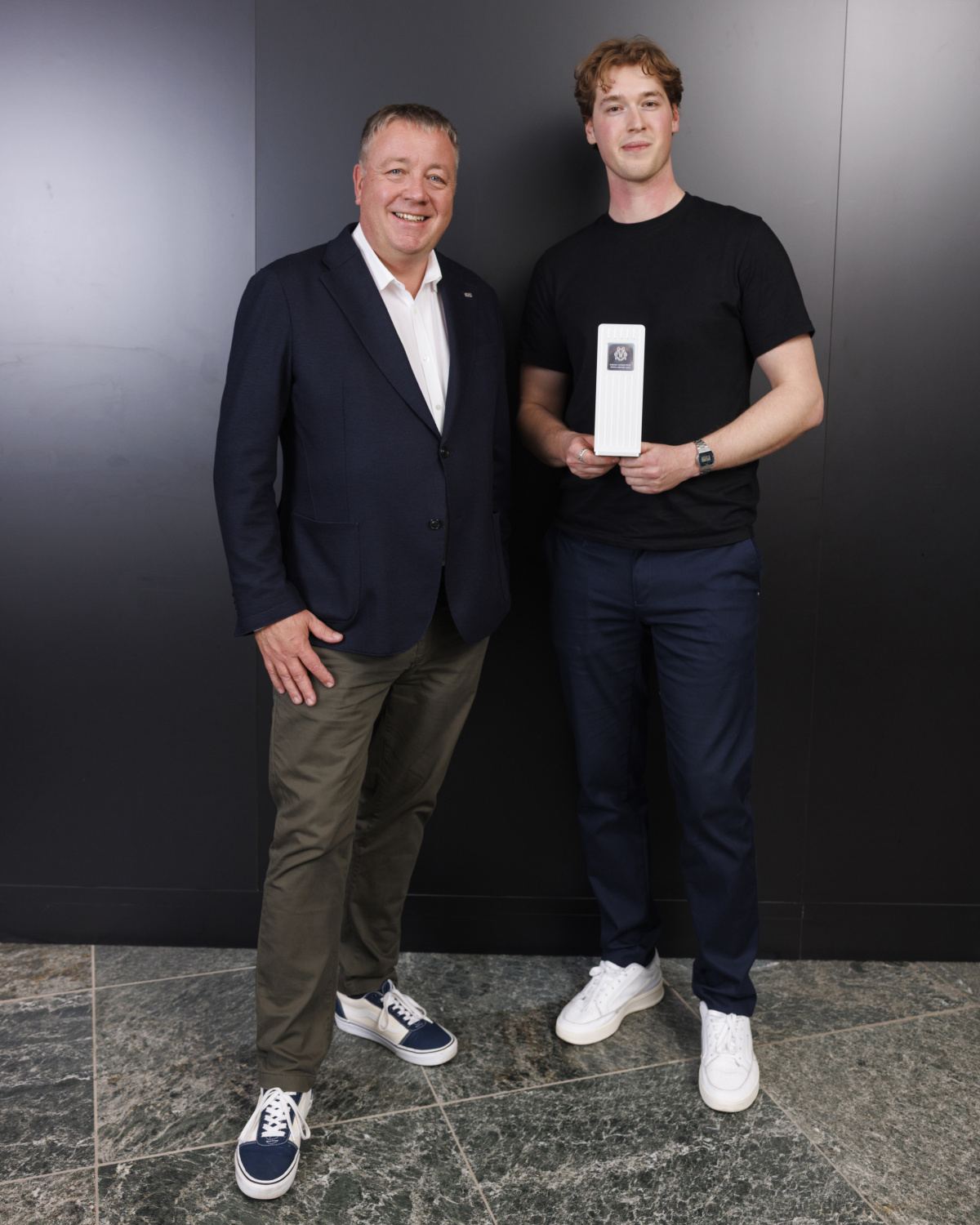
- Special Mention recipient Niklas Henning with his mentor Stefan Daniel, Vice President of Photo and Design at Leica Camera AG, at the Rimowa Design Prize 2026 ceremony.
-
- Niklas’ Paludi Harvester, a system of two autonomous machines designed to restore peatlands through reed farming, was awarded €10,000
A Special Mention and €10,000 prize went to Niklas Henning for the Paludi Harvester, mentored by Stefan Daniel of Leica Camera AG. Two coordinated autonomous machines harvest reed grown on peatlands and process it into standardized bundles and bales, designed to operate during narrow harvesting windows in freezing conditions. It’s a system built for one of the most pressing ecological challenges of our time, restoring peatlands while protecting the ecosystems around them and reducing the physical strain placed on workers.
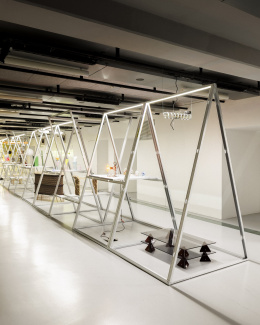
The remaining five finalists each received over €5,000. Valerio Sampognaro’s Aerodomestics, mentored by Farah Ebrahimi, explored lightweight furniture built from aluminum tubes and tensioned fabrics rather than solid panels, inspired by kite construction and light enough to interact with wind. Tobias Kremer and Yannick Stilgenbauer introduced A.R.C., an inflatable cooling capsule for medicines and food designed for use when infrastructure collapses during natural disasters, mentored by Konstantin Grcic.
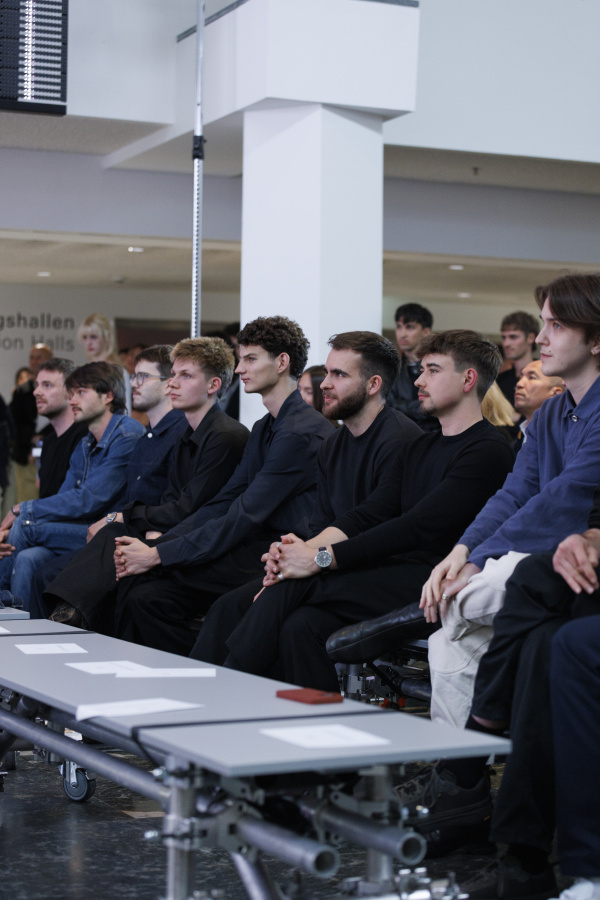
Seven finalists presented their work to an international jury that included designer Konstantin Grcic and e15 partner and art director Farah Ebrahimi.
The finalists also had the opportunity to chat with designer Sabine Marcelis in the weeks leading up to the ceremony. Sabine shared her own experience of navigating the early stages of a creative career.
“I very much reflected on my own journey, trying to give them bits of advice that I certainly could have used.” she says. “Mistakes I made myself and what I would and wouldn’t do again if I was in their situation.”
Rather than steering each finalist toward a particular outcome, she focused on helping them ask better questions of themselves. “There were very diverse projects and each could go in a very different direction,” she says. “These young creatives are at the beginning of their journey, which can take shape in equally different directions.”
For Sabine, the value of a platform like the Rimowa Design Prize is personal as much as professional. “It’s not easy being a starting designer in these times,” she says. “I feel privileged to get involved wherever I can and share my experience. It’s so important to lift them up and give them a platform to grow from.”
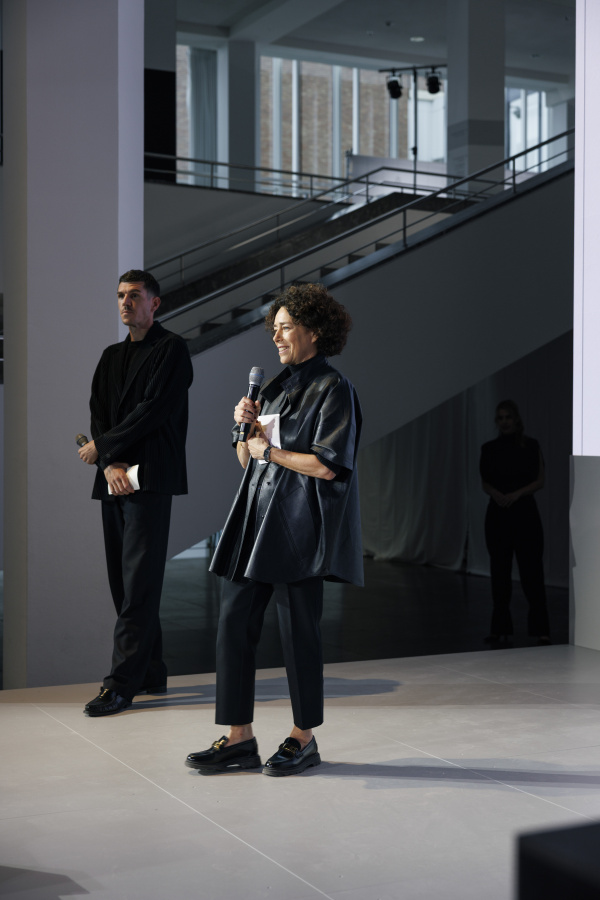
Rimowa CEO Beatrice Monguidi at the fourth edition of the Rimowa Design Prize ceremony, held at Berlin’s Kulturforum on May 11.
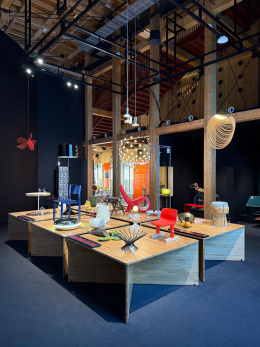
Beyond the prize money, finalists gain access to professional workspaces, industry networks, and mentorship from some of the most respected names in design. The finalist projects will be exhibited alongside winning projects from previous editions at the Museum für Angewandte Kunst Frankfurt this month, giving the work a life beyond the competition.