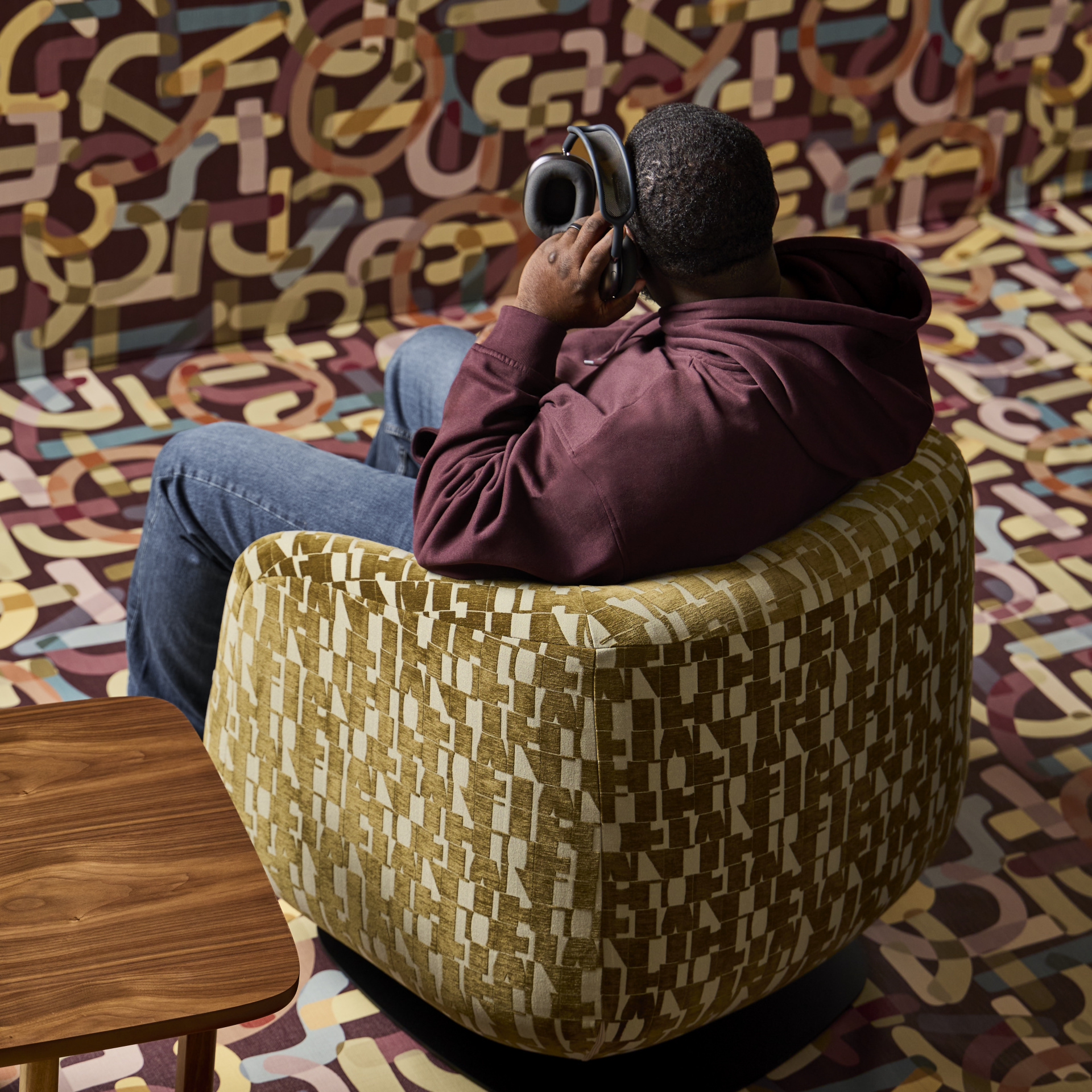
The first drawing in the Michael Ford x Momentum Collection wasn’t made by an architect. It was made by a 6-year-old with his dad’s digital tools, sketching breakdancers as kinetic lines that twisted and collided across the screen. That 6-year-old was Mason Ford, the son of designer and architect Michael Ford, and the drawing became Breakin‘, one of five patterns in a collection that won the Best of NeoCon Gold Award in Textiles: Upholstery last month.
Michael says he could have cleaned it up. Instead he spent the whole process trying not to.
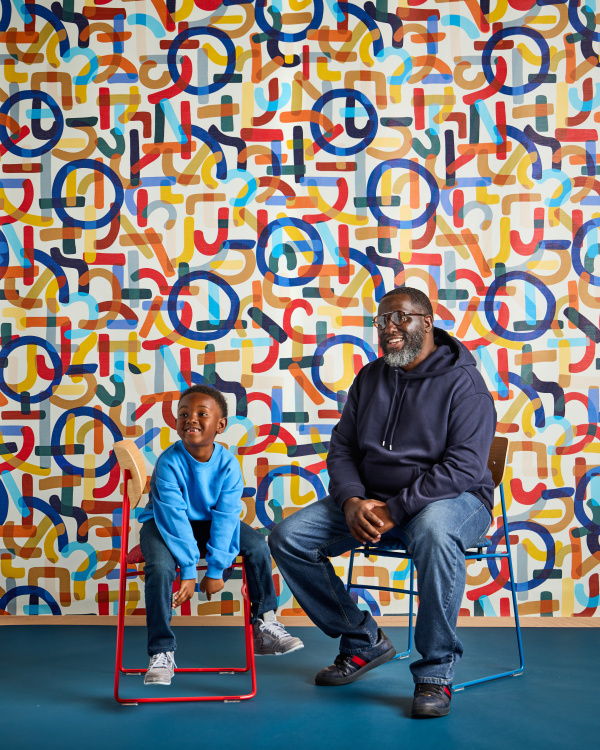
Based on a drawing by Michael’s son, Mason, Breakin’ translates a child’s freehand sketch of breakdancers into a wallcovering built to perform at architectural scale.
“Mason drew the figures with the freedom children naturally have before they begin questioning whether something is correct, polished, or marketable,” he says. “My responsibility was not to redesign his work. It was to protect that energy while helping translate it into a wallcovering that could perform at an architectural scale.”
That instinct to protect the source rather than polish it away runs through Michael’s entire collection. He’s spent more than two decades arguing that hip hop and architecture share the same DNA: sampling, layering, rhythm, repetition, coded language. This collection is the first time that argument has had to survive contact with an actual bolt of fabric. It’s his first textile and wallcovering collection with Momentum, and it earned him a 2026 HiP Award for Designer for Greater Good category.
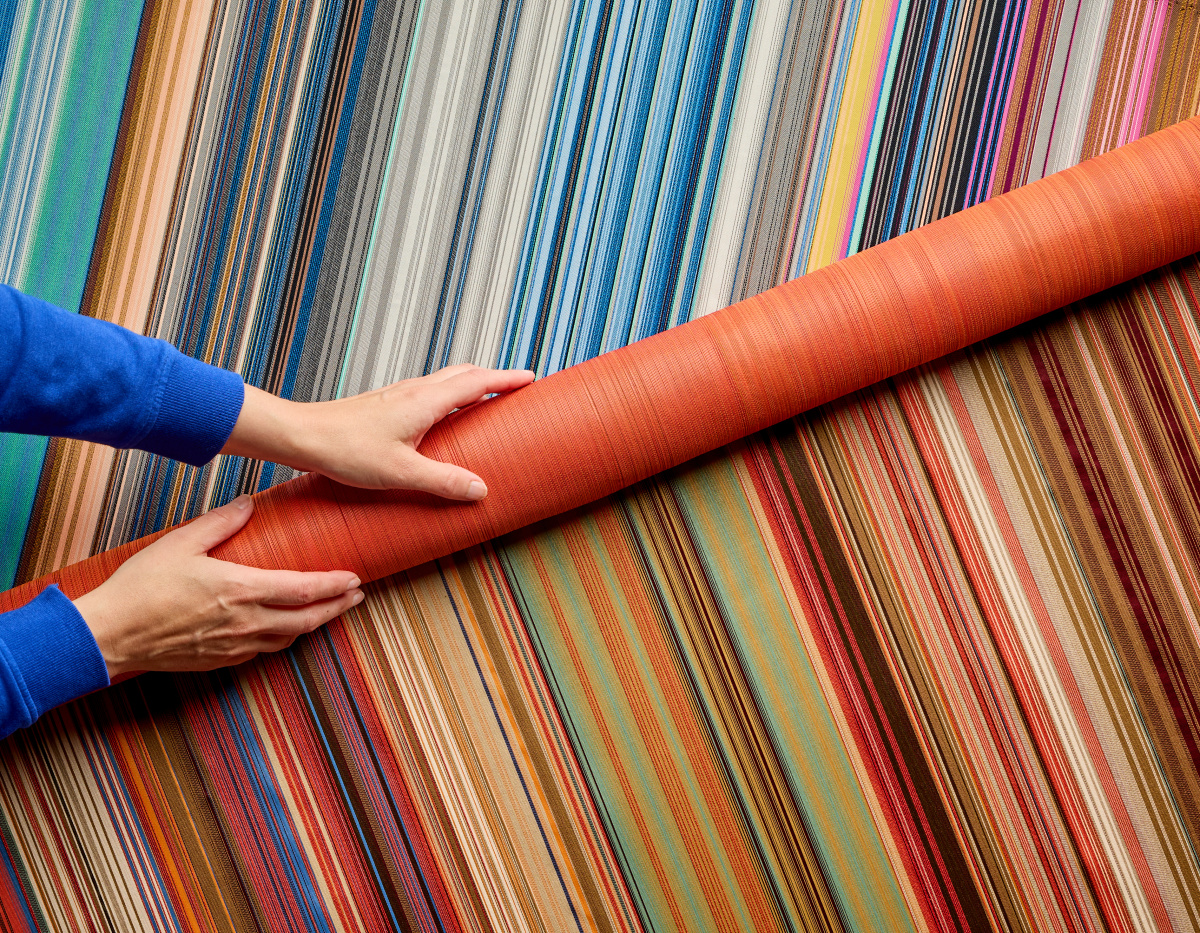
Built from a single line of pixels pulled from a photograph taken at the first Hip Hop Architecture Camp in the Bronx, Bronx Composition is stretched and repeated until the original figures disappear and only color and memory remain.
Michael is an architect, educator, and founder of BrandNu Design Studio, a practice that brings together architecture, cultural research, and community-driven engagement. He’s currently working with Gensler and Ralph Appelbaum Associates on the Hip Hop Museum in the Bronx, slated to open next year. He describes his design process like a DJ’s, someone who hears a fragment worth keeping and then isolates, loops, and stretches it.
His fabric Bronx Composition is where that process is easiest to see. It started as a photograph from the first Hip Hop Architecture Camp in the Bronx, a program Michael founded in 2016 through his nonprofit, Hip Hop By Design, now in its 10th year. Rather than reproduce the photo, he pulled a single narrow line of pixels out of it and stretched that line across the whole composition, repeating it until the people in the original image were no longer recognizable as people.
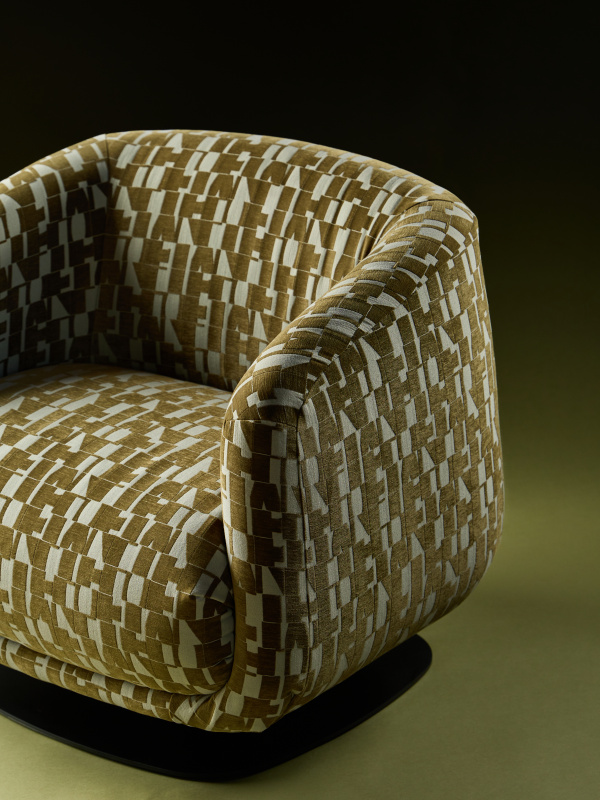
The Cypher fabric traces back to a 2023 community mural project in Madison, Wisconsin, fragmenting the phrase “I AM HIP HOP” until the letters stop reading as language and start behaving like geometry.
“The figures are no longer visible, but the color, energy, and memory of that moment remain embedded in the textile,” he says. It’s a strange kind of portrait, one where the likeness disappears and something more like a feeling stays behind.
Language gets the same treatment in the fabric called Cypher, which traces back to a 2023 community mural project in Madison. Michael took the phrase “I AM HIP HOP” and broke the letters apart until they stopped reading as language and started appearing like geometry instead. Cypher is the most expansive palette in the collection, offered in 10 colorways, with Dance Off close behind at nine and the Circon wallcovering Flow Chart rounding things out at six.
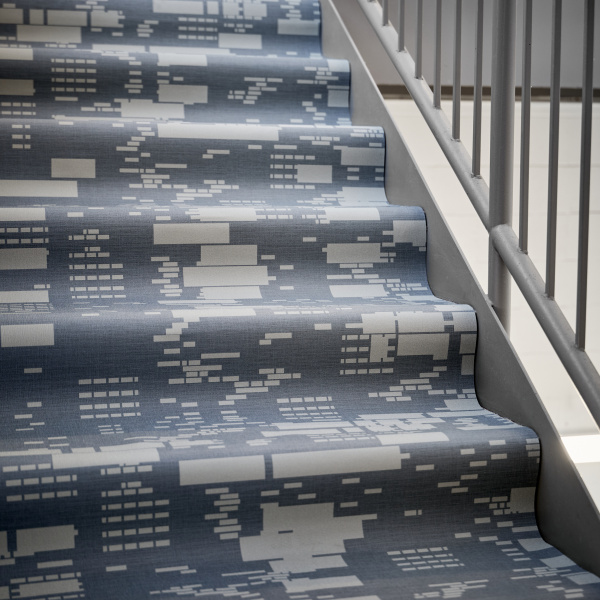
Flow Chart is a Circon wallcovering that translates the cadence of hip hop lyrics, bars, pauses, density, repetition, and variation into a visual system.
Color turned out to be the hardest part of the collection, harder than any single pattern. Michael says he didn’t want a palette that felt like it was chasing a trend or decorating for decoration’s sake, so every colorway got tied back to a specific phrase, place, or mood pulled out of hip hop, while still needing to function across different kinds of rooms.
“A line on a screen behaves differently once it becomes yarn, texture, sheen, scale, and repeat,” he says. “The original concepts remained intact, but the materials gave them rhythm, depth, and spatial presence. That is when the patterns stopped being images and began becoming environments.”
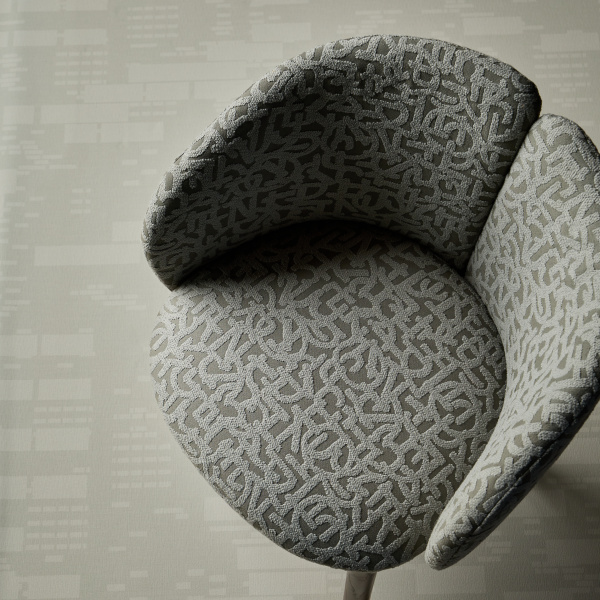
Like Breakin’, Dance Off grew out of Mason’s original drawings, carrying that same sense of unfiltered movement into a second pattern in the collection.
A percentage of every sale goes back to Hip Hop By Design scholarships, tying the commercial product directly to the education work that produced it in the first place, including the camp that gave Michael the photograph behind Bronx Composition.
“What matters most is that hip hop was not applied to the collection after the fact as a graphic theme,” he says. “It shaped how the collection was made, how we selected source material, manipulated images, constructed repeats, developed colorways, used scale, and embedded stories into the surfaces.”