It’s 8PM on a Friday evening in Berlin when Sam Chermayeff answers my call. Berlin Art Week has taken over the city, and he has just come from a friend’s gallery opening. “It’s a beautiful evening,” he tells me.
This is, technically, about to be an interview about his new collection of furniture for Knoll. Though it doesn’t stay that way for long, because Sam is unable to talk about the Knoll Chermayeff Storage collection as though it were his idea alone. He tells me the collection includes five pieces: a bookcase, a bar cabinet, a console, a coffee table, and a side table, all descended from Florence Knoll’s 1961 credenzas and finished in a new palette of colors and finishes.
“I wouldn’t even say this collection is inspired by Florence Knoll,” he says. “It really is her system. It’s still her thing.”
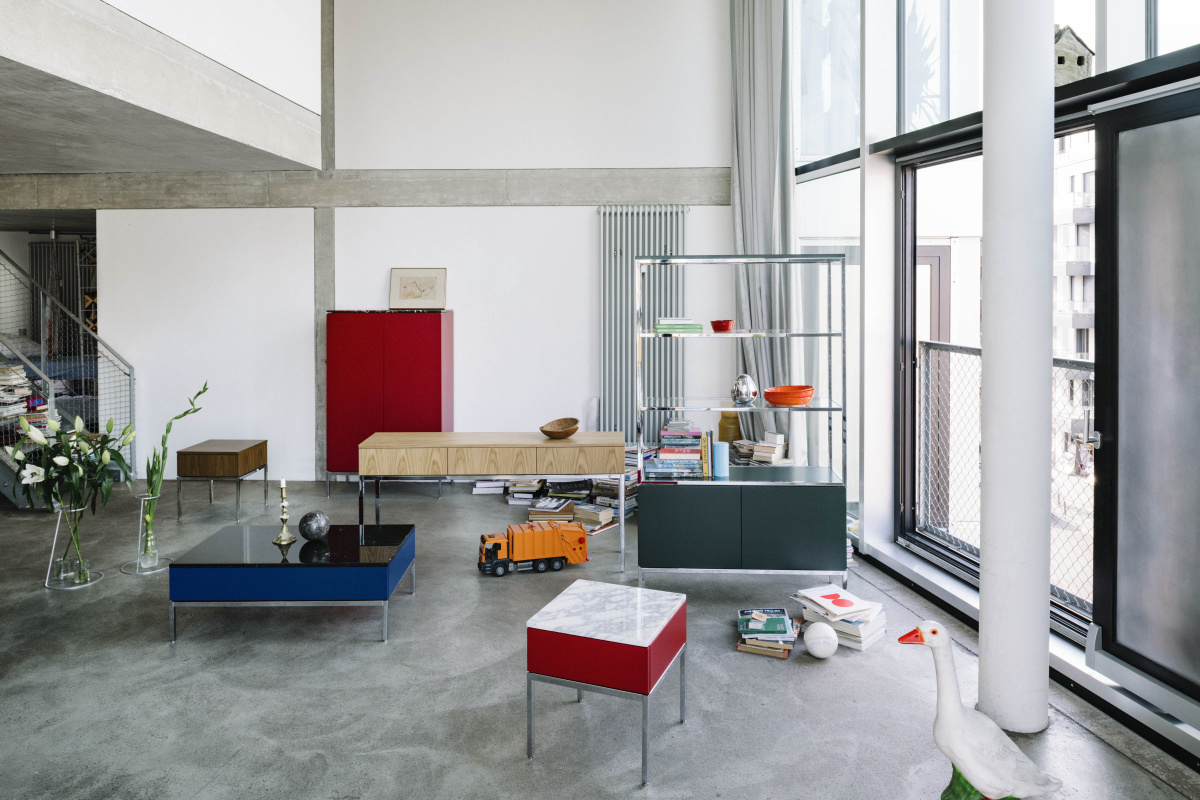
Florence Knoll’s 1961 credenzas were designed for offices. The Knoll Chermayeff Storage collection adapts the same system for the home including a bookcase, bar cabinet, console, coffee table, and side table.
As an architect, Sam tells me he was drawn to the European idea of cooperative housing, where shared walls come down and people are pushed into more constant contact with each other. That same logic shapes the updated collection. Rather than closing objects away, it turns them into a backdrop for the books, glassware, and personal ephemera people choose to keep visible.
“People care more about their homes nowadays than their offices,” he says. “The new pieces follow that shift. We were focused on storing clothes instead of paperwork, holding coffee, and anchoring a living room instead of a boardroom.”
-
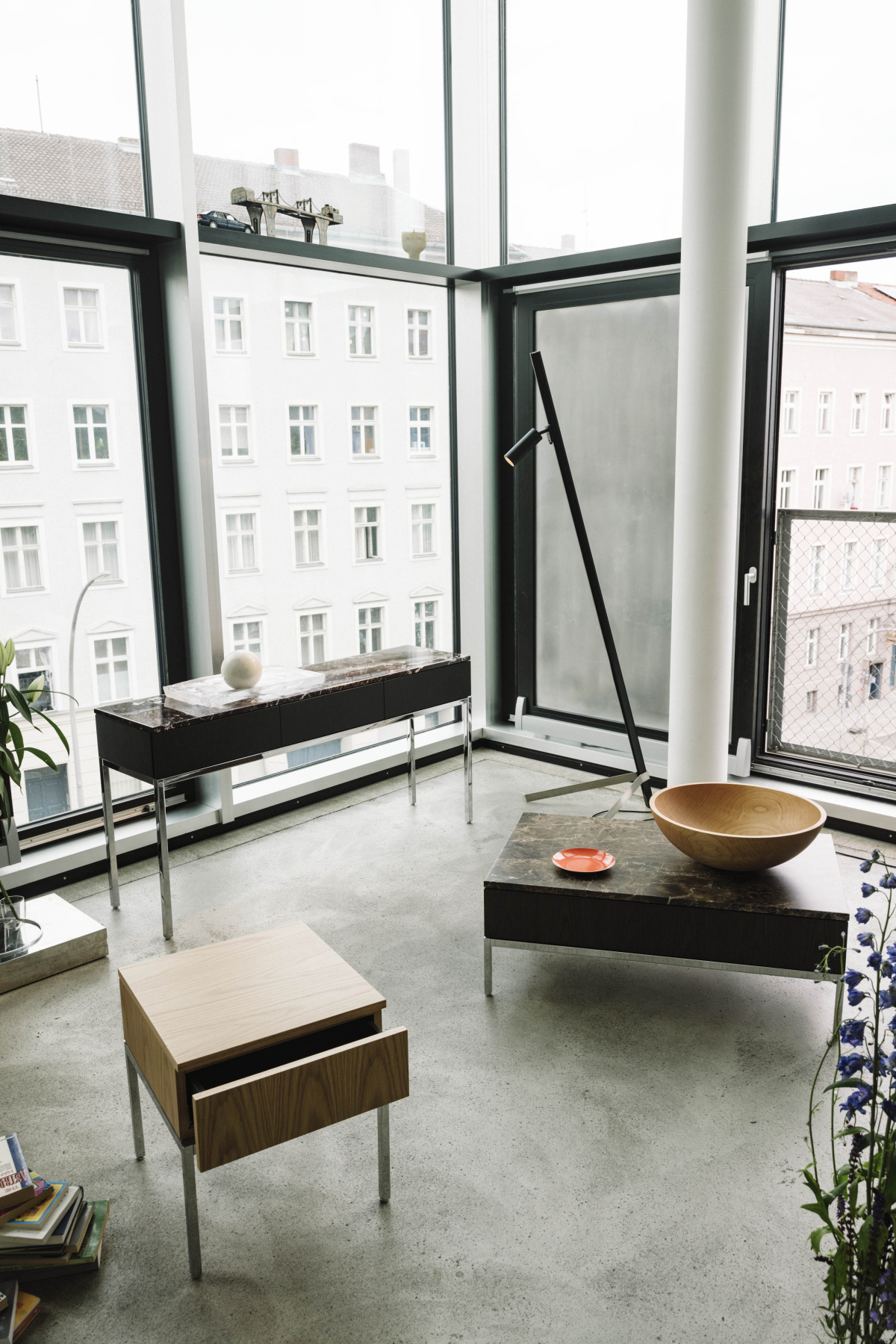
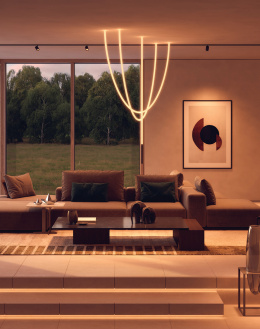
- Designed with the home in mind, the collection brings a boardroom classic into the living room.
-
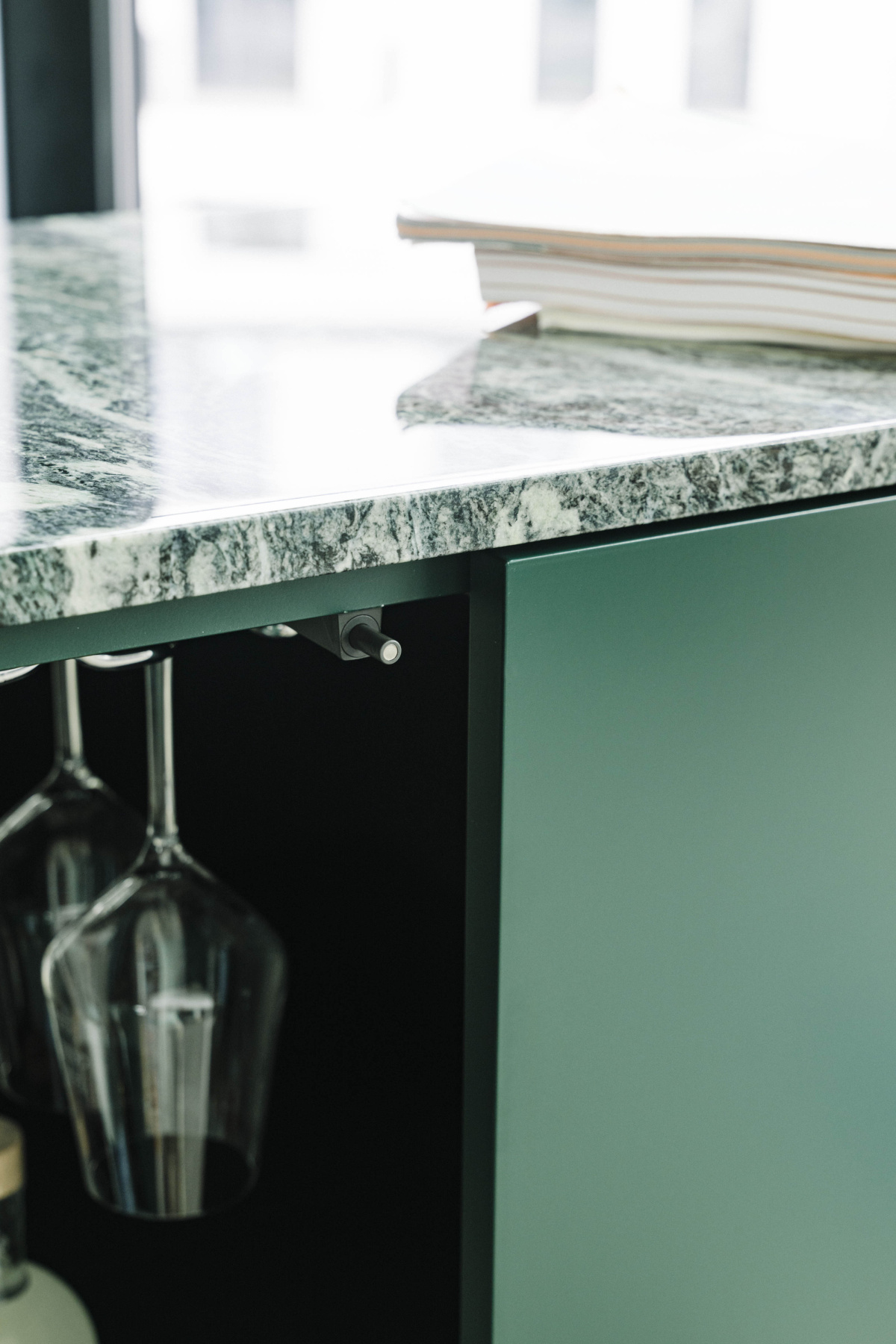
- Where the original credenzas held files, the new pieces are meant for clothes, glassware, and coffee.
Even the smallest details carry that design ethos. Handles are gone in favor of push-to-open mechanisms, hardware that didn’t exist when Florence first designed the credenzas. The hinges have also gone from black to chrome. Small changes, he says, but ones he thinks Florence Knoll would have made herself today, given the chance.
“I came to Knoll with the idea to update these pieces for modern residental spaces,” he says. “But the existing system was actually already a system for anything. By suggesting it, I freed Knoll up to also get funky themselves.”
That meant showing up with more ideas than Knoll would ever use. Sam describes pitching typology after typology once the underlying system clicked into place.
-
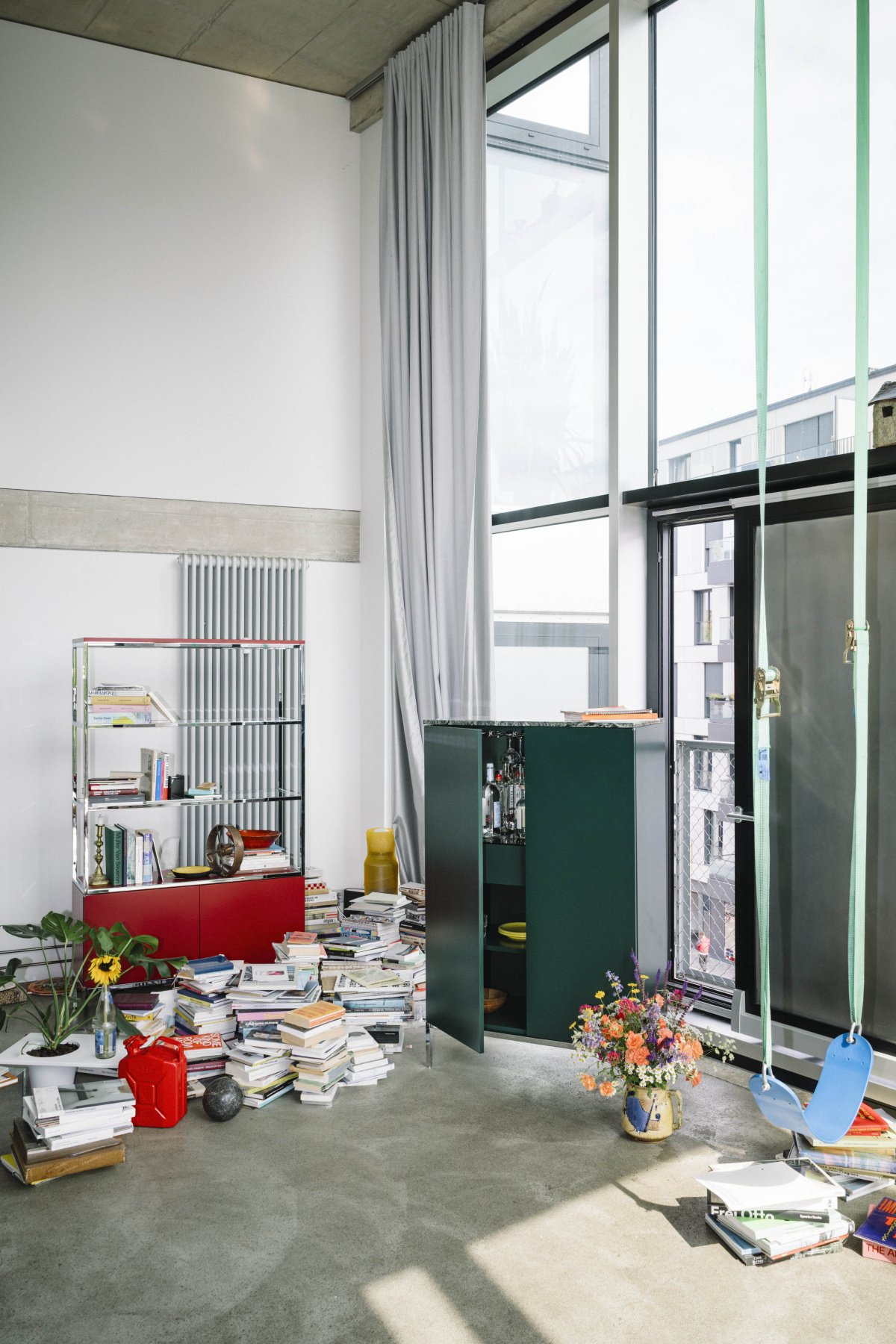
- The bookcase (left) runs tall, with open shelving that draws the eye upward. Part cabinet, part party centerpiece, the bar cabinet (right) is one of two pieces that departs most visibly from the original credenza.
-
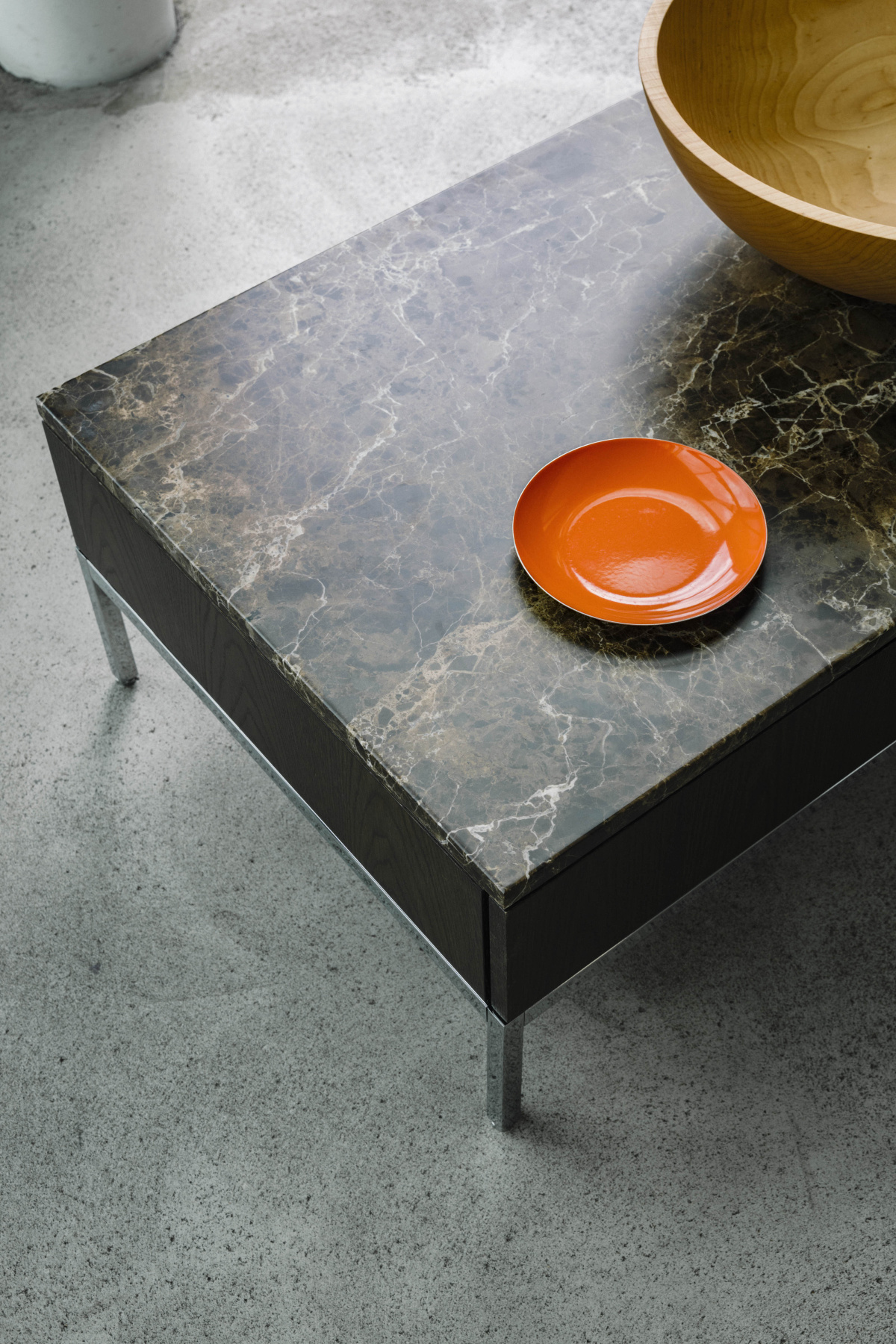
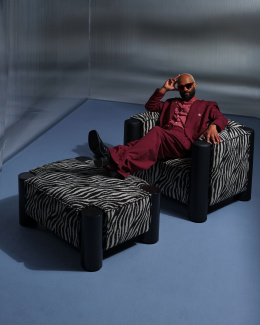
- The coffee table, shown here in the Dark Python colorway, includes an integrated drawer and anchors the living room the way the original credenzas anchored the boardroom.
“It felt like I proposed a thousand pieces,” he says. The real work, as he tells it, wasn’t drawing new details so much as editing the list down to the five that made the final collection.
That domestic shift is easiest to see in the bookcase and the bar cabinet, the two pieces that read most differently from a 1961 credenza on sight. The bookcase runs tall, its open shelving pulling the eye upward rather than along a horizontal line, closer to a piece of architecture than a place to stash files. The bar cabinet does double duty: storage on one hand, the thing a party gets built around on the other. The coffee table, side table, and console all carry integrated drawers, a small functional upgrade.
-
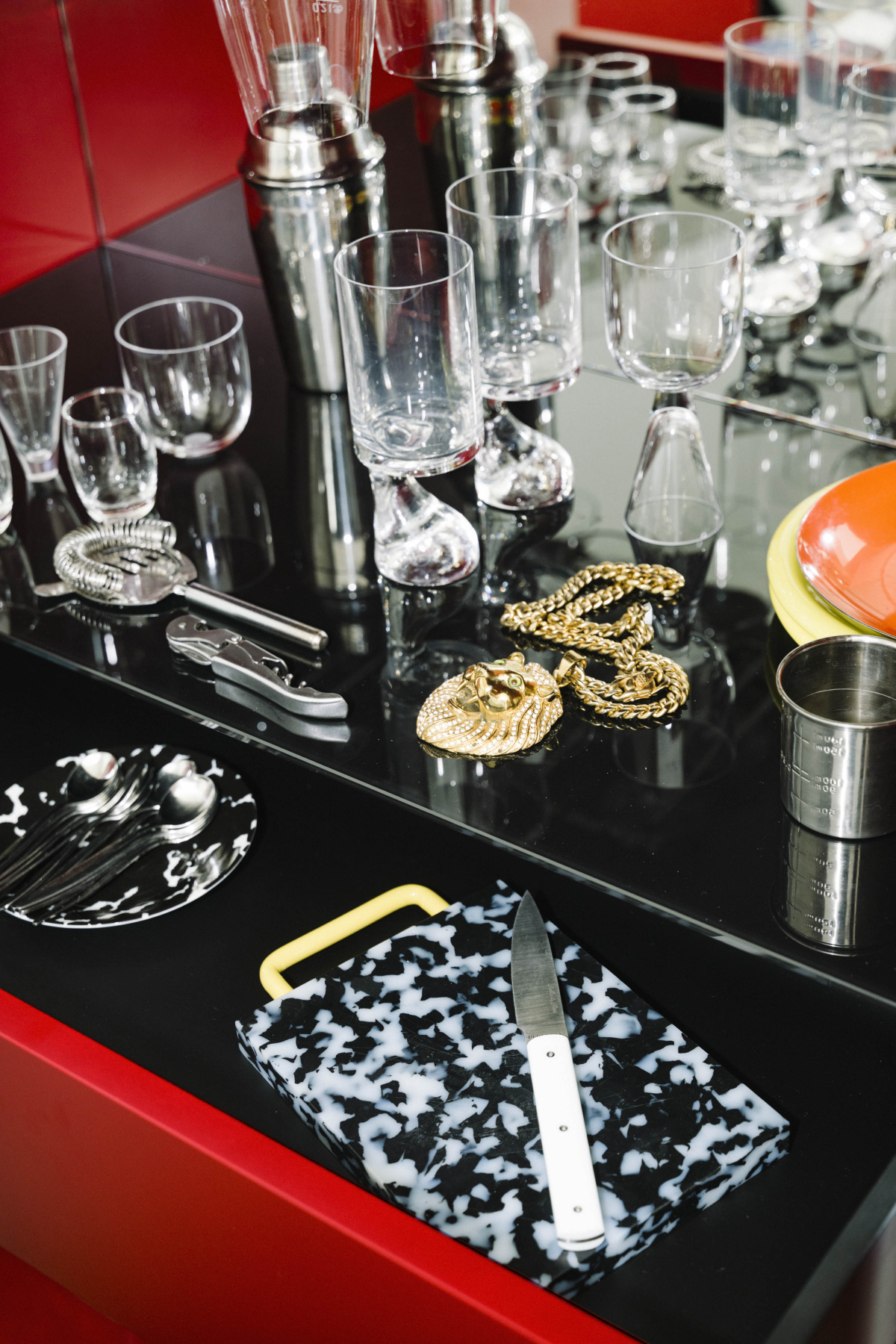
- “People don’t want furniture that disappears into sameness. They want it to reflect who they are.”
-
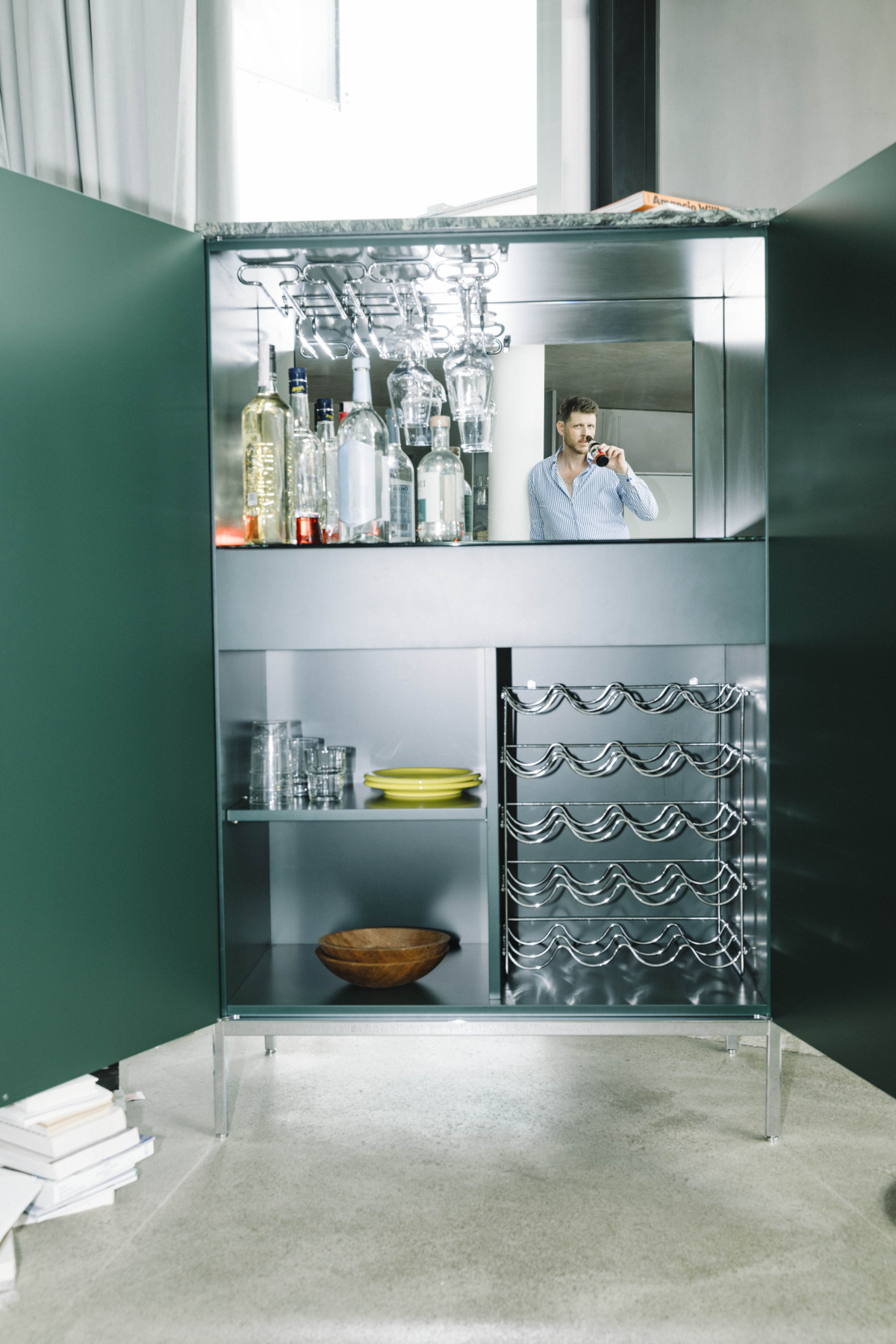
- “I wouldn’t even say this collection is inspired by Florence Knoll,” Sam says. “It really is her system. It’s still her thing.”
The new shelving stays open, he says, because there’s finally something worth looking at.
“Files are ugly, but pots and plates and glasses, these things can be quite beautiful,” he says. Modernism as a movement was built around the idea of universal furniture, a chair or a cabinet meant to work in any home, for anyone. Sam doesn’t think that idea holds the same way anymore.
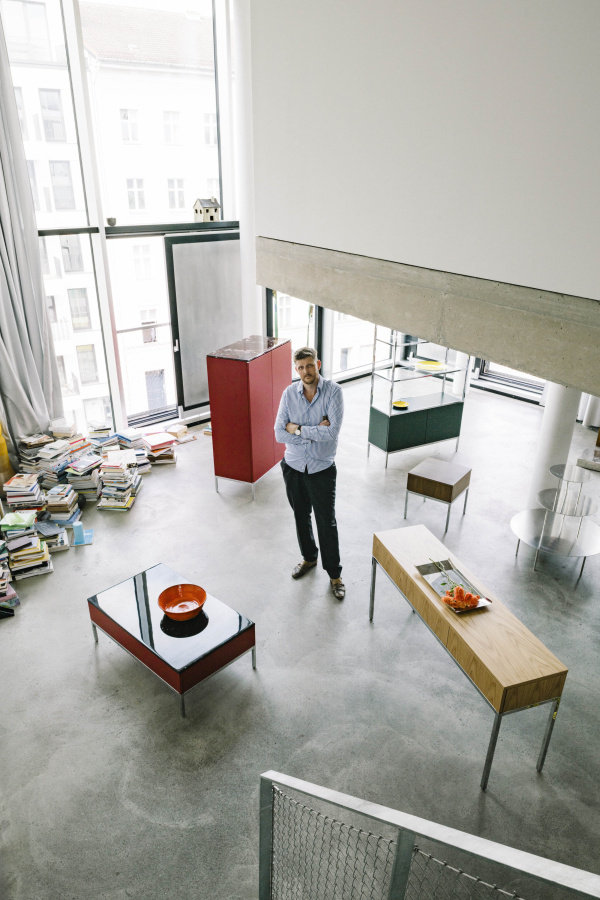
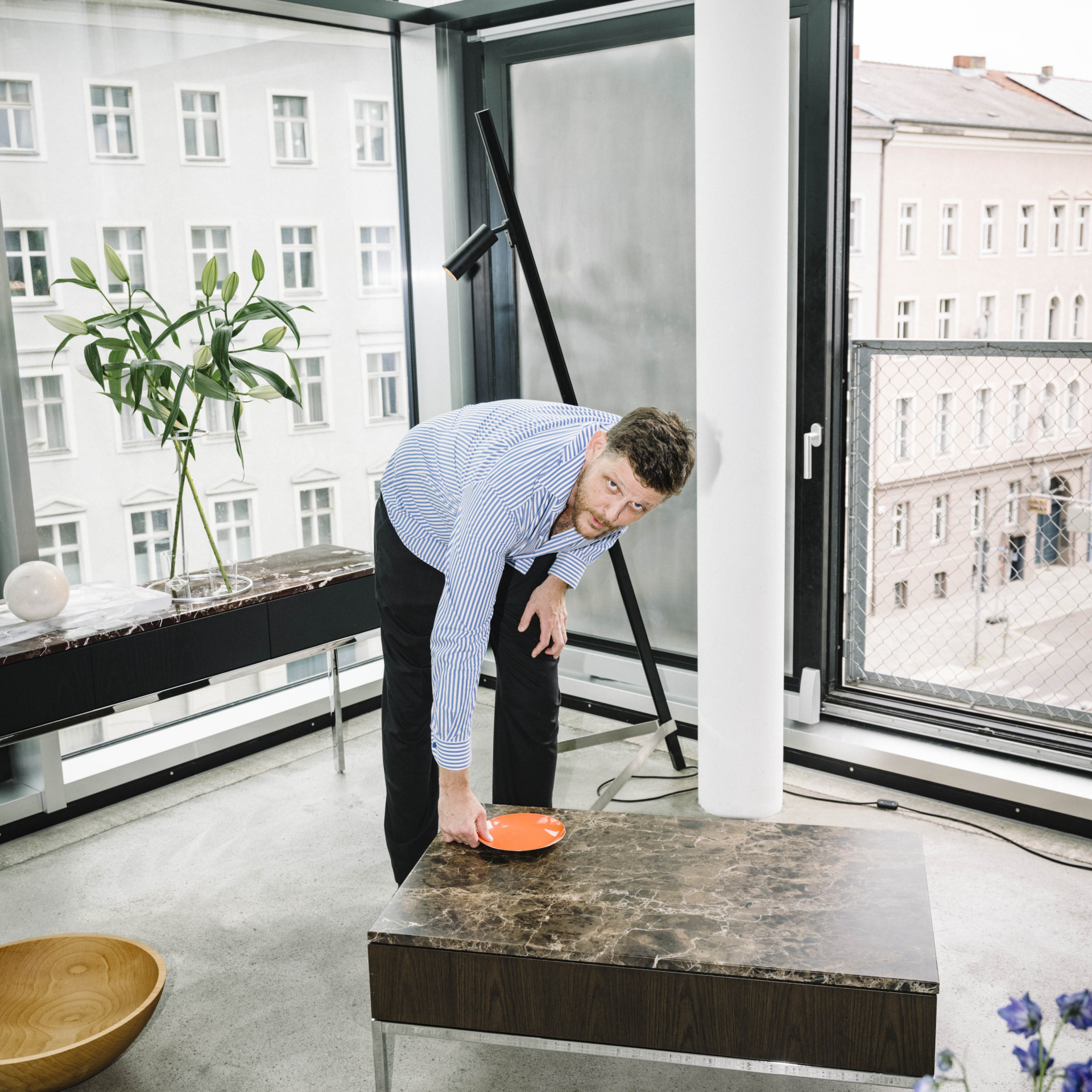
Architect and designer Sam Chermayeff was drawn to European cooperative housing, where shared walls come down and people live in closer contact.
“People don’t want furniture that disappears into sameness,” he says. “That’s why design journalism nowadays is often a home story, or a story a person is trying to tell with their collection of things. They want it to reflect who they are.”