After three editions in Miami, Alcova, the itinerant design fair the two founded in Milan in 2018, is moving its winter edition to Mexico City for Art Week in February 2027. It is the fair’s first Latin American edition and its biggest bet since leaving Italy. Three sites are set. Casa Palomar, a 1920 mansion in the Juárez neighborhood remodeled in 1932 by Carlos Obregón Santacilia, and the nearby Bucareli School will anchor the program, while Villa Reforma, a 1950s house by the modernist Francisco Artigas restored by Lorena Vieyra, opens as a parallel venue 15 minutes from Zona Maco. The local partner is Proyectos Públicos, the architecture and hospitality platform founded by Pepe Islas.
Alcova arrived in the States in 2023, filling a 1957 motel on Biscayne Boulevard with more than 300 participants, then spent two editions at the Miami River Inn in East Little Havana, where it became the one corner of Miami Art Week not organized around a transaction. It was never a polished operation, and that has always been part of it’s charm.
Earlier this week, the three of us talked about what Miami actually did for Alcova’s designers, why the fair is leaving, whether Mexico City can carry a design week of its own, and where a nomadic fair goes as it closes in on 10 years.
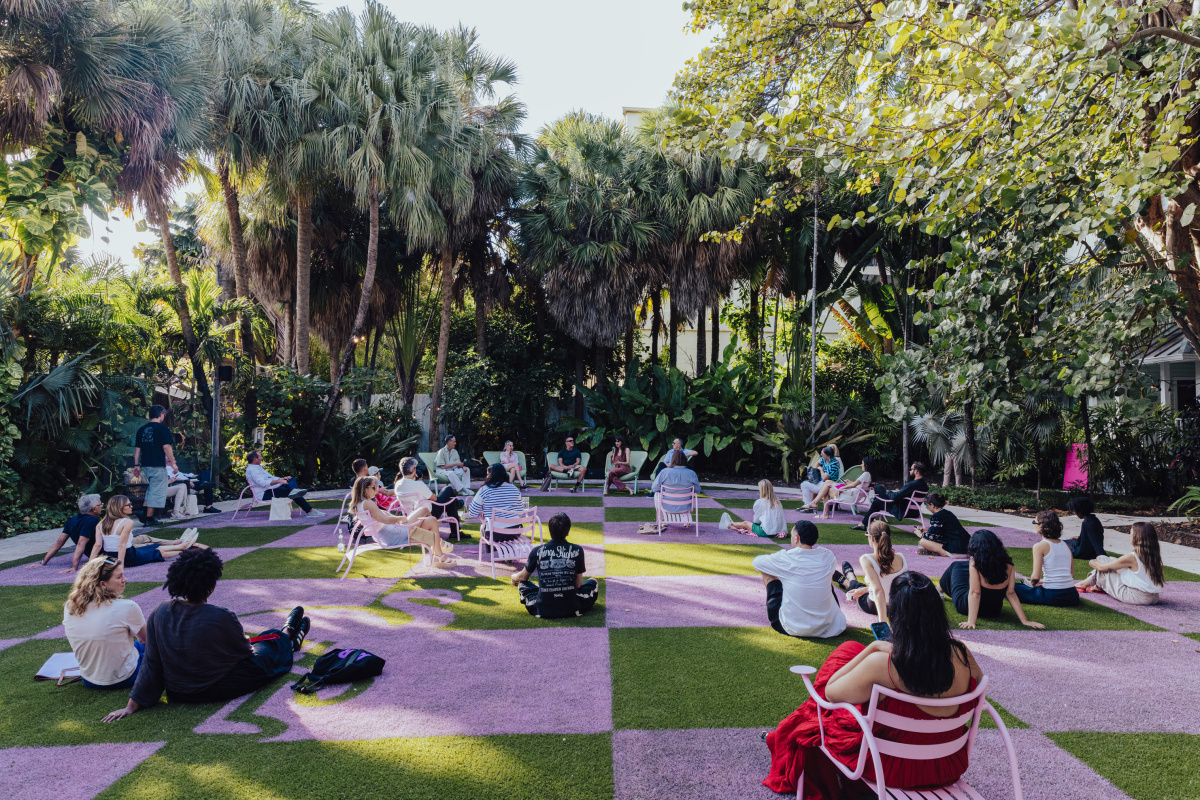
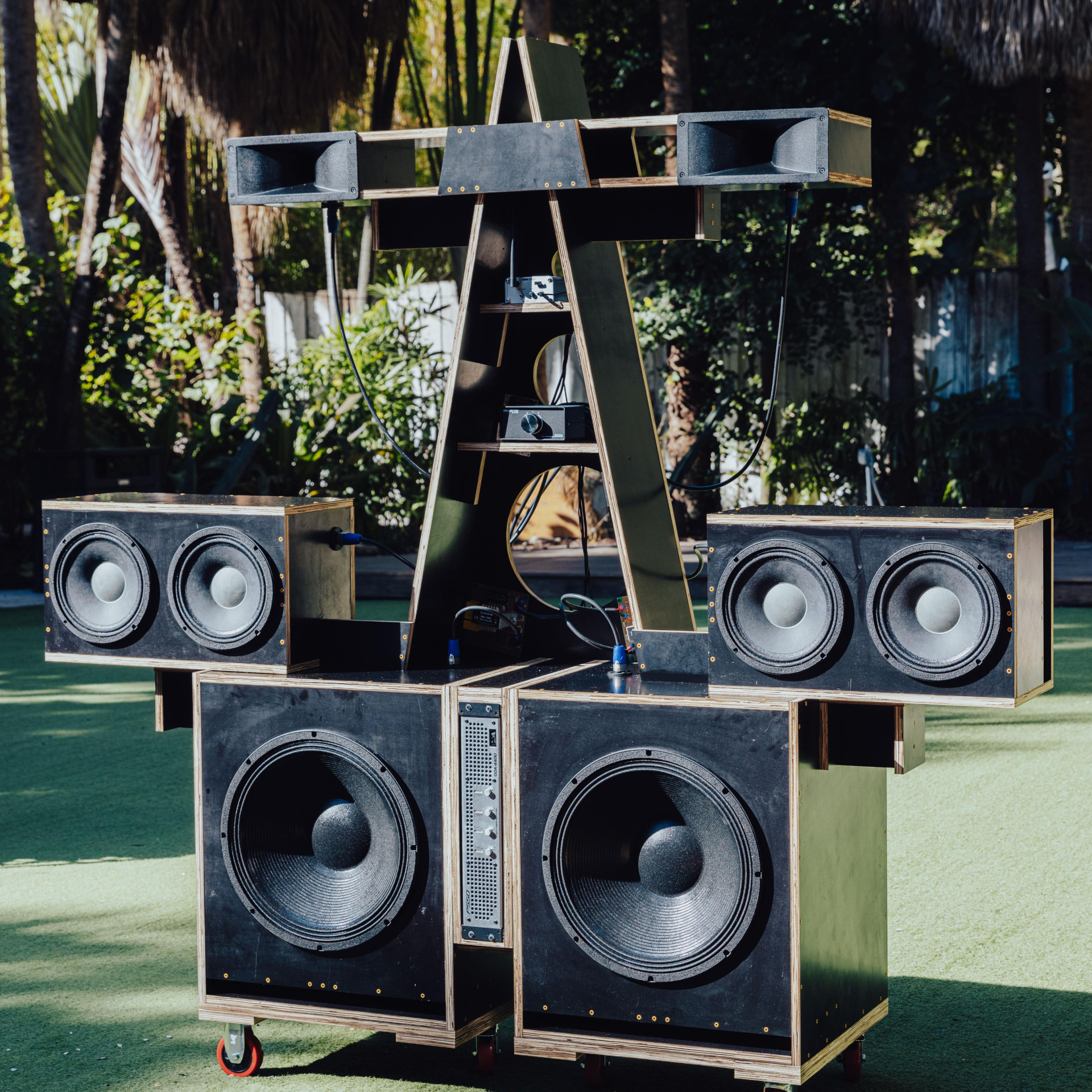
The Garden Game, a collaboration between Haworth and Patricia Urquiola, anchored what became Alcova’s final Miami edition in 2025. Photo courtesy of Alcova
Chris Force: Before we get into Mexico City, recap Miami for me. You arrived in 2023. How do you look back on those three editions now?
Joseph Grima: Miami was really, for us, a proof of concept. Itinerancy has always been a part of Alcova since the beginning. Both in Milan, not becoming attached to a single place, but also as the idea that what we do in Milan could potentially happen elsewhere. It could be reproduced. We could, in a way, capture the energy of places where creative people are doing interesting things. Because Alcova is obviously a design exhibition, but it’s also very much about the place where it happens. It’s always been connected to the identity of Milan as a way of discovering the hidden identities of the city, revealing another side of the city.
We were always really fascinated by the idea that every city has a hidden side that can be explored, and that could really open up new perspectives for the audience. So Miami was really a first experiment in trying to apply that somewhere else. Three years later, we’re super happy with how it went. It began with this very romantic sort of escapade onto Biscayne Boulevard and the 1950s motel, and then going even further back into this 1930s guest house. I think people really did feel a little bit of that spirit of discovering something that was unknown about the city, and at the same time discovering something that was unknown about design. It was really interesting to see how our community responded to that different context. We think it was a success. It was three editions, and now we’re really excited to try the same elsewhere.
“We belong to Milan, but we are explorers.”—Valentina Ciuffi
Valentina Ciuffi: Miami, like Mexico, is a way to expand our community in terms of exhibitors and, of course, visitors. I would say Miami was super important because we are definitely two travelers, Joseph and I. We belong to Milan, but we are explorers. To just stay in Milan and go on in the tradition of Salone del Mobile, where you grow your event in the same city, is not really close to our personalities. The first edition of Miami was really a first step in our adventure there, and from the second, we found a space that was representing us a little bit more. I thought Biscayne Boulevard was a very interesting first step, and we gained our identity in the second location. We were then ready, like we probably will do, to itinerate to a new city. A three-year course could be ideal if we go abroad.
American design culture is commercial first. That week in Miami is hyper-capitalist. Art Basel is the pinnacle of big-time art sales, Design Miami is gallery-driven and collector-focused, and everyone is fine with that. Alcova arrived with a decidedly non-commercial point of view. Over three years, how much of that attitude did you bump into?
Valentina: What we were doing in Miami was bringing, for the first time, a kind of exhibitor that was not present there. Galleries were there, collectible design only through galleries, but independent designers were not featured almost anywhere. You had these little Curio projects inside Design Miami, but nobody really gave much space or stage to the design Alcova is normally showcasing. Many of our designers had a super important experience in Miami, finding maybe not the person buying one little thing, but the person proposing a collaboration. Some of them found galleries, like Nina Johnson or other American galleries, even Miami galleries, through Alcova Miami. Some of them found European galleries. We have these designers from Mexico that found Objects With Narratives there, and a lot of commission work came out of the meetings they had.
It must be funny for you to hear, but they sold much more than they do in Milan, because Milan is absolutely not a moment to sell. The design week is not a place where you sell. So many of the designers didn’t have to go home with their pieces. It was a lot about networking, and in a quieter situation, having access to a certain level of possible clients. So I think overall it was commercial. It looked not commercial. It was, of course, less crowded than the Milan edition. The people that did Milan and Miami thought that in Miami some of the contacts were more crucial for their career. Some of them, and I can’t name them because it’s NDA, are doing a big project for the Design District next year. Even if we are going away from Miami, our designers will be there in a much more visible position.
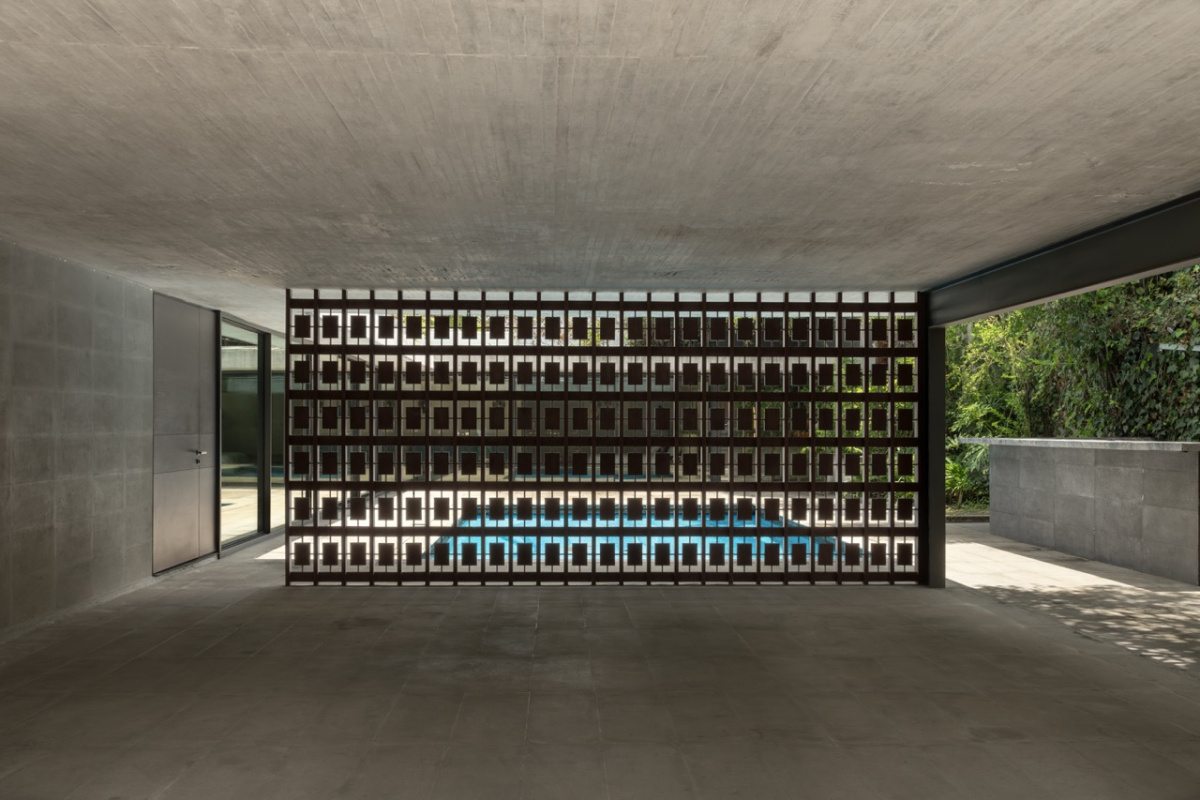
Villa Reforma, a 1950s house by Francisco Artigas, will open as one of Alcova’s three Mexico City venues. The house sat empty for more than a decade before its restoration, exactly the hidden side of a city Joseph says the fair is built to find. Photo by Mariana Achach of Achach Fotografía
The opportunity for the designers is transparent. What confuses American visitors is the fair itself. Alcova feels experimental, not like a business-first operation, and in the US you can usually connect the dots from any creative project back to a commercial transaction. Am I misreading the point of view? And did it have anything to do with deciding to stay or relocate?
Joseph: The reason that perception comes across is because, since the beginning, Alcova has tried to represent the way that design as a discipline has broadened. There are many different economies that exist and overlap inside the field of design, and Alcova has always been about representing as many of those as possible. The people who operate within the collectible design universe, together with companies working experimentally on materials, institutions interested in a cultural interpretation of design, even quite mainstream companies that are interested in being seen in the context of a place like Alcova. When all of those come together in a single place, it becomes like a snapshot of this extreme diversification of design. They all somehow reflect light on each other, and they underscore this multidimensionality of design. That’s what gives you the perception that this is an ideas-led operation rather than a commercially led operation. But the reality is that it is a commercial operation. Each of these has their own economy. It’s not monolithic the way that something like Basic.Space or Design Miami itself is pretty monolithic, where they’re all competing in the same pretty small, cramped space. At Alcova they’re absolutely not competitors. In many cases they’re even complementary, and a lot of new projects have come out of people from very different backgrounds meeting at Alcova.
“Every city has a hidden side that can be explored.” —Joseph Grima
Valentina: Now I see what Chris was asking. If you’re asking about us being a commercial success in Miami, actually, we had a sponsor in the last edition. And we proved to ourselves that, going on, it was going to become more commercial. So it tells you that maybe we are crazy, but this idea of moving is also because Alcova is, for us, something that needs to be inspiring, something that we do with pleasure. Economically, we understood that Miami was not going to be based on big rentals, because we were showcasing a lot of independent designers, but sponsorship came, and we figured out the business model. It could be ironic that now that we have a business model, we move. And we move precisely because our community of designers in Mexico is becoming huge. We think it could be more exciting for us. It is not driven by a commercial sense of danger or failure in Miami.
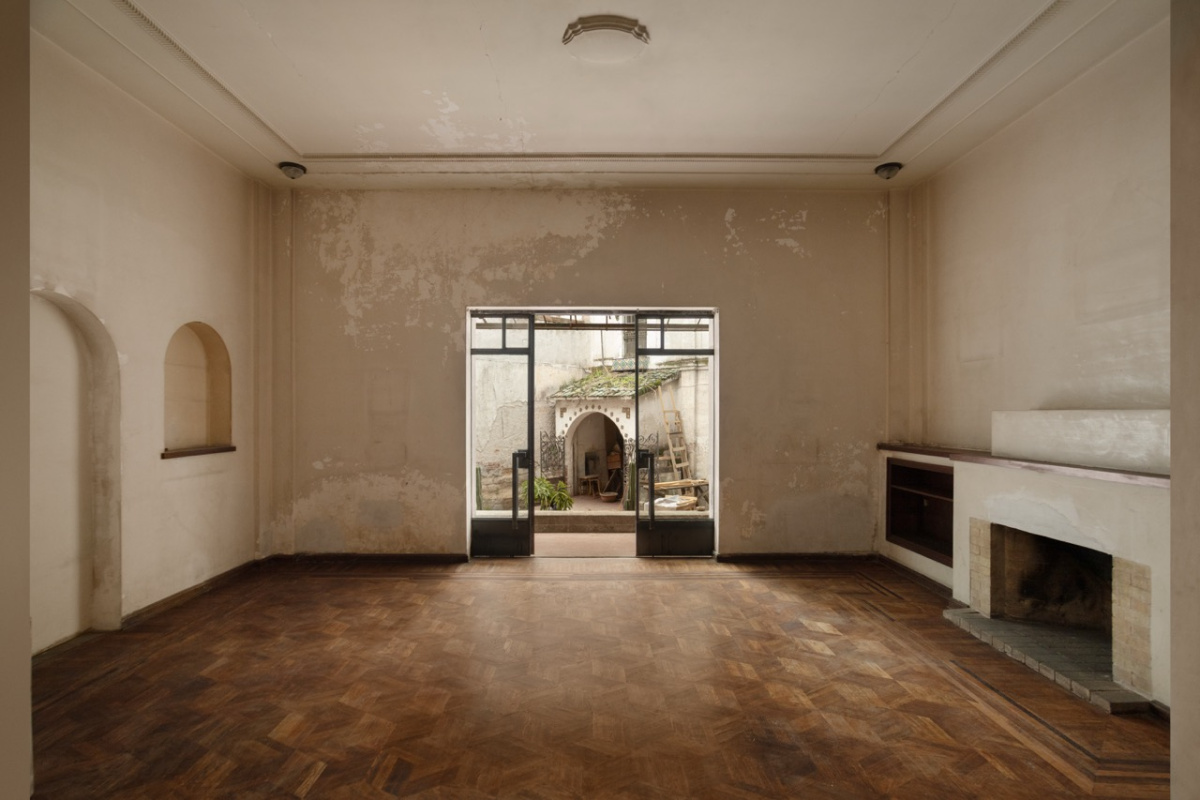
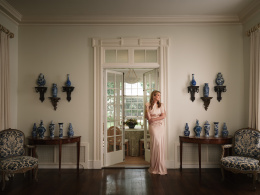
Casa Palomar, a 1920 mansion on General Prim in Juárez, spent its first life as the home of a pioneering obstetrician and his family. Alcova will keep the rooms layered as they are, the architecture Valentina calls “very much in our direction.” Photo by Mariana Achach of Achach Fotografía
So how did the idea form? Did it feel like you’d completed what you came to do in Miami, or more like you saw something in Mexico City and had to choose one or the other?
Valentina: I think we are enlarging our community while moving. We naturally went to Miami because it was the other big week around design that we knew. Then last year we went to Mexico, and that week was incredibly inspiring, maybe even more full of interesting people to meet, even for us. So we thought that our designers also have to be exposed to that community, because for three years they had the possibility to be exposed to Miami. And maybe next we go to Asia. It’s like a snowball.
Joseph: We always think about Alcova as people, not about objects. Alcova is about people and the ideas that animate people, this exploratory, experimental dimension of design. It doesn’t matter who you are, whether you’re a huge organization or someone who just came out of college. If you’re interested in exploration and risk-taking and testing new ideas, then Alcova is the place for you. And for that to make sense, it’s very much about finding a context within which those kinds of people are going to feel appreciated and understood and be energized.
We know very well that these designers are not wealthy. Often they’re really trying to carve out a living in a very, very competitive segment, and it’s not purely about selling their work. It’s about gathering and absorbing creative inspiration for the year ahead, or the two, three, four years ahead. To us, in Mexico City at the moment, there is that energy. There’s that vibration of people who are really looking for something new and want to use design to address completely unexpected questions that are perhaps not possible to address through other fields.
One last Miami question. There’s going to be a hole in that week now. In three years you built out a real identity, almost a lifeline. Art Basel makes it easy to be cynical, the billionaires, the yachts, and Alcova was the uncollectible portion of design. Does that voice get edged back out?
Valentina: Luckily we are not going too far. And we are getting so many applications from the US. We think that for US designers it’s a very good move to be a little bit more in touch with a booming city like Mexico City. And to be authentic, we are simply not a big company. We are not huge, and we have Milan, which is, as you know, incredibly big. It’s not sad that we won’t be back in Miami. We just can’t do something in December and something in February. It was a matter of doing things with the same quality. It’s very nice to hear that we will be missed in Miami, but it was like an initial project to explore the idea of moving. Our business model is based on growing our content, and it is the business model and the personality. We want to have new friends and know new worlds. We could go back to Miami one day. But now I think it’s very important to open a new chapter and show this idea of being itinerant beside Milan. For the moment, we can’t be in three places.
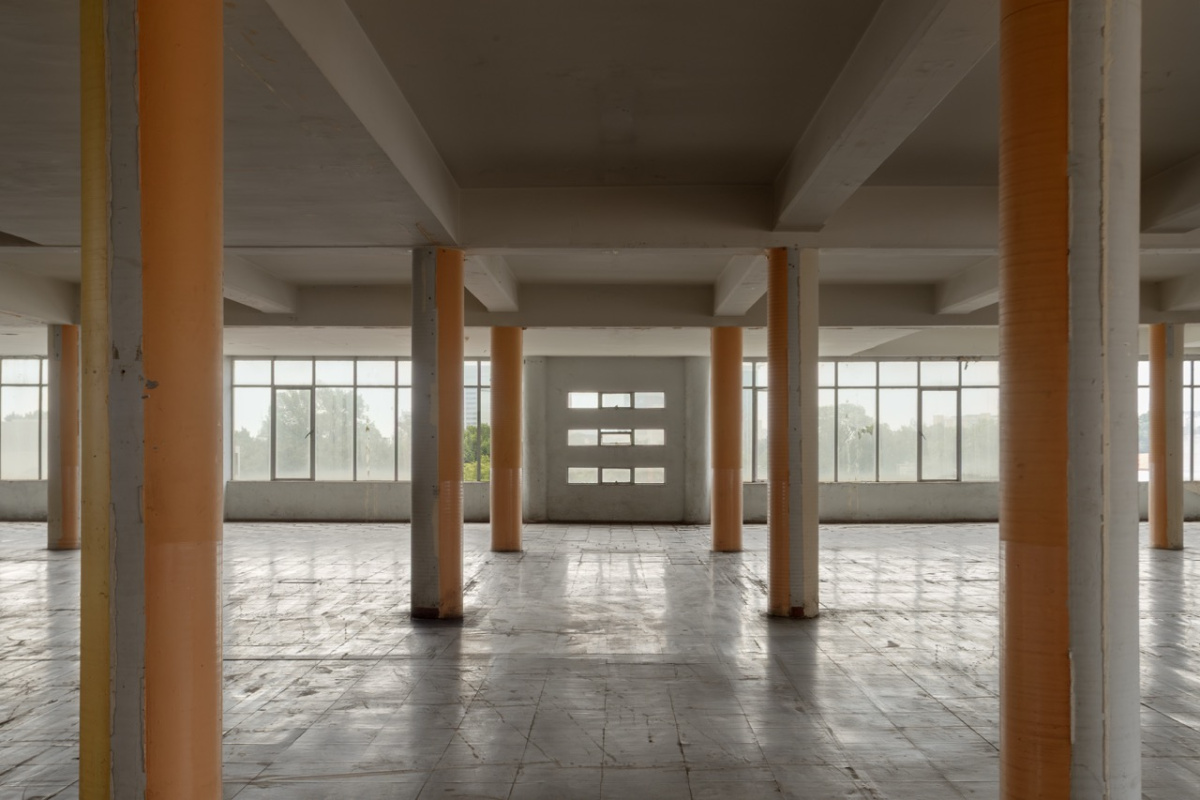
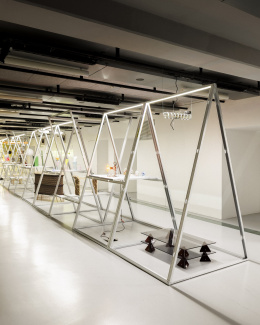
The Bucareli School, named for the eighteenth-century boulevard it stands on, was built for collective use rather than domestic life. Photo by Mariana Achach of Achach Fotografía
I can make assumptions about why Mexico City makes sense. The design history, the venues you’ve secured, the affordability that’s made it a creative hub. But that week is noticeably lacking the commercial counterpart, the trade people I’d run into at your other editions. How did that factor into the decision?
Joseph: It’s a very acute observation. In Miami there’s already a strong design fair existing, and in a way we were piggybacking on that. We were jumping onto a train that’s already moving. What we’ve seen in the last few years is that the design world is expanding more quickly than the art world. It’s becoming almost an ecosystem in itself at the international level, which previously it didn’t have. There was Milan and a very commercial understanding of design, and now design is something that exists on its own terms.
In a place like Mexico City, we think that we could become a point of reference for a new understanding of design in the way that Design Miami did in Miami. We could exist on our own terms. That’s not to rule out the whole collectible side. That’s the core, perhaps the single most important component of our community. But Mexico City is growing so quickly and getting so much international attention, and there’s a lot of opportunity for design to become a much stronger presence in this week, and for Alcova to become the key anchor in that. In fact, the fact that there isn’t a strong design presence already, and a lot of those more commercial characters aren’t really represented there, we’ll see how it goes. We don’t know, because it’s all the first time. But we think that could even potentially be a good thing.
Valentina: Maybe we don’t have the Milano crowd, the Salone del Mobile or Fuorisalone crowd, but you definitely have the Miami crowd. We know for sure that the Mexican design projects that exist sell everything they have. They make their year in that week. A few galleries that are more visible than others are full of people visiting in those days. They are missing a moment like Alcova, in which design is in one or two locations, very close to each other, and they can go and visit something different. But I think the audience of Miami in these last two years, in terms of collectors that are interested in design and art, are there more and more. The Art Week is growing. This February there were at least 10 design events that I visited, but very scattered. All the design journalists I know in New York were there. I doubt that the crowd is very different from Miami. And you have a lot of enthusiasts in design coming from Mexico. The interior design of Mexico is going crazy. Crazy. The interest in collectible design that is sort of affordable, like the Alcova one, is becoming very interesting for Mexicans too. I’m scaramantica [superstitious], I don’t want to say that it’s going to go well, but we are filling a gap. We are meeting more and more interesting people that have the means to support collectible design and independent designers.
February will be your ninth year, coming up on 10. That’s not just a proof of concept anymore, it’s a matured vision. You’ve made experimentation key to your process, so I imagine you’ve learned things every year. What are your hopes for where Alcova goes?
Joseph: The one constant of Alcova is to keep evolving but to stay faithful to its original idea. Despite the fact that it has grown a lot, and to some extent has become something that has a certain weight on the international stage, it still really feels like the same. The spirit of the first Alcova is still there. Every time it opens its doors, that magic is there, which is very much about the fact that it’s a tiny team of people really working with a lot of passion. What we need to think about is how we can always keep that magic, because it’s a very passion-driven, love-driven project, and at the same time expand, because we see more and more that there is a need.
So many of the exhibitors of Alcova have made their lives about making things. They’ve invested everything in building out workshops and networks and ateliers, and they really need a platform. One next step for us is the Alcova design shop. It’s already live on our website, but from the fall we’re going to be significantly expanding our efforts, because it’s intended as a way of connecting designers to people who are interested in their work and can support their work through the rest of the year as well. It’s not replacing our main activities. It’s a multiplier of them.
Valentina: The soul stays. Beside the shop that we are going to boost from September, even if we started it as a vitrine some time ago, we work more than before as consultants for other fairs. We have been creating a special area for a big, more traditional fair in Frankfurt for the last three years. And the evolution lies a lot in this new idea of nomadic Alcovas that can go from the US to Mexico, but we are thinking about other possible destinations. I don’t know where we will celebrate the tenth anniversary, but definitely we
Alcova Mexico City opens during Art Week in February 2027; exact dates are still to be announced.