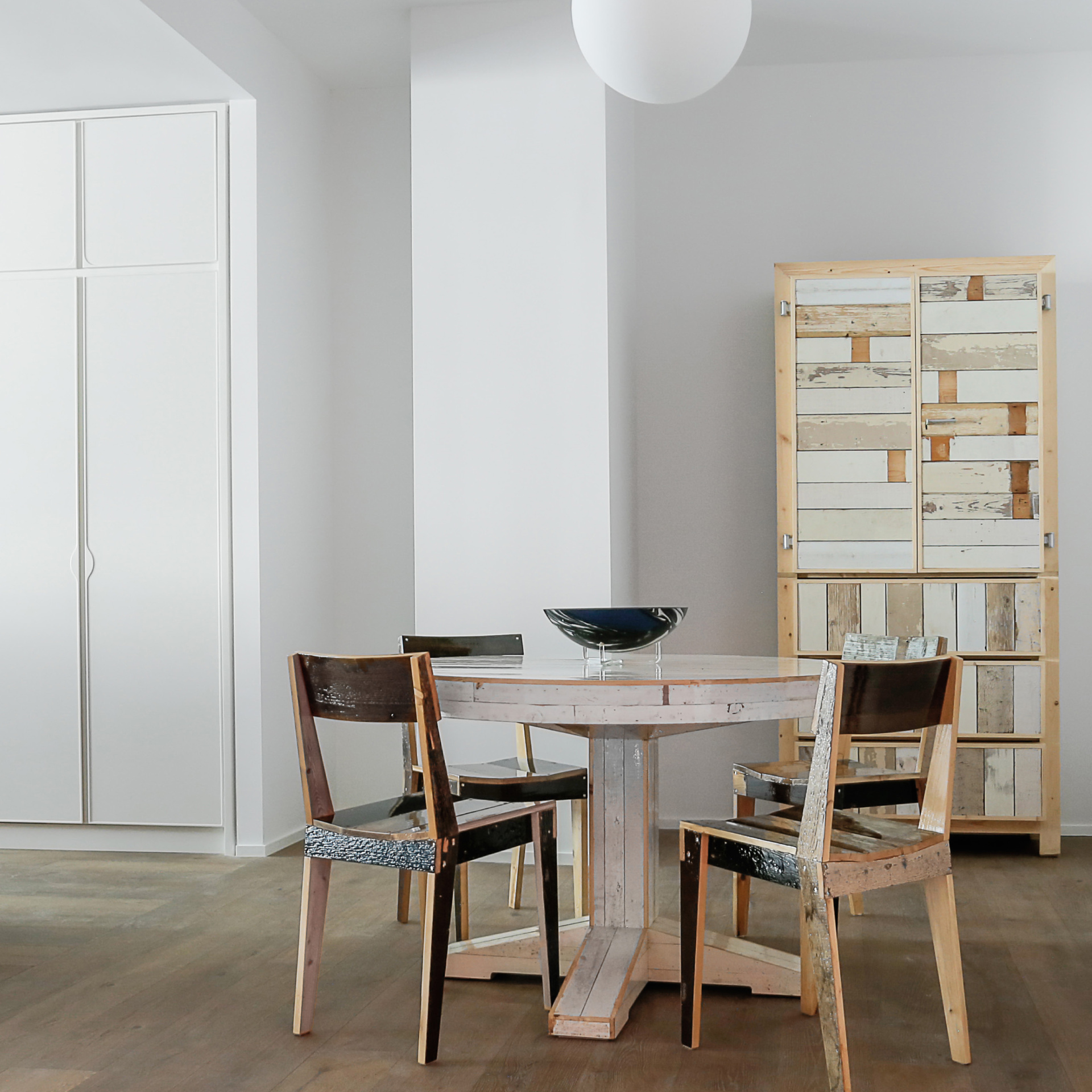
Dutch designer Piet Hein Eek graduated from the Design Academy Eindhoven in 1990, presenting a cupboard made from scrap wood as his final project. He opened his own factory in 1992, and by 2010 had moved the entire operation into a former Philips factory in Eindhoven, a complex that now houses his studio, workshop, showroom, shop, restaurant, gallery, and hotel. His work spans furniture, lighting, and interiors, and has entered the collections of the Stedelijk Museum Amsterdam and the Groninger Museum, among others.
Bram Vanderbeke is a Belgian designer based in Ghent. He graduated from the Design Academy Eindhoven in 2016, and his practice is built entirely around the logic of construction materials: concrete, aluminum, and stone. His Architectural Objects and rhythmic installations sit between art and design, autonomous in form but grounded in the physical logic of how things are built. He is a founding member of BRUT, a collective of Belgian designers, and has shown work with Nilufar Gallery in Milan.
In this conversation, Piet sits down with Bram for the first time to discuss where a practice begins, what it means to treat waste as a starting point rather than a statement, and what 35 years in a workshop teaches you.
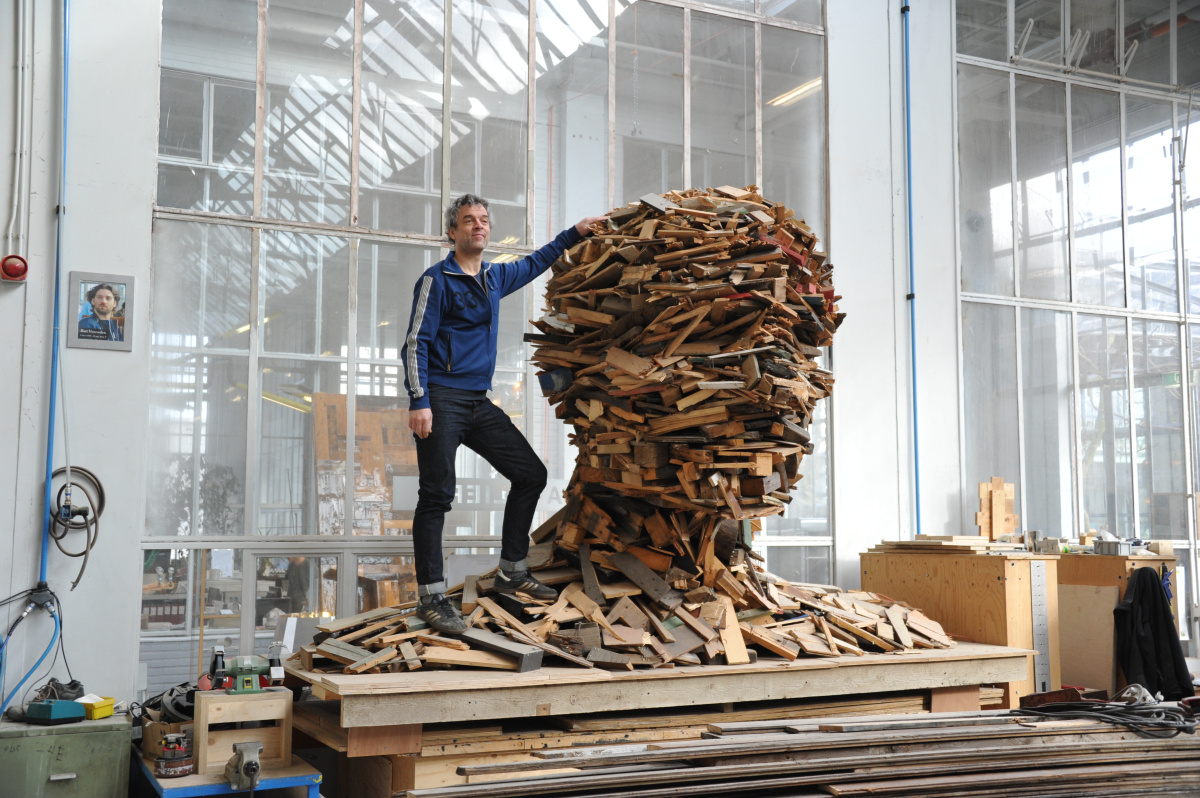
“When I was 12 I was doing the same thing I do now, just with whatever tools and materials were around. It took me a long time to fully recognize that as a way of working, but now I know that’s exactly what it is,” says Piet. Portrait courtesy of Piet Hein Eek
Piet Hein Eek: I know you work a lot with concrete and construction materials, things most people wouldn’t think of as design materials at all. When did you first realize that the material itself wasn’t just a vehicle for the idea, but actually was the idea?
Bram Vanderbeke: For me it goes back to my grandfather, who was a bricklayer. I always wanted to do what he did. I studied wood and construction, and from very early on I knew I needed to be making things and building things with my hands. I didn’t understand yet that this could become a practice, but I knew I needed it in my life.
When I went to study interior design it wasn’t quite right. There was too much plan drawing and model making in the conventional sense. Once I enrolled in the Design Academy Eindhoven I could explore making and experiment with materials in a real way. That’s where I accepted something about myself: I’m not a perfectionist. I’m more of a brutalist.
I embraced the idea that something can be rough and still be deeply tactile. That became the foundation of how I work now. Is it similar for you, or did you come to it differently?
It’s partly similar. Where it’s different is that for me, it was never specifically about Brutalism or refinement. Each time it’s the material itself that tells me what the most logical thing to do with it is. It’s also particular techniques, machines, craft, and what’s available that guides me.
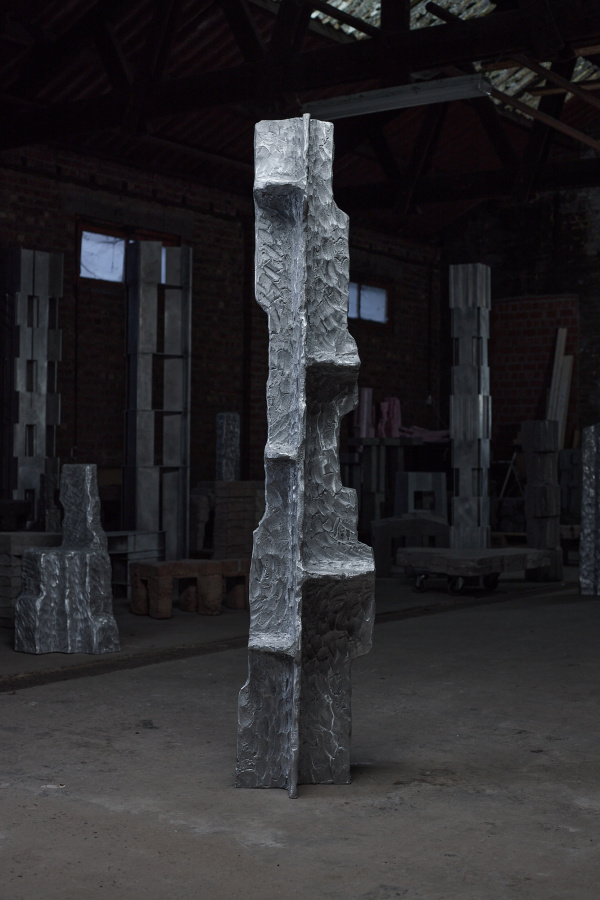
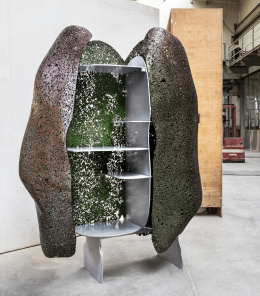
Bram’s Alucast Column/Shelf is a sculptural aluminum casted shelf. The molds of this piece are sculpted out of big foam blocks in combination with layers of wax, an intensive and physical process which is explicated by the scars on the surface. Photo by Alexander Popelier
The ecosystem of what you need to make something has always been my starting point and inspiration. It’s been like that since I was a child. When I was 12 I was doing the same thing I do now, just with whatever tools and materials were around. It took me a long time to fully recognize that as a way of working, but now I know that’s exactly what it is.
Bram: I agree completely. The tools matter as much as the material. There’s something about systems too, the logic of how things connect. Stacking is one of the oldest ways humans have learned to build, for example. The question that interests me is how you intersect materials, and how you connect them in ways that aren’t obvious. How you create a system from something very simple. That tension between the basic and the unexpected is where a lot of my work lives.
I worked at some point with leftover concrete panels. I started grinding and sculpting them into benches and I remember thinking, “This is exactly like sculpting marble, except it’s concrete.” I treated it with that same level of care, shaped it properly, and applied a stone wax finish so you could see all the stones visible in the surface.
That’s something I try to do with materials in general. Even if they look rough, if you treat them with real attention they become valuable. You can make a diamond out of something people were going to throw away. I think that’s a general principle, not just about concrete.
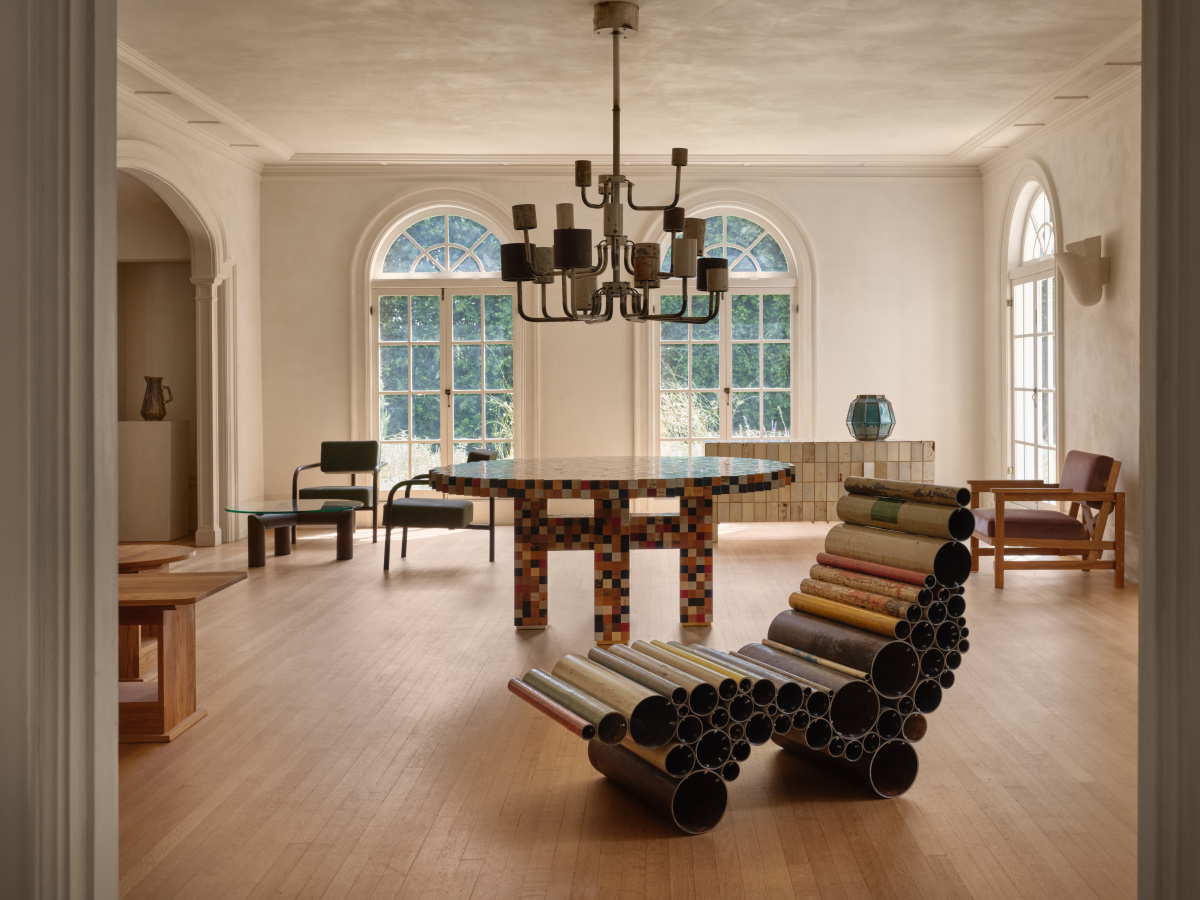
The Tube Chair by Piet Hein Eek is made of old pipes that were salvaged from the building his studio bought and renovated. Photo by Liz Carababas
That’s a blueprint of what I would have said. Of course the materials are different, but the thinking is the same.
When I first started in this industry, it was unusual to approach things that way. There are more designers now who recognize the quality in materials that were previously considered worthless.
But I want to be honest about something: when I began, I didn’t set out to say, “Look, this material was worth nothing and now I’ve made it worth something.” It was simpler than that—I just love all materials. When I see something I don’t think “I can’t make a chair out of that.” I think, “What can I do with this?”
Everything has potential. The so-called “waste” materials weren’t waste to me. They were good materials. In many cases, better than new ones, because they had character. New material often has none at all because it has no history.
And that character is what people end up responding to without always knowing why. There’s a quality in something that carries history.
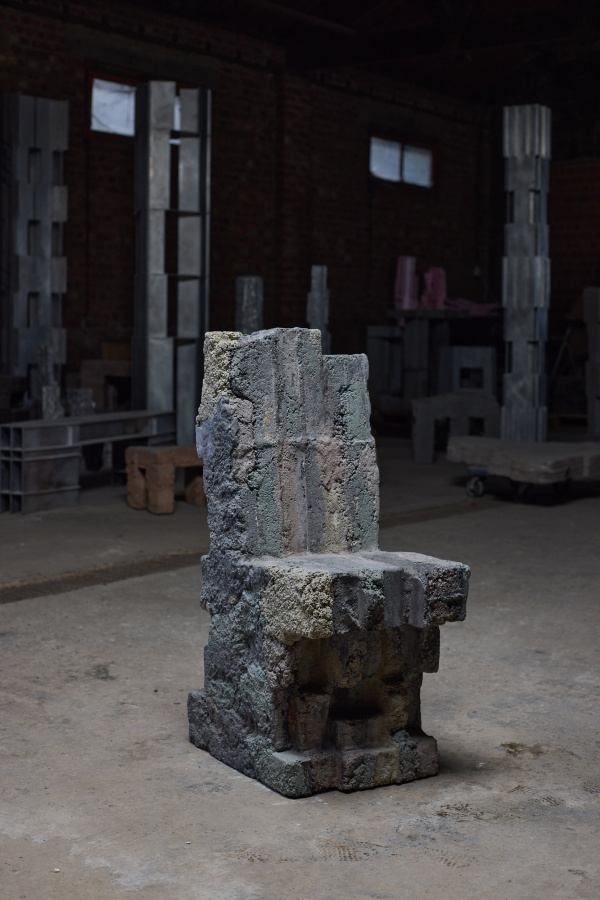
The Brick Chair is a minimalist chair created by Bram Vanderbeke. His “Casted Objects” collection draws inspiration from construction workers’ techniques for creating building foundations. Photo by Alexander Popelier
Exactly. A lot of people started asking me questions about environmental thinking over the years, and I’ve always been frustrated by that framing. Not because I don’t care about the world, but because I think most of it operates at the wrong level.
In Holland we have a saying: “You clean the pavement in front of your own door.” I think that describes about 90% of environmental thinking. People focus on their own small patch and feel good about it while the actual problems don’t get addressed.
If you make something from recycled materials and it’s bad, it’s worse than something made from new materials that’s really good and lasts 100 years. The most environmental thing you can do is make something so well that someone keeps it for the rest of their life and passes it to their children.
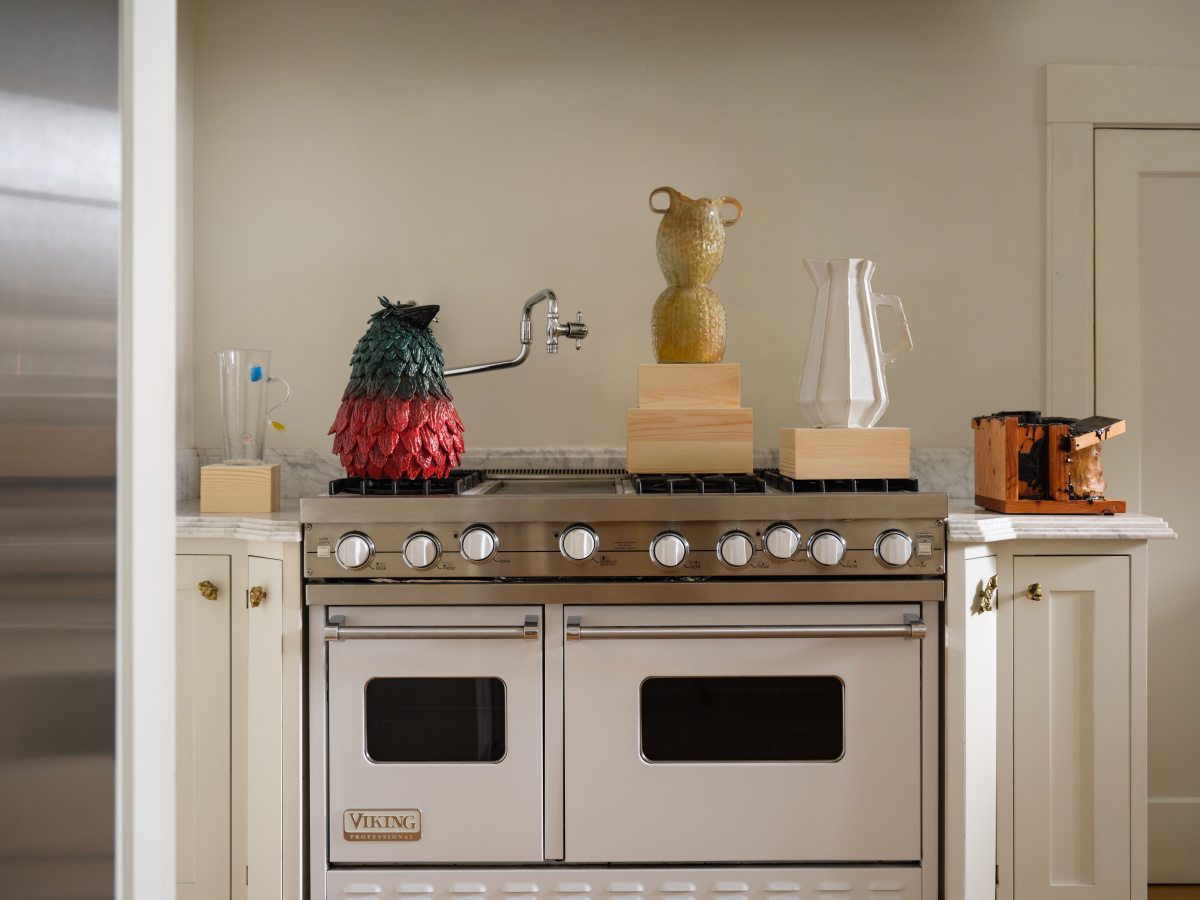
“Everything has potential,” says Piet. “The so-called ‘waste’ materials weren’t waste to me. They were good materials. In many cases, better than new ones, because they had character.
Quality is the real answer. When I started, people thought I was left wing and uncommercial because I used waste materials. I said, “It’s beautiful and it’s cheap and I love it. It’s not a waste material.” I just told people they were wrong.
Bram: I like to think that if I make something and someone really sees it as an object they’ll cherish for the rest of their life, maybe pass it to their kids one day, that’s the most important idea. Not the material it came from or the process language around it. More so whether it earned a permanent place in someone’s life.
Quality is maybe a more important word than anything else if you’re talking about environmental issues.
Nowadays architects are constructing buildings that last only 30 to 40 years, then designing elaborate systems for separating the materials when you demolish them, cradle-to-cradle and so on. But everybody knows using a bulldozer is much cheaper than carefully separating materials.
The product has to justify itself on its own terms first. The idea of designing in a different way as a moral statement, I think that’s the wrong level to operate on. It puts the concept above the work.
“The ecosystem of what you need to make something has always been my starting point and inspiration. It’s been like that since I was a child. When I was 12 I was doing the same thing I do now, just with whatever tools and materials were around.” -Piet Hein Eek
I think the truth of it is that there is good design and bad design. There are some great designers might work with environmentally friendly materials, but they also just make great pieces. What I hope is that people start to understand the difference. The newer generation is getting closer to that. The students are just making things with real attention to material and to process.
At the Design Academy Eindhoven, for example, I think actually had one of the same teachers as you, which is a nice connection. For me the school was a place where my eyes opened. I came from a very hands-on material background, but at the Academy it was suddenly international, suddenly full of people from completely different places with completely different ways of working. That contact and community was probably the most important thing.
The teachers matter of course, but you really have to do it for yourself. What actually forms you is the people around you challenging each other. Being in Eindhoven during Dutch Design Week in my first year and seeing exhibitions everywhere, all these people trying things, making interesting work, it was extraordinary. I’d never experienced anything like it.
It was a completely different world for me 35 or 40 years ago. No computers to speak of, or rather, we had one computer the size of a classroom. We were among the first in Holland doing any kind of digital drawing at all. The school was less international and less creatively chaotic, but better organized.
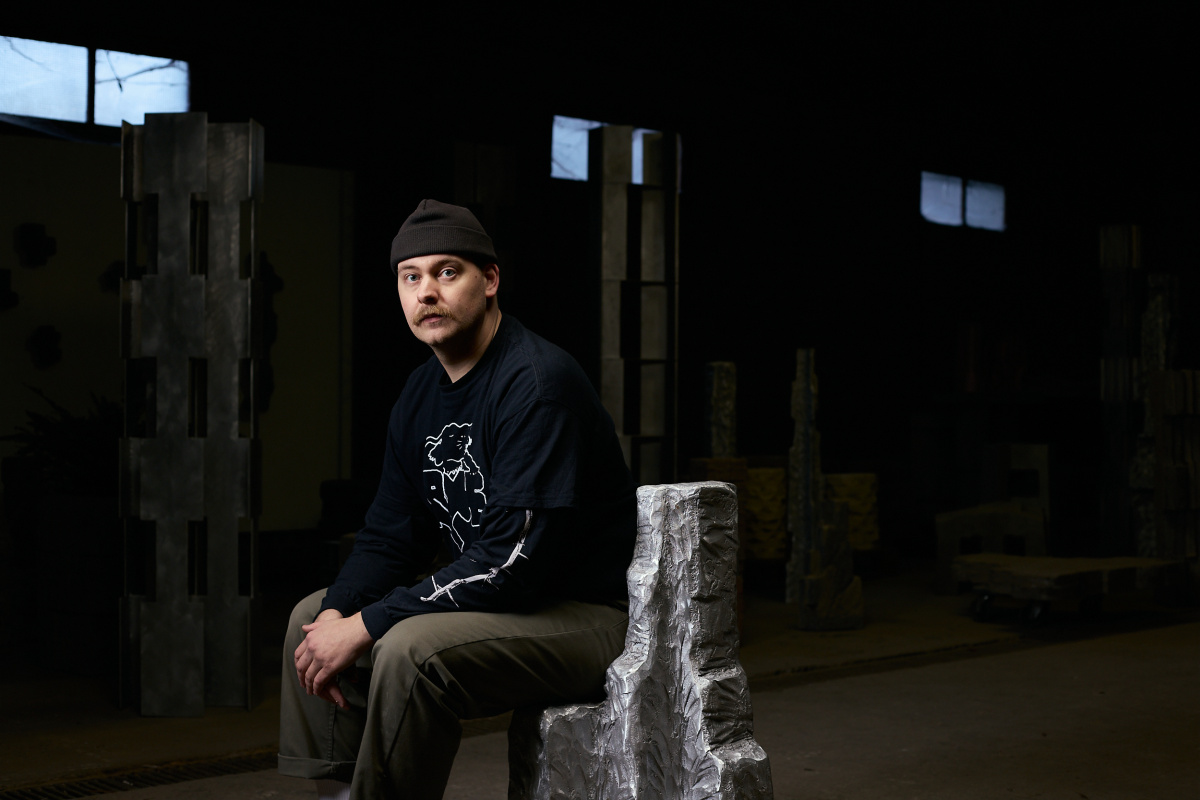
“Right now I’m just glad every single day that I can go to my atelier and build things, that this is my actual life and my actual job. It’s amazing that I can do this,” Bram says. Portrait by Alexander Popelier
I’ve always been somewhat skeptical of the Design Academy, even from my own time there. The structure was built around head teachers who essentially expected students to become versions of themselves. You were supposed to absorb their worldview. I didn’t do that, so I had a good education in the sense that I fought for my own thinking. But most students ended up as copies of their teachers, which is the wrong outcome for a creative education.
When Lidewij Edelkoort came in as director, the school began focusing on helping each student find their own signature and path. She understood both the creative direction and how the organization needed to support it. That was the best period the school ever had.
After she left, things that were working well got changed and gradually both the vision and the organization eroded. But the teachers and the students are still remarkable. In spite of everything, the school still produces good people. That’s partly the city, partly the community, and partly something that just persists.
I’d agree with that. The organization was already a bit chaotic when I was there, and we all knew it. But I try to hold onto the good parts: the friendships, the people I still run into at every exhibition in Milan or anywhere else in the world. That community is real and it lasts your whole career. That’s what I keep with me from it.
And something else shaped me practically: a lot of students were renting their own ateliers in Eindhoven even while they were still studying, because the city had so many old Philips buildings that were still affordable at that point. That’s actually where you learn to run a practice, not in the classroom. I did the same thing after I graduated, moved to Ghent but immediately set up an atelier in exactly the same way I had as a student.
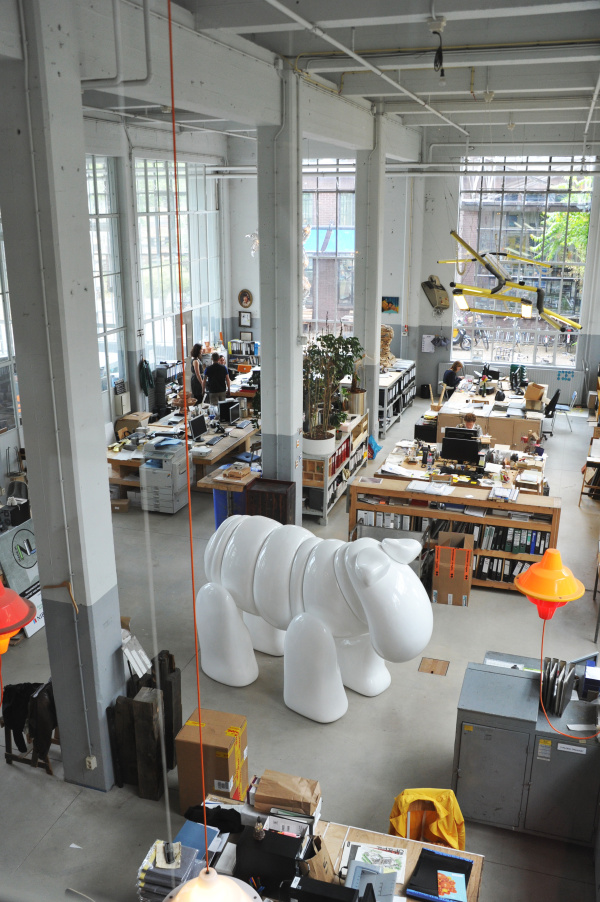
Piet Hein Eek’s studio, Eindhoven, the Netherlands. Photo by Nick Bookelaar
That habit of having your own space, your own rhythm, your own work running alongside everything else, that’s something Eindhoven teaches you almost by accident. The climate is still there I think, even if it’s getting more expensive now. Creative people still go because other creative people are already there and that elevates everyone around it. It keeps expanding outward in the city too—people are moving further out to find affordable space, but the energy stays.
I do think the students and creative people living in Eindhoven are still of very strong quality. Everybody elevates everybody. But if you’re putting money into an institution or design education, you’d hope for something more intentional than that.
I always say it’s like they’re offering a nonintentional education. Sometimes being told three times that you’re not allowed to do something is the best teaching of all, too, because a student immediately thinks, “Well, then I’m going to do it.” But normally you’d hope to stimulate the students in a more positive, intentional way.
Every designer has also to learn how their part fits into everything else from the very first thought until the product is being used. That’s what a generalist does. The specialist handles the detail, the generalist holds the context.
For most of the 20th century, the belief was that cutting processes into small specialist areas would make everything more efficient. But in any vulnerable system—medicine, construction, design—without someone holding the whole picture together you get more mistakes, more cost, more failure. Since around 2000 the consensus has shifted: you need generalists. That’s what designers are and have always been.
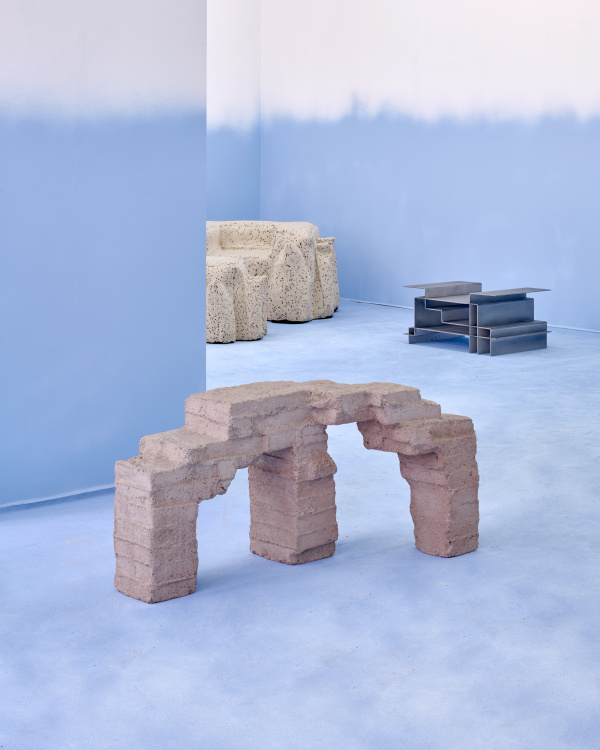
Bram’s Duoshow with Wendy Andreu for Uppercut Gallery. Photo by Pim Top
I agree with that. I like it when a designer dares to experiment with multiple things. If tomorrow somebody comes to me and they want me to work in a material I never worked with or a technique I never worked with, I want to discover it and I want to dive into it. In that way yes, I want to be a generalist and not be focused on one thing only.
I always tell my interns, “You don’t need to know anything specific to work here. If you have some kind of skill, we’ll find something for you to do with it.” I don’t care about specialization at that point. What matters more to me is the willingness to look at something naively.
If you already know too much about a material or a process, you’ll talk yourself out of trying things because you’ve already decided they’re not possible. Naivety is actually a tool. It’s how you discover things that more experienced people have already ruled out. I prefer to approach things in a naive way than to approach them already knowing too much, because knowing too much can close things off before you’ve even started.
I work alone in my atelier, very hands-on, doing experiments and model making myself every day. And I was wondering how it works for you now, because you have a large company with a lot of people. Do you still get to make things yourself, with your own hands?
I stopped working in the workshop myself about 20 years ago, and I thought I would miss it terribly. Every time I tried to make something I’d get interrupted by a phone call and it became impossible to stay in that mental space. So I stopped. Then surprisingly, I didn’t miss it the way I expected to. The people making things are right across the hallway with two layers of glass between us. It still feels completely direct. And after 20 years, the carpenters we have are far better than I ever was anyway.
“If what I’m making satisfies me and satisfies the people I’m making it for, then I think I’m doing something right.” -Bram Vanderbeke
My daughters are all grown now and have their own homes, and I help them sometimes making things for their places. When I’m in a workshop doing that, the joy is exactly the same as it always was. The pleasure of making with your hands doesn’t disappear. It’s just that the way the company is organized, it doesn’t make sense for me to go into the workshop for professional work.
People often ask if I still have time to design, given how large the company has become. But that question makes an assumption that doesn’t hold up. When you work alone you do everything yourself, including all the things that have nothing to do with making: emails, invoicing, ordering materials, bookkeeping. So your time is also limited, just differently.
What I have now is a bookkeeper, someone who handles sales, people who manage the operational things. In the end I design, I draw, I think through problems, and that’s most of my day. The assumption that a bigger company means less time for what you love is only true if you’re badly organized. If you’re well organized, it’s the opposite.
That’s very true. Right now I do all the things I love, but I also have to do all the things I don’t love. I need someone to come and take those off my hands one day.
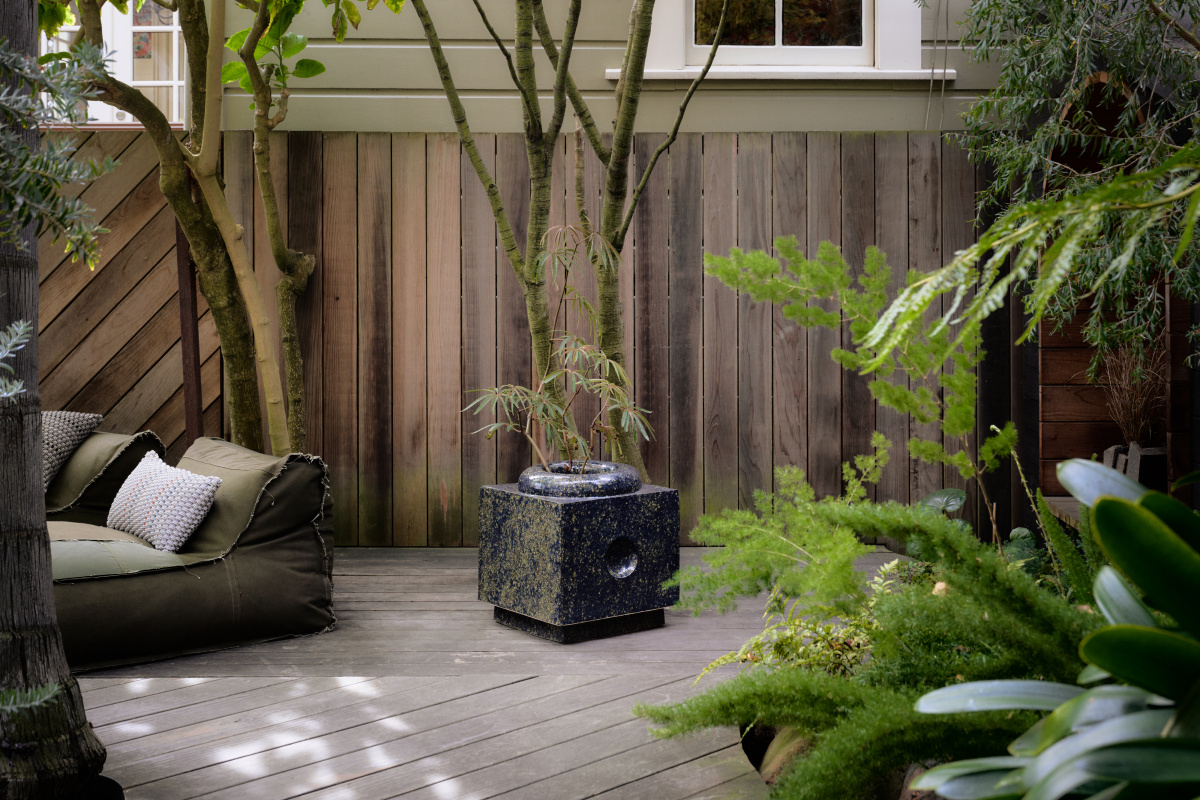
“The pleasure of making with your hands doesn’t disappear,” says Piet. Photo courtesy of Piet Hein Eek
My joy is also entirely in the process of making, not in the result. When something fails completely I’m doing something else the next day and I haven’t spent a moment looking back at it. That’s where the reward lives, in the act of making itself.
Of course it’s an extraordinary thing to be able to live from something you love this much. If you’re able to make a living from what you really, truly love, you’re blessed. There’s nothing better in life. The process of making is so joyful that even if something turns out completely wrong, ugly, or a failure by any measure, you can still remember why it was so satisfying to make it that way. Creating something is deeply satisfying regardless of the outcome.
That’s the thing I want people to understand about this kind of practice.
I hope that in 30 years I feel the same way. Right now I’m just glad every single day that I can go to my atelier and build things, that this is my actual life and my actual job. It’s amazing that I can do this. It still surprises me sometimes. And if what I’m making satisfies me and satisfies the people I’m making it for, then I think I’m doing something right.
pietheineek.nl/en, bramvanderbeke.com
A version of this article originally appeared in Sixtysix Issue 16.