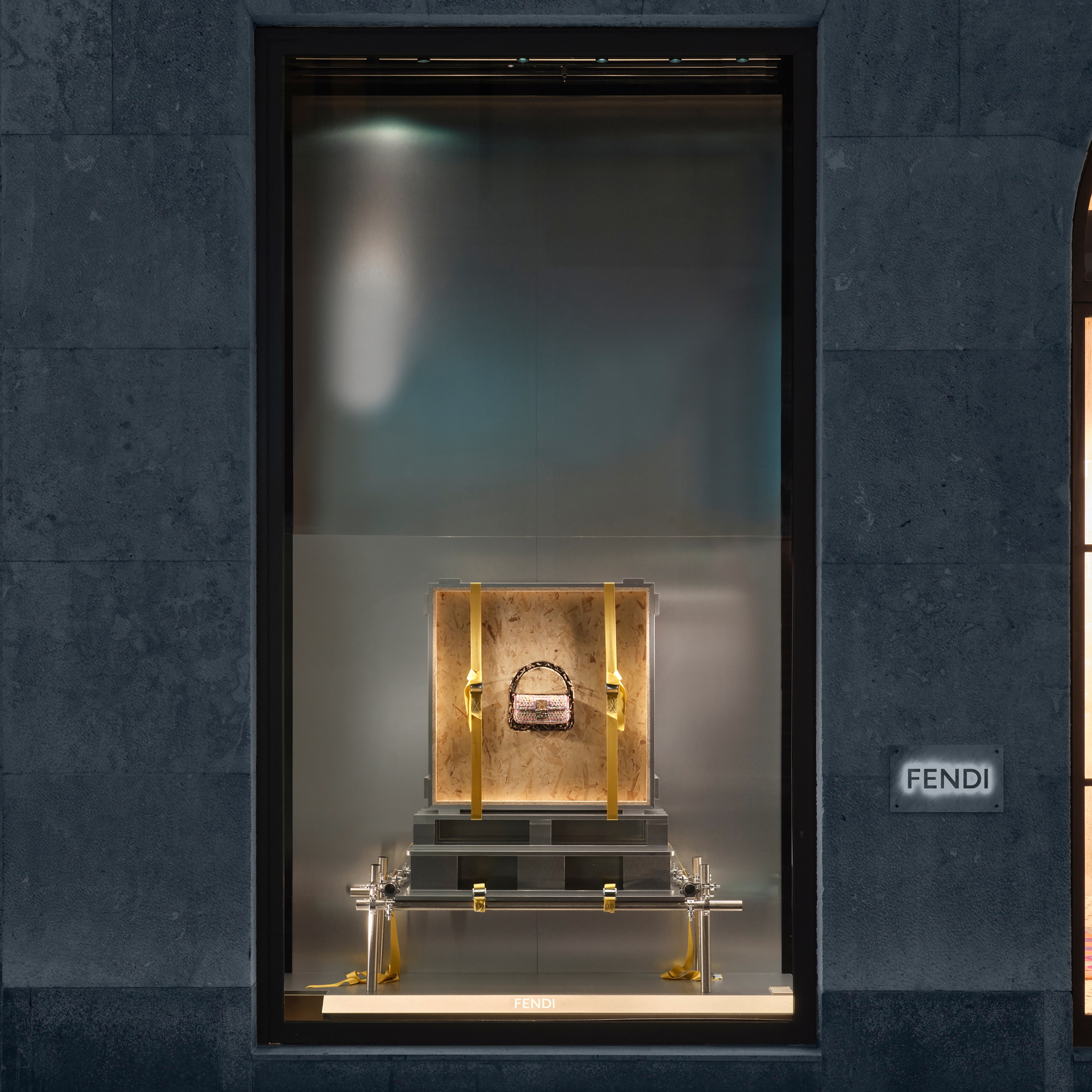
Five flights up the staircase at Palazzo Fendi, past Edoardo Piermattei’s pink and terracotta ceiling fresco and the twin pieces by Levi van Veluw, past a Nick Cave Soundsuit standing like a beaded sentinel, the best aspect of Fendi’s Milan Design Week opening cocktail reception was happening in a makeshift studio where a dozen artisans were stitching the Baguette Re-Edition bags that had just gone on sale downstairs.
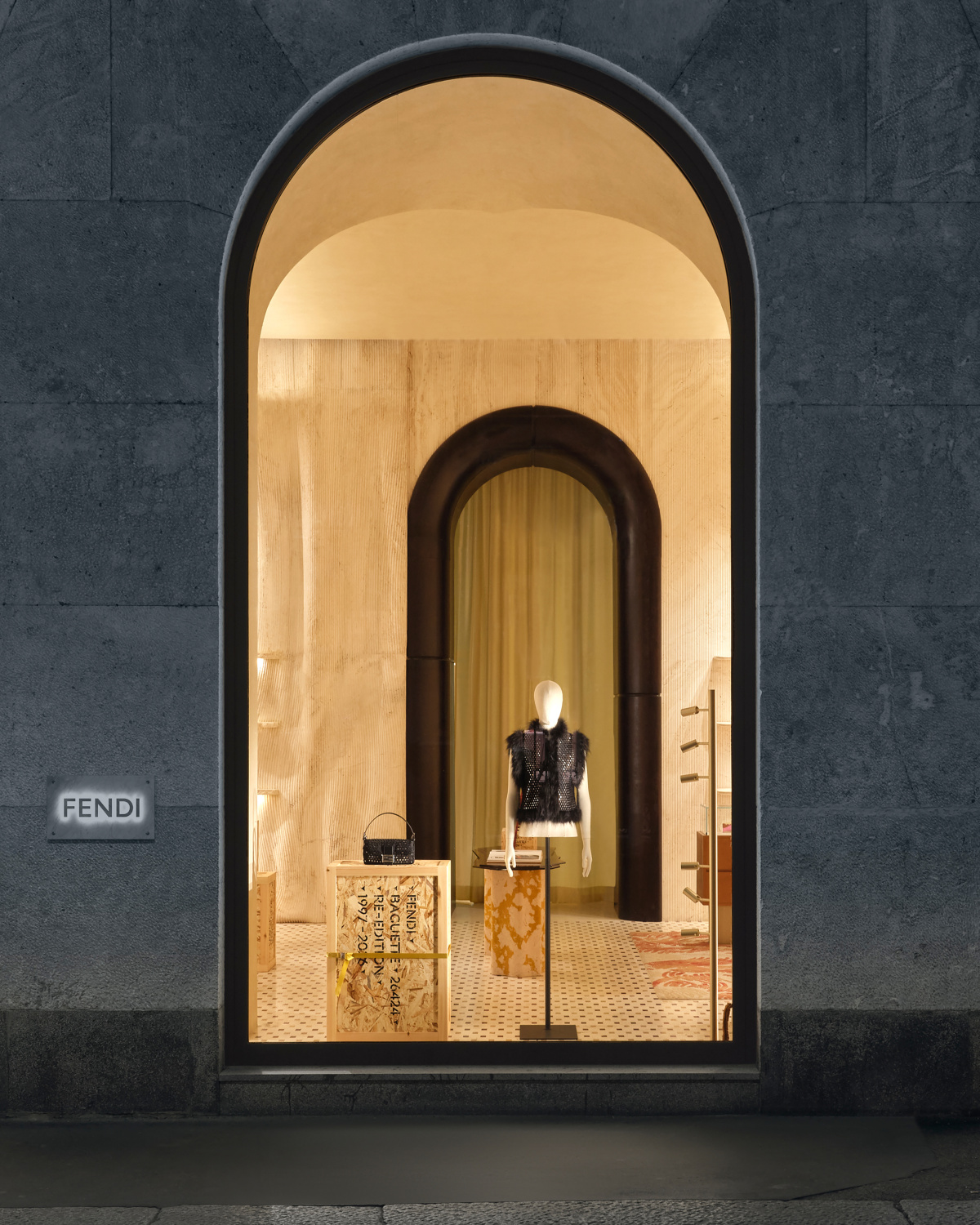
The ground floor of the new Palazzo Fendi, at the intersection of Via Montenapoleone and Corso Matteotti, was doing its job. All 20 re-editions of the Baguette bag were staged on wooden art crates, each one a different translation of the original 1997 silhouette. There were hand-embroidered mirror tiles, cascading paillettes, beading and lustrini, and raffia stitched in the Fendi tiger motif with chain work.
-
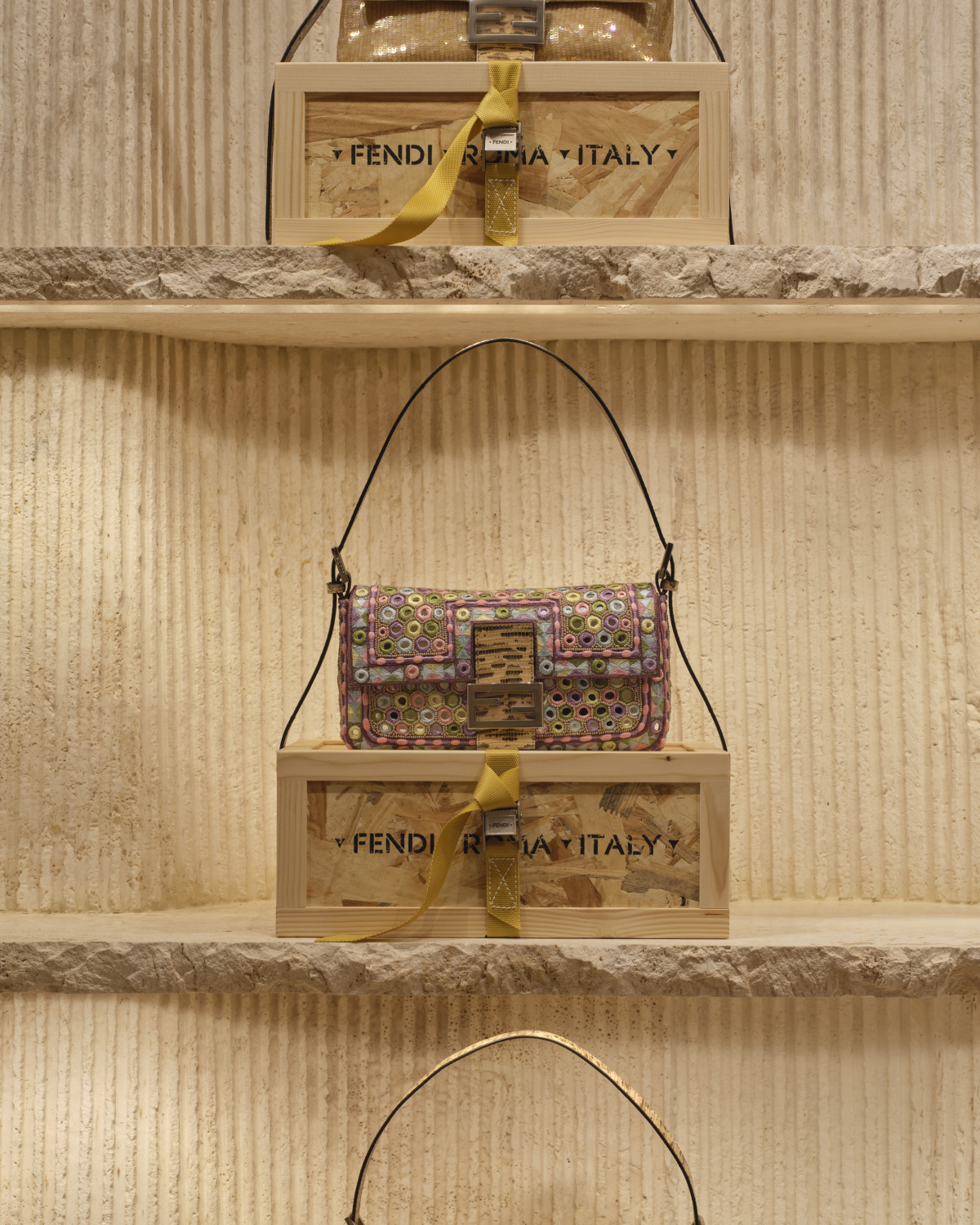
- One of the 20 Baguette 26424 Re-Editions, staged ontop its stenciled wooden shipping crate on the ground floor of Palazzo Fendi Milano. Photo courtesy of Fendi
-
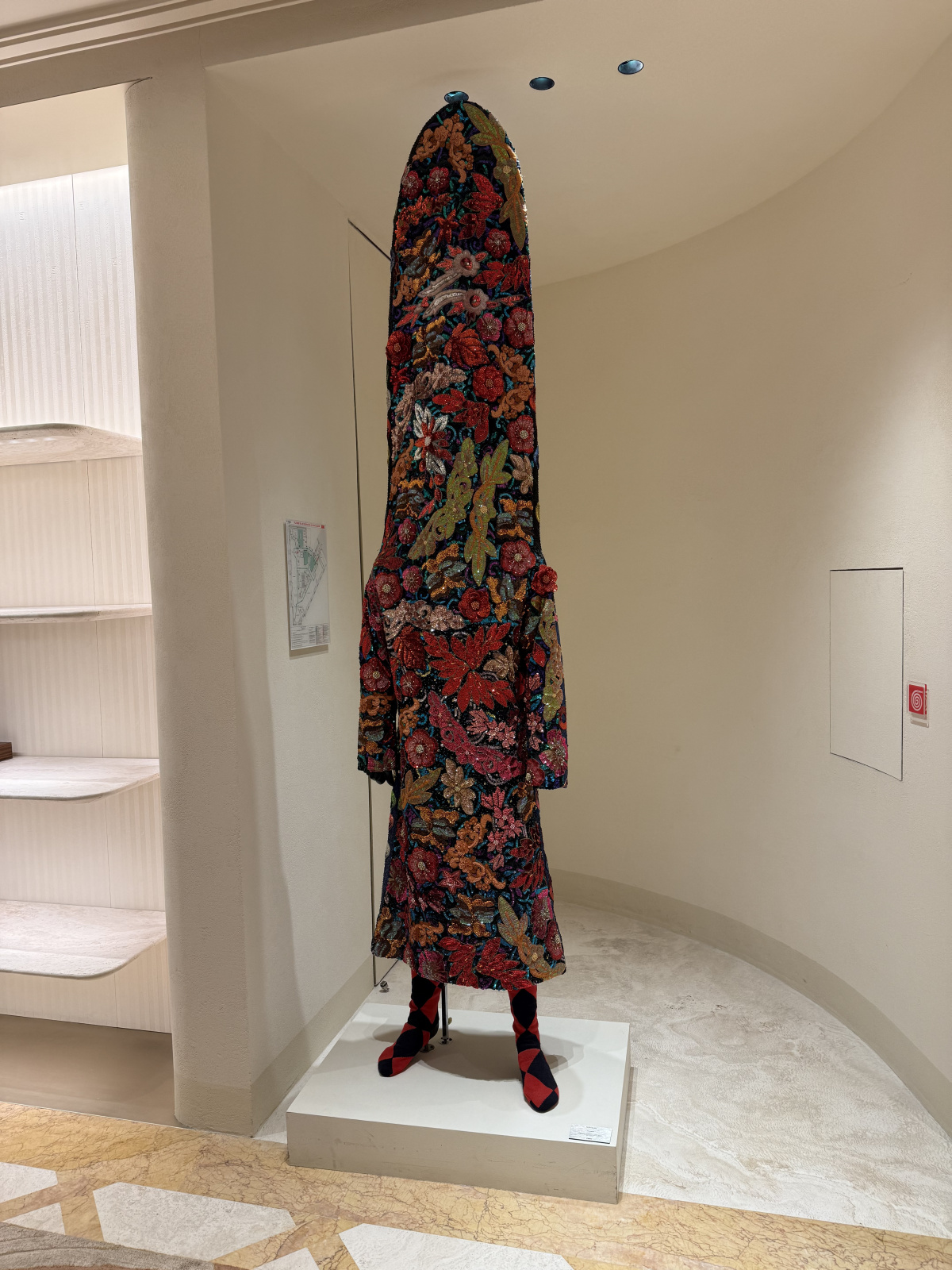
- A Soundsuit by Nick Cave, installed at Palazzo Fendi Milano. Photo by Chris Force
The cocktail crowd worked its way upward through the floors of the rationalist building originally designed by Emilio Lancia in the 1930s to eventually reach the atelier. The room was set up as a working studio with artisans at their stations, stitching, cutting, assembling the re-editions. Swatches and leather pulls were staged across the tables so you could watch a Baguette come together in real time.
Small balconies around the floor offered views over Via Montenapoleone, one of the most photographed stretches of pavement in fashion. People drifted outside with their drinks, taking stock of the week and posing for photos.
-
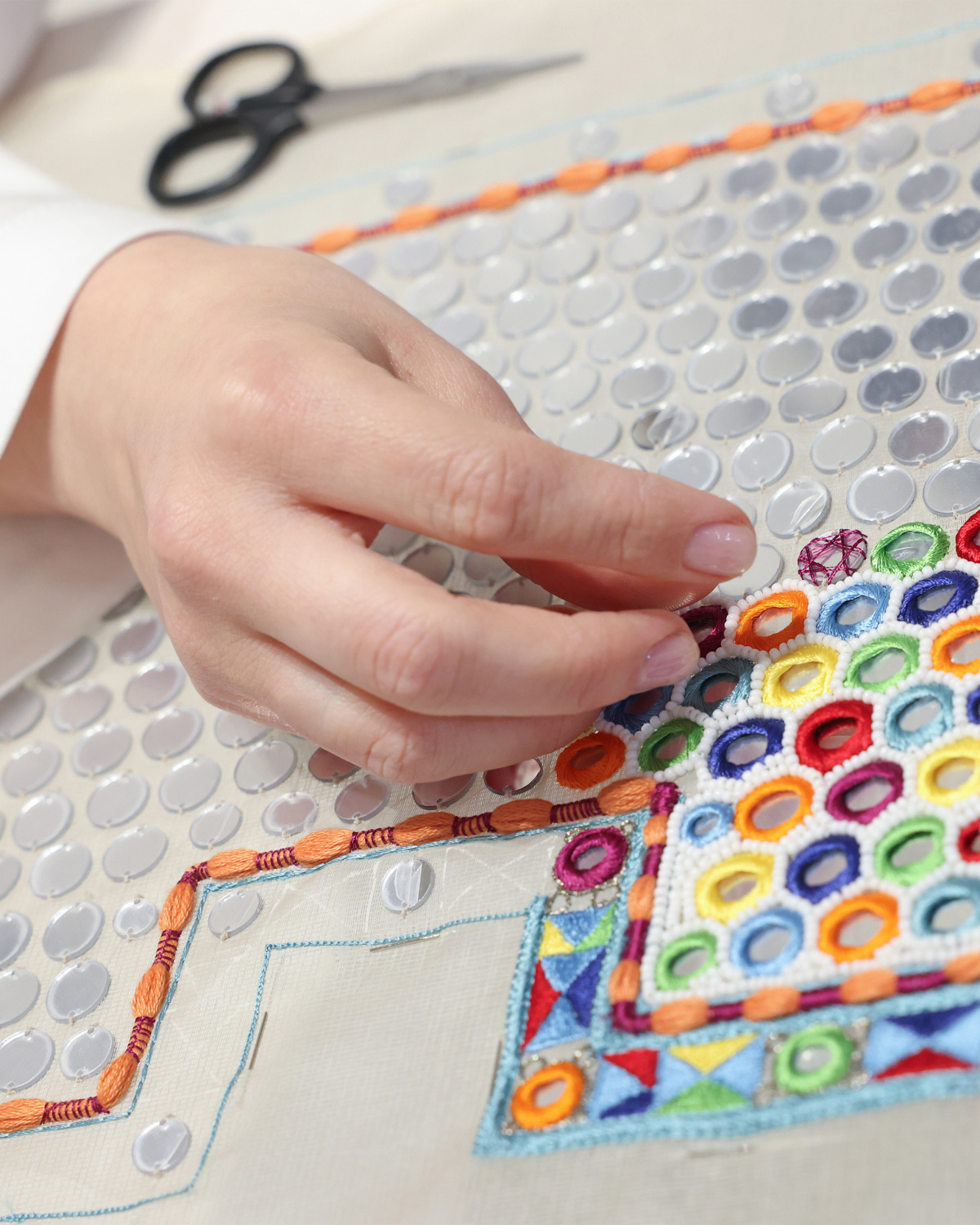
- Artisans at work on the Baguette 26424 Re-Edition inside the 3rd floor atelier at Palazzo Fendi Milano. Above: mirrored-sequin embroidery in progress.
-
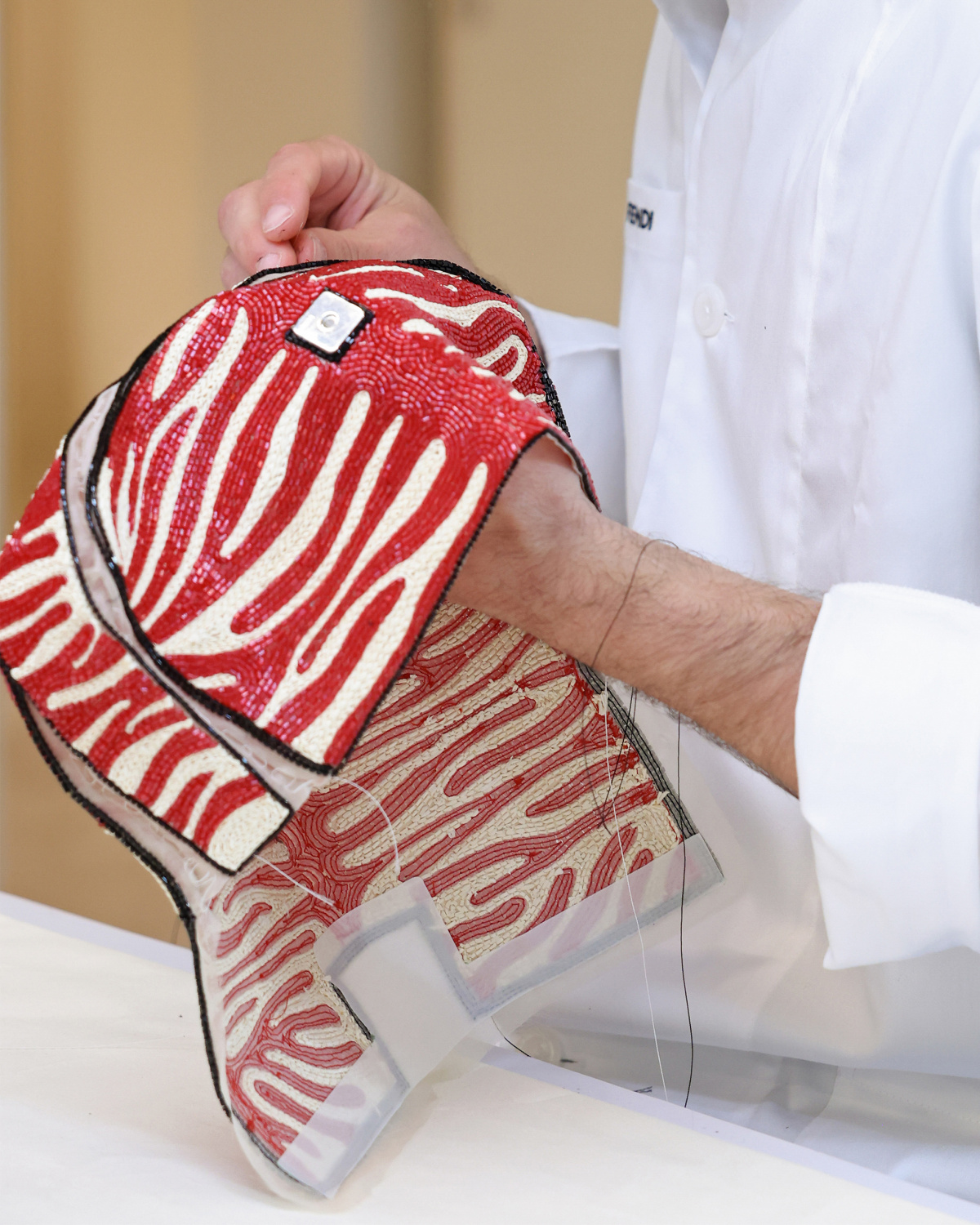
- A zebra-motif Baguette in red sequins and beading. Photos courtesy of Fendi
Maria Grazia Chiuri took over Fendi in February as chief creative officer, returning to the house where she worked on accessories in the late 1990s, when Silvia Venturini Fendi designed the original Baguette. The bag got its name because the original short strap forced it into your armpit, the way the French carry their loaves. Within 18 months of launch, Fendi had put out more than 500 variations. Then Carrie Bradshaw clutched one on Sex and the City and the thing became a decade-defining accessory. An embroidered mirror-tile Baguette from S/S 1999 now sits in the collection of Palais Galliera in Paris.
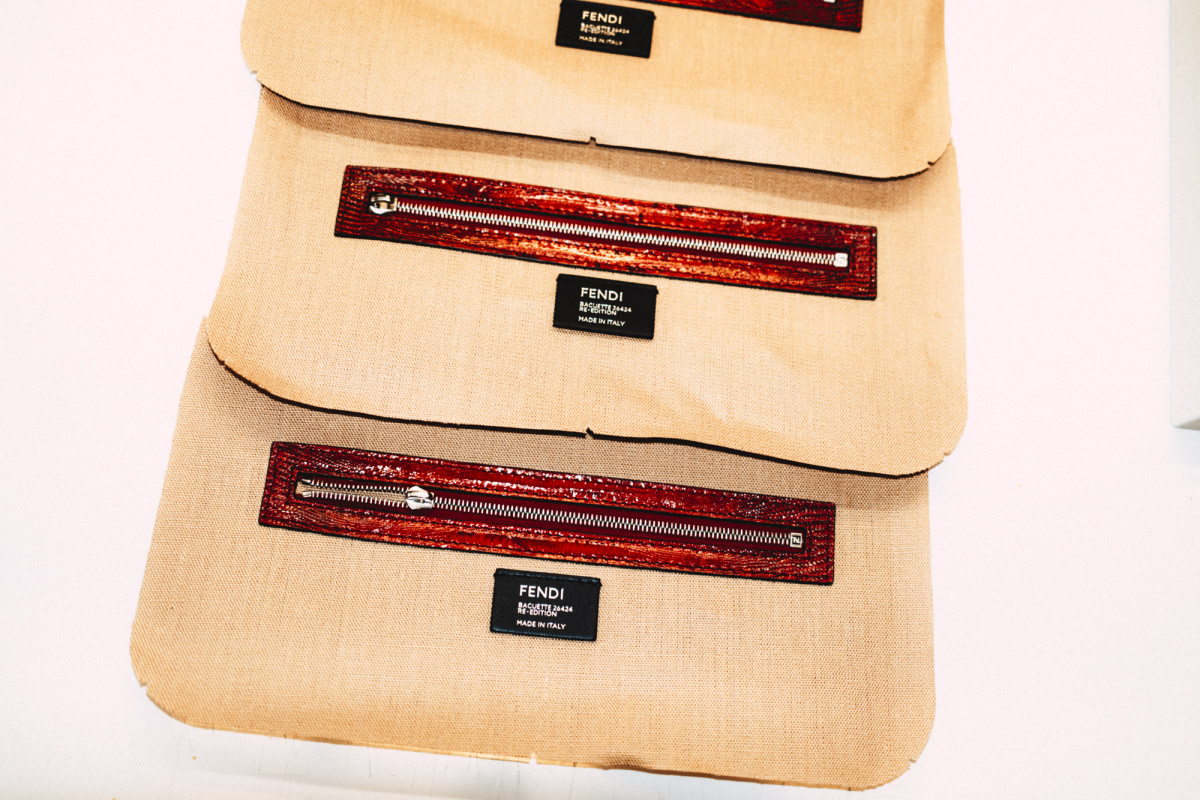
The Baguette 26424 Re-Edition packaging at Palazzo Fendi Milano. Each bag ships inside a stenciled canvas sleeve, then into a wooden crate, staged to position the re-edition as a collectible object as much as a handbag. Photo by Chris Force
The 26424 Re-Edition takes its name from the original style code. All 20 designs, six of them Milan exclusives, all pulled from the archive and softened into a silhouette Maria Grazia says is meant to sit easier under the arm. The embroideries are executed by Chanakya International in Mumbai, the atelier that has been hand-working Baguettes for Fendi since 1997 using Aari, a hooked-needle technique that runs continuous across a surface, and Zardozi, a finer method for detailed embellishment.
-
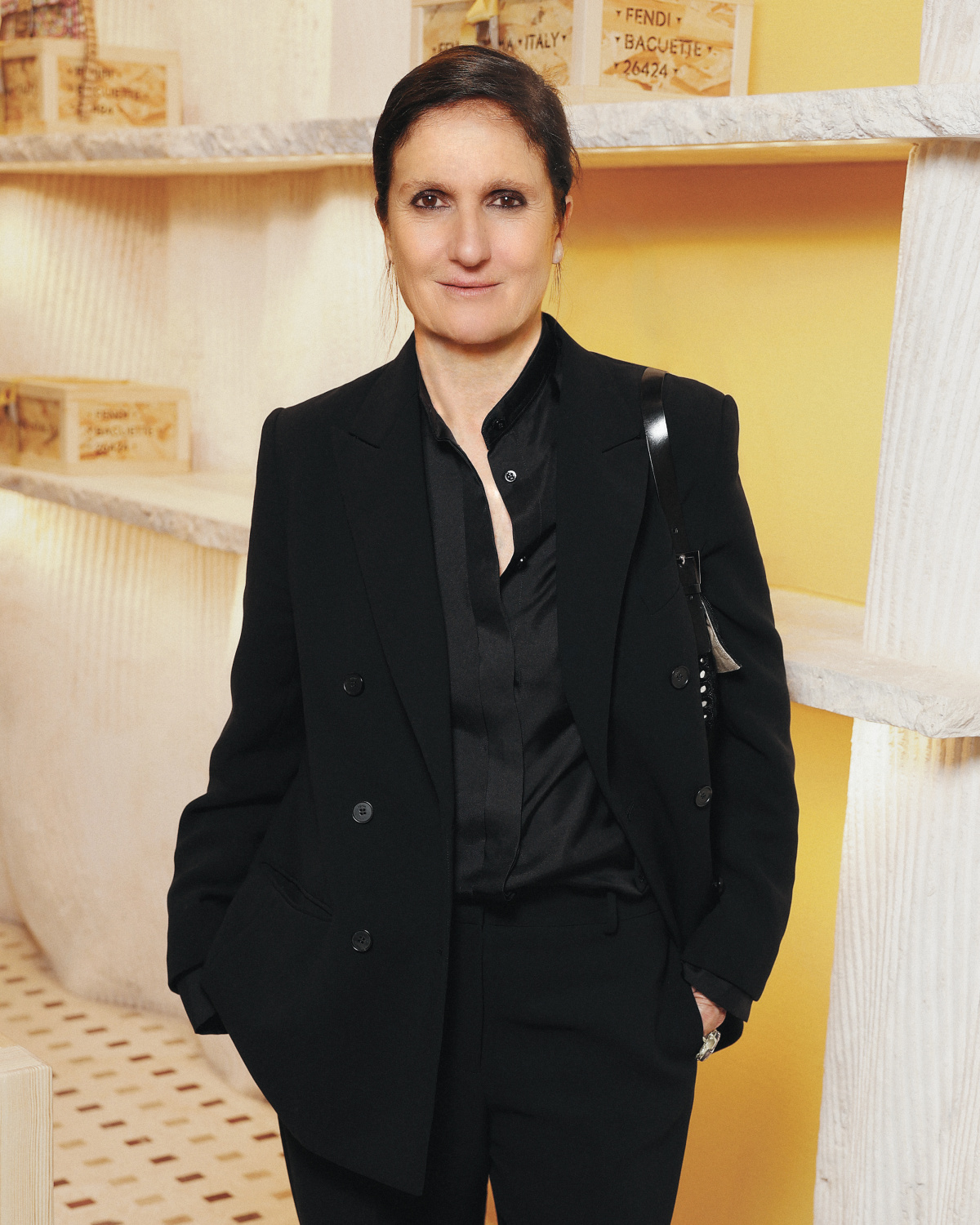
- Maria Grazia Chiuri at Palazzo Fendi Milano on the opening night of the Baguette 26424 Re-Edition. It was her first Milan Design Week as Fendi’s chief creative officer, and the first time she had publicly shown her work on the bag she helped launch in 1997.
-
- Photos courtesy of Fendi
The text Maria Grazia released with the re-edition opens with Truman Capote on the South Street pier, watching Marilyn Monroe feed seagulls cookies she has stolen from a restaurant. No makeup. A chiffon scarf on her hair. Nobody recognizes her. “I have a purse full of cookies,” she tells him, matter-of-fact. A purse, Capote decides, is a personality. The Baguette, Maria Grazia is arguing, can be any personality you want.