The wire that powers a light fixture is, by design, something you’re not supposed to see. It runs through the rod or chain and disappears into the ceiling, a system that is engineered around the assumption that infrastructure should be hidden. For the better part of a century, the goal has been to make lighting both functional and unobtrusive.
Andy Morter, a designer at Hubbardton Forge, spent years refusing this standard.
Andy has been with Hubbardton Forge since the beginning of his career, designing out of the company’s single manufacturing facility in the hills of central Vermont. The company was founded in 1971 and has always operated as a vertically integrated maker. Nearly everything is designed, fabricated, and assembled in that one building in Castleton. When Andy began developing what would eventually become the SNAPS collection, the question he kept returning to was not how to hide the conductor but how to make it beautiful. The answer he arrived at was leather.
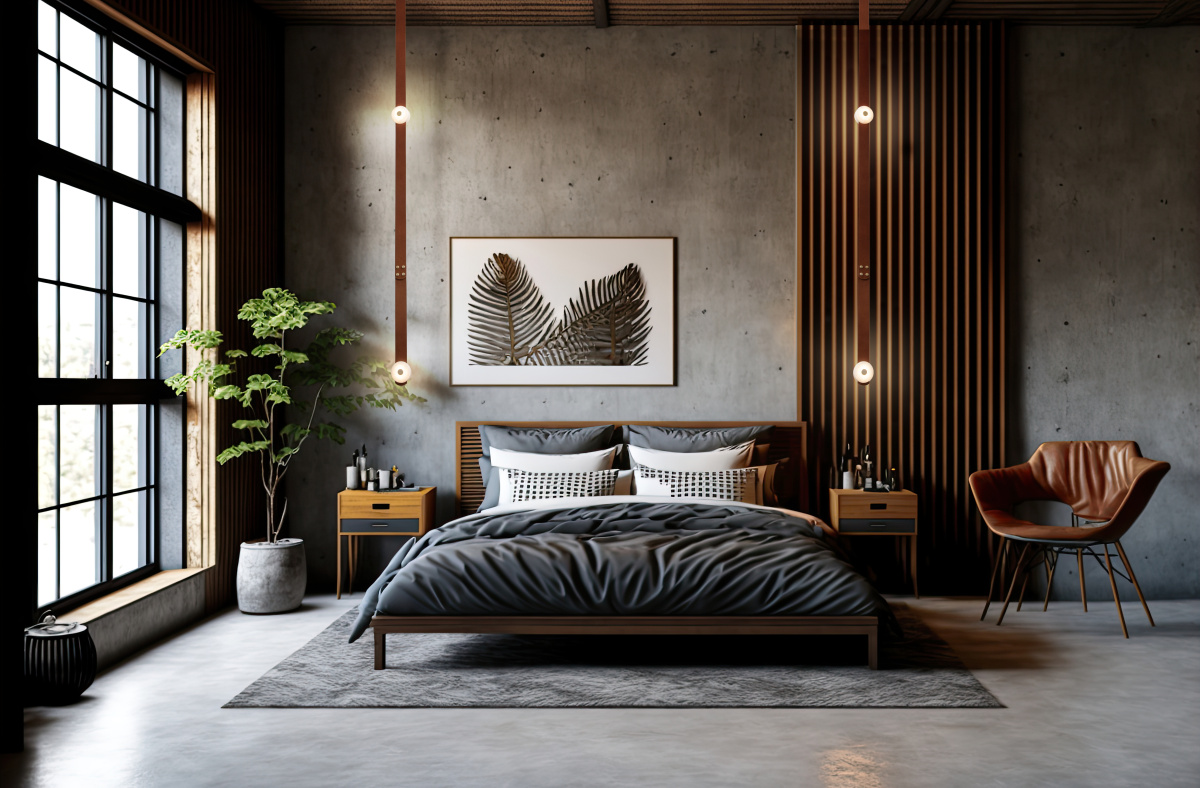
When designer Andy Morter began developing what would eventually become the SNAPS collection, the question he kept returning to was not how to hide the conductor but how to make it beautiful. The answer he arrived at was leather. Photo courtesy of Hubbardton Forge
SNAPs’ straps are made from Spinneybeck leather, cut and stitched by Appalachian Stitching, a manufacturer based in Littleton, New Hampshire, a few hours north of Castleton. What Appalachian Stitching developed for SNAPS didn’t exist before they developed it together: a way to incorporate conductive material within the stitched leather components, allowing the fixture to carry electricity with no visible means of doing so. From the outside, the strap looks exactly like a strap. The current runs through it completely out of sight.
Andy worked alongside both Appalachian Stitching and LEDdynamics, a Vermont-based LED manufacturer about an hour and a half from the forge in Randolph, not just to figure out whether the concept could work but to figure out the best way to do it. Hubbardton’s VP of Design & Product Strategy, David Kitts, oversaw the collection and was heavily involved in its creation. He describes the collaboration as foundational.
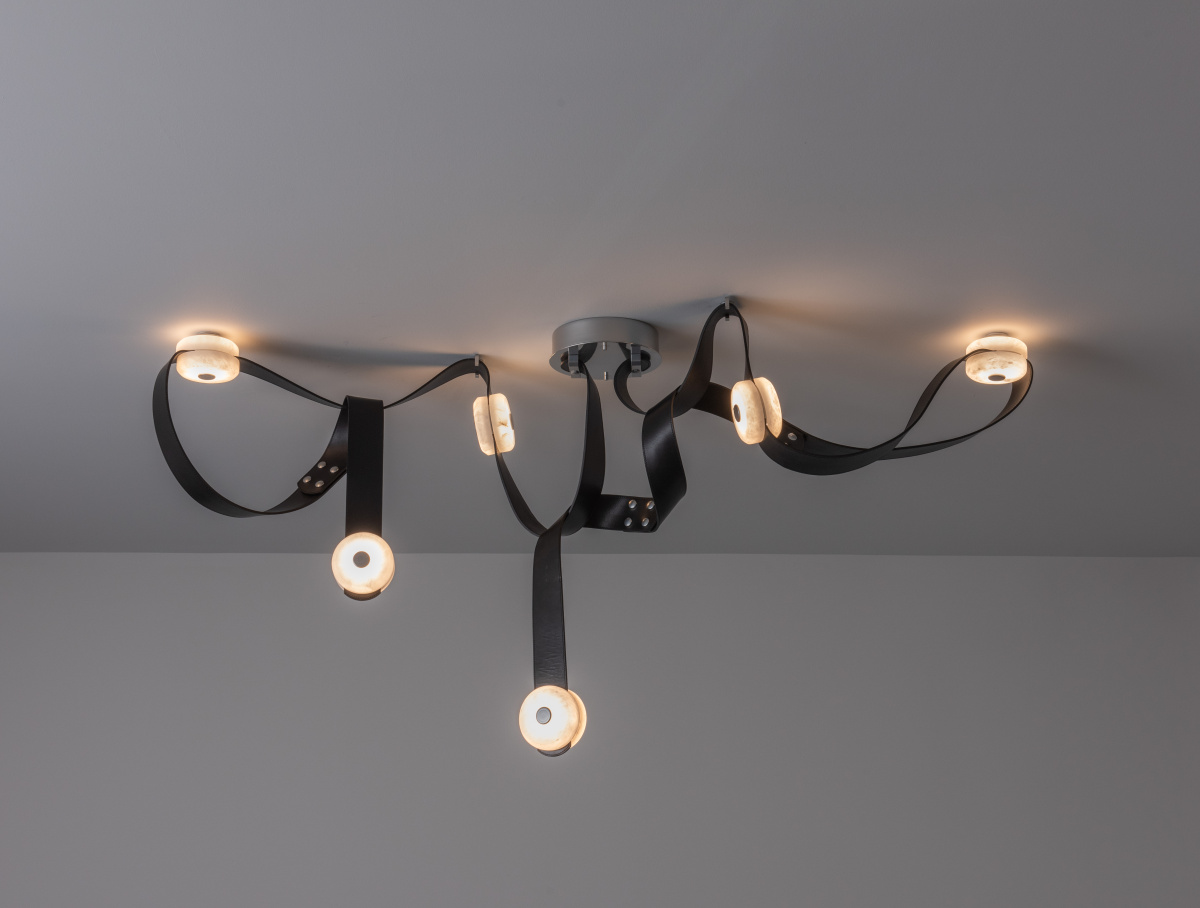
“We liked the pairing of natural materials with cutting-edge technology,” David says. “Alabaster has a warm, diffuse glow that for us is a perfect pairing with an LED light source. The natural variations each piece has also highlights the organic qualities of the material.” Photo courtesy of Hubbardton Forge
“Andy worked hand in hand with both our leather supplier and LED supplier,” he says, “in not only figuring out the ‘if’ and ‘how’ it can be done, but also the best way it could be done for ease of install, modification, and future customizations.” Those questions shaped the system at the level of its mechanics, and they’re also the reason the collection is called what it is. The connections are literal snaps. Press two pieces together, and they click. Press them again and they release.
“The development of our SNAPS collection took years and timed well with the recent swag lighting trend, but trends are by nature temporary,” he says. What he believes makes SNAPS different is its capacity to change. New elements are added to the system regularly. The configuration you install today can become something else entirely next year.
“Replacing elements is literally a ‘snap,’” he says.
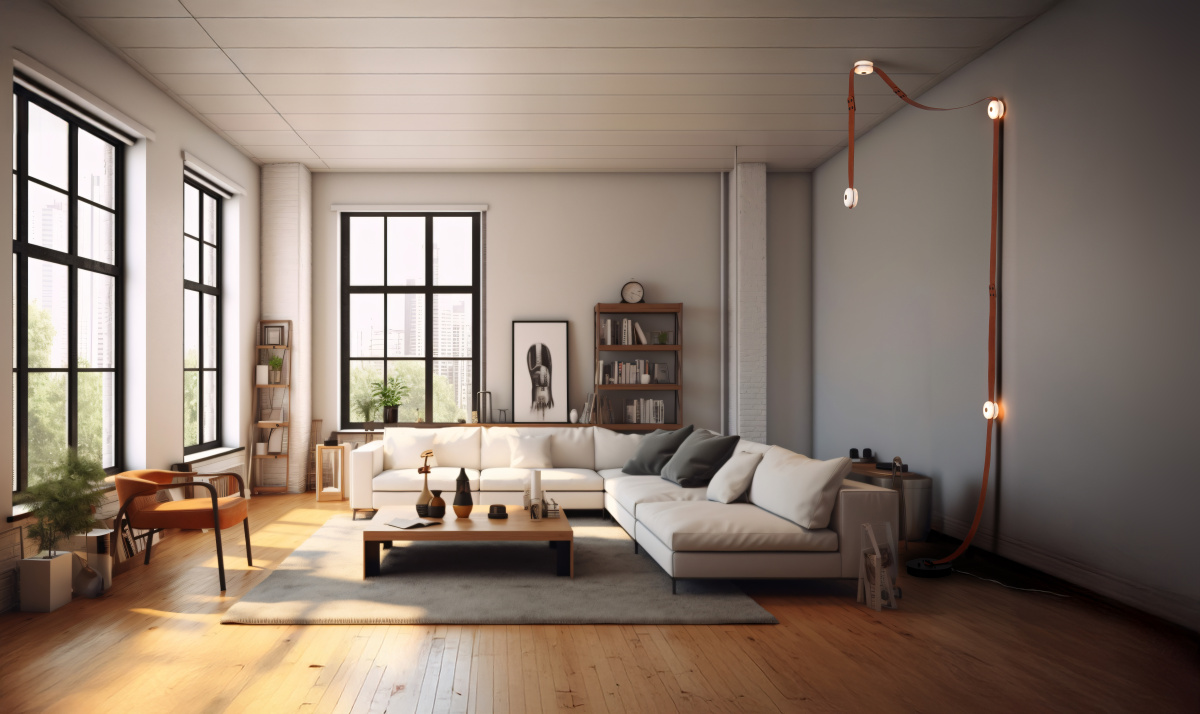
The SNAPS configuration you install today can become something else entirely next year. Photo courtesy of Hubbardton Forge
The collection currently includes five core pieces: a wall sconce, a single pendant, a floor lamp, and two multi-port configurations. Standard leather comes in white, black, and chestnut. The straps can be ordered in various lengths, and because Appalachian Stitching works with Spinneybeck’s full custom portfolio, the options go well beyond the standard three. David mentions blue suede and hair-on hide as examples of what customers have actually ordered.
Each LED module pairs with a diffuser chosen at the time of order: pressed glass, a metal cone with clear glass, or alabaster. The alabaster is the material choice that tends to catch people off guard, and it’s worth spending a moment on. David describes the combination as intentional contrast.
“We liked the pairing of natural materials with cutting-edge technology,” he says. “Alabaster has a warm, diffuse glow that for us is a perfect pairing with an LED light source. The natural variations each piece has also highlights the organic qualities of the material.” An LED is precise in a way that can sometimes work against it in a home setting, reading as thin or cold in rooms built around warmer light.
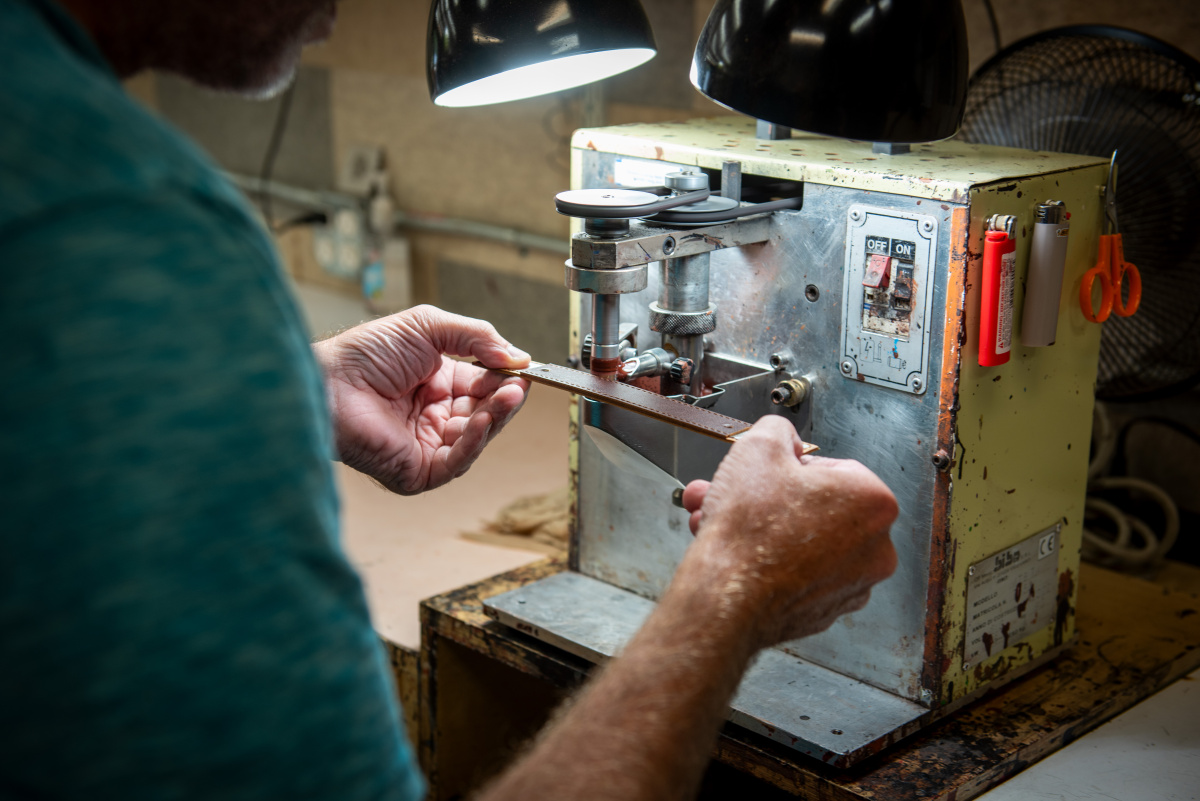
SNAPS’ straps are made from Spinneybeck leather, cut and stitched by Appalachian Stitching, a manufacturer based in Littleton, New Hampshire, a few hours north of Castleton. Photo courtesy of Hubbardton Forge
In addition to the standard leather and four finish colors for the metal fittings, the system can be matched to any of more than 2,000 RAL colors, putting it within reach of projects that need a specific palette. Interior designers have been among the most enthusiastic early adopters.
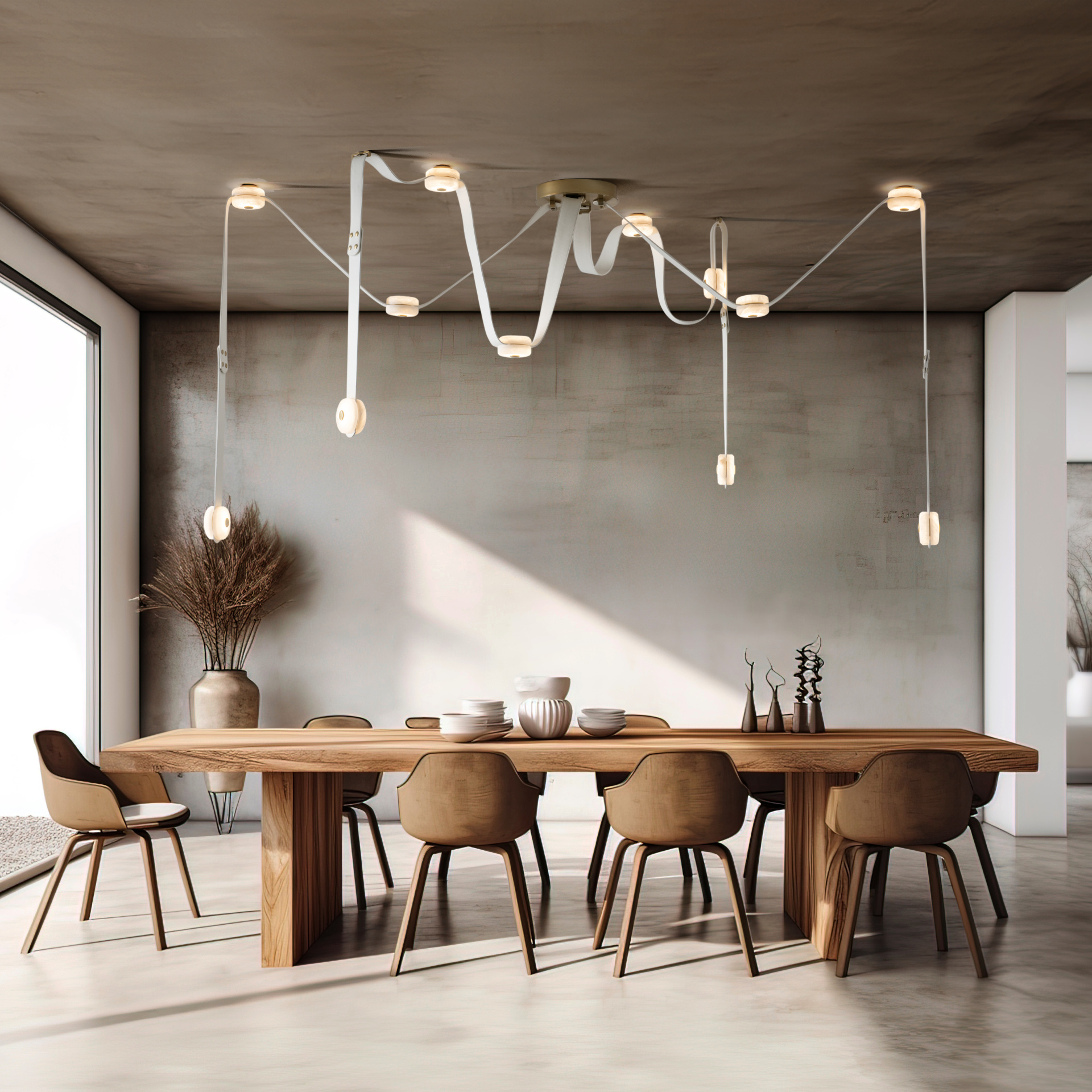
“We envision it being utilized in spaces unlike any other lighting,” he says, “both solving a design problem where a standard light fixture would not work and at the same time becoming a sculptural focal point.” SNAPS thrives hanging from ceilings, awkward angles, and rooms where a pendant would be too much and a sconce wouldn’t be enough. The plug-in version, a priority from the start, opens it further still.
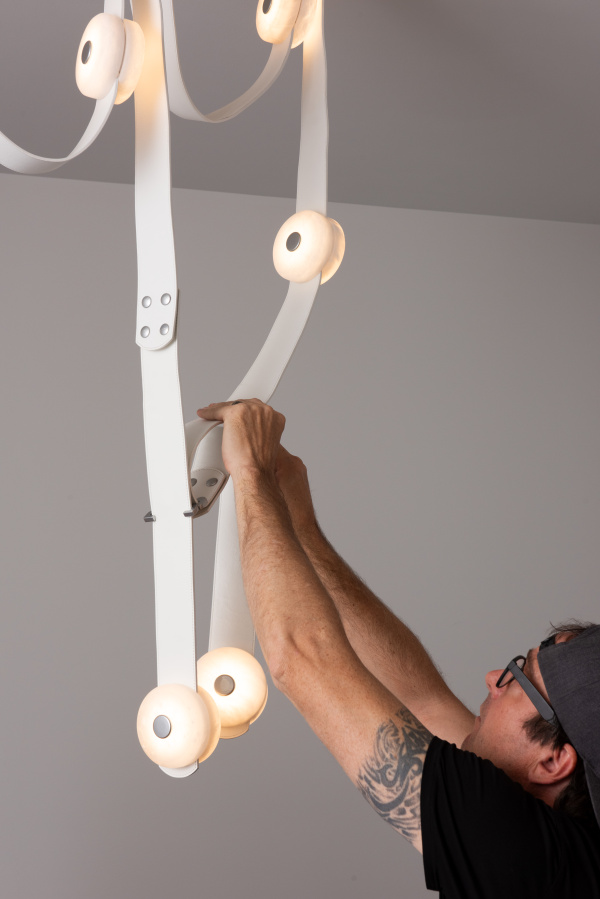
SNAPS thrives hanging from ceilings, awkward angles, and rooms where a pendant would be too much and a sconce wouldn’t be enough. Photo courtesy of Hubbardton Forge
The most unexpected setting David has come across so far isn’t a showroom or a grand entryway, but a powder room.
“It looked as if that room was specifically designed for it,” he says. Which is, it turns out, not the wrong way to think about what SNAPS is for. It’s not a light you buy and hang, but a system you build into a room and keep building.