Before a countertop ever reaches a kitchen, someone has to cut it. For fabricators working with conventional engineered stone, that process exposes them to crystalline silica, a material linked to serious and irreversible lung disease.
Cosentino’s new surface, ÉCLOS, is its most direct response yet.
“ÉCLOS was developed to address multiple challenges simultaneously,” says Valentin Tijeras, VP of Global Product R&D and Quality at Cosentino. “Incorporating high levels of recycled materials, improving circularity in production, and maintaining the technical standards required for demanding architectural applications.”
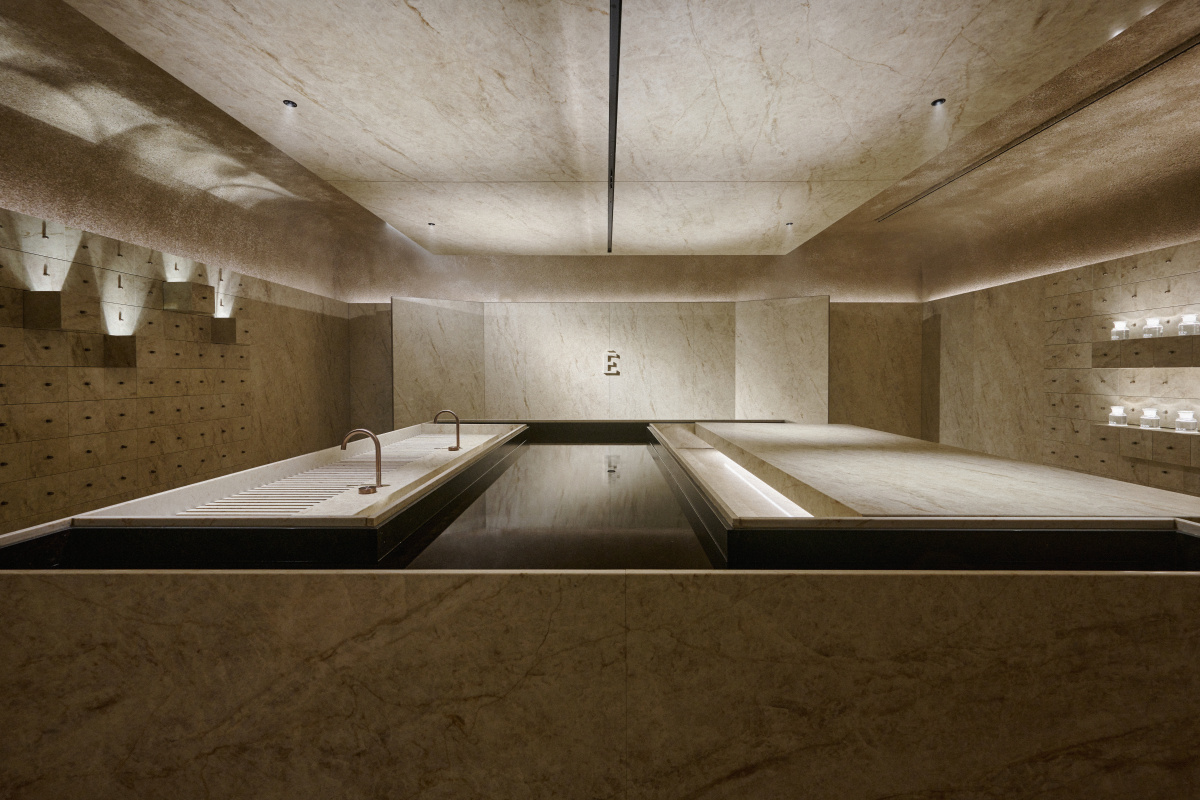
To introduce ÉCLOS to the world, Cosentino partnered with architecture studio Summumstudio for an installation called Manantial, presented at Casa Decor in Madrid.
The material introduces what Cosentino calls Inlayr technology, a process that creates depth from within the material itself rather than applying pattern only to the surface. The result is a three-dimensional design that extends throughout the entire surface and its edges, producing veining that replicates natural stone with a continuity that conventional engineered surfaces struggle to achieve.
“The technology allows the surface to create an experience as though light is moving through the material rather than simply reflecting off it,” he says.
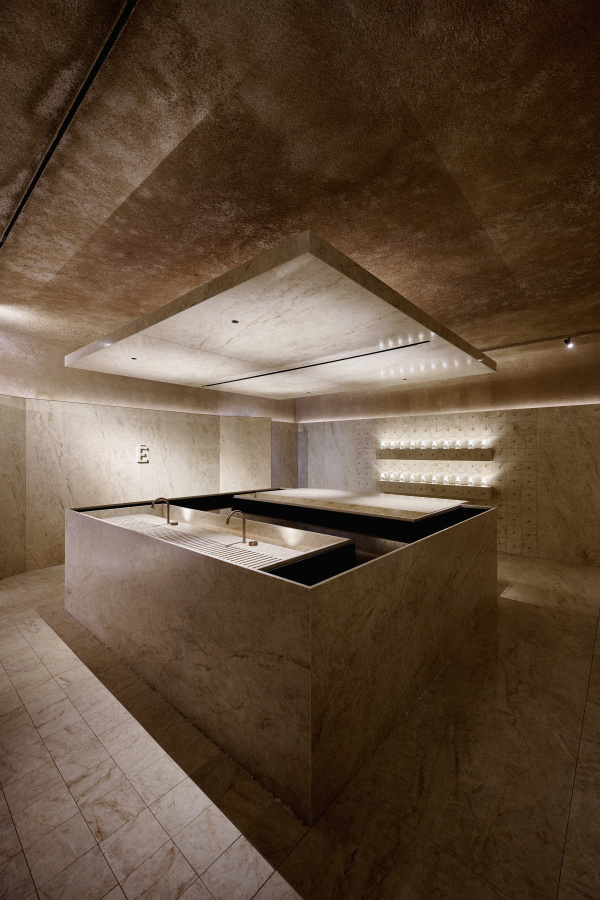
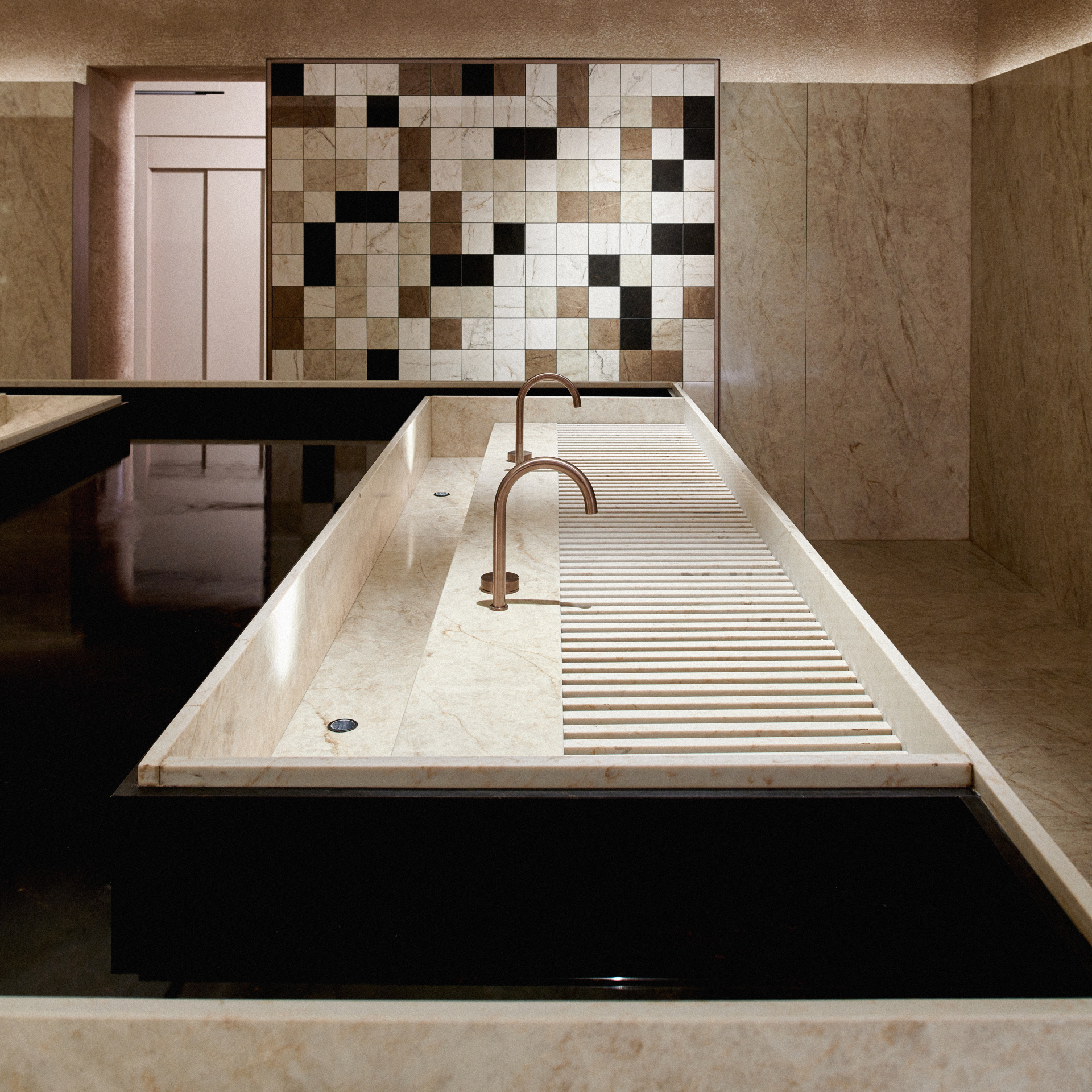
Summumstudio’s Manantial installation demonstrated ÉCLOS across multiple scales and applications, from machined and carved forms to sculpted surfaces that push the material into highly architectural territory.
The development process was substantial. More than 50 specialized researchers were involved, working across 28,000 hours of research and 1,500 hours of testing before the material was ready to leave the lab. Rather than evolving an existing product, Cosentino built ÉCLOS from the ground up as an entirely new category of surface, one it calls Inlayered Mineral Surface. The debut collection, Eclectic Veins, reflects that ambition, combining hyper-realistic veining with mechanical performance that includes enhanced flexibility, ductility, and impact resistance, as well as heat resistance up to 428 degrees Fahrenheit, making it suitable for direct contact with cookware straight from the stove.
To introduce ÉCLOS to the world, Cosentino partnered with architecture studio Summumstudio for an installation called Manantial, presented at Casa Decor in Madrid. The name, meaning “spring” or “source of water,” reflects the installation’s central idea. Water runs as a conceptual thread throughout the space, connecting different material expressions and guiding the sensory experience.
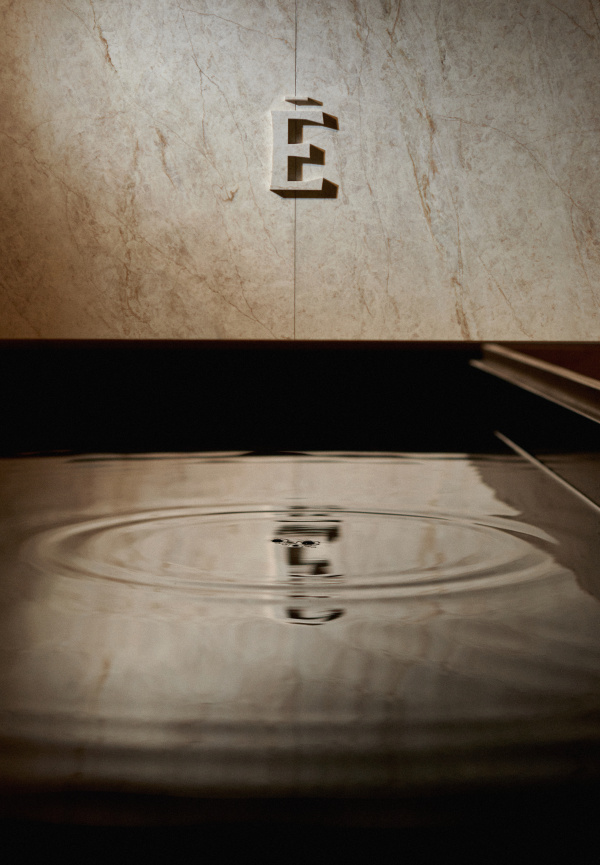
The debut ÉCLOS collection, Eclectic Veins, uses Inlayr technology to create depth from within the material itself, producing veining that extends throughout the surface and its edges rather than sitting only on top.
“The intention was to move beyond presenting ÉCLOS as simply a surface and instead allow people to experience it spatially and emotionally,” he says. Rather than assigning the material to a single function like a kitchen or bathroom, Summumstudio created a fluid architectural landscape that demonstrated ÉCLOS across multiple scales and applications, including machined, carved, hollowed, and sculpted forms that would be difficult to achieve with more conventional surfaces.
“The space was designed as an immersive ecosystem where water, light, sound, and materiality interact continuously,” he says. The hope was that visitors would leave understanding not just the technical innovation behind the material but its emotional and atmospheric potential. “Experiencing how a surface can shape atmosphere, perception, and even behavior within a space is ultimately what ÉCLOS was built to do.”
The launch positions Cosentino at the intersection of two conversations the design and architecture world is increasingly having at once: how materials should perform, and what they should cost the people who work with them.