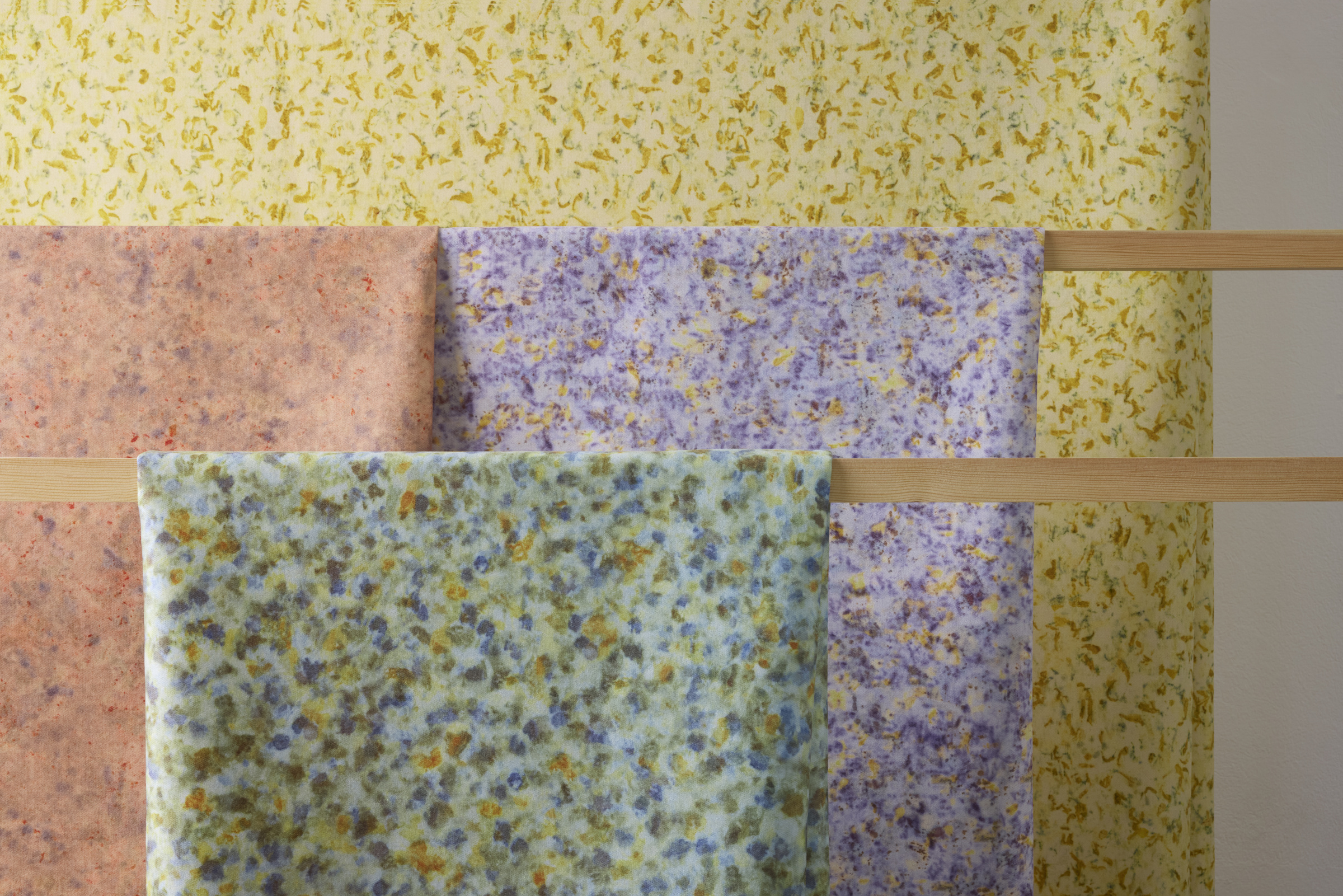
Most textile collections start with a mood board. Alisa Benfey’s started with her neighborhood: a fistful of marigolds from her own garden, onion skins saved from the kitchen, chrysanthemum petals, and tree leaves gathered on walks around Los Angeles, where she lives and works. It’s an unglamorous inventory for what became Slow Color, her new collection with Designtex, but that’s rather the point. Alisa has spent years learning that some of the most striking color in the world is already growing outside the front door.
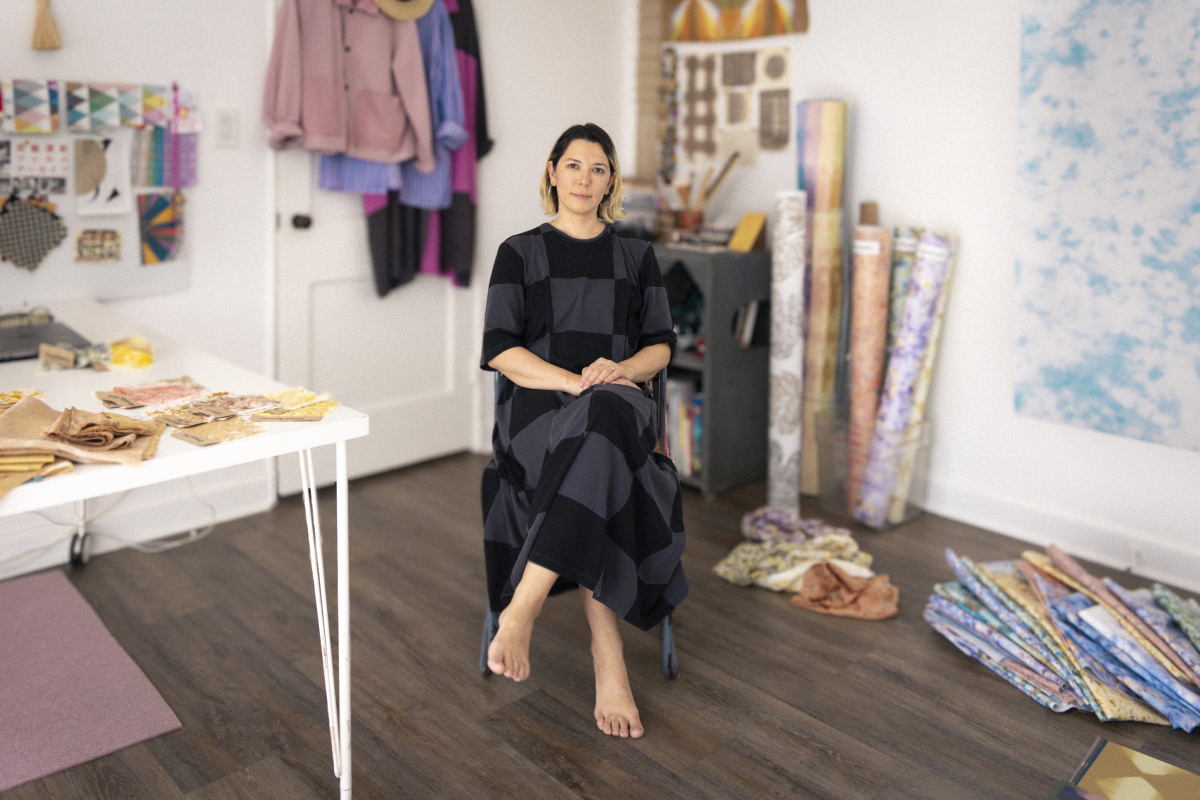
For Alisa Benfey, natural dyeing is deliberately low-tech: botanicals, fabric, and time, with no shortcuts around the process.
The project began when Designtex came to her with an idea rooted in biophilia, the notion that human beings are wired to seek out connection with the natural world, and asked her to bring that thinking into a line of high-performance textiles.
“I work on the computer so much, I wanted to do something with my hands,” she says. “I really started with what’s around me: flowers I’d find on the street or beans from the kitchen. It was just experimental and it ended up beautiful.”
That instinct for noticing what’s close by traces back further than her garden, to a childhood spent in Japan.
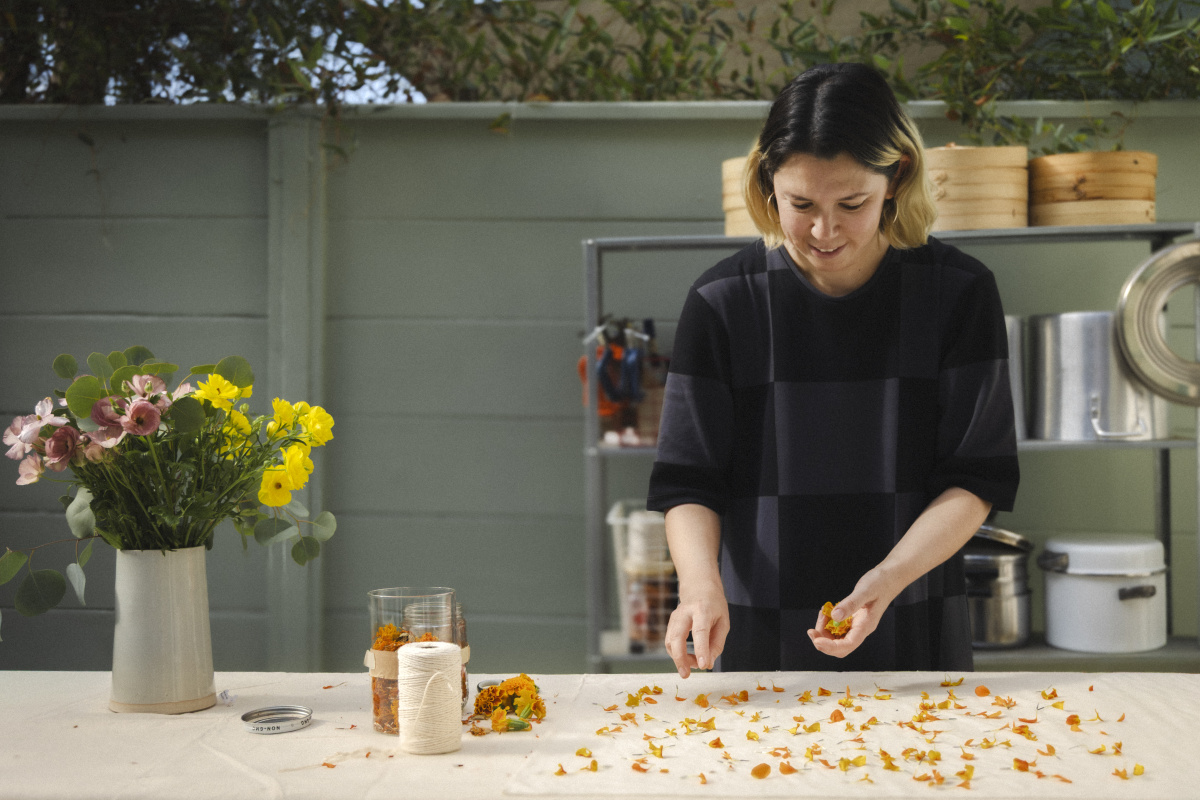
It starts close to home: chrysanthemum petals, onion skins, marigolds, and other botanicals collected from Alisa’s own garden and neighborhood in Los Angeles. Silk and linen are laid out and prepped to receive the botanicals, the first step in turning raw plant matter into color.
“In Japan, celebrating the seasons is embedded in the culture,” she says. “That’s a big part of how I design things. It shaped me and my color sensibility.” It shows up in the collection’s palette, which drifts and shifts the way a garden does, from the deep purples of logwood to the soft blush pulled from madder root, none of it locked into a single, static hue.
“I’m a textile designer,” she says. “I actually worked for Designtex in the past, so I understand the market and what they need, and how to make a product that lasts.” That fluency is what allowed an entirely handmade process to survive the leap to production.
-
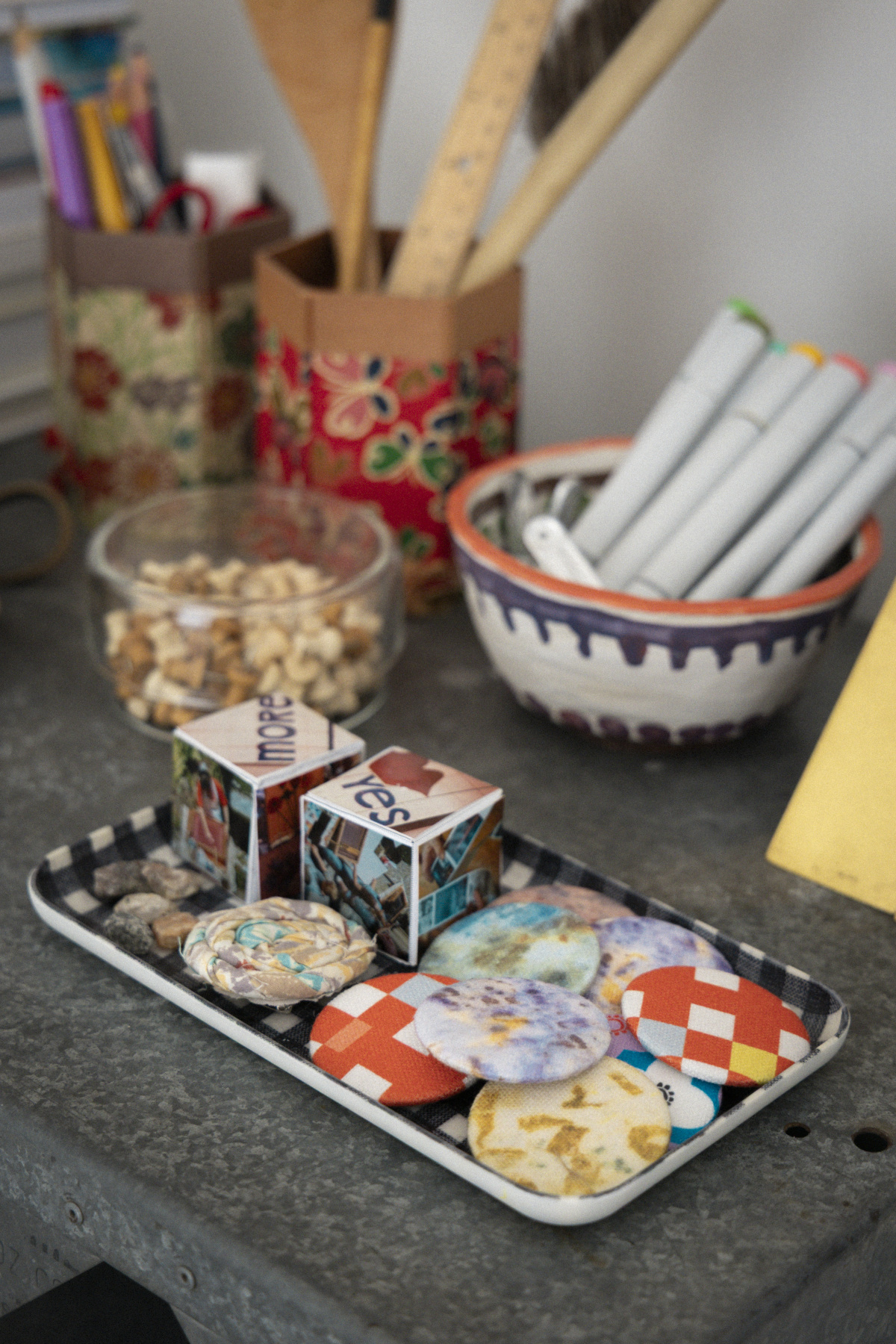
- Slow Color buttons and tools in the studio
-
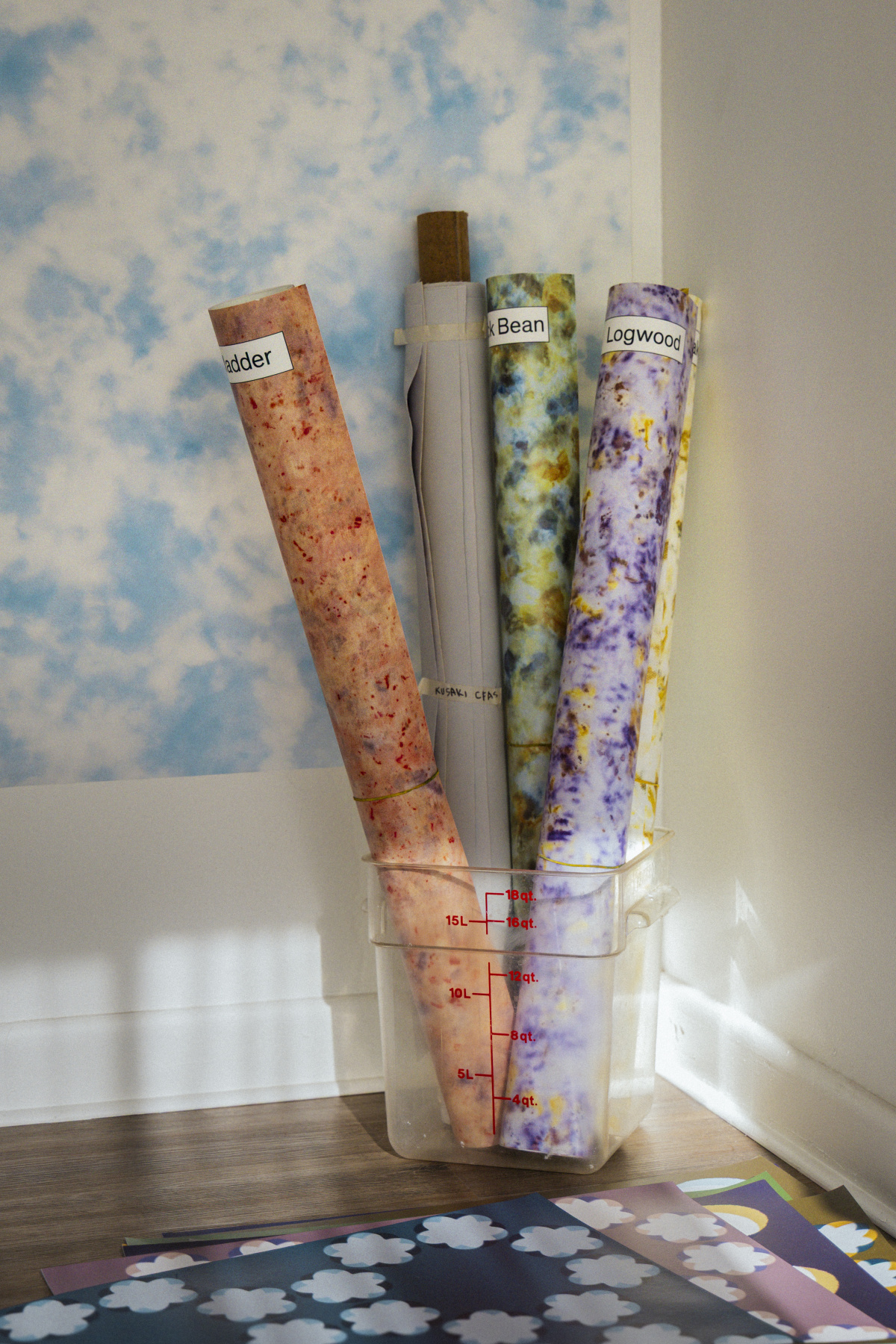
- Production samples for viewing the final colors and repeats
“These are original pieces of silk and linen, hand-dyed,” she says. “We took them, made them into a seamless repeat pattern, and then it’s all digitally printed.”
Digital printing, in other words, isn’t a shortcut around the handwork. Nowhere is the process more visible than in Sora, one of the collection’s standout patterns, whose name is the Japanese word for “sky.” The piece comes from a Shibori dyeing technique that Alisa describes almost like a recipe.
-
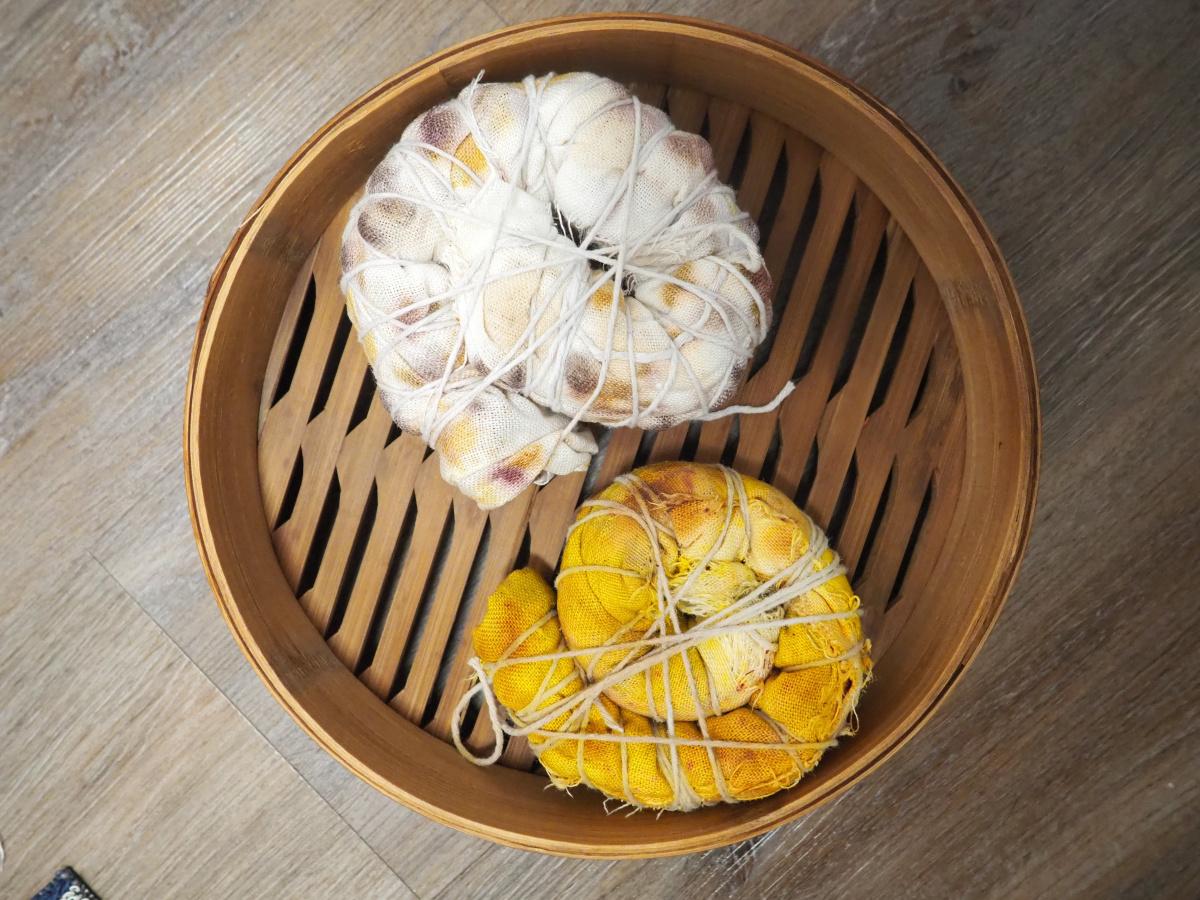
- Botanicals are bundled, scrunched, or clamped against the fabric, depending on the technique, before steam or dye baths begin drawing out their pigment.
-
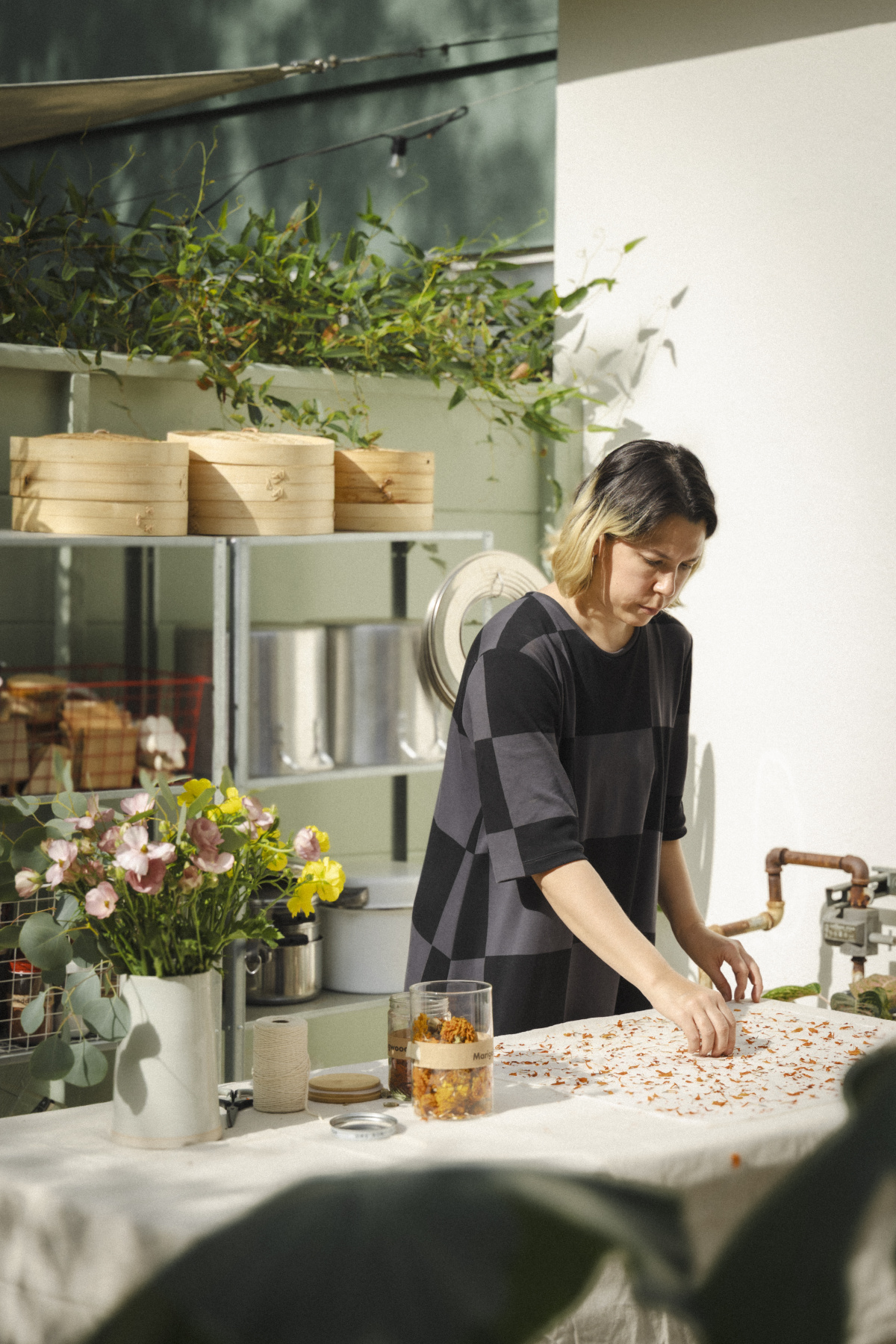
- The dyeing process relies on plant matter alone, no synthetic pigments, to build up color and texture.
“You sprinkle the botanicals onto the fabric, bundle it up, tie it, and put steam on it,” she says. “In about an hour, all the color transfers onto the fabric.” What emerges from that hour is an atmospheric, soft, cloud-like gradient built from avocado pits, indigo, and oak bark that look less like a printed pattern than actual weather caught mid-drift.
For all its craft and technique, Alisa is careful not to let Slow Color read as precious or out of reach. She sees it, ultimately, as a step toward beautifully made materials that more people can actually live with. It’s a fitting ambition for a designer whose entire process began with what was free and close at hand.
-
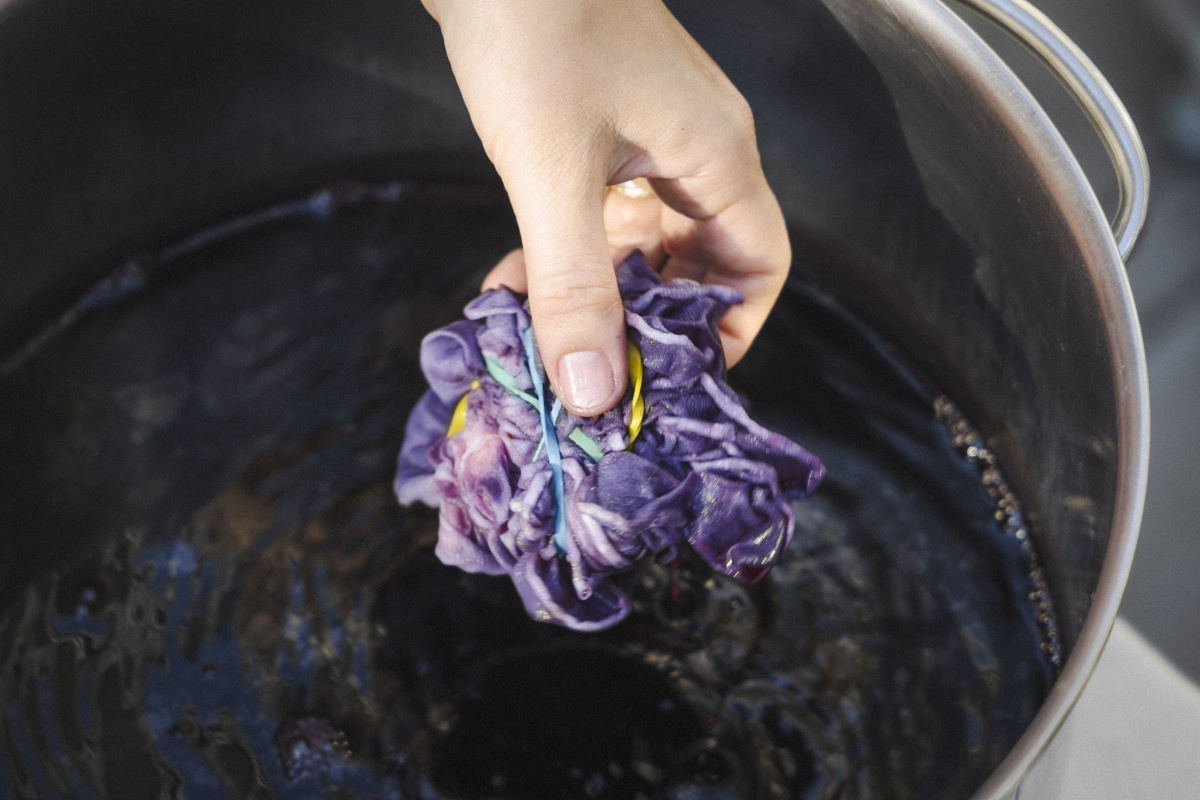
- Heat and steam pull the color from the plants into the cloth, a process that takes about an hour for the pigment to fully transfer.
-
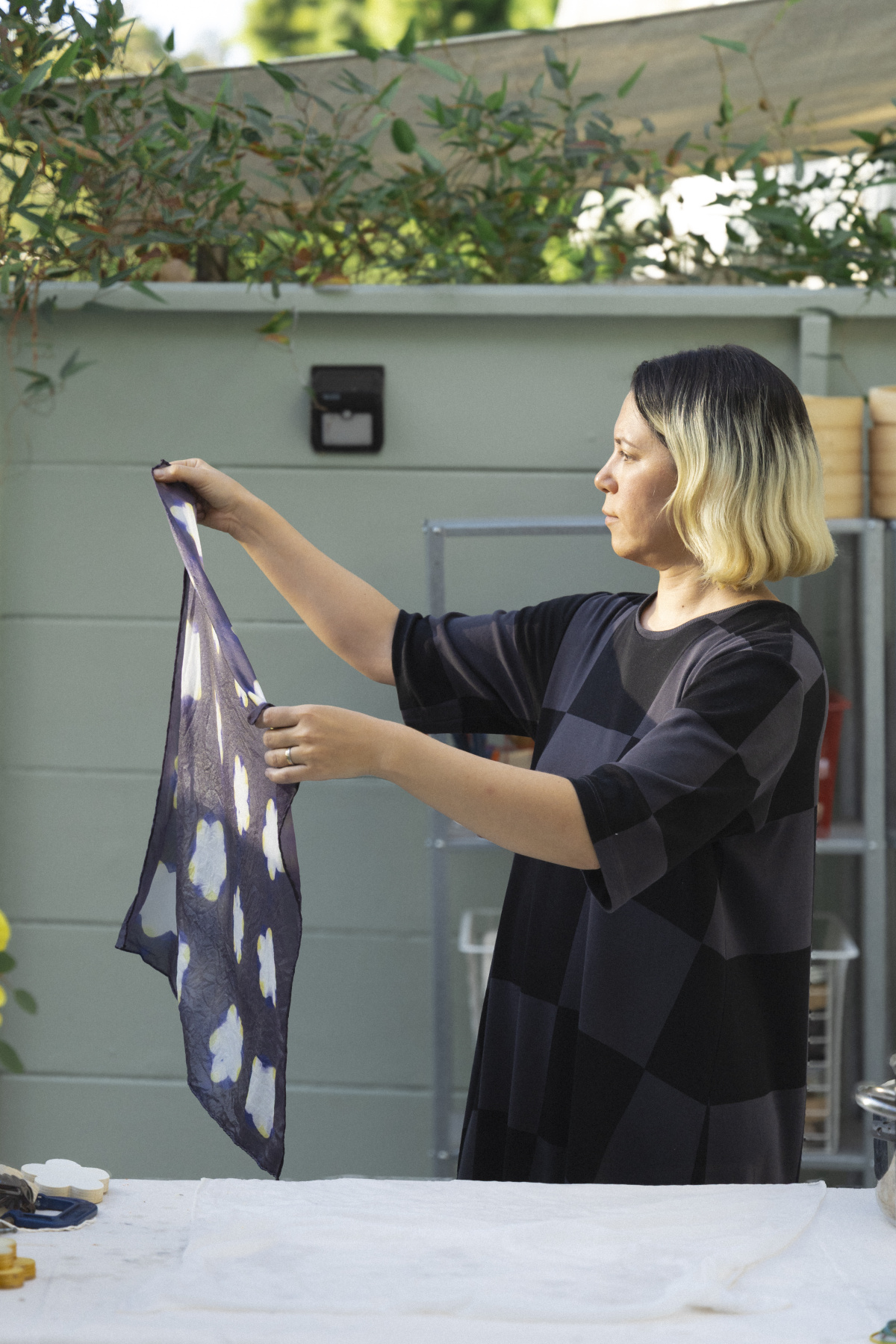
- Once unwrapped, the fabric reveals its pattern, no two pieces ever quite alike, shaped entirely by the plants and technique used.
-
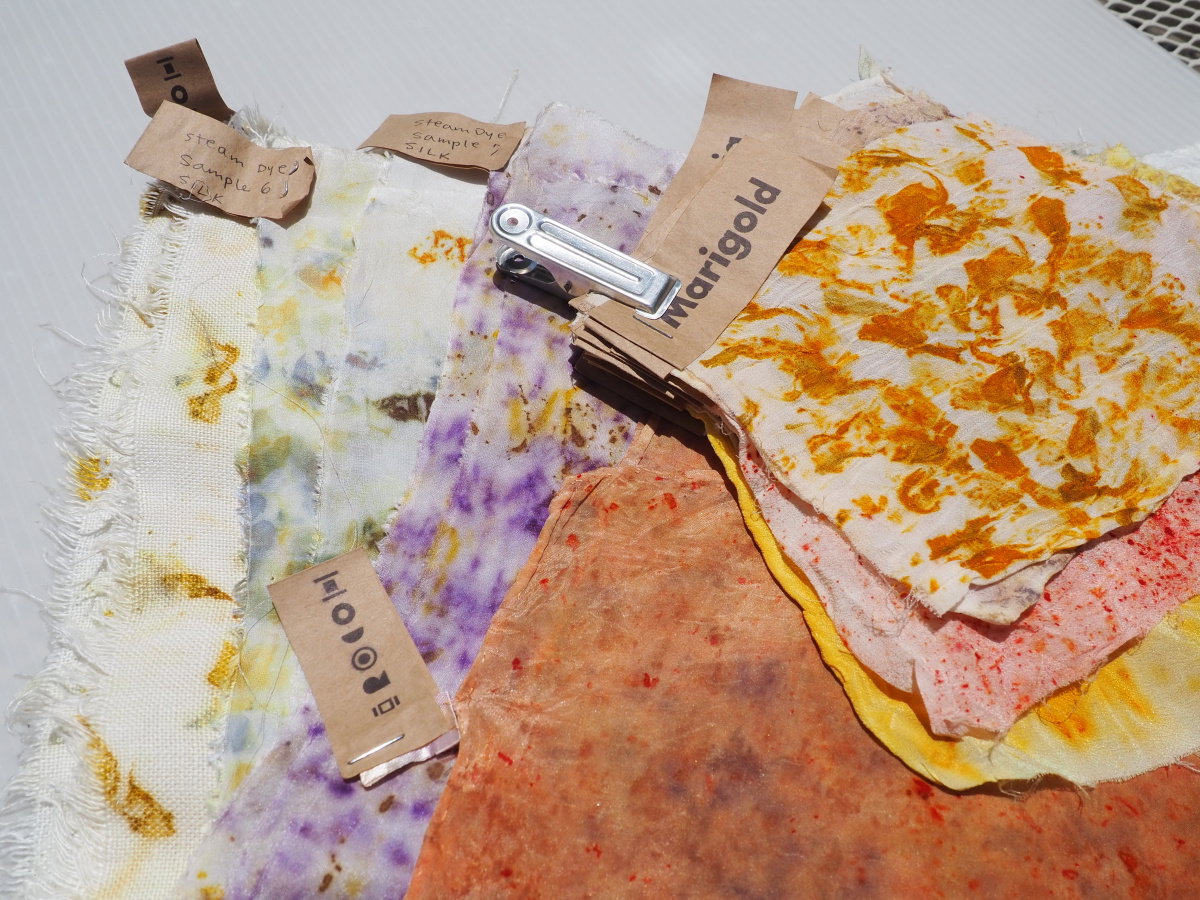
- No two hand-dyed pieces come out exactly the same, a variation that carries through into the final textiles and wallcoverings.
-
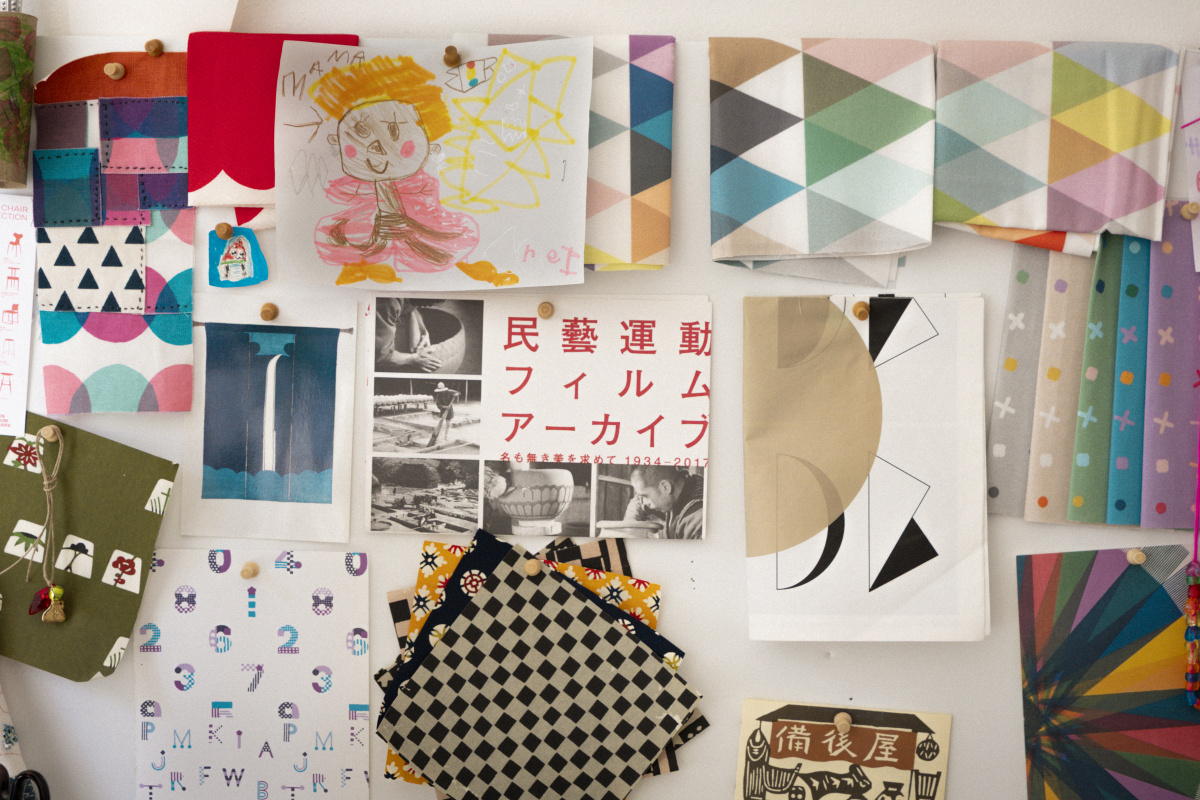
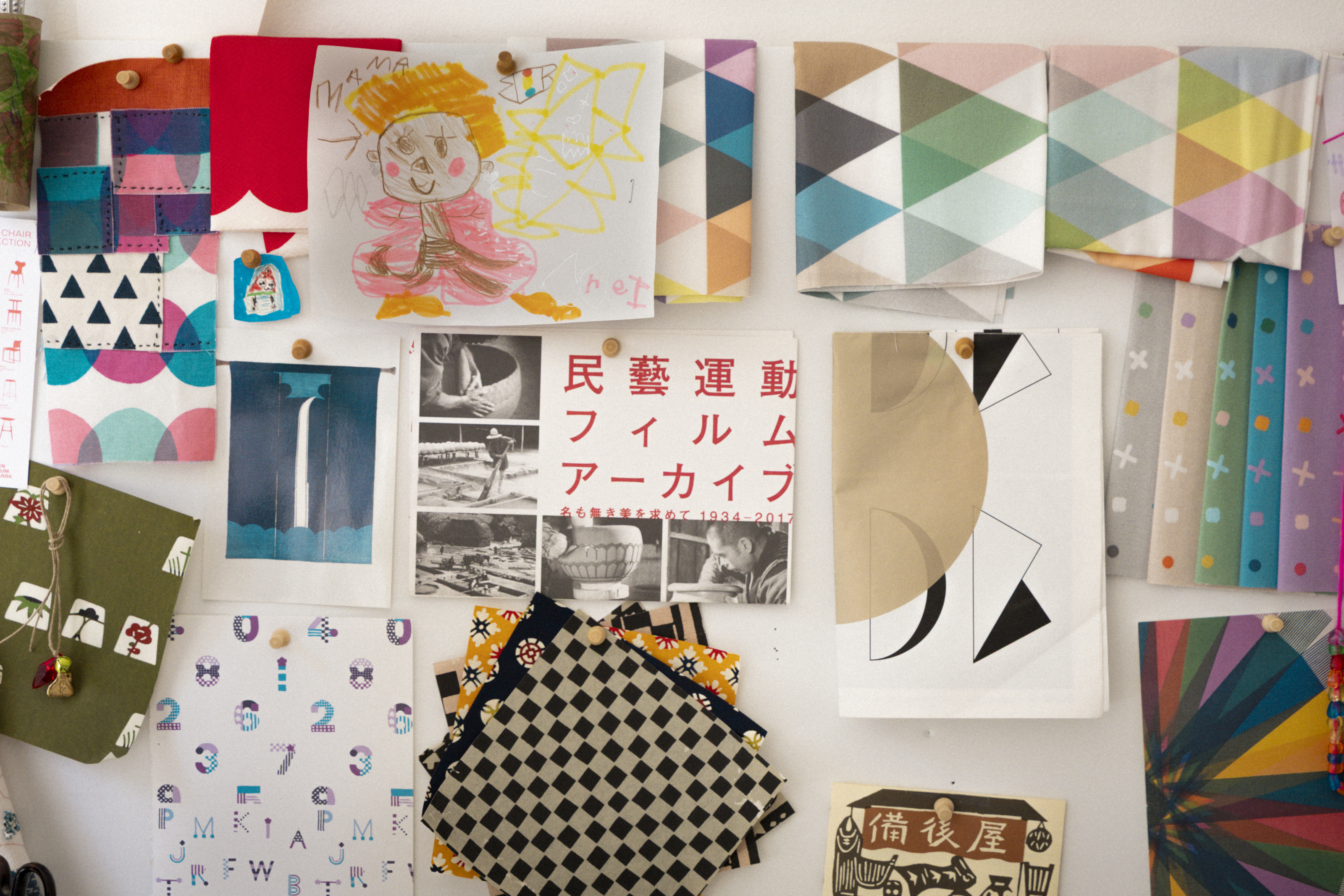
- A collection of materials in Alisa’s studio reflects the playful mix of pattern, color, and craft that runs through her portfolio of work.
-
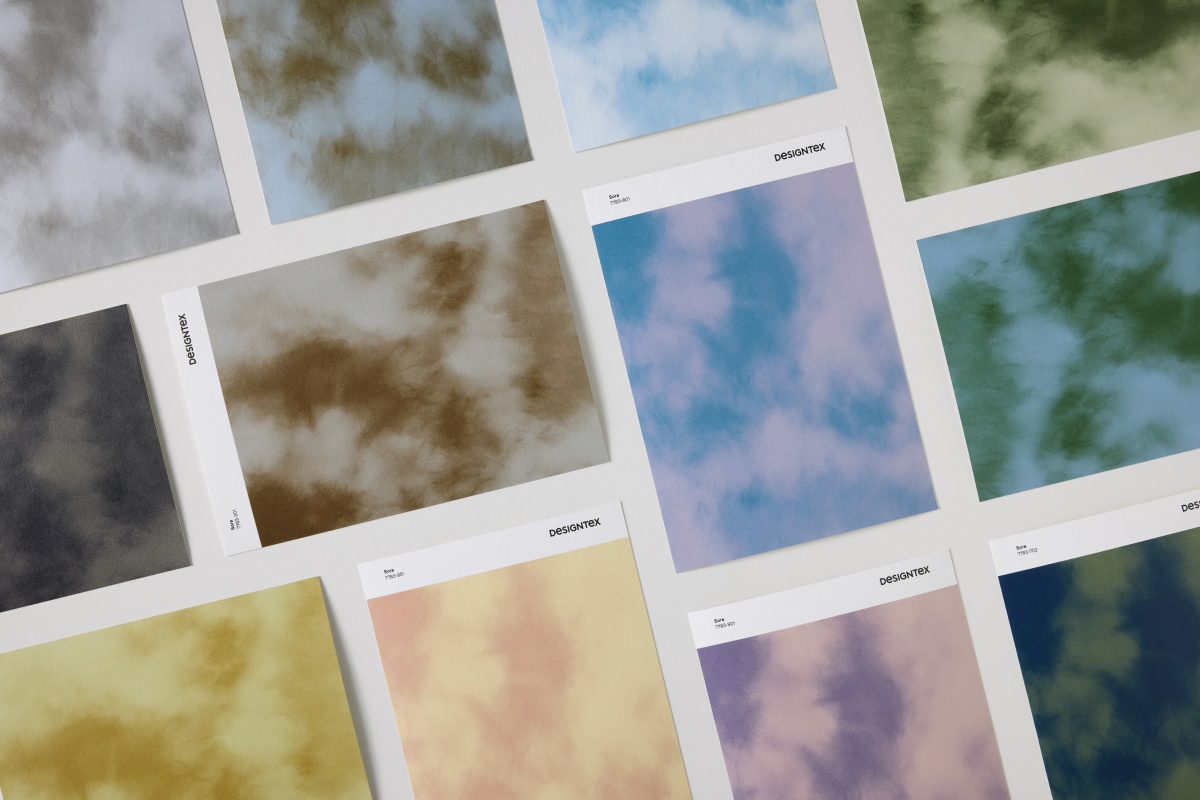
- Each pattern in Slow Color begins as a fully hand-dyed piece, with each color inspired by nature.
-
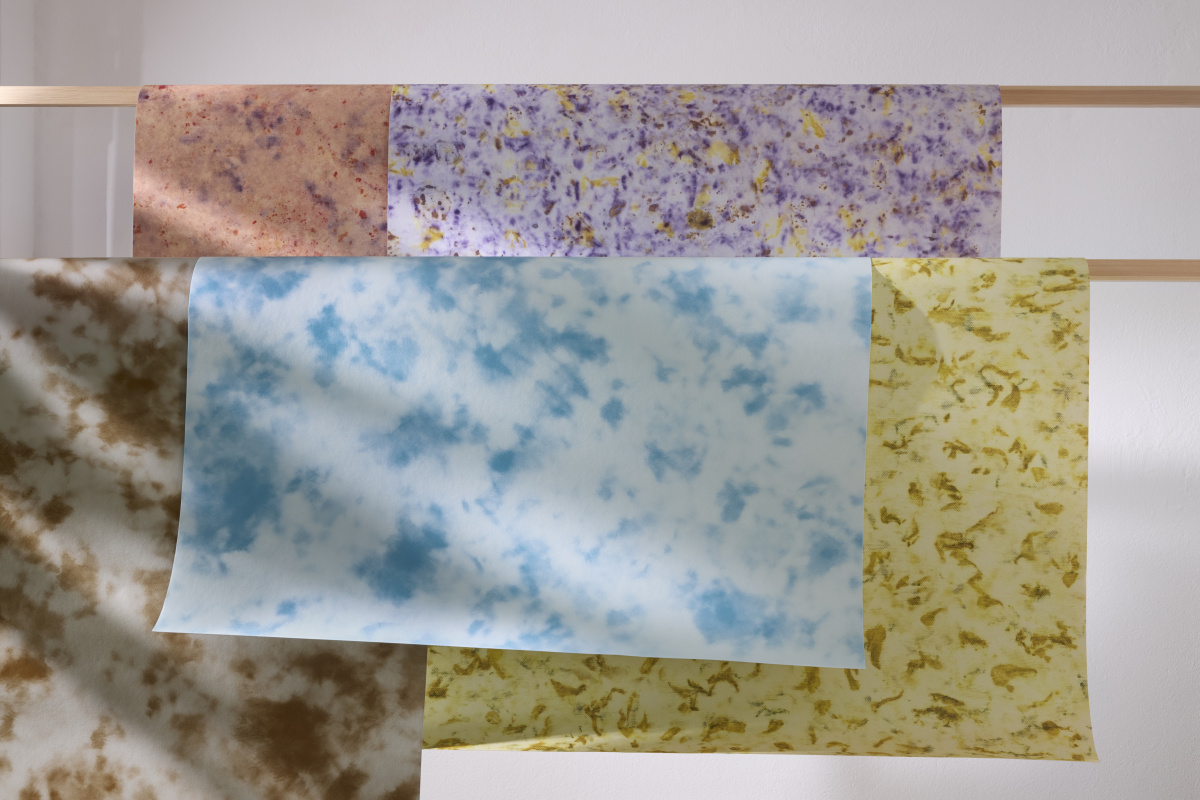
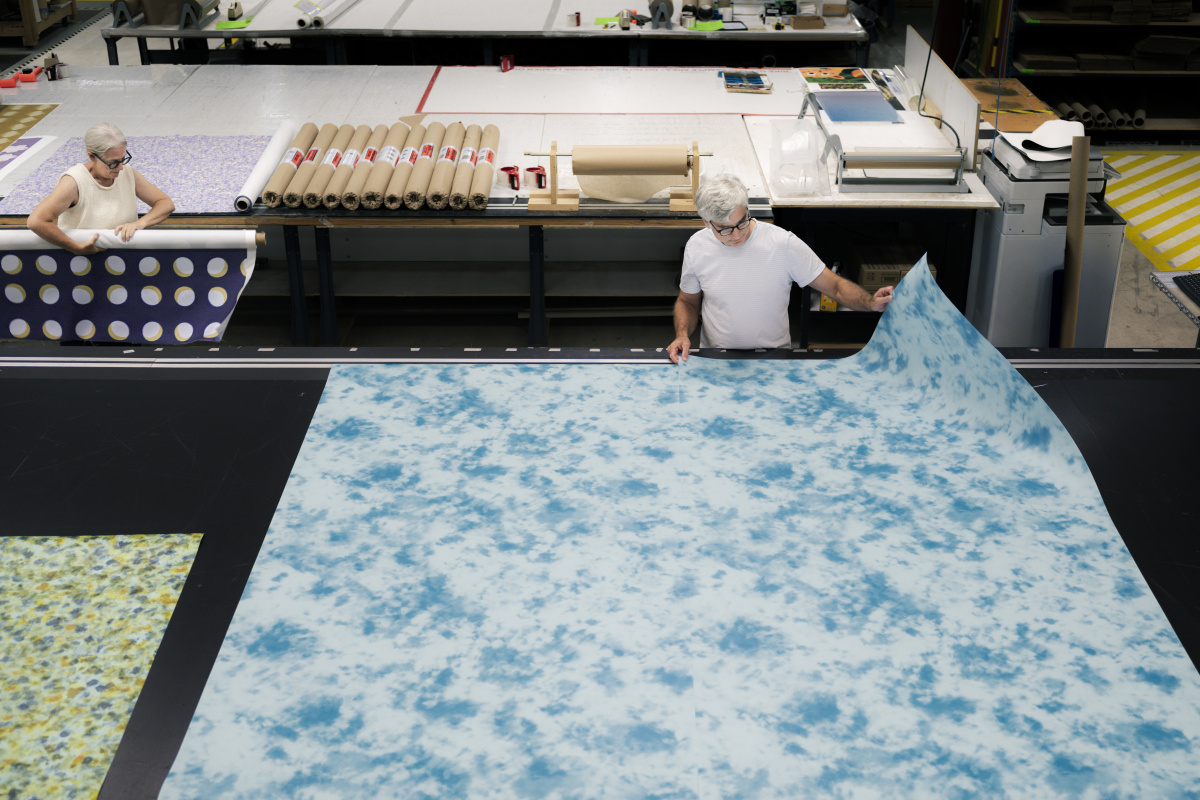
- The original hand-dyed textile is translated into a seamless repeat pattern and digitally printed, preserving its texture and nuance in a durable, high-performance material.
“The Slow Color collection is a reminder of the power of plants and natural colors,” Alisa says. “By sharing the process of botanical dyeing, I hope to remind people of the importance of crafts and natural materials.”