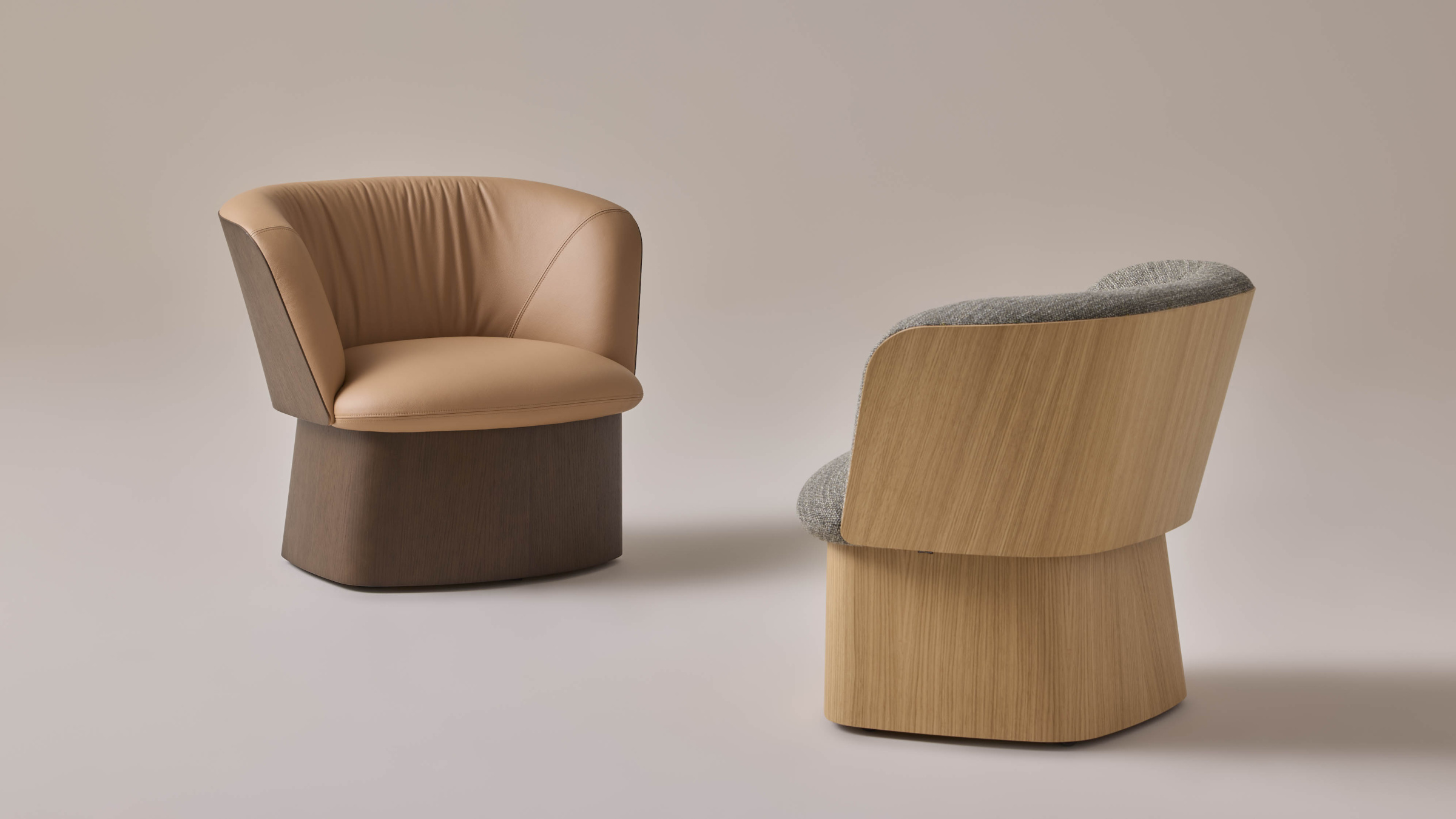
Lounge chairs have become an obsession in contemporary interiors, yet so few of them invite you to sit and stay for long periods. Manto, Monica Armani‘s debut for Viccarbe, is an exception. When Monica talks about Manto, she uses the word “protective.”
Born in Trento in 1964, Monica is the daughter of Marcello Armani, a well-known figure of the Italian rationalist movement. Her work spans architecture, interior design, and product design. Alongside her partner Luca Dallabetta, she has developed what they call “Design in Molecules,” a method that blends rational thinking with intuition and experimentation with precision, turning each idea into an essential project where nothing is left to chance.
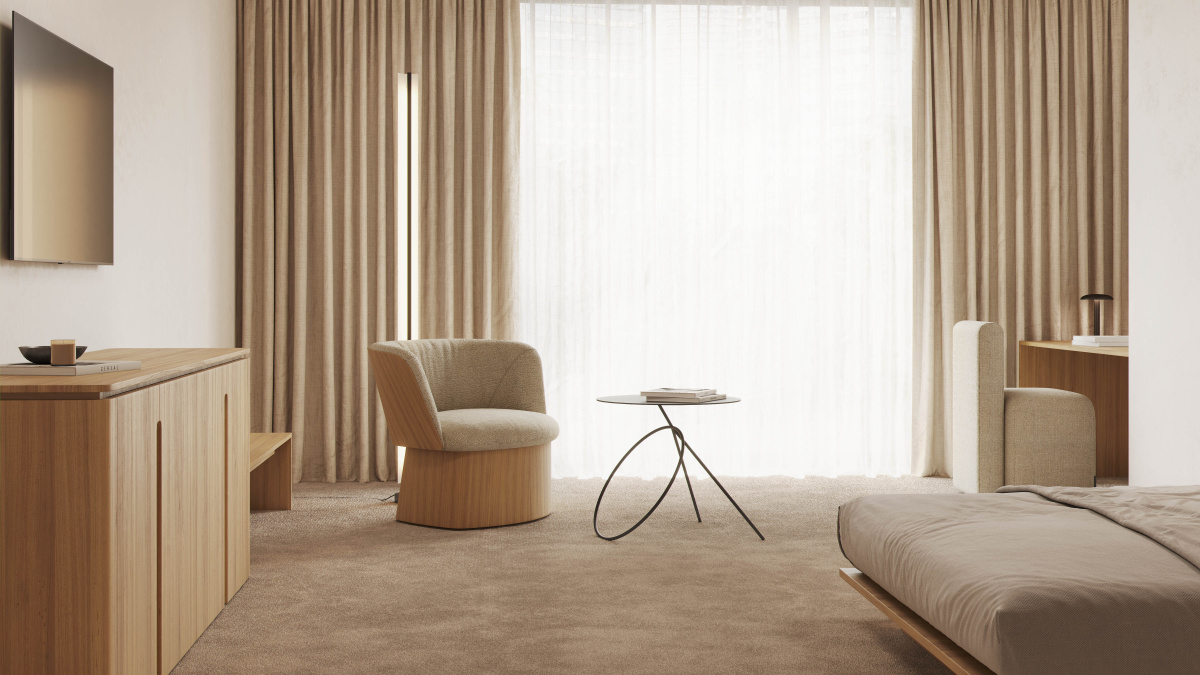
Manto is defined by a rounded and balanced backrest that contrasts with the straight geometry of its base, resulting in a piece with architectural proportions and monumental presence.
It’s a philosophy that suits Viccarbe well. The Valencia-based furniture house has built its reputation on precisely that kind of collaboration, pairing rigorous manufacturing with designers who bring a clear point of view.
“The name Manto is the Italian word for ‘mantle,’ something overreaching to protect you,” she says. “From the back, the chair is like architecture. There is a solid base and this embracing form. Internally there is also a sense of warmth in the combination between strong and soft material.”
This brand of enveloping lounge chair has a long and distinguished lineage. In 1946 Florence Knoll and Eero Saarinen created the Womb Chair, a form that supported multiple relaxed postures through a molded fiberglass shell and an upholstered foam interior. A decade later, Arne Jacobsen designed the Egg for the lobby of Copenhagen’s SAS Royal Hotel, creating an intimate, almost enclosed space that simultaneously allowed its occupants to swivel around and follow the buzz of the room.
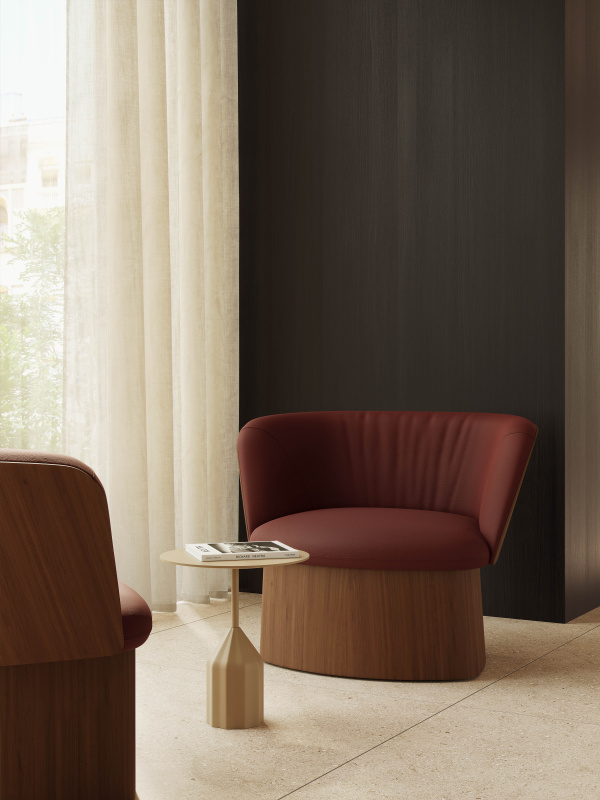
The backrest of Manto deserves special mention for the way the fabric emerges delicately from its edge, revealing two universes: the rigid exterior in oak plywood, and the soft, inviting interior that warmly embraces the user.
The chair’s duality is the main theme of the piece. The outer shell, crafted in oak plywood, gives Manto a clear outline: architectural in structure, precise in tone. Inside the upholstery softens the experience, introducing warmth and tactility. Between these two layers lies a dialogue of geometry and comfort. The stitching that maps the transition between the smooth surfaces and the folded sections of the backrest is not decorative.
An optional writing table extends that range further without tipping the piece into utility furniture. “Constructing the table is very difficult to do given the connection and the way it closes,” she says. “But it’s a great addition to have on a lounge chair with this level of versatility.”
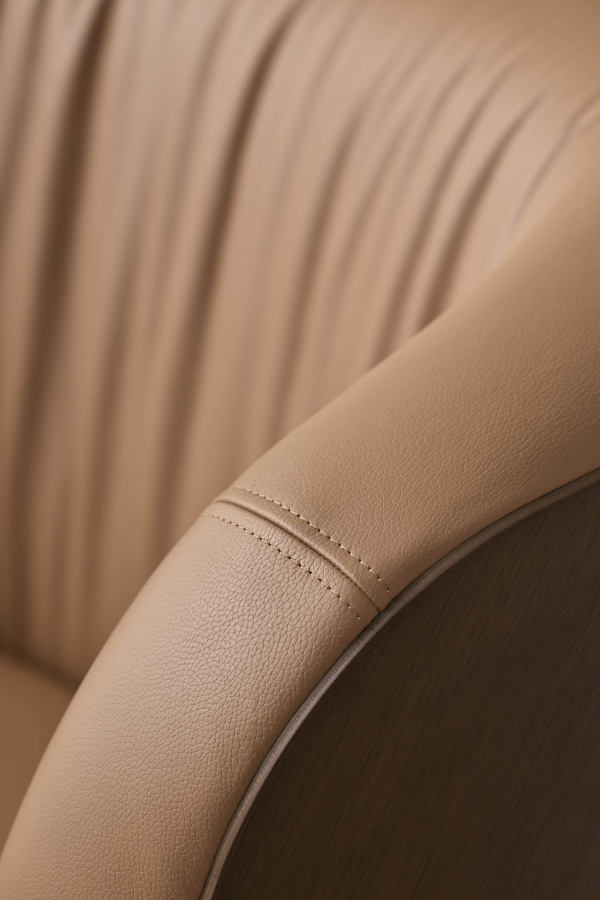
From a solid base rises a seat that embraces and welcomes, while opening its edges to invite use.
What also makes Manto interesting is not any single element but how those elements behave together in use. The seat is wide, conspicuously so. Its proportions allow for different postures: upright, reclined, or casually turned to one side, without losing the cosiness that defines a true lounge chair. The layered foams of the backrest respond gently to movement, while the seat’s curvature encourages natural posture without rigidity.