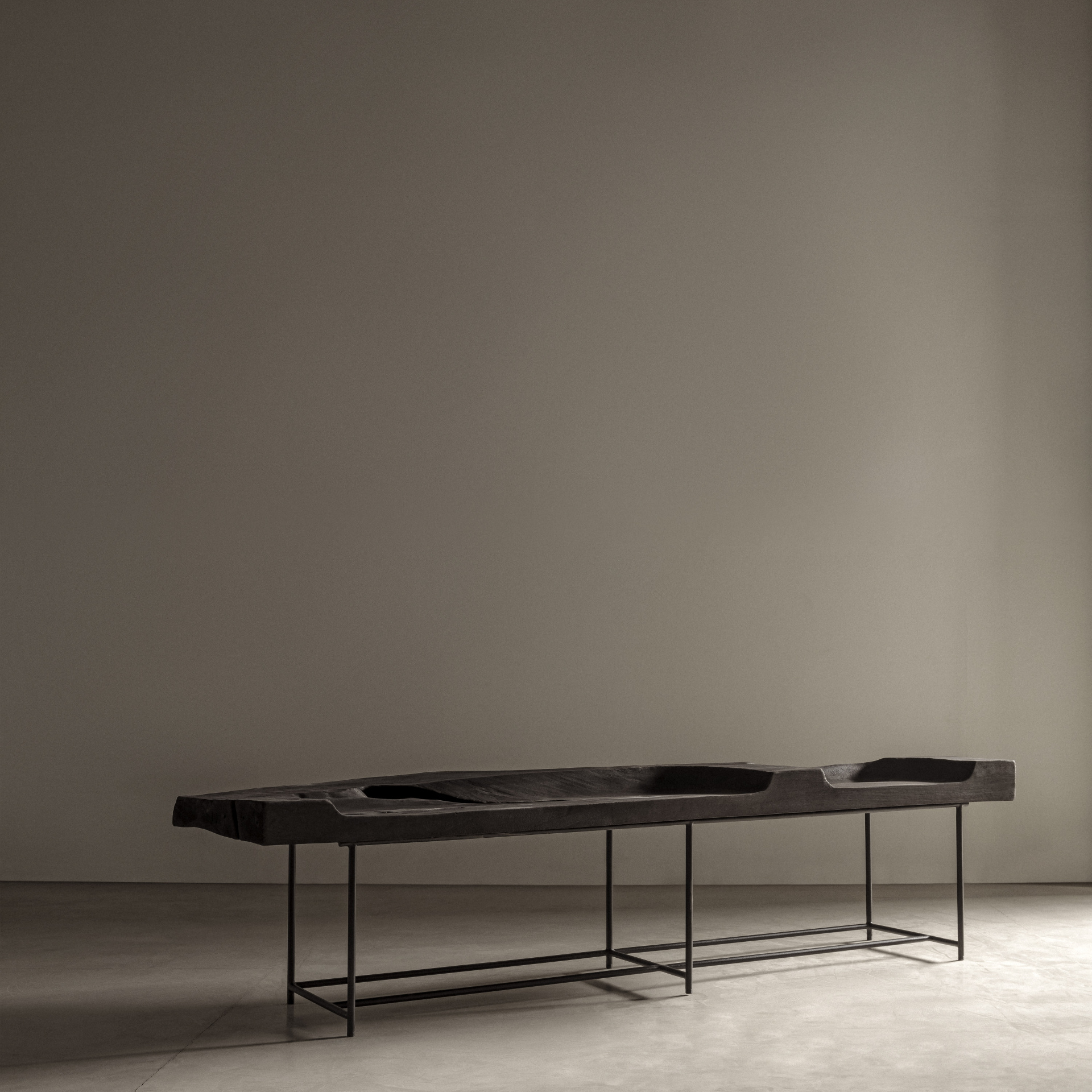
The Three-Leg Wooden Bench by Ernesto Azcarate is defined first by its making: a single piece of wood is selected, shaped, and carved by hand in Mexico City, where the studio is based and where the work remains closely tied to material availability and direct, physical fabrication.
Because each bench begins with a unique section of wood, no two pieces are ever the same. Grain, tone, and internal structure shift the outcome every time, so even when the design remains consistent, the final object always carries a different presence.
The process is deliberately manual. The bench’s wooden seat is carved using hand tools and power tools rather than CNC machinery, allowing the form to evolve during production rather than being fully fixed in advance.
“I don’t use CNC machines because I like to make decisions on the fly,” Ernesto says. The structure beneath the seat is a hand-welded metal base finished with electrostatic paint, creating a contrast between industrial rigidity and the softer, irregular qualities of the wood above it.
Sourcing the right material is often the most time-consuming part of the process, according to Ernesto. Once selected, each bench is worked from start to finish in roughly four to five weeks, depending on the behavior and condition of the wood.
The bench was conceived for use with a large dining or outdoor table, but its function is intentionally open. Rather than prescribing a specific context, it’s designed to adapt to the space and use it enters, shifting slightly depending on where and how it is placed.
Ernesto describes this openness as essential to the work, where the object is not completed in the studio alone but continues to be shaped by its environment and use.
“The uniqueness of the piece of wood will give a different personality to each piece that will make them one of a kind,” he says. His influences behind the bench draw from Mexican cultural references and Japanese aesthetic sensibilities, particularly in the attention to restraint, proportion, and material honesty.
A version of this article originally appeared in Sixtysix Issue 16.