Ian Cartabiano is standing at the edge of the Lexus booth at Tokyo Big Sight on day two of the Japan Mobility Show, and the man is essentially running a marathon in dress shoes. He has given approximately 40 guided tours of concept vehicles: a catamaran, a flying taxi, and a micro-mobility pod the size of a big refrigerator. Somewhere around tour 12, he realized his feet were going to be a problem, so he went out and bought a brand new pair of Doc Martens. “I knew I’d be on my feet all day,” he told me when I finally got my turn to chat with him. He was focused entirely on surviving.
I flew to Tokyo for this. Not for the auto show itself, but because what Lexus showed here doesn’t make sense unless you see it in the context of the city and the people who built it. A six-wheeled luxury limousine. A three-wheeled pod designed for wheelchair accessibility. A sports car with a high-speed drone that launches off the rear deck. The vehicles were designed across Toyota’s studios worldwide, but every one of them traces back to a single thesis that came out of the brainstorm Ian’s team started at CALTY in Newport Beach: that the future of luxury is personal space.
Which, if you’ve spent 45 minutes in the back of a taxi on a Tokyo highway watching your GPS reroute through streets that feel like they were designed exclusively for bicycles, makes perfect sense.
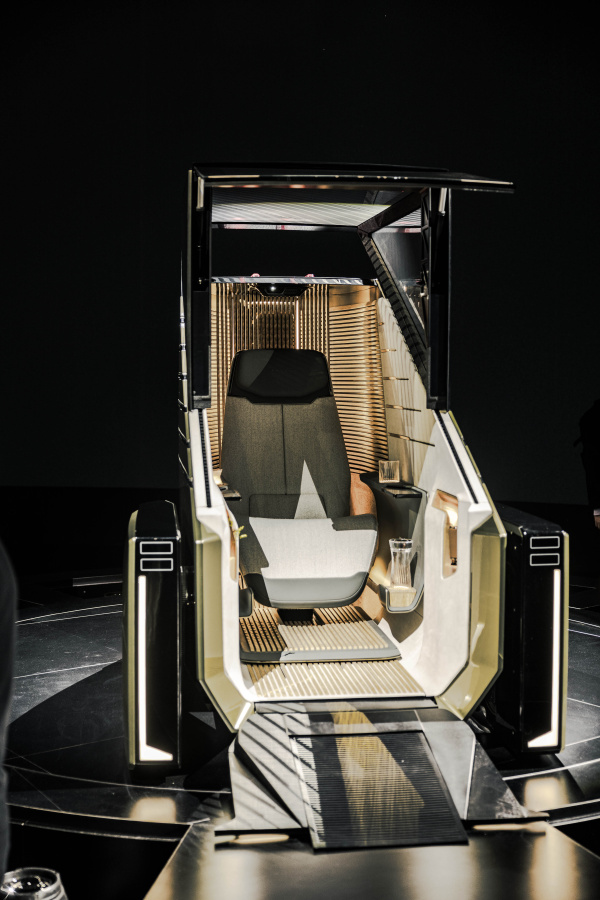
The interior of the Lexus LS Micro concept, a fully autonomous pod navigated by gesture control on a transparent OLED screen.
Ian has done a lot. “In my career I’ve worked on everything from a Lexus Coupe to the IMV 0, a $10,000 truck for Southeast Asia, all the way to a $110,000 coupe,” he said. “You have to have elasticity in your creative mindset.” And that elasticity sits inside an organization of staggering scale. Toyota is the largest automaker on the planet by volume, spending six consecutive years at the top. They sell vehicles, as Ian put it, “on every continent except Antarctica.” The Toyota Corolla, a car Ian has worked on, has sold more than 50 million units since 1966. One rolls off a line somewhere in the world every 15 seconds. Unifying its design across more than 150 countries is one of the most absurdly complex challenges in industrial design, and Ian has done that too.
He grew up in Torrance, California. His father was a toy designer, his mother a painter, his grandfather an aeronautical designer who built rockets and helicopters. At 12, he knew he wanted to design cars. He went to ArtCenter in Pasadena, graduated in 1997, walked into CALTY, and essentially never left. Now 28 years after walking in the door, he’s the president of the studio.
There is a particular kind of designer who is so obsessively focused on precision that they’ll re-machine the smallest lever on their weekend hobby car just to get everything dialed in, but when it comes to their own clothing, the only goal is to not be naked. Respectfully, I got that vibe from Ian. He is purpose-driven, fully locked in on the work, and not especially concerned with performing the part of a visionary creative director. He drives a Prius. He told me somewhat timidly about his interest in learning to better ride a motorcycle. And despite an extraordinary career at CALTY, he sometimes wonders whether he missed his creative opportunity by staying inside a single organization. From the outside, that’s an absurd thing to wonder when you’ve designed some of the most important vehicles in the world. While I think he understands that intellectually, he still feels the pull of “what if.” It’s a healthy fuel. The ones who carry a little self-doubt tend to be the ones who keep pushing.
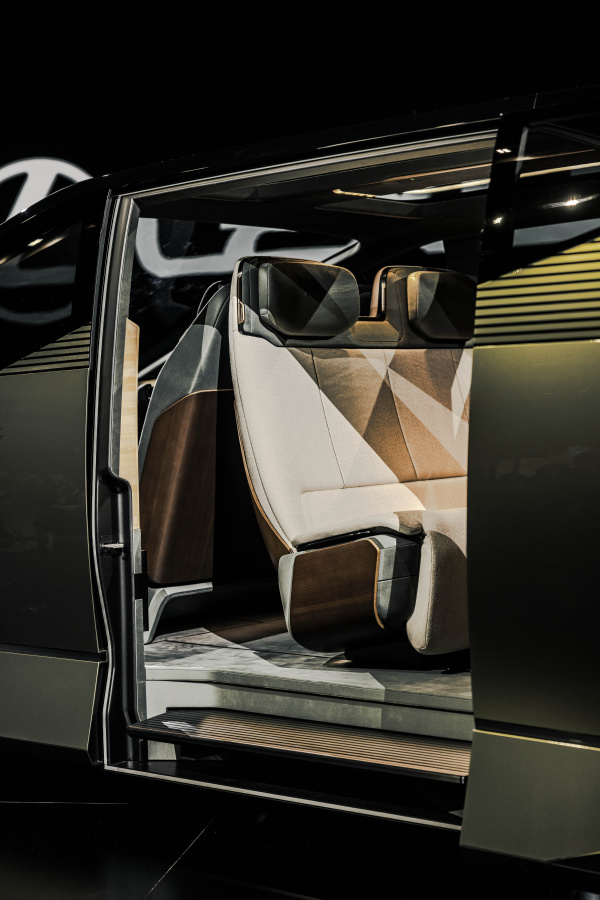
Above: A rear seat inside the LEXUS LS Concept, upholstered in geometric woven fabric rather than leather, on a flat floor made possible by the four smaller rear wheels.
Ian is also exceedingly trusted. Simon Humphries, Toyota’s Chief Branding Officer and Head of Design, an Englishman from Chester who speaks fluent Japanese and is currently restoring a 100-year-old Japanese farmhouse in his spare time, asked Ian and CALTY to start the ideation that became the project.
The timing wasn’t arbitrary. I asked Ian why these intricate concepts had to happen now and not a year earlier or later. “It’s kind of just a feeling,” he said. But then he laid out four converging forces that made it feel inevitable. The LS sedan and LC coupe, Lexus’s two flagship models, were both entering their final year of production. AI, software-defined vehicles, and the growing acceptance of autonomous mobility were reaching a tipping point. And Toyota’s Century brand had been repositioned above Lexus as its own ultra-luxury marque, which sparked a fundamental question about what Lexus was supposed to be. “Those four things came together,” he said.
The assignment was deceptively open-ended. “It came from Simon saying, ‘This is a great time to start thinking about redefining Lexus as a brand. Can you guys at CALTY start brainstorming?’” Ian told me. “No specifications like ‘make this type of vehicle’—literally, shotgun all ideas out there. Think big picture, no idea is too crazy. We generated an idea library that can last us a decade.”
To understand what CALTY came up with, you have to understand what they did before they drew a single line. In February 2024, about two months into brainstorming, Ian brought seven or eight designers to Japan. Not to study cars, but to study craft. I spent part of my trip retracing that research with him.
We visited we+, a seven-person design studio in Tokyo run by Toshiya Hayashi and co-founded by Hokuto Ando, whose work sits at the intersection of natural phenomena and material science. The studio is housed in a nondescript office building, the kind you’d walk past without a second look. When the door opens, you step into a small conference room divided by a wall, and behind it, a warehouse crammed with materials, projects, snippets, and pieces of research, all of their workstations wedged in between. Toshiya makes furniture from microalgae. He recycles discarded Styrofoam from Tokyo restaurants into raw material. He visits metal casting factories in Toyama Prefecture and finds beauty in the burrs that other manufacturers grind away. “Usually they remove these burrs for a polished surface,” he told me. “But I think this burr is beautiful because it expresses the process.”
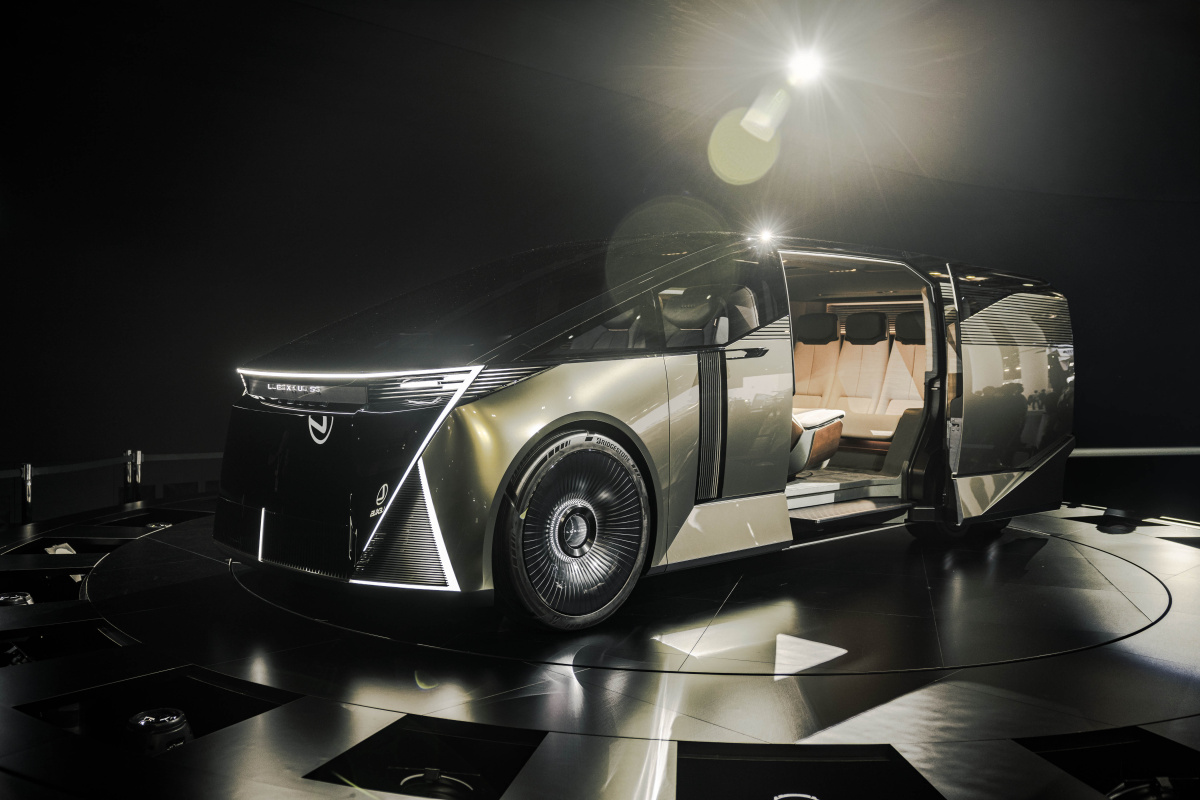
The LS Concept on display at Tokyo Big Sight
When I asked what drives that work, he said, “one of the reasons I choose natural phenomena is to make a theme that resonates with all people. Not only Japan, but everybody all over the world loves sunsets or waves or fire. I want to make something where everybody feels the same feeling.”
Ian watched his team absorb all of this. “Everybody talks about AI and digital, which we’re using. There’s no doubt about it,” he said. “But it’s really cool that going and seeing something in person can still influence an artistic output. And although we’re doing basically industrial objects like cars, there’s still a human element that’s based on feeling.”
We also visited Intersect by Lexus, the brand’s own coffee shop in one of Tokyo’s trendiest neighborhoods, to study how Lexus thinks about hospitality, then went next door to experience a traditional tea service. CALTY has a term for this embedded in its DNA, Toyota’s principle of “Genchi Genbutsu,” which means “go and see and find out for yourself.” Ian credits it with making CALTY what it is. “That’s embedded and engraved from the beginning for CALTY to really go and see and experience. I think that’s part of the reason why CALTY is so successful.”
The research trip produced a presentation that shaped the entire project. “It captured this overall intention of Japanese feeling and mood,” Ian said. “We used literal images from the trip in design reviews for quite a while.” One concept that emerged was what he called the “slow reveal,” the idea that an experience should unfold gradually, like an omakase course or a tea ceremony. “You don’t get everything at once,” he said. “It’s always the anticipation and mystery of what’s going to happen next. I love that, but how do you convey that into a product that’s modern?”
Lexus has one of the most reliable concept-to-production pipelines in the industry. The LF-LC concept became the LC 500. Akio Toyoda challenged the development teams to keep the production car as close to the concept as possible, and they did. The LF-NX went from a concept debut to production reveal in roughly seven months. These are not design-room fantasies.
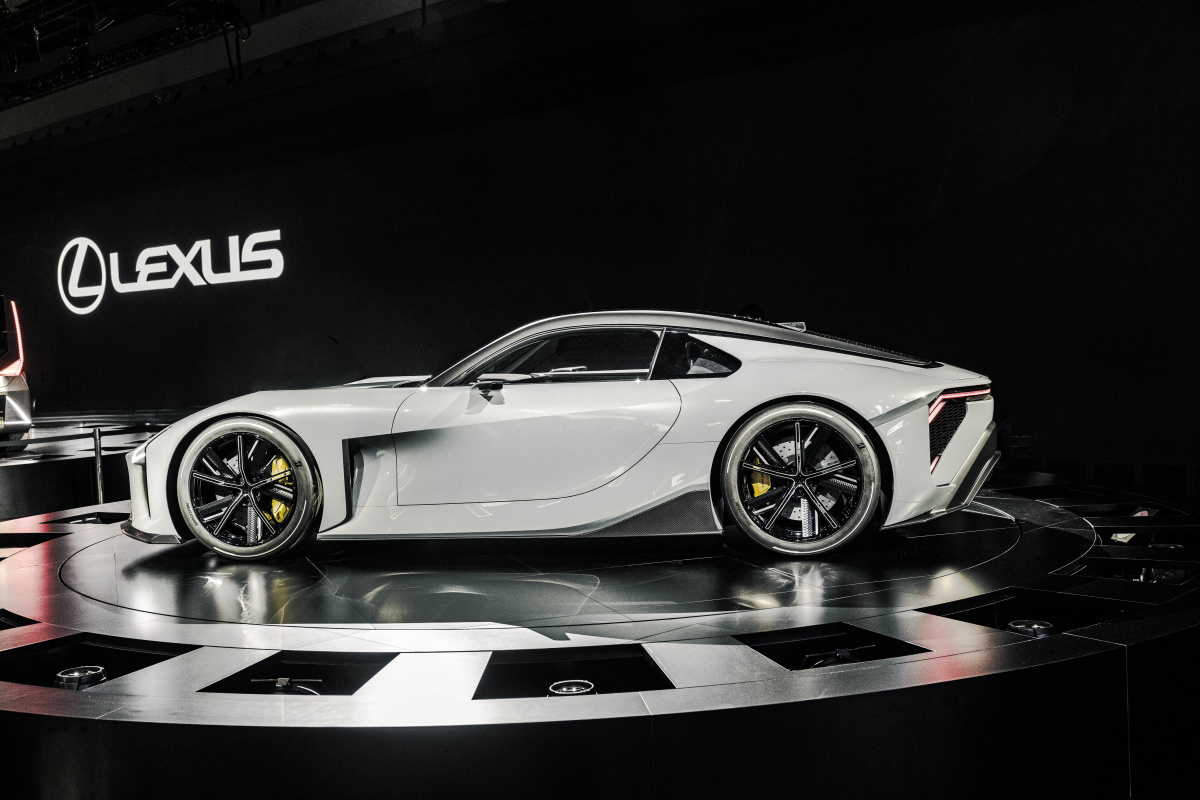
The LFA Concept, with dimpled golf ball-inspired surfacing for aerodynamic efficiency and a high-speed drone that launches from the rear deck.
Ian puts it more modestly. “About 10% of Lexus concept cars end up being produced,” he said. “Everything has some reason for being, and everything you saw could get made if they wanted to. Everything’s kind of a test bed.” But then he added: “If somebody sees it and loves it, it’s going to get made. You don’t want the change to be so drastic that when it’s produced people go, ‘What the hell is this?’”
In my experience interviewing designers, it’s often difficult for them to speak with clarity about their actual design philosophy. You can tell when a great portion of the work was driven by a consultancy or outside forces, or in the case of production cars, by engineering constraints. What made these conversations different is that this was a pure distillation of designer intent. No bean counters had gotten to it yet. No engineering compromises had sanded down the edges. Every decision on these concepts traced back to a creative choice someone made on purpose, and the designers could articulate exactly why.
When I first saw the somewhat outrageous, six-wheeled limousine, I had to remind myself that the work isn’t hypothetical. The LS Concept was not a CALTY project. It was designed by Toyota’s design team in Japan together with ED2, the company’s European design studio in the south of France, working from the direction the brainstorm had set. Ian walked me through it. LS now stands for “Luxury Space” instead of “Luxury Sedan,” and the vehicle uses a tri-axle configuration with larger front wheels and four smaller rear wheels. The smaller rear wheels reduce intrusion into the cabin, maximizing interior volume. “The six-wheel design came from wanting a serene space while going through Tokyo to a business meeting,” Ian said. “The wheel housing on the back doesn’t eat into the cabin space as much, giving you maximum interior volume. Dynamically, it creates stability in the rear. When you accelerate, decelerate, or turn, it’s a really smooth experience.”
The interior is wrapped in hand-carved bamboo from a forest that Lexus owns, sustainable, traditional, and illuminated with backlighting that turns the B-pillars into lanterns. “It’s something we took from Japanese traditional architecture and brought into the interior,” Ian said. “You get that experience without privacy glass, plus it’s beautifully made and provides a cool lighting experience inside.” When the door opens, a halo of light emanates from the center Lexus logo, sweeps around the car, and frames the entry. It’s “omotenashi,” the Japanese concept of anticipatory hospitality, rendered in LEDs.
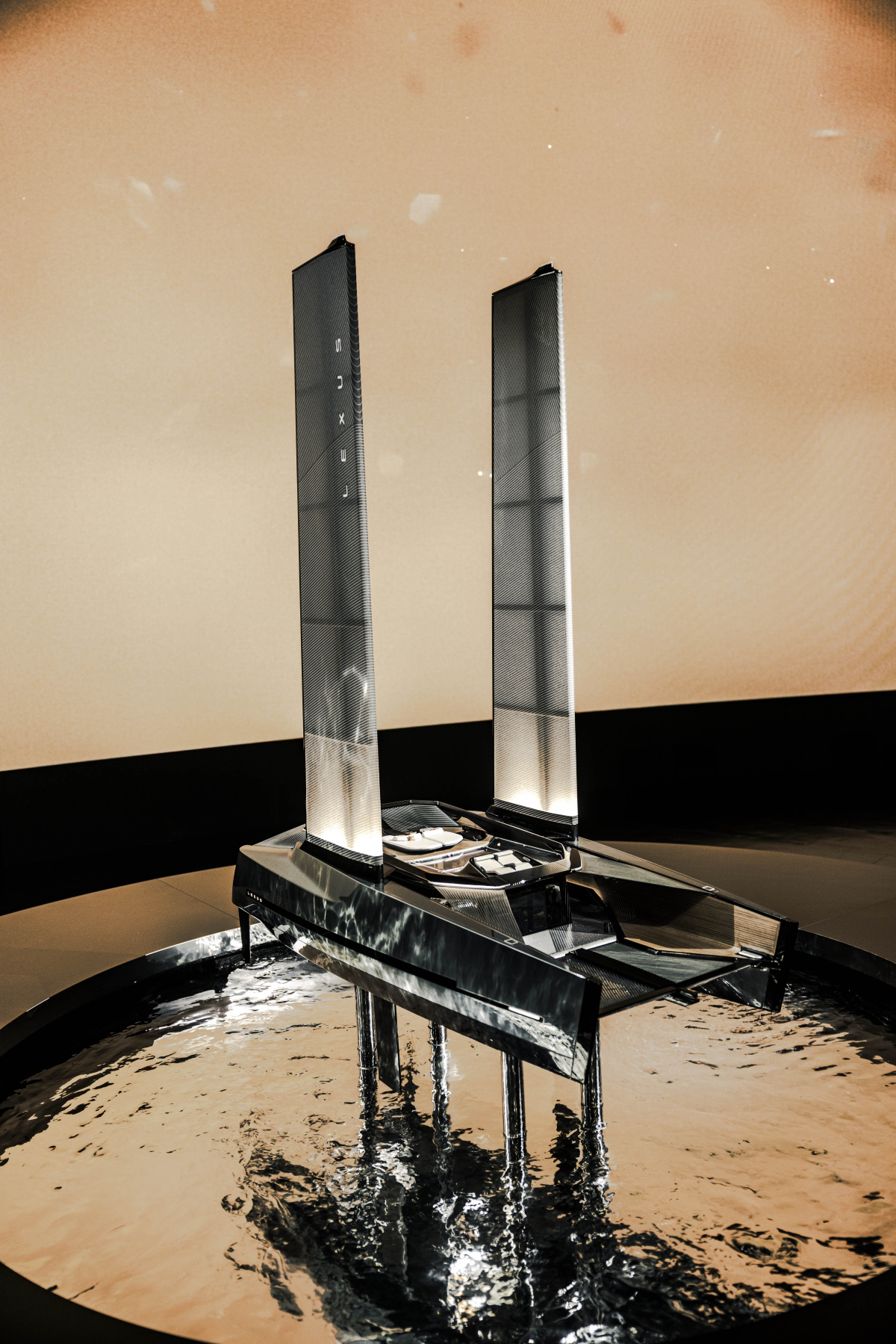
The LS Concept didn’t exist in isolation. On the show floor, Lexus placed a full-scale Joby eVTOL helicopter, a miniature maquette of a catamaran, and architectural renderings of a secluded island home alongside the vehicles. Together they sketched out a vision of an entire lifecycle of personal space and luxury. You can take your Micro to your limousine, your helicopter to your yacht, or arrive at your private home––they’re thinking about all of it.
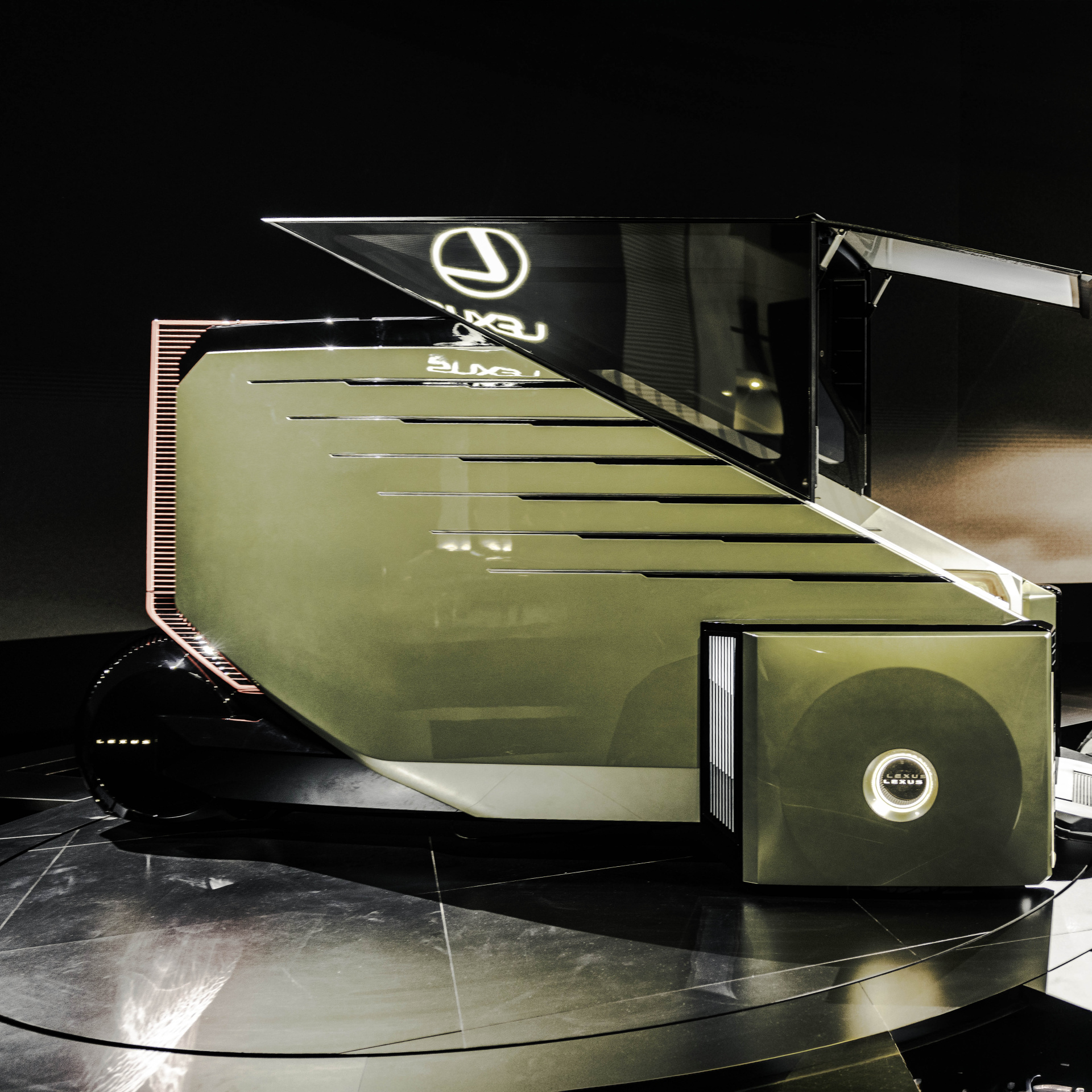
I spent a good amount of time with the LS Micro concept, and it might be the most interesting thing on the stand. From a form standpoint, it was the most unique vehicle at the show. It’s a three-wheeled, single-passenger pod designed for last-mile urban mobility. The canopy opens like a jewelry box, a detail that Jin Won Kim, Chief Exterior Designer at CALTY, told me was inspired by samurai bamboo-cutting tests. “The slicing motion informed how the canopy opens,” he said. “It has a jewelry-box-like movement where it slides up and folds open, allowing occupants to walk into the car gracefully instead of hunching or squeezing.”
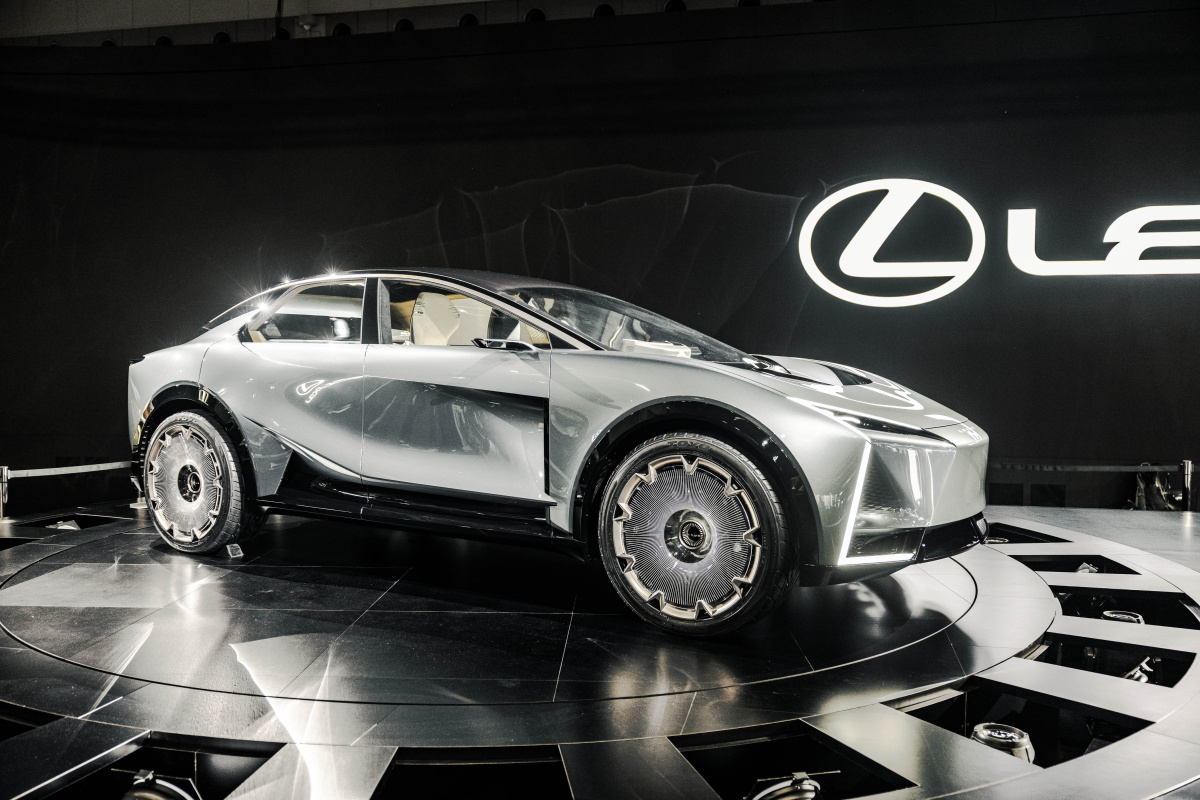
The LS Coupe Concept, a vision of duality where executive sedan volume meets performance coupe profile, wrapped in recycled carbon fiber inlaid with mother of pearl.
The front panel is a transparent OLED with gesture control. Point at a building while driving and the system tells you what it is. The seat slides forward when the canopy opens and meets you at the edge. “Basically it’s all about mobility being available to everyone,” Ian said. And when the canopy lifts, there’s a small vase for a flower inside. That was a tell. The helicopter and yacht felt more like loose sketches, placeholders for a future someone has doubts about. But the Micro has a vase for a flower; someone thought about what it would feel like to sit in this thing every morning.
Ben Chang, Chief Interior Designer at CALTY, was adamant about the approach. “We avoided the typical masculine automotive interior that relies on hard leather and aggressive styling,” he said. “Instead we used Japanese traditional architecture as a foundation and translated it into a modern, warm interpretation. The layered materials, bamboo, soft colors, organic textures, lighting, and even the small biophilic vase all contribute to that calm and intentional aesthetic.”
I brought up something that had been nagging me since walking the booth: these interiors feel decidedly different from the black and chrome aggression you see from the Germans. There’s a softness to them. A warmth. I asked Ian whether that was intentional. He was careful with his answer but clearly had thought about it. “Is it softer and warmer? 100%. The intention was warmth. That was the number one direction for all interiors,” he said. “We reference a lot of old-world luxury as what not to do—tufted leather, cigar lounges, boys clubs. That’s 100% not what we wanted.”
He pointed to the LS Coupe’s instrument panel. “That’s dark green leather with a worn finish in the driver’s seat. That’s not a feminine choice—it’s a more exquisite taste.” Then he circled back to something that anchors the whole material philosophy: “People question why we use fabric more than leather in luxury vehicles. In Japanese tradition, especially Kyoto, beautiful fabric is more special. We use a 1,000-year-old company that still weaves fabric. We wanted that in the interiors.”
When I asked whether the vehicle is geared toward Asian consumers specifically, Ben added, “It is definitely global. But Lexus as a brand is rooted in Japanese culture, so we wanted that cultural expression to be part of the message.”
The LS Coupe concept is the one I think most people will sleep on. It’s essentially an LS plus an LC, executive sedan interior volume in a performance coupe profile. The instrument panel is a thin blade of recycled carbon fiber inlaid with mother of pearl. Two small screens sit directly in front of the driver; the passenger gets a transparent OLED that folds away when not in use. “The tech is there when you want it but not intrusive,” Ian said.
Every decision on these Lexus concepts traced back to a creative choice someone made on purpose, and the designers could articulate exactly why.
The LS Coupe Concept had a detail I kept coming back to: a monitor integrated into the rear of the driver’s headrest projecting a live video feed of what the driver sees ahead. It’s a way of giving the rear passenger some sense of autonomy in a space that can normally feel locked or trapped. A subtle touch, but you could see the intent being successfully integrated. Simon Humphries, at his press briefing, put the philosophy plainly: “Space is freedom, and space is privacy. They are two commodities that are simply priceless.”
You could tell which vehicles truly had the most thought and passion about defining personal space. The driver’s seat is shaped for performance. The passenger seat is wider, softer, with an expanded headrest that houses a 360-degree active noise cancellation system. “It’s like having a full sound environment around your head,” Ian explained. “That’s why the headrest has expanded, to give you full sensorial experience.” Two seats, two different shapes, two different ideas about what the person sitting in them actually wants.
Then there’s the LFA Concept, a sports car with dimpled surfacing inspired by golf balls for aerodynamic efficiency, integrated aero sculpted into every body line, and a high-speed drone that launches from the rear to film your track day and feed the optimal racing line into your heads-up display. On the back sits a digital homage to the original LFA’s three exhaust tips, reinterpreted as the fog and rear brake light cluster. “We’ve digitized that signature and brought it into the future,” Ian said. Inside, the cockpit is split into two zones: a white surround for the driver with what Ian called “the black butterfly,” designed to funnel your focus to the road ahead, and skypods above each seat that give an open-air feeling inside a closed cockpit. “The styling is beautiful and sexy,” Ian said. “It’s not a typical sports car look, but it’s truly elegant.”
Later in my trip I visited Tendo Mokko, the legendary furniture maker founded in 1940, to understand how 85 years of bent plywood expertise could apply to the interior trim of the concept cars. This is where I met up with Sellene Lee, CALTY’s CMF chief designer and Momoko Otawara, Lexus & GR group manager. You could immediately tell these were CMF designers. Both were dressed flawlessly, so much so that we had to ask Momo at the end of our meeting where her coat was from, because the craftsmanship was so unusual.
At Tendo Mokko, we saw the great complexity of their woodworking ability and how it played into a very subtle part of the concept cars’ interior finish. Even though the application was subtle, the team went through extraordinary lengths to get it exactly right. I think that points to one of the great benefits of a project at this scale: the extraordinary amount of intention you can pour into every single decision.
-
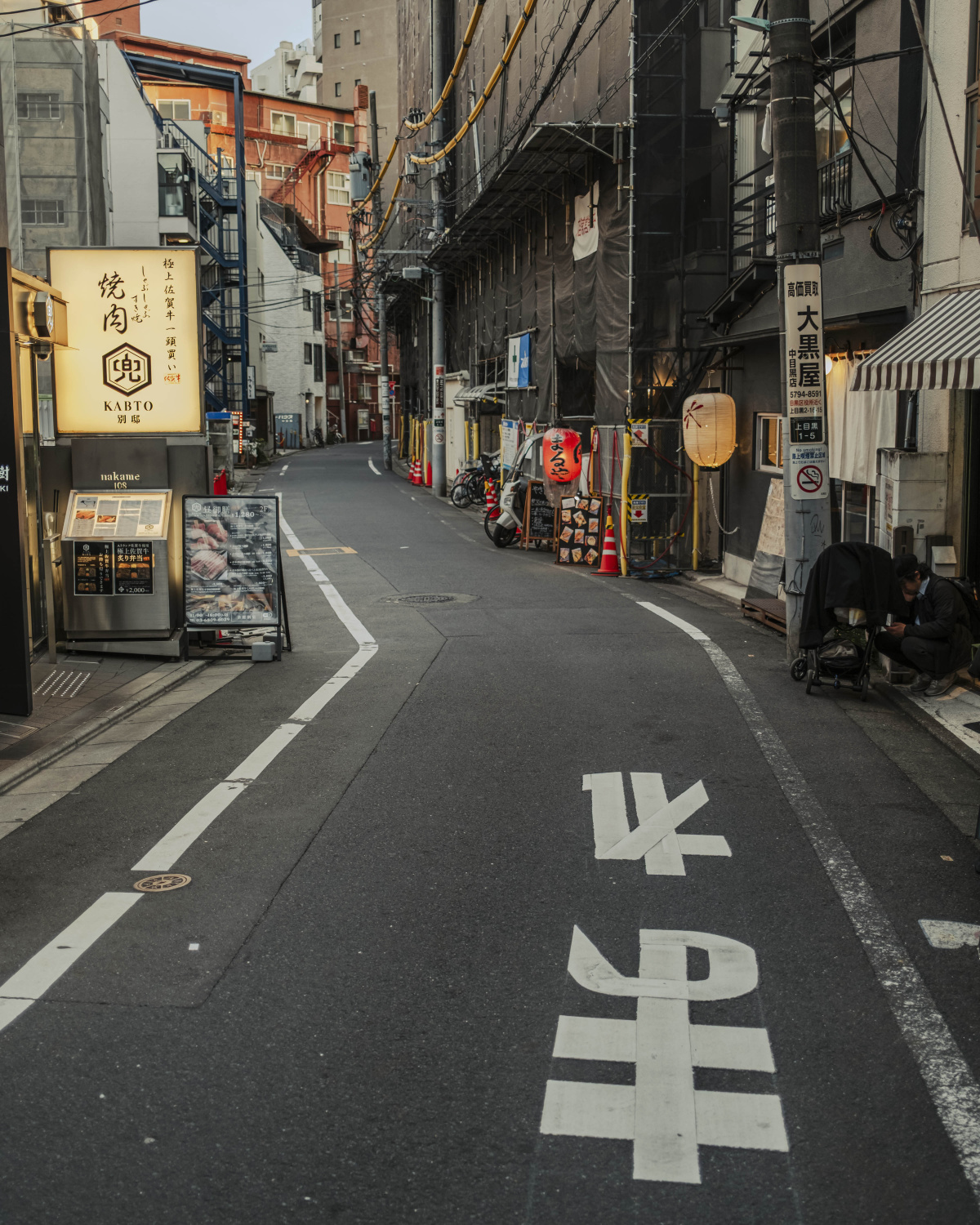
- Imagine the LS Micro navigating a Tokyo backstreet on an early morning commute.
-
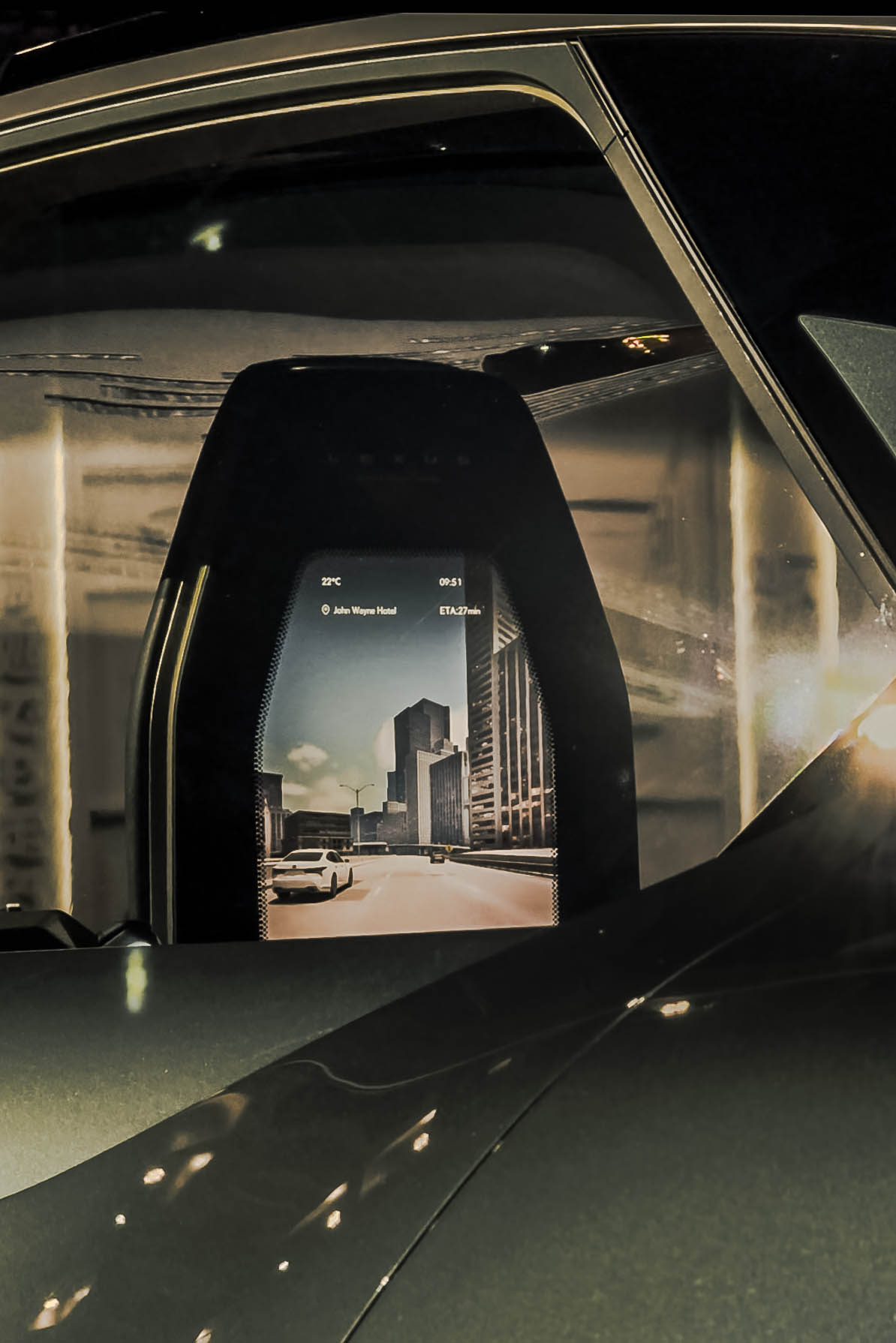
- A rear passenger’s headrest view inside the LS Coupe Concept.
What struck me most across my conversations in Tokyo was how thoroughly the project rejected the current direction of luxury automotive design. Sellene, who has been at CALTY for 15 years, was blunt about it. “What Mercedes-Benz defines as luxury is completely different from our approach,” she said. “We believe a significant part of the luxury market will appreciate our direction. We’re not trying to attract buyers who want purple lights everywhere.”
Momoko framed the target differently than I expected. “We focused less on traditional demographics like age, job, income, and marital status, and more on lifestyle and life stage,” she said. “For ultra-high-end luxury customers, we asked: What is luxury for them? We found that time is the most luxurious thing. They have money and can buy everything, but time is limited. Pure privacy and private time became our focus.”
The concept they arrived at was “Discover Sanctuary.” Momoko described how it reshaped everything: “The key was ‘less is more.’ The automotive industry tends to add more and more entertainment, UI/UX, and illumination, but for a true sanctuary, we shouldn’t overwhelm luxury customers. We tried to reduce elements and make the interior as simple as possible, which made material selection even more important.” Sellene picked up the thread immediately: “It’s the beauty of subtraction. First we wanted to distinguish Lexus from European luxury brands by returning to our DNA: the quiet, comfortable, sophisticated elegance from when we launched the LS in 1989. Remember the commercial with wine glasses stacked on the hood? That proved the performance was quiet and sanctuary-like.”
I asked Sellene and Momoko whether there were brands outside automotive that shaped their thinking. Momoko mentioned TAAKK, a Japanese label that minimizes design but adds three-dimensional applications. Sellene added, “The Row or Jil Sander. Both are simple and minimal, but edgy. Issey Miyake is also iconic and very relevant. Outside of fashion, Japanese architects are absolutely relevant: Tadao Ando, Sou Fujimoto. You cannot hide that DNA; it’s so strong.”
Toyota is thinking about all of it. Take your Micro to your limousine. Take your helicopter to your yacht. Arrive at your private home.
The color palette across all four concepts was deliberately restrained, only consisting of whites and beiges and a single strong green on the Coupe that Sellene and her team agonized over. “We pushed a bit more with a strong green, but we worked hard for it not to look like European racing green,” she said. “We came up with our own shade that was green but not too green. Very subtle.” For the show as a whole, they chose harmony over variety. “We could have used different beautiful colors, but we chose a message-focused approach,” she said. “The palette of whites and beiges still fits our market and our DNA.”
Sellene also explained her understanding of Japanese luxury. “Japanese people hide their wealth. If you show it conspicuously, you’re considered shallow or even associated with Yakuza. In Japanese culture, wealth appears in very meticulous details. We don’t want to show ‘I have so much money.’ Instead we focus on bespoke details like a special button on the door. It’s showing the money by not showing money.”
When the brainstorming began, all of Toyota’s global design studios were brought in, not as competitors, but as collaborators. Sellene described the process as “very organic and collaborative, which is distinctively non-hierarchical.” Momoko added, “Usually headquarters is in charge and we contribute smaller parts, but this time Simon had a vision for all international studios to work together. We communicated almost every week, sharing materials and creating consistency across all vehicles while maintaining each one’s distinct character.”
The result is what Ian called “360 degrees of revolutionary luxury.” “We weren’t using that term at the time,” he told me, “but it was this total ecosystem where it was all types of mobility. We started brainstorming and then we knew we would have to make something.”
When I asked Ian if he’d been surprised by any of the feedback from press tours, he told me something that I think reveals the whole project. “I was surprised by comments that were super insightful, capturing what we were thinking internally without me saying anything. That’s the sign we got it right.” Then he laughed. “I told my team to stay off the internet for two weeks, though I ended up scrolling through articles last night.”
Toyota is the biggest automaker on Earth. Lexus posted a record year, moving 882,231 vehicles and surpassing Mercedes-Benz in the U.S. When it came time to imagine the future of that brand, Toyota didn’t hand the assignment to a consulting firm or a marketing department or AI. It handed it to Ian Cartabiano and a team of roughly 28 creatives in a studio in Newport Beach, California, and said: figure it out. The answers came back from studios in California, Japan, and Europe.
-
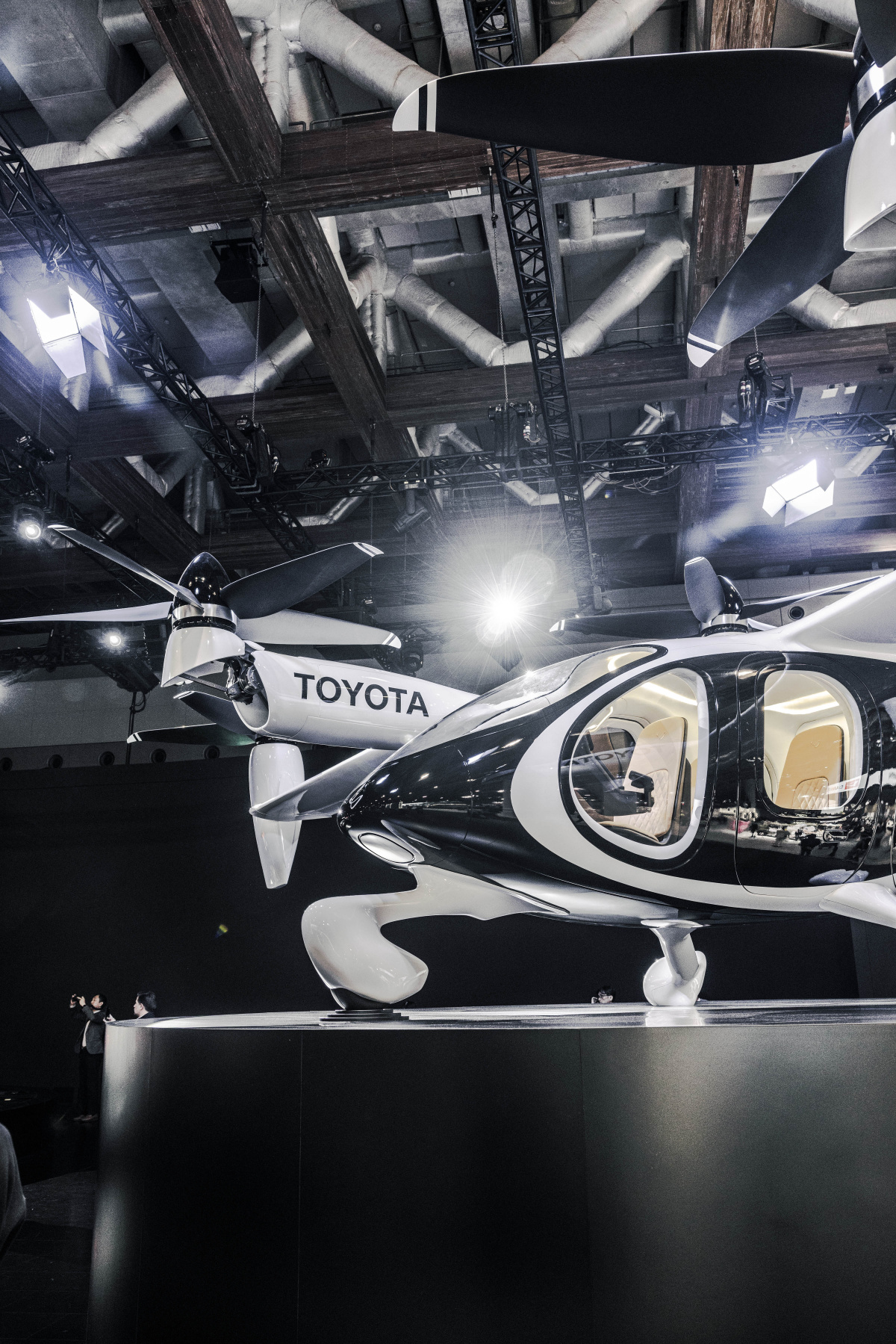
- Autonomous trips aboard the Lexus Catamaran Concept and Joby eVTOL shuttling you to a private residence.
“A lot of other companies have teams that do that for designers,” Ian said. “You literally just become a stylist. That’s why I’m so proud of our team. We’re constantly amazed by what the team can do. I think we are the best designers in automotive because our team has to do so much ourselves without anybody giving us the answer, with a small team.”
He’s earned the right to say that. And in a market where every competitor is racing to fill every surface with screens and every experience with noise, Lexus is betting that the most radical thing you can offer someone is a private room that moves.
A version of this article originally appeared in Sixtysix Issue 16.