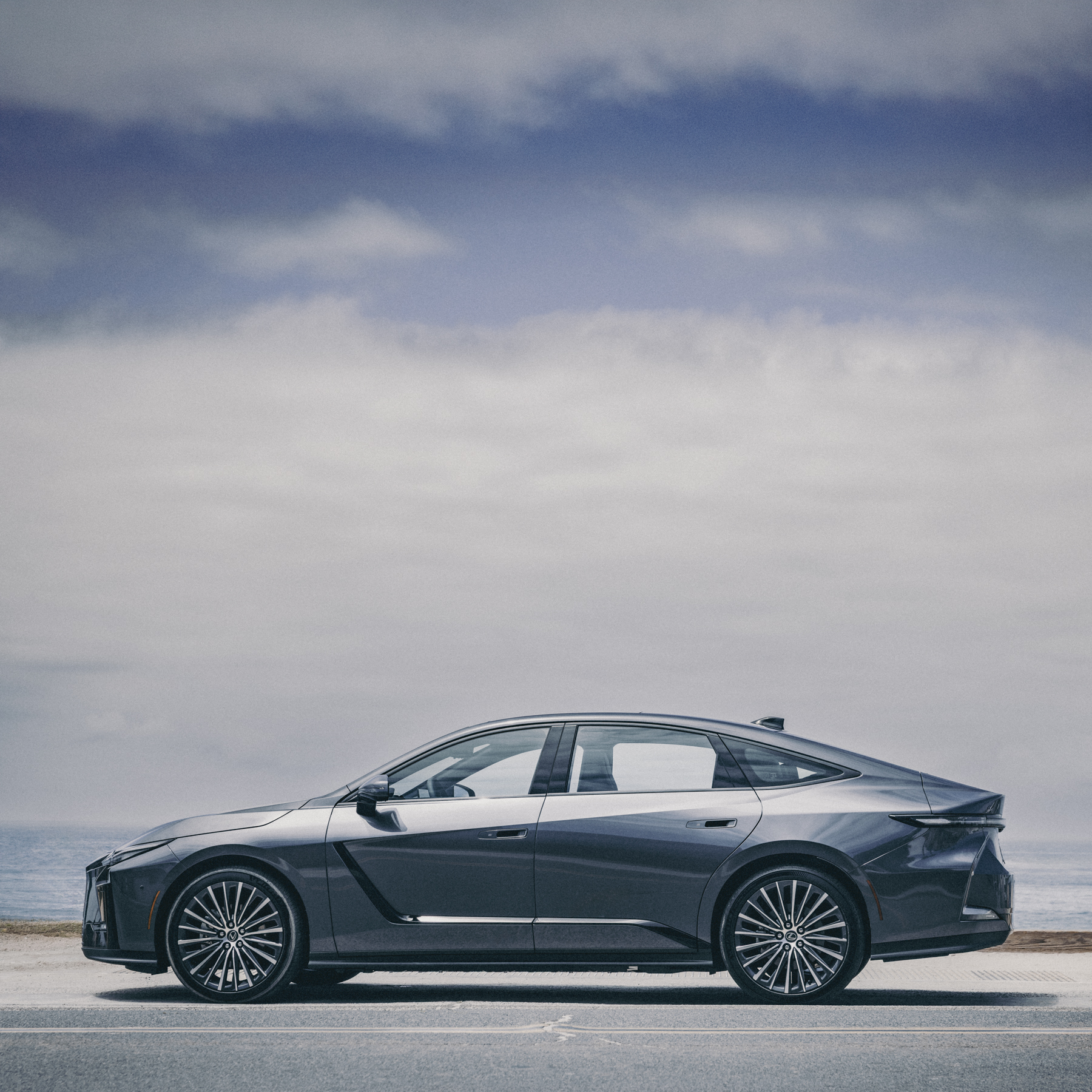
“The name the car holds is symbolic of its role within the lineup,” Kohei Chiashi tells me. We are sitting in a conference room in La Jolla, and the chief engineer of the eighth-generation Lexus ES has just said, in a somewhat oblique way, the most important thing about the car: that it must know its place. He doesn’t mean it as a market position, he means it as a design principle. All great design knows its place. The role of the ES is to be an entry-level luxury sedan. The form follows from there.
That sounds obvious until you remember the state of the luxury sedan in America, a category has been disappearing for a decade. Most of the cultural and marketing energy in the segment has moved to crossovers and SUVs, taller cars with higher seating positions and bigger trunks for the gear and kids and dogs that American buyers actually have. Later in the day, when I sit down with Cynthia Tenhouse, marketing VP at Lexus, she will steer me toward the TZ, the brand’s new three-row electric SUV, as a more practical option for my phase of life with two young kids still in car seats. Sedans are no longer the default purchase, even for the people whose job it is to sell them.
And yet the ES is Lexus’ best-selling sedan globally, in production since 1989, now in its eighth generation, and for the first time available as a battery-electric vehicle. The platform supports both hybrid and electric powertrains under the same name—the first multi-pathway car Lexus has built. The form has gotten bigger, taller, and longer. None of that, Kohei argues, changes what the ES is for. “Lately Lexus has been trying to create an experience instead of a product,” he tells me. “When you move from a product to an experience, even if the shape of the car changes, the role the car is meant to play has to be protected.”
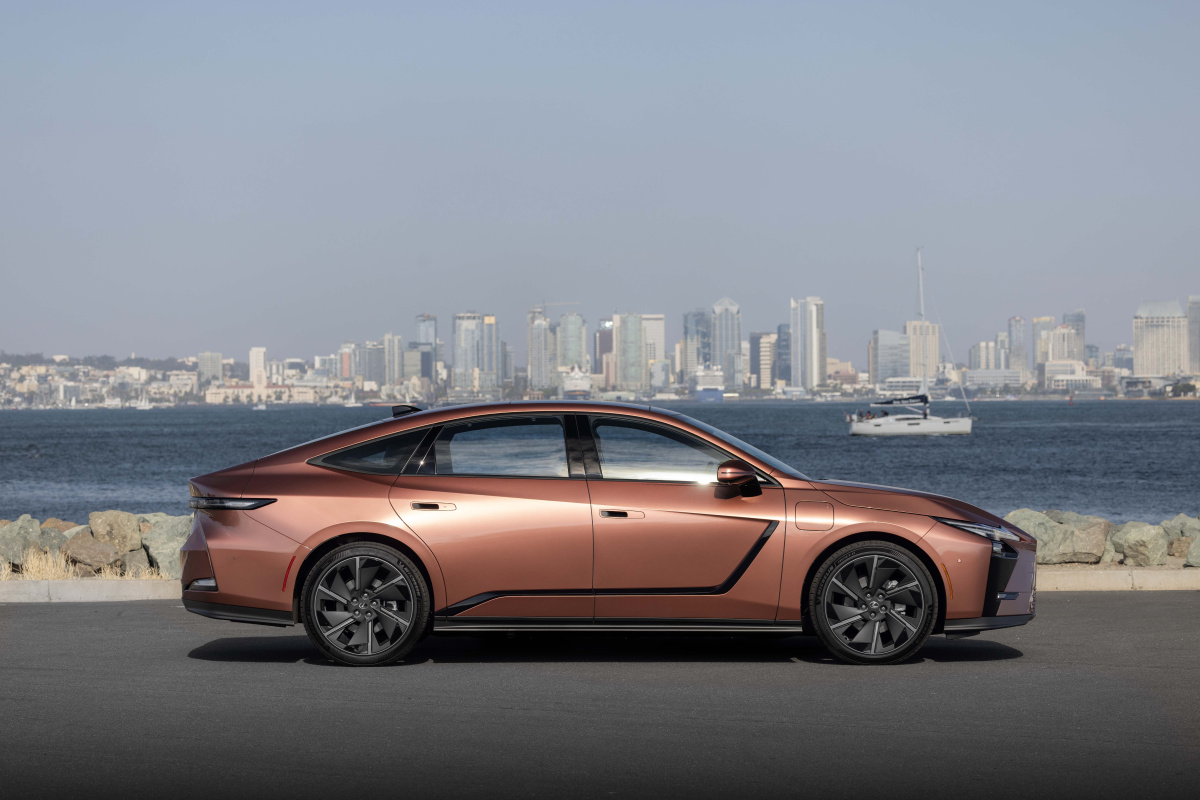
The new Lexus ES adopts a tapered, trunkless roofline drawn from Lexus’s LF-ZC concept, a departure from the traditional three-box sedan shape. Photo courtesy of Lexus
My press day with the Lexus ES starts in a parking lot. Two ES 500es and a couple of 350es are lined up waiting. I open the door of a 500e in Iridium with palomino semi-aniline leather and start with the smallest test there is: I turn the volume down. Next, I turn the air conditioning up, and lastly pair my phone to CarPlay. Earlier in the day there was a thorough demo on the new tech system, but I opted to skip it. Good tech should not require training and Lexus has succeeded here. The volume roller is cool aluminum, beautifully finished, exactly where my hand wants to go. The AC controls are illuminated red and blue, with physical resistance under my finger and unambiguous arrows. CarPlay takes about a minute. None of this is the future of automotive technology. It is, in a way, the opposite: the bedrock interaction layer that almost every car has, executed with the small additional care of a brand that has decided ease of use is a luxury attribute.
The seat is the next thing. The snug settled-into-the-car feeling specific to a sedan arrives, but without the drop. The seat is higher than I expected, and easier to get into. There is also a wider field of view through the windshield. Later, Kohei will tell me he raised the hip point on purpose. The car got bigger and taller this generation, and rather than fight that change, the team leaned into it: easier ingress, expansive cabin feeling, and a higher seating position that doesn’t lose the sedan’s specific gravity. The point of the change, he says, was to protect what being in a sedan is supposed to feel like, while accommodating drivers used to climbing into SUVs. I felt the design intent before he named it.
That kind of design choice repeats itself throughout the car. The HVAC interface looks deceptively simple, a single auto button you press and forget. But when I asked Kohei about it later, he laughed. “Inside the little button you call auto,” he told me, “there are over 100 complex processes happening.” Lexus has been running an AI on top of years of HVAC control data, refining the logic. The end product is a button that hides the work. That is a Lexus position on what technology should do in a car: handle the complexity below the surface, leave the human with the simplicity above it.
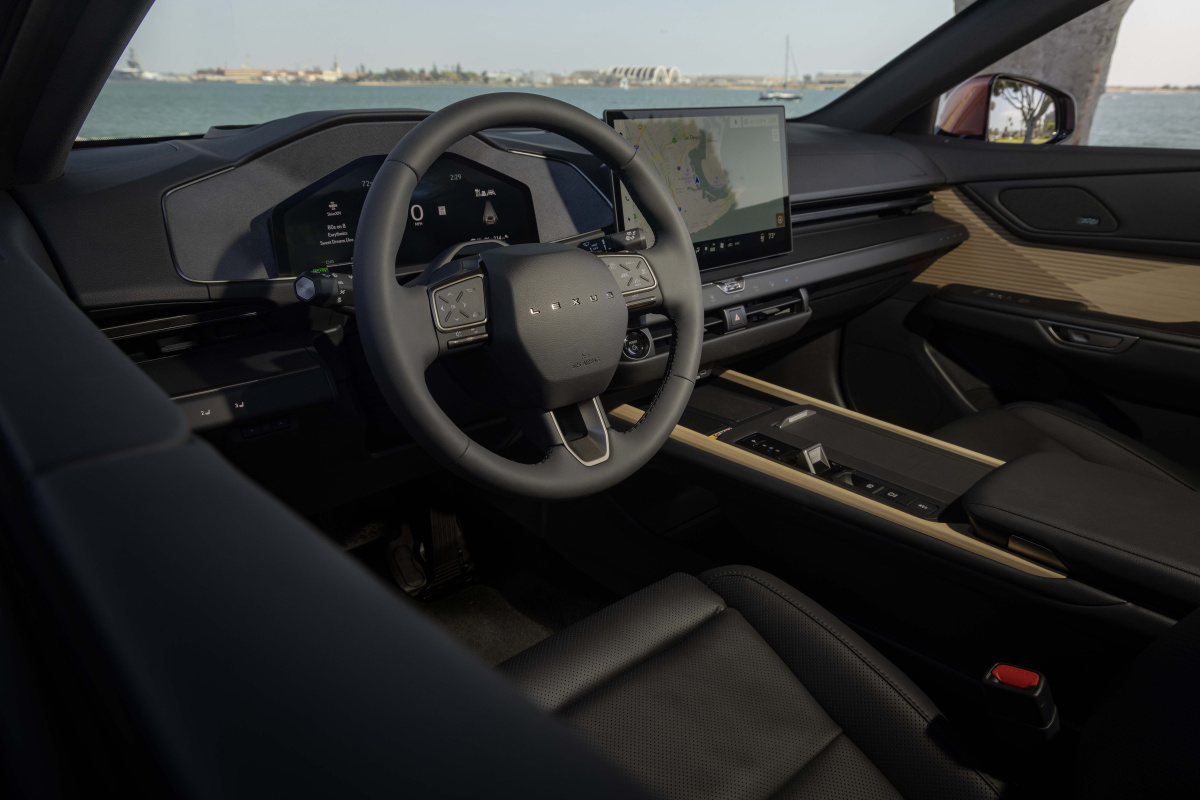
Inside the 2026 ES 500e. The eighth-generation ES introduces a steering wheel that spells out “LEXUS” horizontally in the brand’s updated typeface, one of the typographic signals of the redesign. Photo courtesy of Lexus
The same logic shows up in the material details. Behind the 12.3-inch digital instrument cluster, set into a hexagonal cutout in the dashboard, Lexus has lined the surrounding panel in a dense felt. The texture is precise enough that you can see the directional pile if you look closely from the driver’s seat. It is a Takumi gesture, a reference to the master Japanese craftspeople Lexus employs to hand-finish interior surfaces, the kind of small material commitment that announces a brand has thought about what you can see. The bamboo door panels on the Luxury trim do similar work, layered wood inlay backlit by LED so that light filters through the grain at night. None of these are decorative in the old luxury sense of ornament. They are tactile and material in a way that fits the broader Lexus argument: that craft and finish are luxury attributes, not horsepower numbers or screen sizes.
The brand has been doing this for a while, but the eighth-generation ES is one of the more articulate versions of it. “Once you focus on raising the value of the experience itself, the old engineer-versus-designer conflict shifts. It is in everyone’s best interest to move from conflict to collaboration,” says Kohei. Engineering and design used to fight, in his telling, because everyone was trying to optimize for the same object. When the object becomes an experience instead, they are suddenly working on the same problem.
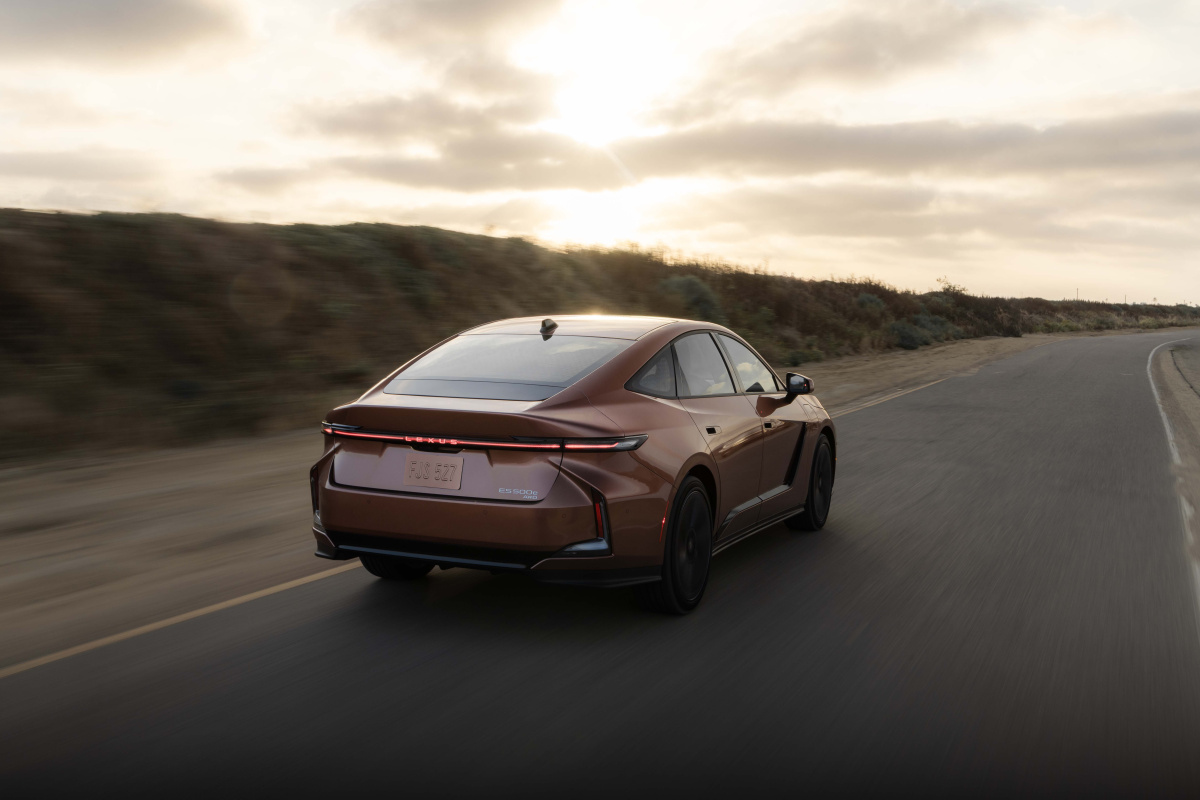
The 2026 ES from the rear at dusk. The L-shaped turn signals at the lower rear of the new ES echo the L-shaped daytime running lights at the front, part of a recurring motif in the brand’s design language. Photo courtesy of Lexus
Cynthia Tenhouse, the marketing VP, shared a similar point of view, “We truly think very deeply about the end user, and everything is in service of that,” she tells me. “You can tell Kohei thought about what the experience would be like for the guest sitting in the product. How do the knobs feel? How does the seat and the leather feel, and the lighting? That to me is our white space, that we own, that no one else really does. It is not engineering for engineering’s sake or trying to get to a good horsepower number. It is in service of the human emotion.”
This is the part of the Lexus brand that has always been there, restated for the EV era. Park the new ES next to a Mercedes EQS and the difference in ambition is immediate. The ES doesn’t look like a halo car, but a nicely considered sedan. The personality is not extraordinarily strong but it is also not utilitarian in the Prius way. It is built around a specific buyer.
What that buyer gets, in the Luxury trim with the 17-speaker Mark Levinson PurePlay system, is the best version of the ES, and the one that earns the brand’s claim. The Premium trim with the 10-speaker Lexus system is noticeably less immersive, fair for the price, but not luxury-class. The cabin is also a little louder on the highway than I expected, and louder than it should be at the moment the door closes. I’ve come to equate a silent cabin as a definition of true luxury. The ES does not quite get there.
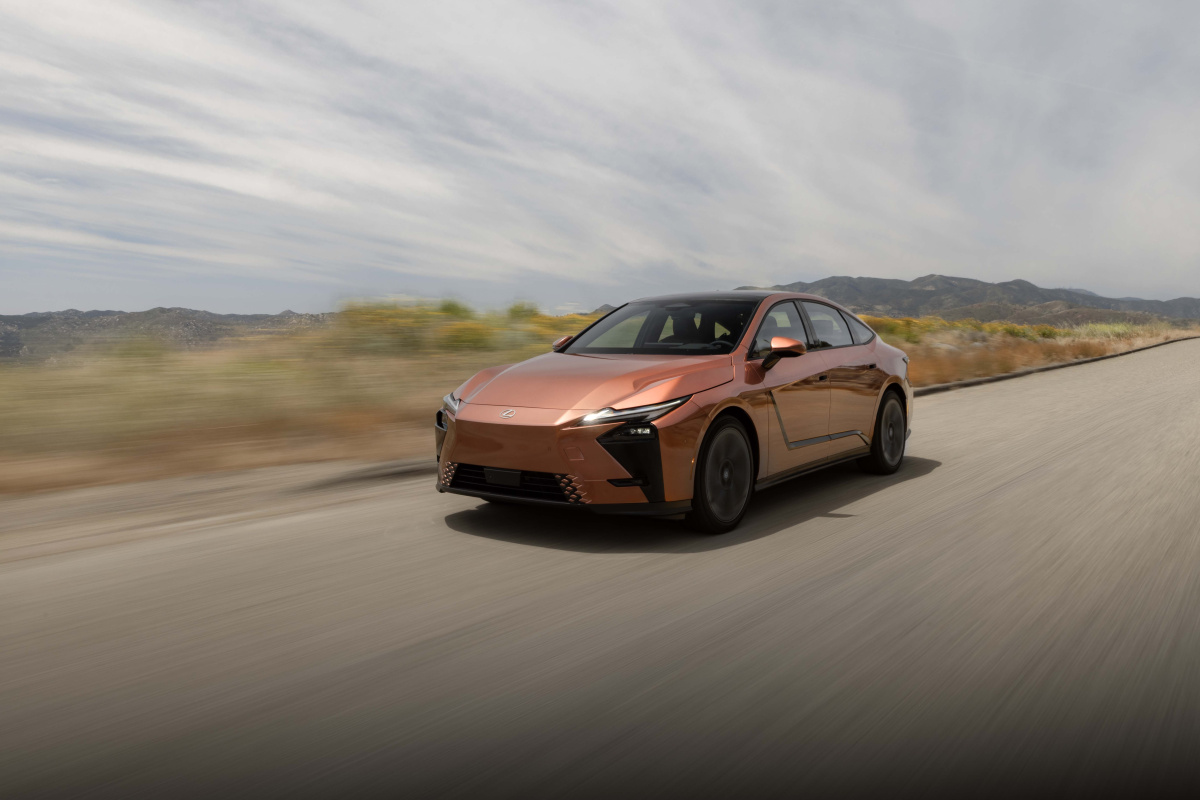
The 2026 Lexus ES 500e is the all-wheel-drive, all-electric version of the new ES. Photo courtesy of Lexus
Inside the Lexus lineup, what really shifts between the trims is how the experience plays out under your foot. The 500e, the all-electric AWD, is by far the most rewarding to drive. With 338 horsepower split between front and rear motors, it accelerates with the kind of power that fits the Lexus aesthetic, no theatrics, but you arrive at speed faster than you mean to. The DIRECT4 torque distribution makes it feel composed in fast cornering and confident off the line. The 350e, the front-wheel-drive entry at 221 horsepower, does not have that responsiveness. It is comfortable. Easy. The kind of car that drives well enough for the buyer who has stopped caring about driving and started caring about everything else.
At the end of the afternoon, I park the 500e in the same La Jolla lot where the day started. The luxury sedan has been disappearing from American driveways for a decade. The ES is one of the few left worth making a case for, partly because Lexus did not try to make something it isn’t. The 500e is the version where the experience and the form meet in a way that earns the price. The 350e is the smart, reasonable purchase that still does what a luxury sedan is supposed to do for the person sitting in it. Both trims, in different ways, are the products of a company that has decided what its sedan is for and built it around that.
The car knows its place. In 2026, that is no small thing.