Designer Tom Dixon‘s path toward becoming an internationally acclaimed designer reads like an unlikely success story, but it makes perfect sense once you understand his relationship with metal. The British designer didn’t discover his calling in an art school classroom—he found it in a scrap yard, welding salvaged materials to fix his motorbike. That early fascination with transformation and seeing potential in what others discard now runs through everything he creates, from the pieces housed in the Victoria & Albert Museum to his latest collaboration with HYDRO, the world’s largest aluminum producer.
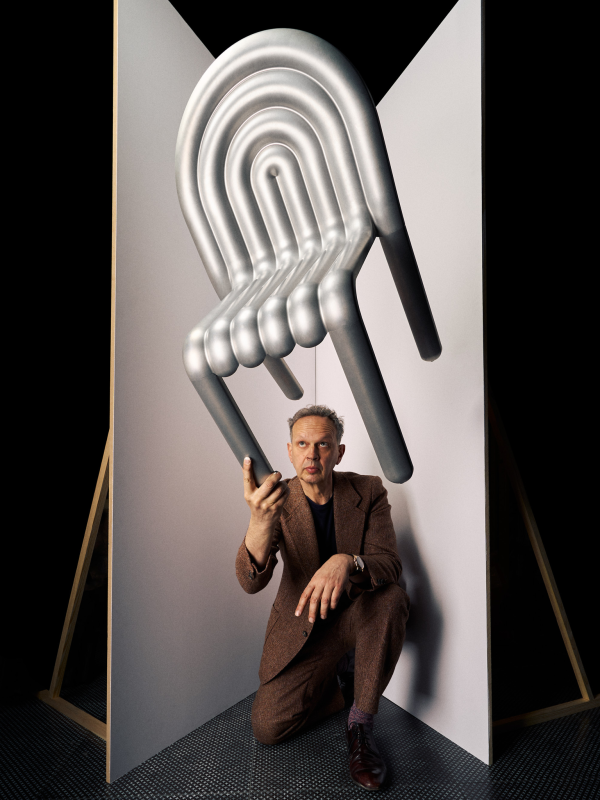
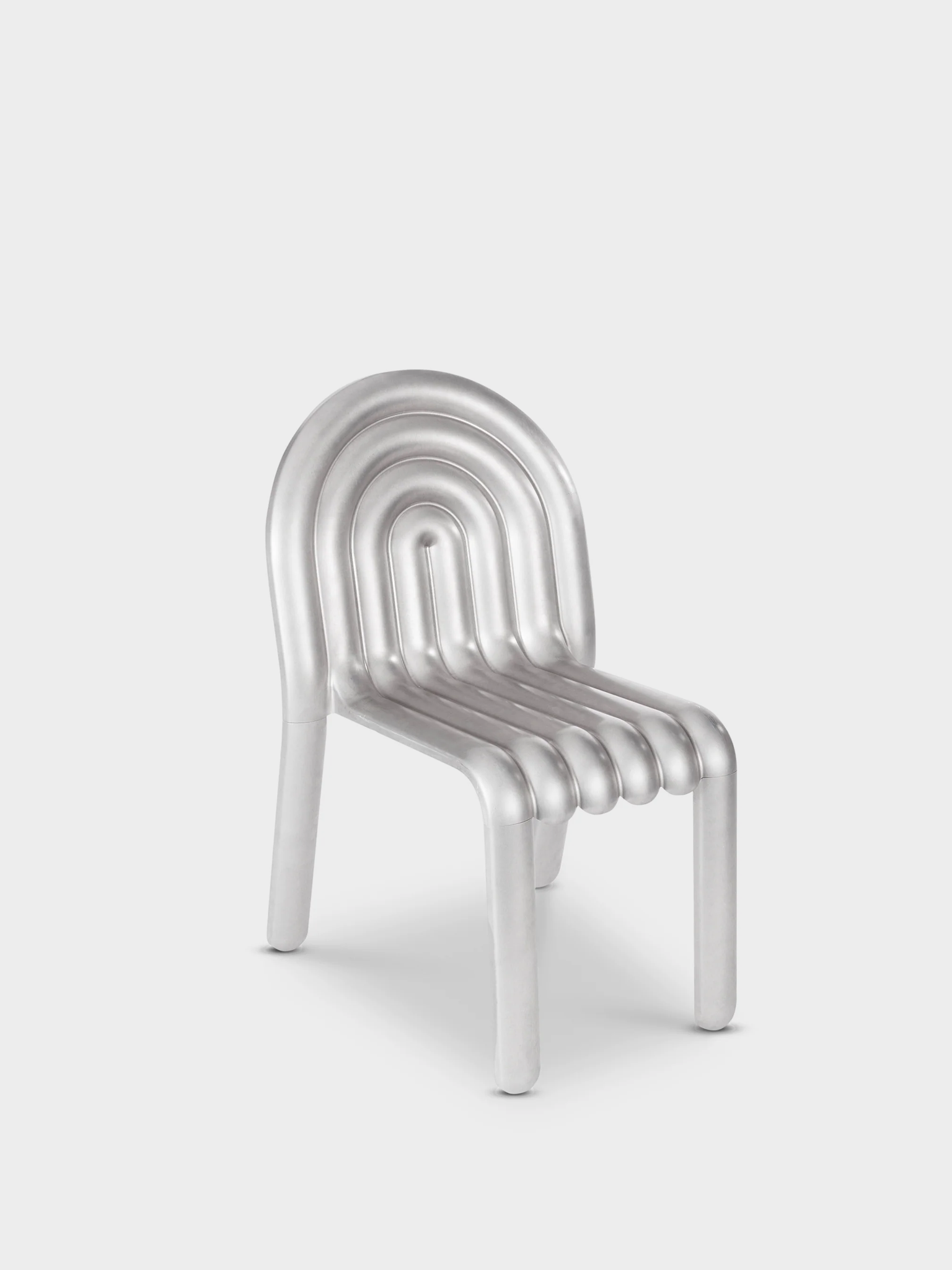
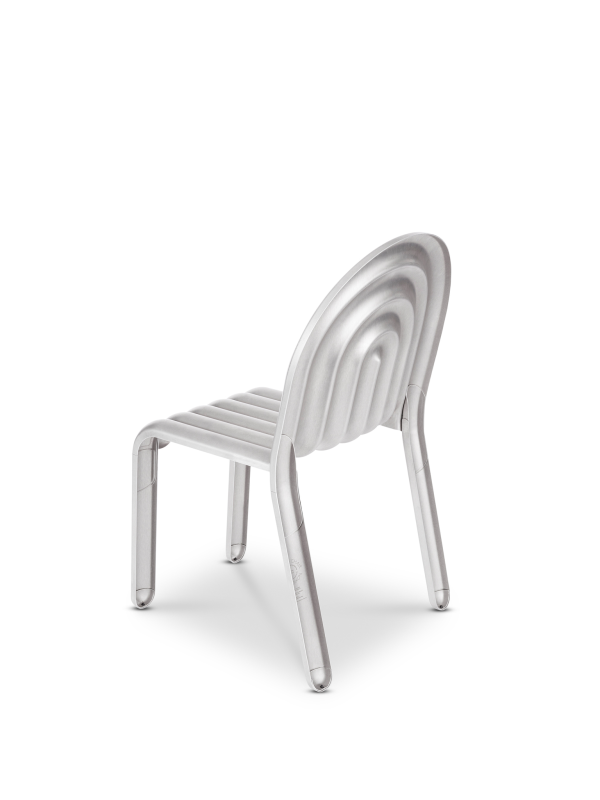
The HYDRO chair represents what Tom calls “the simplest, and maybe the most difficult form of all,” a challenge that captures both his design philosophy and technical ambition. Working from a single piece of aluminum, the chair takes shape through Superplastic Forming and robotic laser cutting techniques borrowed from automotive manufacturing. What emerges is a ballooned pattern that delivers structural integrity while giving the polished metal an almost organic quality.
The chair’s patterning serves a precise engineering function, creating a piece that somehow achieves the contradictory goals of strength, lightness, and visual softness all at once. The chair shows how advanced manufacturing can push materials to their limits, creating forms that simply wouldn’t be possible through traditional methods.
The collaboration gains additional significance through HYDRO’s approach to sustainable manufacturing. The company’s new facility in Cassopolis, Michigan, transforms post-consumer scrap into their CIRCAL alloy, producing aluminum with one of the lowest carbon footprints on the market.
The limited-edition piece works as both functional object and design statement, embodying Tom’s belief that the best innovations often come from the most fundamental questions. In this case: what can a single piece of metal become when shaped by the right combination of vision, technology, and responsibility?