Mischa Couvrette, founder and lead designer of Toronto studio Hollis+Morris, was somewhere over the Atlantic flying home from Copenhagen after 3daysofdesign, when the Beaufort collection came into focus. The conversation had turned to ice, to climate change, to the layered beauty of Arctic formations. Eventually sketches developed on the plane. By the time the wheels touched down, the idea was already there.
“The Beaufort sits in a lineage of Scandinavian and Canadian design that privileges material honesty, quiet restraint, and the idea that an object should be worth looking at even when it isn’t doing anything,” says Jonathan Mandeville of Hollis+Morris. That dual quality, active and passive, lit and unlit, is central to how the collection was designed.
“For years I have been drawn to the beauty of ice above a body of water,” Mischa has said of the collection’s origins. “The layered gradients, the shifting transparency, and the mysterious world concealed beneath the surface.” That feeling of stillness, depth, and something just out of reach, became the design brief.
The Beaufort collection, showcased during New York Design Week’s ICFF, takes its name from the Beaufort Sea, the remote stretch of Arctic ocean that sits above Alaska and the Northwest Territories, one of the most ecologically significant and least visited bodies of water on earth.
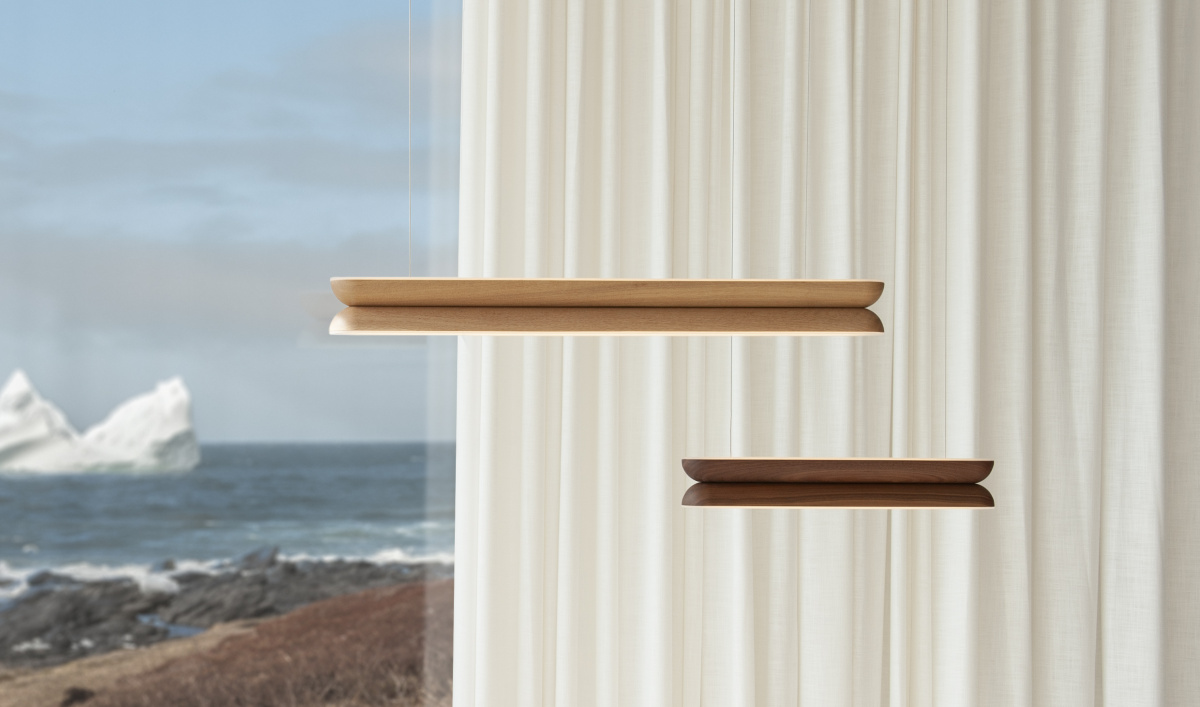
“The Beaufort sits in a lineage of Scandinavian and Canadian design that privileges material honesty, quiet restraint, and the idea that an object should be worth looking at even when it isn’t doing anything,” says Jonathan Mandeville of Hollis+Morris. That dual quality, active and passive, lit and unlit, is central to how the collection was designed. When the light is off, the interplay of carved wood and acrylic reveals something subtle and glacial. When it’s on, light moves through the form in layers, diffused and directed by a process that is more considered than it might first appear.
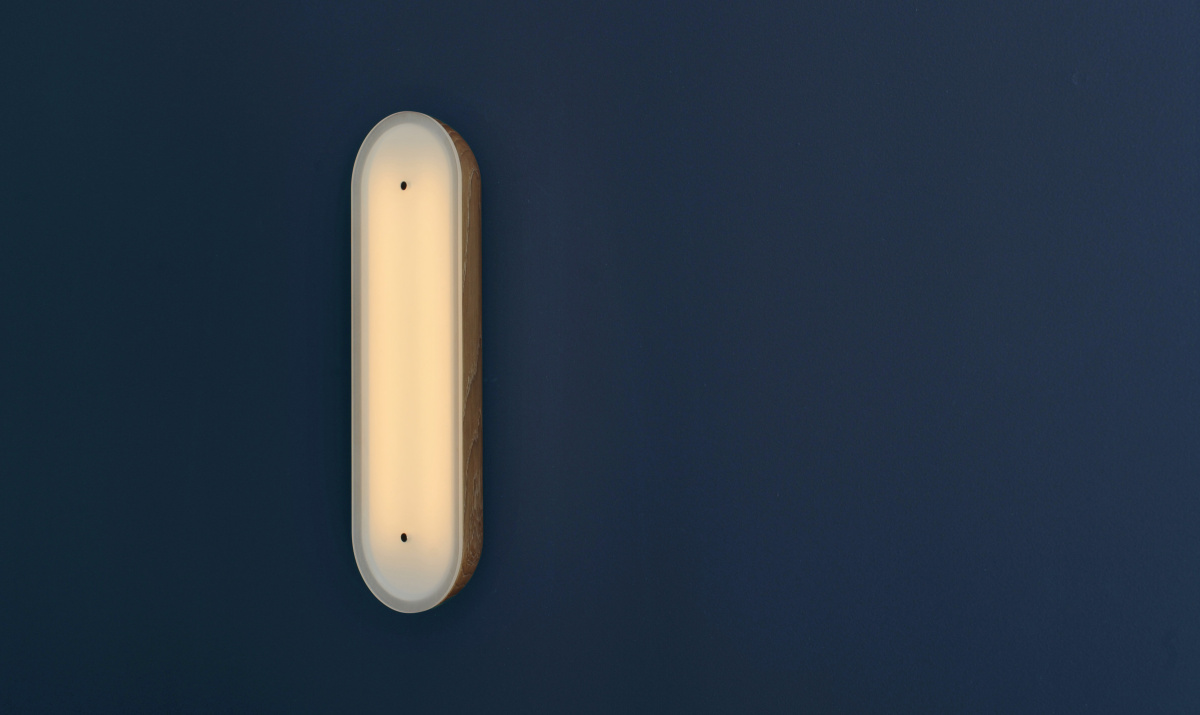
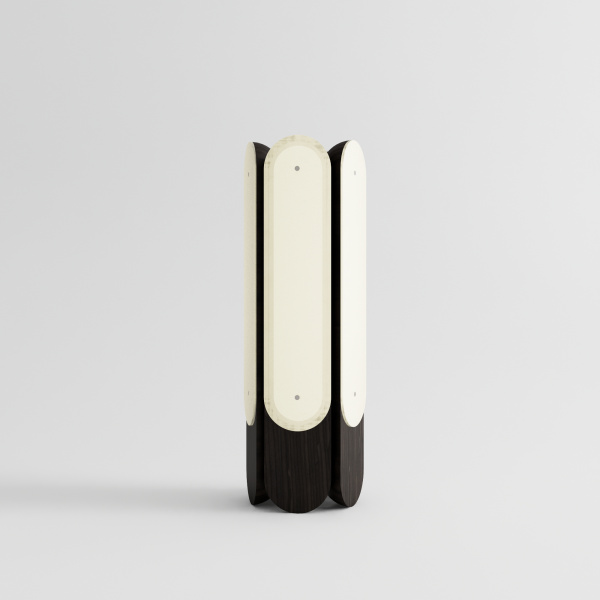
The stepped shoulder profile that gives the Beaufort its silhouette isn’t decorative. It’s structural and optical, catching and refracting light differently as the viewing angle changes, so the piece looks slightly different from across the room than it does up close.
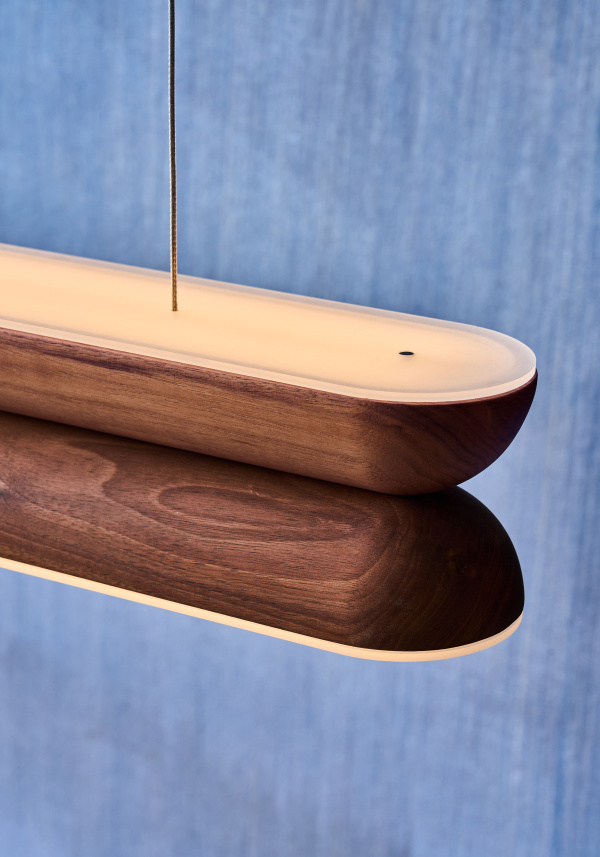
Each piece in the collection is sandblasted by hand, a process that etches the surface at a microscopic level, transforming clear acrylic into something that diffuses light from within while retaining a subtle, faceted depth. The stepped shoulder profile that gives the Beaufort its silhouette isn’t decorative. It’s structural and optical, catching and refracting light differently as the viewing angle changes, so the piece looks slightly different from across the room than it does up close. The interior of the wood is hand-carved to create a precise relationship between the LED source and the acrylic lens.
“How the light enters the acrylic, how it travels, and how it exits is all deliberate,” Jonathan says.
“For years I have been drawn to the beauty of ice above a body of water,” Mischa has said of the collection’s origins. “The layered gradients, the shifting transparency, and the mysterious world concealed beneath the surface.” That feeling, of stillness, depth, and something just out of reach, became the design brief.”
Production is split roughly equally between machine and hand. CNC milling gives the Beaufort its precision, the half-cylinder profile, the interior chamber, the stepped geometry that allows the acrylic to sit flush against the wood in layered planes. Everything after that is done by hand. Edges are softened, metal connection details are fitted, and every piece is finished with a hardwax oil, applied and buffed by hand to bring out the grain of the wood. “The machine gives us accuracy,” Jonathan says. “The hands give it life.”
Everything is made in Toronto, where Hollis+Morris is based, using FSC-certified solid oak or walnut, non-toxic finishes, and recycled metals wherever possible. The studio is B Corp certified.
“Making in Canada isn’t a marketing position for us,” Jonathan says. “It’s a practical expression of our values around sustainability, craftsmanship, and accountability. We want to know exactly how and by whom our pieces are made, and that’s only possible when production stays close.”
“We’re living in a moment where there’s a lot of maximalism and novelty for its own sake,” Jonathan says. “The Beaufort is calm. It’s considered. It gets more interesting the longer you look at it.”
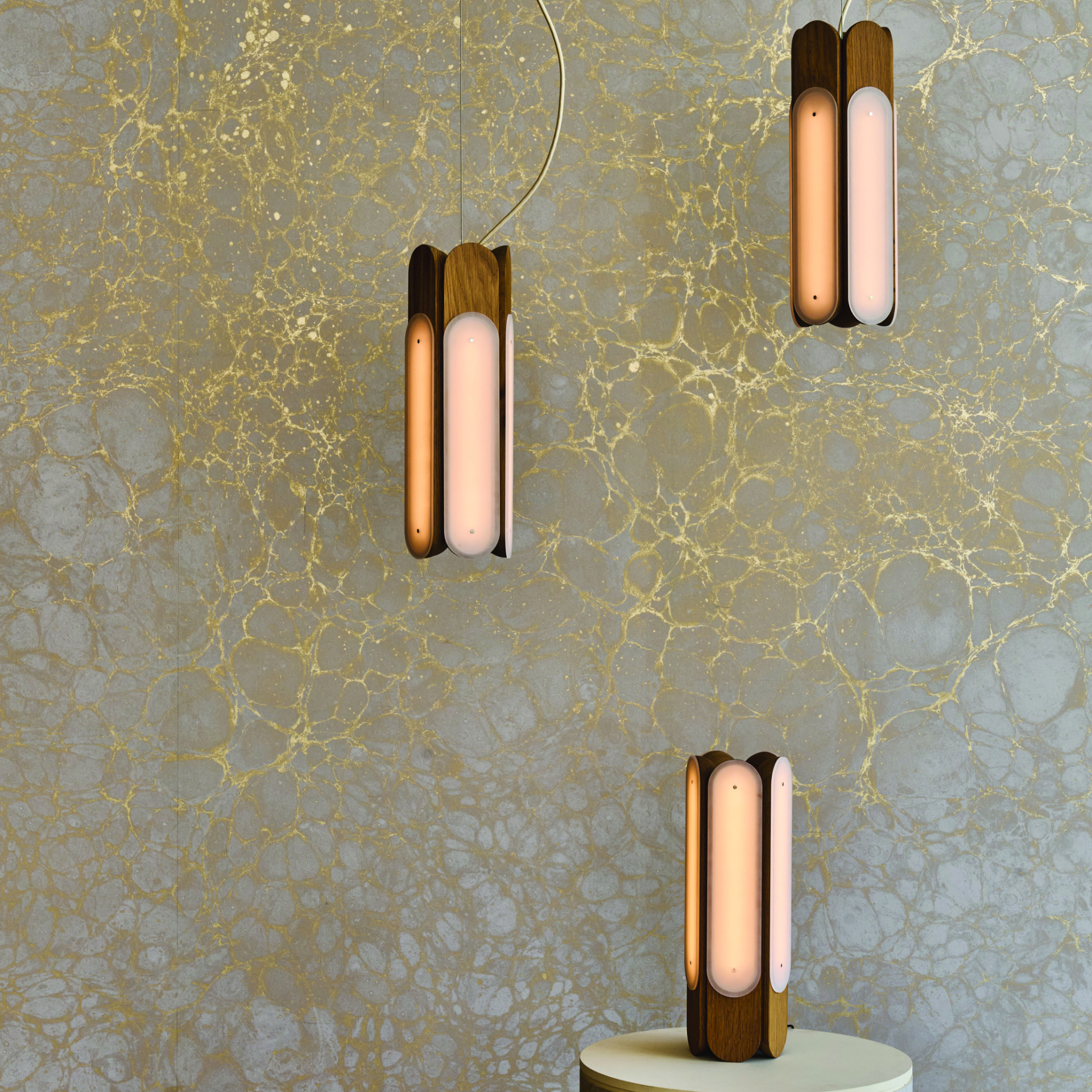
The Beaufort family spans a sconce, a horizontal pendant with mirrored components that cast light both upward and downward, and a series of R5 variants including a horizontal pendant, a vertical pendant that reads like a lantern, and a table lamp.
“What ties the family together is the quality of light,” Jonathan says. “It’s soft, layered, and moves gently through the form, which works in almost any interior that values atmosphere over brightness.
“We’re living in a moment where there’s a lot of maximalism and novelty for its own sake,” Jonathan says. “The Beaufort is calm. It’s considered. It gets more interesting the longer you look at it.”