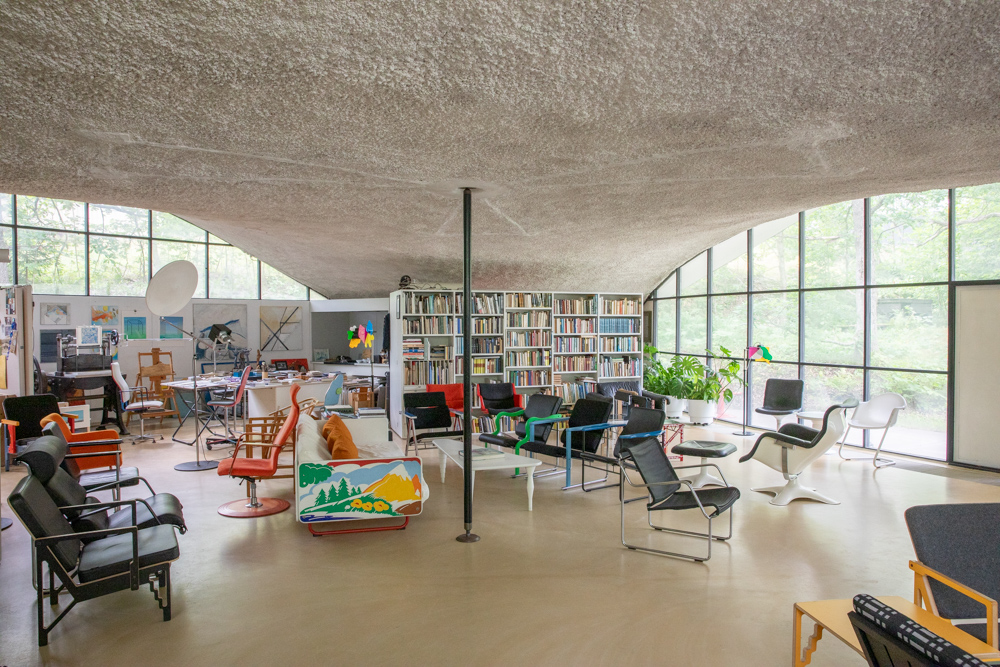
Studio Kukkapuro has been the home and creative workspace of iconic Finnish designer Yrjö Kukkapuro since the 1960s. Nestled in a private grove in Kauniainen, Finland, the studio’s eclectic furnishings and mid-century architecture invite visitors into the designer’s unique world. Bold pop art hues and geometric forms reflect his decades-spanning design ethos—one where imagination and experimentation are never sacrificed for practicality.
-
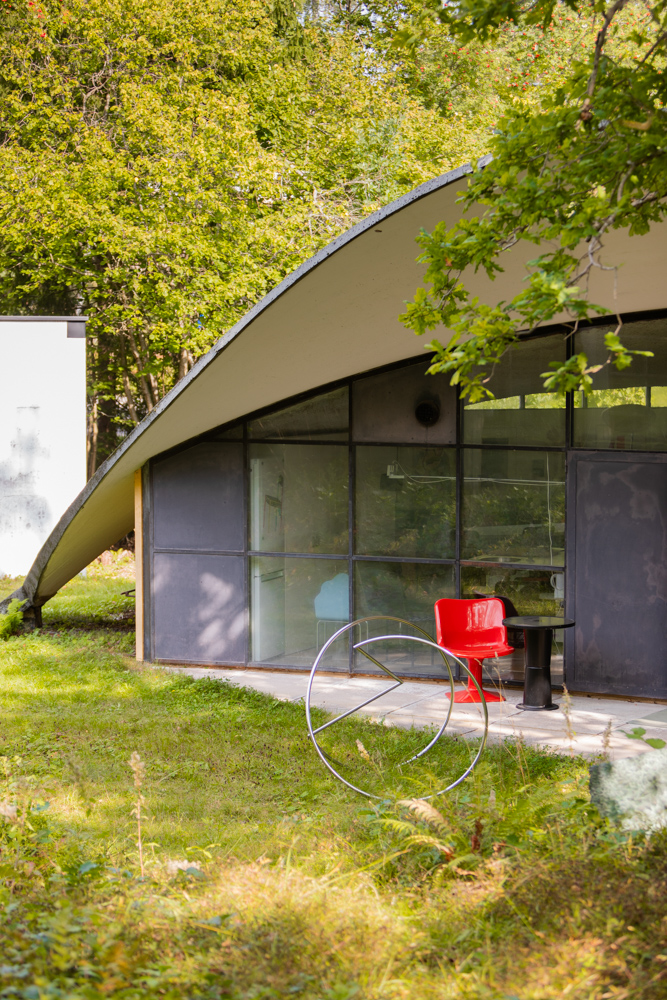
- With nature palpably close in the studio, the atmosphere shifts with the changing seasons. One of the walls is made entirely of thermal glass. Located in a private grove in Kauniainen, the studio was designed by Yrjö and engineer Eero Paloheimo.
-
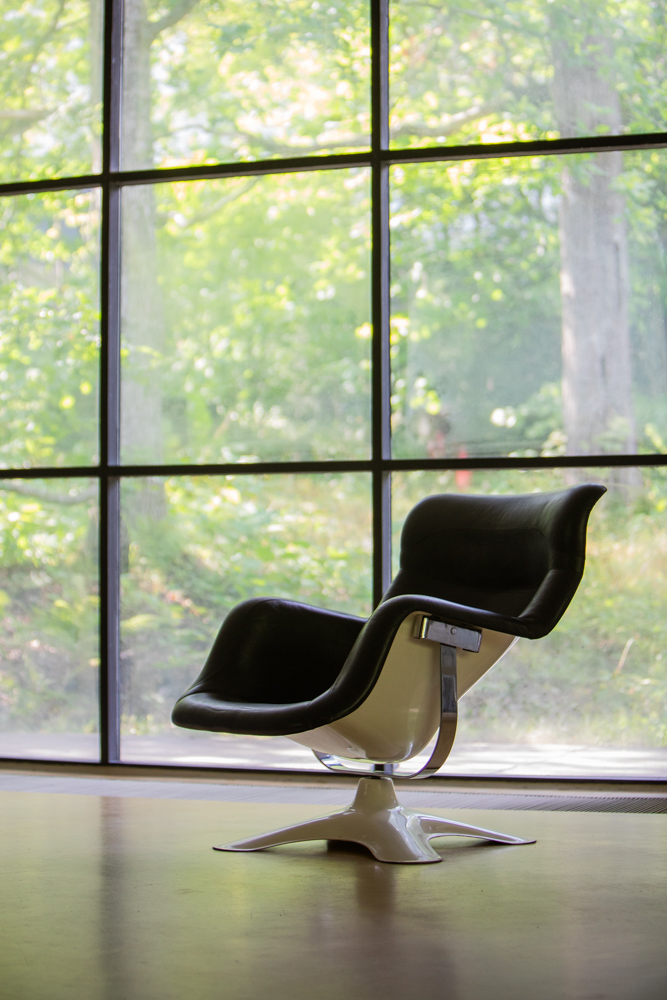
- The Karuselli lounge chair showcases Yrjö’s interest in function, ergonomics, and organic form. The Karuselli (meaning “carousel” in Finnish) got its name when, at the Kukkapuros’ home, his daughter Isa spun in the chair with a squeal of delight: “This is a real merry-go-round!”
-
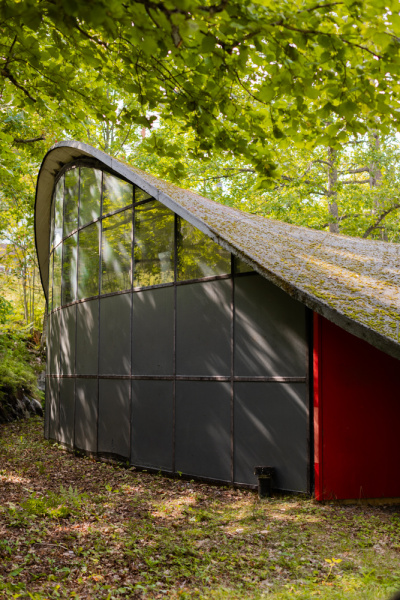
- Studio Kukkapuro’s roof is a single structure made of poured concrete. The walls do not support anything.
-
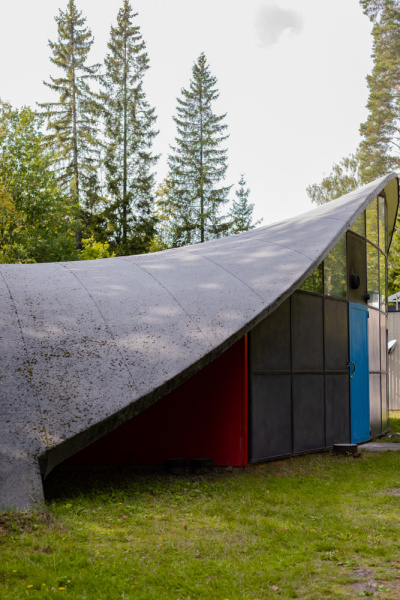
- All of the structural solutions in the studio were shaped by an ultra-modern faith in the future. The materials were experimental, and the solutions for the living space unusual.
-
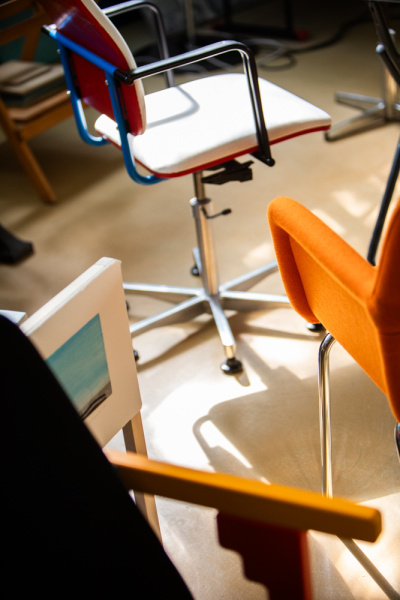
- The studio environment embodies the megatrends of the 1960s. For Yrjö it meant an ascetic and modern approach to work. The Sirkus office chair, 1984, is visible in the upper half of the photo. A glimpse of orange upholstered Moderno chair, designed in 1956, is on the right.
-
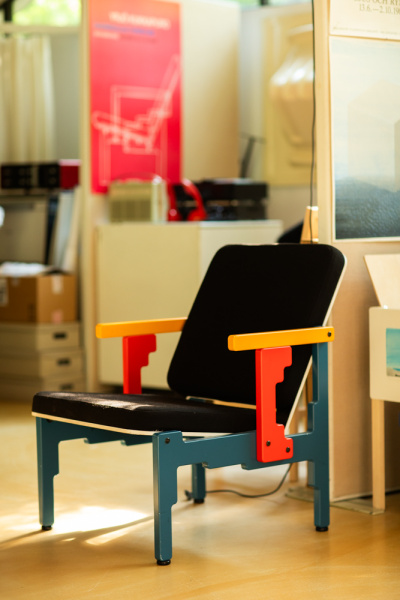
- The Color Elements chair prototype in red, yellow, and blue.
-
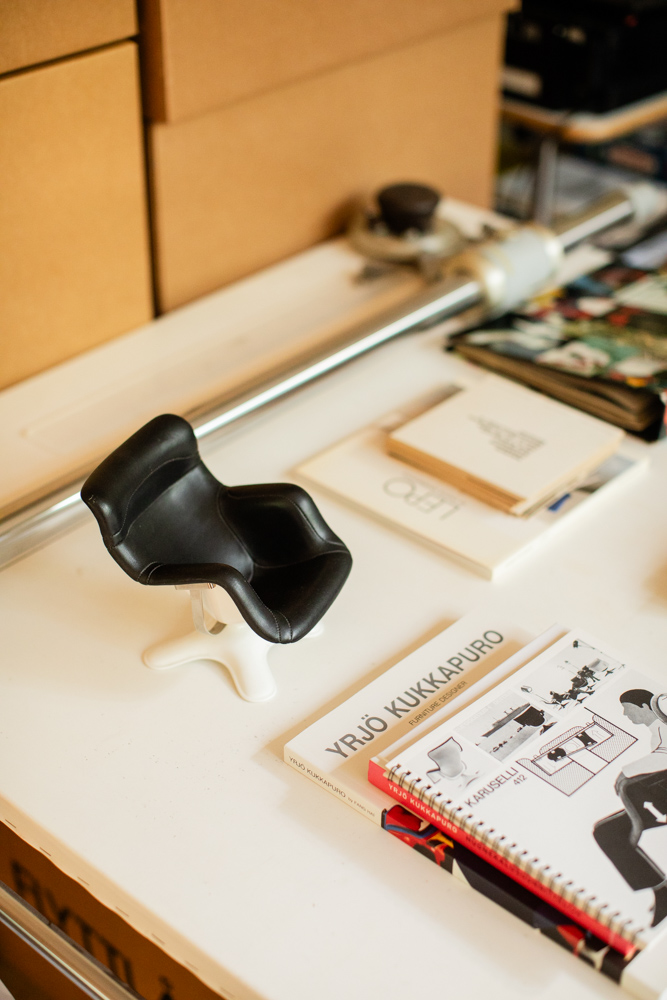
- A scale model of Yrjö’s Karuselli lounge chair sits on a desk in the studio. The chair was designed to provide the most relaxed sitting position possible. Yrjö spent several years sculpting the chair, wrapping himself in chicken wire and making a plaster cast of his body in a lounging posture in order to achieve the perfect dimensions. When the chair’s form was realized in 1964, it became an immediate international success.
-
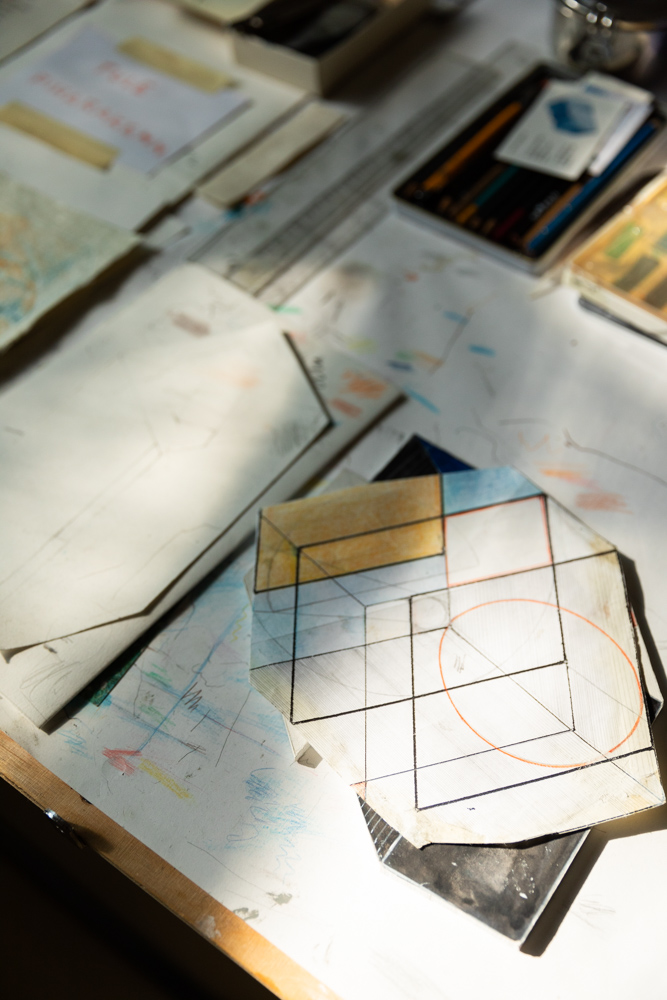
- Yrjö often drew inspiration from his own designs, revisiting themes and exploring variations over time.
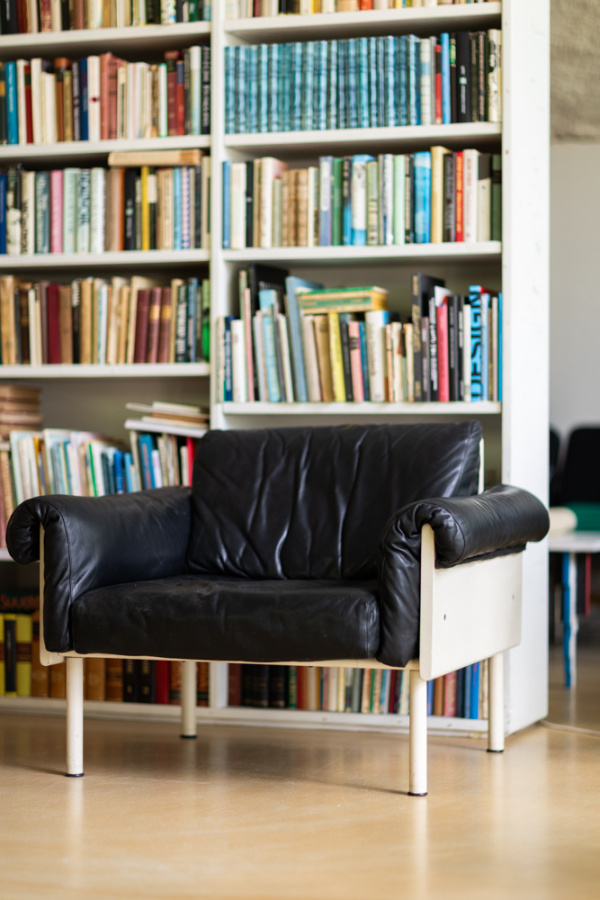
His 1964 Ateljee lounge chair was developed with the intention to translate the structure of a steel bed into a chair. It remains one of his best-known works and has been added to the collections of both the Victoria & Albert Museum in London and MoMA in New York. The series is still produced in Finland today.
-
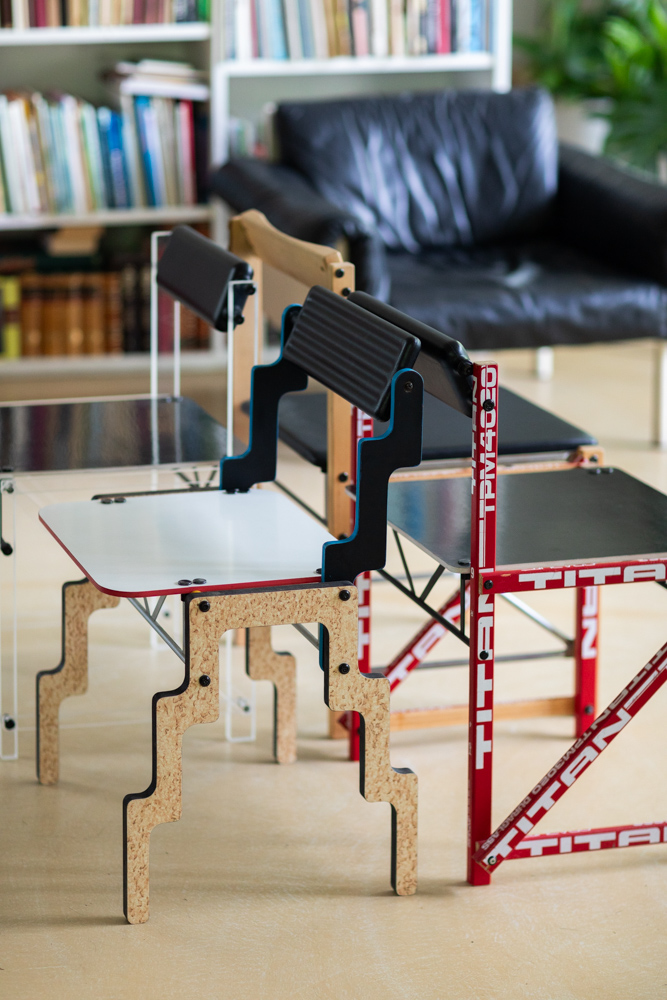
- Yrjö’s Nelonen Curly Birch Telescope Foot chair (left) and Nelonen Titan chair (right). The Titan was made with ice hockey sticks in the 1990s.
-
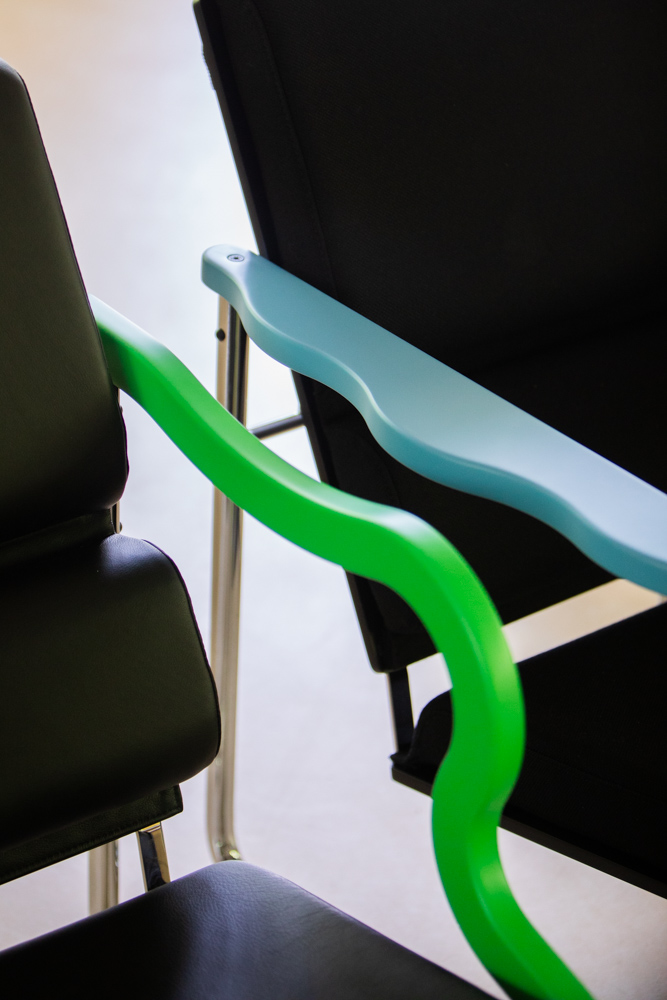
- A colorful, postmodern chair collection called Experiment. This design, considered avant-garde when first launched in 1984, marked a distinct shift in Yrjö’s direction—and that of the world—toward an optimistic postmodern future. Swedish furniture manufacturer Hem reintroduced the iconic chair last year.
-
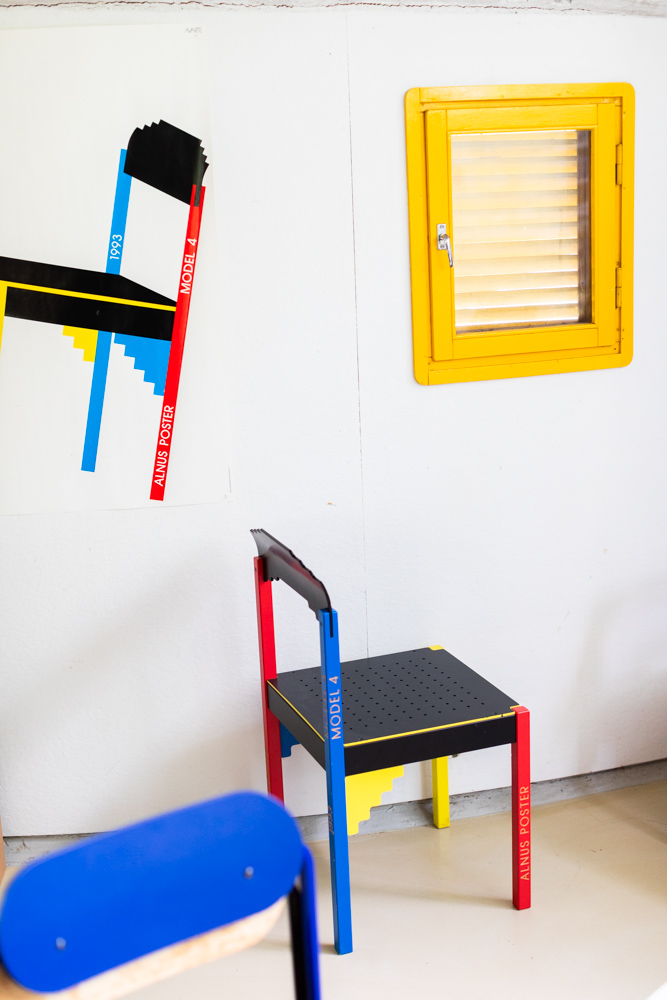
- Graphic designer Tapani Aartomaa created the Alnus Poster for a joint exhibition with Yrjö in 1993. Yrjö made the model based on the poster design.
-
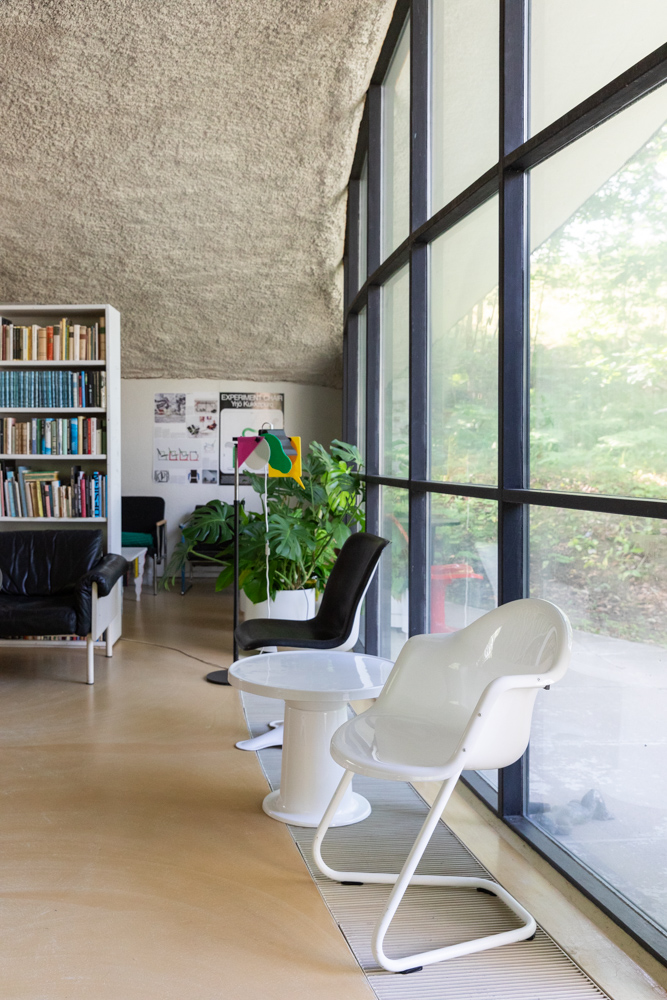
- Yrjö’s designs sit along the studio windows: White Piling plastic chair i419, in production 1968-76; Saturnus coffee table, 1965, still in production; small B&W rotating chair 415, 1965-78
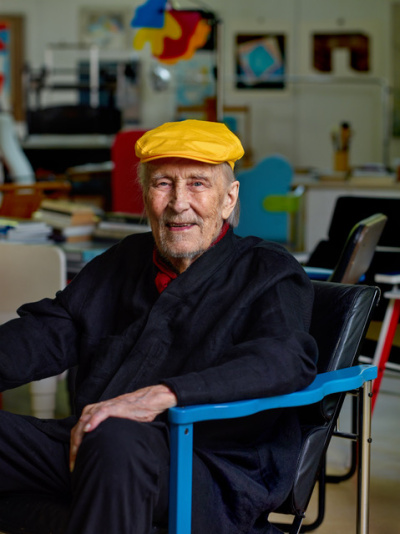
Yrjö, whose passion, hobby, and purpose has been his life’s work, could not imagine working anywhere else. With future accessibility needs in mind, his residential space and studio are all on one level. A new project could be at his fingertips; all he has to do is cross the yard and step into the studio. Photo by Ofer Amir
A version of this article originally appeared in Sixtysix Issue 13.