In Stockholm, designer Sara Erichsen Susnjar stood beside a wall of swatches and wood veneers and began talking about the EX60 the way an interior designer might talk about a room. Sara, a Senior Color and Material Design Manager at Volvo Cars, has been with the company for nearly 20 years. Her vocabulary is less about horsepower than it is about tactility, restraint, and the way a surface reads in her native Nordic light. She also pays attention to the world around the studio, including fashion and furniture citing Acne Studios, Bottega Veneta, Patagonia, and the Swedish outdoor brand Houdini as sources of inspiration.
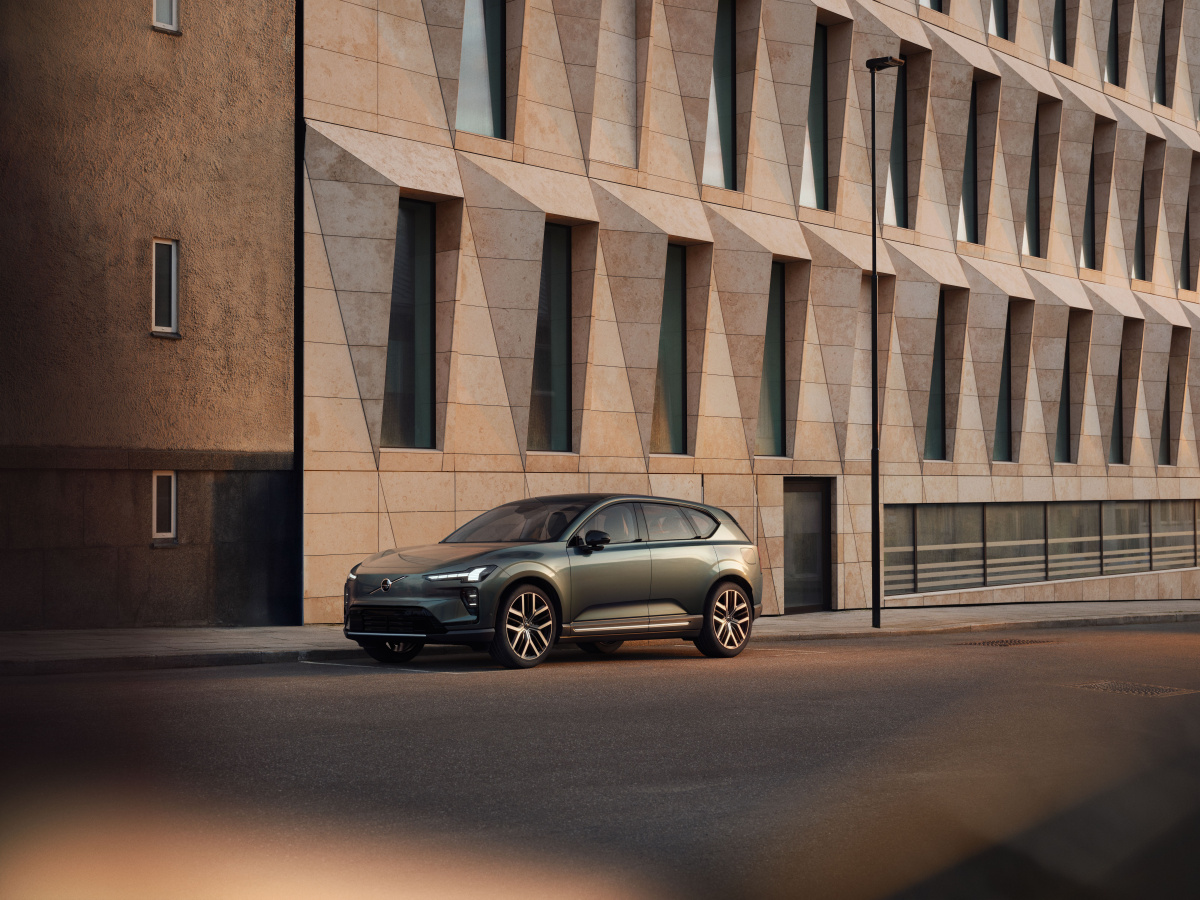
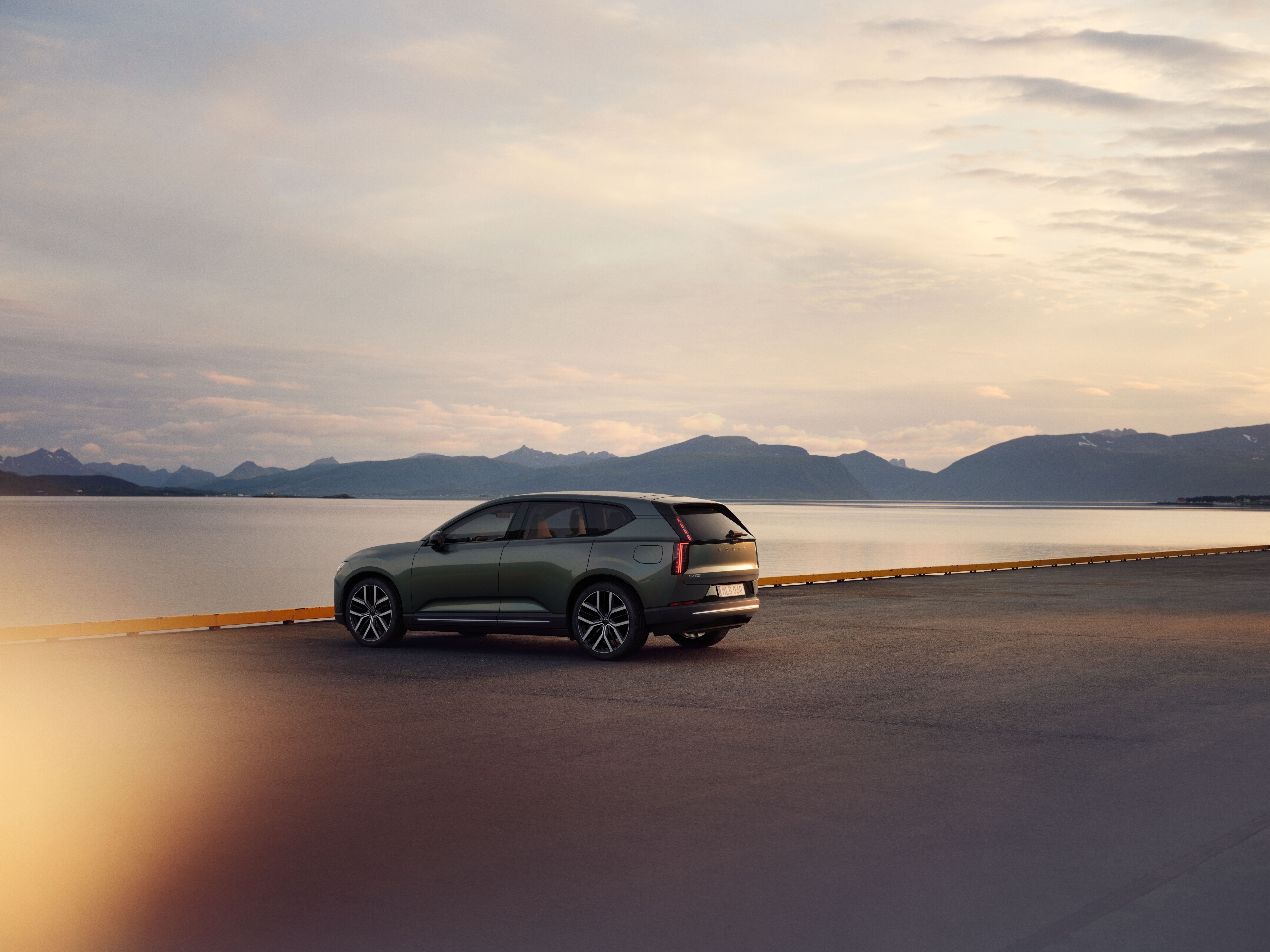
Volvo’s new fully electric EX60, built on the SPA3 platform, debuts with a software-first setup designed for over-the-air updates, a new battery architecture, and an aerodynamic shape aimed at maximizing range and cabin space.
For Sara, the project began five years ago with a brief that was unusually expansive. “It was a ‘do everything’ car,” she said. “It was the new XC60. We had big shoes to fill.” But there was a second layer to that assignment, “It was also a new design language for the electric era with very high demands on sustainability.” That is the tension Volvo is trying to resolve in the EX60: a vehicle designed to be led by computing and electricity while still feeling anchored in the brand’s Swedish history.
Revealed just last week, the EX60 is built on SPA3, Volvo’s new electric vehicle architecture, and powered by HuginCore, the company’s core system meant to support a software defined car that can improve via over-the-air updates. Volvo says the new platform uses cell-to-body technology, next generation in house e-motors, a new battery cell design, and something called “mega casting” to improve efficiency and reduce weight, with packaging advantages that can translate into a more spacious interior.
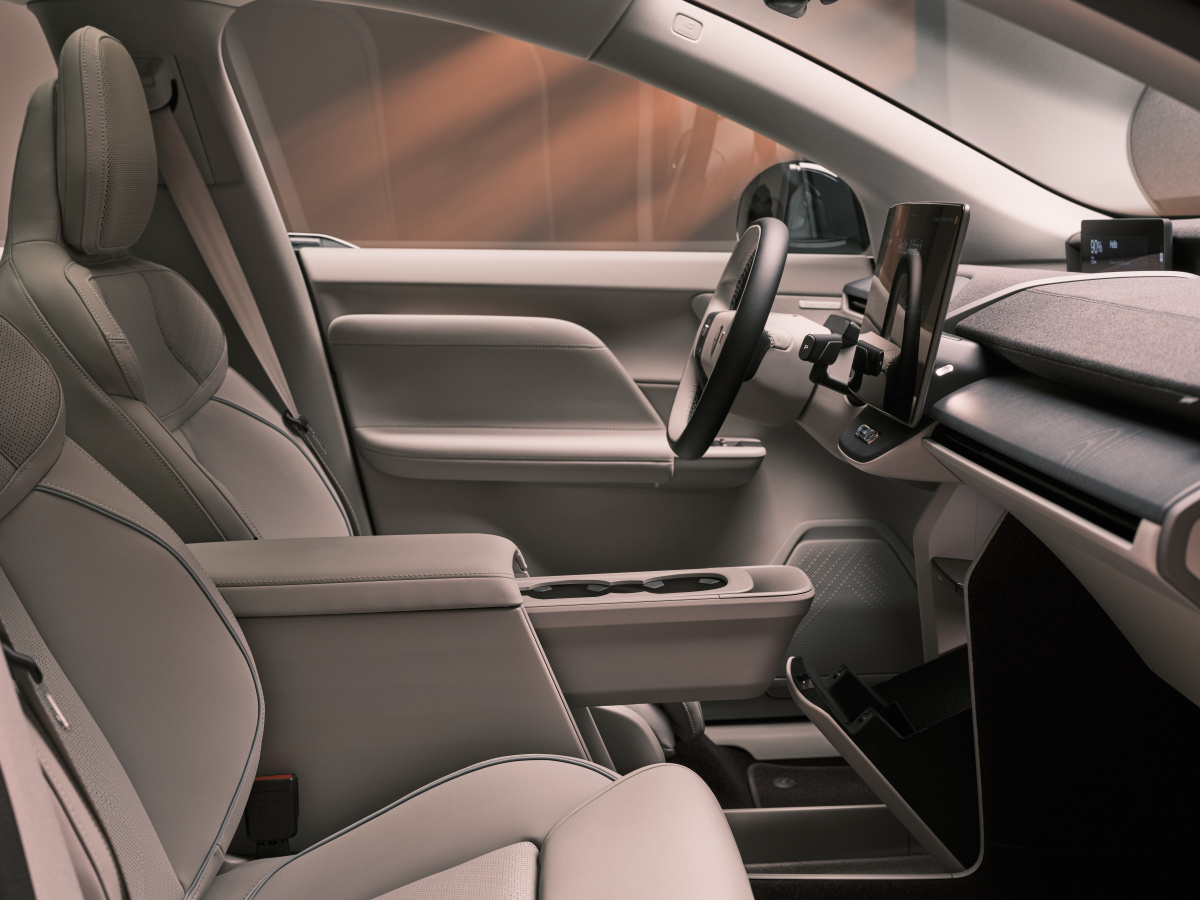
Inside, the EX60 reads like a pared back Scandinavian room: natural wood, quiet contrast, and upholstery textures developed with sustainability in mind, including subtle patterns inspired by materials collected in the forest outside Volvo’s design studio.
Volvo’s public messaging about the EX60 is explicitly technology forward. The company says the EX60 will be the first vehicle to feature Google’s Gemini AI assistant, running on Android Automotive OS and built around a computing stack that Volvo describes as “human centric technology,” combining in house development with partnerships.
What stood out was how carefully Volvo tried to make all that technology feel familiar. When the company unveiled the car to a packed room of journalists in a high production reveal, the backdrop was notably a serene (presumably Swedish) oceanside view. Volvo’s CEO Håkan Samuelsson made the point plainly: even as Volvo goes all electric, the cars have to “remove all obstacles for going electric.”

Volvo CEO Håkan Samuelsson speaks at the EX60 reveal in Stockholm, framing the new SUV as part of a push to “remove all obstacles for going electric.”
When I sat inside the car, it felt less like a giant computer and more like a sleek living room. Sara shared how important bringing nature, not tech, to the surface was fundamental in the design. “During COVID, we went to the forest outside our design studio and picked materials. We picked moss, we picked stones, we picked mushrooms. On the backside of the seats, there is a very subtle pattern that was inspired by a specific stone we found in that forest.” It is an almost literal translation of place into product, and it is also a way of keeping Swedish landscape inside a car that is otherwise defined by software.
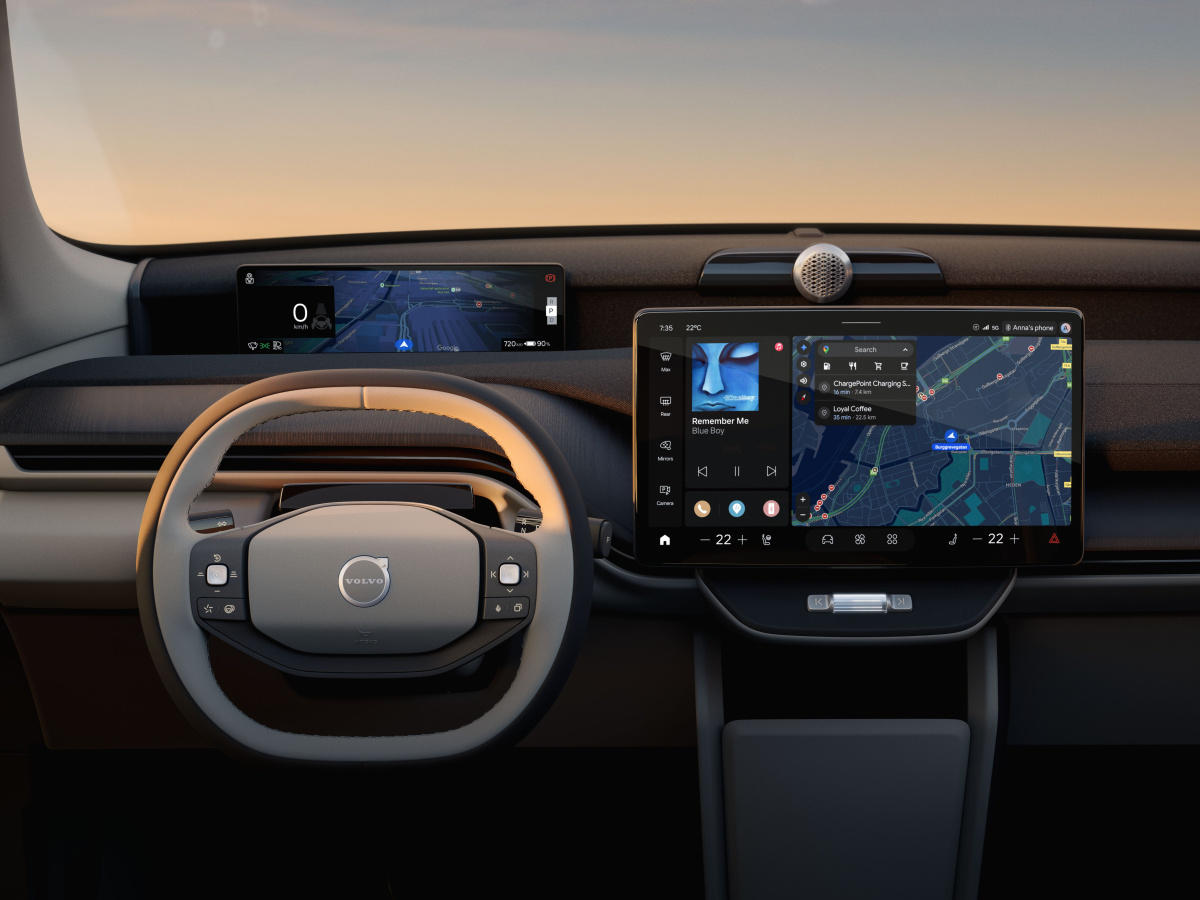
The EX60’s dash centers on a clean, tablet-style display and Google built in tech. The overall effect is closer to a calm living room than a rolling device, with pared back surfaces, warm materials, and a layout that keeps the cabin from feeling like a giant computer.
In one of the lighter interior expressions, she leaned into a classic Scandinavian idea: calm as a stage set for texture. She pointed to a new seat perforation pattern for ventilation that turns a functional detail into a graphic element. The pattern, she said, was “inspired from Skagen, Denmark where they have two seas that meet,” describing “this super geometric pepper when the waves” come together, and adding that the motif appears in other areas of the car as well. Even the wood is treated as something to reveal rather than paint over. “We try to get the wood grain to shine through.”
In a market where the future is often framed as faster screens and bigger numbers, Volvo is trying to define something quieter, an electric SUV that updates like a device, yet still feels like it came from a forest outside Gothenburg.