For the Swedish electronic music trio Swedish House Mafia, the question has never been “How big can we go?” but rather, “How do we make it feel different?” After 20 years of touring, the trio is now chasing something more elusive than sold-out stadiums: that initial spark of discovery that first drew them to electronic music.
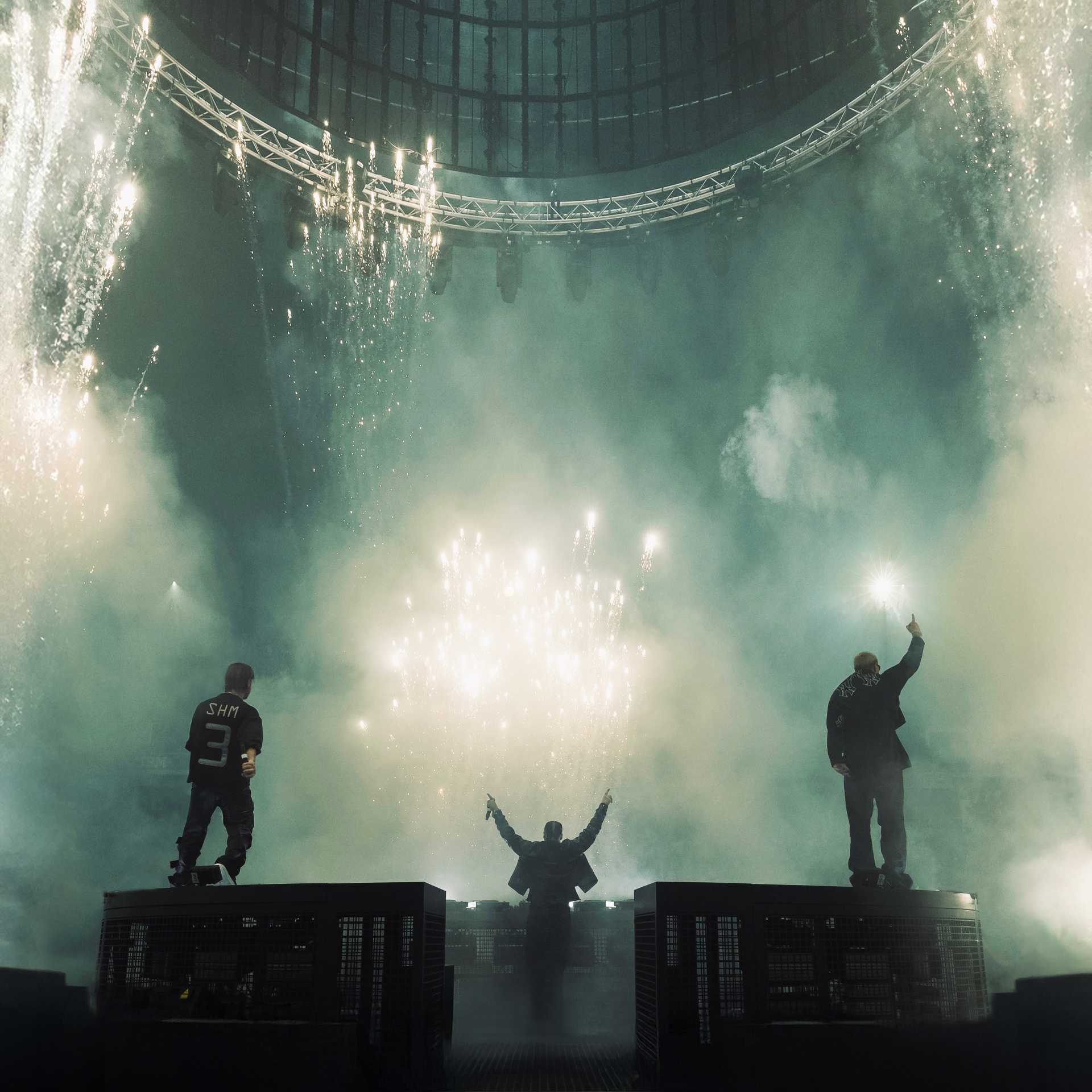
When the group’s Steve Angello saw an aerial photograph of Mexico City’s Plaza de Toros, the largest bullring in the world, something clicked. The venue’s circular geometry became the blueprint for a fully immersive 360-degree stage placing members Axwell, Steve, and Sebastian Ingrosso at the center of the arena, surrounded on all sides by their audience. After becoming the first electronic act to headline Arthur Ashe Stadium last month, the group has been systematically rethinking what a dance music performance can be.
I sat down with Steve to talk about the creative process behind the Mexico City show, the group’s collaboration with visual designer Alexander Wessely, and the financial gambles they’ve taken to push production forward.
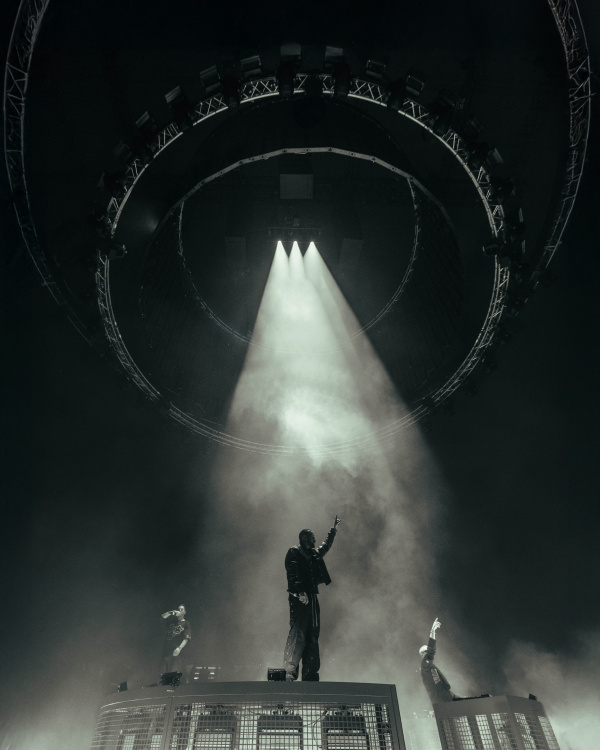
Swedish House Mafia flips the typical lighting approach. Their brightest, most illuminated moments happen during the darkest, most introspective songs. Photo of Steve Angello by Henry Hwu
When you look back at the beginning of Swedish House Mafia’s career, the live performances looked much different than they do today. What was it like doing an electronic music gig back then versus now?
At the very beginning, most artists start out in a production warehouse somewhere in a port, and there’s nothing there. It’s raw and stripped down.
We were trailblazers in opening up arenas and stadiums for dance acts, but that came with a price. Back then you had to overdo it for people to understand the concept in a very commercial venue. We were introducing electronic music to spaces that weren’t built for it. We had to see it from an entertainment perspective and create a show that works for everyone in that room.
Then all of a sudden, we were playing for three generations of people because they come with their parents and their kids. Now it’s coming back to the basics, the skeleton, the core of architecture. We’re reembracing the architectural environment.
We get bored as well, doing 200 shows a year for 20 years. When you’re on that circuit for that long, you need to find ways to keep it fresh. So we ask ourselves: How do we take on something that isn’t just lights on us in a cubicle? How do we embrace the ceiling or the seats? How do we make it an immersive experience for everybody?
That’s been our goal in recent years. We choose venues based on what they look like, not just by capacity or production capabilities. We try to create an environment and a vibe and an energy, and then think about how this reflects on the brand. How do people get there? How do we communicate this? What’s everything going to feel and look like? Every detail matters.
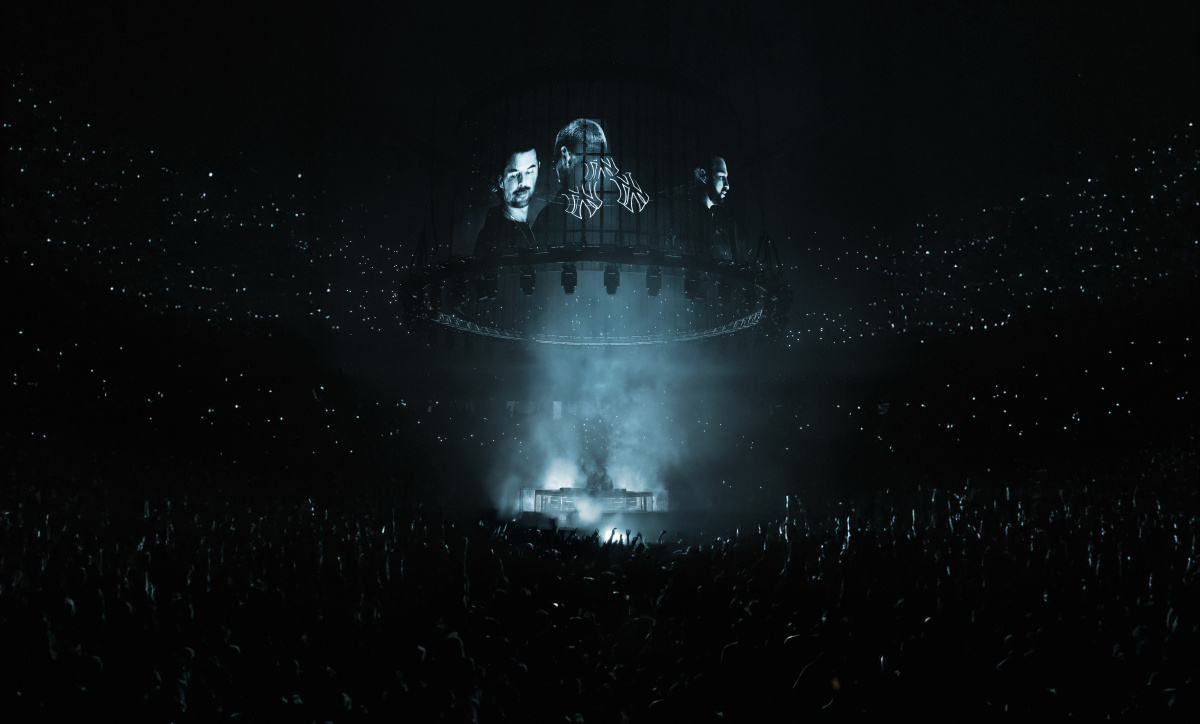
“All of a sudden you look around and there are people surrounding you everywhere,” Steve says. “The rush you get from it is incredible.” Photo by Jason Martinez
What made the group want to take the visual aspect up a notch?
That shift happened over the last couple of tours. We’ve always approached our shows from a consumer perspective. I constantly ask myself, “Would I buy a ticket to see this?” If we want to create a rave experience, how do we make an arena or stadium feel like a rave? How do you translate that intimate club energy into a massive space?
That’s been the core challenge. We build out concepts and challenge everything together in a room. We’re brutal with each other in the best way. Then we search for that sweet spot where we all agree it feels like something we would actually attend ourselves. That approach was solidified a couple of tours ago, and it’s become a constant obsession. We’re always pushing boundaries and asking what we can do that we haven’t done before.
A couple of tours ago, we were losing money on every show because of production costs. The expenses were insane. We’d compensate for it by doing corporate gigs or booking festival slots to make up the difference. But for us, it’s essential to walk off stage feeling like we accomplished something meaningful, not just “I showed up, played a set, made some money, and left.”
We challenge ourselves at every festival. Even at places like Tomorrowland where the production is already incredible, we’re constantly asking how we can make a difference. The organizers will say, “What are you talking about? This is already next level.” But we keep pushing.
I don’t know if it comes with age or just being so exposed to everything, but we’re always searching for what we haven’t seen yet. When you’ve experienced everything, you start hunting for the undiscovered.
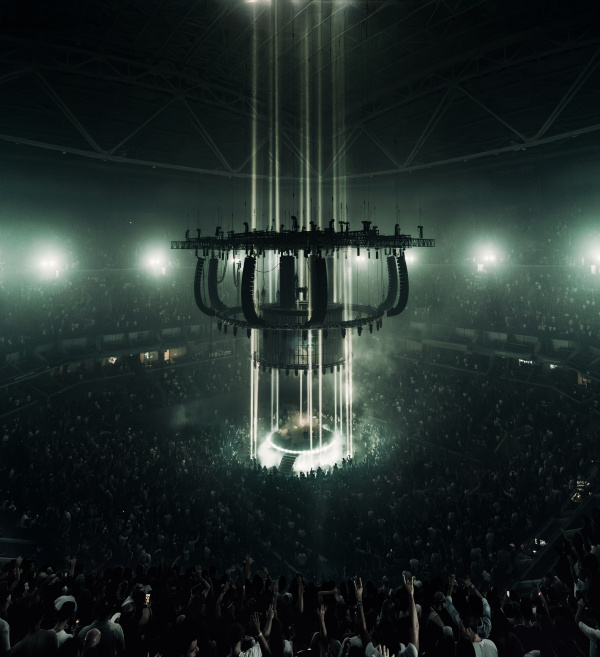
“We always keep pushing. How do we elevate the color palettes? How do we use smoke and lasers differently? How do we make our set distinctive? I don’t know if it comes with age or just being so exposed to everything, but we’re always searching for what we haven’t seen yet.” Photo by Clément Protin
The landscape of electronic music has changed a lot over the years too. Is there anything that you see moving into this new era as a non-negotiable for you, things that define the performance?
For us, it has to be the way we want to do it. We don’t compromise on the vision. Luckily we’ve been successful, so we have means to come up with ideas and concepts that are not traditional. On our last tour, we built this massive sculptural concrete ring that hung above us. We removed all the screens as well so the ring became the visual focus.
Moving forward, we just take an empty space and do everything ourselves because that’s the way it works for us. We have full creative control. Playing festivals is different because you have to adapt to what’s there. But when it comes to our own venues, our own shows, we just go in with our team and redo the whole venue.
Walk me through what sparked the 360-degree concept at Plaza de Toros.
It started when they sent me a picture of the Plaza de Toros venue. I looked at it from an aerial view and immediately thought, “that’s nuts, we have to do that.” The team flew to Mexico to see the venue and experience the architecture firsthand.
From the outside the venue had this incredibly brutalist quality, almost like Soviet architecture. That aerial view stayed imprinted in my mind. The question became: how do we make this immersive for people in every direction around us, not just the people directly in front of a stage?
We ended up building the stage in the center of the venue with a 360-degree configuration, and designed the lighting and screens specifically for that setup. I was really particular about the screens being see-through because I wanted people on one side to be able to see the audience on the other side.
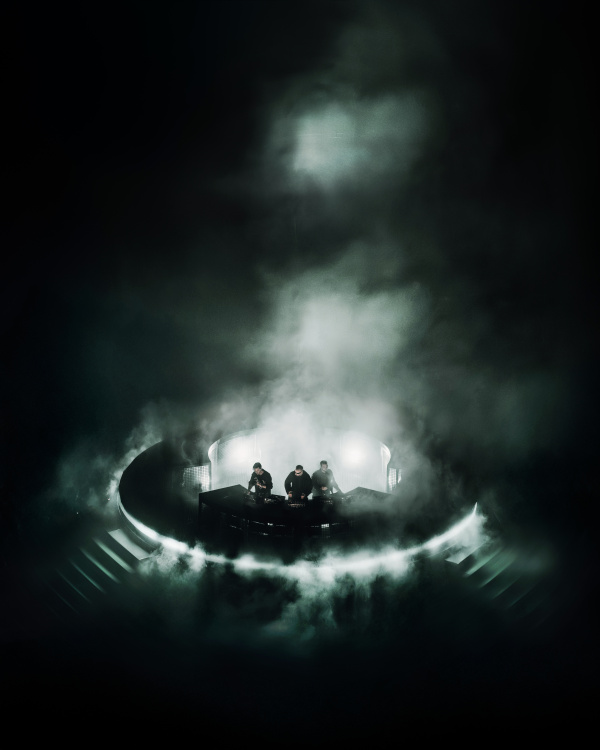
“This whole concept was brand new for us, and it was scary at first. It’s a completely different way of performing where all three of us are facing different directions. We come together and move around the stage, but from an energy standpoint, it’s wild. All of a sudden you look around and there are people surrounding you everywhere.” Photo by Clément Protin
This whole concept was brand new for us, and it was scary at first. It’s a completely different way of performing where all three of us are facing different directions. We come together and move around the stage, but from an energy standpoint, it’s wild. All of a sudden you look around and there are people surrounding you everywhere. The rush you get from it is incredible, and the energy is unlike anything else. You can actually see people and watch the way they interact with each other across the venue.
Sometimes it’s hard to find new ways of performing that feel fresh and exciting, but this format is special. You feel the energy, passion, and love from every angle. It ended up being one of the best shows we’ve ever done. There are always challenges when you’re working with local crews to build complex structures like this, but we had an amazing time. Everything went smoothly and the energy was just crazy.
You worked with Alexander Wessley on the visuals for this. I’m curious what that creative process actually looks like when you all get in a room together?
When we’re developing a stage show with Alex, we often start by meeting and throwing out ideas without any limitations in mind—no financial constraints, no dos and don’ts, no weight restrictions, nothing. We just go off on a brainstorming spree. We pitch craziest things you can imagine, things that are impossible to do, and then we cook it down. We strip it back to see the core of the architecture and go back and forth.
Then we bring everything to the production team. They go through our ideas and flag all the problems: safety issues, weight restrictions, things that are physically impossible or way too expensive. Then we all gather in one room—the group, Alex, the creative team, and the production team. We sit there for hours, debating and problem-solving together. Should the fire be here or there? Can we angle the lasers differently? What if we scaled this down? We challenge every placement, every effect, every element until we work out the basic architecture of the show.
At the end of the day, it’s kind of a small team running the whole show.
Were there any off-the-wall suggestions being tossed around in the early stages?
When we all get going in those brainstorming sessions, there aren’t enough LED walls in the world to cover all our discussions and ideas. We talk about the most excessive, over-the-top concepts you can imagine. Massive structures, endless screens, effects everywhere. Then we swing completely in the opposite direction and talk about something even crazier, which is using nothing at all. We go from maximal to absolute zero in a matter of minutes.
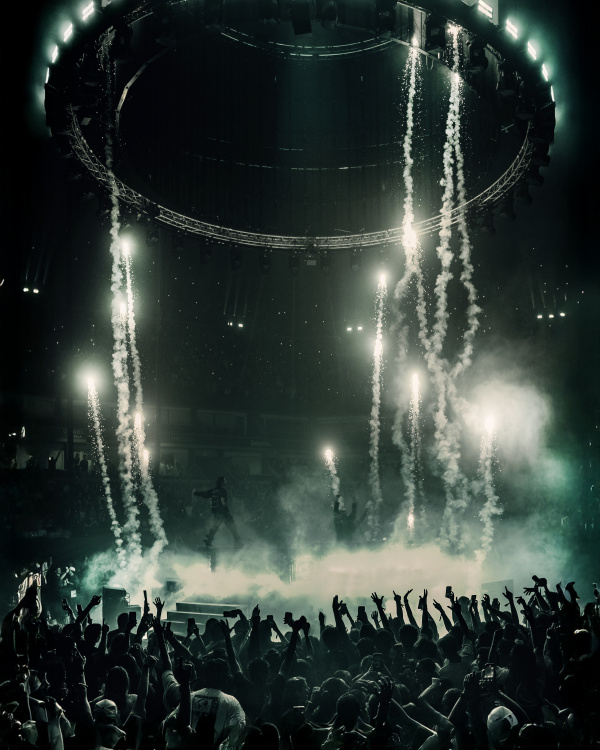
“We start by mapping out the big moments within a set, the peaks that we know will really excite people. Then we figure out how to use the technology at our disposal to enhance those specific moments.” Photo by Clément Protin
We’ll be deep into planning some elaborate production with every bell and whistle imaginable, and then someone will throw out something like, “What if we just put a table in the sand in the middle of the stadium and that’s it? Nothing else.” Just us, a simple setup, and the audience. We go back and forth through these extreme ideas all the time.
The lighting in your shows often seems so intentional. How do you actually build a storytelling arc through lighting during a set?
The first thing we actually work on is the quiet moments in the show. Those pauses where people can catch their breath and take everything in. Those are usually the most visually striking moments for us. We deliberately flip the typical approach. Instead of going dark during calm songs and bright during high-energy moments, we do the opposite. We want the audience to really see us, to feel our presence up close, to feel like they’re part of what’s happening on stage. So our brightest, most illuminated moments are actually during the darkest, most introspective songs.
We have key songs where we already have a clear vision of what they should look and feel like. Those become our anchor points. Then we work backwards from there. How do we build toward that moment? How do we transition from a quiet, intimate scene to a massive, euphoric explosion? What does that journey look like visually? It’s really dramatic and intentional.
We literally sit down with a piece of paper and map it out like we’re writing a story. But instead of using words, we’re telling the story through the energy and movement of the lights.
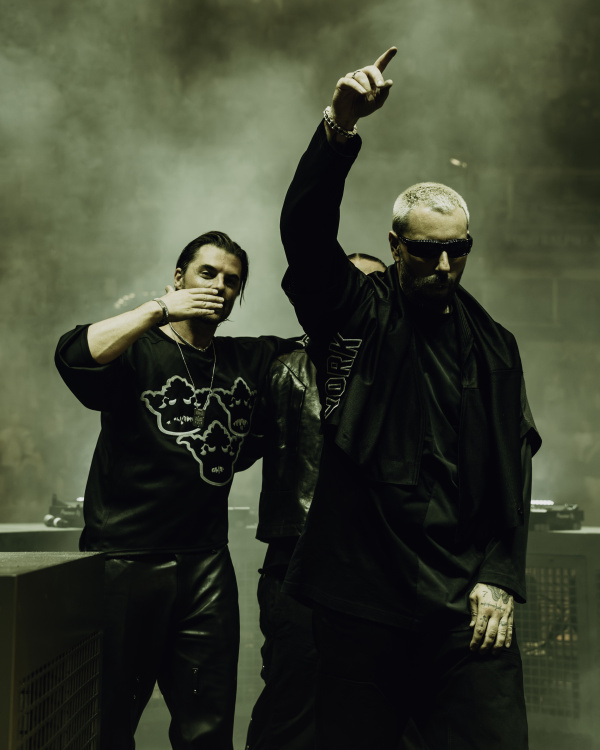
“I’ve been one of the lucky few people in history who has actually accomplished their dreams, even just the fundamental one of making a living creating music. That was a massive milestone in my life.” Photo by Clément Protin
You’re using all this technology in your live shows, but at the core, you’re still trying to capture that sweaty, intimate “club” feeling. How do you balance those two things?
I think we try to strike a balance by pushing things forward and still staying true to the “less is more” principle. That’s been the key ingredient to everything we do. The goal is to use as little as possible and still make it look incredible. It’s the same approach we take with the music itself. You’re constantly trying to find that balance, building carefully and taking people on a journey without overwhelming them.
We start by mapping out the big moments within a set, the peaks that we know will really excite people. Then we figure out how to use the technology at our disposal to enhance those specific moments—the screens, the special cameras, the effects. Everything is designed as a bespoke moment for a specific purpose. We don’t believe in just plugging things in and letting them run.
What’s next for Swedish House Mafia? Are you planning to take this 360-degree setup to other cities?
The next 360-degree show we announced is in Sweden next year. It’s the biggest stadium in all of Scandinavia, and we’re doing a couple nights there, which is going to be absolutely crazy. We’re talking about 70,000 to 80,000 people per night.
We have other shows lined up and a lot of dates we haven’t announced yet that we’ll reveal soon, but I can’t talk about those right now. What I can say is that we’re actively hunting down the most unique venues we can find whether it’s the materials they’re made of, the way they’re positioned, or the architecture itself. The Mexico venue had that brutal concrete aesthetic, those perfectly circular stadium walls. Sweden will have its own character. We’ve been really pushing to find the craziest possible locations we could perform in. Maybe it’s a historic piazza somewhere in Italy that can fit 50,000 people. Maybe it’s something else entirely that nobody’s thought of yet.
When someone walks out of one of these shows, what’s the thing you hope sticks with them?
It’s about the immersive energy of being in the show. That’s a key element for us. I want everybody in the stadium to feel like if you have the worst seat in the house, it’s actually the best seat in the house because you can still see the whole show.
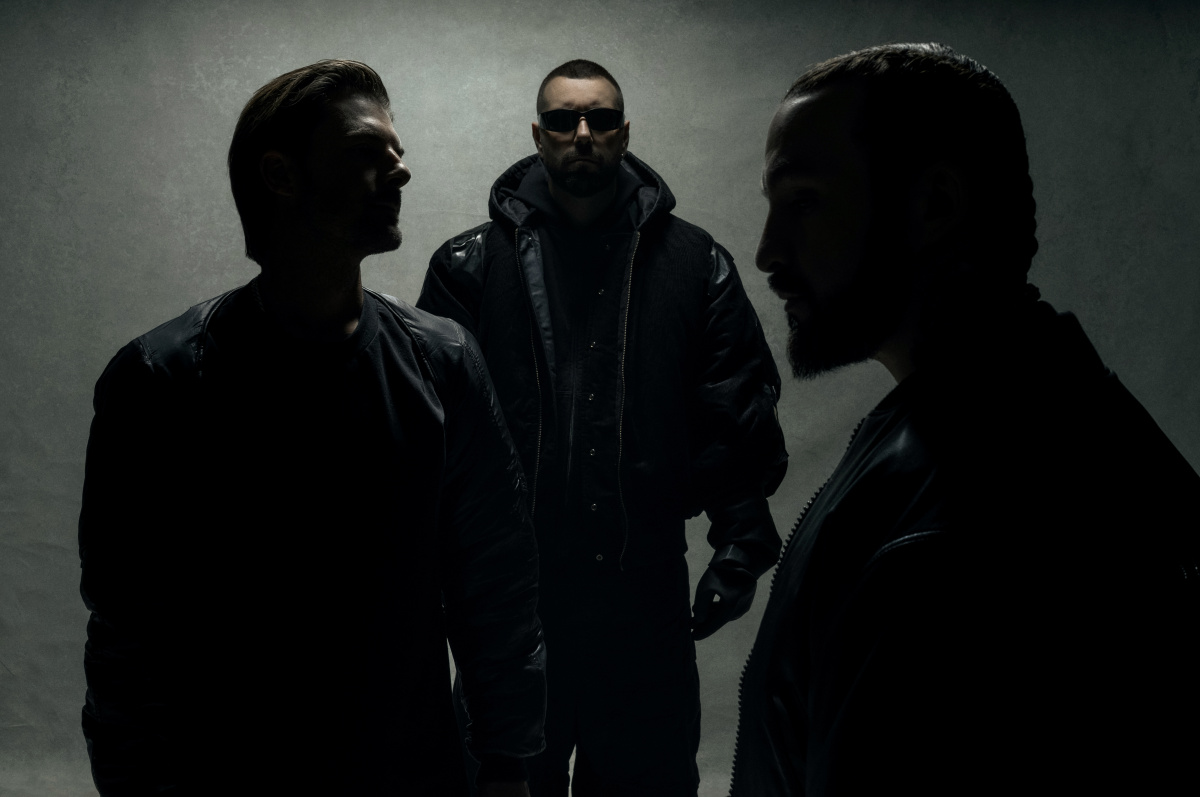
“We’re always pushing boundaries, always asking what we can do that we haven’t done before.”
Is there anything you’re still dreaming about doing artistically?
The dreams change all the time. They have to. I’ve been one of the lucky few people in history who has actually accomplished their dreams, even just the fundamental one of making a living creating music. That was a massive milestone in my life. Just being able to look around and think, “Oh wow, I can actually eat and pay my bills doing this.” When you step back and think about how far we’ve come and all the things we’ve accomplished throughout the years, it’s surreal.
I still think that at some point in Stockholm, we should do a free party and invite the whole country. Just do something absolutely nuts with millions and millions of people. It would be the craziest thing ever. We’ve already played all the major stadiums here in Sweden, but this would be different. This would probably be the ultimate finale. How do you even fit two million people onto a field in Sweden? That I can’t wait for.