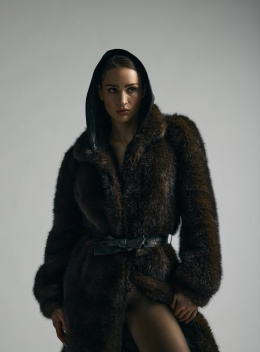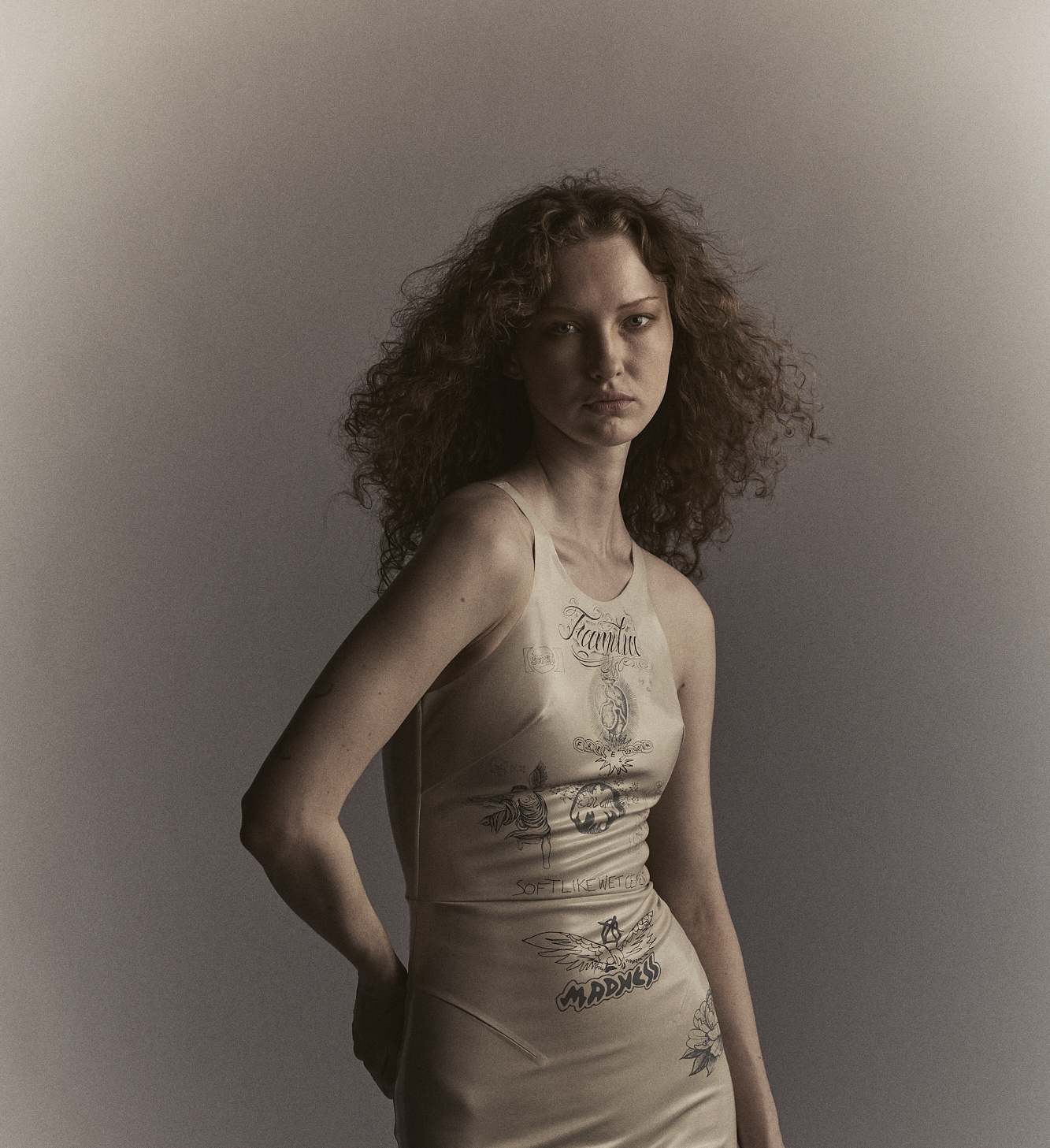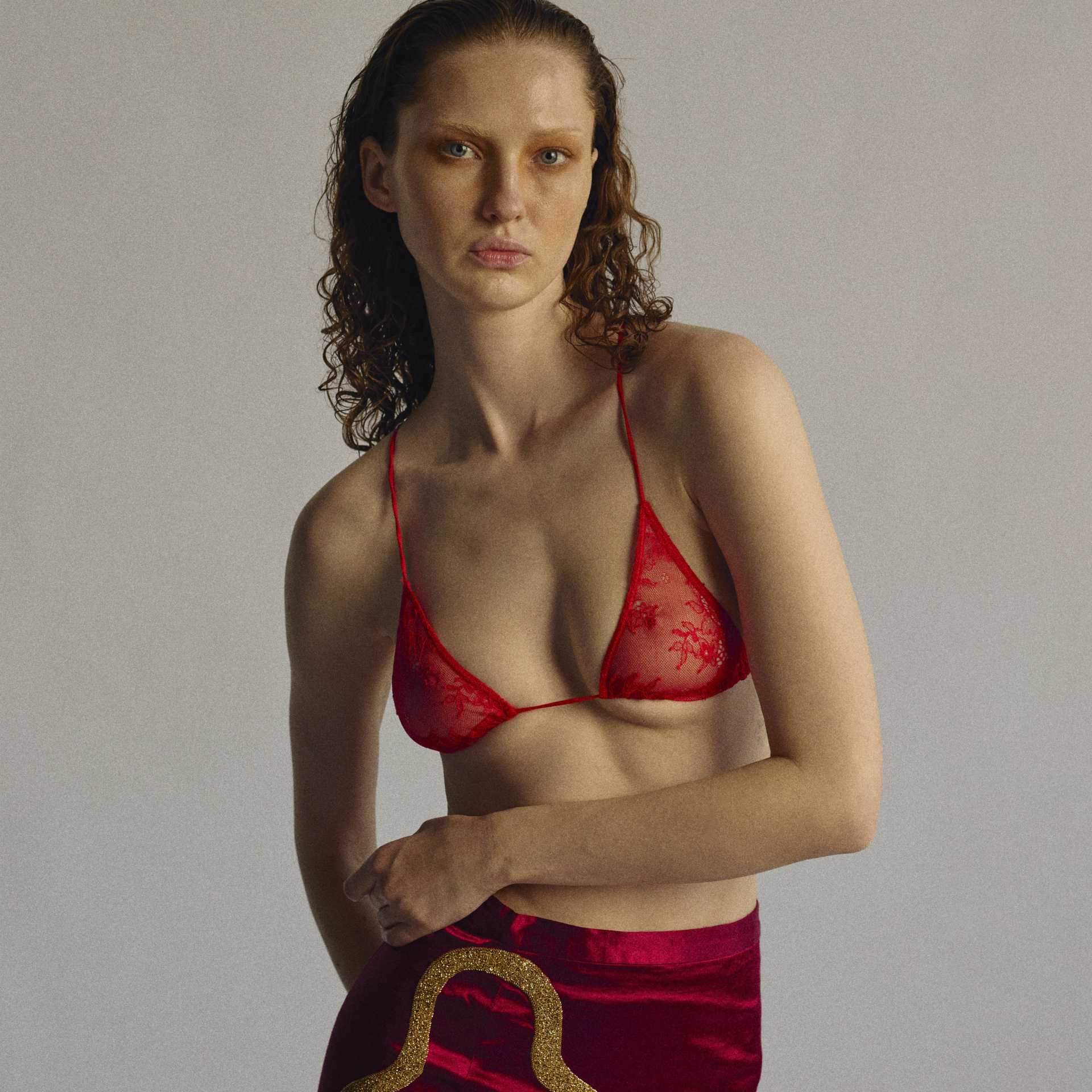
Tinka Weener grew up in The Hague wanting a dress so badly that she did chores around the neighborhood to buy it herself. She was nine. Her parents had raised her gender-neutral, which in practice meant no dresses, no Barbies, no pink. “It didn’t mean that I was only wearing brown clothing,” she says. “They just didn’t want me to be constricted by society’s expectations of what it means to be a woman.” The irony, which Tinka finds hilarious, is that the freedom to choose pushed her straight into hyper-femininity. “Now I drive a pink car,” she says.
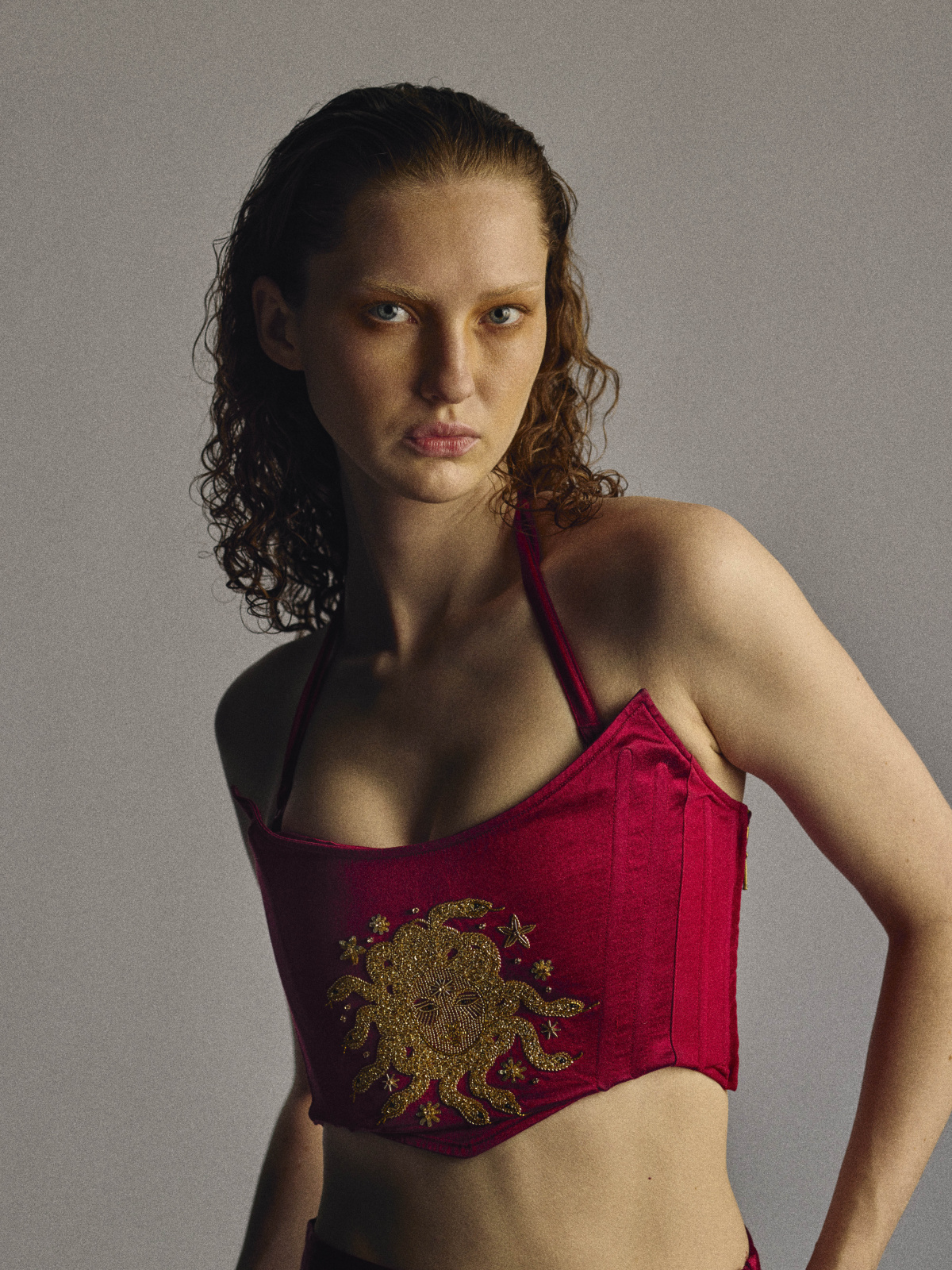
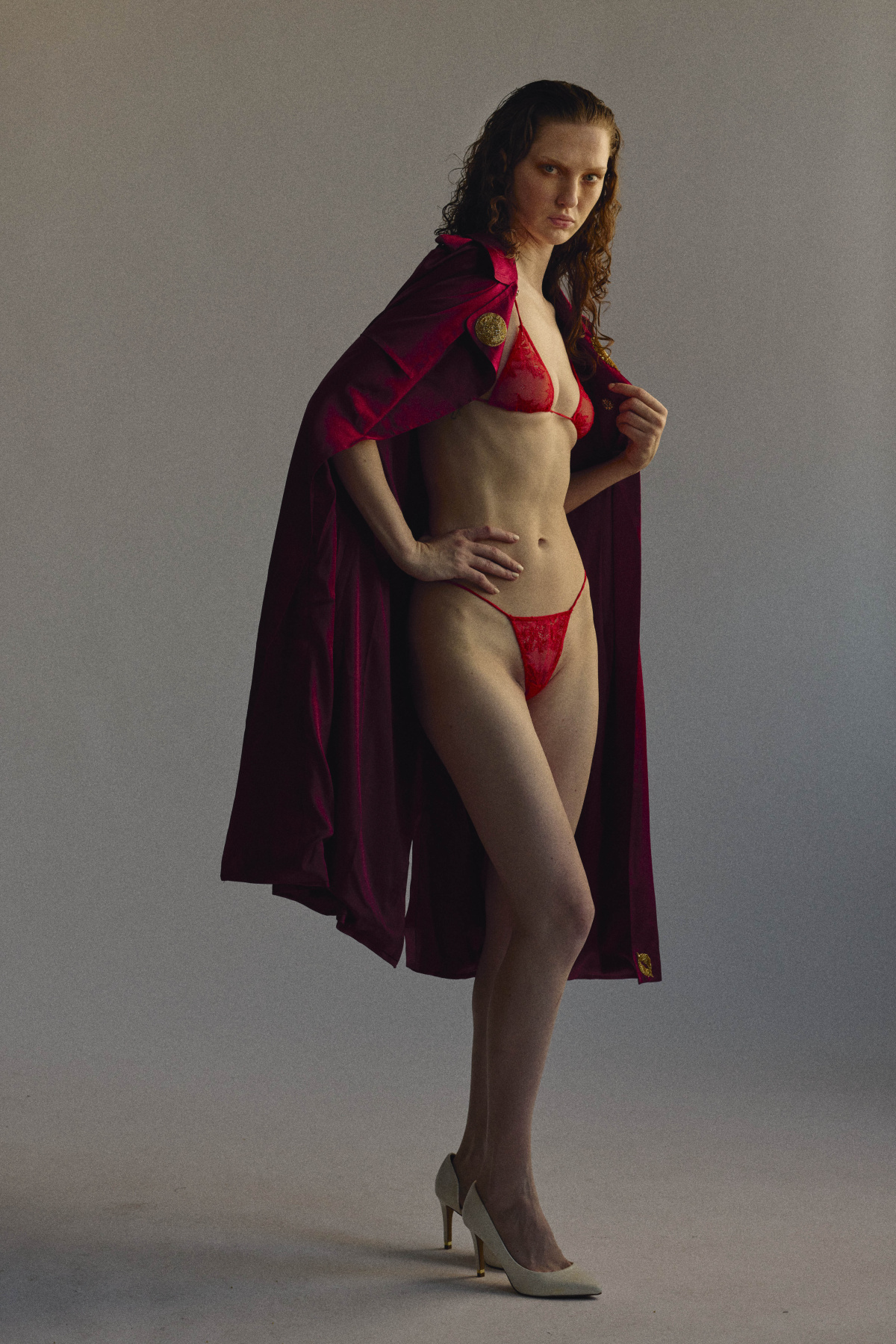
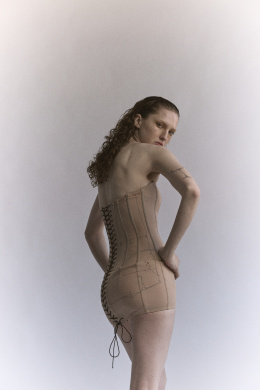
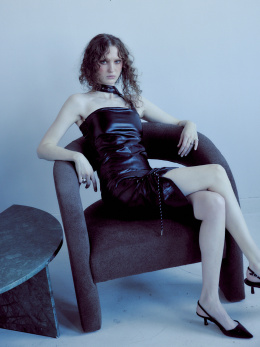
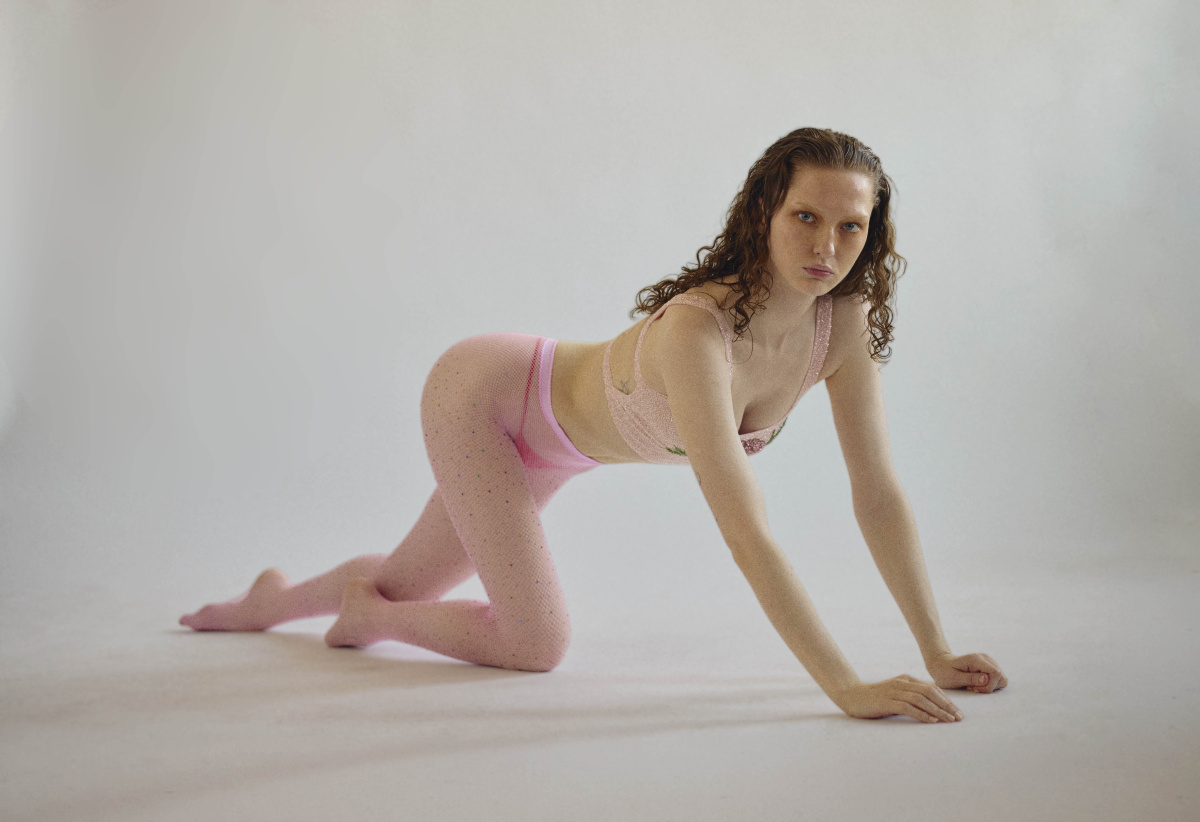
That dress, bought with a nine-year-old’s savings, is essentially the origin story of Songs of Siren, a hand-beaded luxury label that Tinka launched in December 2024 from Los Angeles and immediately catapulted to London Fashion Week, New York Fashion Week, and onto the bodies of Paris Hilton, Jessica Simpson, and Natasha Bedingfield. The speed of it is almost absurd, but the craftsmanship is serious. Every piece is hand-beaded by artisans in India using 100% glass beads, a process that can take up to two weeks per garment. The garments themselves sit in a space between ancient mythology and nightlife, between the sacred and the sexy. Medusa on a corset top. Serpents down a spine. Roses beaded in pink because Venus gave the rose its thorns to protect its beauty. The pieces are cocktail-length, sculptural, and the kind of thing that makes people stop you on the street, which is apparently what happened before Tinka even had a brand (she was wearing her own designs and strangers wanted to buy them off her).
Tinka’s path to this was unusual. She studied economics first, which she describes the way most creatives describe their practical degree: as a detour she had to take before she could admit what she actually wanted to do. “I didn’t know back then that it could be a true career path,” she says about fashion.
After economics she enrolled at the Amsterdam Fashion Institute and later FIDM in Los Angeles, where she learned that fashion has roles beyond design itself: marketing, branding, and the business architecture that keeps a label alive. She worked as a stylist, did PR for several luxury brands and agencies, including time with the Dutch lingerie designer Marlies Dekkers, and freelanced in on-set styling for Alexander McQueen.
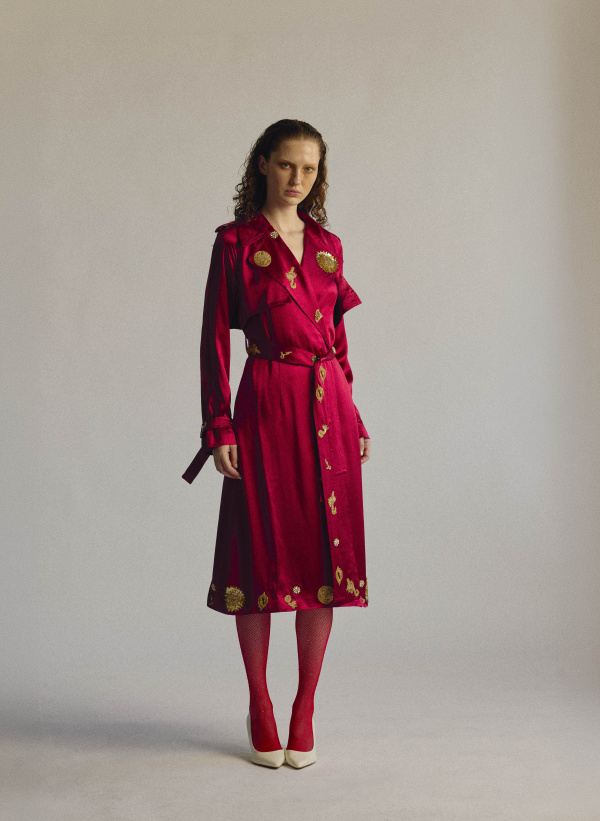
McQueen is where her vision clicked. “This was the first time I really came in contact with couture,” she says. “Being able to touch it and feel it and see how it flows. Especially the embroidery and the beading was just super intriguing to me. I’d never seen anything that was in one way so delicate, but also so strong at the same time.” She traced the beading back to India, to ateliers where the techniques have been passed through families for generations, and that became the foundation of Songs of Siren’s production model. When she finally launched, she flew to Mumbai to visit the factories herself. “I just wanted to see it for myself,” she says. “To learn more about what they do for their employees.”
The trip also produced a campaign. Tinka and her creative director Indiana Voss hired an all-Indian team, stylists, and crew, and gave them free rein. “Sometimes brands kind of hide where it comes from and then they pretend like it’s made in Italy or in London,” she says. “It’s made in India and there’s so much power and beauty to that.”
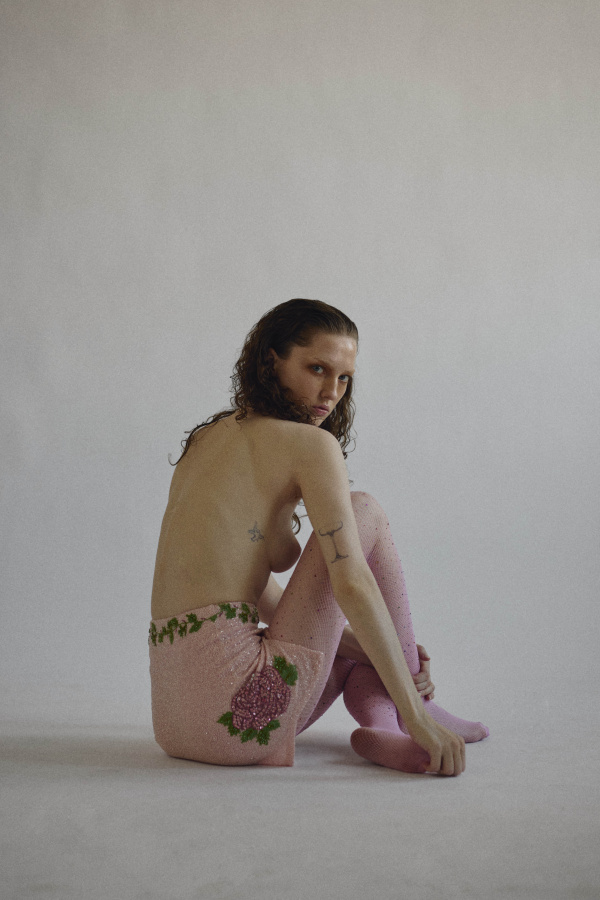
The Greek mythology layer in Songs of Siren comes from Tinka’s obsession with misunderstood female figures. “Strong, dominant figures were often portrayed as dangerous or bad,” she says. “I really wanted to change that narrative.” The Medusa piece in the collection we shot is a case in point. “She’s a classic example,” Tinka says. “She was portrayed as a villain and a monster, but she was actually a beautiful maiden and a priestess of Athena. She was cursed by Athena after being raped by Poseidon in the goddess’s temple. In reality, she’s basically a victim of abuse and misogyny.” That’s heavy freight for a beaded corset top, but it supports her brand’s narrative.
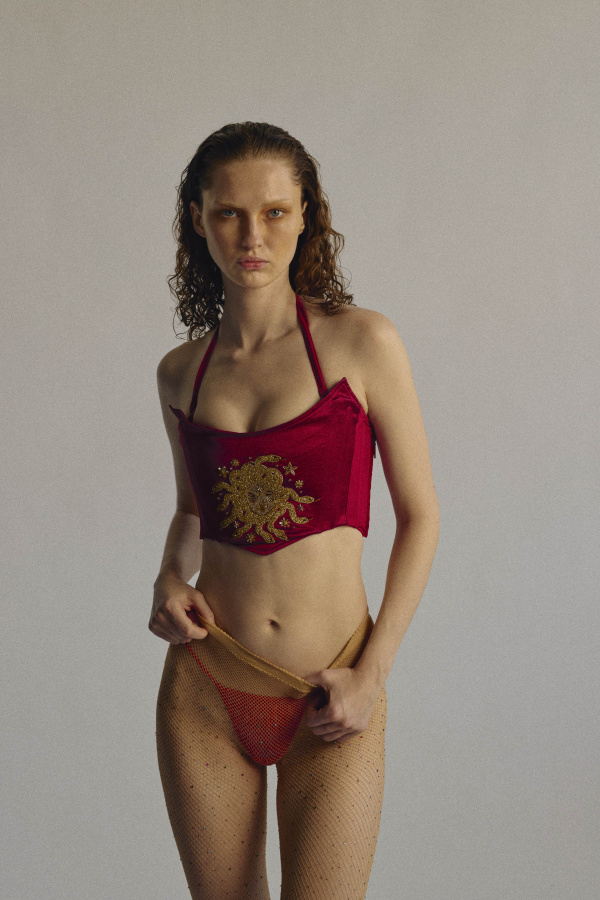
Her collection development process is old-school. Tinka sketches in pen, develops illustrations that become the patterns for the beading, and sends the sketches, patterns, and color palettes to the atelier in India. They produce a sample square, and she approves or adjusts. Then they build a full sample. She fits it on multiple body types in LA, because “of course I want the extra-large to be just as good as a small.” Then she loans the first sample to friends. “I want to know that it works if you go to a dance floor or to a wedding and that you can actually move in it,” she says. “They’re not just museum pieces that are pretty to stand in. I want to make sure that women actually can move in it and feel comfortable. And I know that my friends are going to be brutally honest with me. Especially the Dutch ones.”
The color and material decisions come from art books, of which she has shelves. “I can look in an art book and see colors that I absolutely love but I don’t like the painting itself,” she says. “I just memorize and use the color palettes.” She’s currently exploring old Dutch masters for the third collection, possibly Van Gogh. There’s a Dutch saying Tinka quotes that explains a lot about her aesthetic: “Be normal, then you’re crazy enough.” She grew up rebelling against exactly that sensibility, becoming a goth kid and a theater kid in a culture that valorized restraint. “I longed for that fantasy and drama.”
Additional reporting by Gianna Annunzio. Hair & makeup by Celena San Juan, LAB Artists Agency. Model: Avery Piepenburg, Ford Models
A version of this article originally appeared in Sixtysix Issue 16.