There’s something powerful about the way light moves through a home. It shifts throughout the day and frames the moments that define our daily lives. Thirteen years ago Chrissy and Jason Roellchen understood this, launching what would become Skyline Window Coverings from their Chicago apartment with a simple mission: elevate window treatments from purely functional to transformative.
What started with weekend installations and product samples taking over their living space has now evolved into a seven-city network of curated showrooms that approach every project like a collaboration. Chrissy tells me this isn’t the traditional “measure, install, and move on” model. Skyline is about creating spaces that respond to how people actually live, proving that the most overlooked elements of interior design often hold the greatest potential.
From Chicago’s iconic lakefront high-rises to the sun-filled homes of Los Angeles, Chrissy and Jason have built their reputation on the belief that how we control and celebrate natural light in our spaces shapes our entire experience of home.
-
- What started with weekend installations and product samples taking over their living space has now evolved into a seven-city network of curated showrooms that approach every project like a collaboration.
-
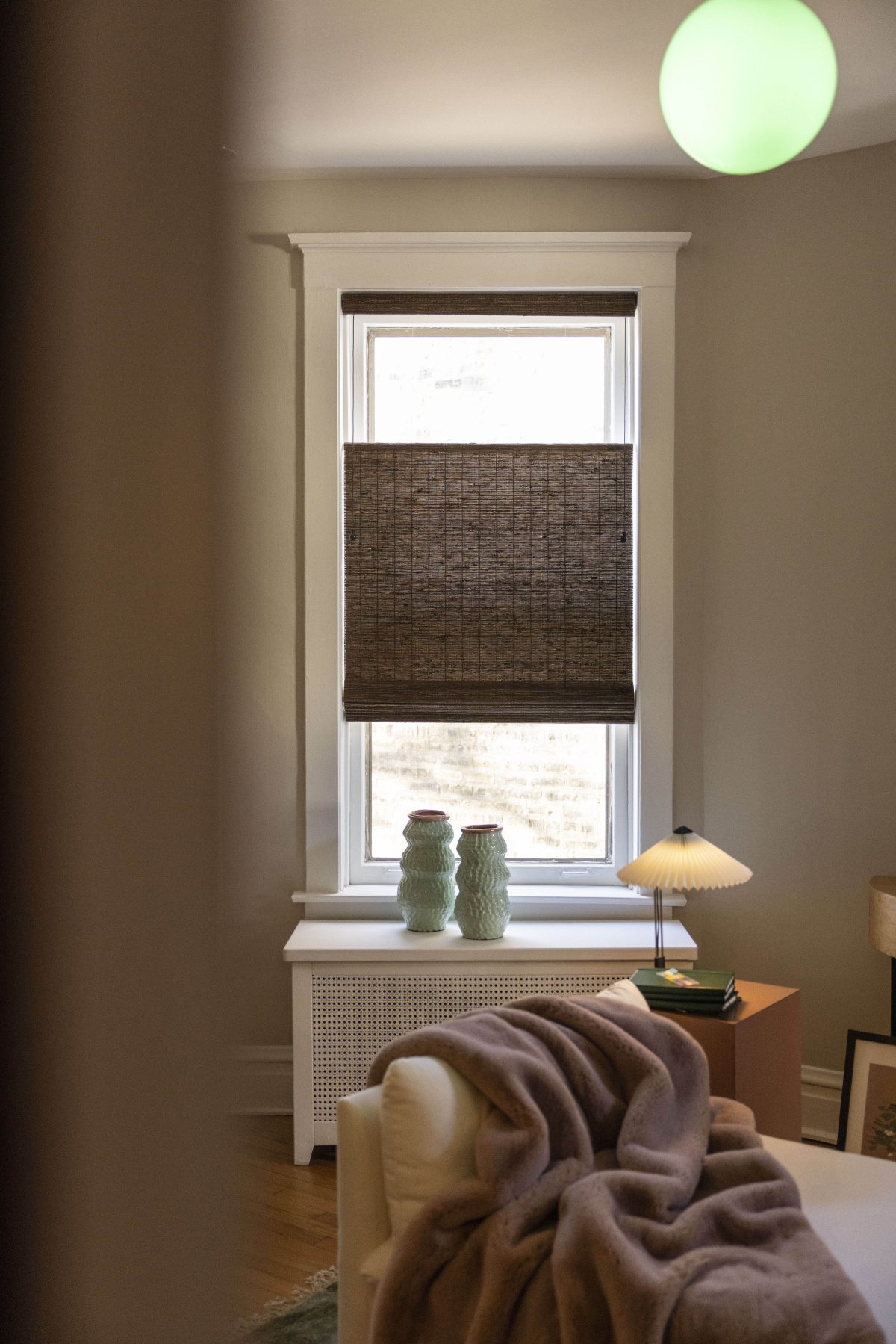
- Chrissy tells me this isn’t the traditional “measure, install, and move on” model. Skyline is about creating spaces that respond to how people actually live, proving that the most overlooked elements of interior design often hold the greatest potential. Photos courtesy of Skyline
Let’s start at the beginning. Your background was originally in interior design. Did you grow up knowing you had an affinity for that world?
Chrissy Roellchen: I’ve always really liked putting together home furnishings. I like furniture pieces, I like color, I like wallpaper, and I’ve always gravitated toward that side of things. Just like redoing your bedroom when you’re a kid, right? Little silly things like that.
Even before Skyline I loved going into people’s homes to help accessorize and create that cozy, finished feel. It’s not everyone’s strong suit. I’d bring in artwork, décor, and accessories, placing everything for them. Those projects were always fun and creative, and window treatments were just one piece of the overall transformation.
In the beginning many of my projects were just a couple of rooms, maybe a renovated primary suite or a refreshed living room. I did a lot of color consultations and helped clients choose paint and wallpaper. Often those projects would grow from there. Once the colors were set clients would realize they also needed new bedding, rugs, and window treatments.
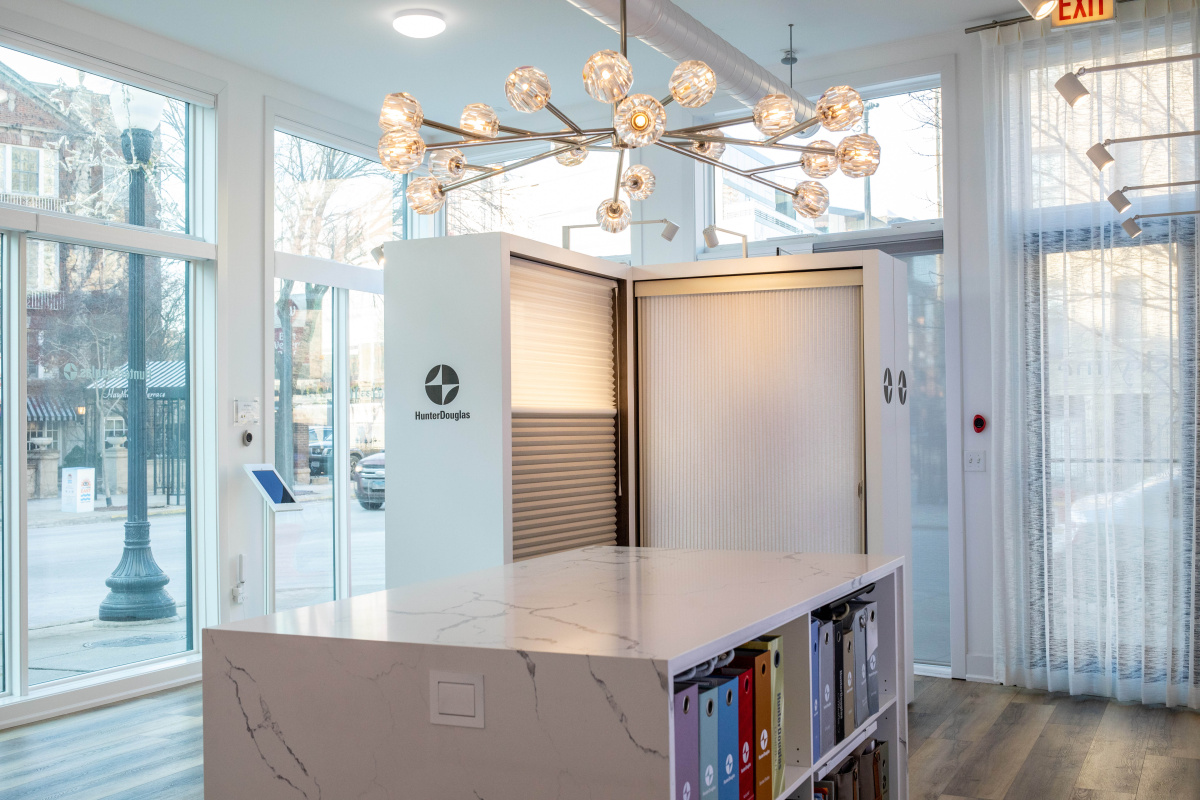
“For the first five years we stayed shop-at-home only. Our manufacturers encouraged us to open a showroom, but I hesitated. I didn’t want something that looked like every other dealer’s space. When we finally took the leap, we made it different,” Chrissy says. Photo courtesy of Skyline
I also used to do more full design—kitchen remodels, bedding, furniture, the whole thing. It was a lot of fun but it’s hard to know everything about everything. I’m a detailed person, so I often want to know the details so that I can speak intelligently about them. It was something I’m passionate about, but I ended up wanting to shift into specializing in one thing and being the best I can be at it. There aren’t a lot of people that just specifically do window treatment and sell one brand like we do.
What first motivated you to launch Skyline from your living room?
I’ve been in the window treatment industry for about 25 years, and my husband Jason has too. We both grew up in Kansas City, and in 2012 we packed up and moved to Chicago. At first we stepped outside the industry to get to know the city, but with our combined knowledge it didn’t take long to realize—why not do what we love and know best?
We started small. I ran appointments and met clients during the day, and Jason handled installations on weekends after his full-time job. It was never meant to be big, just a side business out of our apartment to make a little extra money. Within a couple of years it grew fast enough that our apartment was overflowing with boxes. We needed an office and more hands just to keep up.
-
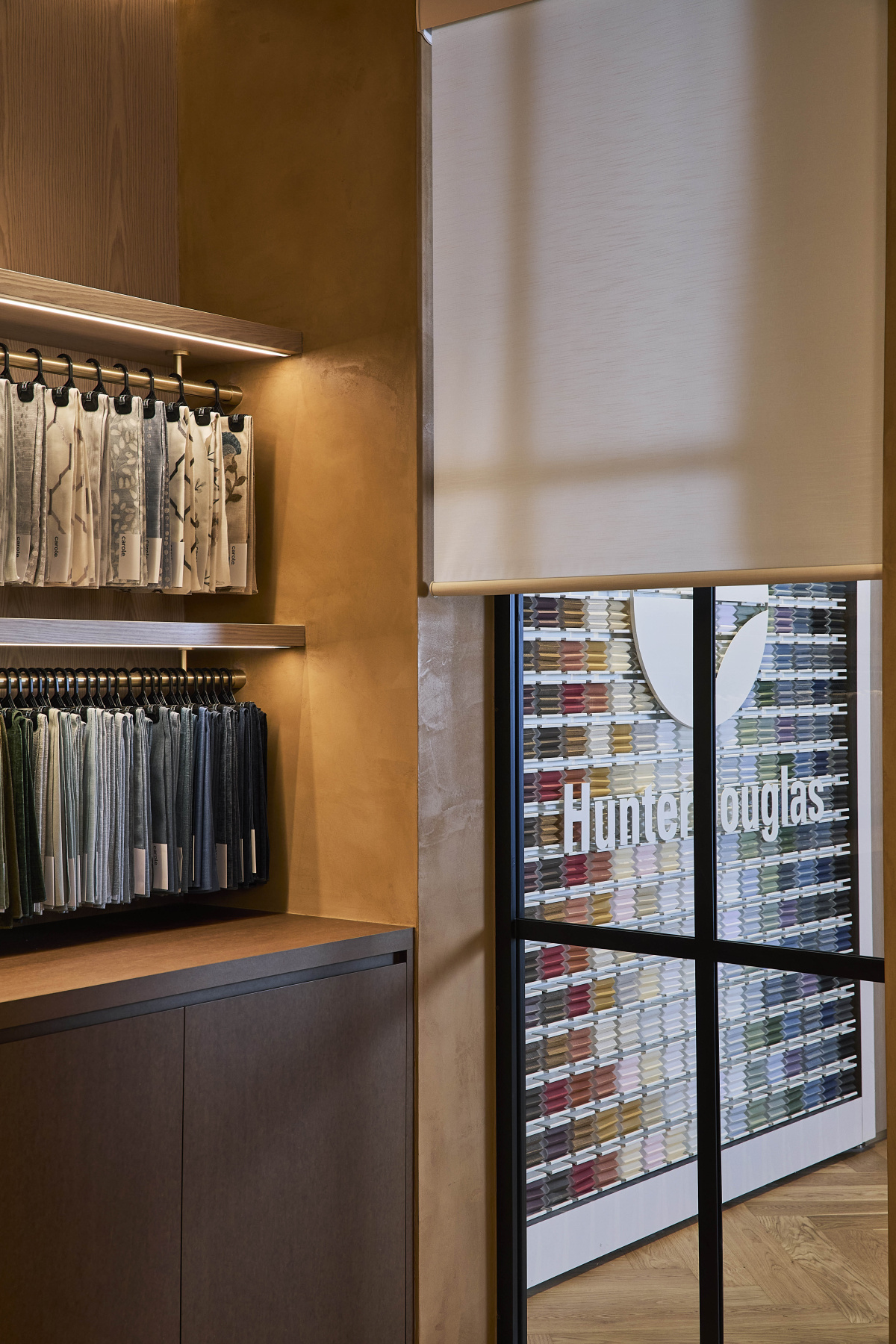
- “Since we’re selling 26 different Hunter Douglas lines, we can tailor each space to meet their needs while creating something visually striking,” Chrissy says
-
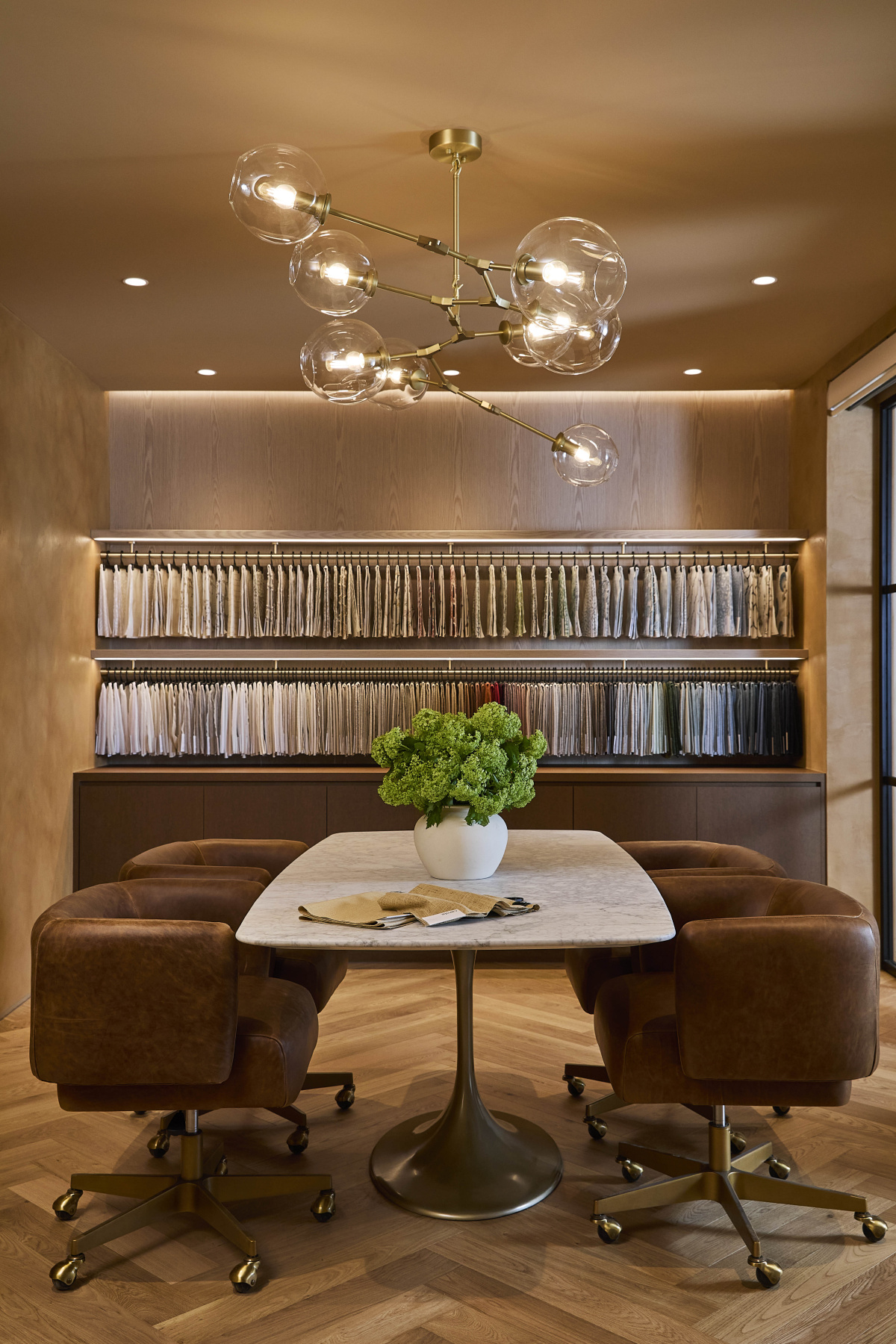
- Photos courtesy of Skyline
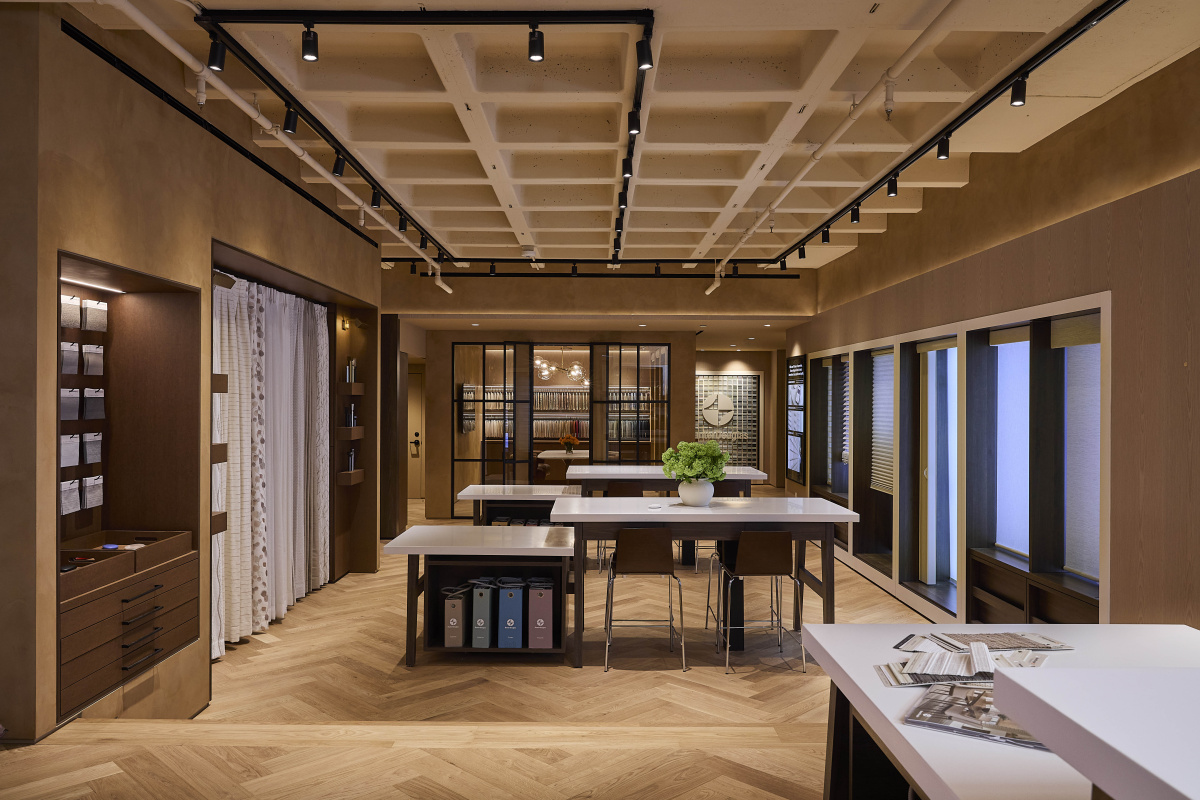
For the first five years we stayed shop-at-home only. Our manufacturers encouraged us to open a showroom, but I hesitated. I didn’t want something that looked like every other dealer’s space. When we finally took the leap, we made it different. It was a small but beautifully designed space with comfortable furnishings, warm details, and an experience that felt personal. We staffed it with hospitality-minded experts who knew the products inside and out. The business took off almost immediately!
That became our model for growth. We partnered with Hunter Douglas and opened a showroom in Portland, then continued expanding across the country. We have seven locations today between Chicago, New York, LA, Portland.
“We don’t want to do things the same way that everyone else is doing them. We truly care about client experience. We want our clients to know and understand what they’re getting and we try to be very detail-oriented with them.” Photo courtesy of Skyline
We don’t want to do things the same way that everyone else is doing them. We truly care about client experience. We want our clients to know and understand what they’re getting and we try to be very detail-oriented with them. We really spend a lot of time with our clients whether it’s in the showroom or in their home, getting to know them and their needs and then helping them come up with the right solutions.
What was it like starting a business with your husband?
We’re kind of a yin and yang. Jason is really good at things that I’m not the best at and vice versa.
We’ve been working together for a really long time, even before we started Skyline. We’ve actually known each other since high school. So it’s just kind of our normal.
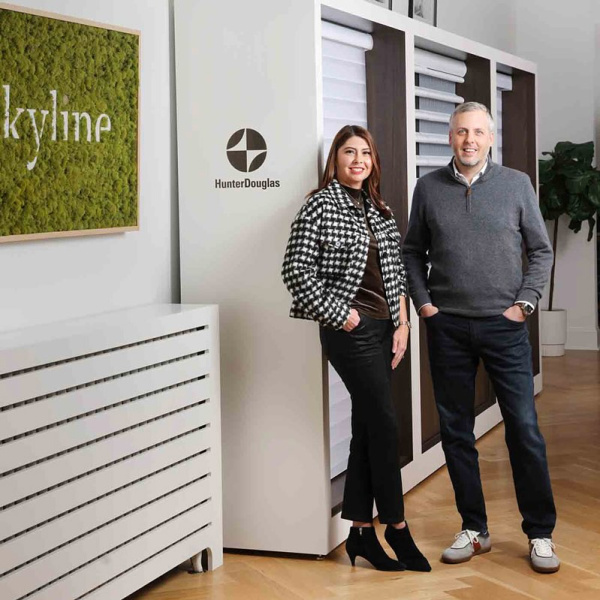
“We’re kind of a yin and yang. Jason is really good at things that I’m not the best at and vice versa. We’ve been working together for a really long time, even before we started Skyline. We’ve actually known each other since high school. So it’s just kind of our normal,” Chrissy says. Photo courtesy of Skyline
There’s no one I would trust more than my husband, who also just so happens to be my business partner. We both try to stay in our lane and it seems to work pretty well.
Jason grew up in design as well. We both actually worked for his family’s business in Kansas City before we relocated to Chicago. His family had a decorating center where they did a little bit of everything, including window treatments. So he had a lot of background in that, but his real specialty is marketing. He does all of our marketing and advertising for Skyline.
How have you managed to balance the large firm experience with a boutique, Midwestern, family-owned feel?
It can be challenging as we’ve grown and expanded. We really try to stay very local and be very active in the community in each market that we’re in, and to stay in front of interior designers and professional partners.
We have had to balance not getting too big for our britches. Sometimes that’s challenging to be honest because we like to give our people autonomy. If they do what they’re supposed to do, everything’s good, clients are happy.
-
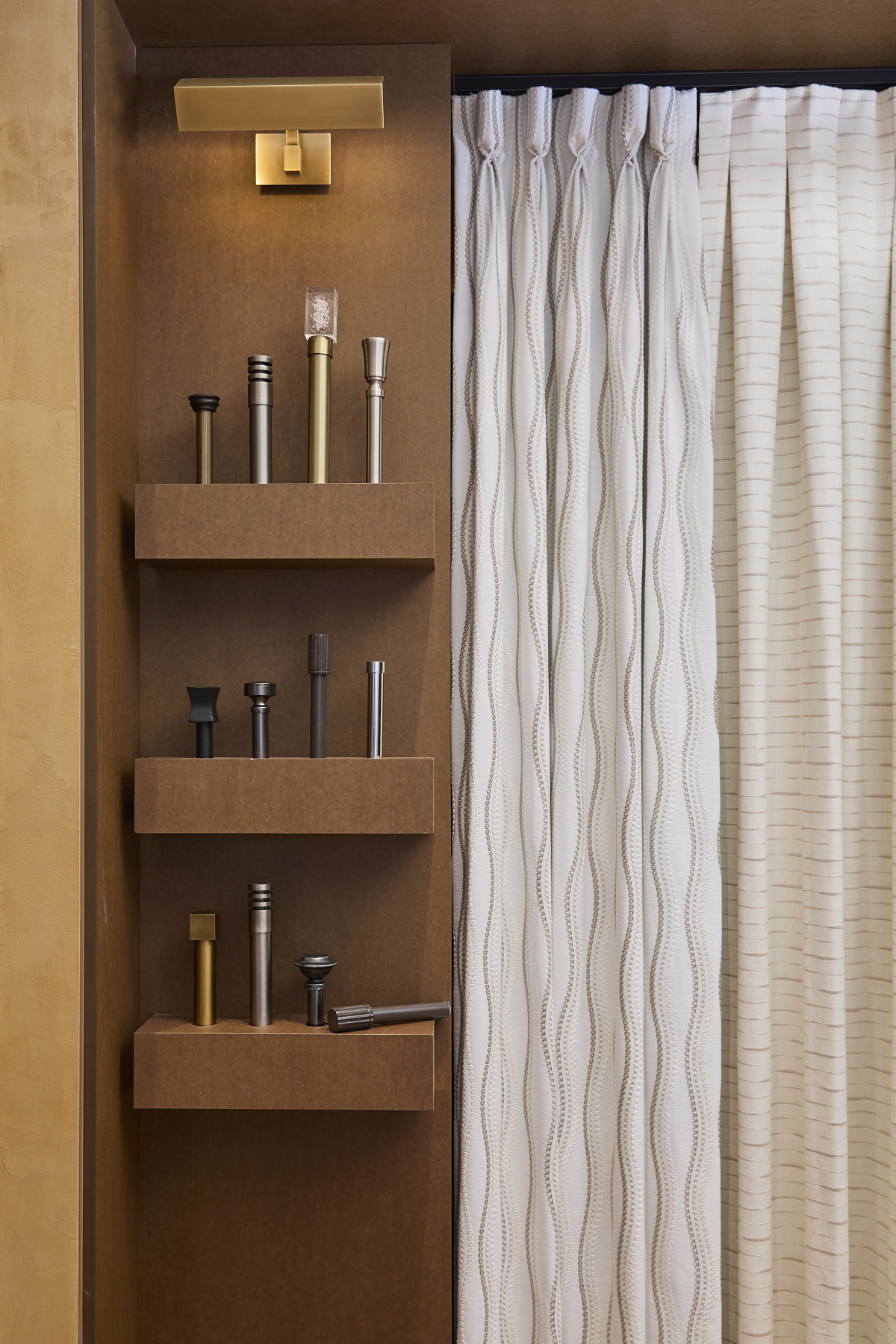
- “We invest a lot in our showrooms and work hard to encourage clients to visit and meet with us. That way we can show them large live samples of the product, especially when it comes to automation, which is a big part of our business,” Chrissy says.
-
- Photos courtesy of Skyline
What is the creative process for translating a client’s vision into a reality within their space?
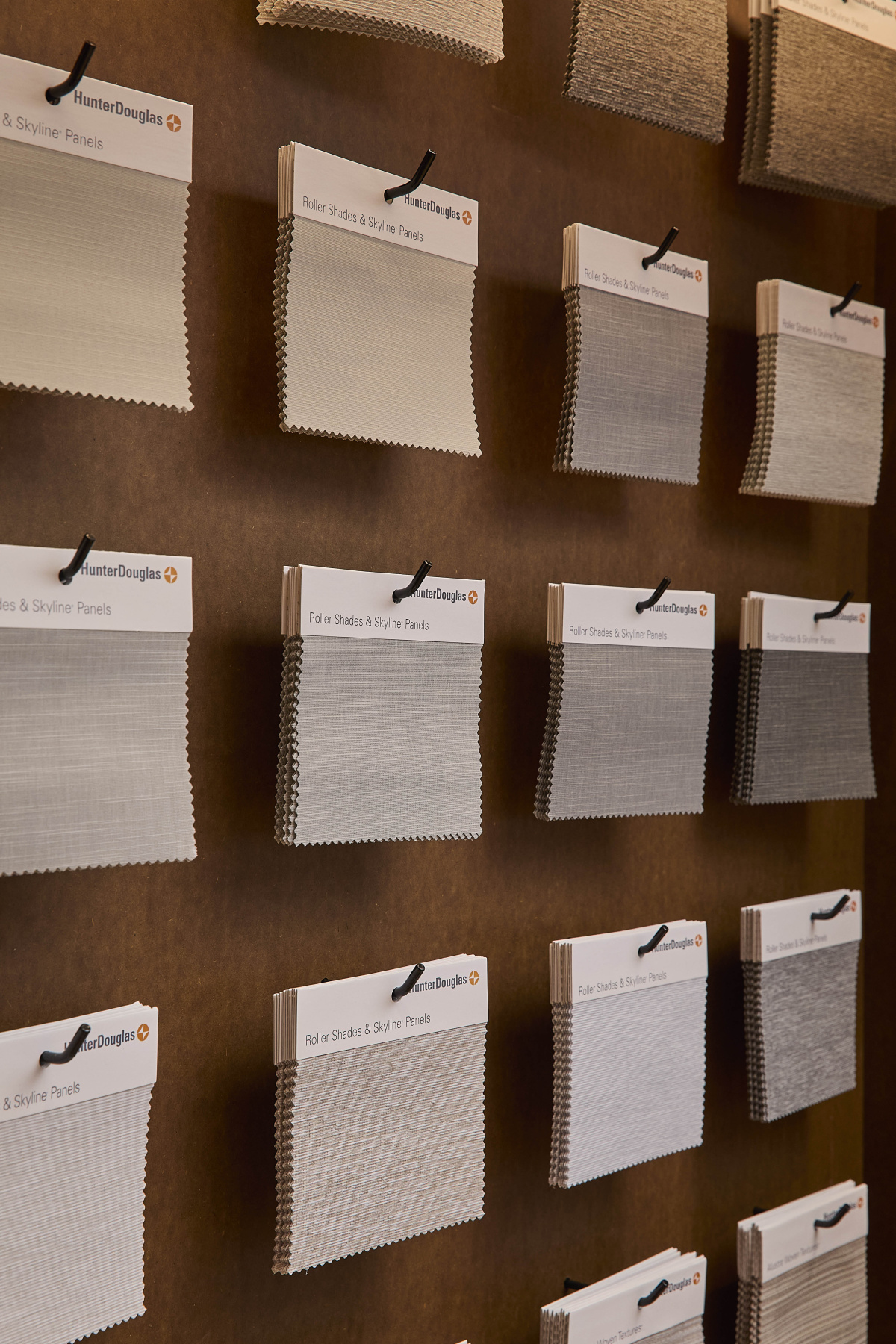
We invest a lot in our showrooms and work hard to encourage clients to visit and meet with us. That way we can show them large live samples of the product, especially when it comes to automation, which is a big part of our business. We want them to be able to demo it, test it out, and make sure it’s the right fit for them.
We do our best to get people into the showroom, but we also offer a lot of shop-at-home appointments where we go directly to the client’s home with samples. This works well for those who don’t want to make the trip in. It’s a balance of both. In the home we aim to be just as effective by using visual aids—tons of photography, videos, and samples—to help them picture exactly what they can expect. Since they are very custom products it can be hard to make large financial decisions based on tiny swatches. The more we can show and demonstrate, the more confident our clients feel.
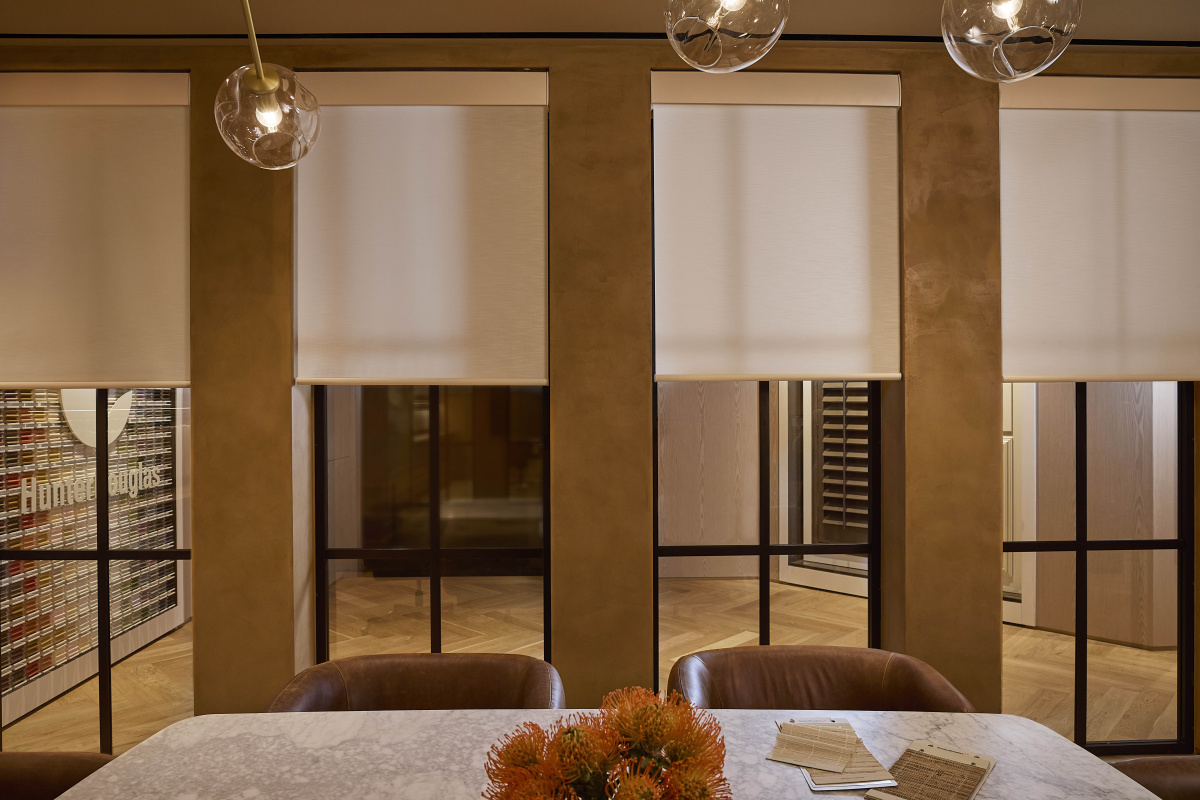
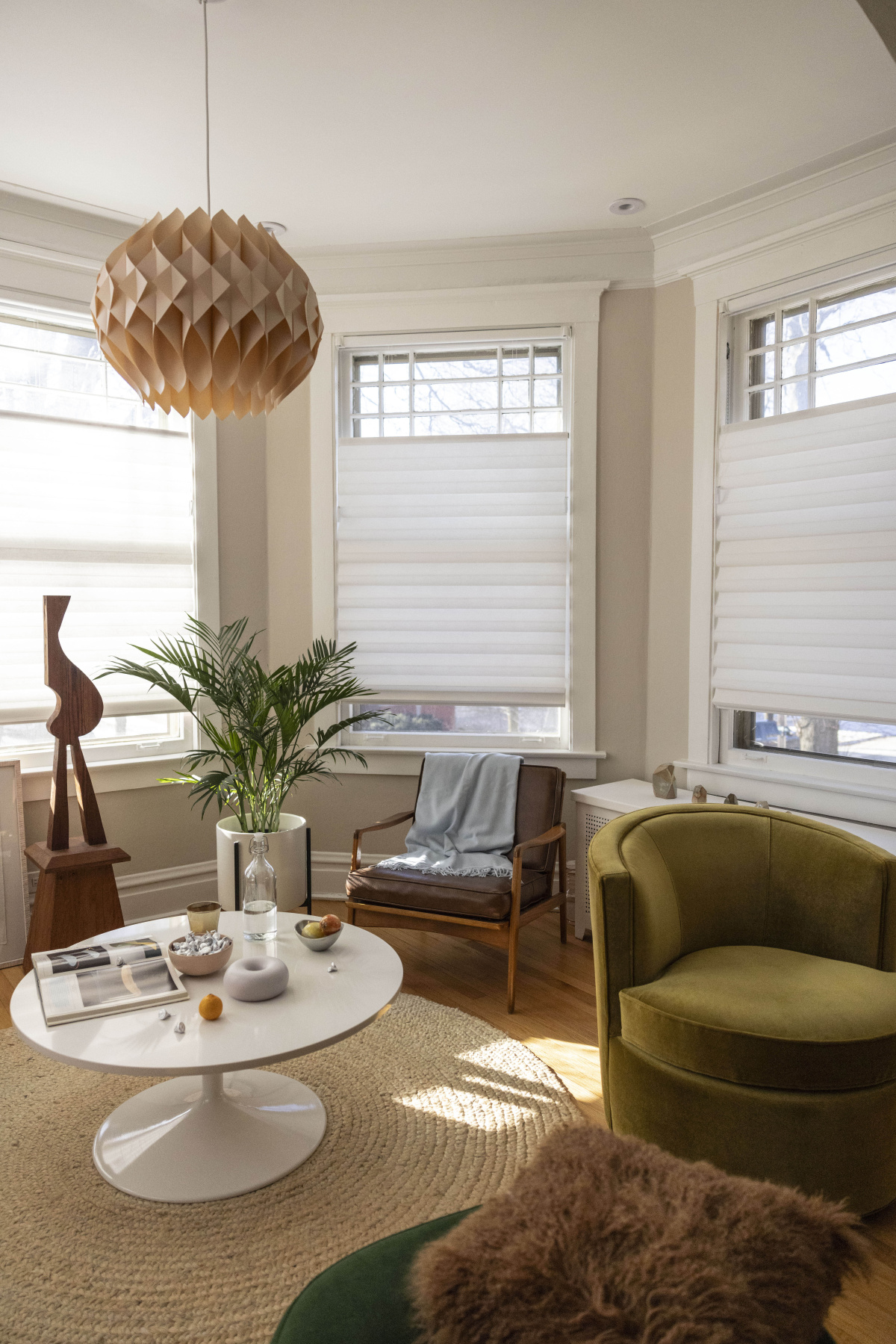
Window treatments are often the final touch in a room after the remodel, renovation, or new build is nearly done. The way shades control light and mood, softening the room and shifting colors, can be a game changer. Photos courtesy of Skyline
For us it’s always function first. We want to make sure the product does exactly what the client needs before we focus on making it beautiful. Aesthetics are a close second, but addressing the client;s functional needs is always our starting point.
With all the new technology in window treatments, how have they changed and why are they such a big deal in interior design?
Window treatments are often the final touch in a room after the remodel, renovation, or new build is nearly done. But they can completely transform a space. The way shades control light and mood, softening the room and shifting colors, can be a game changer. People sometimes say, “It’s just a window treatment,” and I’m like, “Sure… but it can be so much more.”
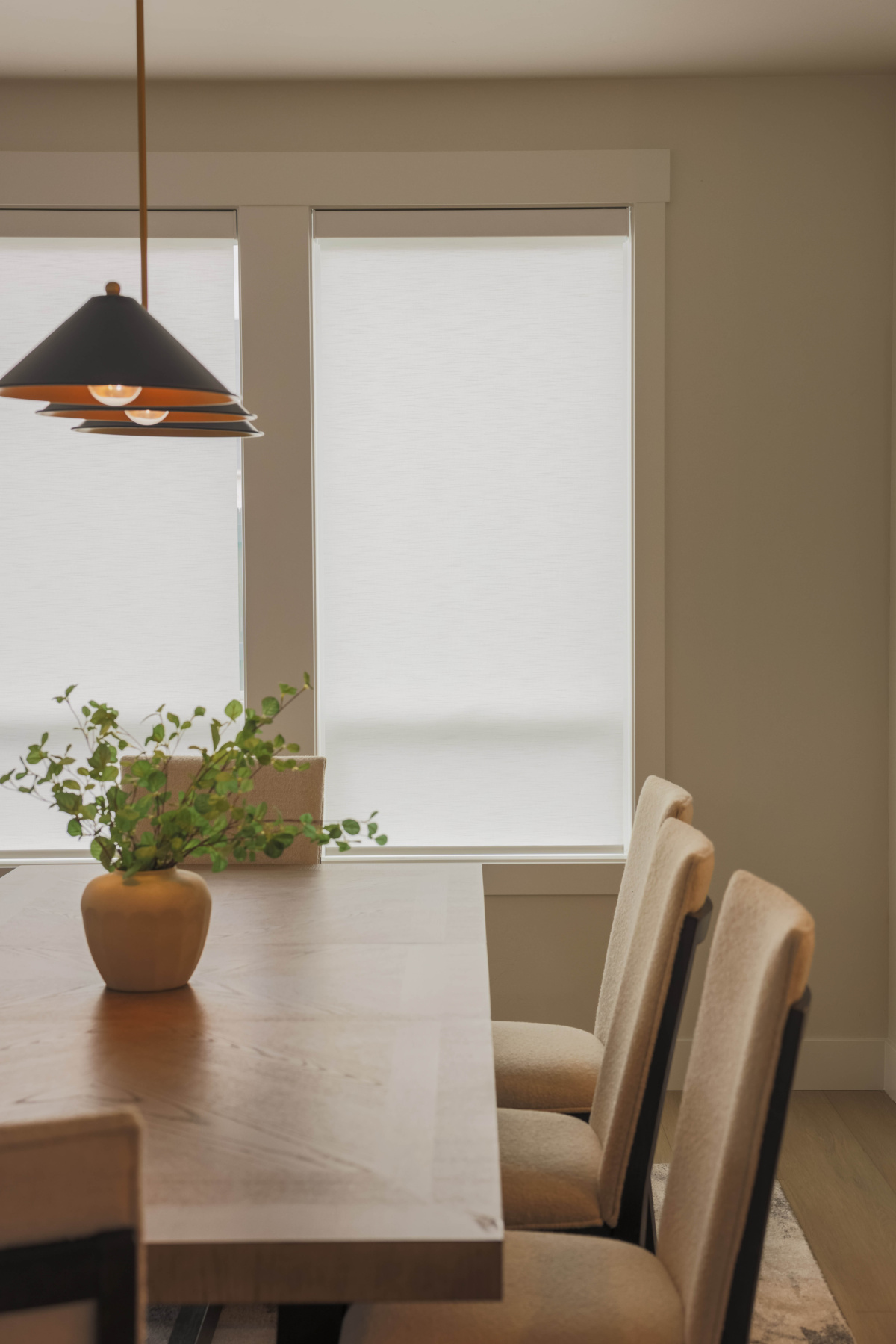
With smart homes and automation, we now do a lot of motorized drapery and shades. It’s lifestyle by design: timers that open shades to wake you up, close them at night, voice commands, and integration with the rest of the home system. It’s part of people’s daily rhythms. Automation used to be expensive, but costs have dropped as demand has grown.
-
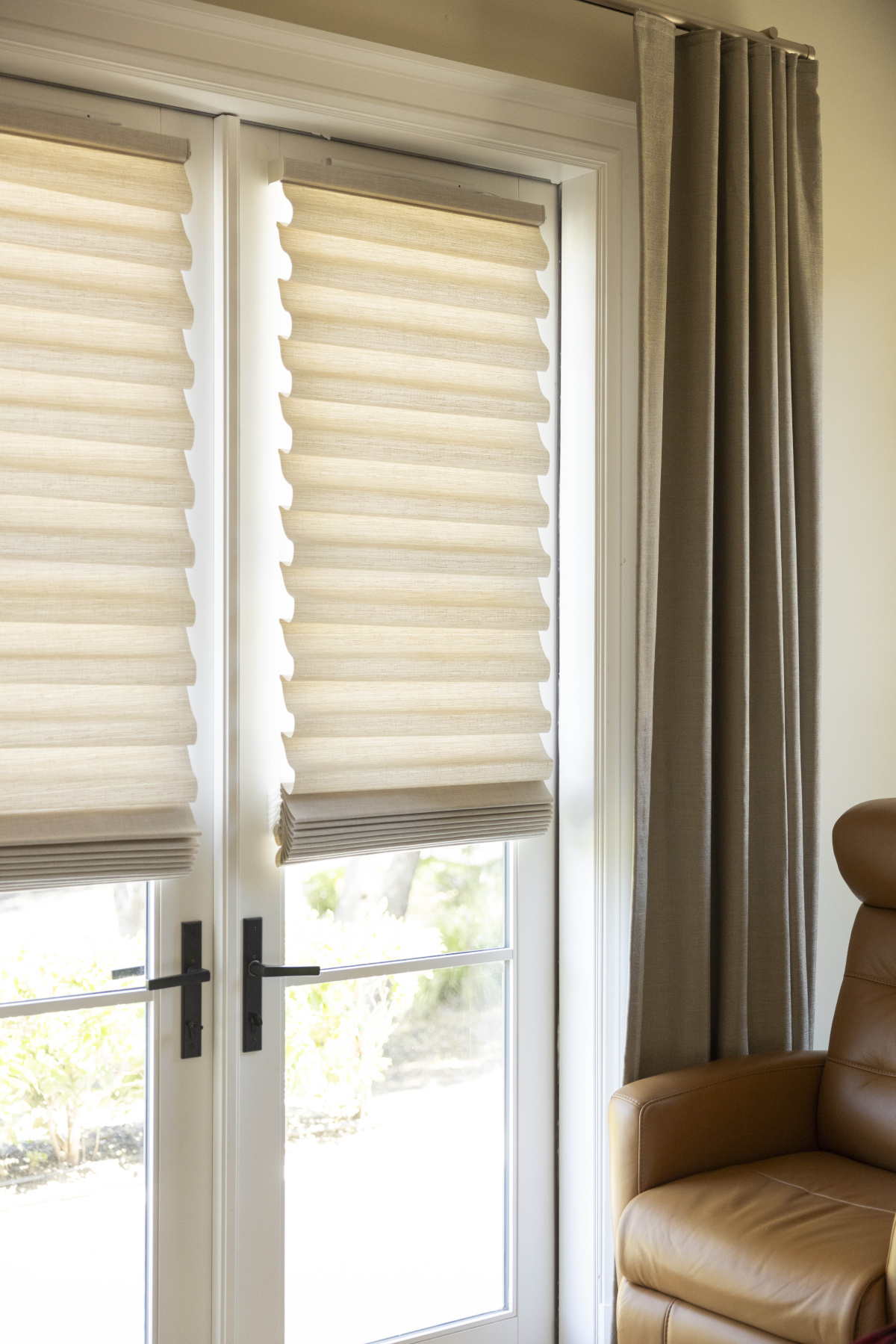
- “There has also been a big move toward cordless designs for a clean look, child and pet safety, and ease of use,” Chrissy says. “People love that automation eliminates cords and wands entirely.”
-
- Photos courtesy of Skyline
There has also been a big move toward cordless designs for a clean look, child and pet safety, and ease of use. People love that automation eliminates cords and wands entirely. We don’t just hand over a remote, we help them connect to Alexa, set up scenes and timers, so it runs on autopilot.
Most people have a routine for waking up, leaving, and coming home, and automation can match that effortlessly. We are also starting to use AI, testing renderings, tracking metrics, and sending smart prompts to keep projects moving. We are using it in small ways now, but the potential for the future is huge.
When first-time homeowners come in saying, ‘I have no idea what I want,’ how do you guide them through the process?
With those clients we slow things down. We ask if they’ve done this before or researched products and if not, we invite them into the showroom to explore options in person. Because we carry so many products we use targeted questions to narrow down functionality and needs, helping us quickly get to two or three strong choices.
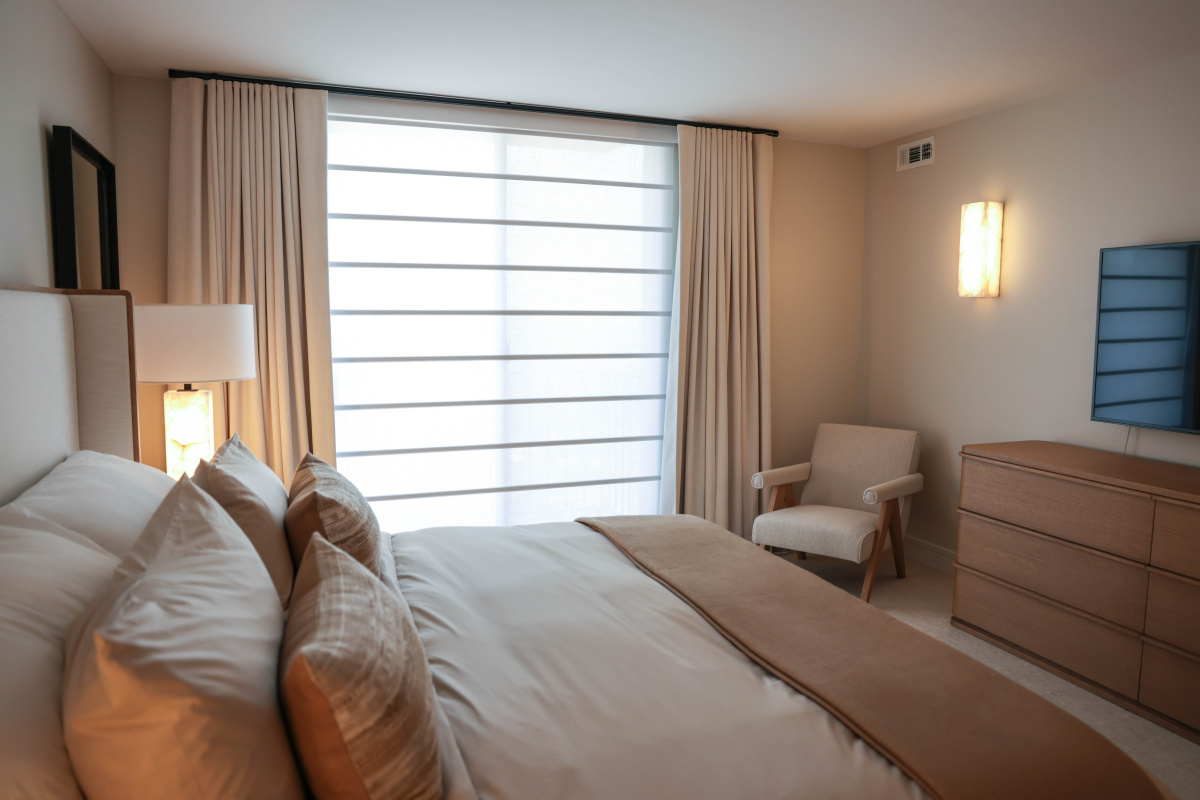
Skyline has also started offering custom drapery. It’s quickly become one of their fastest-growing categories. Adding drapery brings another layer of style and texture, according to Chrissy. Photo courtesy of Skyline
Budget is part of that conversation too. For first-time buyers who don’t know what to expect, we give them ranges and options to find the right fit. For larger projects like a whole home or condo we often recommend phasing the work, starting with priority areas like the main living spaces and bedrooms. This allows clients to live with the products and confirm they love them.
What’s a recent project that captures what Skyline is all about?
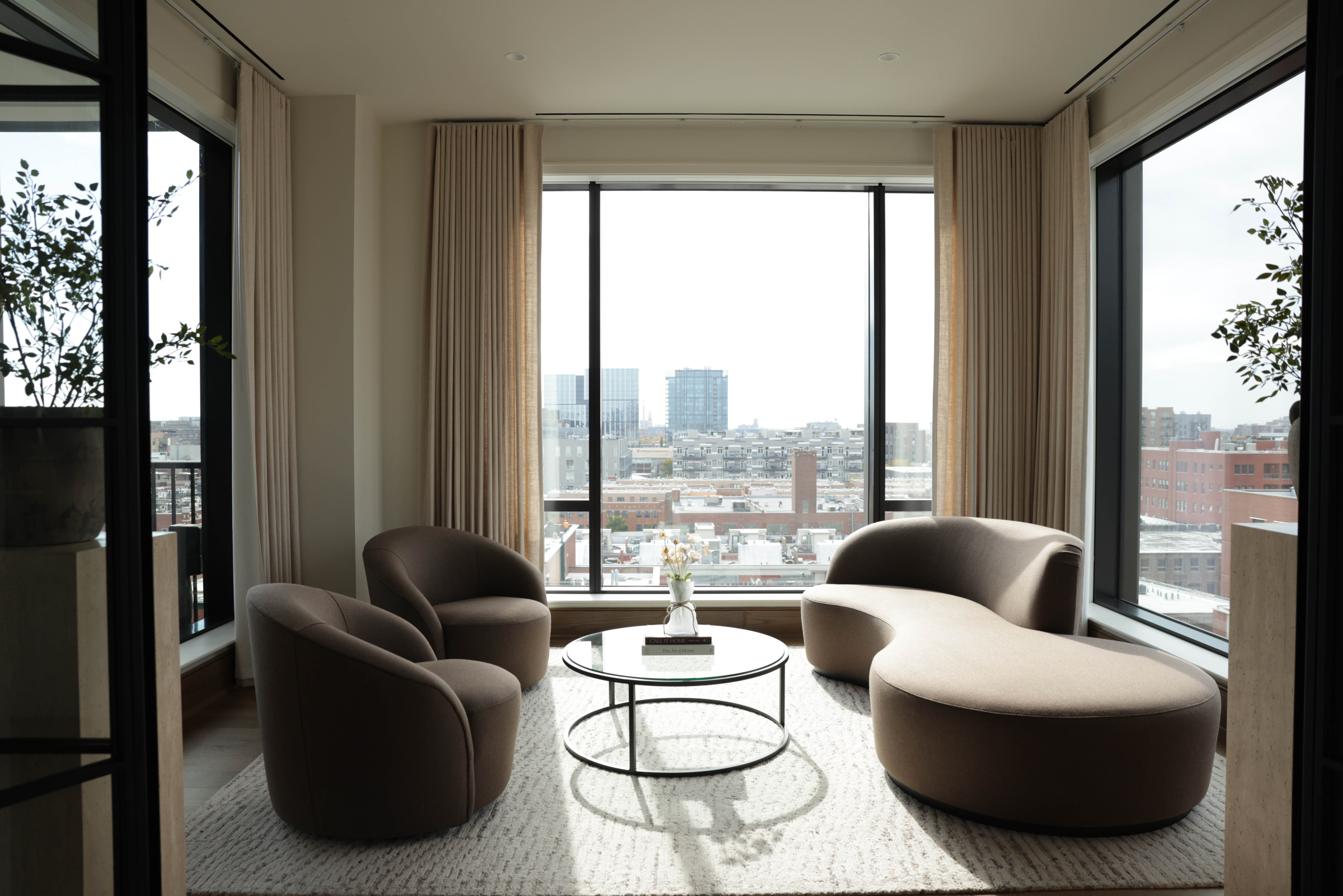
In Chicago we’ve had the chance to work on some incredible high-rise projects, especially along Lake Shore Drive with those stunning water views. Many of these clients come to us needing functional solutions, but they’re also looking for a “wow” factor, and that’s where it gets fun. Since we’re selling 26 different Hunter Douglas lines, we can tailor each space to meet their needs while creating something visually striking. Some of our favorite projects are those where the lake is the backdrop and the finished result is both practical and breathtaking.
We’ve also started offering custom drapery, and it’s quickly become one of our fastest-growing categories. Adding drapery brings another layer of style and texture.
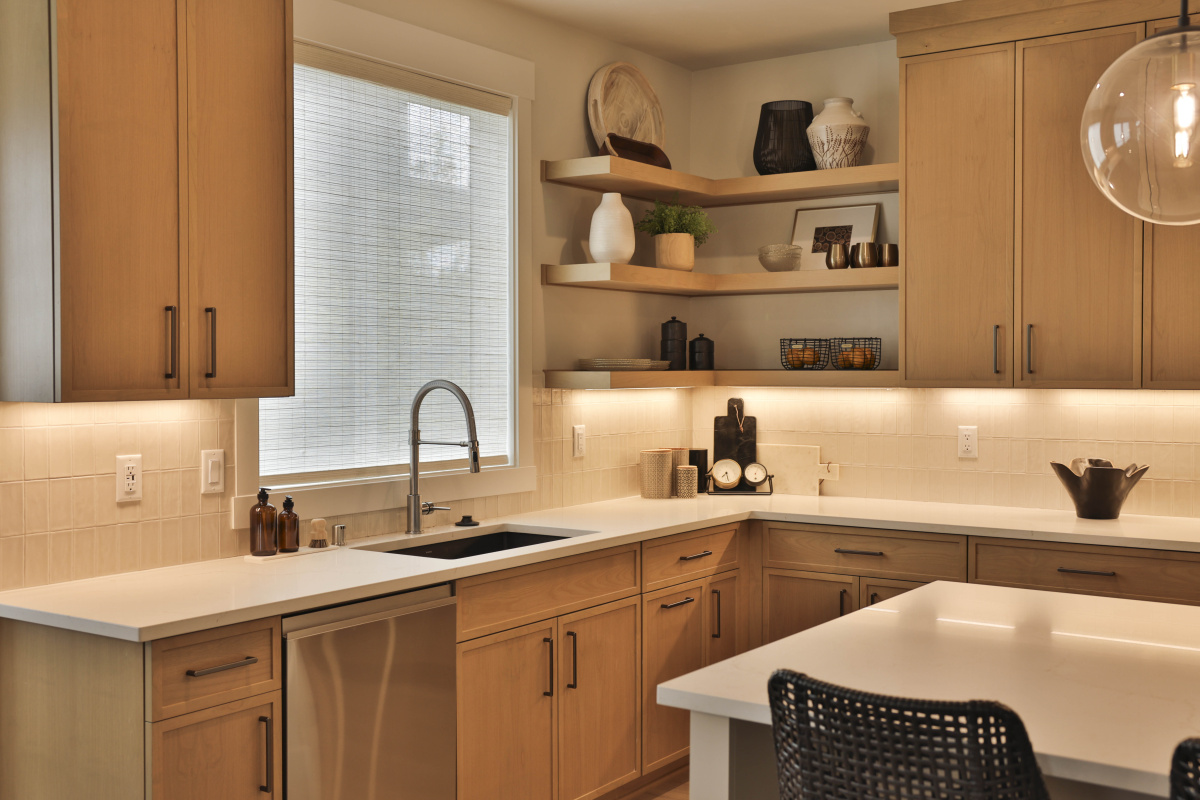
“Window treatments are also a very intimate business. You’re being invited into someone’s personal space, and that comes with trust and responsibility. We keep that in mind with every project.” Photo courtesy of Skyline
Looking back, are there any early decisions that really set the stage for Skyline’s growth?
A personal passion is my love for travel. It’s always been exciting for us to go to a new city and open a new location. We get to learn the area and be immersed in the city. Right now I’m somewhere different every other week just going around to showrooms, doing additional training with new team members, things like that.
Opening the second showroom in Portland was super scary because we were 3,000 miles away. If something went wrong I couldn’t just be there in an instant. The biggest challenge with opening new locations is finding great team members that we can trust and can carry our Skyline torch. We have to 100% trust that they will do what they need to do. They kind of function as micro-businesses.
What keeps you hooked on this business even after all these years?
I still really love the design side of this business. I love helping clients with fabric selections. I don’t get to do as much of it as I used to, but when I’m in different locations—right now I’m in our New York location—I still hop in and talk to a client when they come in. It’s fun meeting new people every day.
-
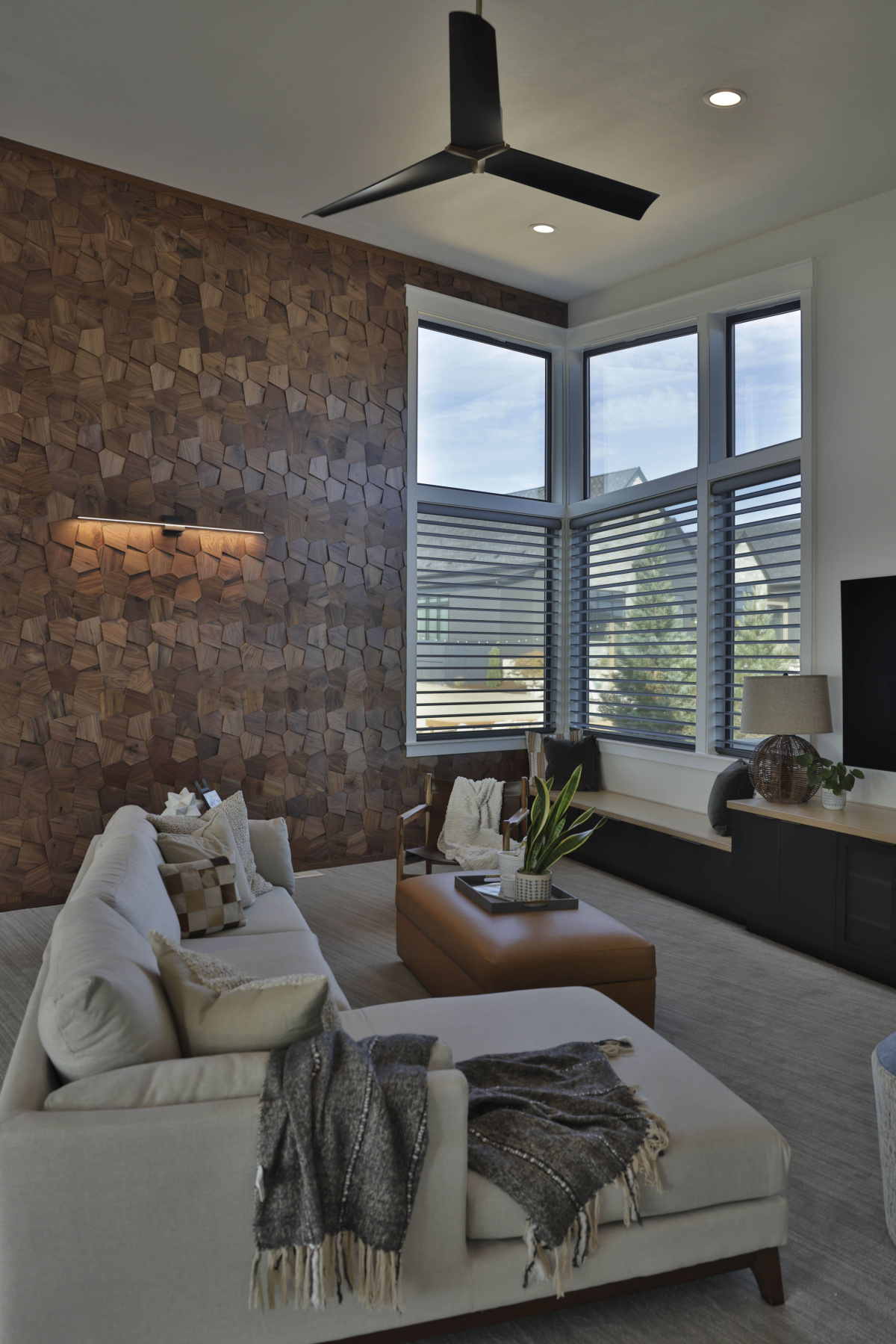
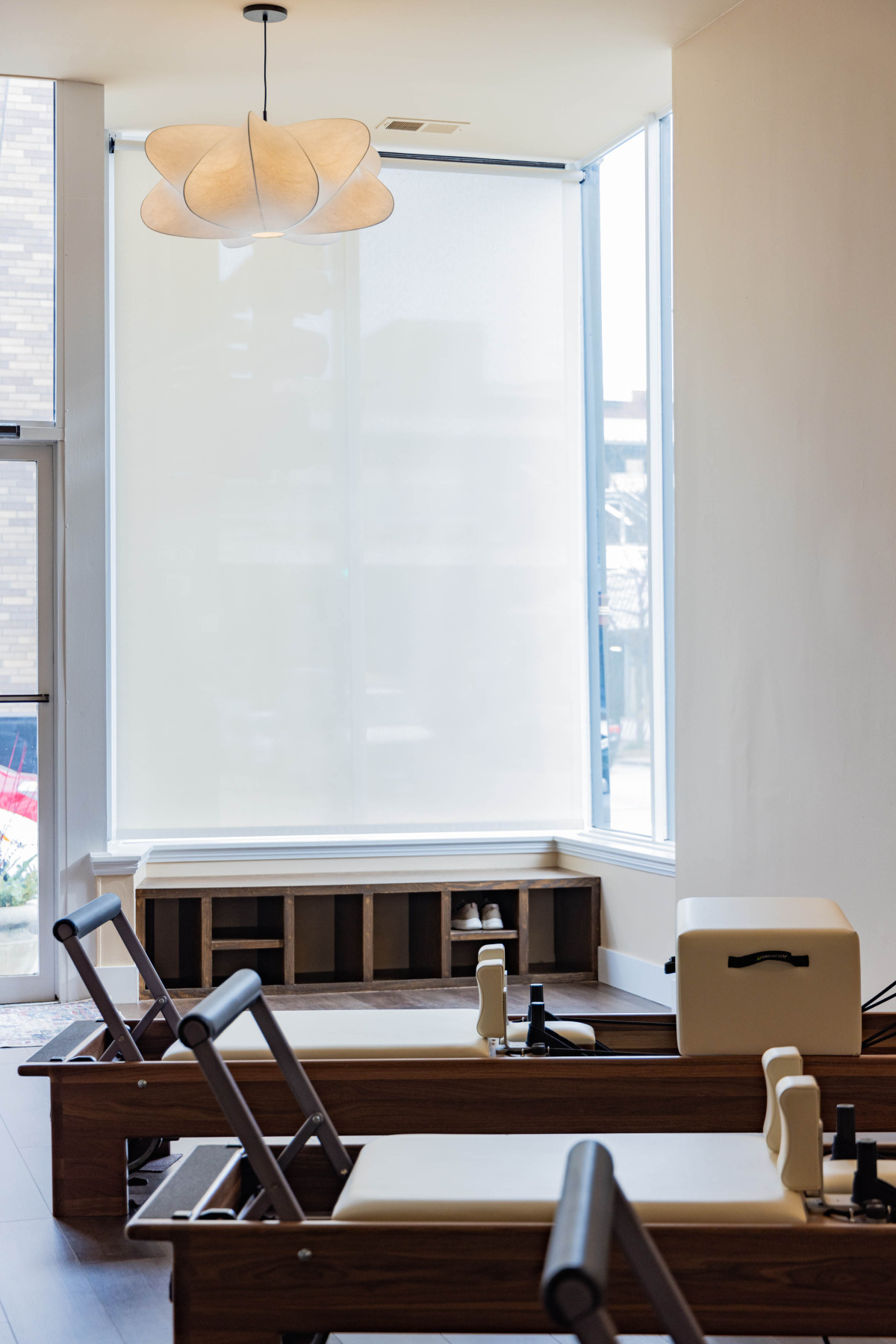
- “The most rewarding part is being there for the installation and seeing the finished product. We know how to envision the end result from the start, but our clients are trusting us to guide them to the right solution,” Chrissy says.
-
- Photo courtesy of Skyline
One of the things that drew me in when I first started was that every day feels different. You’re often doing similar tasks, but always in a new setting. We’re going into clients’ homes, exploring different neighborhoods, and meeting new people. If you love homes it’s exciting to step into places you’ve never been before, whether it’s a brand-new high-rise or a historic building.
Window treatments are also a very intimate business. You’re being invited into someone’s personal space, and that comes with trust and responsibility. We keep that in mind with every project.
The most rewarding part is being there for the installation and seeing the finished product. We know how to envision the end result from the start, but our clients are trusting us to guide them to the right solution—and there’s nothing better than seeing their reaction when it all comes together.
That moment when they light up and say they love it is truly my favorite part of what we do.