The new SKS flagship showroom at The MART in Chicago made its debut like a stage curtain rising. A chandelier of fluted glass hung above sculptural basalt stone at the entrance. A 20-foot dining table pulsed with projection-mapped light while Grant Achatz, the Michelin-starred chef behind Alinea, deconstructed a Chicago hotdog into an artfully formed jelly.
Every element was intentionally theatrical. When I sat down with architect Piero Lissoni to chat about the project, he tells me envisioned the showroom as a stage where the scenery shifts and products take on different roles. He also told me all about what it means to design for “qualities of life” rather than simply displaying appliances, and why he sees every showroom as a new stage.
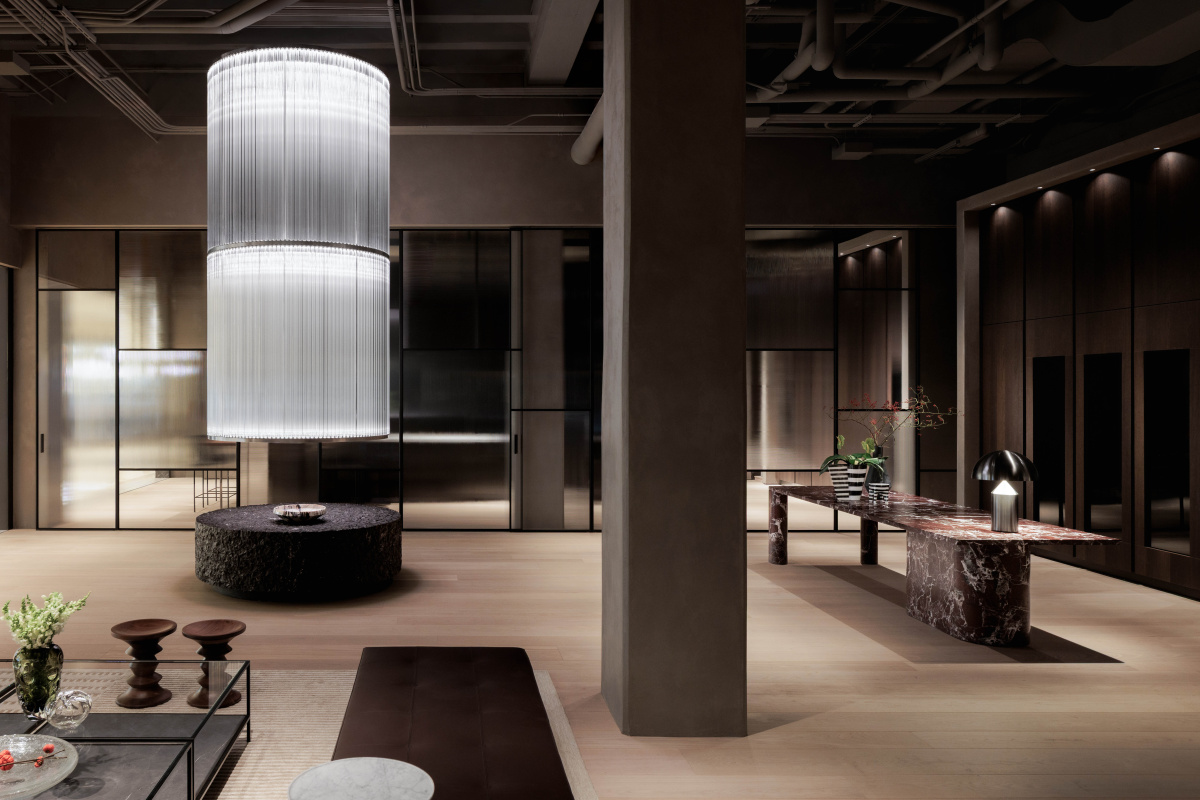
A custom ten-foot chandelier composed of fluted glass rods sets the tone for the space’s refined, gallery-like atmosphere. Photo courtesy of Petrini Studio
Gianna Annunzio: You’ve designed so many restaurants, hotels, and residences throughout your career. What drew you to this showroom project, and how did you approach it differently than a traditional retail space?
Piero Lissoni: First, I know the company very well. When SKS discussed the project with me, they said it wasn’t about designing a showroom but about “creating a stage”—a super sophisticated stage. Something that looks like a theater where life unfolds. That’s what really captured my imagination. Second, I’ve had a long relationship with LG and their brands, who I collaborated with on this project.
When designing the showroom, we didn’t want to incorporate appliances in the traditional sense. We didn’t show ovens and refrigerators like you would find in a typical appliance store. Instead we showed qualities of life. We showed how people actually live, how they cook, how they gather, and how they create memories in these spaces.
Everything is designed so you don’t feel like you’re inside a shop or classic showroom environment, but inside something completely different. A stage, a theater with choreographed light, music, electronics, and ambiances. The LED display helps create this cinematic quality. It transforms the entire atmosphere with imagery and movement.
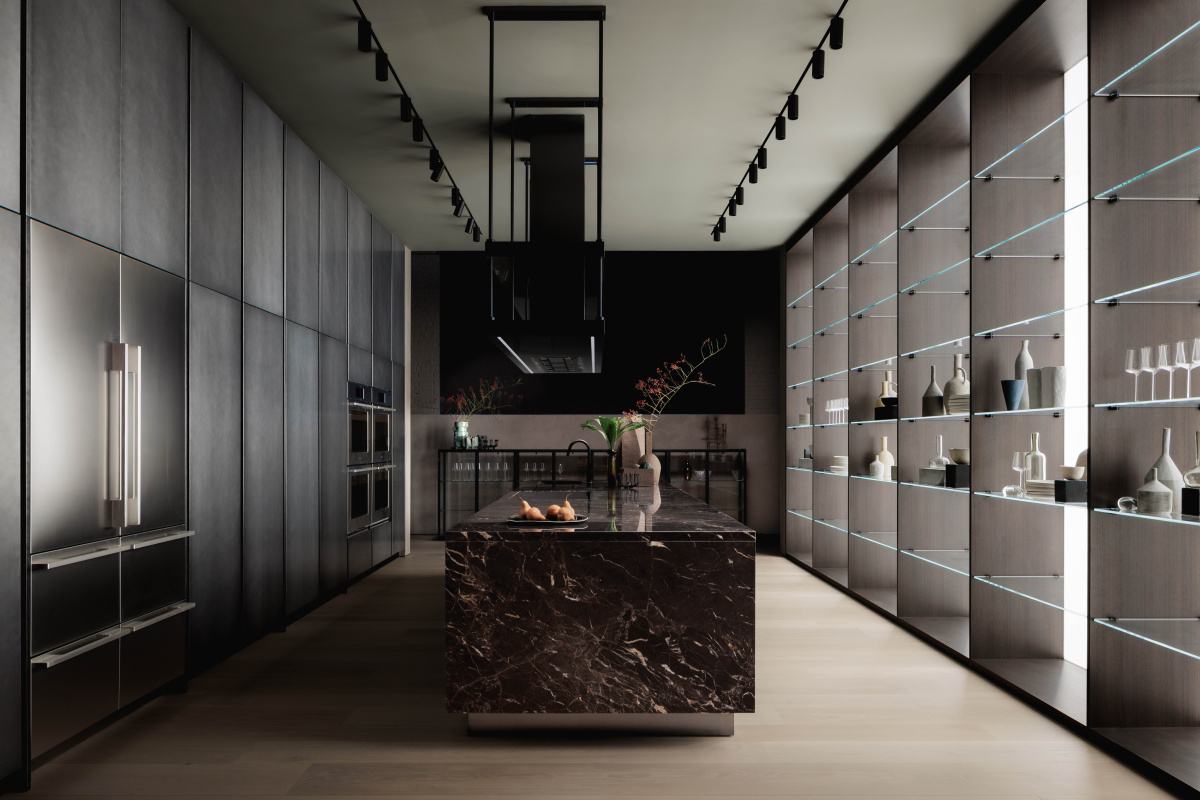
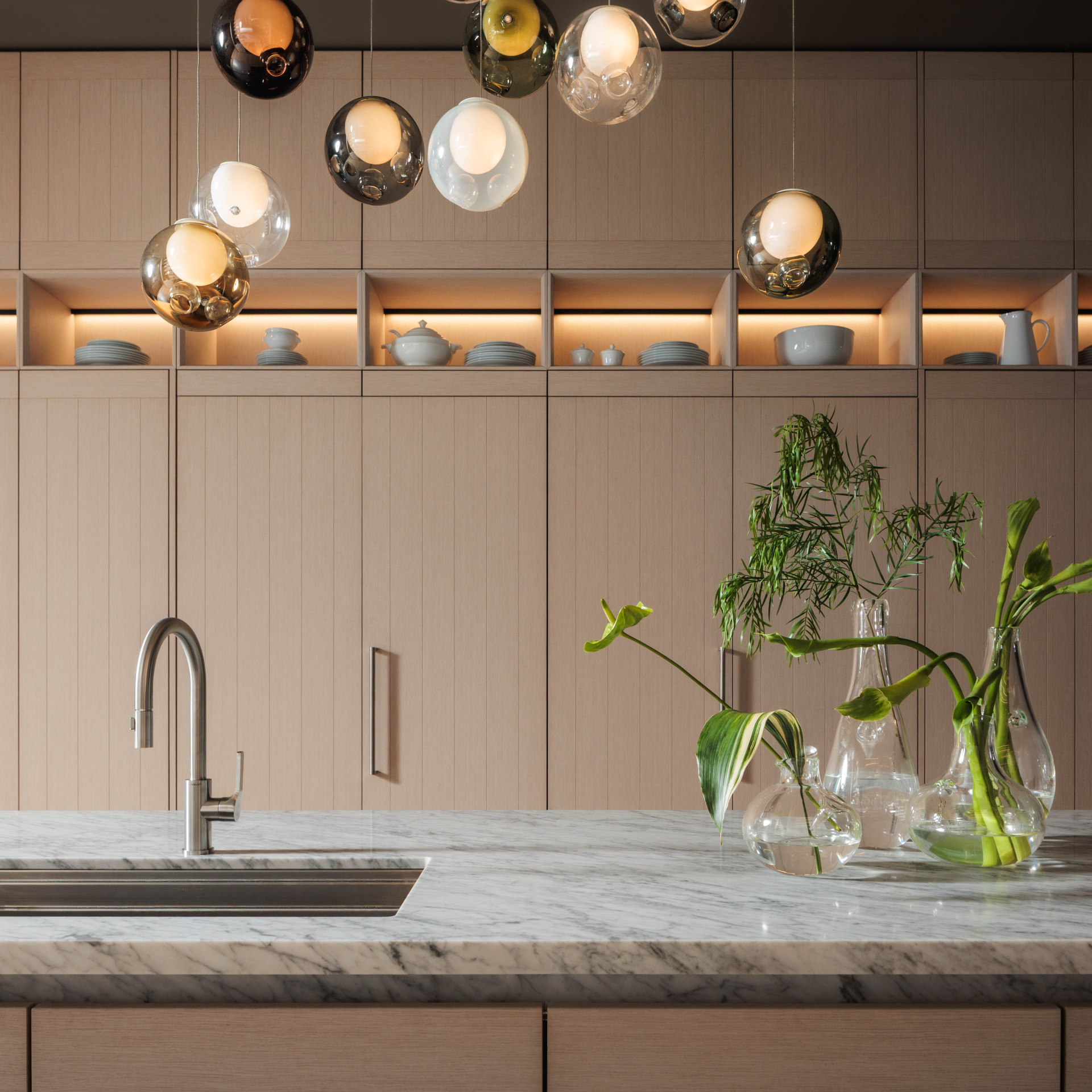
The design pairs Italian millwork by Arclinea with advanced Korean engineering from LG, merging craftsmanship and innovation in every vignette. Photo courtesy Petrini Studio
How did those artistic and theatrical influences shape your design approach?
I thought about the showroom as a still life painting—like those beautiful Dutch paintings from the Golden Age with the fruits and the vessels and the light. Everyone who walks in is part of the still life. When they step into this space, they become an actor on the stage or a figure in the painting. That’s why we worked so carefully on the lighting and detail. The ten-foot chandelier at the entrance made from fluted glass—it sets the tone immediately. You understand you’re entering something curated.
I’m also a huge fan of photography and theater. I’m a fan of atmosphere and the art of creating a mood. Throughout my career I’ve always been drawn to how space can evoke emotion and can tell a story without words. We tried to put atmosphere inside this showroom. We combined together a few different styles and altitudes of aesthetics.
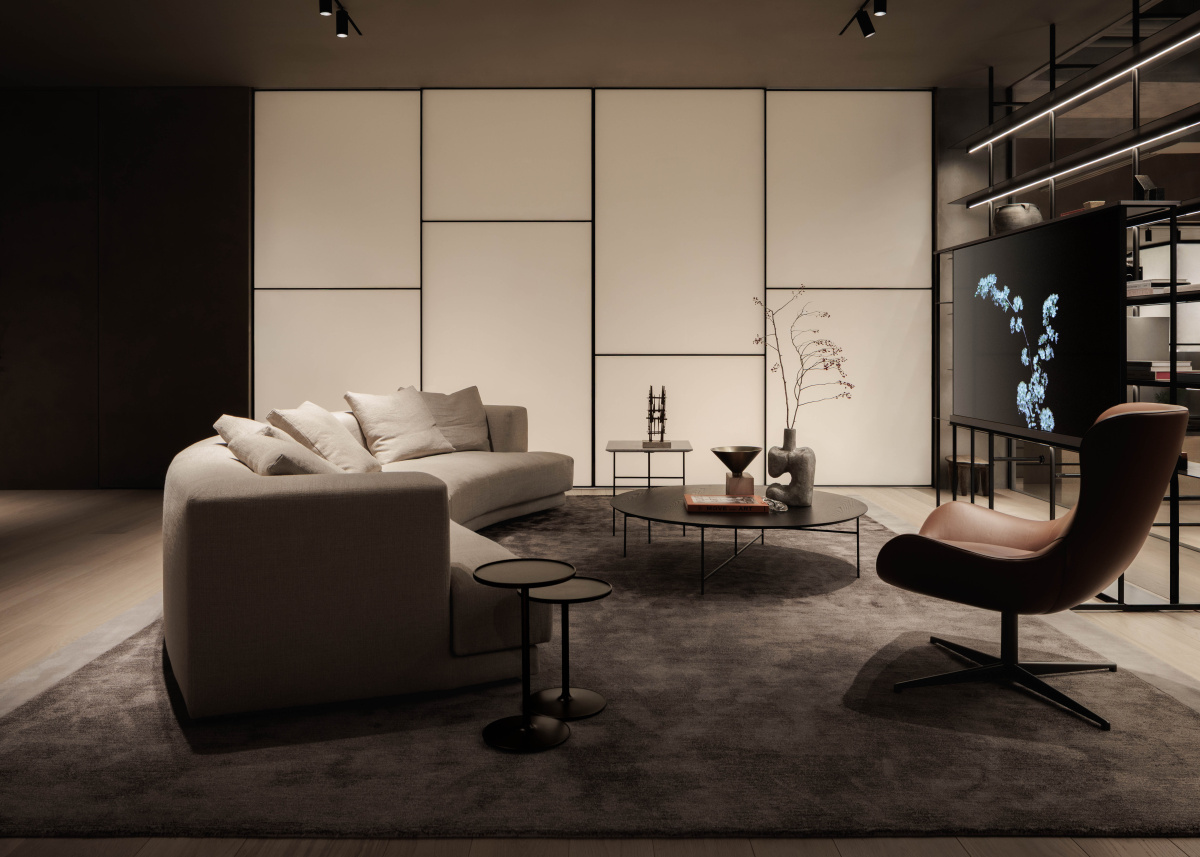
Designer Piero Lissoni turns the SKS Chicago showroom into a living stage where architecture, technology, and emotion perform as one. Photo courtesy of Petrini Studio
What were you referencing aesthetically when planning the showroom’s design?
I grew up with a strong European aesthetic, studying at the Politecnico di Milano and absorbing the Italian design tradition. At the same time, Chicago is a city where Mies van der Rohe designed the aesthetics of modernism. I tried to respect what he established here. I tried to follow this lineage, and to combine my personal taste with the client’s smashed together like potatoes. I tried to adopt a kind of purist attitude, this discipline that Mies advocated for.
We also didn’t use too much decoration. We didn’t add unnecessary flourishes or ornament. We designed only one beautiful floor that has the right materials and the right texture. People love to label me a minimalist. I like simplicity, yes, but simplicity is for me the public face of complexity. At the same time, simplicity needs some risks.
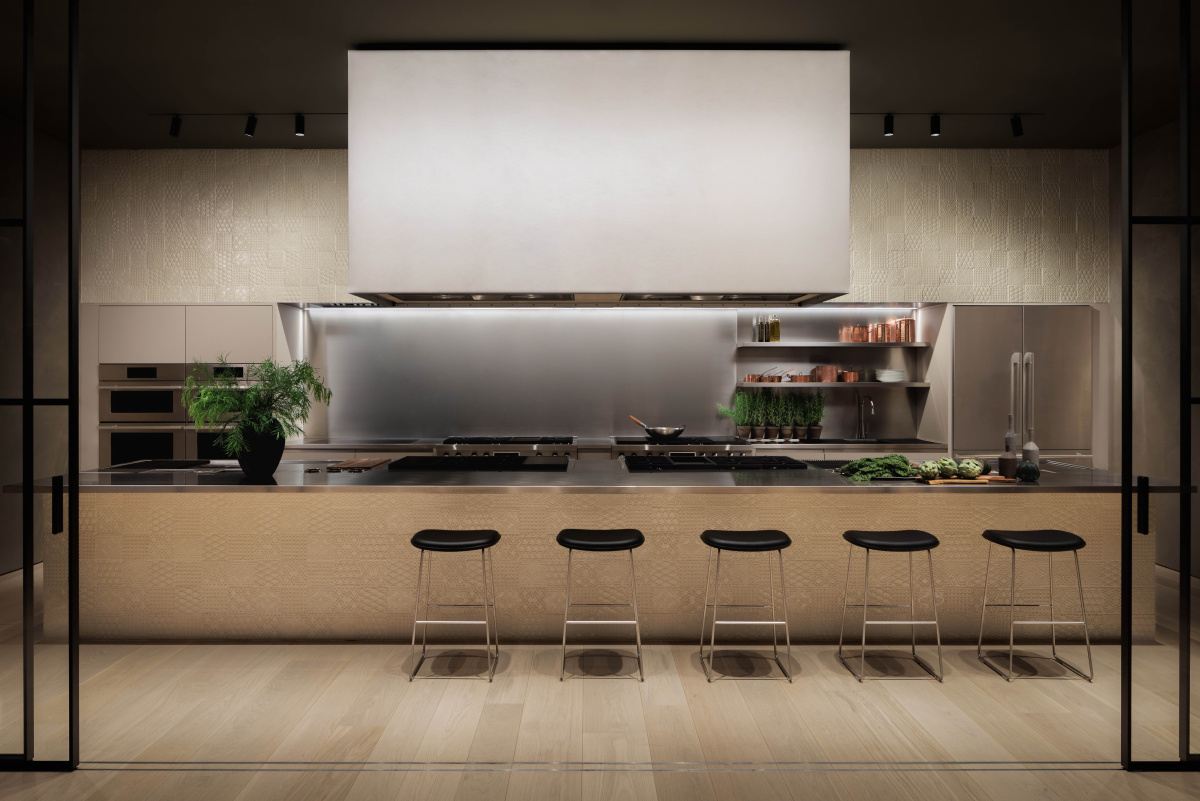
More than a place to display appliances, the space invites visitors to imagine morning rituals, late-night dinners, and the quiet moments in between. Photo courtesy of Petrini Studio
Does your design approach often change depending on the city you’re in?
When I’m designing in a new location, I need to be quiet first. I need to follow an attitude or follow my capacity to understand a place. For me, designing in Japan or the United States or Italy or Chicago, New York, or South America—it doesn’t really matter in one sense. I don’t choose the country as a starting point. It’s more or less the same approach because I design for a precise community of people who will use and experience the space. Whether they’re in Tokyo or Milan or Chicago, people still cook, still gather, still seek beauty and functionality.
We adapted our idea to that space because we are in Chicago, and we’re in The MART, this incredible landmark building with its own industrial heritage. But at the same time, I adapted the space to my language, and not vice versa. I didn’t compromise my design philosophy to fit a preconceived notion of what a showroom should be.
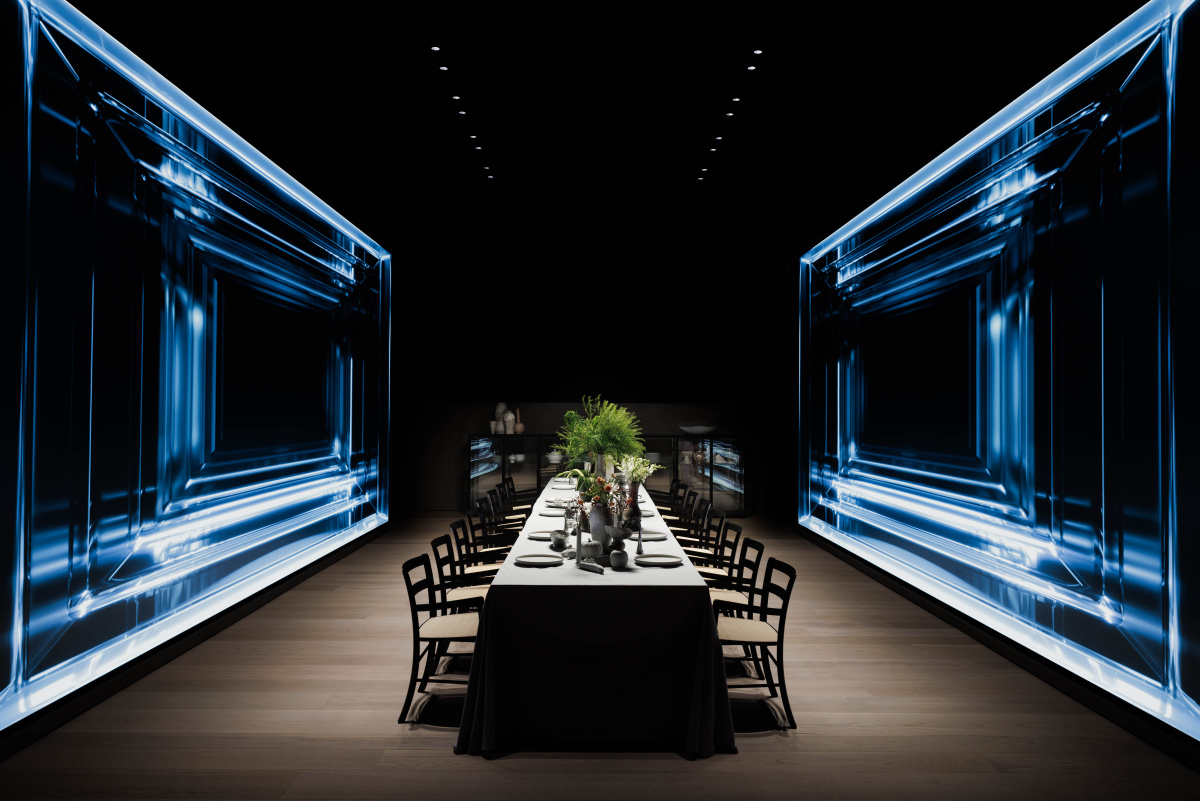
LED walls, hidden technologies, and sculptural lighting work together to transform the showroom from serene daylight to dramatic nighttime ambiance. Photo courtesy of Petrini Studio
A project of this scale requires many collaborators. How did you navigate that creative process?
We started by discussing many different details, attitudes, visions, and aesthetics. We had conversations that went on for months about materials, about lighting temperatures, about the exact placement of every appliance. In the end I signed the project, but it was made by many hands. Some hands from Korea—the LG design and engineering teams. Some hands from New York—my own studio, Lissoni Architecture New York, working on the details. Some hands from Milan—my main office coordinating the vision. And then Arclinea for the Italian cabinetry, craftsmen for the custom chandelier, specialists for the LED installations.
To be proud of your work you need a lot of courage. You have to listen to everyone and consider their perspectives but at the same time, you need to follow your own point of vision. You cannot design by committee. That takes a lot of confidence and years of experience.
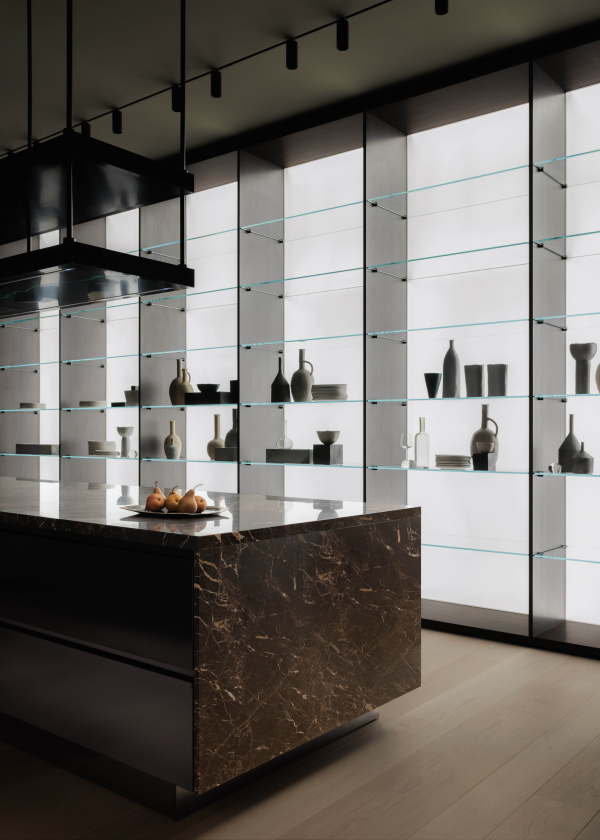
Every vignette captures a different lifestyle, from the calm precision of minimalist cooking to the layered warmth of communal entertaining. Photo courtesy of Petrini Studio
The showroom includes high-end culinary demonstration areas. How do you think about designing for food and cooking rituals?
All of these thoughts are for me part of one alphabet. It’s all the same language I speak as a designer. It doesn’t matter if it’s a kitchen, a wardrobe, a machine, sofas, lights, buildings, landscapes. It’s all inside one alphabet that I’ve developed over forty years of practice.
Luckily for me with this project, it was easy to use my alphabet together with their vision. But I’m not a great fan of food simply because I like to design something for food. I’m not a great fan of war because I like designing crosses. I like life, and I like designing for life in all its dimensions.
How do you approach integrating technology without letting it dominate the design?
Technology is everywhere you look in this showroom. The perspective of these screens is completely crazy and immersive. But I didn’t use technology like a theatrical effect or a gimmick. I used technology because it was the primary tool in my mind to use it in the correct way for this project.
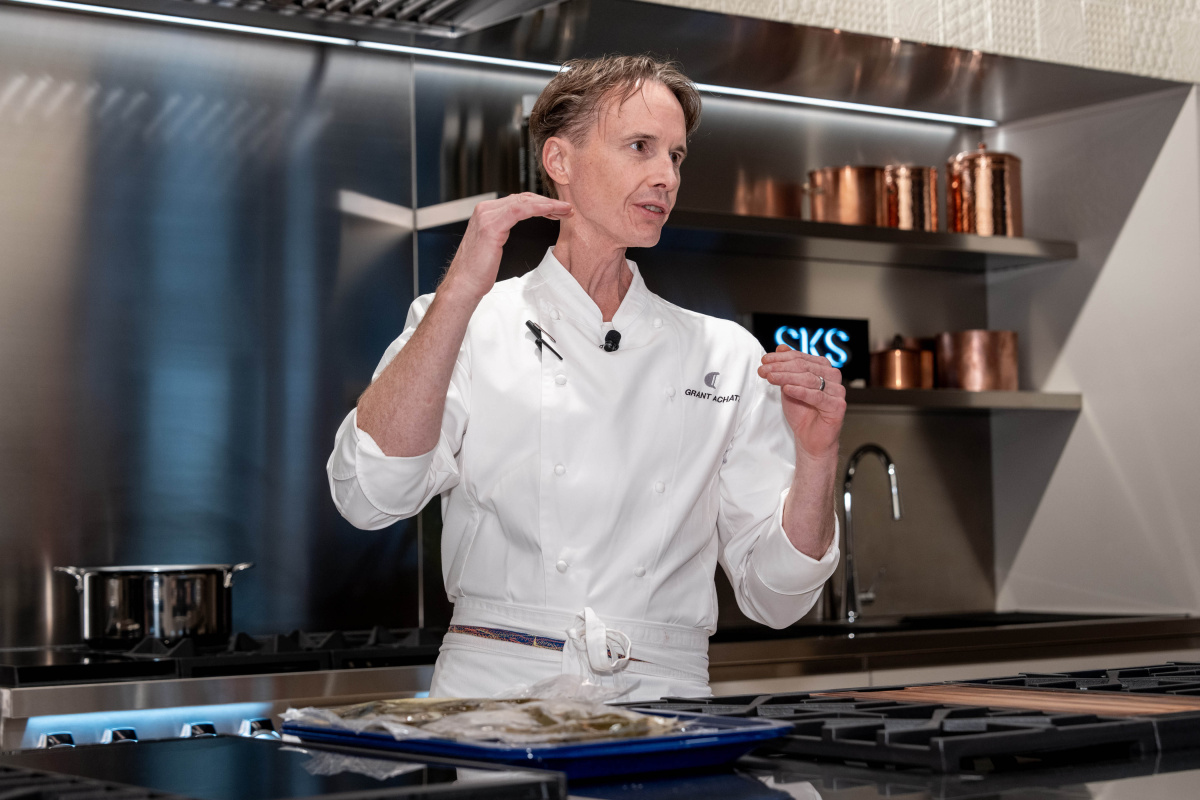
Chef Grant Achatz brought the showroom’s culinary vision to life, demonstrating how innovation, precision, and sensory storytelling can shape the way we cook at home. Photo by Jack Dempsey
When we started to discuss the LED light show that appears on the table in one of our vignettes, the first thought was, “OK, we’ll design a beautiful still life on the table.” Every two weeks, we need to change everything—fresh flowers, new objects, seasonal arrangements. At the same time I thought, “My God, I’m talking with LG, one of the technological monsters of the world. We need to do something to improve, something to change the paradigm.” So we designed a table that’s made with animation, light, and digital content. We used the dynamic display technology to bring still life to life.
Technology without ideas is pure tools—it’s meaningless. It’s just machinery. You need the human vision, the design thinking, to make technology meaningful.
Have you always had an appreciation for pushing tech boundaries in your work?
I have. I actually curated something in the beginning of the 1990s that was revolutionary at the time. We did a special exhibition that combined music and lights in a way that hadn’t been done before. We combined the music choreography principles from La Scala Theater in Milan and the choreography of using the correct quality of light to create different moments and moods. We put a lot of microphones around the space and speakers everywhere, and the music moved inside the exhibition with voices and spatial sound. The room was also full of computers that lined the walls. At that time computers were huge, ugly machines.
The exhibit overall was about at the feeling and effect we created. There was this interplay with light that went down and up, some spots following the music. It was impossible to look away. People spent hours going inside this installation and were completely mesmerized.
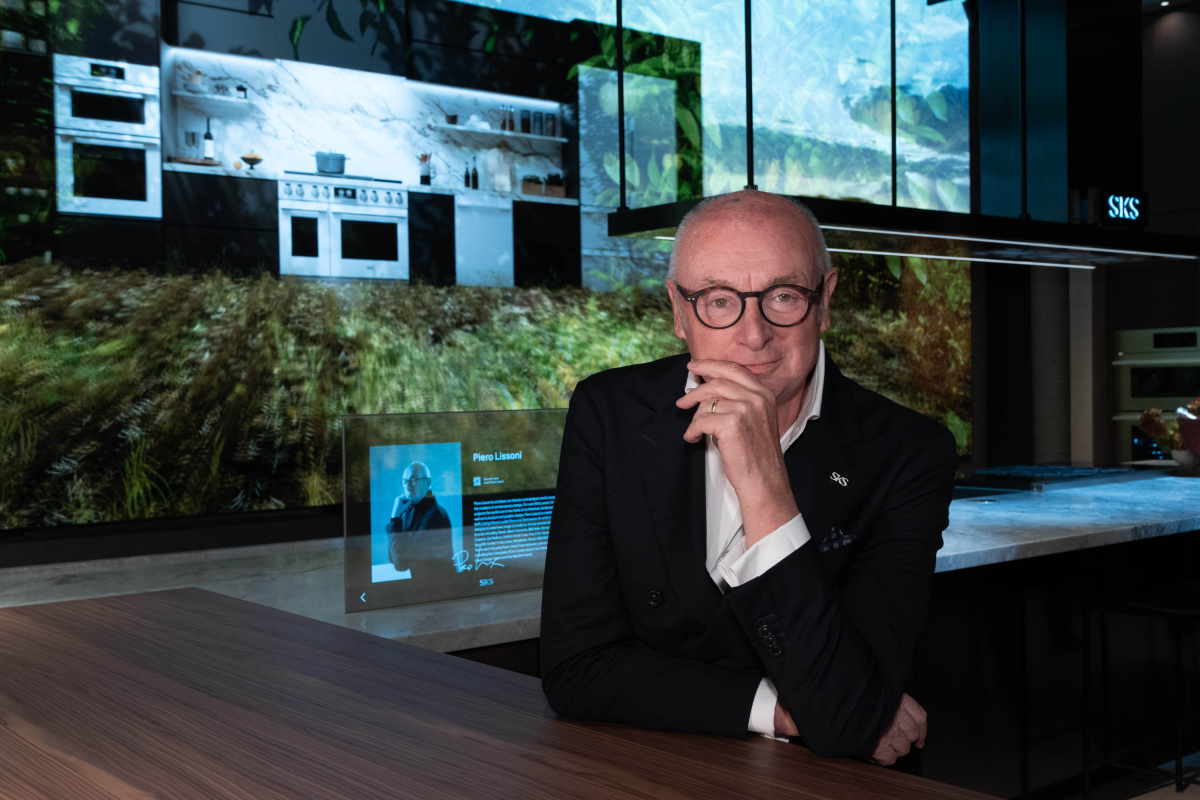
For Piero the showroom isn’t a collection of appliances, but a living still life shaped by light, proportion, and human presence. Photo by Jack Dempsey
What feeling do you want to linger after someone leaves a space you’ve designed?
I have a different attitude and level of responsibility depending on the project type. Here I’m working inside this scenography in this theatrical environment. When I’m designing architectural buildings it’s another level of responsibility entirely. If I do the wrong scenography, in the end it’s possible to change it. If I design an ugly building, it’s completely different.
When you walk through the SKS showroom, you understand immediately what we were trying to achieve. The space tells its own story. The integration of the artwork “The Culinary Journey” by the artist KAMW across those massive LED displays, the way each of the five kitchens has its own personality—these are things you have to experience in person.