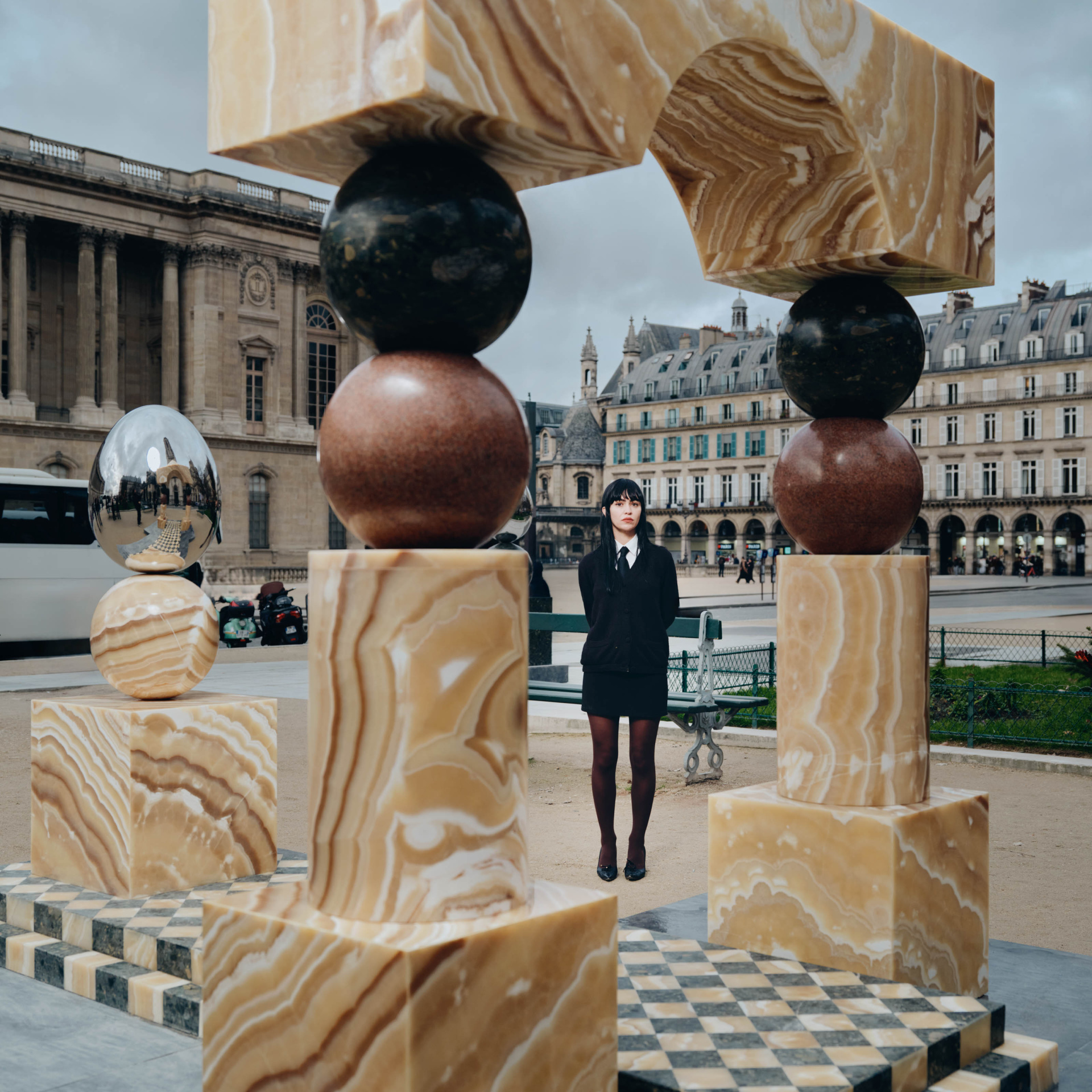
Pilar Zeta’s sculpture “Mirror Gate II,” fresh off of her installation in Miami, arrived in the heart of Paris during Paris Design Week, installed on the Place du Louvre as a bridge between ancient Egypt and today. The work looks like a temple doorway, carved from Egyptian stones: yellow alabaster, red Aswan granite, and Fawakheer breccia from the Marmonil quarries.
In a cover story for Sixtysix Issue 14, Pilar said she has long been drawn to the “ancient Greek and Egyptian” forms mixed with modernism. Originally exhibited facing the Pyramids of Giza, the portal has now been installed in Paris, 190 years after the Luxor Obelisk arrived as a gift from Egypt.
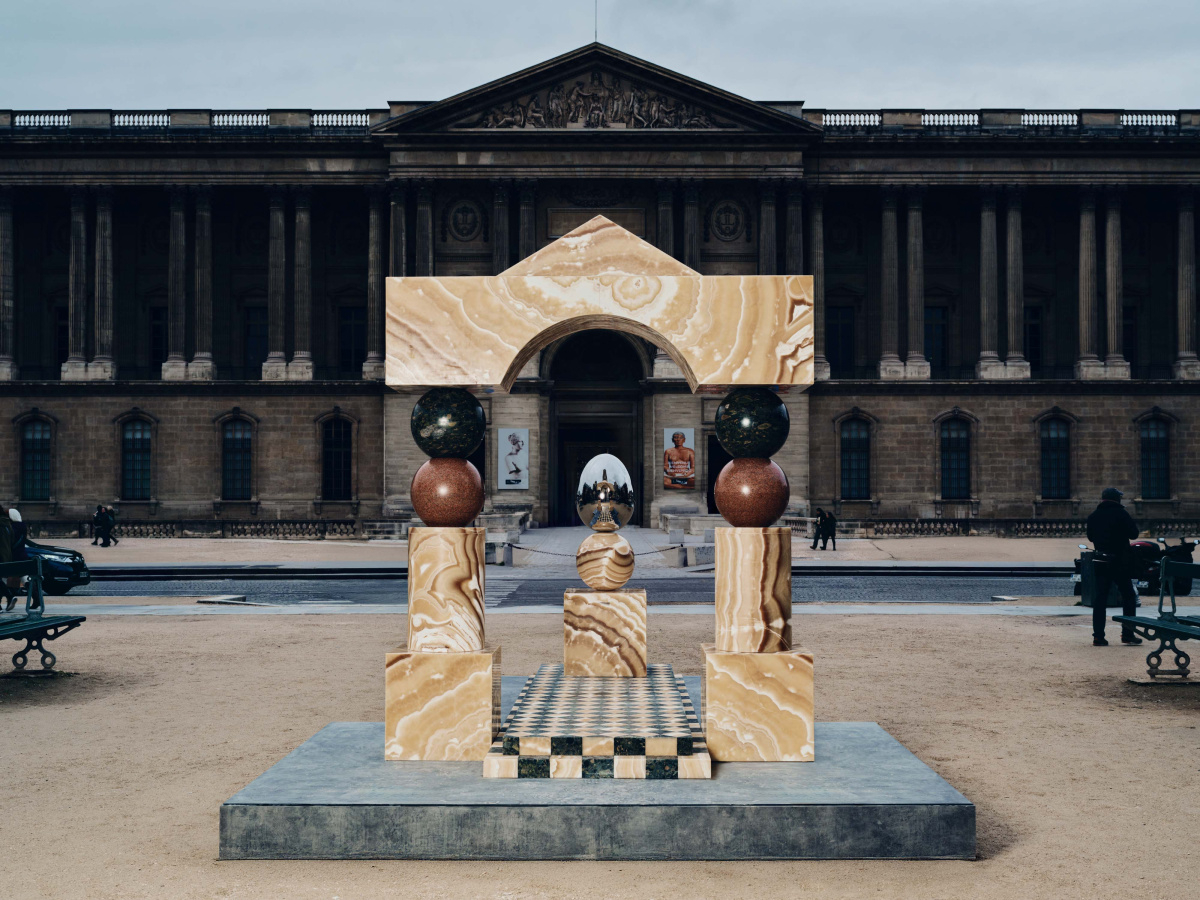
The monumental portal invites visitors to walk through a checkerboard path leading to a mirrored egg at its center, symbolizing transformation and potential. Photo by Christophe Coënon
At its center a checkerboard path leads to a mirrored egg, meant to symbolize potential and transformation. The portal invites visitors to look at their own reflection and think about themselves differently.
Marmonil, the Egyptian company that carved the work, uses techniques passed down from ancient times. Their craftsmen recently supplied over 110,000 square meters of stone for the Grand Egyptian Museum, including Aswan granite from the same quarry that provided stone for the massive statue of Ramses II.
-
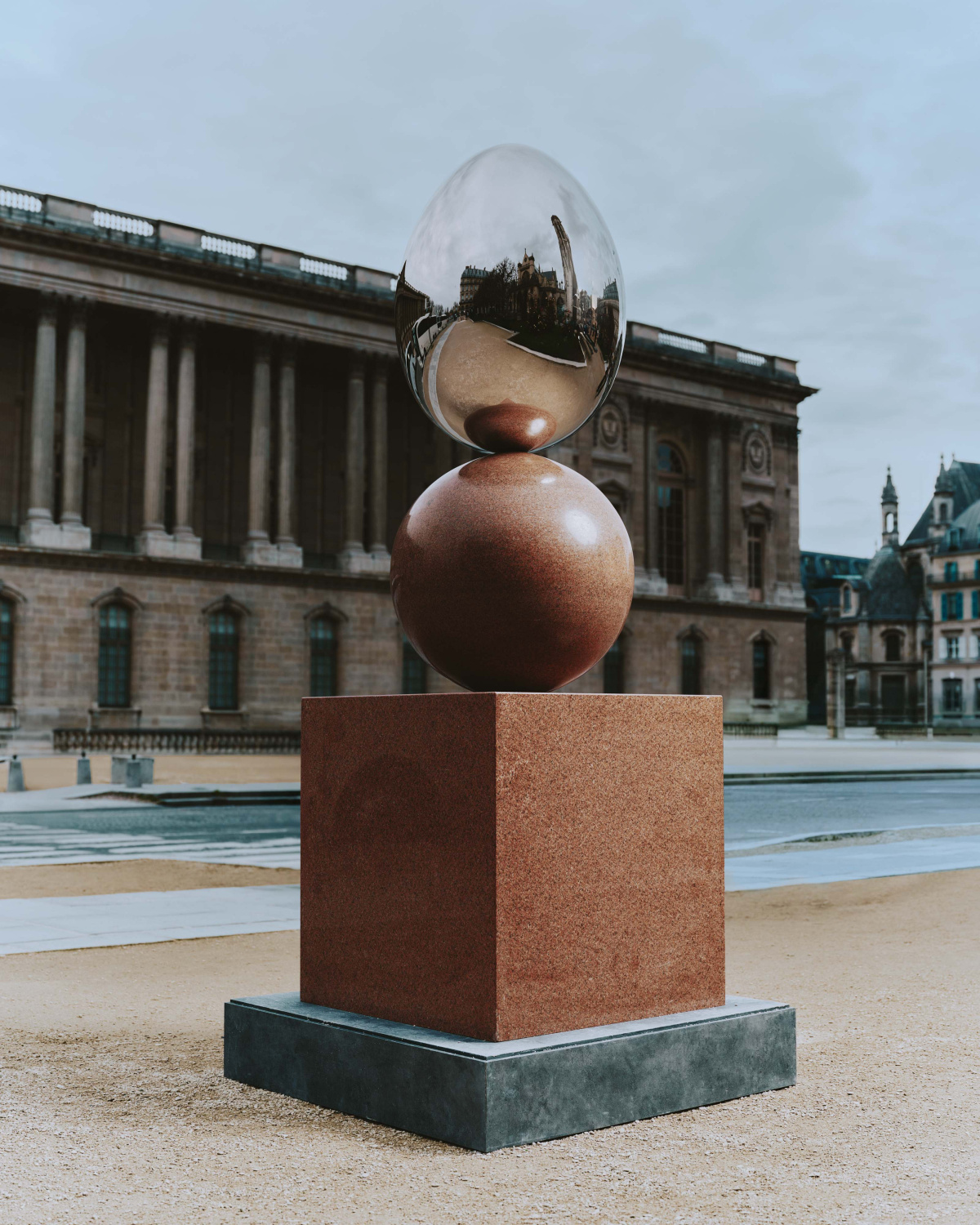
- After facing the Pyramids of Giza, Pilar Zeta’s stone portal arrives in Paris as a mirror between ancient Egypt and now.
-
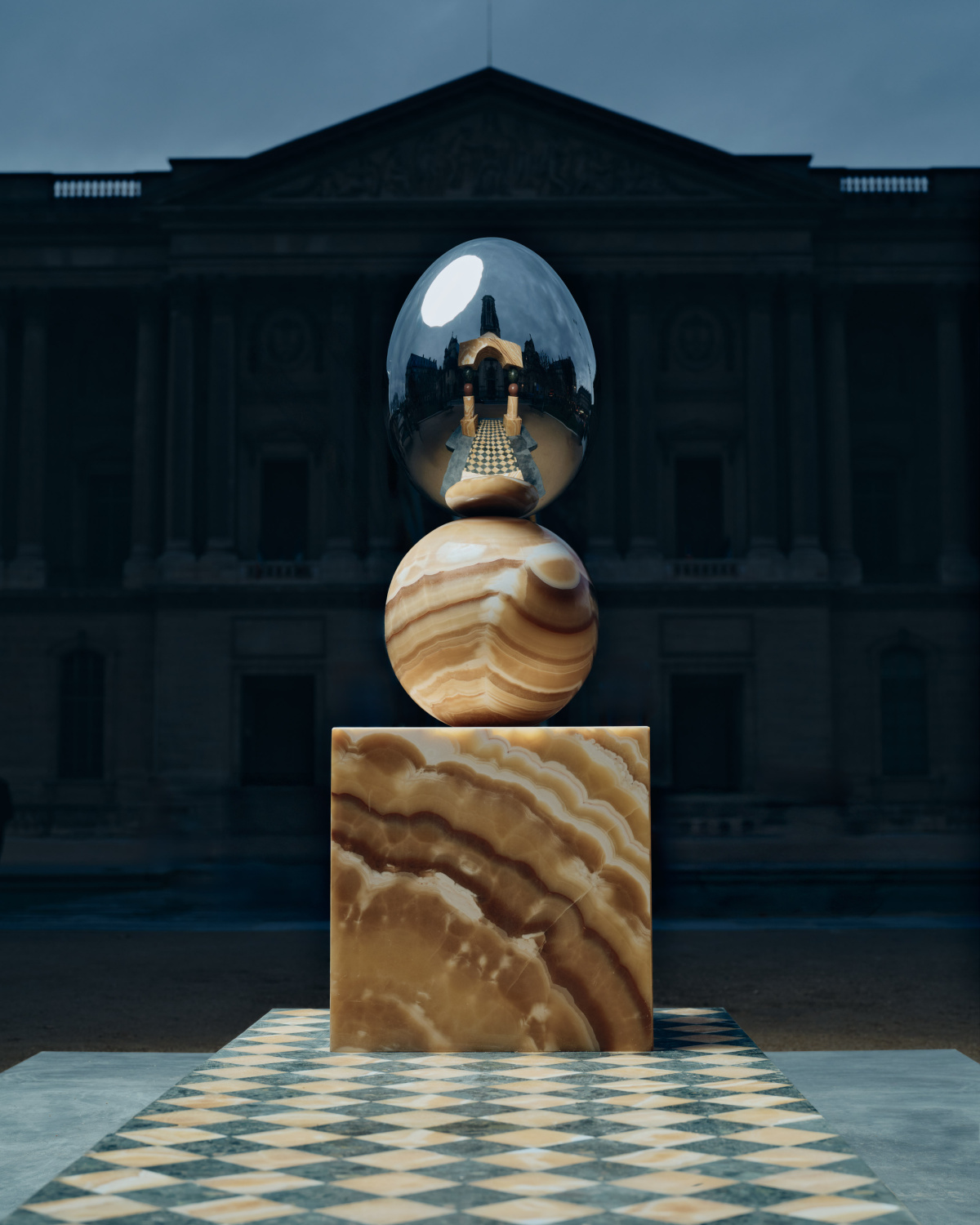
- Photos by Christophe Coënon