The oldest square in Paris exists because in 1559 Henri II took a fatal wound at a tournament beside the Hôtel des Tournelles, his Marais residence, and his widow, Catherine de’ Medici, had the palace torn down.
Half a century later Henri IV built the Place Royale, today the Place des Vosges, on the site. He never saw it finished; he was assassinated in 1610, two years before the opening. Paris has never been shy of drama. The square’s design was radical. 36 houses built to one elevation around a 140-meter square: red brick with stone quoins over vaulted arcades, steep slate roofs, and repetitive dormers. Nothing in Europe at the time looked like it (but soon everything would). Two taller pavilions anchor the axis, the Pavillon du Roi to the south and the Pavillon de la Reine to the north.
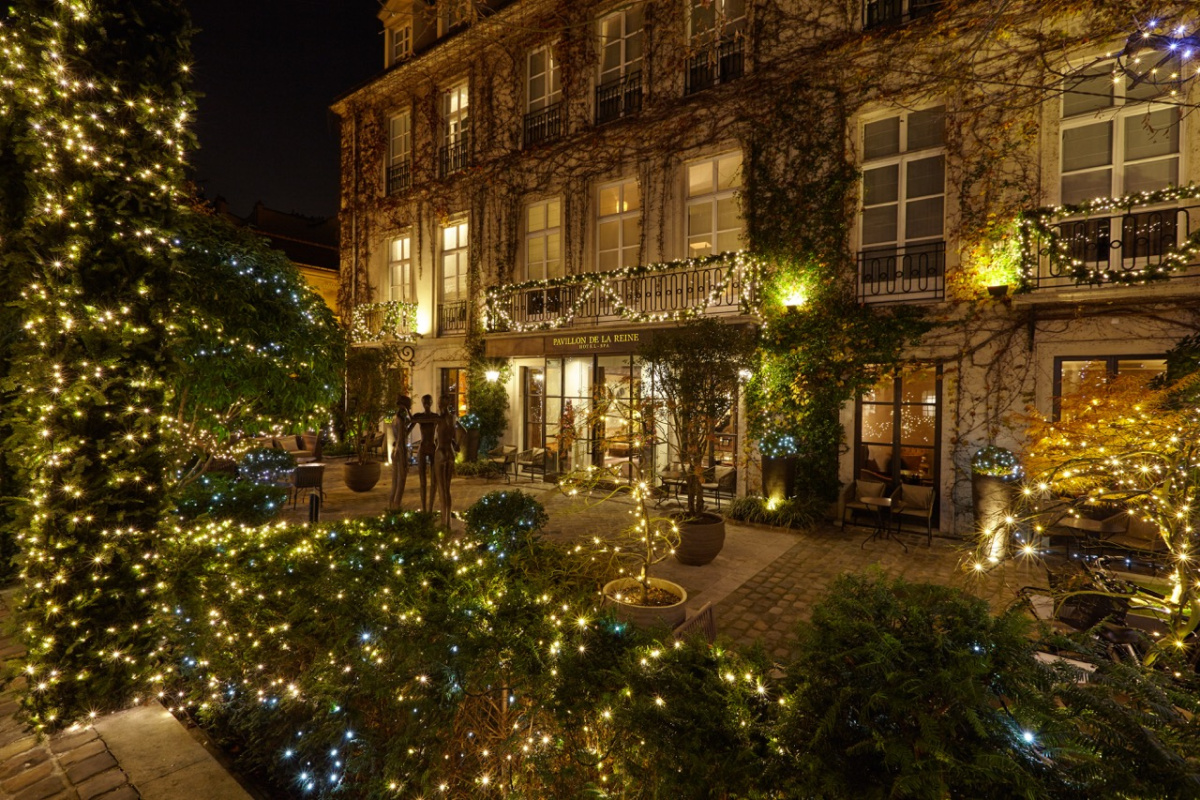
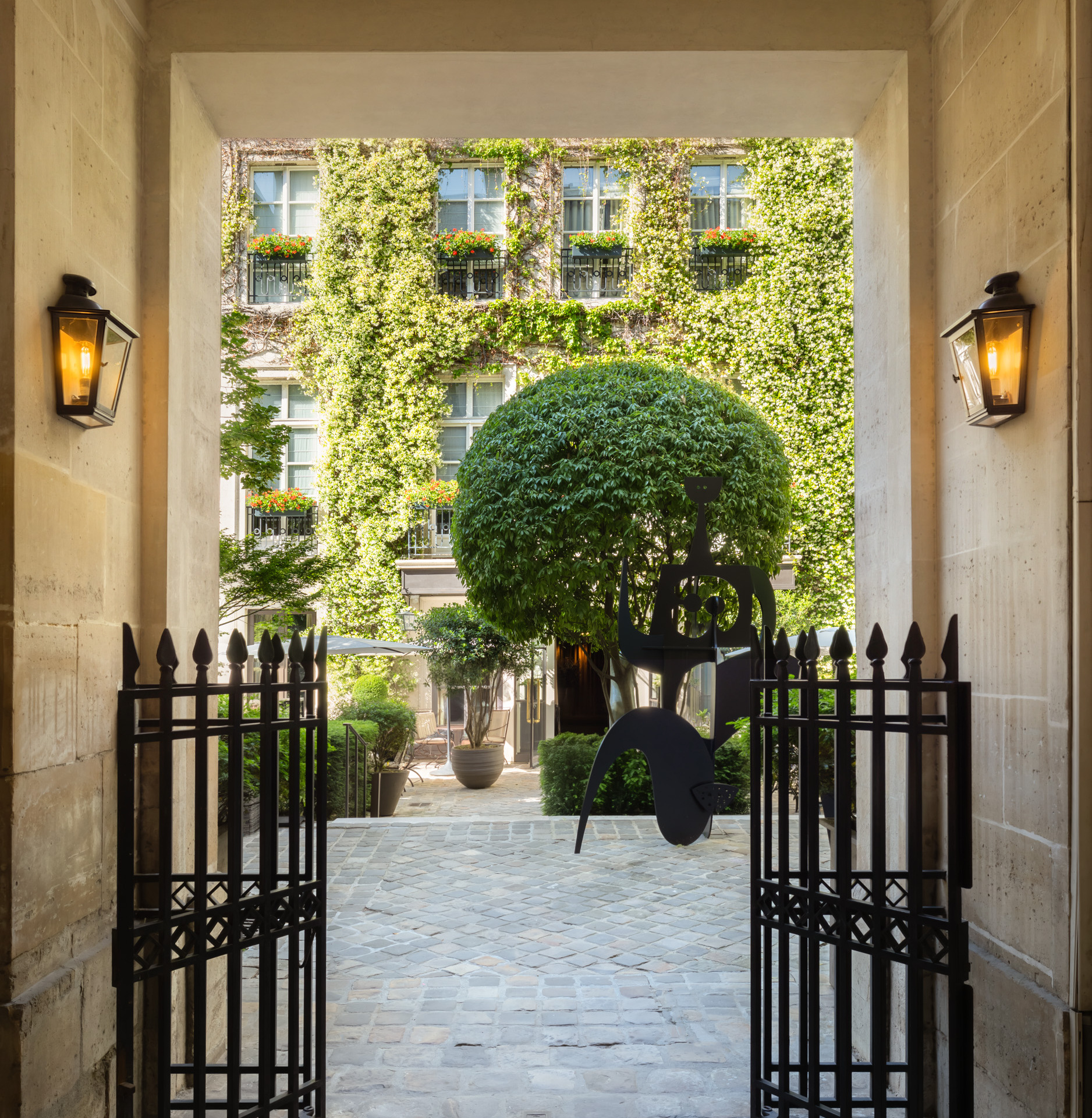
By December the courtyard garden is strung with lights, with garland running the balcony rails beneath the ivy. A bronze group of three figures anchors the Pavillon de la Reine’s planting beds.
The park spent its first century hosting duels and trysts. Madame de Sévigné was born at 1 bis in 1626. Racine, La Fontaine, and Molière moved through the salons. Victor Hugo took number 6 in 1832 and stayed 16 years, drafting much of Les Misérables above the arcades; Colette came later. The Revolution renamed the square for the Vosges, the first department to pay taxes to the new Republic, which is how the most aristocratic address in Paris came to be named for it.
The Pavillon de la Reine, the hotel, sits at number 28 and borrows the north pavilion’s name. If you have ever walked the arcades, you have probably missed it, which is the point. The entrance runs through a gate and across a private courtyard where the facade disappears under ivy. The name honors Anne of Austria, who by the house’s telling lived in a wing behind the square.
-
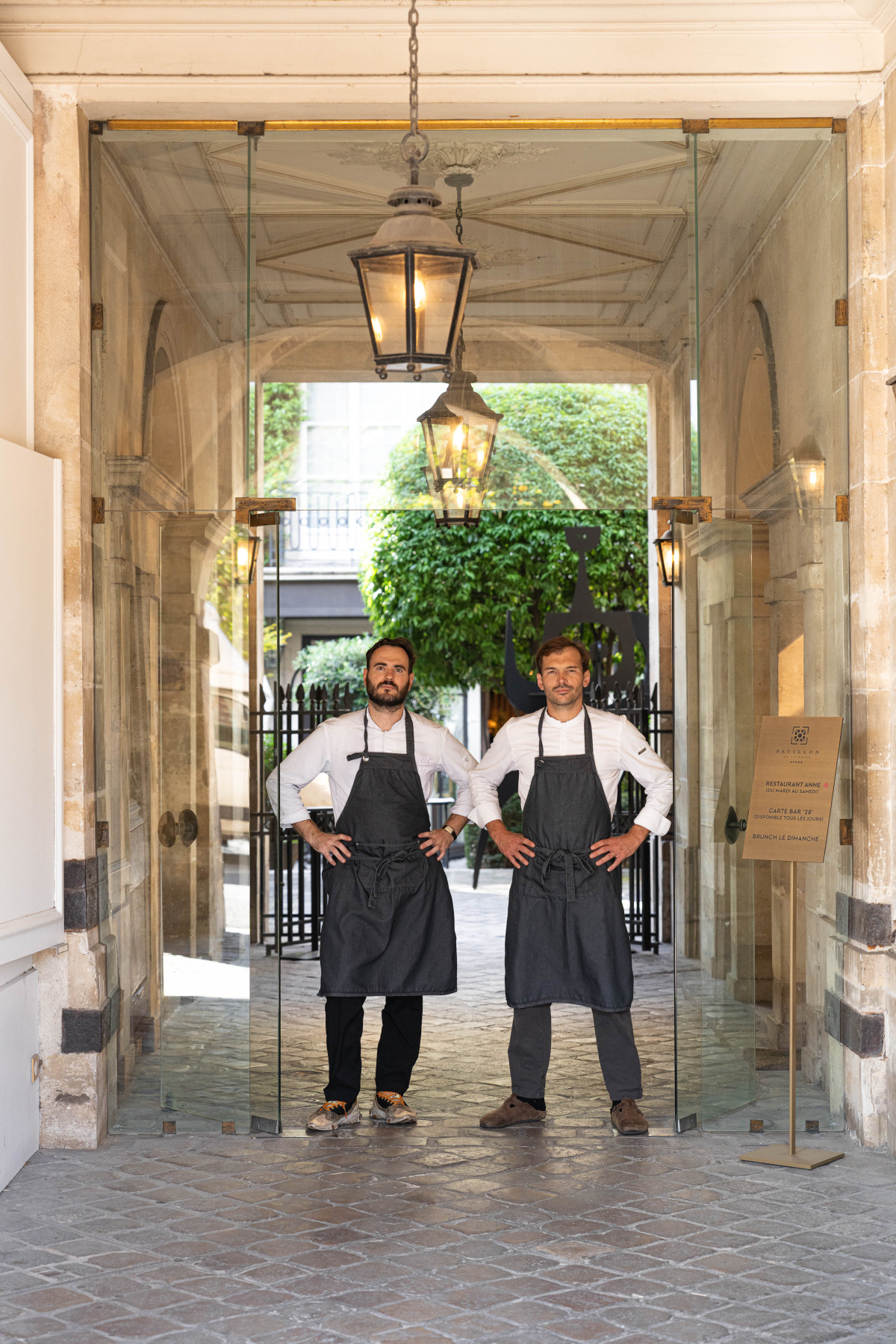
- Chef Thibault Sombardier and executive chef Matthieu Pirola
-
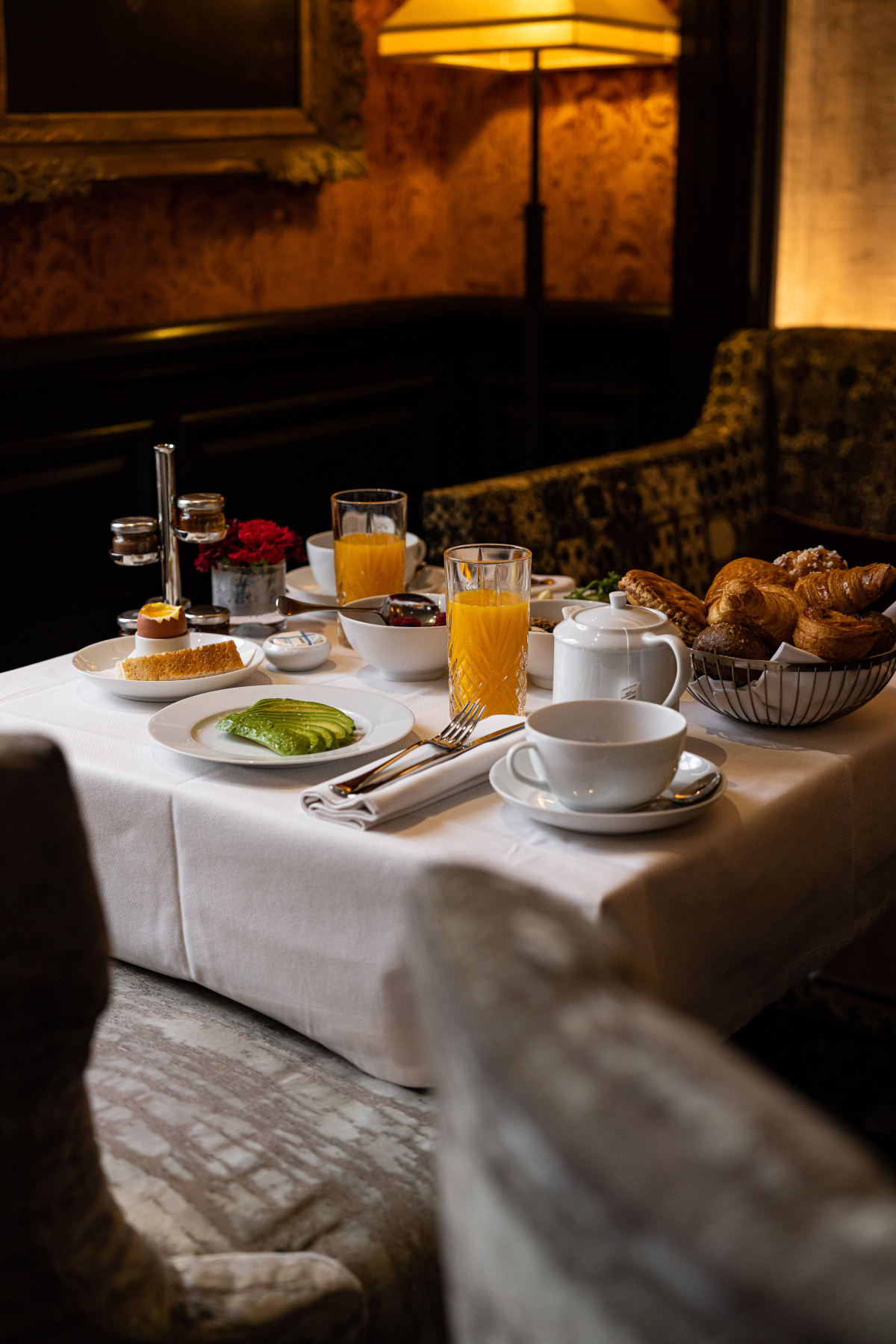
- Breakfast arrives on white linen in the salon.
The family that owns it is the Chevaliers, from Auvergne. The business began as a run of brasseries in western Paris in the 1950s, then moved into hotels in the 1980s. Madame Chevalier ran her hotels betting on charm and personalization over scale; her sons Jérôme and Éric lead the group today, four hotels including the Christian Lacroix-decorated Hôtel du Petit Moulin. The Pavillon remains the flagship: 56 rooms, no two alike, with interiors by Didier Benderli of Kérylos Intérieurs, who threads 17th-century beams and Versailles parquet through velvet, marble, and contemporary art. There is an honesty bar. There is free parking, which in Paris qualifies as a design achievement.
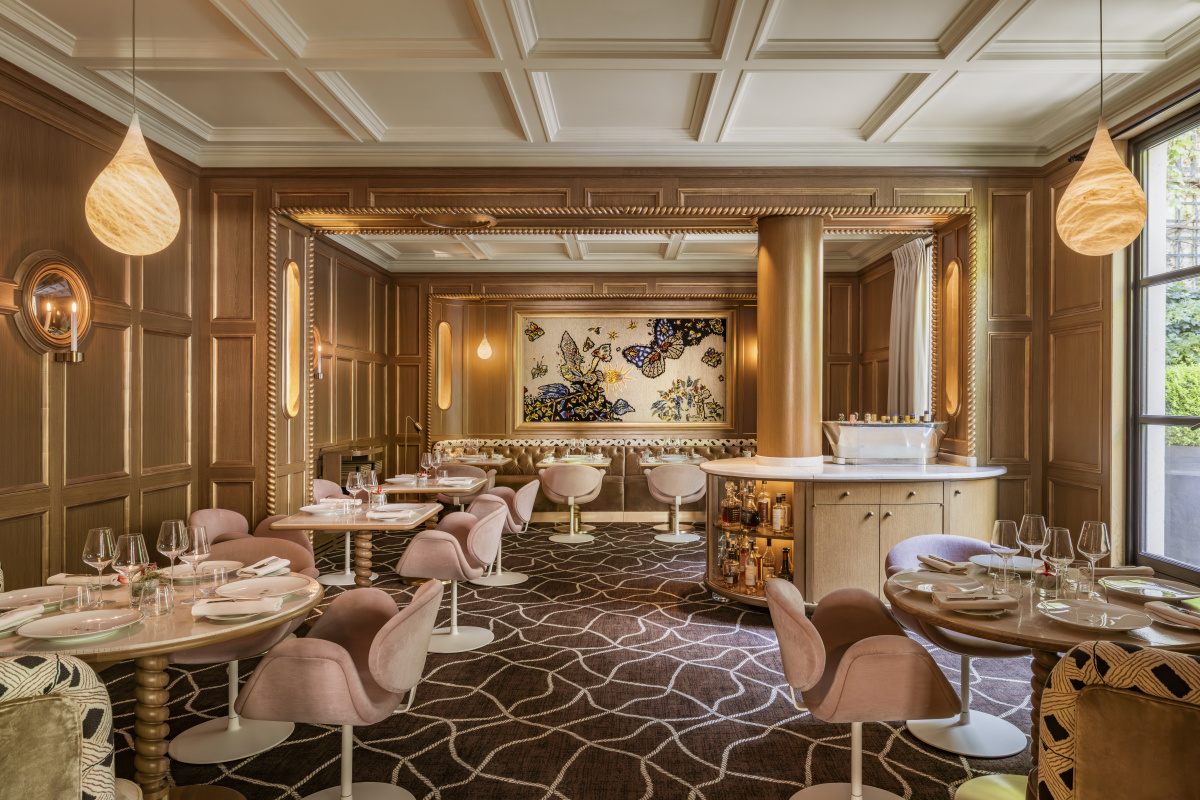
The recently refurbished dining room at Anne wraps oak paneling in gilt rope molding beneath a coffered ceiling and teardrop alabaster pendants. A tapestry of butterflies hangs above the banquette, opposite Anne’s blush velvet swivel chairs and a marble-topped bar cabinet.
For years the hotel ran without a restaurant, a confident position on a square that includes L’Ambroisie at number 9, where Bernard Pacaud held three Michelin stars from 1988 until his retirement last summer. When the hotel finally opened one, it hired Bernard’s son. Mathieu Pacaud built the menu at Anne, named for the queen, down to a chocolate soufflé honoring her famous chocolate habit. The Michelin star arrived in 2020; Thibault Sombardier runs the kitchen now. For a stretch, the square had the son of its most decorated chef cooking across the garden from his father. The Marais does not do coincidences.
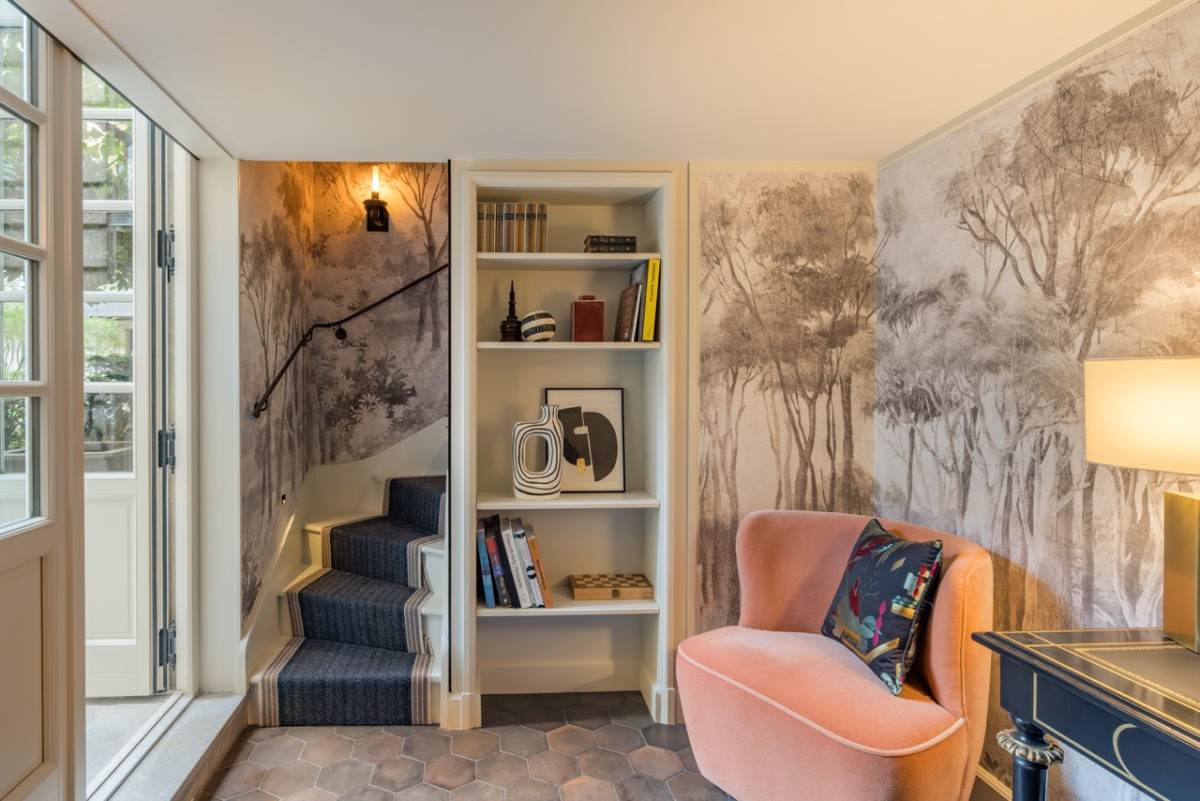
No two rooms at the Pavillon de la Reine share a floor plan, and several, like this one, come with their own staircase. The split-levels make the Pavillon feel less like a hotel than a small Marais apartment someone lends you, books included.
Paris hospitality in 2026 is an arms race of spectacle: palace spas, lobbies lit for the camera, chef reveals timed to fashion week. The Pavillon de la Reine sells the opposite. The square is the amenity, and the hotel’s design job is to frame it and then get out of the way. That is also why the people who check in are the ones who prefer not to be listed, and why the house will not list them.
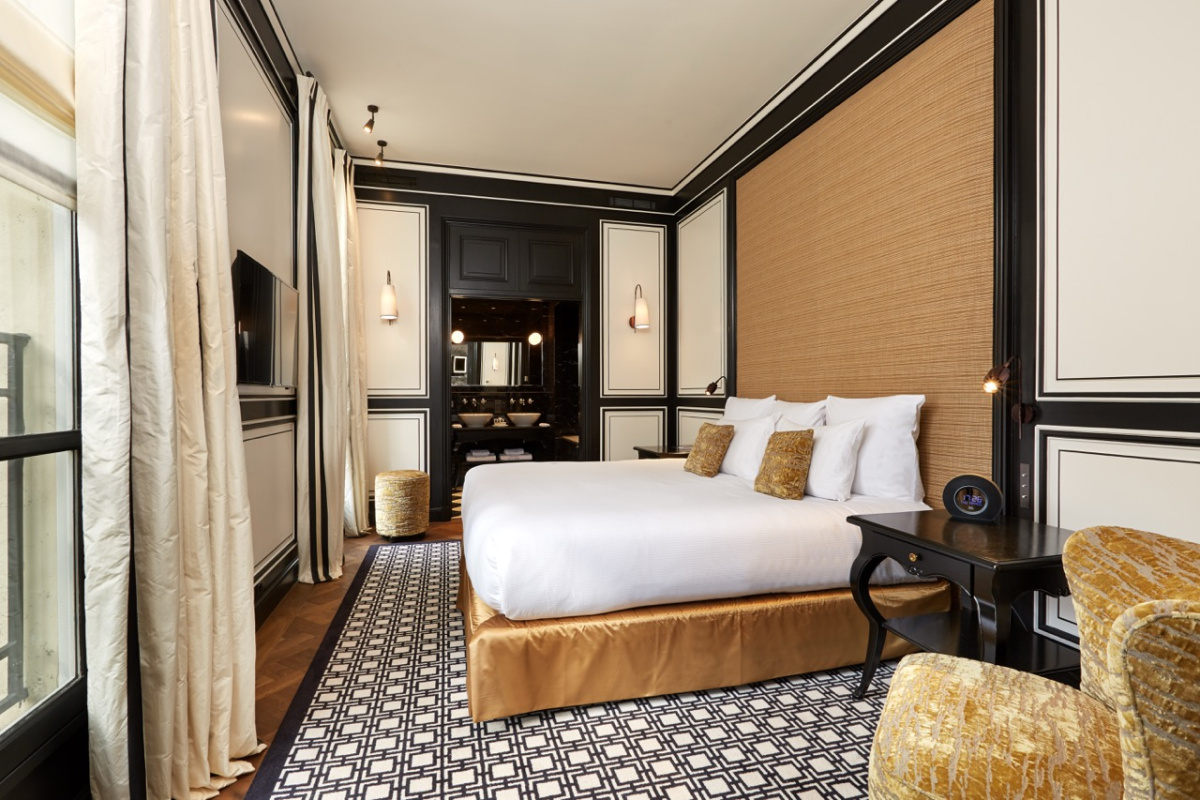
The Pavillon de la Reine’s 56 rooms run in two styles, patrician with antiques and toile, or contemporary like this one, black-trimmed paneling against a raffia headboard.