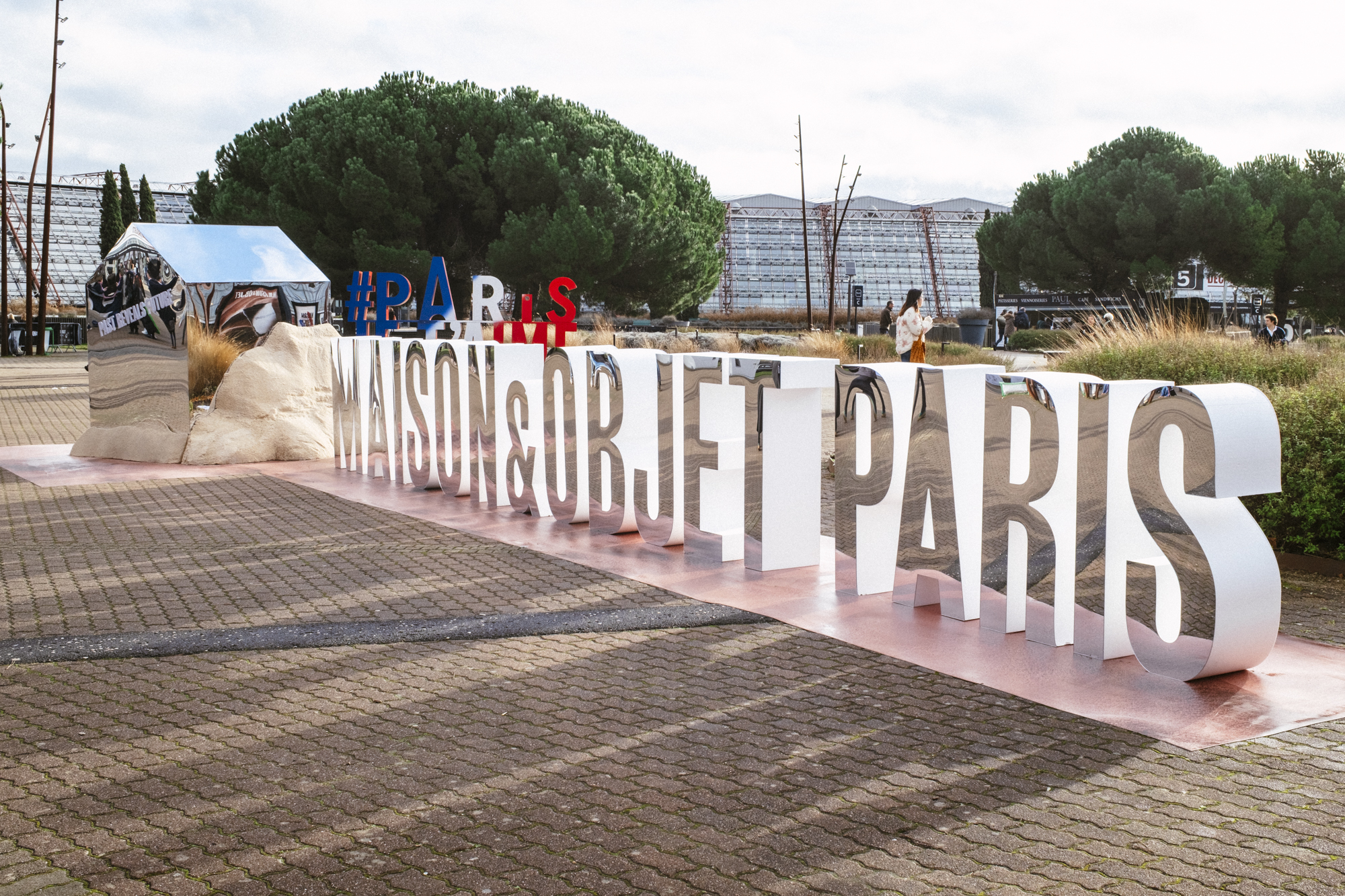
On September 4 in Paris Nord Villepinte, the aisles filled as Maison&Objet opened its five-day September 2025 edition under a “renewal” brief, with Amélie Pichard serving as artistic director.
The fair tightened its layout into six sectors and introduced a new Design District for emerging work, bringing together Rising Talent Awards Germany, Future On Stage, Maison&Objet Factory, and the Accor Design Awards.
Across the city Paris Design Week activated more than 375 locations from Le Marais to Saint-Germain, with its Factory program gathering over 130 young studios.
I spent two days racing around Paris to try to see and experience as much I could. Here’s what I saw.
-
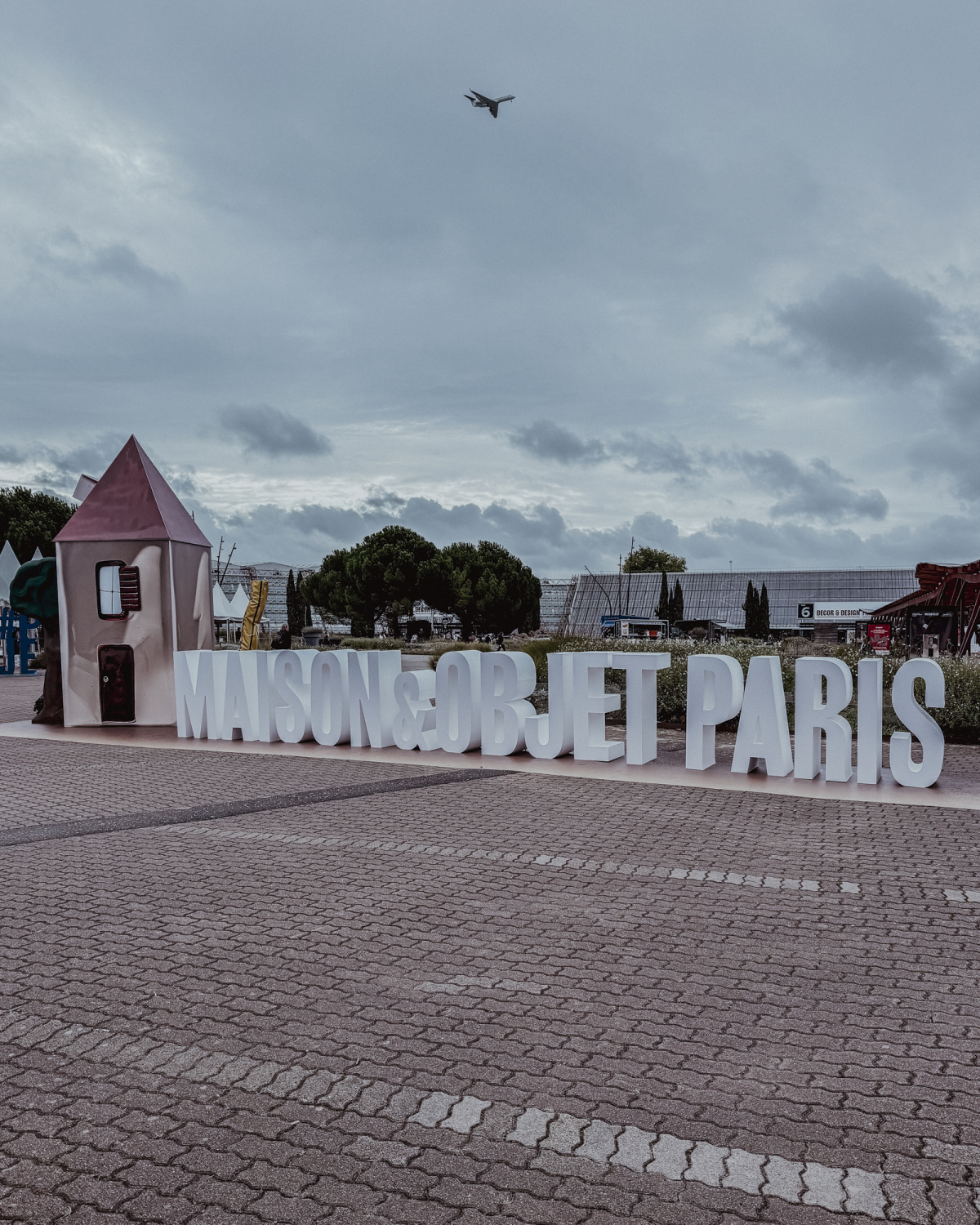
- Maison&Objet welcome sign with the little house from Amélie Pichard’s “Welcome Home.” The motif comes from this edition’s poster, a teapot house conceived with ceramicist Blumen and artificial intelligence, a curious note for an installation centered on makers.
-
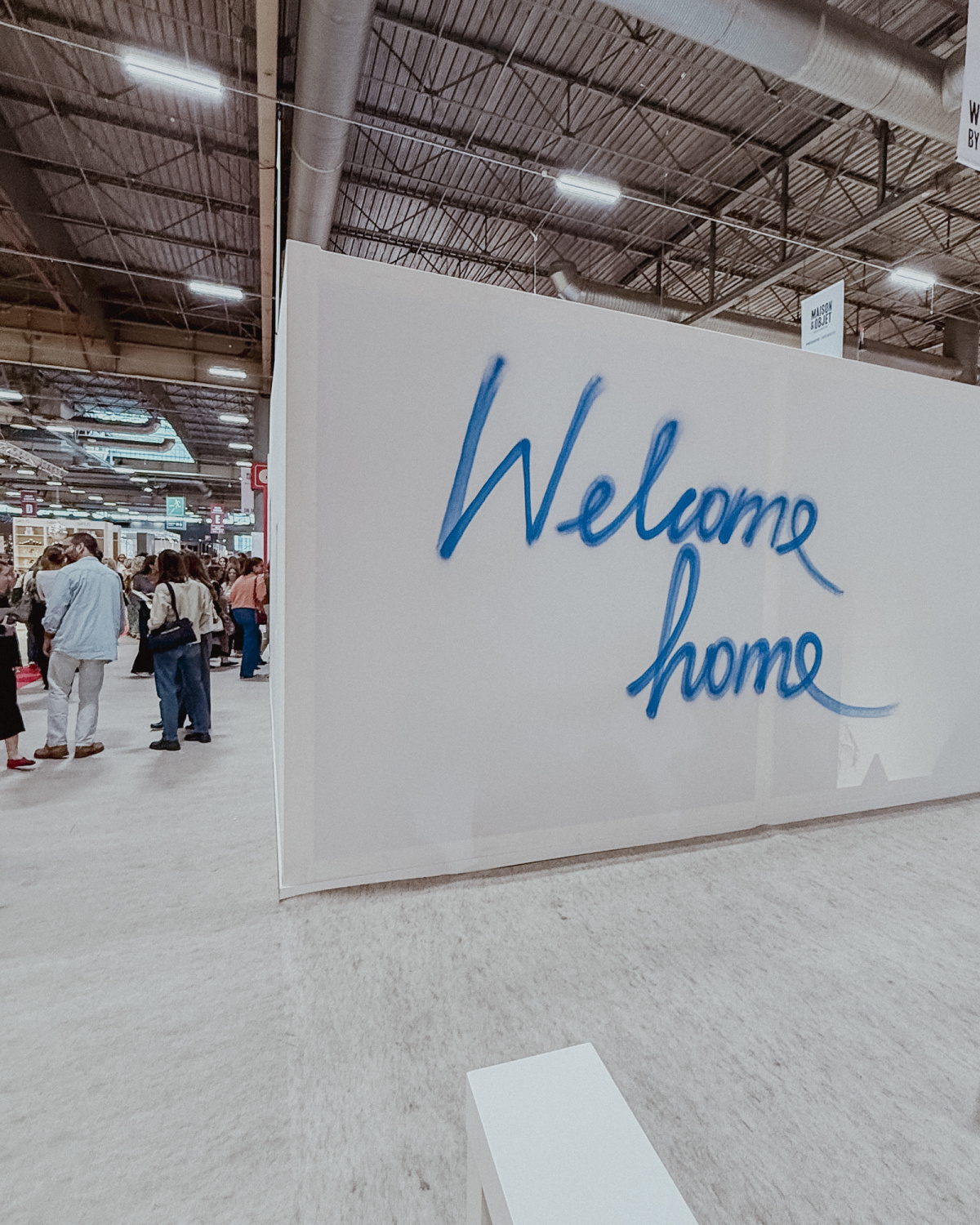
- Exterior of “Welcome Home” by Amélie Pichard, an open five-room installation with no hard walls, intentionally left unfinished to mirror evolving life. Inside are lightweight, multifunctional pieces, mostly self-produced by designers.
Inside the Welcome Home installation by Amélie Pichard
My first stop at Maison&Objet was to meet with its new artistic director. The design-fair world has been evolving quickly amid global challenges. I was curious how Amélie envisioned her role and what, specifically, she thought would help move Maison&Objet forward.
I met Amélie at her installation, “Welcome Home,” a new “house” at the fair, an open structure of five rooms where visitors can see across thresholds and watch one scene bleed into the next. She explained that the commission arrived with unusual freedom; the fair’s organizers “gave me carte blanche,” she said. The assignment was to design the official visuals and replace a former trends area with a lived-in domestic setting shaped by her point of view.
Her selection process began in March and ran daily. Thousands of brand lookbooks landed on her desk. Her brief allowed a mix of roughly 80 percent of objects from the fair, 10 percent from Paris Design Week, and 10 percent from outside sources. That balance let her tell a coherent story while introducing voices discovered through Instagram, friends, and chance encounters. She sometimes chose a studio for its philosophy rather than its most polished product, especially where designers produced their own work.
-
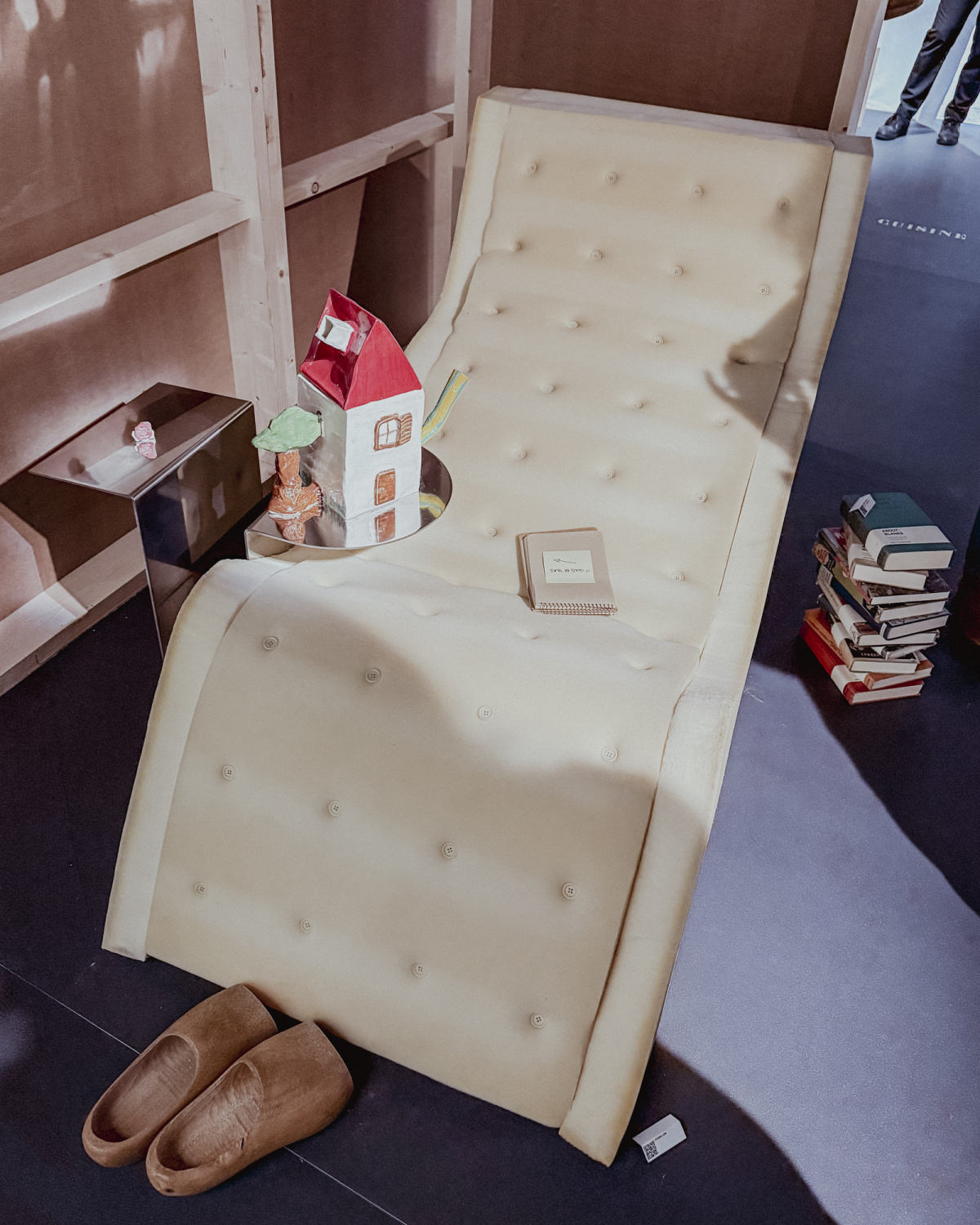
- A teapot-house (or house-teapot), designed by ceramicist Blumen
-
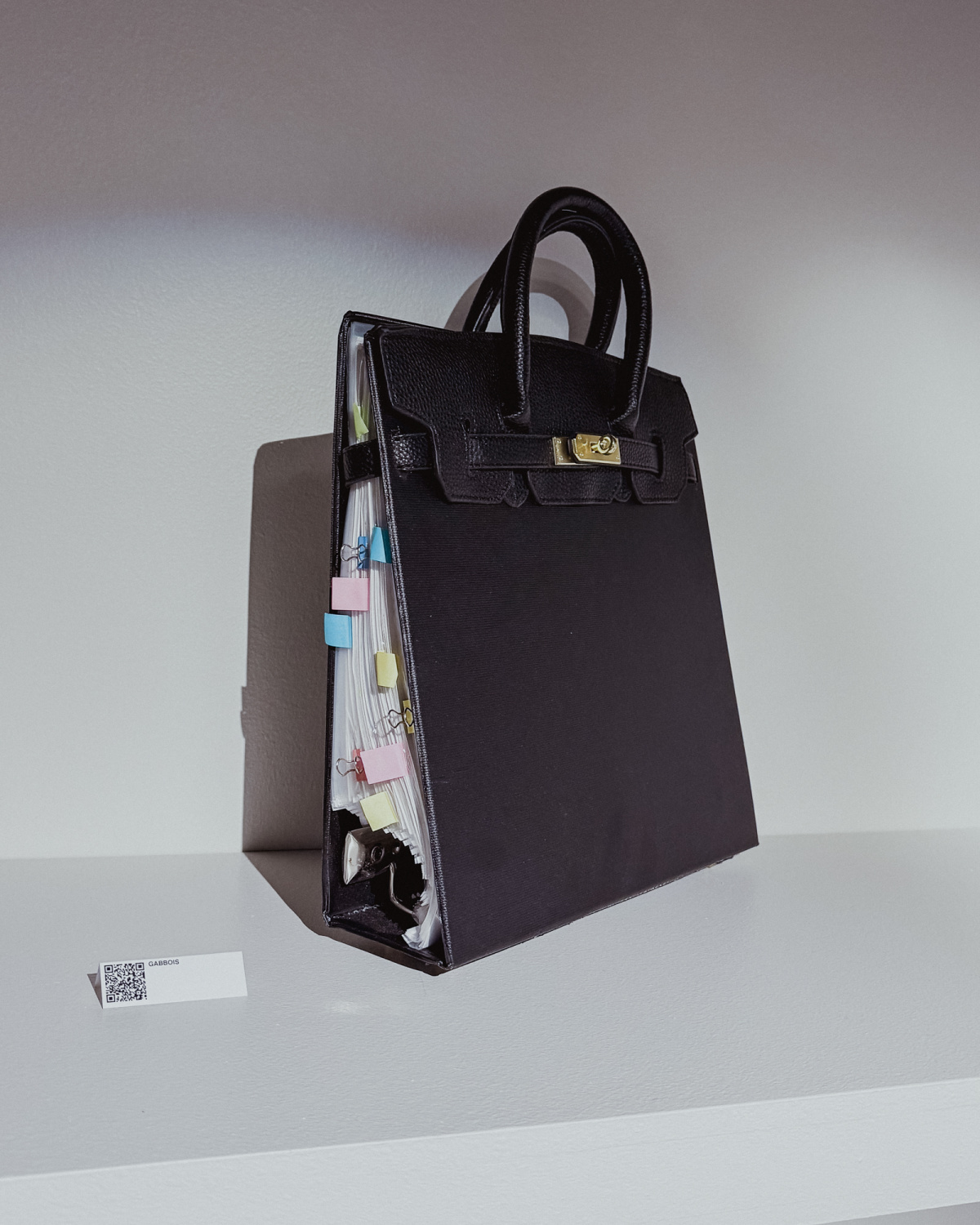
- A three-ring binder by Gab Bois styled after a classic Hermès handbag
The concept for the space is an unfinished home with no hard partitions. Perfection is out, “why should we finish everything?” she asks, pointing to celebrity house tours that present a staged set rather than real life. Her own house in the French countryside has been in progress for years, a reminder that people evolve and interiors should evolve with them.
Utility and personality appear to be the general rule. Pieces are lightweight, foldable, easy to store, and often multifunctional so a chair can also serve as a table or shelf. Amélie told me her aim is to detach from heavy consumption and reduce attachment to objects, a respectable but curious position given the context of a trade fair.
Amélie’s perspective comes from experience: for thirteen years she ran a label producing shoes and bags, then paused the seasonal cycle to release products only when they felt necessary. She’s now interested in “made to order” as a new ideal standard because it avoids stock and waste, though she admits it is hard to square with industrial timelines and a customer base trained for immediacy. We speak at length about the dangers of mass production. She questions the old triangle of brand, buyer, and fair that still largely governs how products move, and she notes that scale and algorithms tend to reward the same large players. By contrast, craft she argues, sets real limits. She prefers designers who are also makers because they know what is possible and where to stop. Most pieces in Welcome Home were self-produced by their designers.
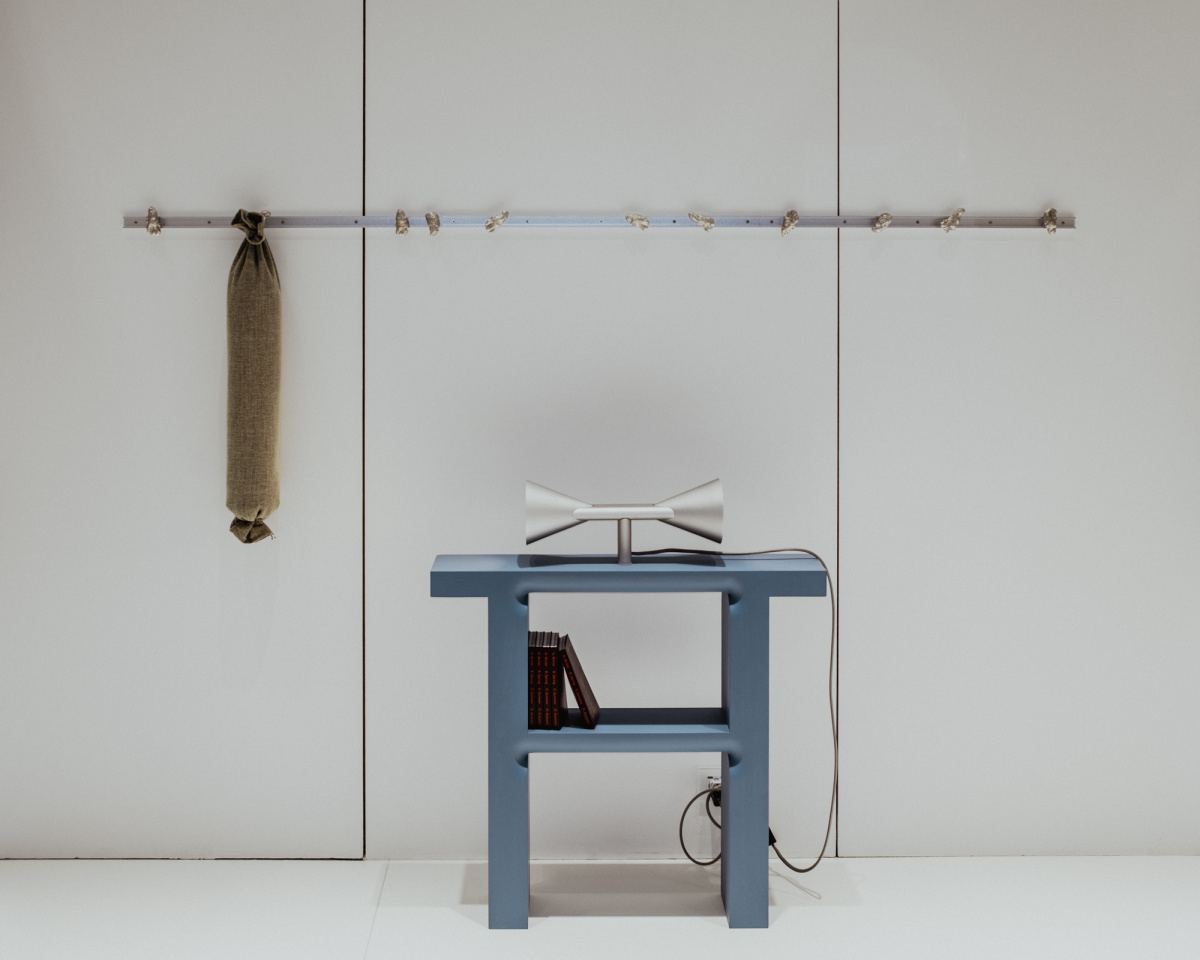
Studio Œ’s corner of the all-German Rising Talents installation felt like a working sketchbook made three-dimensional.
Rising Talent Studio Œ
Studio Œ’s corner of the all-German Rising Talents installation felt like a working sketchbook made three-dimensional. Lisa Ertell and Anne-Sophie Oberkrome met in their first semester of university and simply never stopped building together. Berlin is home base and the duo split their time among commissions, teaching, self-initiated experiments, and collaborations.
The show’s anchor is their three-height Dopo stool family, developed for Mattiazzi last year. The form is simple and quick to read, but the tell is a rear leg that rises above the seat. Lisa said, “It has this special feature, kind of with a forth leg, which is raised above the seat, and you can use it to pull the chair or to hang your jacket or bag.” They studied how people actually behave at bars where sitting is rarely still. Perching, leaning, and shifting are part of the program, so the object supports positions rather than one posture.
-
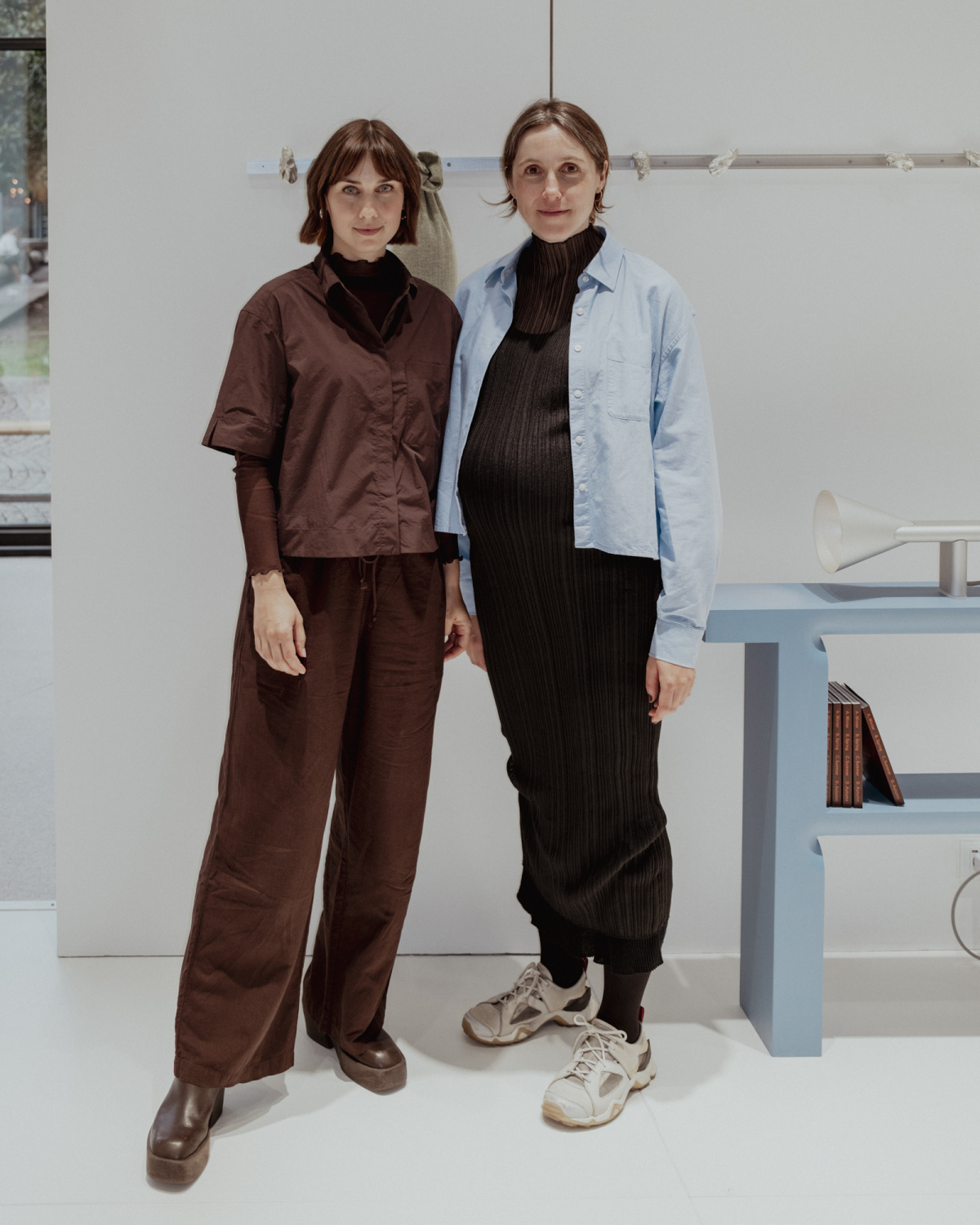
- Lisa Ertell and Anne-Sophie Oberkrome of Studio Œ
-
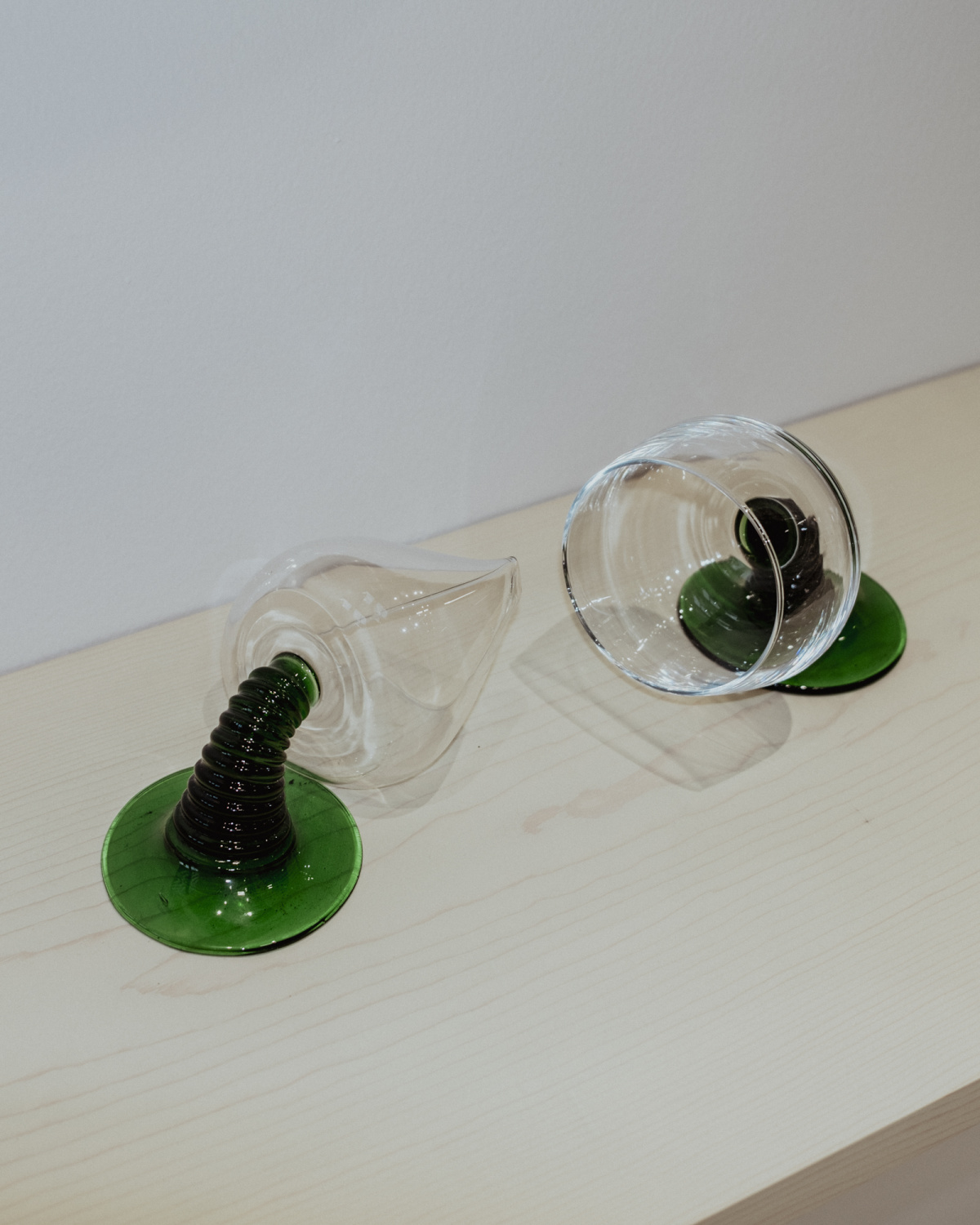
- Distorted drinking vessels from the duo’s Fan Collective
On a nearby plinth sits a cluster of distorted drinking vessels from the duo’s Fan Collective, each one a riff on the patterned glassware found in many grandmothers’ cupboards across southern Germany and France. The pieces began as ready-mades that were heated until they slumped, turning the familiar into something oddly ceremonial.
Lighting and storage arrive as prototypes looking for partners. The Cone Light is a standing lamp that can also be wall-hung, a small gesture toward living with fewer, more adaptable objects. A wall-mounted wardrobe takes its cue from the ritual of oysters at celebrations and treats the entry hall like a stage for arrivals.
The Rising Talents exhibit, consistently a highlight of the fair, often functions as a preview of upcoming trends and styles. Here the preview is a practice that treats research, collaboration and production as one loop, then invites a manufacturer to step in where it makes sense. “It’s really nice to be involved in this energy,” Anne-Sophie said.
-
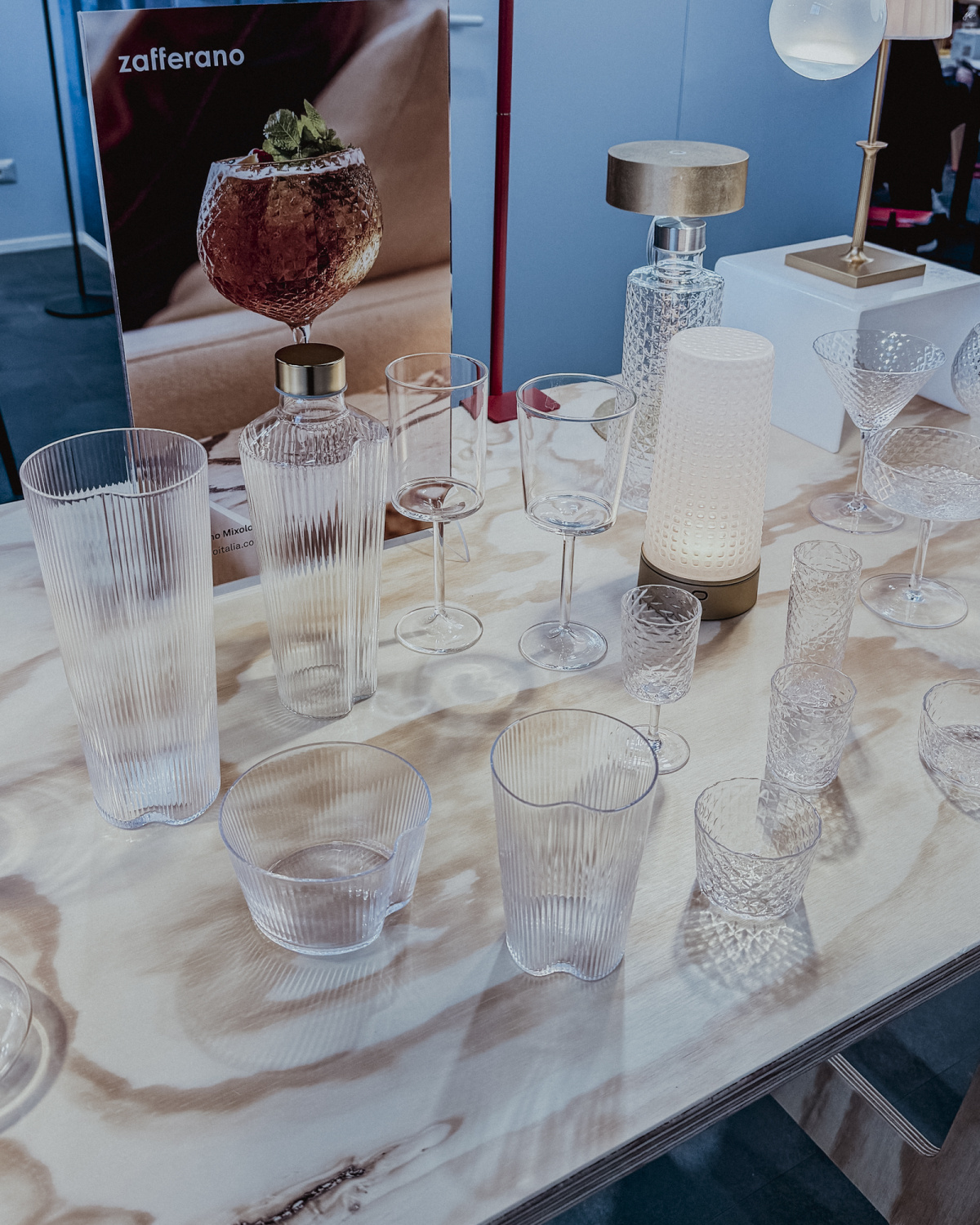
- Fluted pieces from Zafferano
-
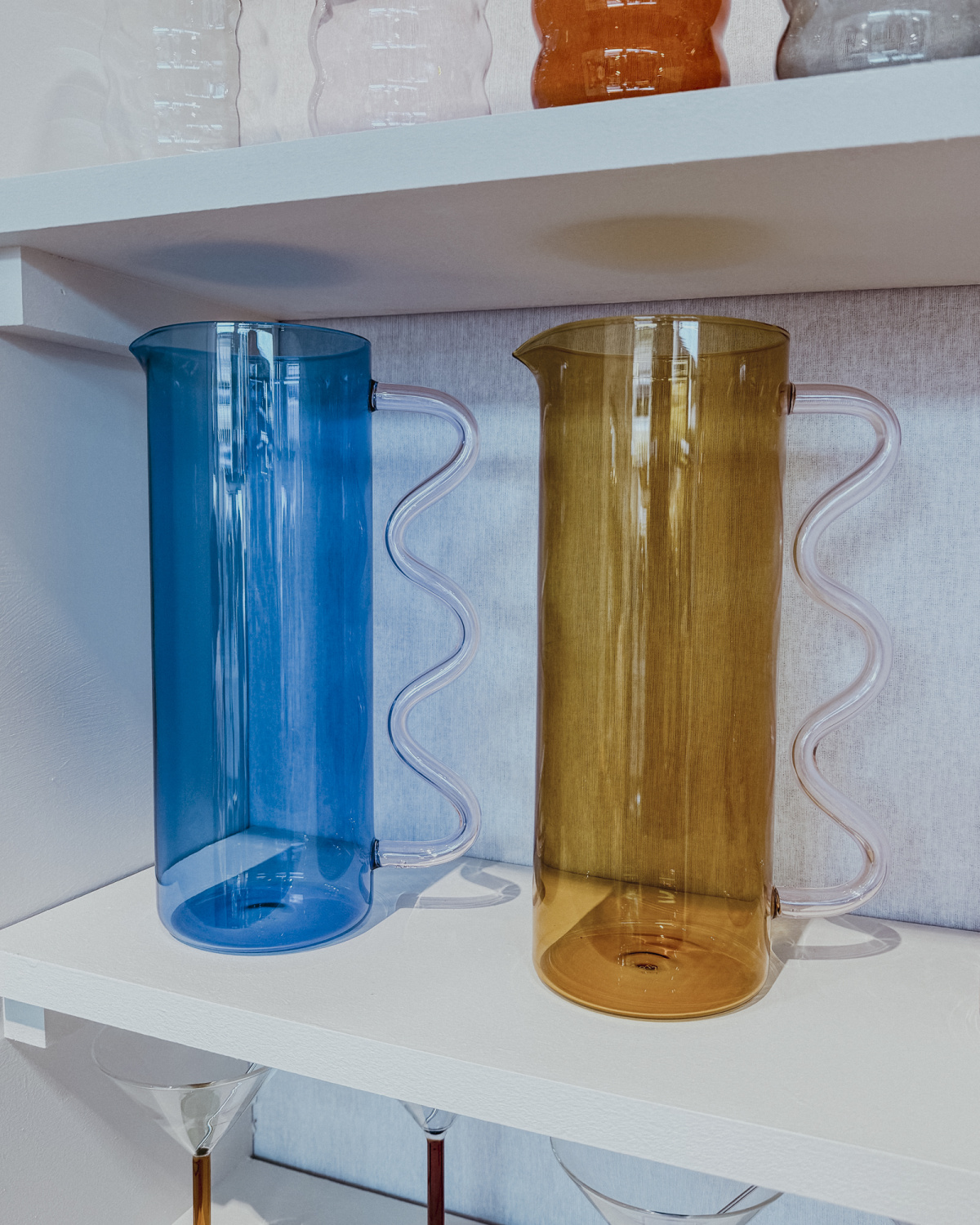
- Sophie Lou Jacobsen’s tastefully squiggly borosilicate glass pitchers
Fluted Glasses and a Friendly Bear
The fair had no shortage of beautiful objects and glassware. Two standouts: the fluted pieces from Zafferano (left), the Venetian-founded brand known for colorful restaurant glassware and its Murano-inspired ribbing, and Sophie Lou Jacobsen’s (right) tastefully squiggly borosilicate glass pitchers, part of the New York designer’s ongoing exploration of playful yet useful table forms.
-
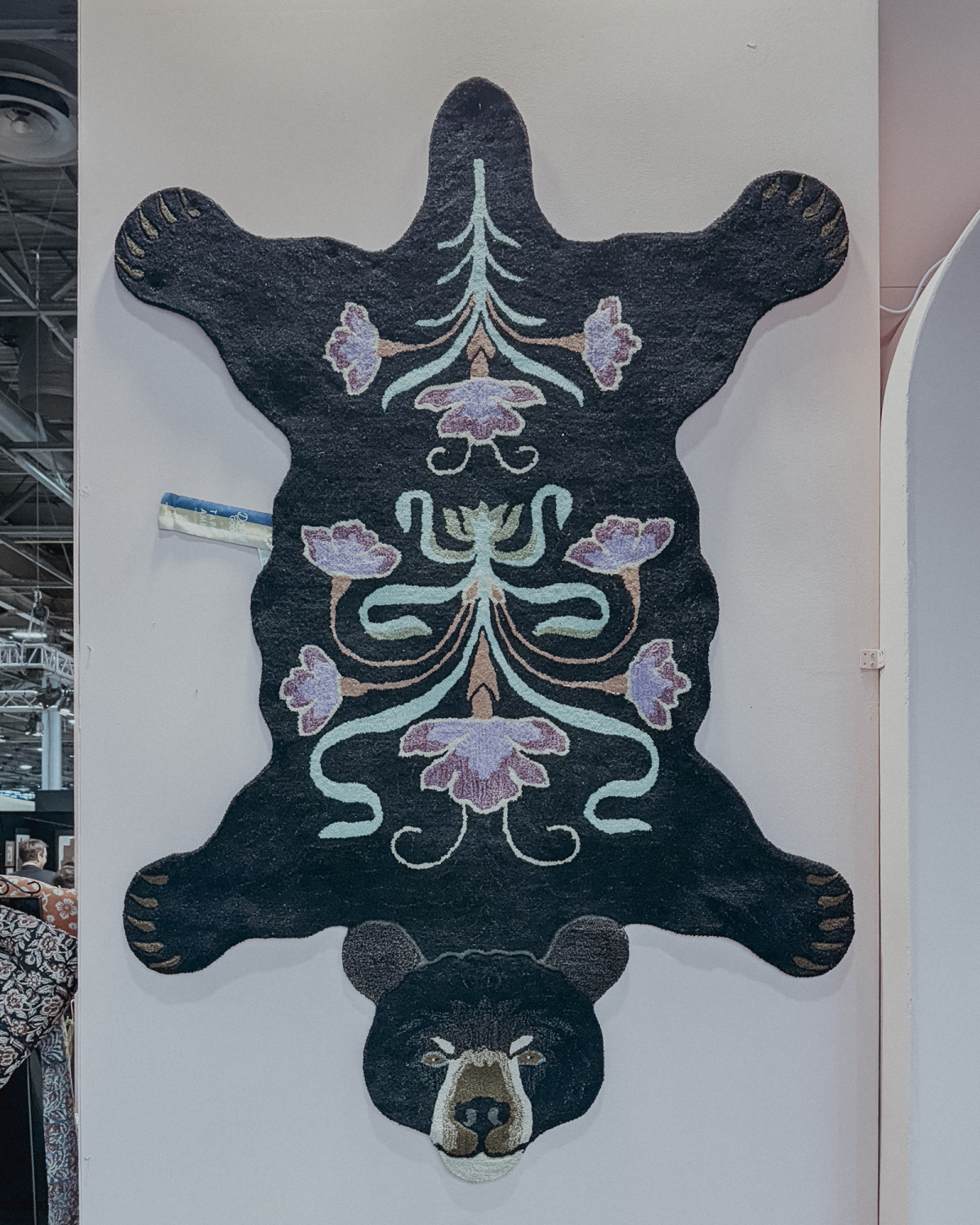
- Doing Goods’ Blooming Black Bear Rug
-
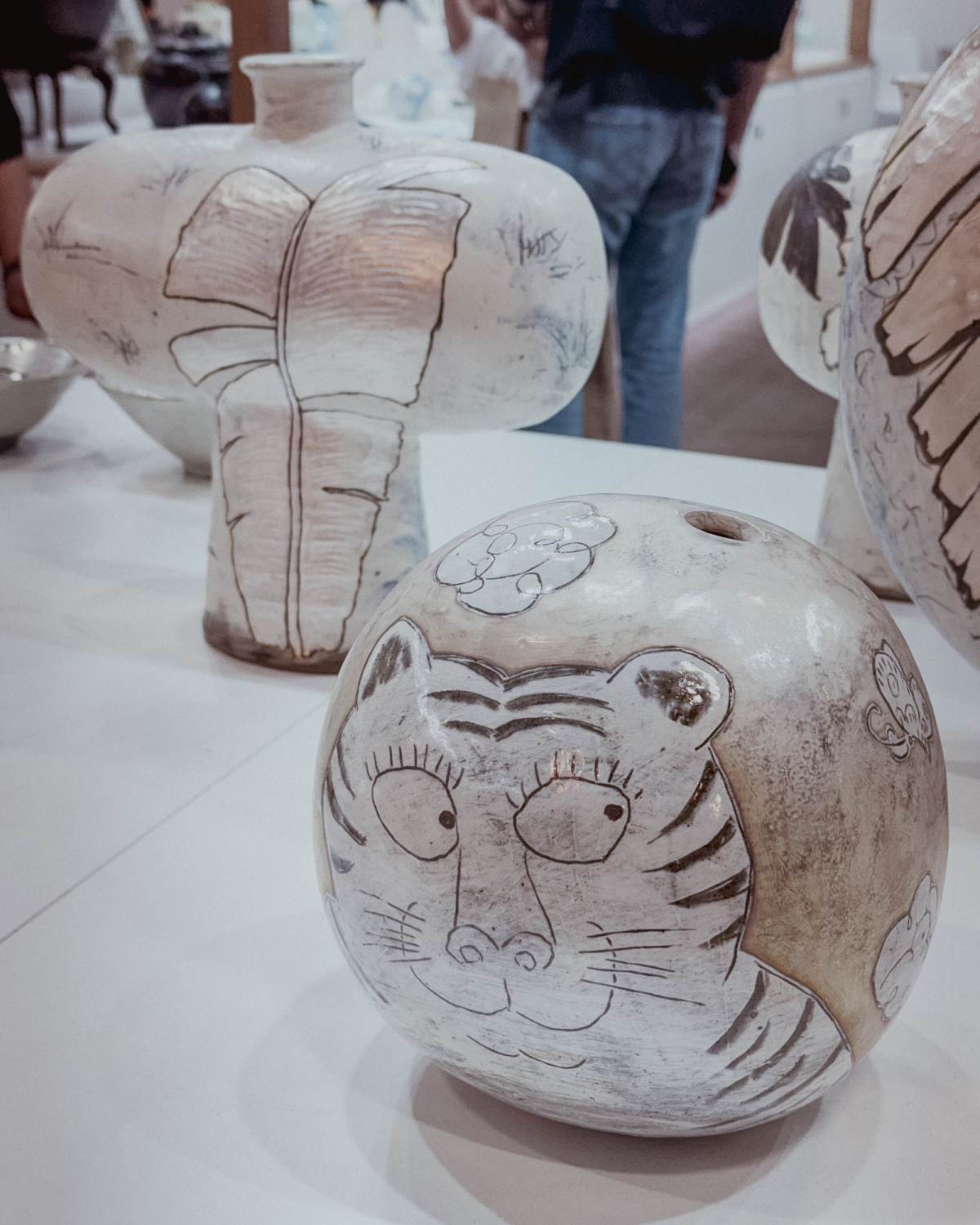
- A buncheong ceramic by Seoul-based Huh Sangwook
Every year I cave for one animal object. This time it was Doing Goods’ Blooming Black Bear Rug (left), a hand-tufted 100% wool piece with a cotton backing from the brand’s Tapis Amis line, cheerfully more textile than taxidermy. On the more serious side, I admired a buncheong ceramic by Seoul-based Huh Sangwook (right), known for animated motifs rendered with sgraffito.
-
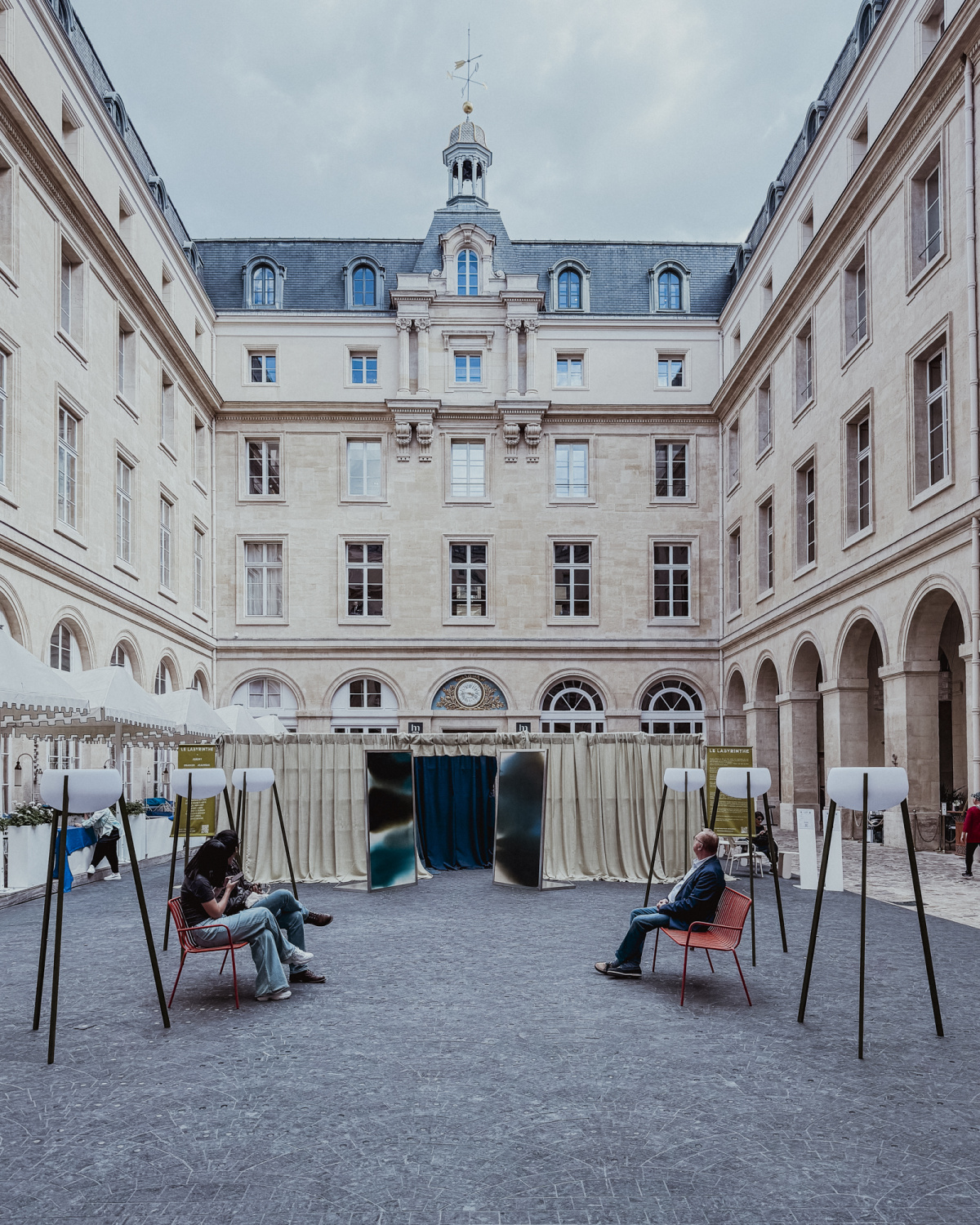
- Fermob’s Yunos solar floor lamps in front of the installation.
-
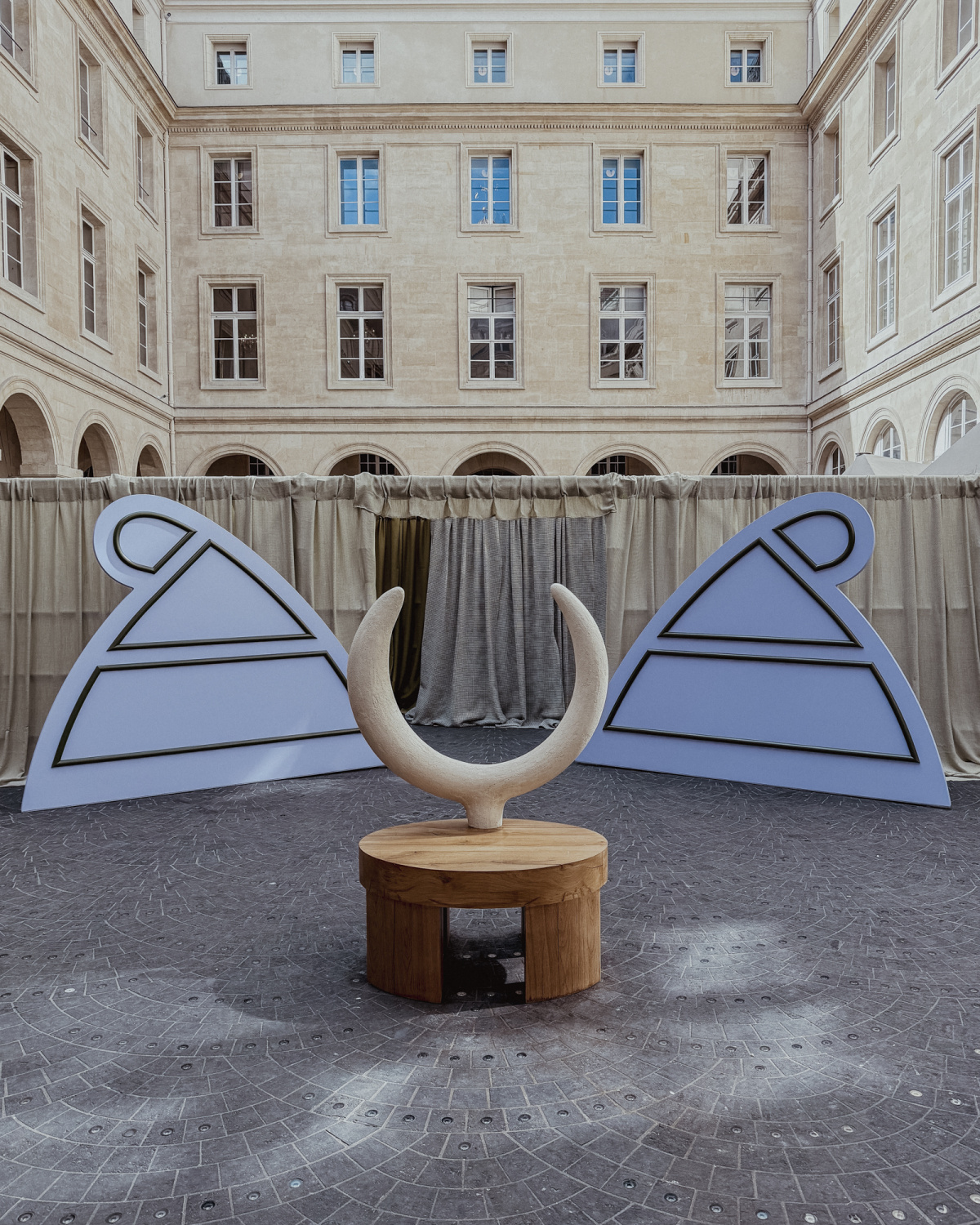
- Wing-shaped doors mark the entrance to LE LABYRINTHE, flanking a horned Minotaur throne by Philippe Hurel.
Design Installations around Paris
At the Hôtel de la Marine, Jérémy Pradier-Jeauneau’s LE LABYRINTHE was his first large-scale solo project. The installation ran in three parts: a courtyard maze marked by wing-shaped doors with a dramatic entrance courtesy of the YUNOS lamp by Fermob. Inside eight podiums in the ceremonial salons paired fashion and design including a horned Minotaur throne by Philippe Hurel, and an exhibit where resin and plaster figures draped in Maison Élitis textiles face the square.
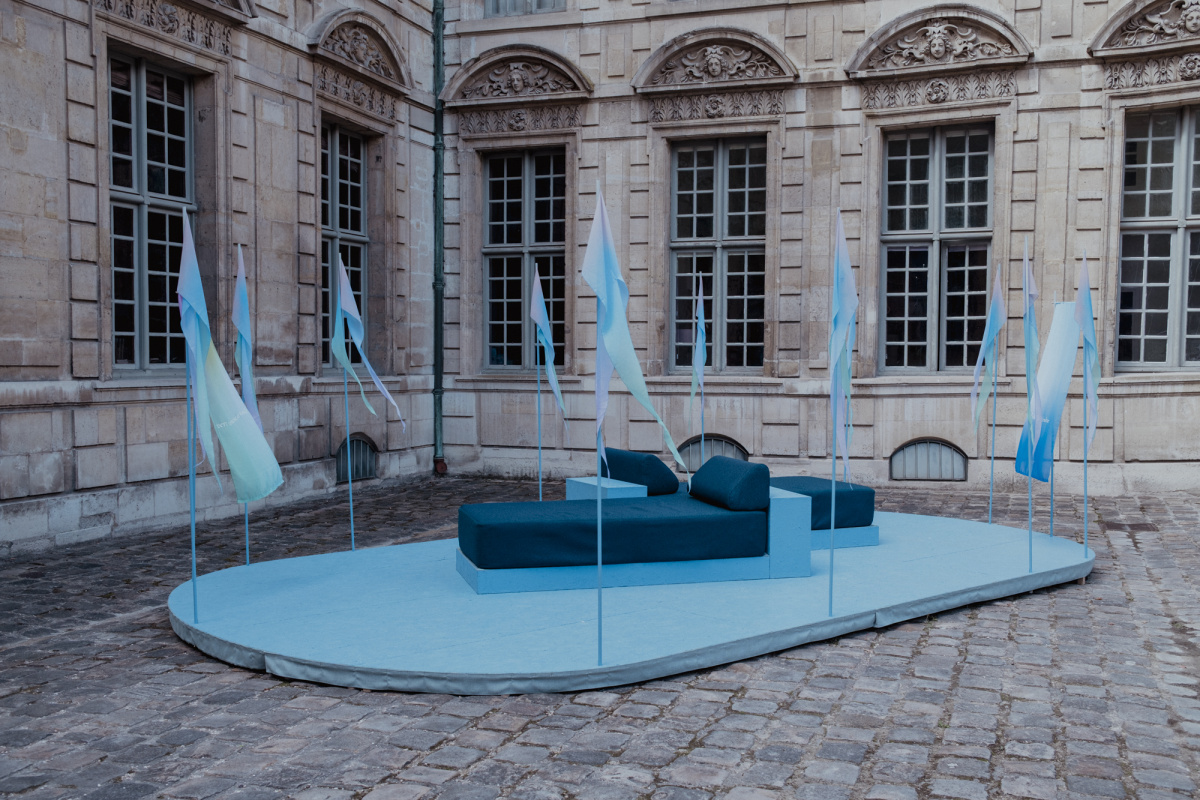
On the terrace of the seventeenth century Hôtel de Sully, designer Lucas Huillet and perfumer Alexandre Helwani presented “Folie,” an installation about mental health.
YMER&MALTA and Folie at Hôtel de Sully
On the terrace of the seventeenth century Hôtel de Sully, designer Lucas Huillet and perfumer Alexandre Helwani presented “Folie,” an installation about mental health. Visitors were invited to recline on a sofa, look up at bright fabric forms, and breathe perfumes created with Amandine Clerc-Marie, lead perfumer at DSM-Firmenich, the world’s largest privately held fragrance company. The setup followed a familiar design week formula: a handful of simple, colorful objects set against a historic courtyard. When I visited, the promise and the reality did not match; the platform read unfinished and the sofa felt casually assembled rather than crafted which undercut the idea of comfort and care. In a city full of exceptional furniture, it looked out of step. Scent was meant to be central, but it was missing that day.
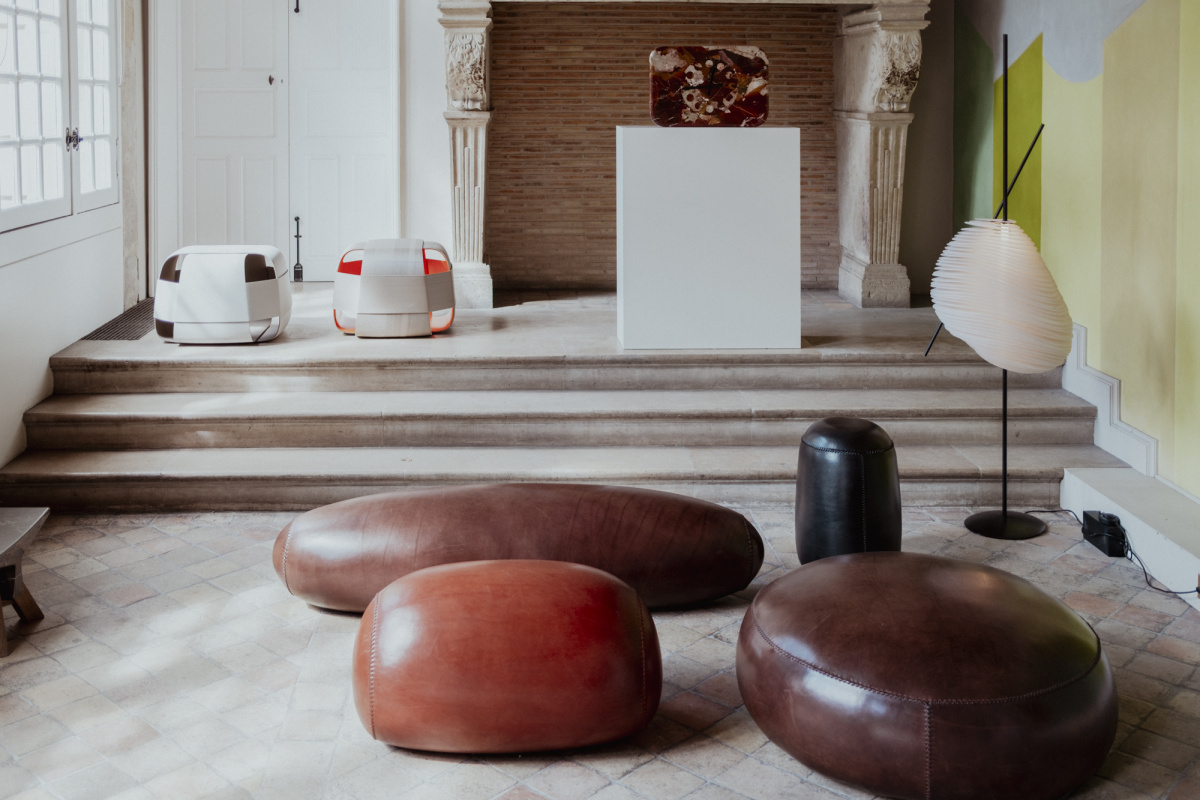
The Timeless clock, a sculptural nod to the marble mantel clocks of French decorative arts.
Also at Hôtel de Sully was an exhibition by YMER&MALTA founded by Valérie Maltaverne. She presented AsphericalTwilight created with Benjamin Graindorge, a pared-back light in whitened oak whose soft LED plane reads like a window to different times of the sky. They also presented The Timeless clock, a sculptural nod to the marble mantel clocks of French decorative arts. Crafted in Diaspro marble, its dial and hour markers are cut from a single stone by water jet.
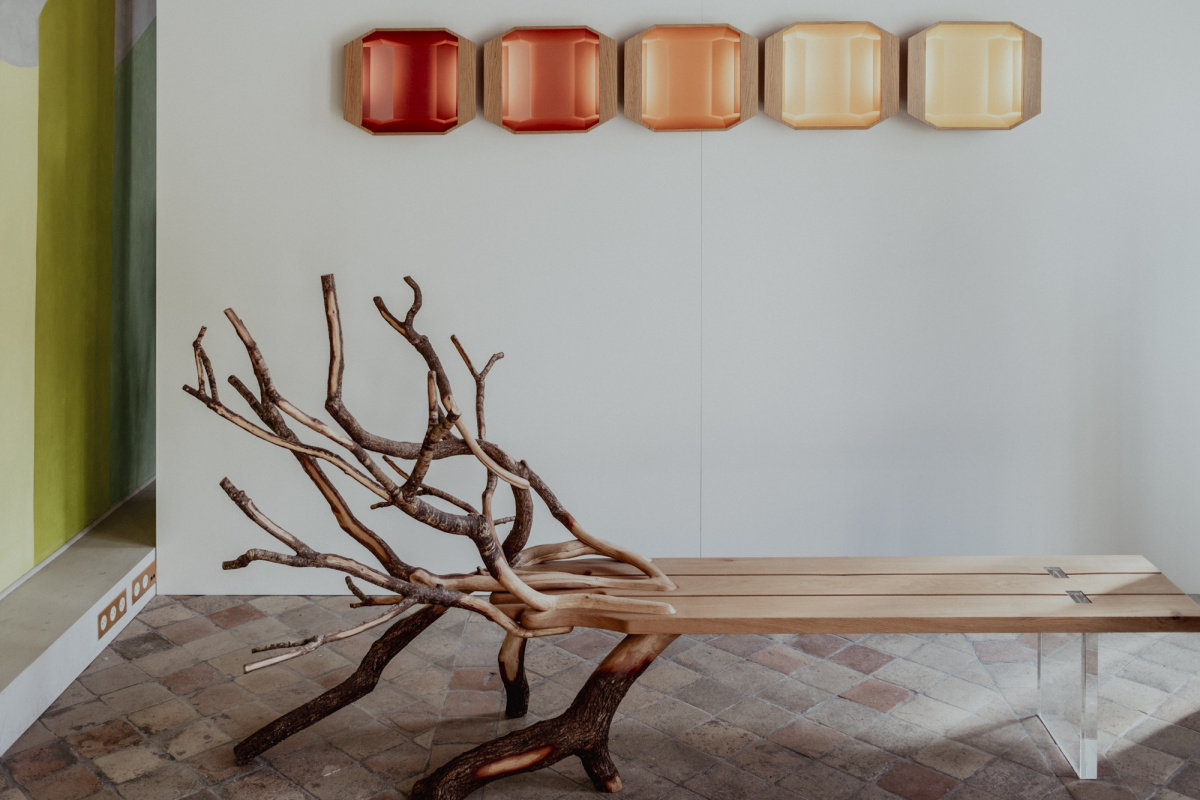
AsphericalTwilight is a minimalist light in whitened oak with a soft LED plane that reads like a window to the sky.
-
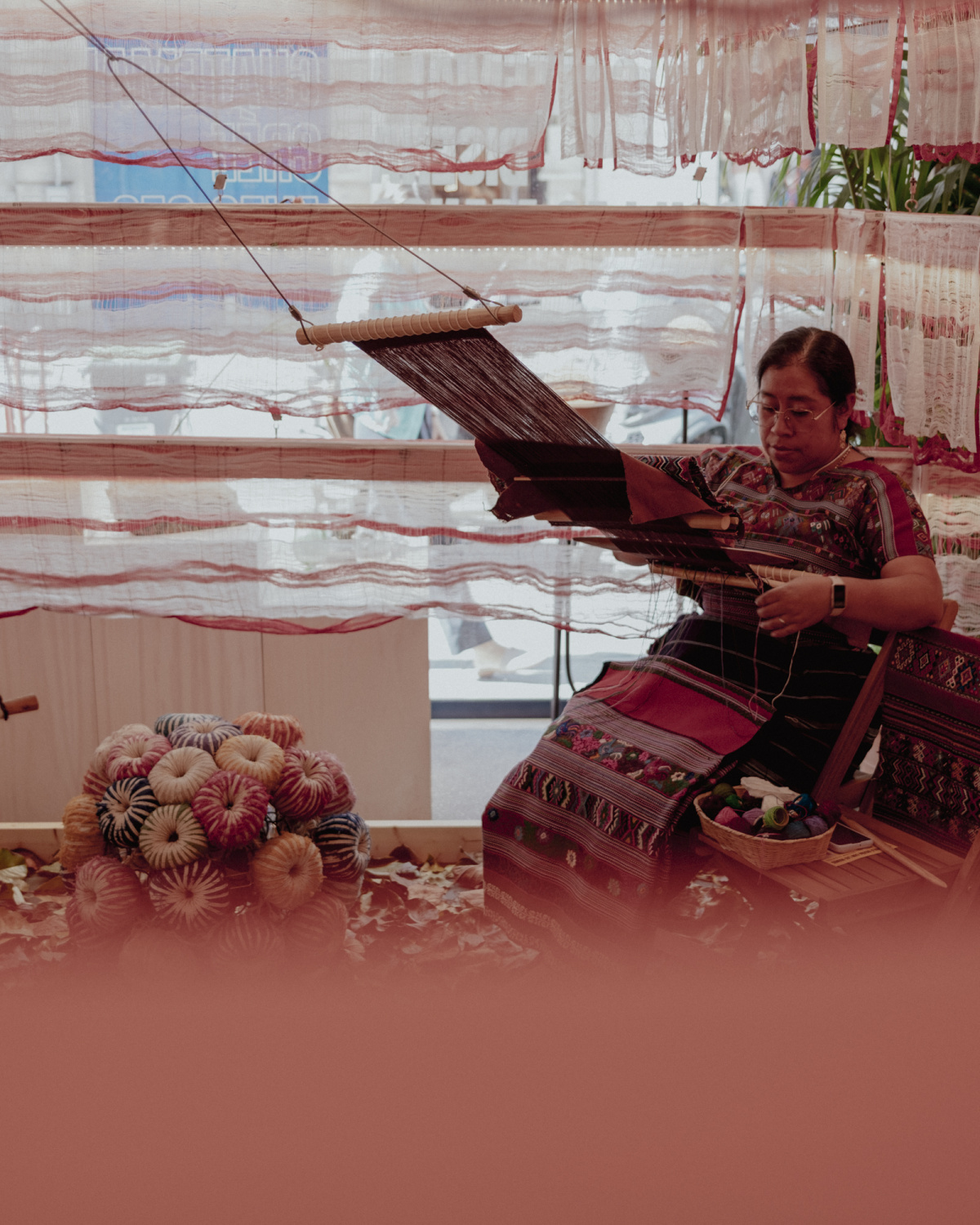
- A Guatemalan craftsperson demonstrating traditional weaving on site, showing time-honored techniques as fresh leaves underfoot subtly scent the room.
-
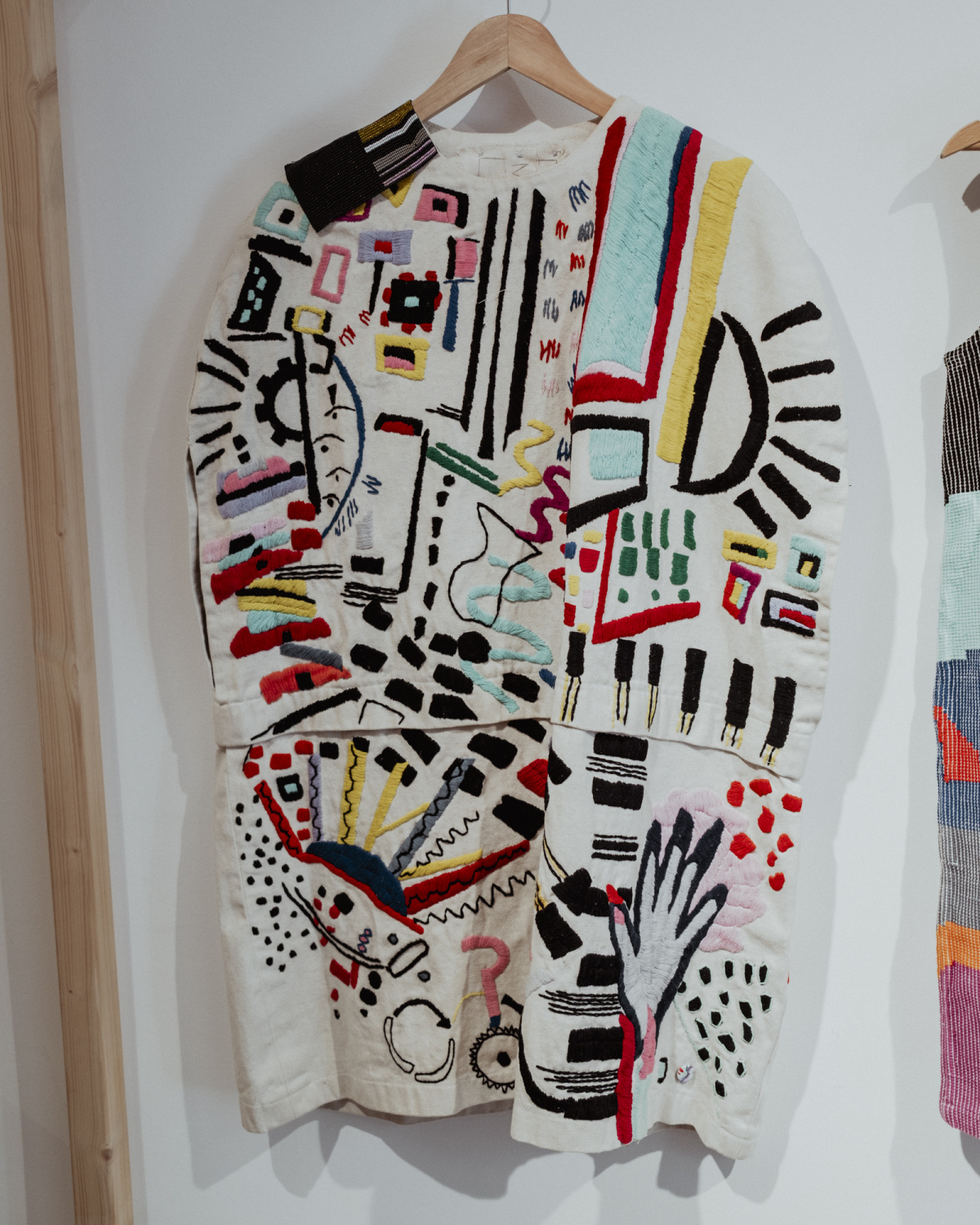
- Graphic jacket by MEÜS, created with London textile designer Nelly Rose and artisan cooperatives Chuwila, Las Rosas, and Adiba.
Argentina’s Craft and Color in Paris
Argentina presented a curated group of design brands across the fair and Paris Design Week. The selection spanned handcraft to industry: BUENOS Norte Argentino’s naturally dyed wool rugs woven by a network of women artisans; Berry Design’s 500-plus patterns for wallcoverings, and many other craft-based products. Nearby the Guatemalan presentation included three indigenous weavers working on site. The room smelled of fresh leaves underfoot, a strong sensory cue. The fashion lacked context in a city known for fashion, but one coat with bright graphic patterns, likely a modern take on traditional dress, showed real promise.
-
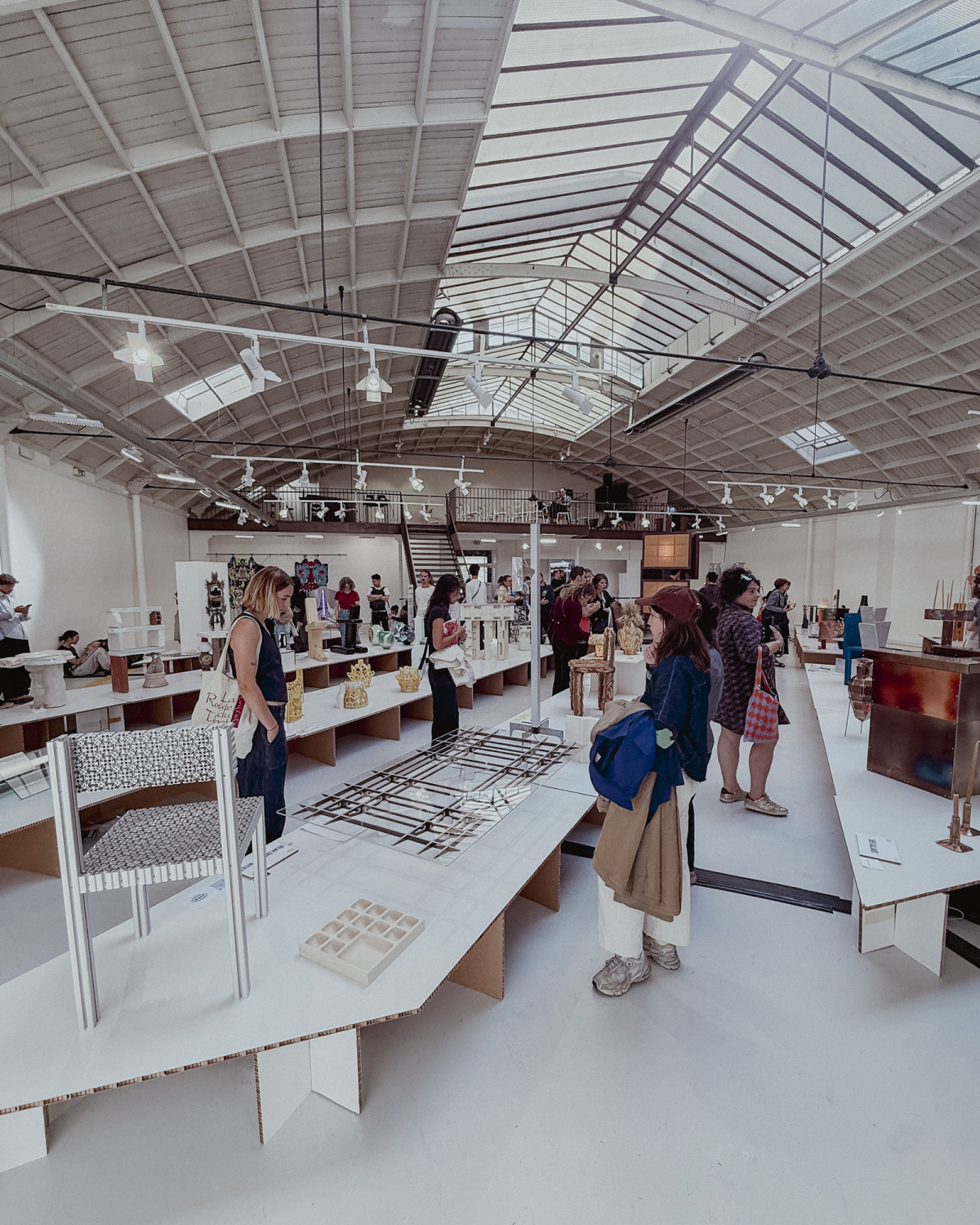
- Paris Design Week Factory
-
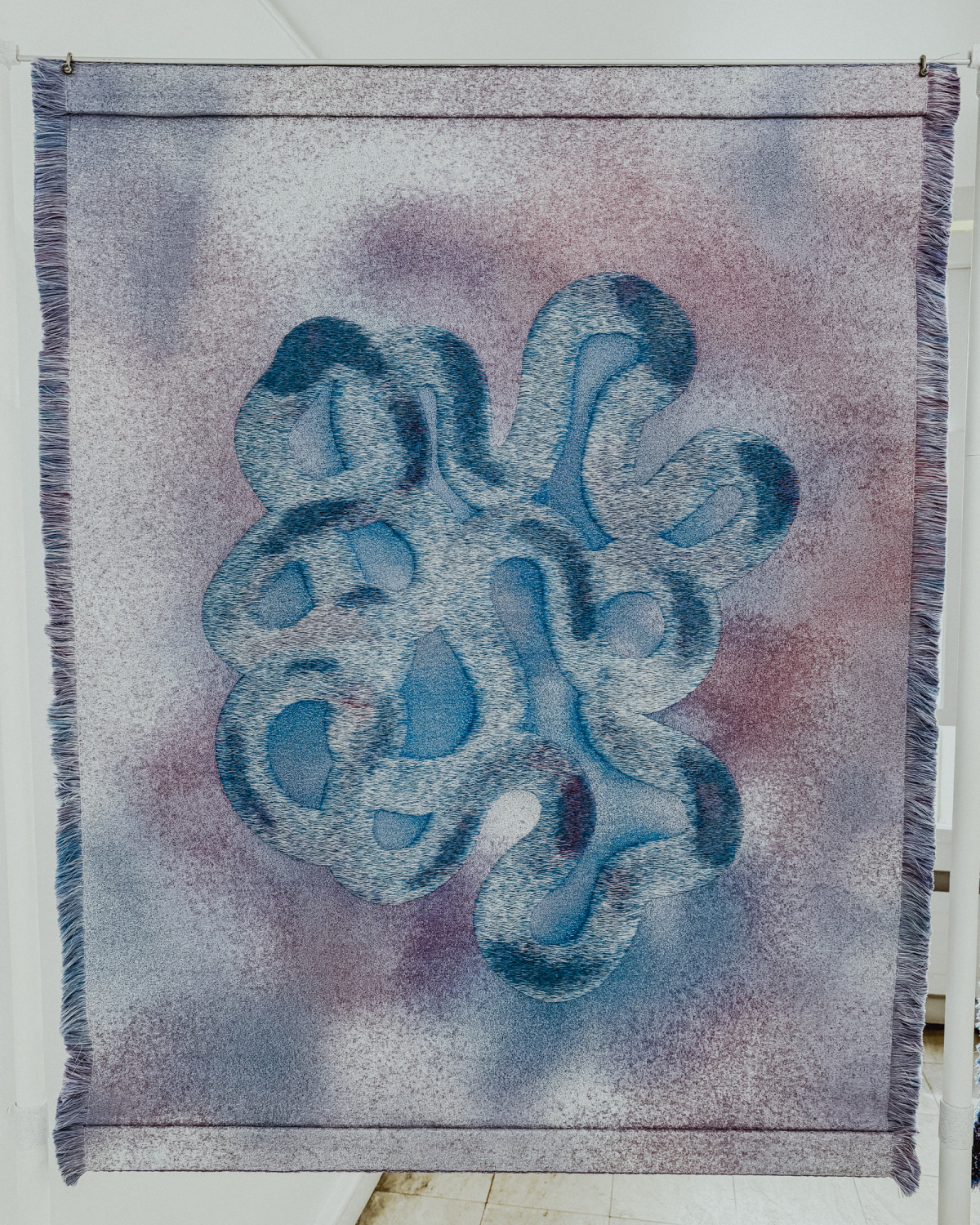
- Nolwenn Le Scao takes a tridimensional approach to textiles.
Paris Design Week Factory
Paris Design Week Factory 2025 was curated by designers Jean-Baptiste Anotin and Thibault Huguet of the Meet Met Met collective, now in their second year leading the platform after two years participating as exhibitors (Factory caps exhibiting at two editions).
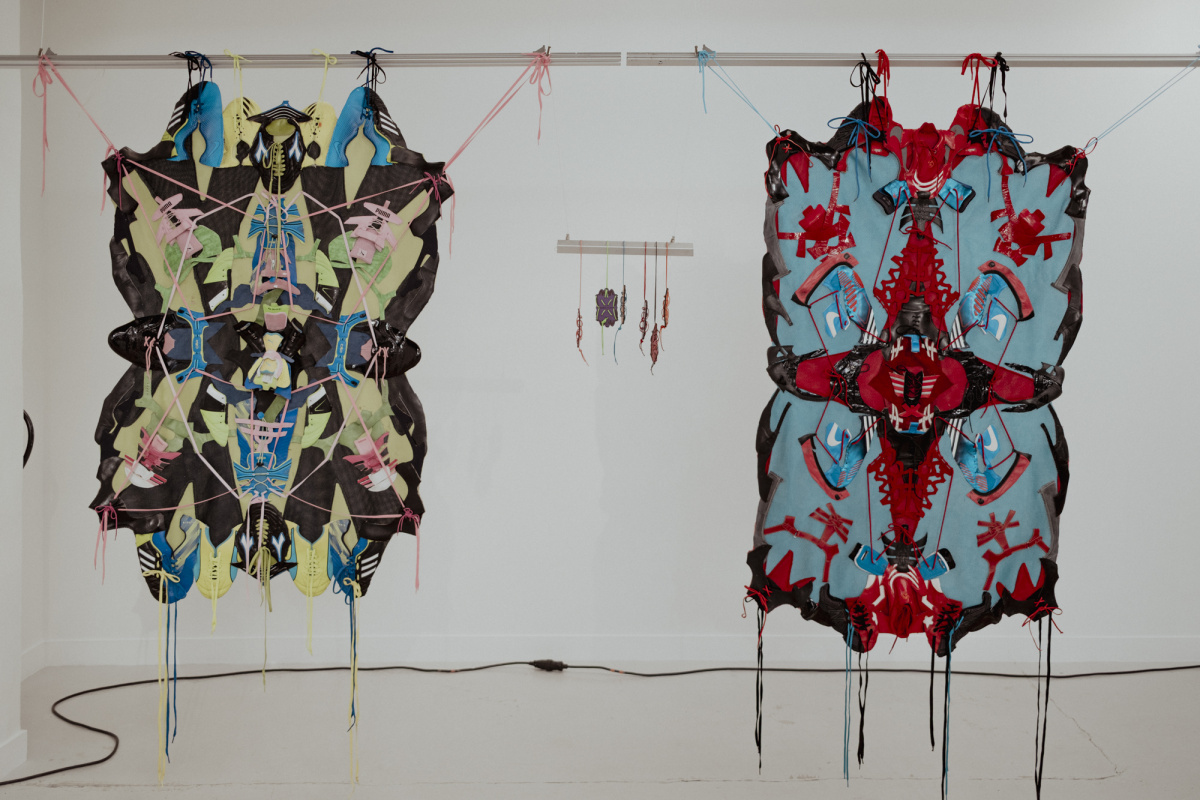
Dana Elmi Sarabi
Spread across four venues, the program was intentionally split: one space centered on collectible, one-off design that foregrounds material intelligence and craft, while another focused on more commercial, ready-to-produce objects. A third location focused largely female creatives from China, and the fourth international and Argentine designers.
-
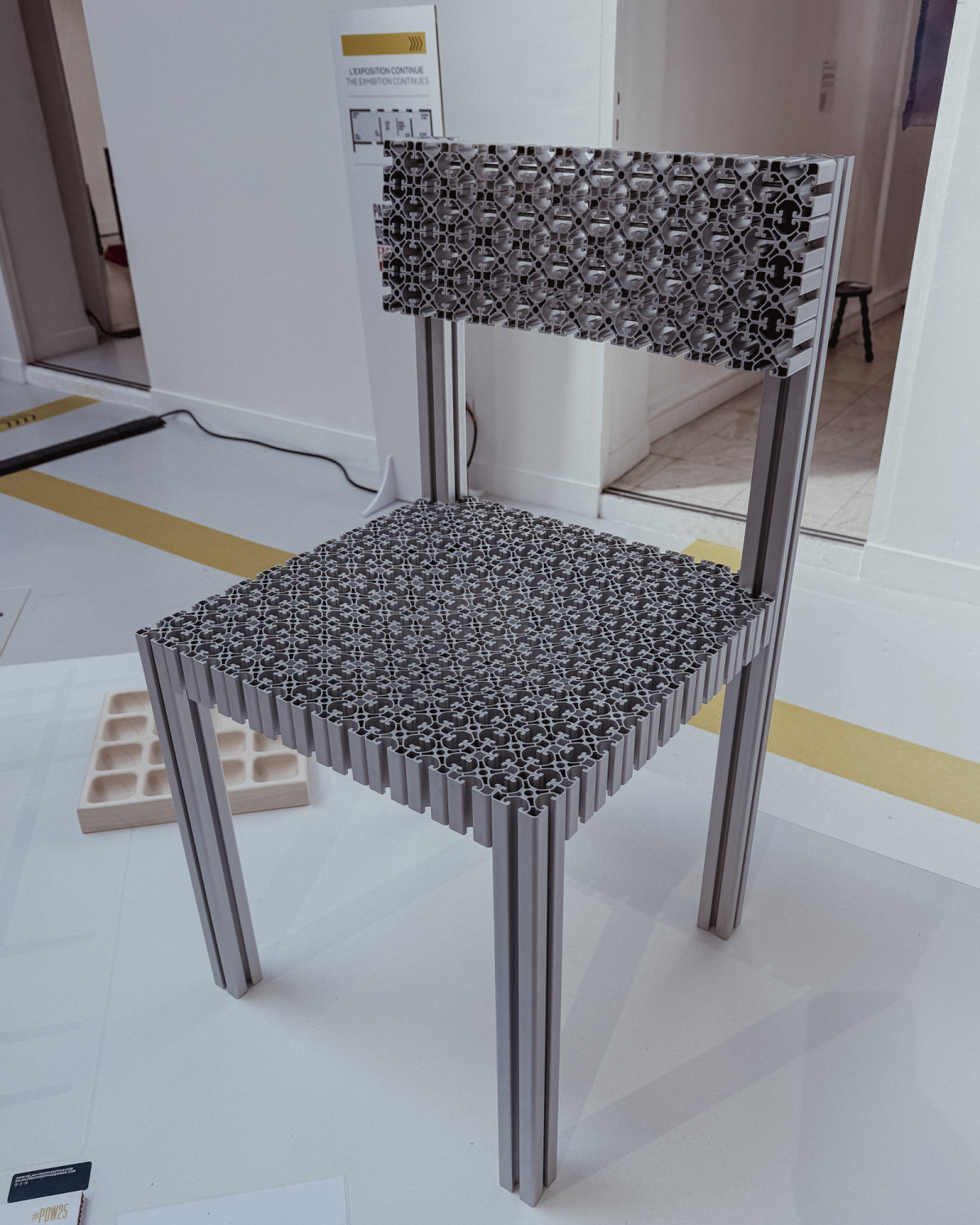
- A chair by Achille Anjora of SELAH CREATIVE OFFICE & Théo Braghini
-
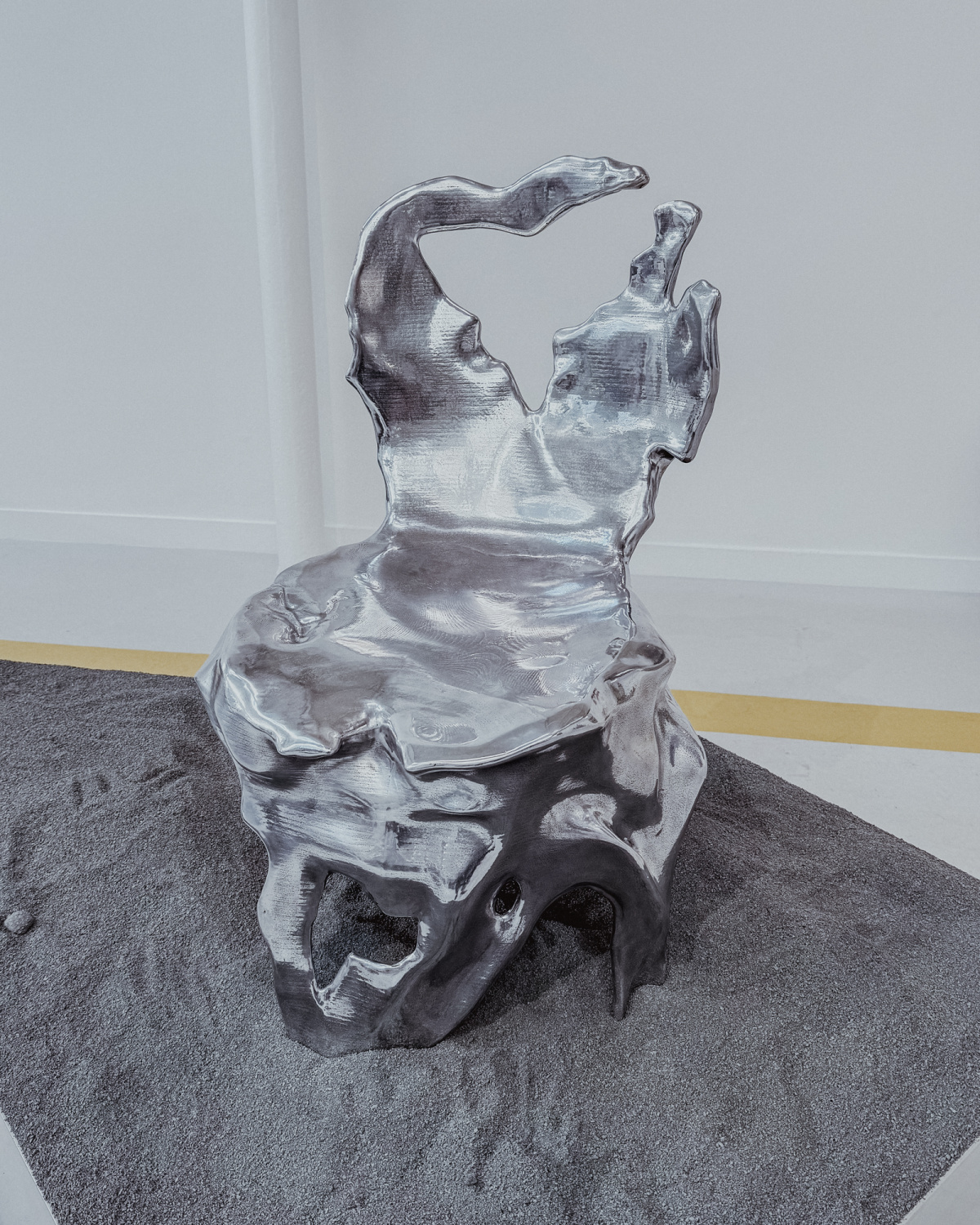
- Chair by Age of Digital
The curators frame Factory as a launchpad for viable, durable ideas rather than spectacle, coordinating the staging across galleries to keep attention on process, materials, and use. When I spoke with Jean-Baptiste he said this year felt like a strong move forward, with the show gaining traction amongst buyers and collectors.
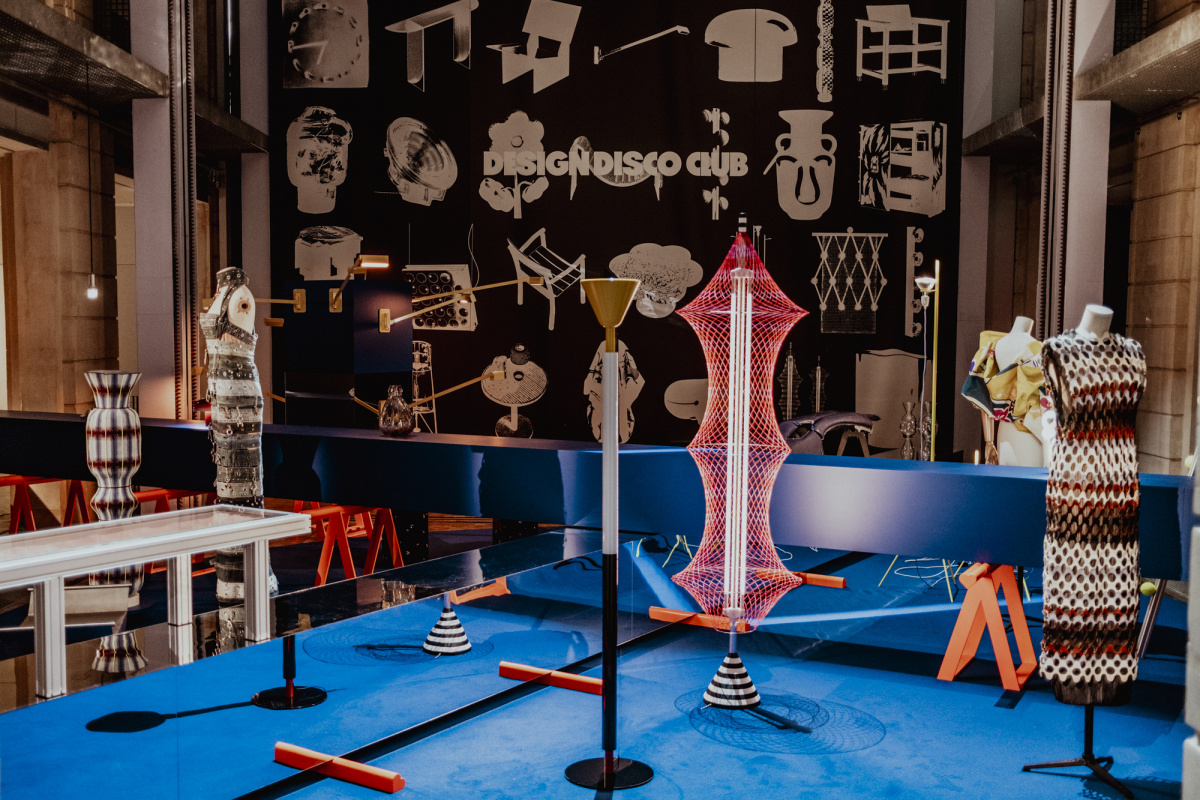
A Highlight of Paris Design Week: Design Disco Club
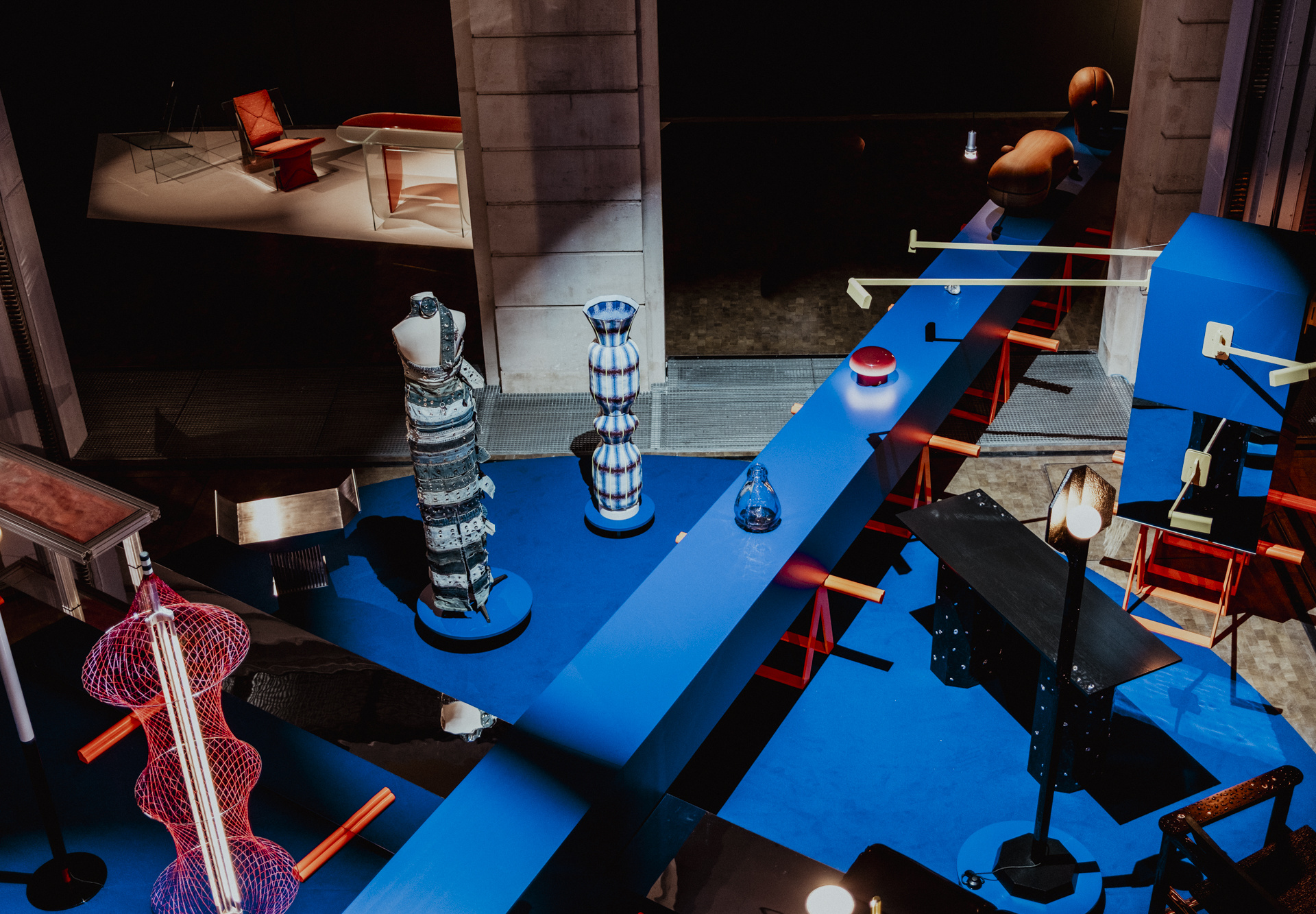
I was really impressed by Design Disco Club inside Lafayette Anticipations. I met Fannie Tomas, a Belgian curator, who with Christopher Dessus (Pli office) pulled the show together with production by Paf atelier. The space was a brutalist, museum-grade room and the premise was simple: take disco’s spirit and turn it into a community of designed objects. Over 40 designers and architects showed furniture, lighting, textiles, and objects, with fashion houses in the mix and a custom soundtrack by Bureau Bruit.
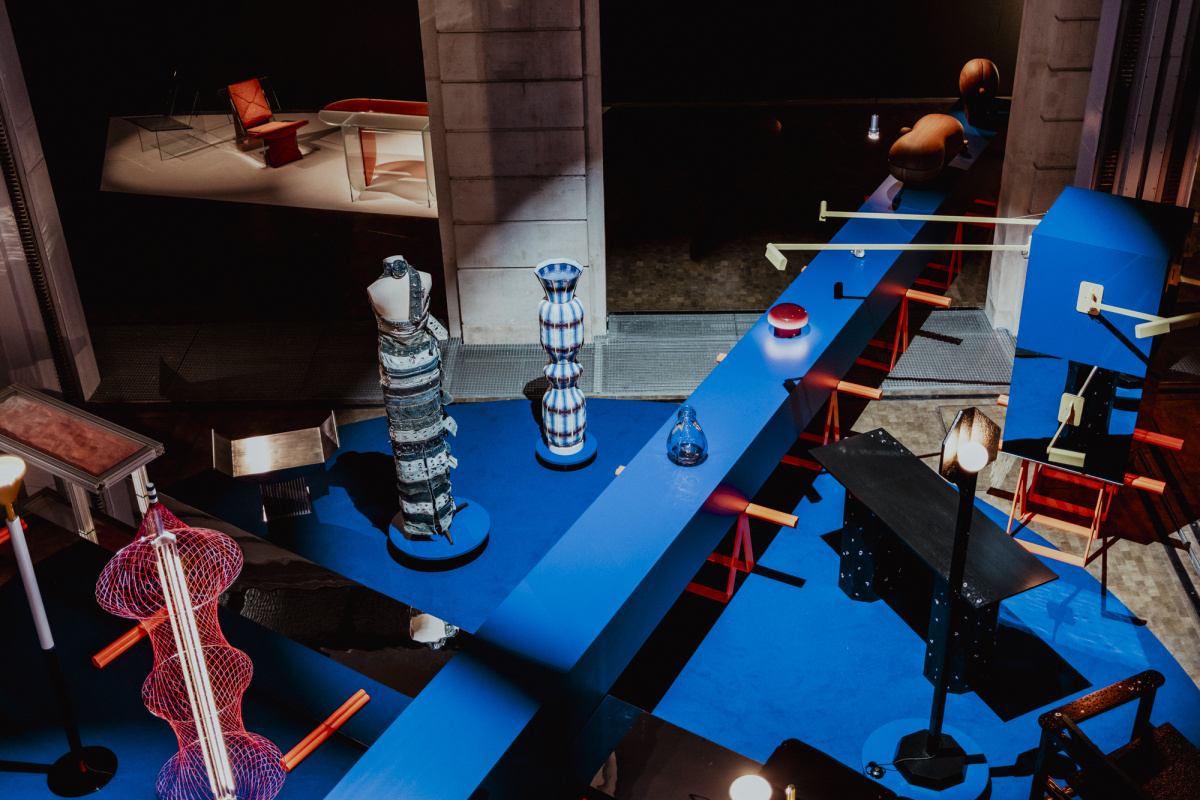
At the center of the exhibition sat a large X made of reflective chrome steel, a deep matte-blue cross, and bright orange sawhorse topped with lighting and objects. Christopher told me it was modeled on a clock and working with a lighting designer, he set a beam to sweep a full rotation every minute. Around it experimental fashion, aluminum furniture, and sculptural pieces in new materials were intentionally jumbled, which made the room feel active and readable rather than staged. Jeanne-Léopoldine oversaw the fashion component. Extraordinarily well done.
The next edition of Maison-Objet will be held January 15-19th in Paris.
maison-objet.com