Designer Linde Freya Tangelder remembers the first time she saw Muller Van Severen’s work at Valerie Traan gallery in Antwerp. The directness of their vision struck her immediately, and how their objects seemed to speak without hesitation. “I’ve always been surprised by how clear your language is as designers,” she tells Fien Muller and Hannes Van Severen as they sit down to chat. It’s something she admires, especially since her own process unfolds differently. Based in Amsterdam, Linde runs the design studio Destroyers/Builders with her collaborators, creating sculptural furniture and objects that explore materiality and form through carefully considered compositions that challenge how we perceive everyday objects. Her work gravitates toward weight and substance, exploring the tension between heaviness and lightness.
Fien and Hannes work in the opposite direction. They assemble ordinary materials like steel, aluminum, and glass into compositions that feel surprising. Their specialty is making furniture seem to float. “We try to make heavy things feel light,” Fien says. Their objects nearly disappear into a room while somehow holding their presence. Both trained as artists for a decade before they started collaborating on functional design. “Having that boundary was somehow even more freeing,” Hannes says. “With pure sculpture we often felt lost without borders.
In this conversation the three designers discuss how common materials become sculpture in the right context, why historical references help objects fit into eclectic homes, and why constraints can be surprisingly liberating.
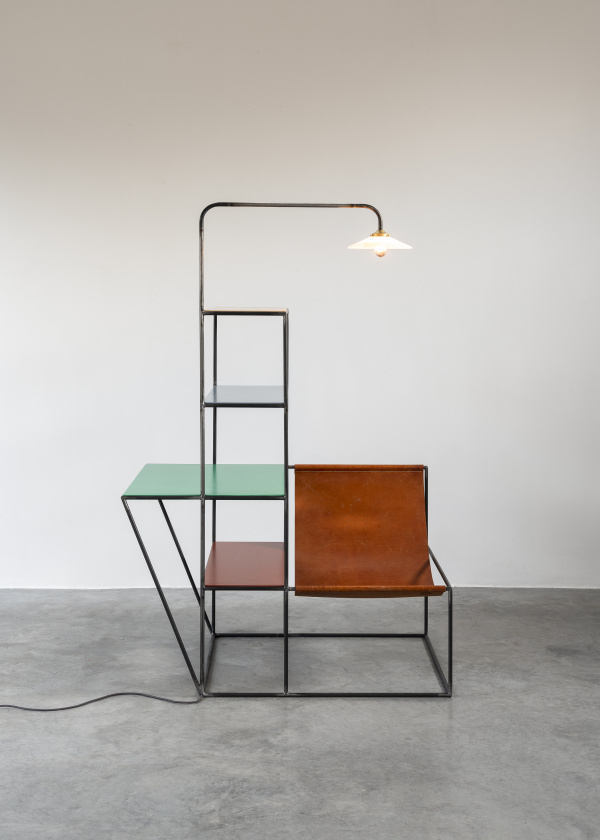
“When it comes to our design language, material is an important starting point for us and a real passion,” Fien says. “We love materials and finishes.” Above: Installation Small by Muller Van Severen. Photo by Frederik Vercruysse
Fien Muller: I remember first seeing Linde’s work at Valerie Traan gallery. We both work with that gallery. Your project looked like it was made of cork or something similar. That was the first piece I saw from you, and I thought it was beautiful. I was so interested that I even wanted to know the price.
Linde Freya Tangelder: That’s how I got to know both of you too—through the gallery. It’s funny because I did an internship in Amsterdam with Scholten & Baijings back in the day. They had this group exhibition, and I’m not sure if you were in it, but that’s actually how I first learned about Valerie Traan gallery.
That was also around the time I was considering moving to Belgium. I felt like the gallery was at least one solid foundation that I appreciated in Antwerp, and discovering your work there was part of that too.
Hannes Van Severen: Why did you want to move to Belgium?
Linde: I love the architecture and diversity in Belgium. I was always complaining about boredom in the Netherlands where every village looks exactly the same. I was also drawn to the culture there. I felt like there was much more diversity in Belgium than in the Netherlands. But maybe I was just stuck in my surroundings. I studied at Design Academy Eindhoven, which is such a small world.
Fien: I understand why you wanted to move. We actually moved too, but not from city to city or country to country—more from medium to medium. Before we started Muller Van Severen, Hannes and I were both working as individual artists. We met in a sculpture class at St. Lucas in Ghent, and we both did our own work for about 10 years.
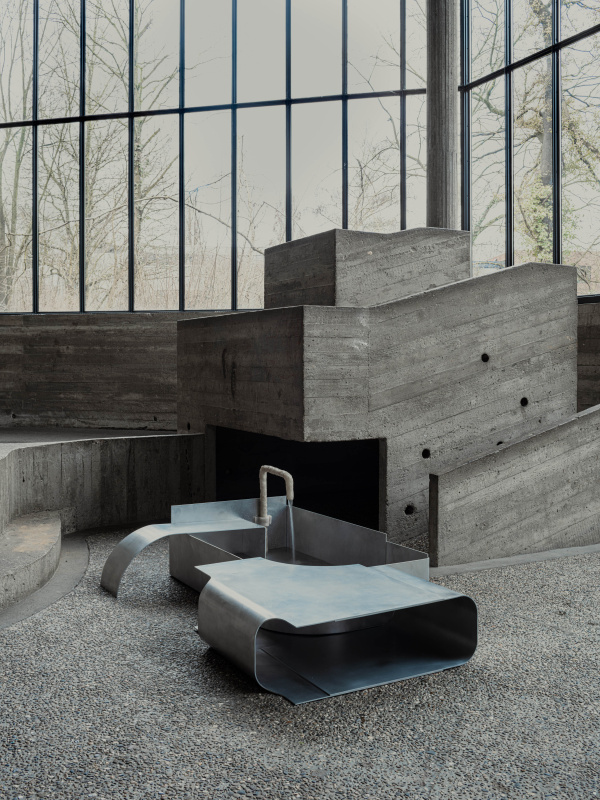
“Sometimes I don’t think about function at all,” Linde says. “It’s more like when I’m working on
a family of objects and there’s one proportion or technique I want to try out.” Above: Solidified “Reflections” water pond, 2022 by Linde Freya Tangelder, made from aluminum, resin, and water. Photo by Jeroen Verrecht
When Valerie Traan asked me to do a show in Antwerp and invite someone else, we had the idea to start working together.
Hannes: The gallery was focused on the relationship between object and subject, so we thought about creating something new together—functional objects. We put together a whole exhibition in a very short time, and we loved doing it so much that we never stopped.
Linde: I’ve always been surprised by how clear your language is as designers. I can imagine as an artist there are often a lot of questions, and sometimes you want to stay ambiguous or somewhere in between. I’m fascinated by how clear you can be. You probably have questions and doubts along the way, but the outcome is always so clear and speaks to everybody. That’s a strength you have together.
Fien: I think it’s just a language we both speak that we can’t deny. We’re two people making one work, but if you look at our individual work from before, you’d find it’s very related to what we do now.
You also have a language that’s so recognizable.
Linde: I think what I see as an overlap is this interdisciplinary thinking—moving from one discipline to another and always being inspired by something different. I think that’s something we have in common, even though our languages are so different.
Fien: When it comes to our design language, material is a important starting point for us and a real passion. We love materials and finishes.
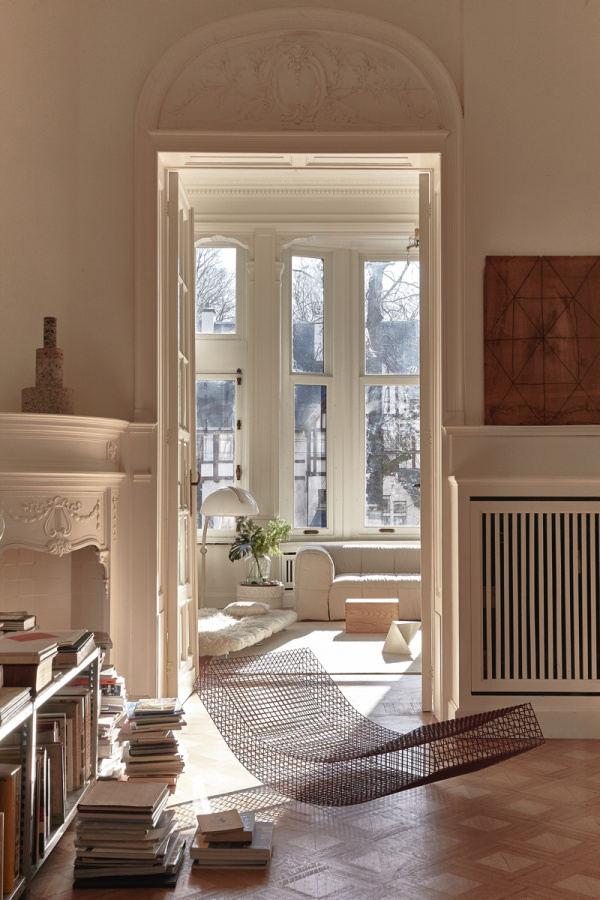
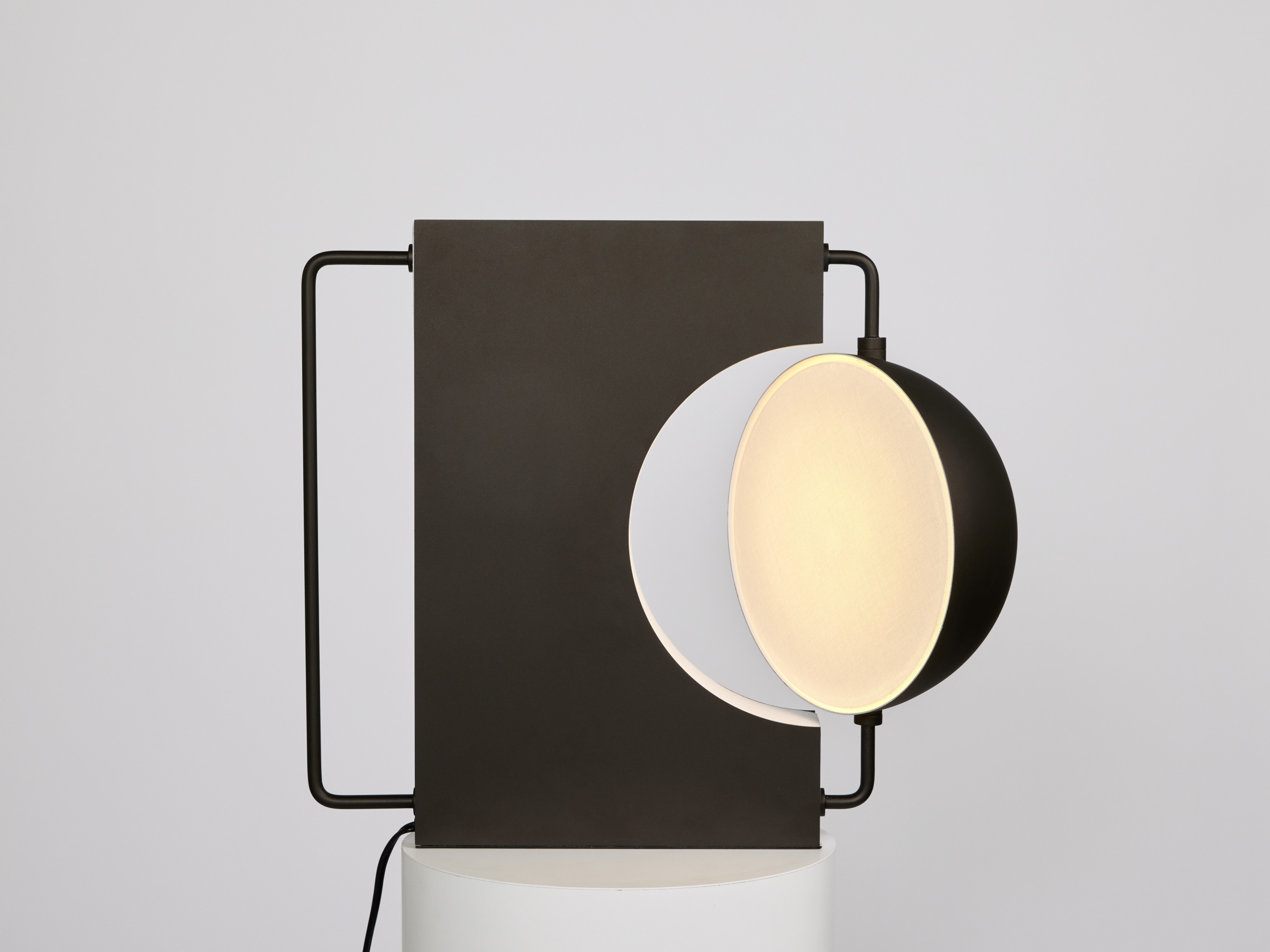
Wire S #1 by Muller Van Severen, one of a series of objects the duo created for Solo House, an architectural holiday home amidst nature in the North of Spain, designed by OFFICE kgdvs. Photo by Martina Björn
Hannes: But we work more with standard materials that we combine. It’s more like making a collage, gathering things that already exist—very solid and pure materials, but very common ones—and then trying to combine them in surprising ways. We often take classical materials and mix them with something more contemporary. It’s always a bit of playing around, but not too much and not too little. We want it to be exciting.
Linde: That’s definitely becoming your language. Finding good combinations with common materials that we see every day, and then in context it becomes like sculpture.
For me there’s sometimes this handmade process that I can’t outsource. It’s more by coincidence, or not thinking about the end client, that I sometimes get lost in the craft, and then I like to do it myself. I love to work on one piece for a long time sometimes, and I still want to do that. There’s quite a gap between limited editions that I do for galleries and collaborations with brands.
How is that for you? Do you feel you can have the same material in a collaboration?
Fien: We do a lot with steel and aluminum because you can work with very thin lines but still have strong objects. It’s about trying to make heavy things feel light. Maybe that’s different for you, Linde. I think in your work I see more heaviness. Maybe you accentuate that while for us, it’s the opposite. We make heavy materials seem almost weightless.
Linde: In my work it’s about this interplay between heaviness and lightness. There are works that are about open spaces or open volumes, and others are these heavy volumes that fit within that space. Something can be heavy and elegant at the same time.
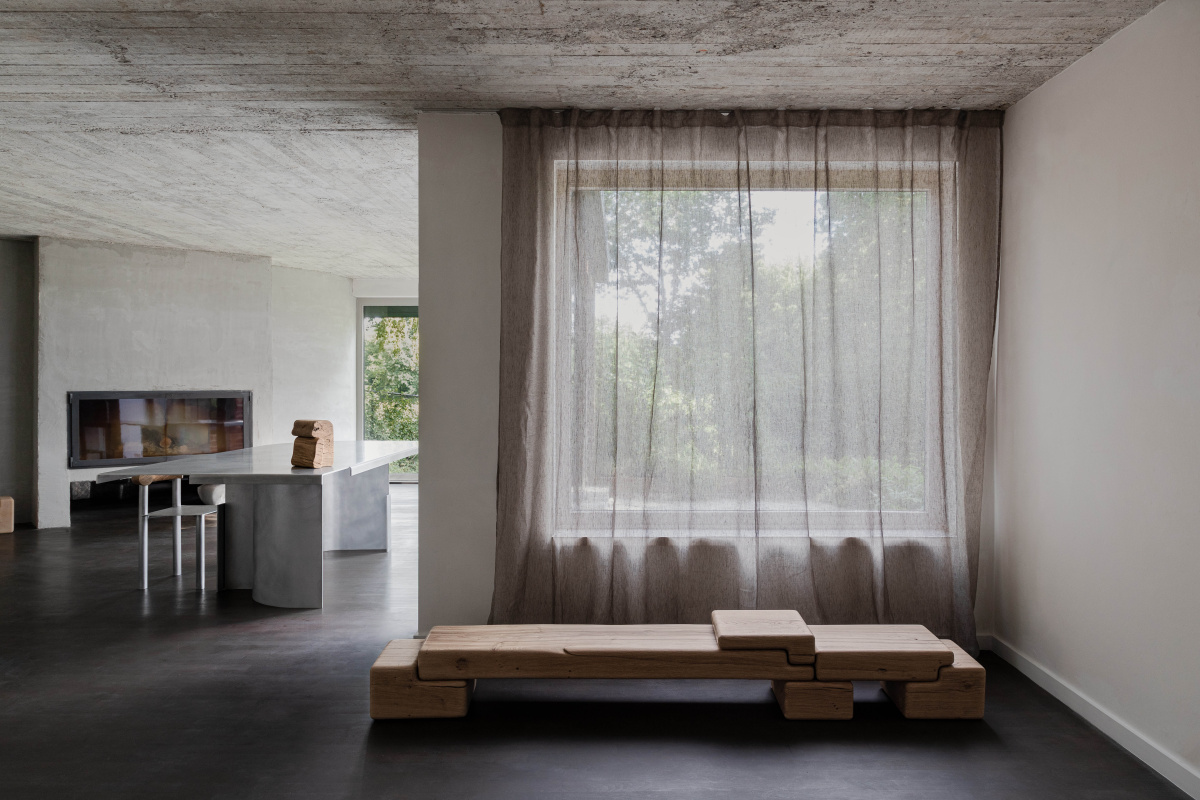
Linde’s Solidified Reflections Bricks’ Reflection chair, dining table, wood sculpture, and low bench pictured in the Destroyers/Builders studio in Belgium. Made from oak wood, aluminum, and brick. Photo by Eline Willaert
I often think about this counterweight in another material or playing with something close that is very heavy. Wood in general is a material that I work with a lot. I love the fact that you can sculpt it by hand so easily. I feel more in control with wood than with metal, where I always need partners. That’s what I love about each material being so different, and which partners belong to that material. Working with craftsmen is important.
Fien: I love the glass lights you did for Cassina. They have a very sculptural feel but are also a mass product. I think they’re super sensual and poetic.
Linde: Those lights are meant to be a copy of the human touch. The light has this handmade texture that gets scanned and then produced in glass. A project like that depends on the collaboration or whether there’s someone willing to invest in it. Often even good brands aren’t open to doing that.
In the end I think the type of brands you work with are a a big influence on the path you’re going down.
Fien: There’s a constant dialog between Hannes and me, but we create a separate dialog with our brand partnerships. It’s always interesting to get to know a brand’s DNA. They can often show you materials you’ve never heard of.
Linde: The culture that comes with each brand is always so different too. Europe is so diverse, so where the company is based matters. From north to south it’s completely different.
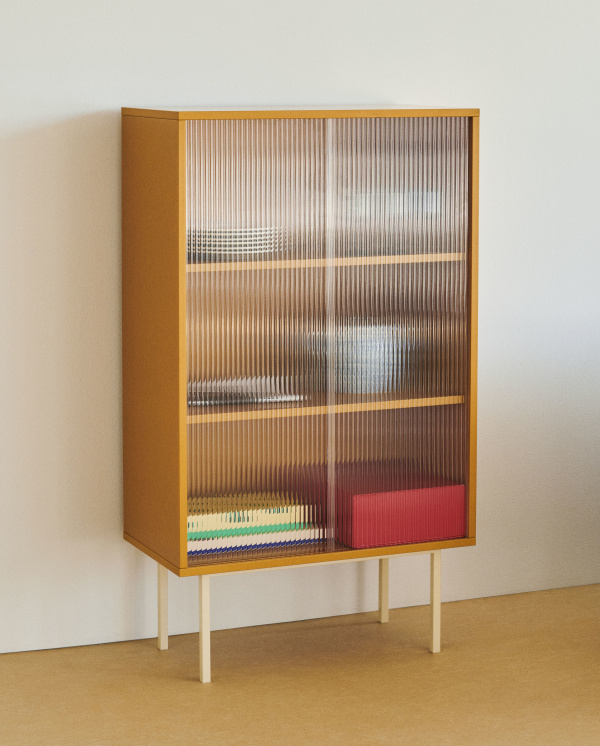
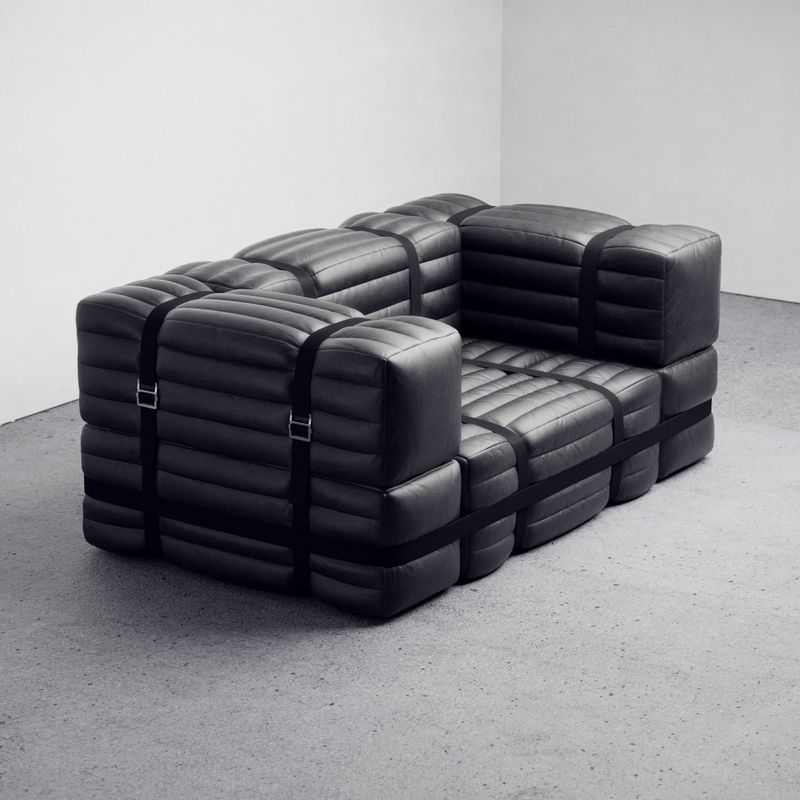
The Color Cabinet series by Muller Van Severen balances a clean, minimalist design with vibrant color. Photo courtesy of Muller Van Severen
Fien: Even though we don’t focus on interiors, we always consider how our objects will work within spaces. When we design something we don’t think about just one piece. We create families of objects. These families need to work on the ground, on walls, and even on ceilings. We try to engage with the architecture while remaining respectful of it.
Linde: We often have historical references in the back of our minds when we’re designing, and I think that’s what makes our pieces work well in different kinds of spaces. Especially in those mixed, eclectic homes where you might have some old parts and some new parts all together. The objects themselves sometimes have references to archetypes.
Hannes: It’s very important that our pieces are able to stand next to something very old or very new. Function is also important in our work, even though a lot of people don’t think it is when they first see our pieces. But it’s always there. It has to be there.
Linde: What comes first when you have an idea? Is it the function or the aesthetic?
Fien: I think it goes together, and it depends on who you’re making it for. When you work for a brand like Hay you definitely have to think about function. When you’re working with a gallery, maybe that’s not the first priority. It depends on the context, but both aspects are always important.
Linde: Sometimes I don’t think about function at all. It’s more like when I’m working on a family of objects and there’s one proportion or technique I want to try out. Even if there’s no real function there, I still want to make it and see what happens.
“We’re not so busy thinking about the future. Everything will slowly follow along.” -Muller Van Severen
Hannes: Function is important for us because we come from visual art. It was actually nice to switch to functional objects. Having that boundary was somehow even more freeing. With pure sculpture we often felt lost without borders. Sometimes you need something to hold onto.
Linde: Sometimes model making can be so sculptural, especially when it’s close to the final result. Maybe it has to do with how you switched careers and got to work in art and photography. I always felt like I was taught to be a designer in design school but wanted to do something outside my comfort zone or a bit opposite. I always try to get away from it, but then I always come back to that.
Fien: Architecture is important in our work too. We have a lot of little architectural elements in our pieces, and it’s a big inspiration. But it’s also about proportion. You have to be aware of doors, spaces, all of that. We become one with the architecture, so of course we have to be aware of it. We love it as a medium and an art form.
Linde: It’s interesting to relate to architecture but also to the outside, because I think the relationship between the inner and outer shell of architecture is fascinating. But I always say that architecture has existed much longer than design. Our field is still very new if you think about it. That also makes my inspiration from architecture different from yours, even though it’s still the same source.
Fien: Architecture is something we all move through. We can all see it, but objects are completely different. They’re hidden, more secret. We’re all more involved with architecture than with other things. It’s nice that we’re making something for those hidden places.
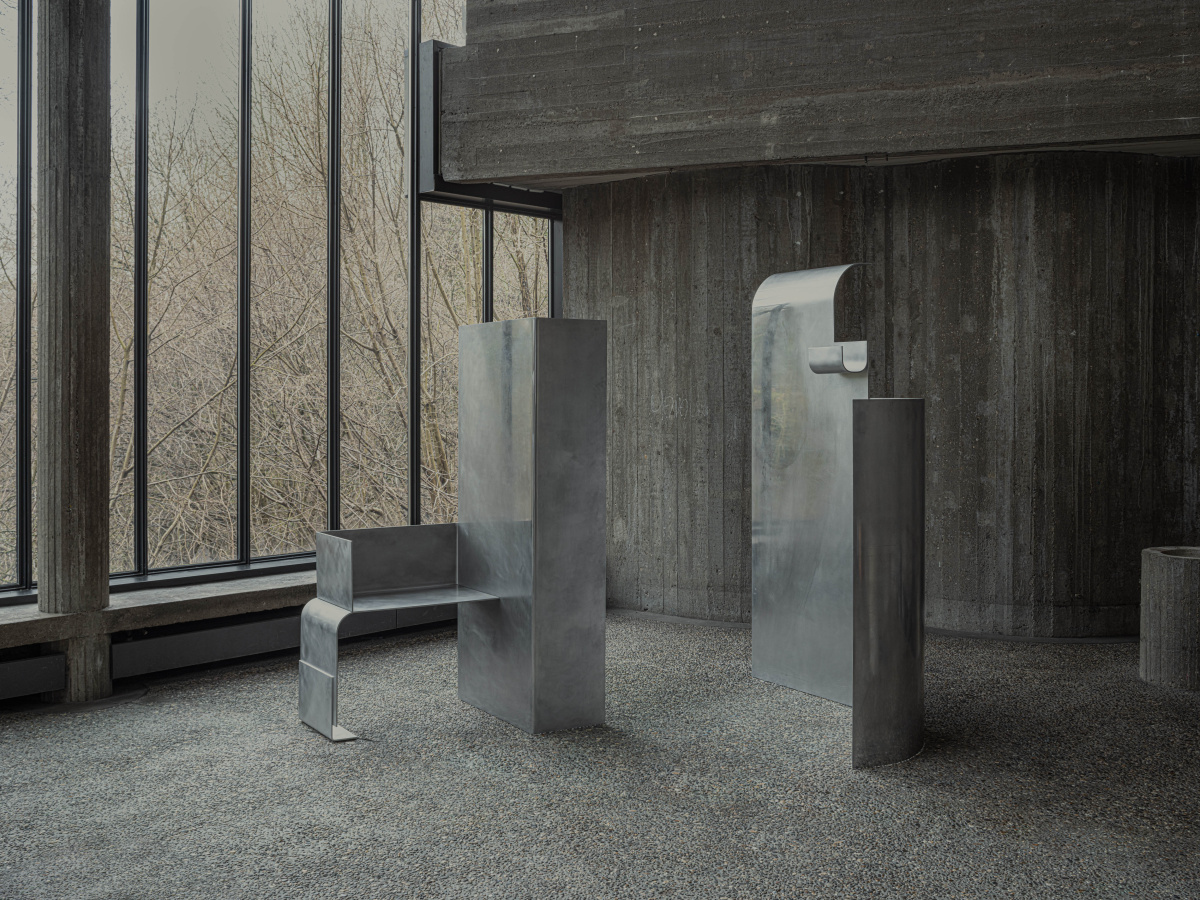
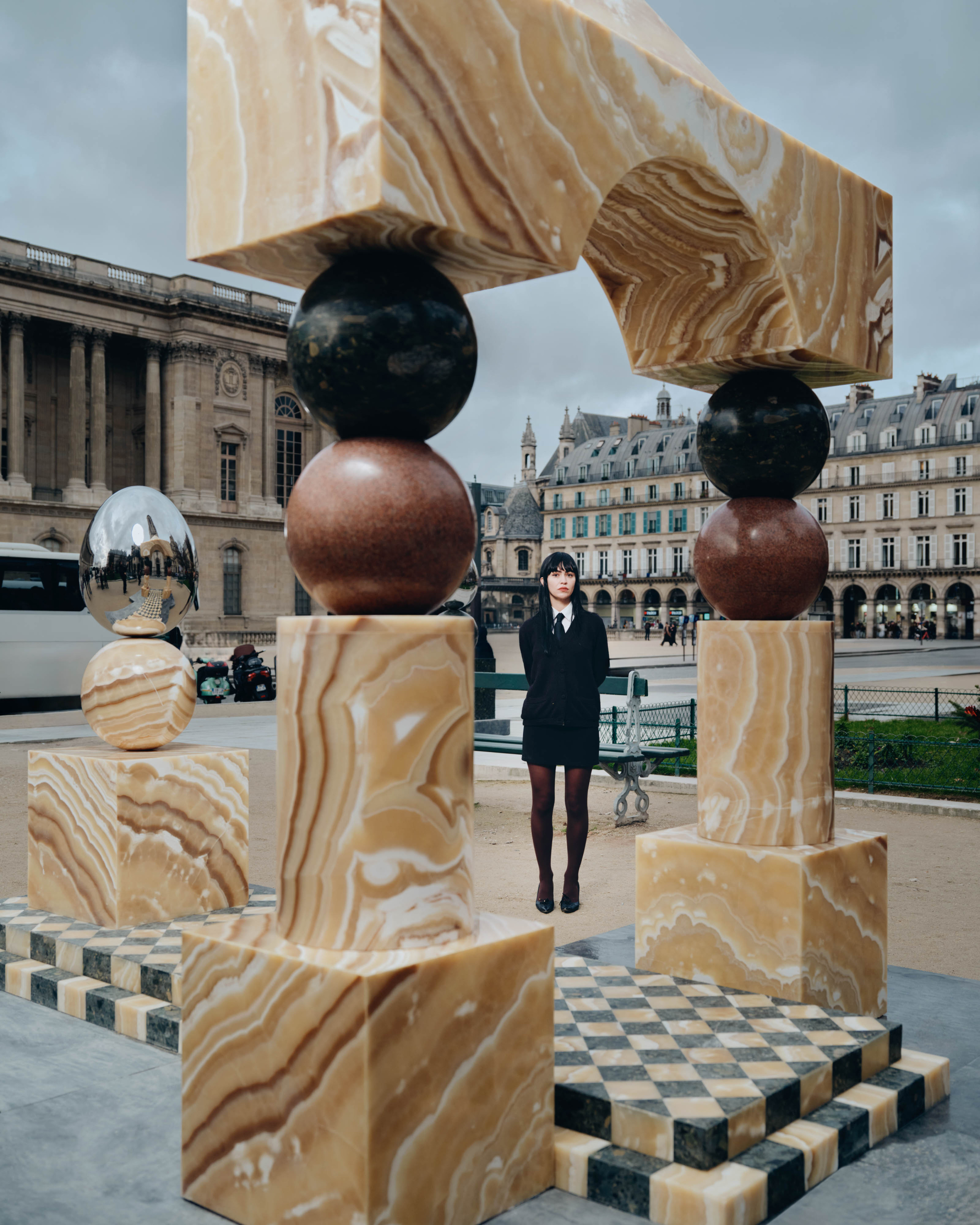
Solidified Reflections is a minimal furniture collection, a collaboration between Linde Freya Tangelder, Carwan Gallery and IN Residence under the cultural patronage of Cassina. Photo by Jeroen Verrecht
Linde: An architect that’s important for me is Lina Bo Bardi, who is a Brazilian Italian architect. Do you have specific architects that you connect with?
Hannes: I love a lot of what Oscar Niemeyer did, but my influences are varied. Sometimes it’s not just one concentrated influence. I love things in general that you can see as sculpture, building, and object—somehow they have it all. It could be the most beautiful villa, but it could also be a pigeon house in Egypt.
I’m curious about how design will evolve over the next few years.
Linde: Do you feel threatened by AI at all?
Hannes: I think we’re safe because we already have our own design language. I don’t think AI can create a language like that. The human soul will never be replaced. But we’ll see. Maybe in five years we’ll think differently.
Fien: I’m scared of it, to be honest. I don’t understand it and often think, “What the hell is going on?” It does scare me when I think about it, but it’s not my focus. I’m so deep in my own world that it’s not affecting me day to day.
-
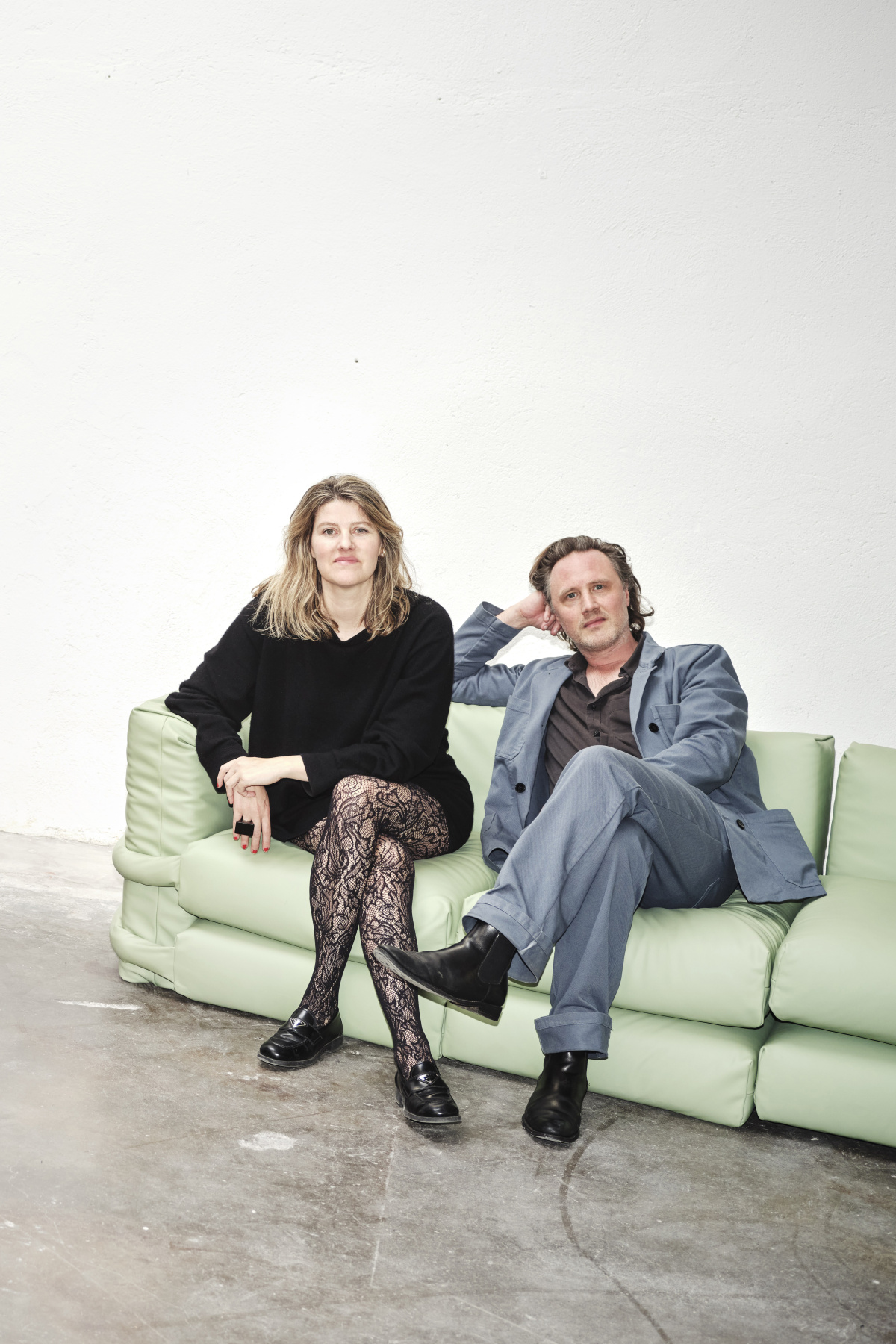
- Muller Van Severen. Portrait by Nacho Alegre
-
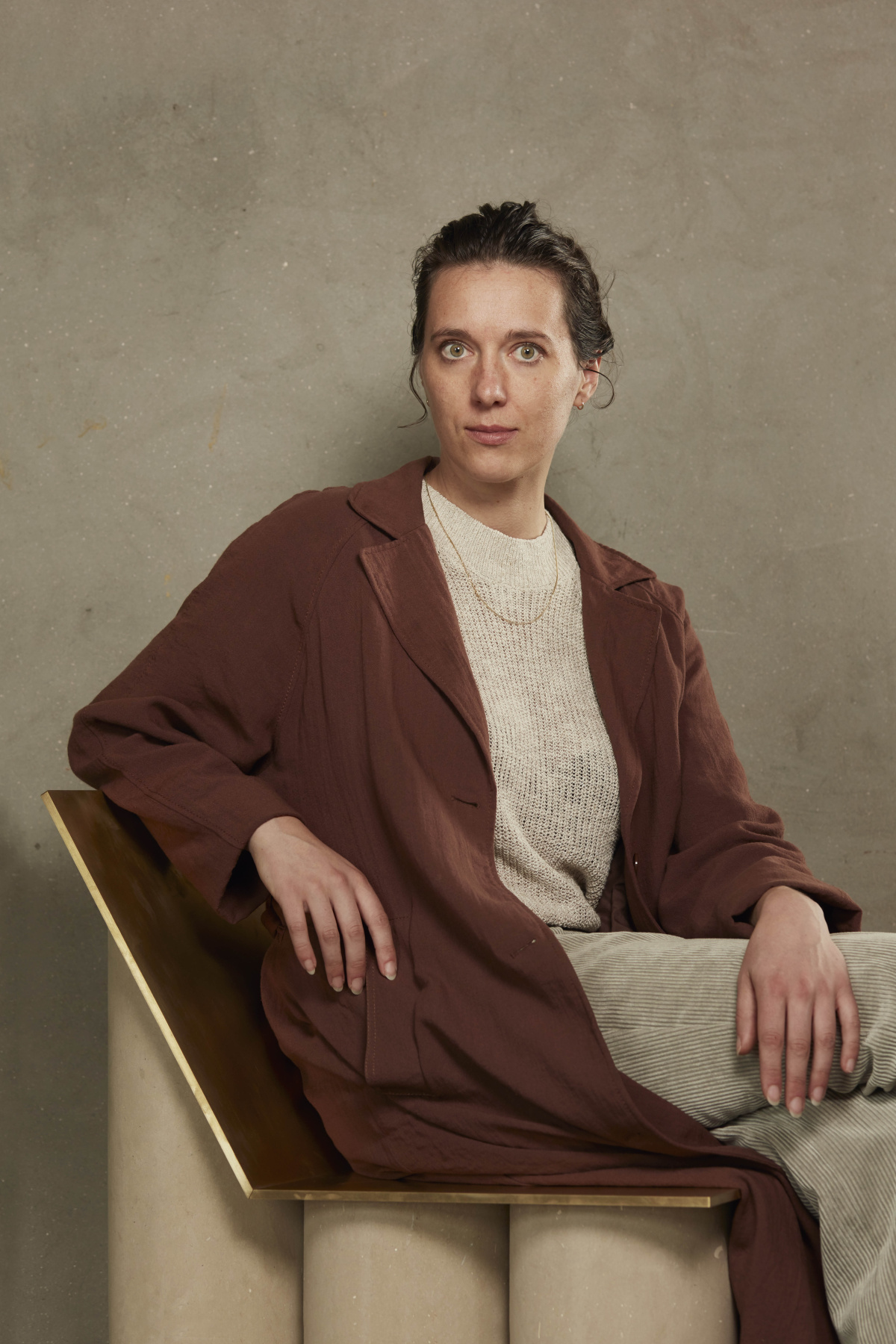
- Linde Freya Tangelder. Portrait by Alexander Popelier
Linde: I also think human beings and the things we have in mind—or how crazy you sometimes get when you come to an idea—I’m convinced that’s something that can’t be replaced by a machine.
Hannes: A few years ago when the latest iPhone came out, I was wondering what could possibly be next. It’s such an incredible machine, what could come after that? And then there was AI and it was beyond what you could even imagine. It’s so crazy. In some contexts I think it’s good, like medical applications. But it’s also scary because it could become like the Terminator.
Linde: It also feels impossible to give it more thought than we are right now. I don’t want to overthink it. You have to stay in your own world in a way.
Hannes: I agree. We’re not so busy thinking about the future. I just think about what I want to make and how things are evolving. Everything will slowly follow along.
mullervanseveren.be, destroyersbuilders.com
A version of this article originally appeared in Sixtysix Issue 15.