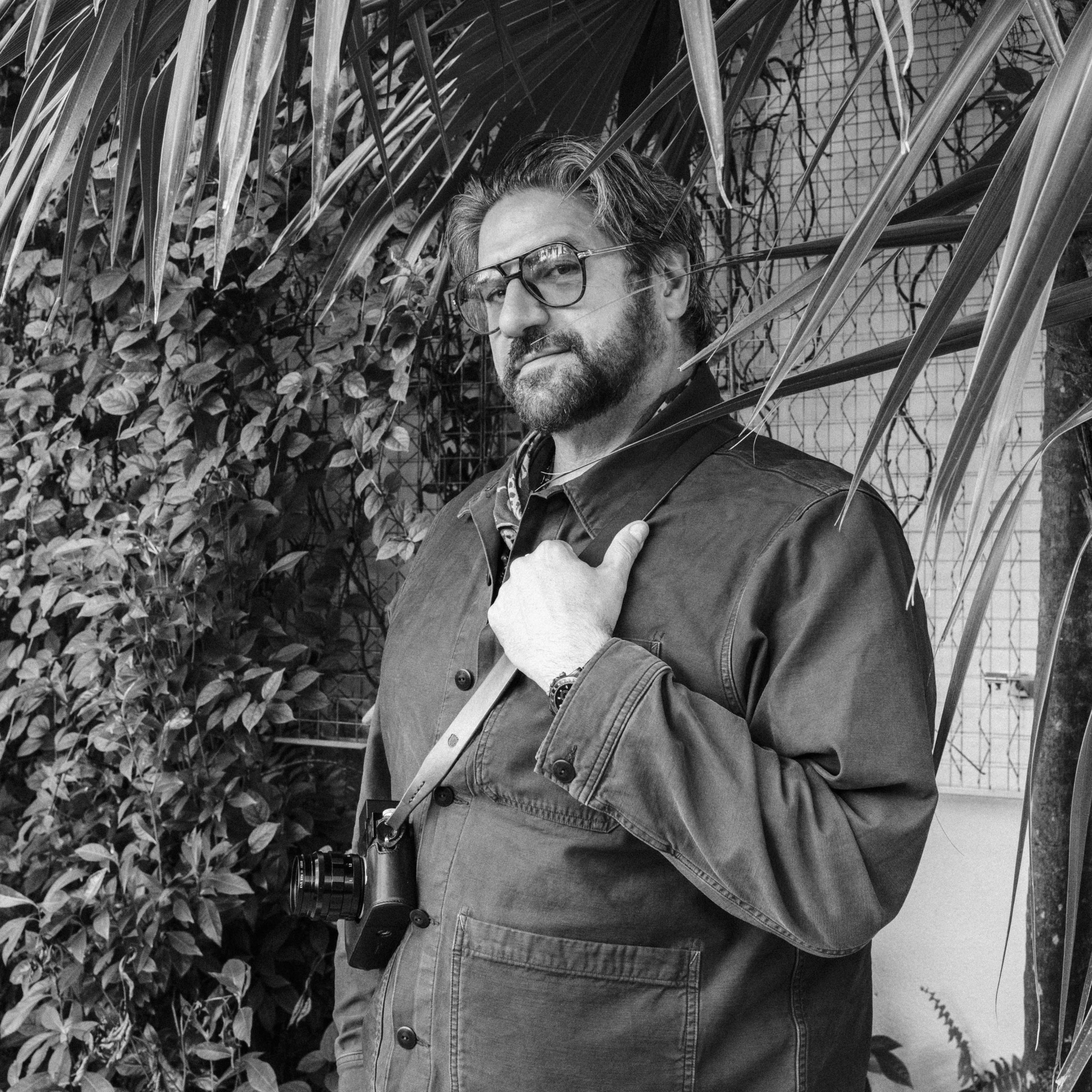
Mathieu Bitton is a three-time Grammy-winning photographer, designer, art director, and producer born in Paris and based in Los Angeles. He has designed over 800 album covers, box sets, and posters for artists including Prince, Miles Davis, Marvin Gaye, The Rolling Stones, and Jane’s Addiction. He is the official photographer for Dave Chappelle, and spent over a decade on the road with Lenny Kravitz. He is a Leica Camera ambassador with an obsessive collection of roughly 40 cameras and 110 lenses. His most recent book, Paris Blues, published by teNeues with a foreword by Naomi Campbell, is a 240-page love letter to his hometown assembled from 30,000 photographs taken over 15 years. In 2012, France awarded him the Chevalier de l’Ordre des Arts et des Lettres.
I met Mathieu at a Poltrona Frau showroom event where Paris Blues was being projected on screen. He was heading to Portland later that day for the Dave Chappelle arena tour, having missed two shows to be there. Mathieu is an obsessive collector of first edition books, Black film posters, vintage lenses, and cultural connections that shouldn’t make sense but somehow do. Over his career he has taken all of it, and mixed it into a voice that is unmistakably his own. He calls it his “magic potion.”
Here is our conversation, completely in Mathieu’s own words.
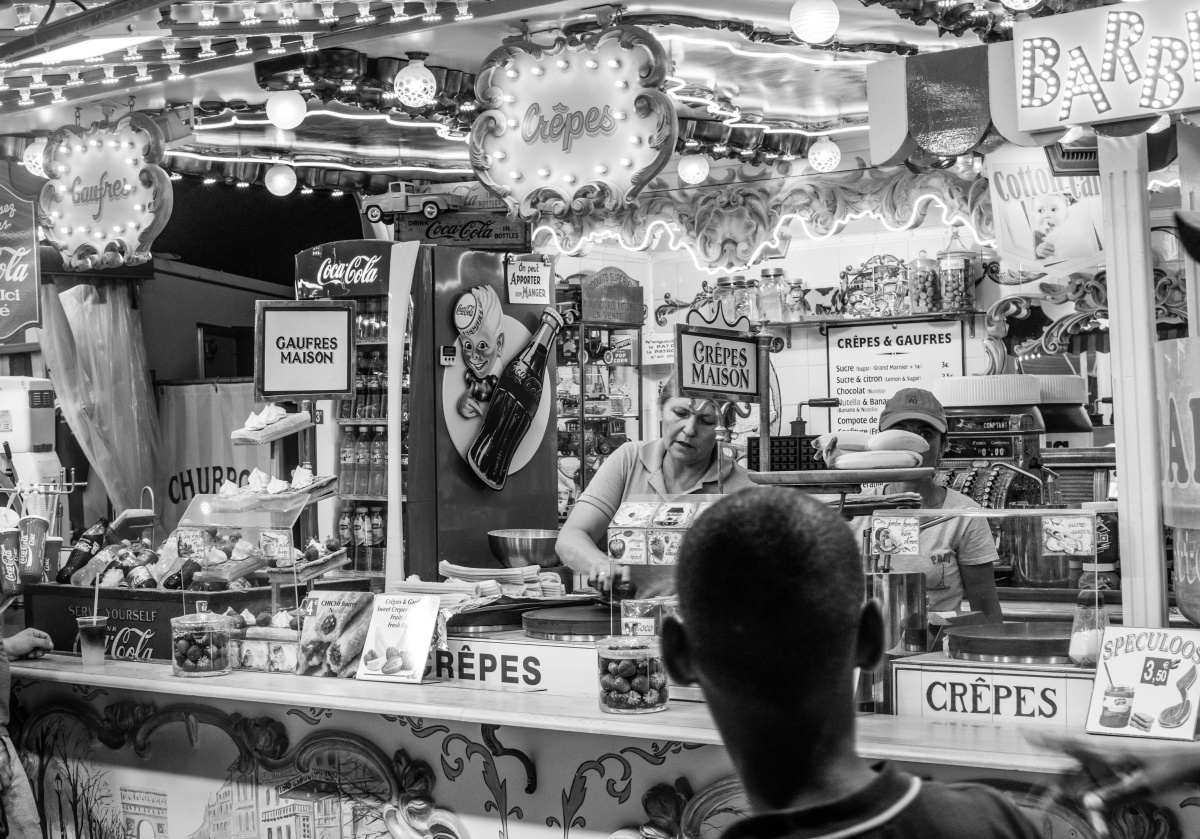
Paris Blues is Mathieu’s photographic love letter to the city that shaped him. Above: “July 16, 2018.” Photos by Mathieu Bitton
I look at Paris Blues as an autobiographical piece. These are all moments where I remember where I was by looking at the images. I turned 50 recently and my dad has Alzheimer’s and is in a home in Paris, so I wanted to make something personal that other people could connect with. The idea for the book came when I thought, “I want to do something about Paris.” With my dad going through Alzheimer’s, I need to keep his memories and my memories alive. I need to keep something like a memento of what he’s losing. My girlfriend suggested titling the project Paris Blues because one of my favorite movies is Paris Blues with Sidney Poitier, Paul Newman, and Louis Armstrong. I own the original painting for one of the movie posters.
There are about 15 years of photos in the book. A lot of it comes from me running around with a camera, which I do all the time. Then there are some other moments, like being on tour with Lenny Kravitz for over a decade, so he has a whole chapter in the book. There’s a flea market chapter because I spend my Sundays, whenever I’m in Paris, no matter what, at the flea market. My dad’s a collector of mid-century furniture and art. Every Sunday, that was our thing from the time I was in a stroller.
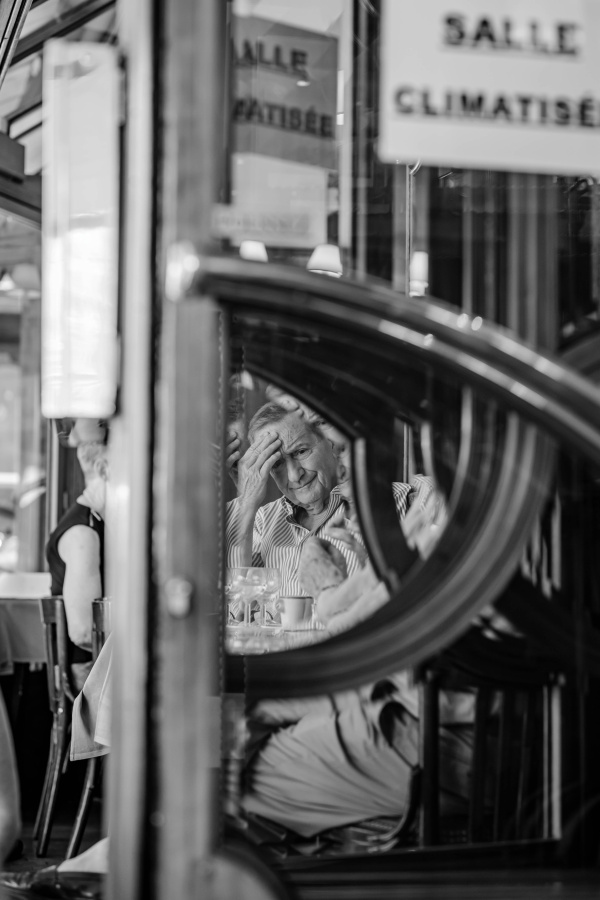
“REGRETS CLIMATISÉ,” CHATELET, PARIS. AUGUST 1, 2018
How do I tell my story in images? Why is there a picture of an old dude walking and a picture of Lenny Kravitz and Ty Dolla $ign and Westside Gunn? The 2018 World Cup win in France, all the facets of Paris: homelessness, landmarks, crazy amazing characters, and Lenny. The forward I wrote is one of those stream-of-consciousness things where I was like, “Whoa, I can’t believe this all just came out.” It’s my love letter to Paris. It made me fall in love with Paris all over again, doing this project. I mentioned places like where The Red Balloon was filmed that I used to watch when I was a kid. I went back and retraced those places, and they’re all in there.
When I turned 40, that was the cleanup year. I removed people who shouldn’t be in my life or who I shouldn’t be working with. It was a clean slate of sanity. I got rid of people who were users, people who only called for concert tickets but never checked in.That’s when I started a major transformation in my work. I think my work got so much better when I turned 40 because I was more self-reflective. Then 50 was like, now is the time to really create my legacy.
There was an acceptance of turning 50. I can always be young-spirited, and I can always be goofy and make inappropriate jokes. But now I feel like I have a duty to the work. The work has to be mature in a way. I’m building my legacy, so it has to be worthy of being shown. I never felt that before 50. Before it was like, “Look at this cool shot. Damn, I got Jay-Z in the booth.”
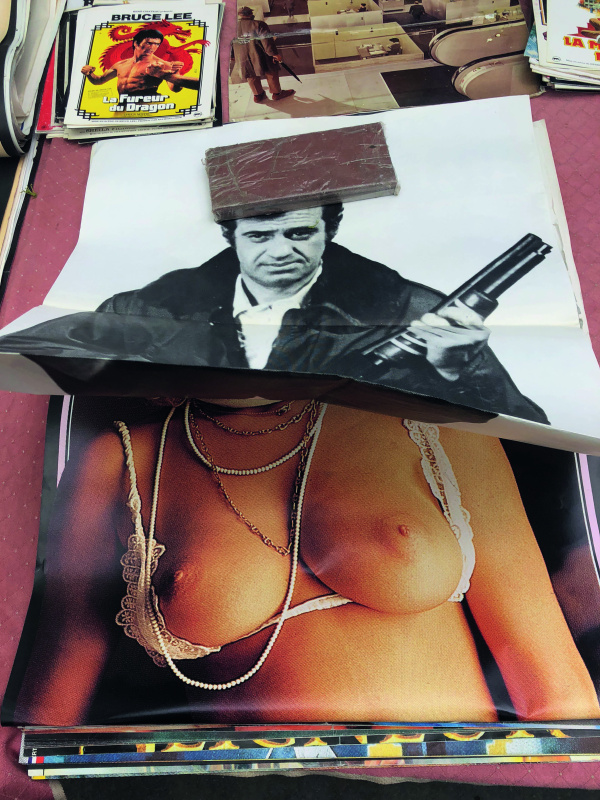
“Inside my mind at 11 years old,” Vanves Flea Market, France. July 17, 2011
I used to think if I could win a Grammy, my career would be set. The first time I was nominated was in 2009 for a Jane’s Addiction box set I designed, Cabinet of Curiosities. And then I didn’t win. I was like, “That’s it. That was my only chance.” But why do I care so much? It’s somebody deciding that something is better than something else. Then I win one, but all the problems are still there. My insecurities are still there. Then I win a second one and a third one. Doesn’t really affect it. At 50 you start realizing that none of it really mattered. They’re great accomplishments and I’m very proud of them, but this is more important. The things that are going to be left behind. The things that people can buy a print of, have on their walls, have on their coffee table.
It makes me focus harder. When I’m in Paris I need to walk the entire day. When I was there last month, I was looking at my step counts. It was like 35,000 steps a day.
I used to get a picture, and it was enough that it was Lenny or that it was Bruce Springsteen or the Rolling Stones. When I was doing the book, I had photos of big celebrities that I didn’t include because at 50, I’m like, “I don’t care that it’s this person. Is the photo good enough to be in a book?” Just the fact that it’s a celebrity is not enough for me.
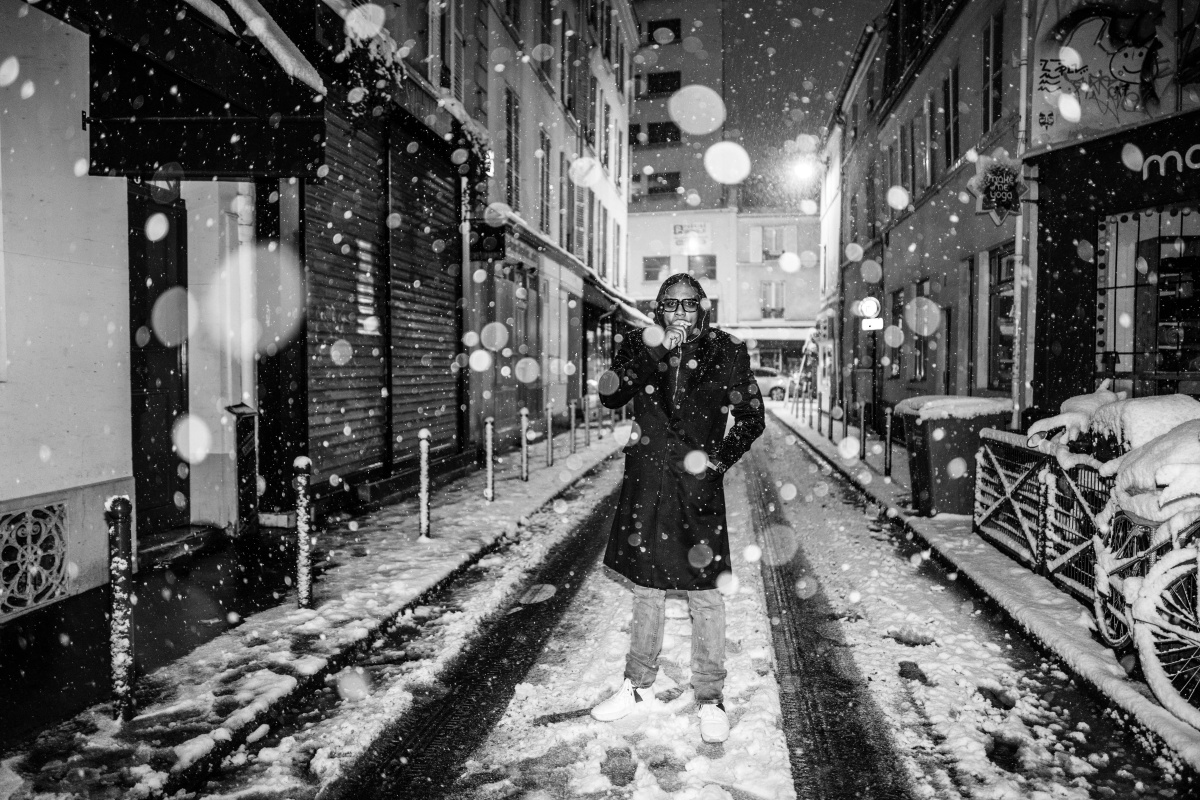
“SNOWING & SMOKING,” DAVE CHAPPELLE. CHEZ PIERRE SANG RUE OBERKAMPF, PARIS. FEBRUARY 6, 2018
I went through 30,000 Paris photos from 2010 to 2024. The only editor is my son, Miles, who is also a great photographer. He’s been assisting me since he was 12. He’s working on a book after seven years of shooting at the Blue Note in New York. He pissed me off because there were pictures where I was like, “Look at this picture!” and he’s like, “meh.” But in the end, he was totally right.
I do everything myself. I’m always jealous of what it must be like to have a crew. A few months ago I went to London to shoot Raye, and I had a photo assistant and a lighting assistant. I was like, “Man, this is luxury!” Often the stuff I shoot in the street by myself is my favorite stuff. All the stuff with the lights and the backdrop, I feel like anybody could have done those photos.
I think what celebrities love about working with me is they’re always like, “How’d you get this? That’s the way my mom would have photographed me.” It’s tuning into the core of a person. At the end of the day, I care about talent. I don’t care about celebrity. When I was a kid growing up in Paris, I was so impressed by celebrity. You meet a bunch that are totally ungrateful, or you end up with the ones like Dave Chappelle or Lenny that are brothers to me.
Intimacy comes from comfort. For a guy like Quincy Jones to be like, “Come to my 89th birthday party and only you can take pictures,” there has to be a level of comfort. That’s been a recurrent theme with Dave. I’m the only person he’ll allow to shoot. Right now I’m missing shows so there’s nobody shooting. If I’m not there, he doesn’t want anyone.
My assistant for the past 10 to 12 years has been my son. People accept him. He’s family. He’s turning 26 this month. I have two kids. My 23-year-old works for the Clippers. Today is his last college day. He’s at UCLA. He’s totally uninterested in the photography stuff. He’s the rebel.
There’s one book in my house that’s in a glass display case. Henry Miller and Brassaï’s Quiet Days in Clichy, a first edition from 1957. Brassaï is probably my favorite street photographer. Paris Blues is definitely a tribute to him.
My biggest prized possession is Allen Ginsberg’s photography book that I got him to sign when I was 17. That’s how I became friends with people like Quincy Jones. These guys would meet me and be like, “How do you have all this stuff? You’re too young and you’re from France.”
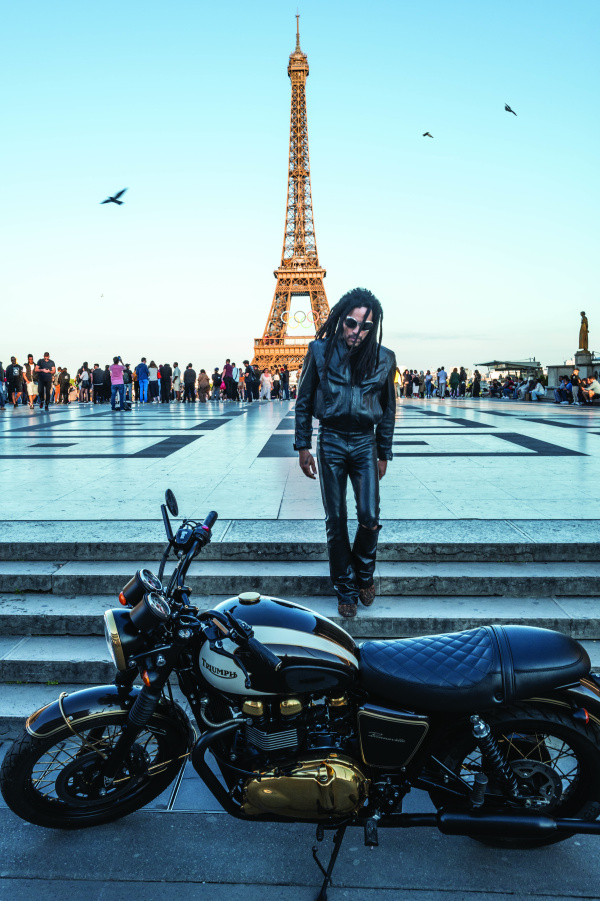
“OLYMPIC TRIUMPH” outtake, LENNY KRAVITZ, PLACE DU TROCADERO, PARIS. JUNE 9, 2024
With Dave, there was this incredible moment documented in his The Bird Revelation Netflix special. He was talking about Iceberg Slim at The Comedy Store, and I’m like, “Do you know about my Iceberg Slim collection?” He’s like, “How the fuck does a French Jewish guy have Iceberg Slim?” I had a first edition from 1967 that was almost impossible to find. In the special you see me in the back with the book. He’s like, “This is Mathieu, he’s from France, he’s white.” Everybody laughs. I’m sitting there thinking, “Dave Chappelle has always been my favorite comedian, and I’m his official photographer while he’s telling an Iceberg Slim story with my first edition from high school.” What a moment.
The nice thing about Leicas is that they’re small and they’re not overwhelming. My godfather was a big Leica guy. He took all of my childhood photos because he was always with us, shooting on an M4, which I never realized until I was working on this book. On my 13th birthday he gave me a Leica Flex. That was my first camera.
I’m a collector at heart. My dad was a collector. I got the bug from him. My rule with myself was anything I get, I have to use.
Quincy Jones was one of my mentors. I was at his house and I was managing artists, designing, making videos, art directing, shooting, producing. Too many things. And he was like, “What’s the one thing that makes you happy and what’s the one thing that makes you money? You should combine those two.” I’d never thought of that before. Management does not make me happy. It stresses the shit out of me because everybody’s ungrateful. Photography makes me happy. Design makes me happy and it pays the bills. Blend it all together. That was a pivotal time where I thought I was just going to get some regular job.
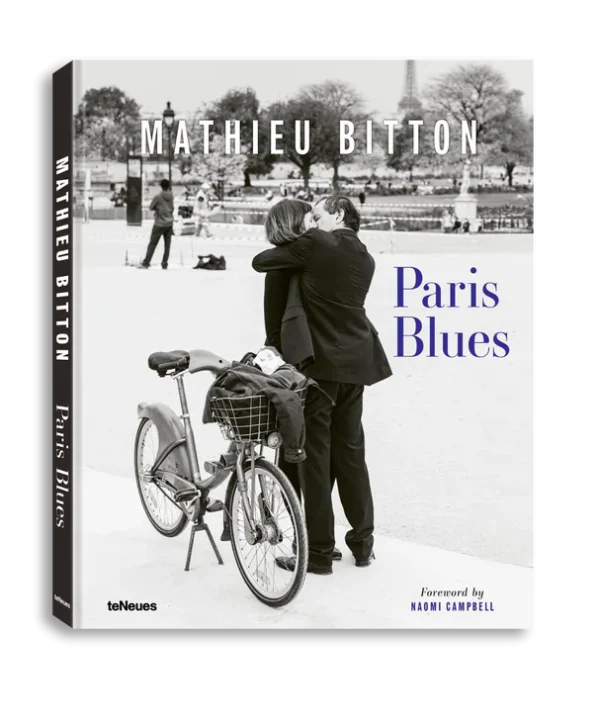
His most recent book, Paris Blues, published by teNeues with a foreword by Naomi Campbell, is a 240-page love letter to his hometown assembled from 30,000 photographs taken over 15 years.
Nike tried to hire me. It was a big decision with my ex-wife, and I owe her a lot because she was the one who was like, “I know it’s a crazy salary, but with your personality and your drive and all the things you want to accomplish, to go work for a corporation where you have to wear the same outfit as everybody every day?”
Once something is out there, it belongs to the world.
A version of this article originally appeared in Sixtysix Issue 16.