Ama Serwah Genfi, known professionally as Amaarae, is a Ghanaian-American singer, songwriter, producer, and sound engineer who has become one of the most compelling voices in global pop. Born in the Bronx and raised between Atlanta, New Jersey, and Accra, she returned to Ghana after college and built a career that fuses R&B, Afrobeats, and alté into something that resists easy categorization. Her debut album The Angel You Don’t Know’s standout track “Sad Girlz Luv Money,” remixed with Kali Uchis, charted worldwide.
Her second album, Fountain Baby, arrived in 2023 to rave reviews. In 2024, she became the first female Ghanaian musician to surpass 1 billion streams across all major platforms. In April 2025, she made history again as the first Ghanaian artist to perform a solo set at Coachella, where she shaved her head onstage and played tracks by other Ghanaian artists alongside her own.
I spoke with Amaarae while she was home in Ghana, where she keeps a house near her extended family in Accra. She had just come off a long family day and was still catching up on sleep, and she brushed her hair before turning the camera on.
Here is our conversation, completely in Amaarae’s own words.
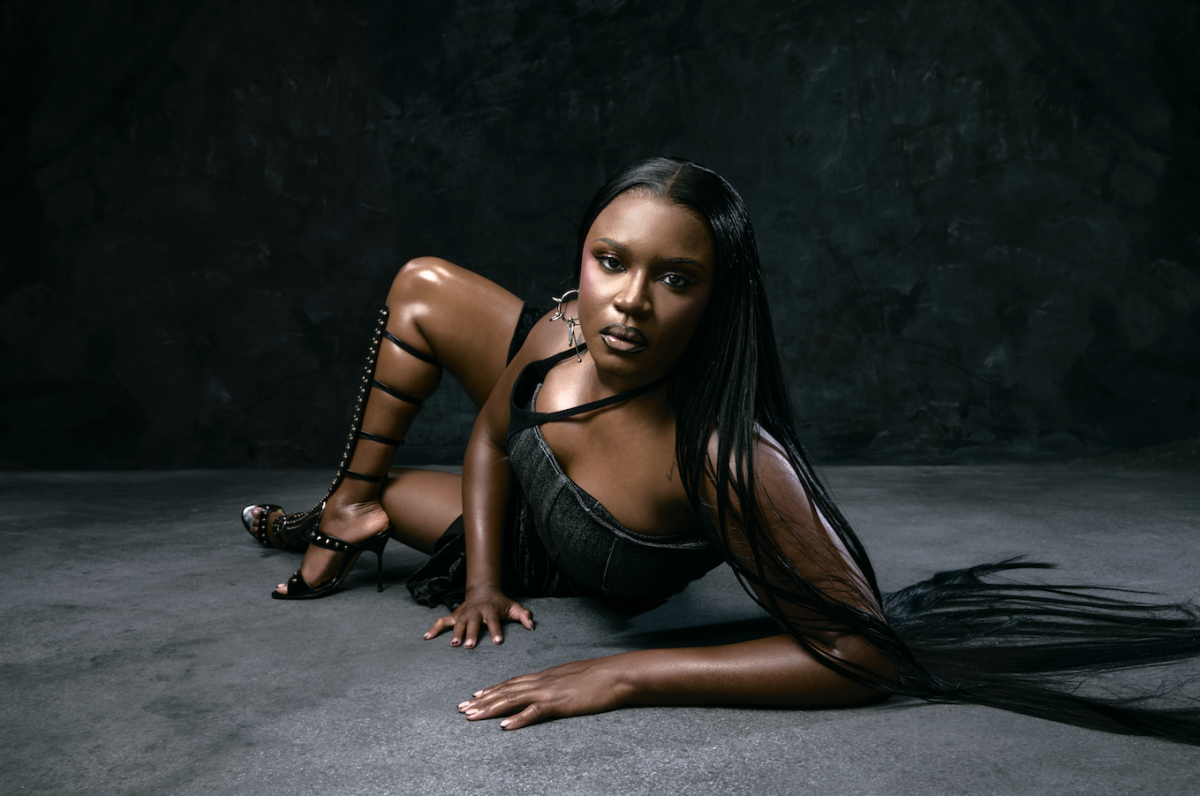
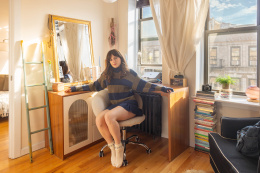
An introvert who gives everything on stage, Amaarae strictly limits her time online and needs two full days to reset after a show. “When I come here, I give you everything I have. When I go home, I give me everything I have.” Photo by Salomé Gomis-Trezise
What’s happening now feels more like performance and less like art. I think about Janet Jackson’s Janet album cover, where Rene (Elizondo Jr.) has his hands over her chest, and how tasteful that was, but how sexually explicit it was at the time. I think about Madonna’s Sex book. I think about various iterations of Lil’ Kim album and magazine covers and her appearance at the MTV Awards where she had one breast out with a purple pasty on it. Those provocations were rooted in, especially for women, a different type of expression that never existed before. I think the later internet generation post-TikTok lacks taste, lacks historical context, lacks research, lacks true original thought and execution, lacks a respect for media, and lacks a respect for curation and curatorial skill. Everything is just crass and overexposed. There is no longer a “why,” they just do.
I’m an African girl from Ghana. Sexual expression was not the norm, probably up until our current generation of artists and stars. Even still, a lot of my peers are far more conservative than I am. But I think there’s a gap for women who feel and think and create the way that I do. I’m very well-researched and I’m very considerate about what sexual expression is to me, not to do it in vain, but to do it to create a conversation and to represent an underserved community of African women, diasporan women, and Black women specifically.
Certain artists still bring a certain “taste” to it. Solange, for instance. Hers is more rooted in the education of Blackness from a southern perspective, and that’s a real conversation. Versus someone like FKA twigs, who is rooted in movement and body and guts and real, raw sex and touching and feeling. She even says something about a “craving rabid fuck” on one of her songs on the Eusexua album. There are some people that still respect the art, and then there are the kids who just don’t know what is going on.
Once you go through your first internet cancellation, it’s like losing your virginity. The rest is cakewalk. The internet is a battlefield. Since Twitter/X has been monetized, there’s been this real community of hatred dedicated to misunderstanding anything and everything public personas share. The moment we allow that to stop us, we lose everything that art is supposed to do, which is to educate, to revolutionize, to help people see and understand things that they typically wouldn’t bring their minds or their hearts to.
My confidence comes from the fact that I don’t want to see art die. This is one of the ways that art can be killed. You need to be bold and you need to not have fear. Too many artists are wrapped up in what’s happening in the social media sphere. They canceled me for saying Kelela is like one of my OG moms, like one of my favorite artists that I bear a musical lineage with. They just started going off on me for that. You have to learn to ignore it. You have to find a way to enjoy it. You have to find a way to banter it and use it to your advantage.
I don’t think that private, communal space exists at festivals anymore. The only person I’ve seen cultivate something like that in a huge space was Frank Ocean at Coachella, when he headlined and everybody came to see him. That was the only time I saw people silent, phones away, everybody just wanting to be in the moment. As of right now, you can hope the frequency of the music carries people through the experience, but I don’t think that’s how it works anymore, sadly. I always see phones up at a concert, wherever I’m playing.
The configuration of concerts has changed, but some artists still offer a communal space. FKA twigs at the Sphere in Las Vegas felt ceremonial, almost spiritual. Because she’s so celebrated for her performance craft, when people go into her space, they’re really taking it in. Kendrick Lamar, depending on the city, is another one. Solange. Playboi Carti has something completely different going on, but it really is their own true community with an unspoken code. It’s hard to create connection in these big spaces.
What I’ve been doing is whittling it down. Say I’m shooting a visualizer for a song. If you’re a sexy girl in New York, meet me here. And they’re part of the video and we actually hang out and they roll up and they’re like, “You want to smoke this?” That’s how I connect with my community. Since I’ve been in Ghana I’ve thrown two secret DJ sets. We have another one coming up in two days with just myself and my friends. There are certain super fans that run underground communities that I can share these things with. No phones. You don’t know if it happened, how it happened, when it happened, where it happened. That’s the way I’ve connected with my community, these little pop-up things wherever I am.
Where is the underground really thriving? Ghana, Lagos, and Brazil. Brazil takes the cake. Those are the three scenes I’ve been in that have a true thriving underground culture of personalities, parties, communities, connections, and community events that have nothing to do with partying.
Fans ask me all the time why I haven’t spoken up on war, on genocide, and on the abortion bill. We’re not politicians and we’re not policymakers. There’s so much missing context that we just don’t have to approach certain subjects. At times artists are not qualified to speak on the things that people want us to speak on. The general public has so much smoke for artists and personalities, more than I even see them have for their policymakers or politicians who actually have the power to pass or abolish legislation.
Where did this come from? How did it begin that artists and celebrities are looked at as the beacons to carry forward political conversations or initiate political change? It used to be Reverend Al Sharpton. During the Civil Rights Movement, voices were used as pillars of revolution: Nina Simone, Billie Holiday, Ella Fitzgerald, James Brown. But the way they pushed revolution forward was different. Everybody spoke to their specific fight and used their voices and resources for that fight. Now all the fights are jumbled and everything is going on at the same time. I don’t know if a tweet or a video truly moves policy forward.
I do think there is an obligation for artists to use their art to comment on the times. I don’t believe in music for music’s sake or music for foolishness’ sake. We are here for a reason and we are here with a message. The power that we have is our voices, our music, our art—that is the arena that we know and understand and can execute successfully within. But as far as being an active part of political conversations, we don’t have the tools. We’re not politicians. We’re not legislators.
In West African culture, we believe deeply in privacy. When things are happening between your parents or in your home, unless it’s detrimental or harmful, you don’t discuss family business in public. You don’t discuss money in public. It’s seen as uncouth or improper. My mother is one of my managers, and she’s always instilled that there’s a fine line between your personal life and your work as an artist.
When I come to work, I put my artist hat on. I have my message. I have my goal. Being on social media is a part of that, but I have my boundaries and my limits. I’m not going to the extent of publicity stunts or public humiliation or starting wars online. I love to share my opinion on things, if it’s researched and educated, because I have a take on a lot of things. Sometimes I share, sometimes I don’t. But I share when I know I have a dog in the fight or when I can explain myself clearly and back up any points I have to make.
I do one hour a day on Instagram or Twitter/X, and then it’s blocked. I have a block on my phone. I’m very precious about my time and the energy I spend on the internet because the work that we do as artists requires so much energetic force and life force. You make music, you promote it, you tour it. I’m an introvert. Going on stage and seeing 4,000 people and giving them everything I have, I need two days to recalibrate and reset myself before I can do that again. When I come here, I give you everything I have. When I go home, I give me everything I have. That’s the line. I don’t have time for other people’s expectations, because then you’ll die and people continue to live their lives and they don’t give a fuck.
You should meet my grandmothers and my grand aunts. They don’t play. We just went to my great-grandmother’s ancestral home two days ago and I saw all my grand aunts—these really aggressive, sprightly 80 to 87-year-old women. They’re all mentally alert. They’re all smart as hell. They’re all walking around lifting chairs, sweeping the compound, telling us family stories. I come from a long line of very powerful, smart, enterprising women. Our tribe is matriarchal. The women lead in our tribe, so I was born with that confidence. It’s genetic. If you meet my mom, you’ll see it. If you meet my aunts, you’ll see it. They’re all crazy. No bullshit, no nonsense. It’s something that’s been passed down in my blood.
Someone very special to me made me a table when they visited me here in Ghana. She took a bed sheet, dipped it in concrete, and then molded it over the wood. Then she cut the wood into a cross and molded it. I filmed the whole process. Another friend made me this really cool ceramic pot. She actually did my first album cover. I have all these artist friends in my life who give me stuff or I buy stuff from them. That’s what’s been coming into my life design-wise lately.
The app Are.na has been a treasure for me. It has so much literature, so much imagery, and these little sectors and communities where you can learn about design, fashion, and art. My favorite thing about it is how much free literature there is on some of the most incredible architects, incredible writers, and a lot of really great stuff on critical race theory, fashion, and design.
I’ve been listening to KeiyaA’s album, Hooke’s Law. I also discovered an artist called No Home through KeiyaA’s page. She’s an experimental rock producer and artist. She has an EP called Princess Suite, and it’s all very heady and cerebral with weird textures and weird vocals. To me, it’s so fire.
I’m working on a really cool project with Thandiwe Newton. We shared a cigarette together. She told me the craziest story about a certain oligarch. She’s a real one. To see and watch a master at work, someone who’s done it for so long just tap in and out of it, is insane. It’s really been dope.
A version of this article originally appeared in Sixtysix Issue 16.