Designer Mark Grattan begins our conversation with a with a confession—he doesn’t pay much attention to other designers. Not out of arrogance, but because the practice swallows you whole if you let it.
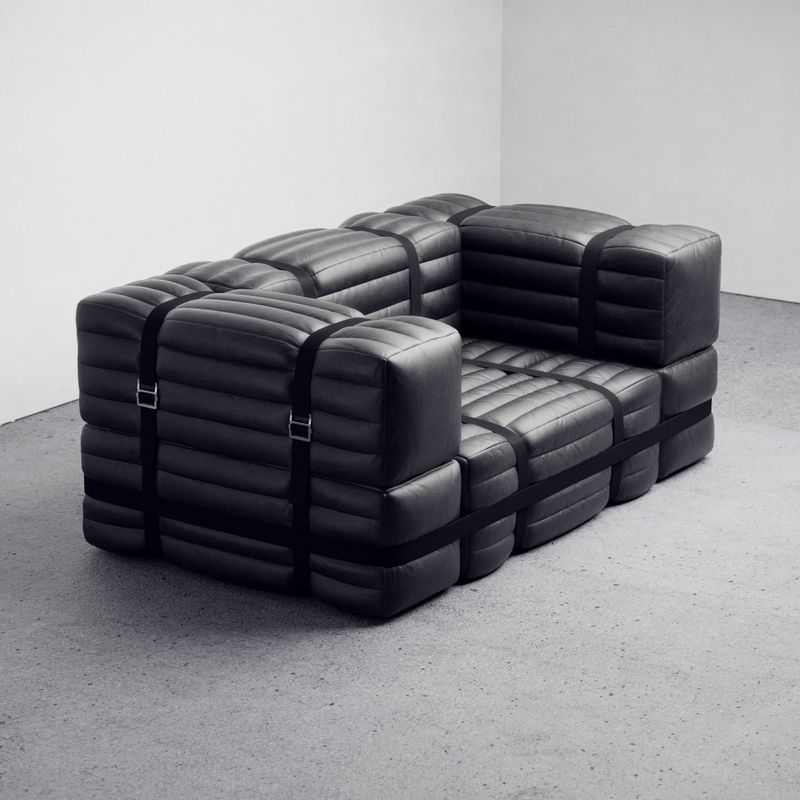
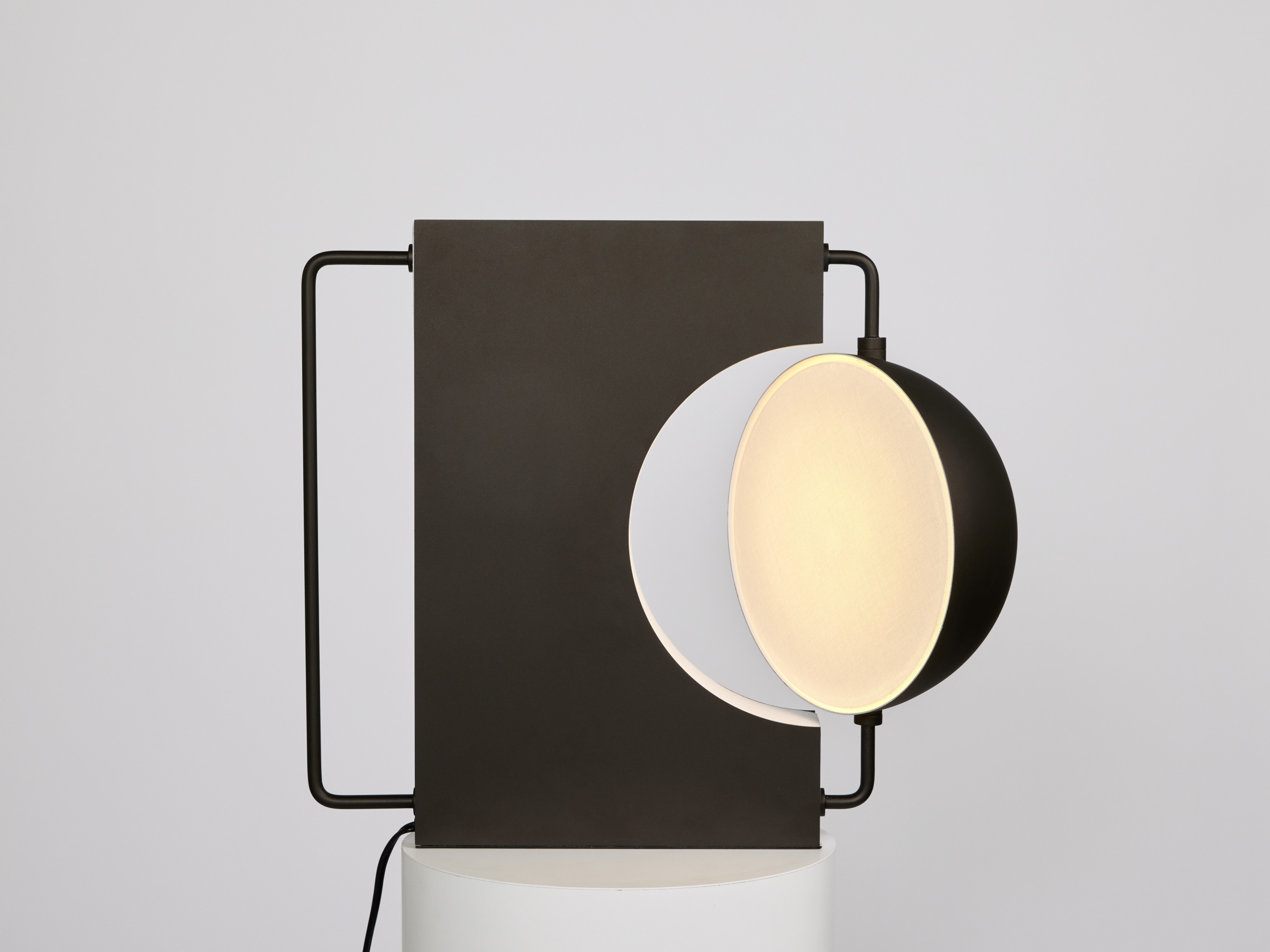
Though he remembers the first time he encountered designer and sculptor Nifemi Ogunro’s work at a show. There was a warmth radiating from the surfaces, and a tenderness you could only coax out with human hands. It stood in stark contrast to everything Mark makes. He describes his work as intentional, almost synthetic at times, chasing the precision of industrial processes.
When these two sit down together, Nifemi opens up about what it takes to survive as a maker. She talks about the isolation of working alone in the studio, about constantly producing work to be consumed, and how her identity as a Black woodworker has become commodified at times.
What emerges is a shared question both makers are trying to answer: how do you stay human in an industry that demands perfection?
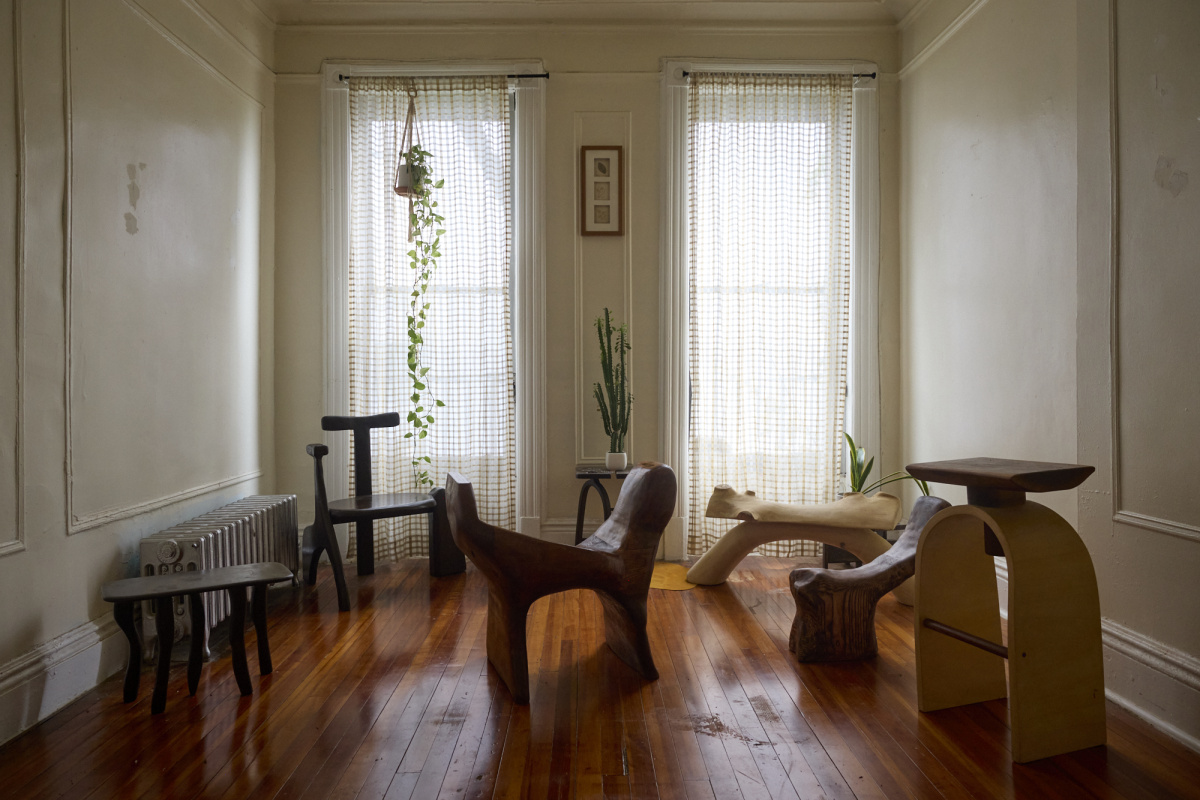
“Right now I’m in Philly working on a group show through the Museum of Art and Wood. I’ll be here for two months in residency,” Nifemi says. “For the show I’m working on reimagining some of the curved forms I made for a performance.” From left: “Untitled,” 2024; “Tumi,” 2023; “A Chair for One,” 2025; ”Mrs. Sola,” 2020; “Tope,” 2020; “Untitled,” 2024; “Tob(i),” 2020. Photo by Chris Force
Mark Grattan: I was immediately drawn into your work, Nifemi, which is rare for me.
I’m still very new to it. I don’t know the full scope of what you do, where your studio is, where you’re from, or even what materials you love most. But I do know there’s a strong personal voice in your work, and that’s something I try to hold onto in my own practice. That’s what really resonated with me.
I do want to know more about you and what inspires you. What attracts me to your work is how different it feels from mine. My work feels rigid, even synthetic at times. There’s a lot of electricity, where your work has softness and warmth. It’s like a hug.
I admire artists who lean into the human hand. I’m always trying to mimic the machine, to make it precise and technical. I use a lot of industrial processes compared to something like plaster or wood carving. I’ve been working with wood for years but have never carved it because it intimidates me.
I think part of it is just who I am. I’m a Capricorn/Virgo/Virgo so I also blame that. There’s this rigidity and structure to everything.
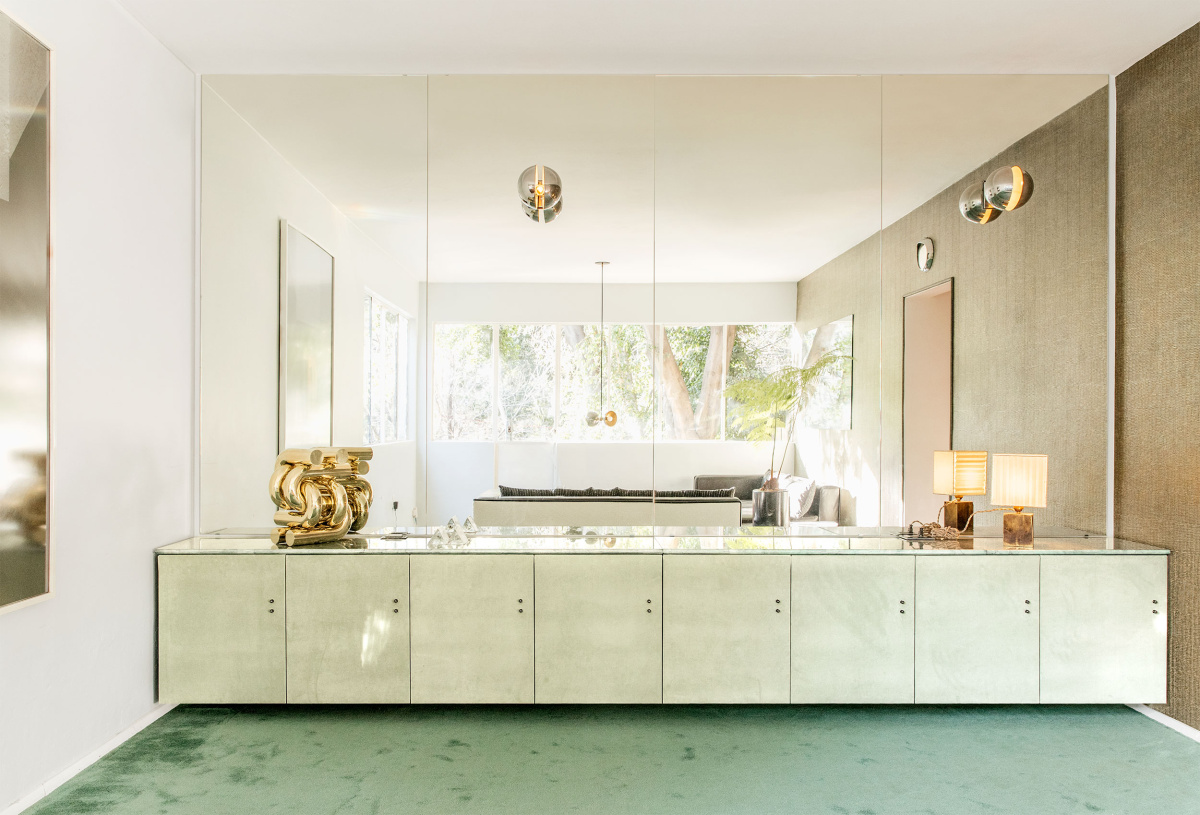
“My work has too much intention,” says Mark. “I can’t release it and let it be in a world of its own or have a mind of its own. I have to be in control.” Photo courtesy of Mark Grattan
Nifemi Ogunro: Thank you for saying that. There’s a readability to your work too. I read your work as something that I could see in my space. I studied industrial design, and when I think about industrial design I think about your work.
The way you think about color is really interesting to me, but the forms themselves read as high-end industrial design, period. It’s so cool.
Thank you for that. I rely on machines, where you’re really relying on the hand. I don’t use a hand tool until I’m at the sanding stage. If somebody told me to use a hand plane and a chisel, I wouldn’t do it.
You’re carving which is real emotional labor. I admire the free spirit of that. My work has too much intention. I can’t release it and let it be in a world of its own or have a mind of its own. I have to be in control.
A lot of my pieces are 3D modeled first. I sketch, then build it in the computer to understand scale and space before moving to the materials.
For my recent solo show I modeled the entire floor plan and placed the works digitally before deciding their positions. There’s a constant back-and-forth of planning digitally, then letting the material push back when I’m building.
For example, I made a chair with about 50 different wood pieces. I had a digital plan but once I started the material itself dictated changes. Especially with organic forms, you can’t force the wood to behave exactly like it does in CAD. There’s always that exchange between control and letting the material lead.
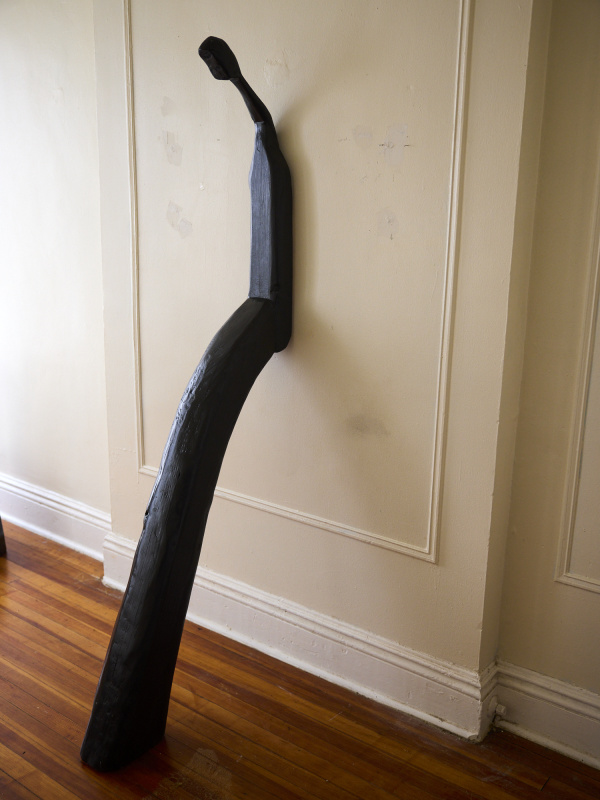
“A lot of my pieces are 3D modeled first,” says Nifemi. “I sketch, then build it in the computer to understand scale and space before moving to the materials.” “Onlooker” in wood, 2025. Art by Nifemi Ogunro, photo by Chris Force
I have that same experience. That push and pull is just part of the design process as a maker no matter what.
You can only get so much information in the computer. I also don’t work with color that much because it stresses me out. I feel like I put everything into form, and by the end I just don’t care about color anymore. I usually end up with neutrals.
I want my work to read as what it is and to have a tactile, approachable quality or a legibility. When I add color it can create this surrealism, but I feel like I’m already accomplishing that just through how I work with the material.
I read a little bit about how you got into industrial design, and it sounded similar to my path. I wanted to be an artist but felt like I wouldn’t make money, so I chose something more technical. For you it seemed like your parents wanted that.
I didn’t study furniture, I studied product design. My first internship centered around furniture, but I thought I did a really bad job. Then I saw the pieces at High Point a year later. They didn’t tell me. That was crazy.
My first official job was at a lighting design company running photometric lighting calculations. I created 3D models of homes or office spaces, placed fixtures, and figured out how to light them according to building codes. It was boring and very direct.
But also interesting because lighting completely changes how we experience space.
Exactly. I learned a lot about lumens, about why offices are lit the way they are, and why homes are designed differently.
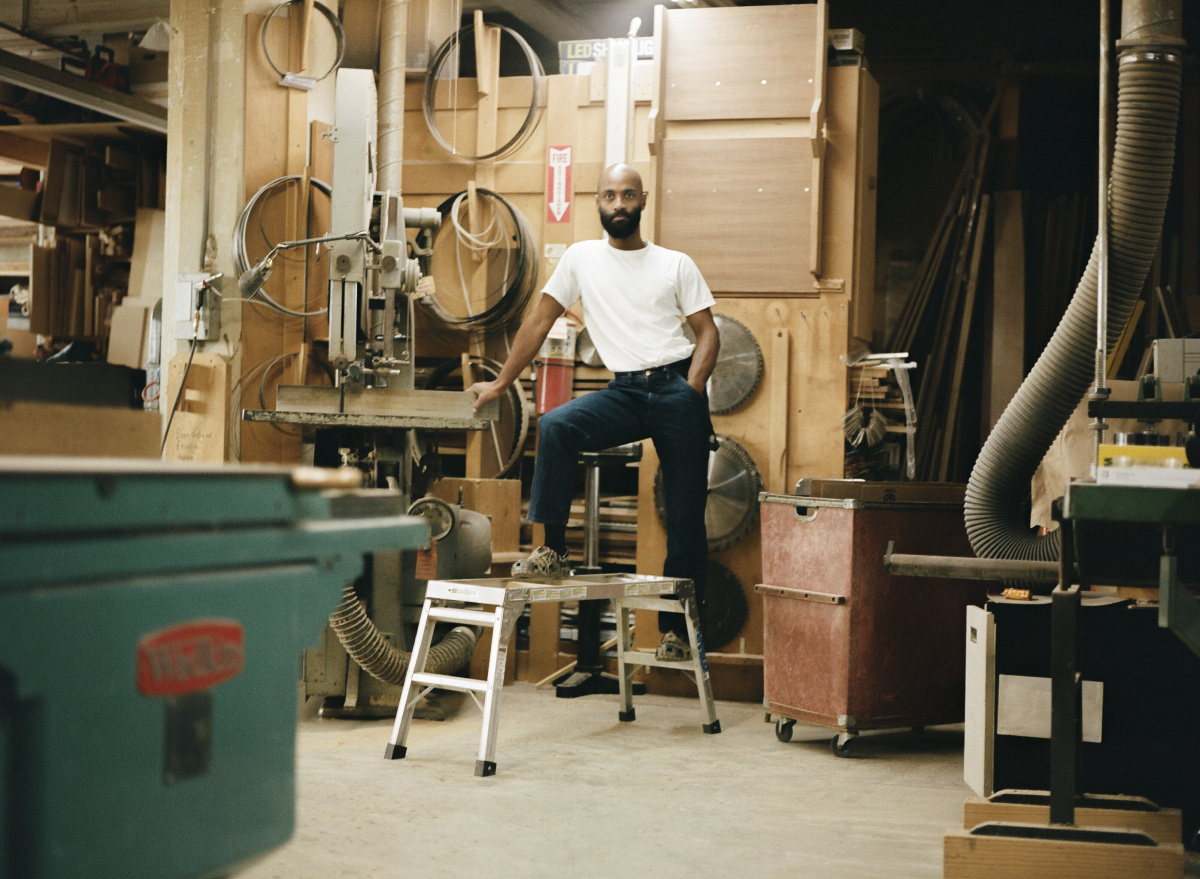
Mark Grattan. Portrait by Alex Cruz
After that I did some graphic design work, but I was always more interested in making things. In college I had been excited about materials. I made a coffee table in my industrial design materials class. That freedom to just have an idea and see if it worked even if it wasn’t the original intention was exciting to me.
I once made a weird frame and then flipped it upside down. It didn’t have to follow strict function; sometimes function is more interpretive. Furniture is basically an X, Y, and Z axis. A lot of furniture is just planes, so if the planes serve your purpose, it works. That way of thinking expands what a chair or table or shelf can be.
Even now as my practice gets more abstract and larger in scale, I still start with surfaces. That’s my entry point and then I expand from there.
What are you working on right now?
I’m in Philly working on a group show through the Museum of Art and Wood. I’ll be here for two months in residency.
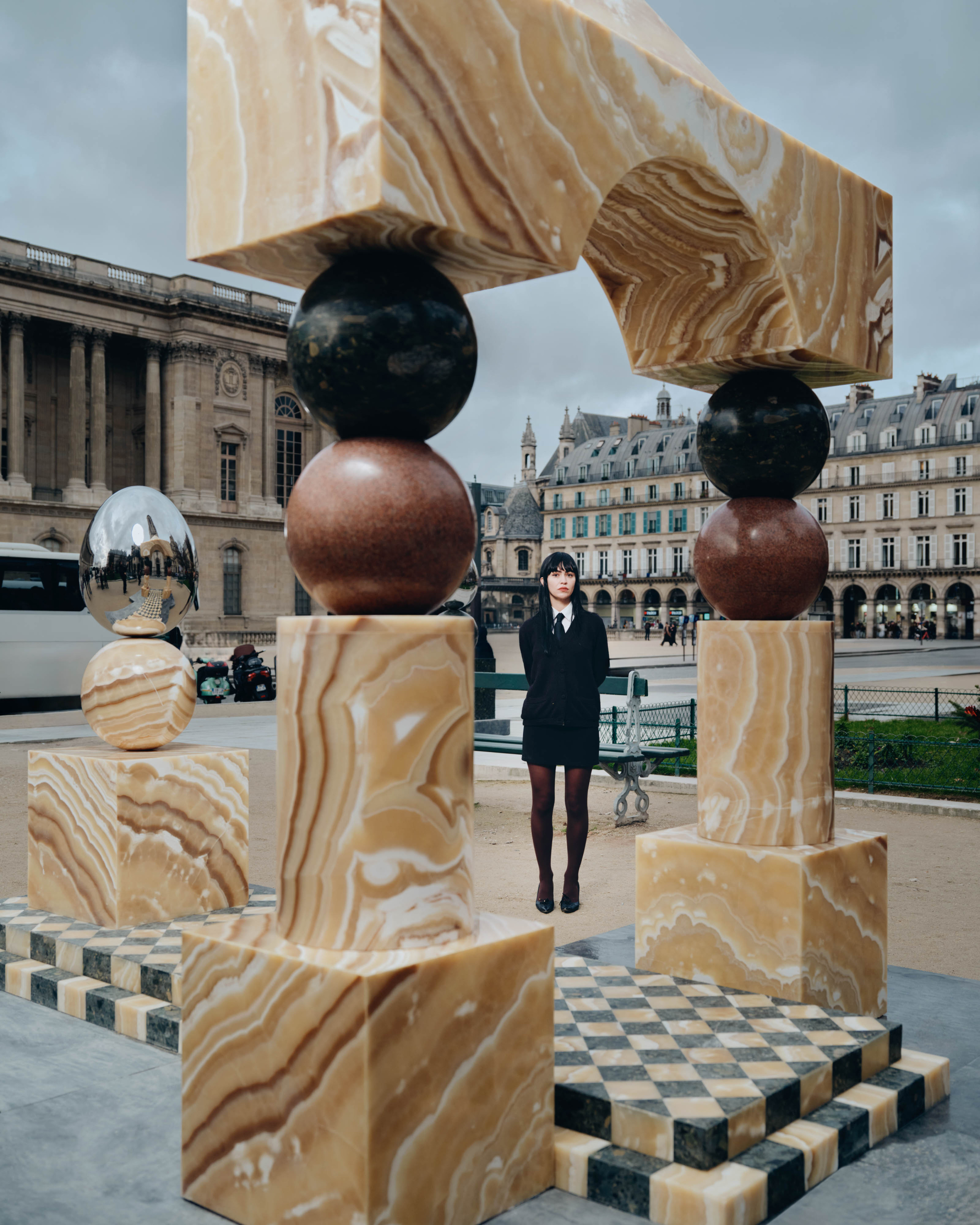
For the show I’m working on reimagining some of the curved forms I made for a performance I had that are now living in a sculpture park. There’s a moment in the performance where all five fixtures are separated, and then come together. I thought it’d be interesting to take that ephemeral moment and archive it as a museum piece. Now I’m creating four or five objects clustered together as one installation for my main piece. I’m making other things too.
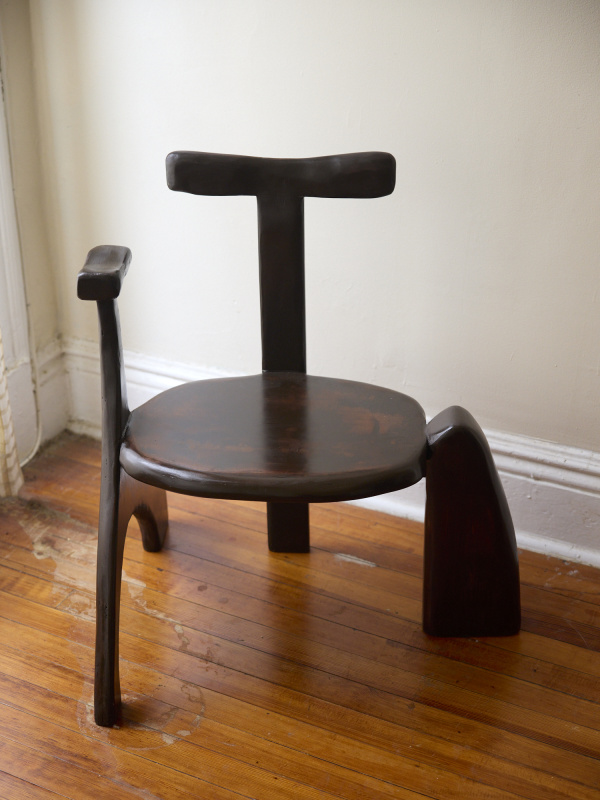
“As a Black maker my identity can feel commodified,” Nifemi says. “There’s the work itself, then how I photograph it, and then the added layer that I made it.” “Tumi,” 2023. Art by Nifemi Ogunro, photo by Chris Force
Congratulations! I can’t wait to see the work. Going back to woodworking though, was anyone in your family into it? How did you first get into that?
When I was still working in an office, I told a friend I was interested in wood. She connected me with her professor who needed an extra hand for a huge sculpture he was working on. It was 24 feet long, nine feet tall. Basically a giant table with two knots in the middle meant for a hotel lobby.
That professor was Michael Beitz. At the time I didn’t realize he had studied under Wendell Castle, which explains his very specific way of working with wood. It was perfect for me because I had always been sketching curves but never knew how to realize them in wood.
When I joined the residency I brought three of those sketches, and he let me use the shop outside his hours. I ended up making three pieces there as well. That was my first real hands-on wood experience.
What’s the process for bending wood? Was it like beam bending, or vacuum press?
Mostly using cauls and clamps. You don’t always need a vacuum press. At that point, straps and pressure will do the trick. It’s tedious but it works.
That’s funny because I’m like, “Get the machine, get the vacuum press!” Industrial all the way. I’m glad you’re getting to know that because bending wood is its own world. A lot of people don’t even know about it. It’s a beautiful process.
Have you ever tried turning wood?
I have. I did some recently, but I’m terrified of it.
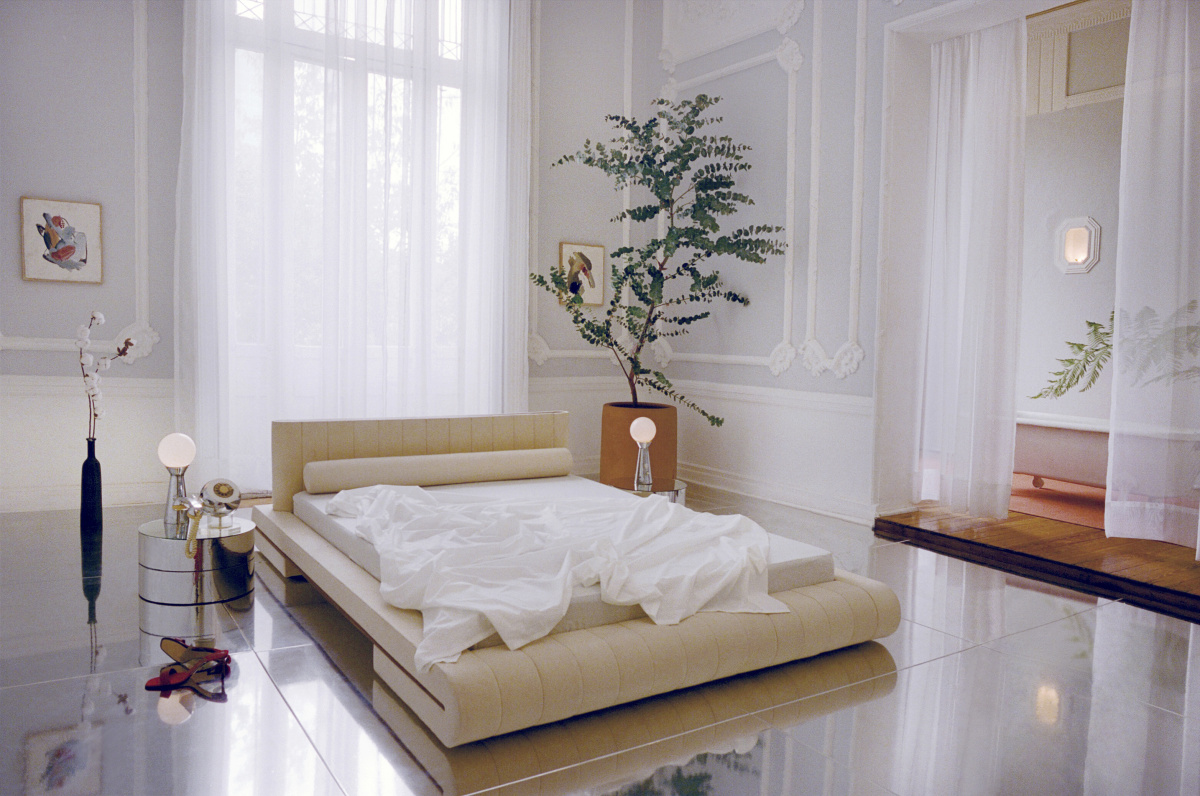
“A lot of my inspiration comes from how I was trained and what I grew up around: Italian design, tropical modernism, Art Deco.” says Mark. “Those cues molded me. For example, I can’t let go of repetition. I see it used so beautifully in Art Deco.”
As you should be! I read a story about a woman in Connecticut who was using a metal lathe. Her hair got caught in the chuck and she lost her entire scalp. Horrifying. I was using one once and something flew across the room and nearly hit someone.
Shops can be scary places, but wood shops are probably the most forgiving of all trade shops. Metal shops? Scary. Glass shops? Scary. I guess ceramics might be the softest of them all.
A lot of my inspiration comes from how I was trained and what I grew up around: Italian design, tropical modernism, Art Deco. Those cues molded me. For example, I can’t let go of repetition. I see it used so beautifully in Art Deco.
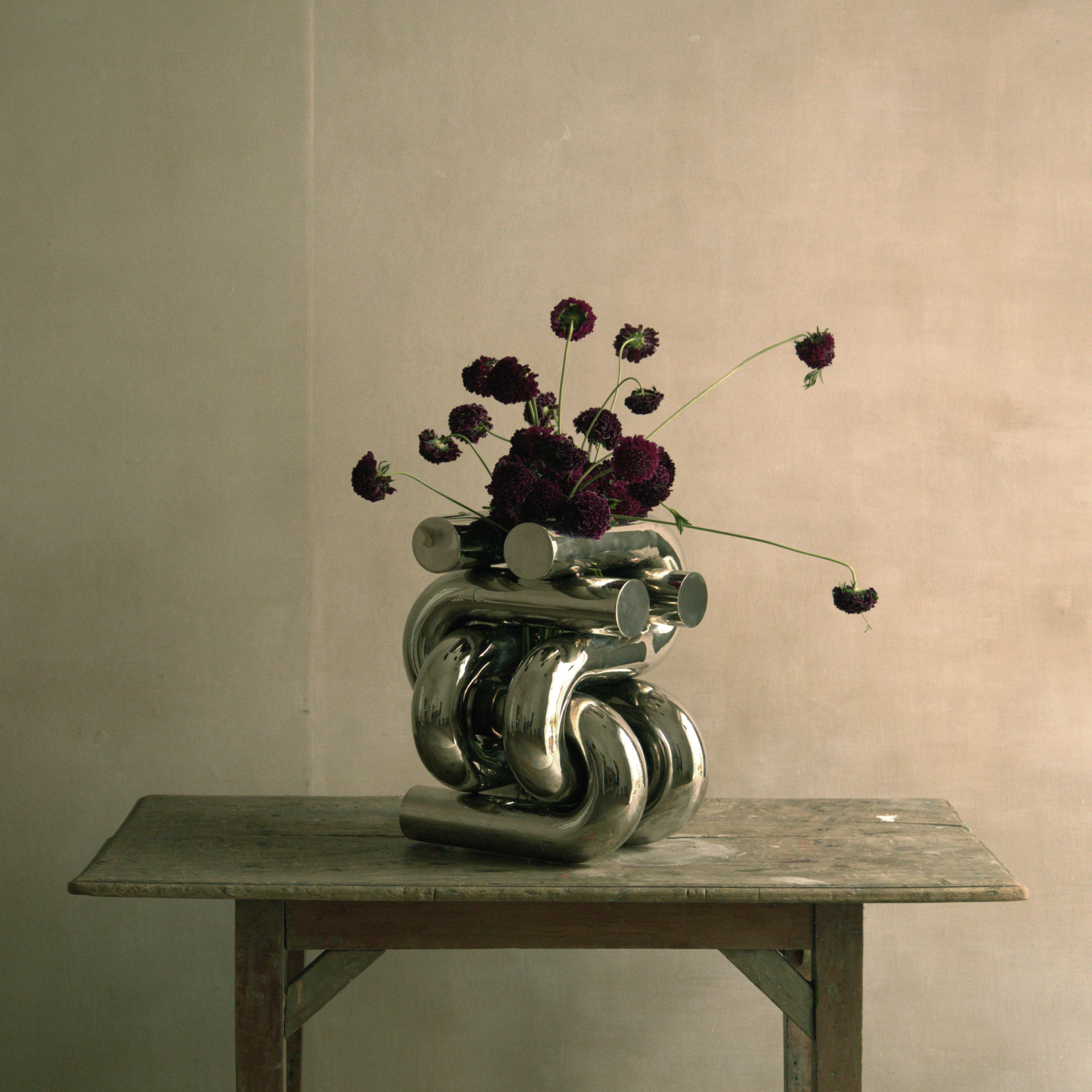
Recently Architectural Digest did this ridiculous article about chrome. Chrome takes me back to an era I wish I lived in—old New York, Studio 54, even Star Wars. Very cliché maybe, but I can’t help it. It’s nostalgia for a time I never actually experienced.
I’m a trained woodworker, but you wouldn’t necessarily see that in my pieces. I often hide the craftsmanship under upholstery or behind lacquer. Only recently I tried to return to my roots in woodworking.
If not wood, what materials do you wish you were trained in?
-
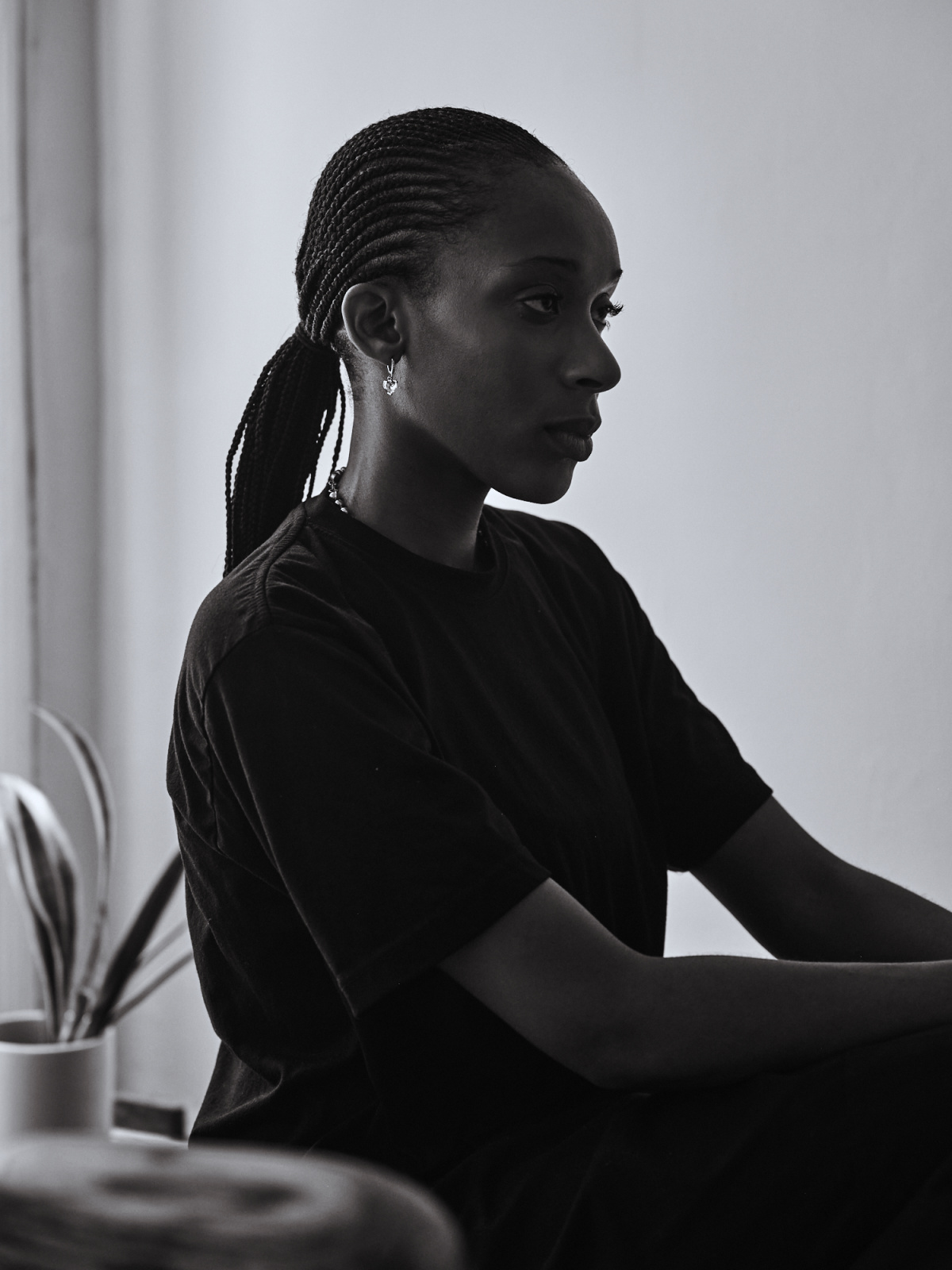
- “I like that idea of timelessness too. When a design is right, it’s just right. Styles cycle too.” Above: Nifemi Ogunro, photo by Chris Force
-
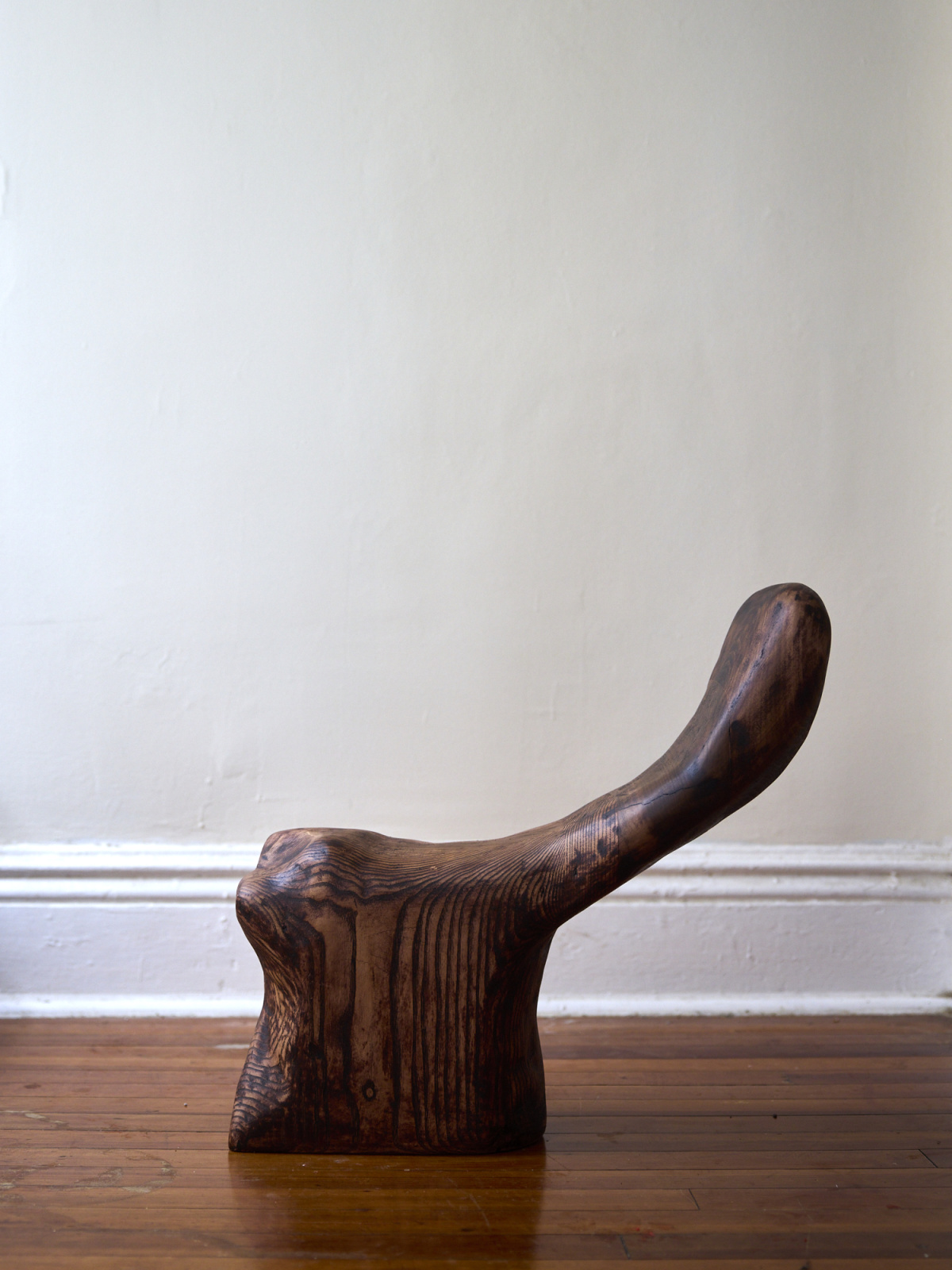
- “Untitled,” 2024. Artwork by Nifemi, photos by Chris Force
For me it’s upholstery. That’s the one thing you can’t get right on a computer. The plumpness, ergonomics, foam density, stitch details—it’s a whole world I’ve always wanted to infiltrate. Part of it is that I’ve never designed a good chair, and that pisses me off. I love how technical it is. When it’s done well it makes me angry. It’s so good it makes you mad.
That goes back to Italian design, to chrome, to leather, to Scarpa, Bellini, Poltrona Frau, all those icons. Their work is timeless. People still seek it out today because it’s just good. I’d love to add upholstery to my practice, but I feel like it would take at least 15 years of training. I’m obsessed with it.
I like that idea of timelessness too. When a design is right, it’s just right. Styles cycle too. I think Memphis had a big moment around 2020, but certain eras feel ever-present. They don’t fade.
There’s one Saratoga sofa I love so much. It’s such a basic piece but it’s iconic and timeless. That’s what I want too. I just want to have and live with it.
The first few pieces I made were in 2020. The pandemic hit and I was living in a co-op with 12 people in Colorado—a place I had never been before with people I didn’t know. I was driving a yellow pickup truck to and from the studio, which was on a farm. My world felt very insular. The only change during lockdown was that my friends called me more often.
But after a while, I started questioning: when would it be safe for me to leave Colorado?
-
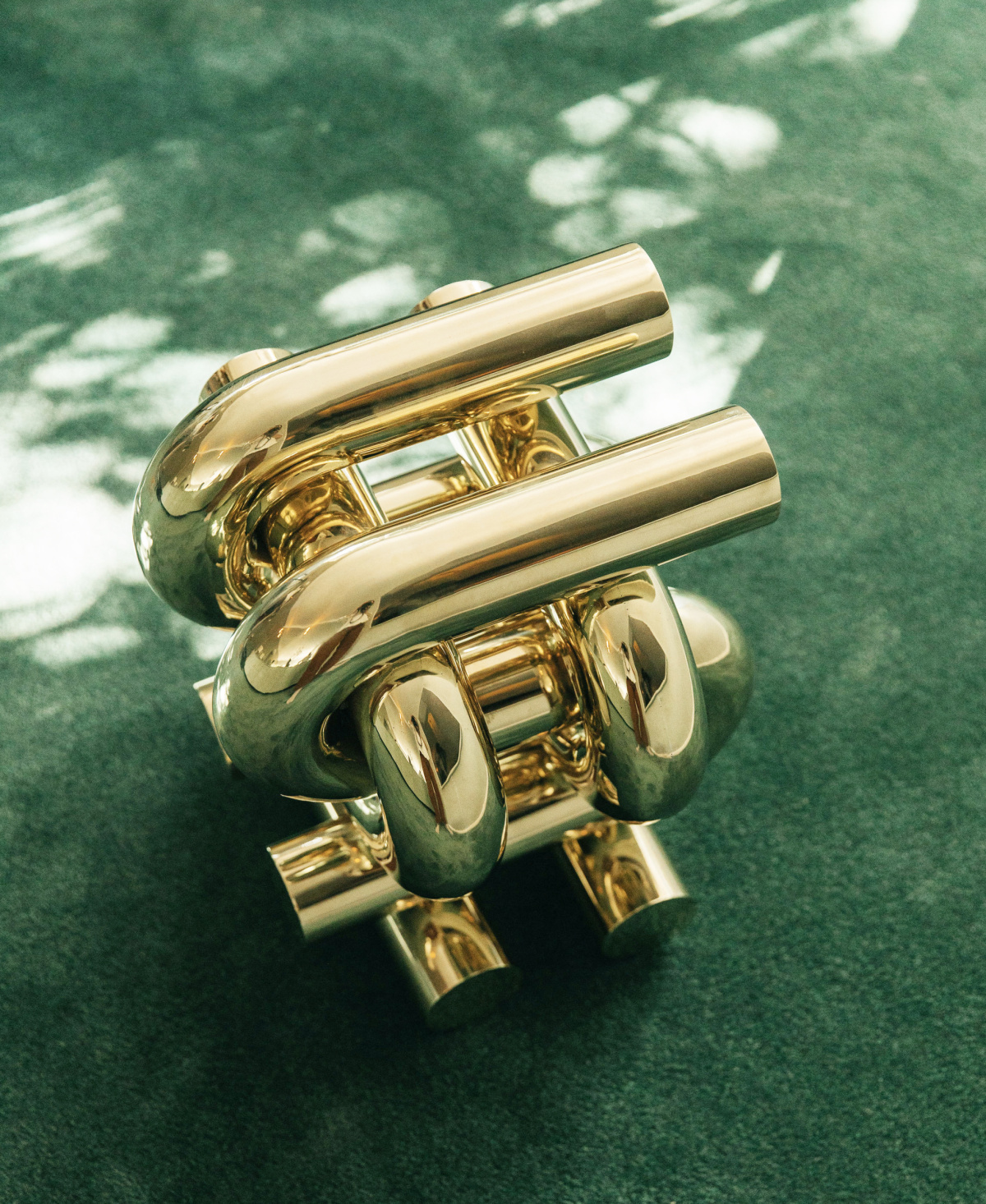
- “It’s hard to find your place in this industry, even for people in the majority. And when you’re the minority in such a small, exclusive field, the weight is even heavier.” Above: HERMANX in polished brass by Mark Grattan. Photo by Maureen Evans
-
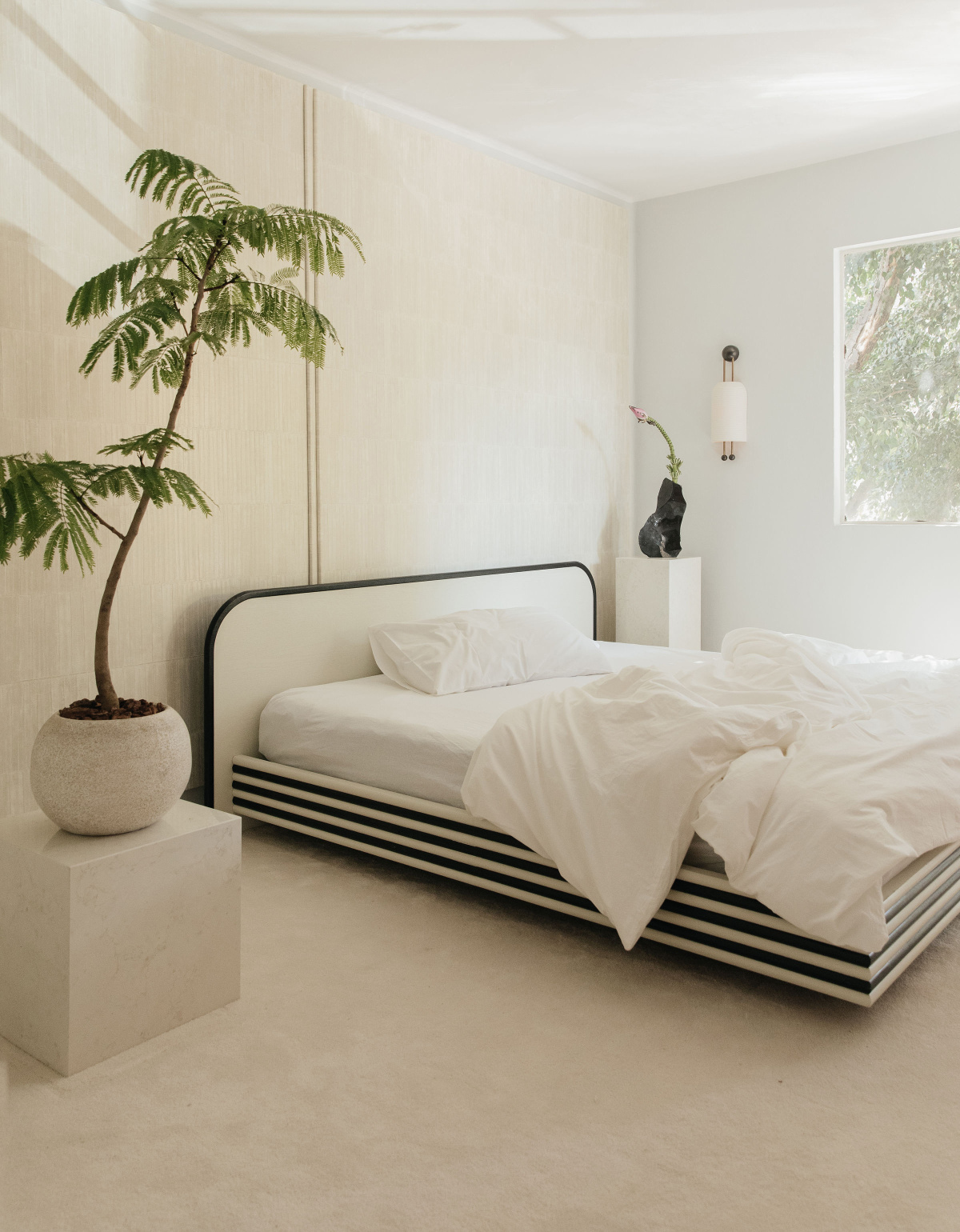
- Photo courtesy of Mark Grattan
So Michael Beitz and I—he’s the woodworker I was apprenticing with—we were both thinking about family a lot during that time. I wasn’t sure when or if I’d be able to go home. That’s when I started naming works after my family, pulling from inside jokes and our shared history.
More recently my work has been tied to my experiences in New York, navigating the design space here. Whatever I’m going through personally often becomes embedded in the stories of the work. The forms always come and go—they’re very spur-of-the-moment. I’ll see something in nature, or something from the body, and it sparks an idea. But the narratives are always tied to whatever I’m going through at the time.
A couple years ago I had this conversation with myself: “I don’t like furniture enough to feel lonely in this space.” Because the truth is, the studio can be isolating. You’re constantly producing work to be consumed. You’re inspired by color, or by movement, or theater, but at the end of the day you’re in a room alone day after day.
So I had to ask myself—if this practice makes me feel this way in my body, is it worth it? How can I make it feel different?
That’s why residencies were so important for me this past year. They gave me the resources to make pieces I’d always imagined but couldn’t afford. Before that I was stuck in a cycle of taking a deposit, making a piece to pay rent, then losing all attachment to it because I needed to chase the next deposit. The expression was gone.
“I’m focusing on the parts of design I love, and critiquing the structures I don’t.” -Nifemi Ogunro
On top of that there was this tension in the design space. As a Black maker my identity can feel commodified. There’s the work itself, then how I photograph it, and then the added layer that I made it. Suddenly the meaning shifts three different ways and I’m never allowed to insert what I think the work is about. The work is often validated because I’m a Black designer, not simply because of what it is.
This past year has been about rejecting that and focusing on the parts of design I love, and critiquing the structures I don’t.
I follow that completely. It’s hard to find your place in this industry, even for people in the majority. And when you’re the minority in such a small, exclusive field, the weight is even heavier.
It’s part of what drives me now. That’s why I’ve been focusing on outdoor work. I walk into design spaces where my work is celebrated, but I don’t see myself. Outdoors feels different. It transcends the categories of design, craft, gallery, museum. It’s a space that feels accessible and made for everyone.
Of course money always factors in. But every decision I make now comes back to how I exist in design knowing I’m not just a designer, I’m also a maker. If you don’t work with a manufacturer you’re seen differently.
In the collectible furniture space I think it’s important for artists to use their hands. I actually got kicked out of a client’s house the other day. They kept sending a leather piece back for “quality issues.” I redid it with a different technique, sent it again, and they still complained. I tried to explain, “This was made by hand. Leather is skin, a living material. It has its own mind.” But they didn’t want to hear it.
People want “handmade,” but only if it looks machine-perfect, and you can’t reason with that. Experiences like this are why I insist on being paid in full upfront. Clients think they know how long things take, how they’re made, but they don’t. I’m not afraid to talk back anymore.
As you should, because you’re a human being. You’re not IKEA.
-
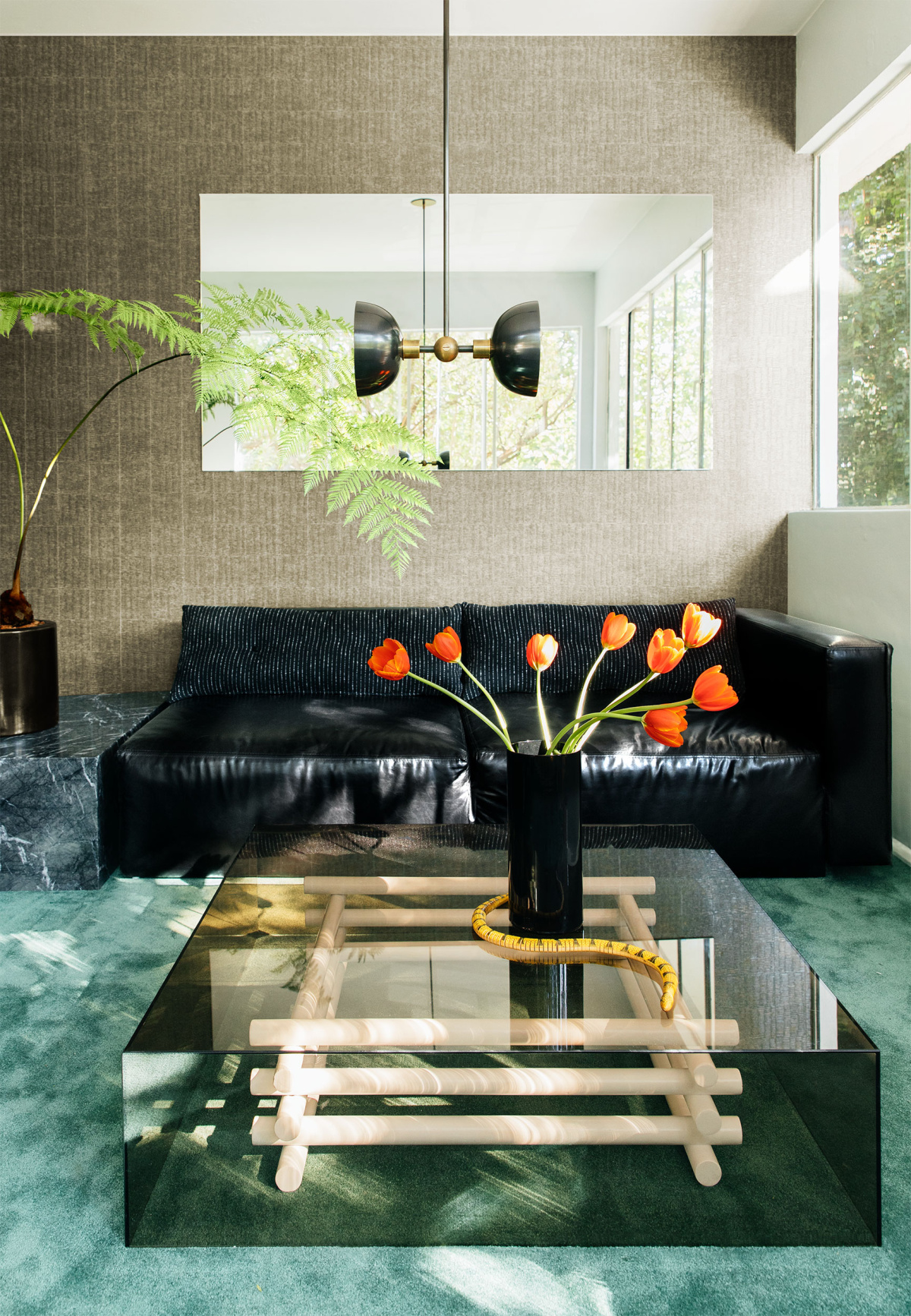
- “Design is an emotional process,” says Mark. “My whole self goes into it. I’ve reached a point where I need to know who is buying my pieces.”
-
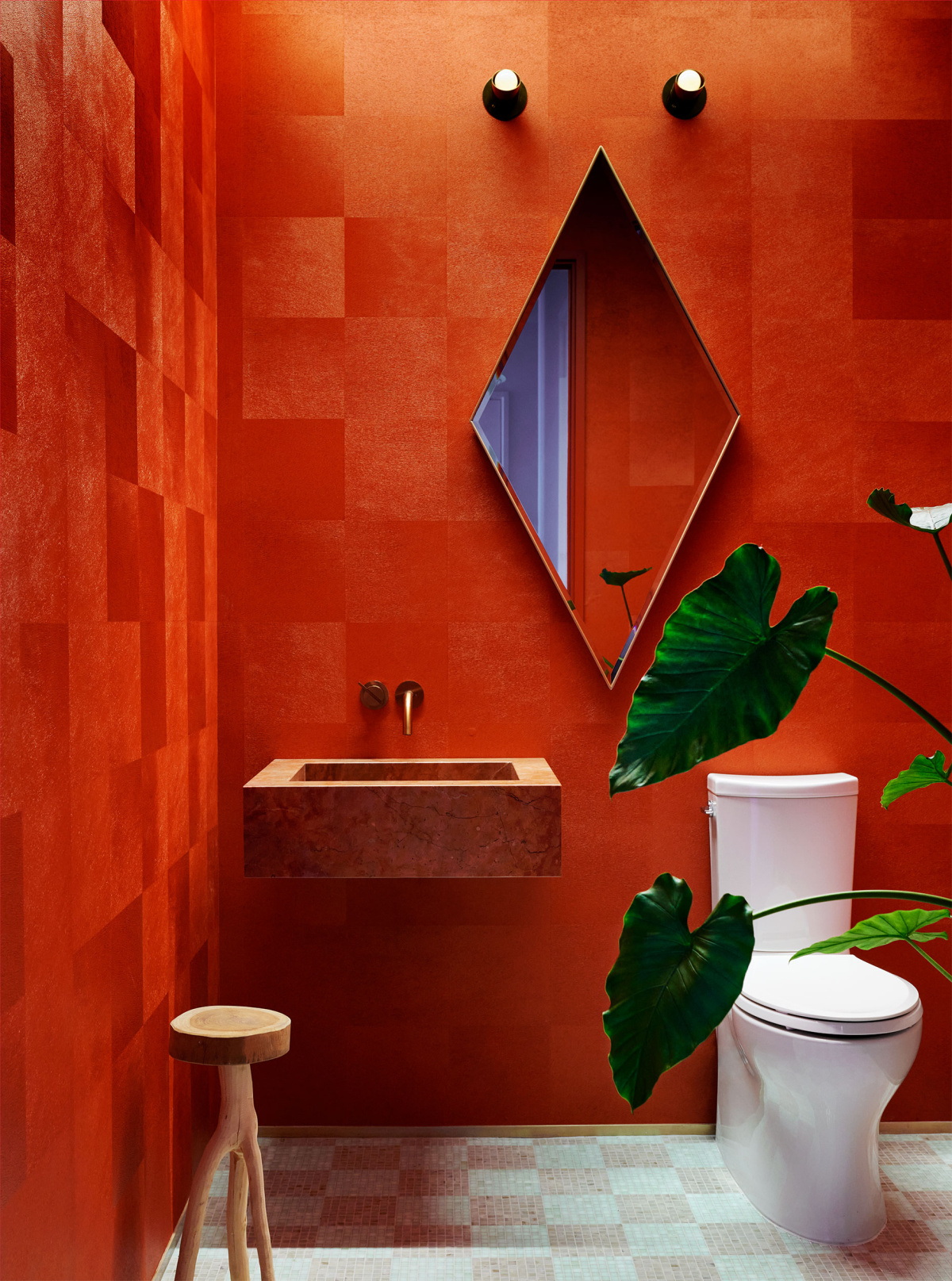
- Photos courtesy of Mark Grattan
And it’s an emotional process. My whole self goes into it. I’ve reached a point where I need to know who is buying my pieces. I want to choose who gets to live with them because they’re not just products, they’re extensions of me.
At my old gallery there was a piece I had been trying to develop for at least three years. I didn’t have the money to do it, and I didn’t have anyone who could make it because it looked so complex. I finally had those two things align—the money and the fabricator. I produced these two pieces and told the gallery, “Do not sell them. These are my artist proofs, my prototypes.”
They were presented at Design Miami three years ago, and they never left Miami. They were sold. I didn’t even get a photograph of them and I don’t know who bought them. Since that happened I’ve been almost rebellious in the industry. I protest, I say no, and I think that’s important.
Even the galleries don’t understand. And if anyone should, it’s the galleries. They’re the ones who are supposed to know what it takes to make this work not just physically, but financially. Furniture is not a cheap industry, especially in New York. It’s extremely expensive. So for a gallery to ignore that devastated me.
I’m really sorry that happened. I think a lot about how we create these beautiful objects that people get to experience and use, but it’s so much easier for people to wrap their heads around paying $100,000 for a painting. With furniture, even sculptural furniture, it’s hard for them to understand its value.
“I admire artists who lean into the human hand.” -Mark Grattan
Sometimes they do, but not often. When I’m creating oftentimes the prototype is the experiment. Then the next time, I refine it. I don’t have little material studies lying around the shop. That’s not how I work. The shop isn’t a place of discovery for me.
People always ask if they can see the shop and I’m like, “it’s just a table saw.” There’s a piece going out tomorrow, but you won’t see it because it’s leaving. That’s all it is.
What about you, do you experiment?
I think so. Two years ago I realized I couldn’t keep approaching design the way I was. I asked myself how I could make it unique to me so I didn’t feel sad while doing it.
It wasn’t just about being alone in the shop. It was also this weird mix of rejection and acceptance from the design world, and not loving what I was making, so I feel like I’m in this experimental phase now. I’ve been blessed with residencies and grants that let me create proof-of-concepts. I’ve made pieces that exist outdoors. I’m making a bigger sculptural piece that really has no function except to be beautiful.
The real experiment is the risk I’m taking with my career direction. Performance is something I’ve been experimenting with too in terms of how we present objects. We make things for people, so I’m trying to bring people back into the work.
What do you have going on for the rest of the year?
-
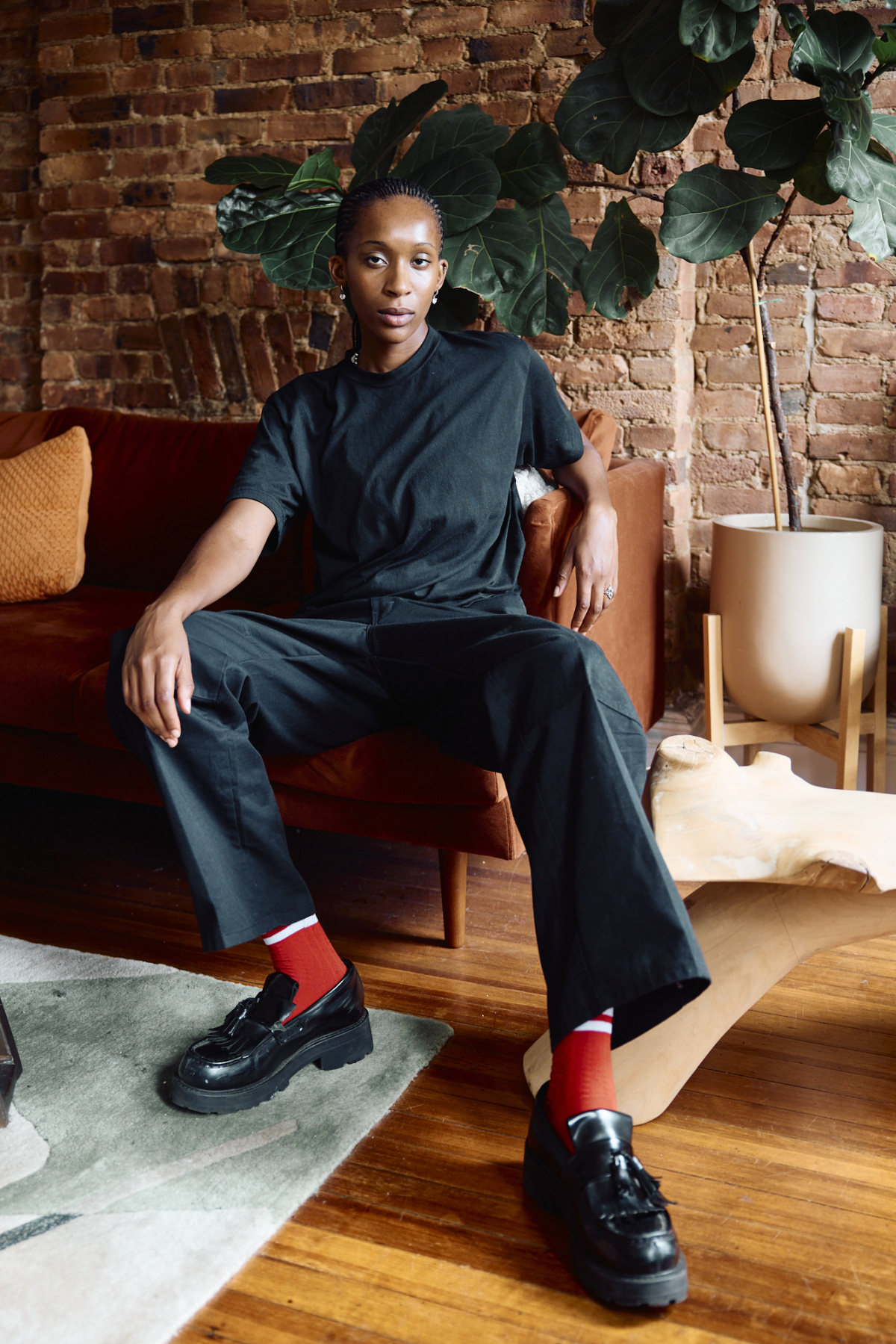
- “Two years ago I realized I couldn’t keep approaching design the way I was. I asked myself how I could make it unique to me so I didn’t feel sad while doing it.” Above: Nifemi Ogunro, photo by Chris Force
-
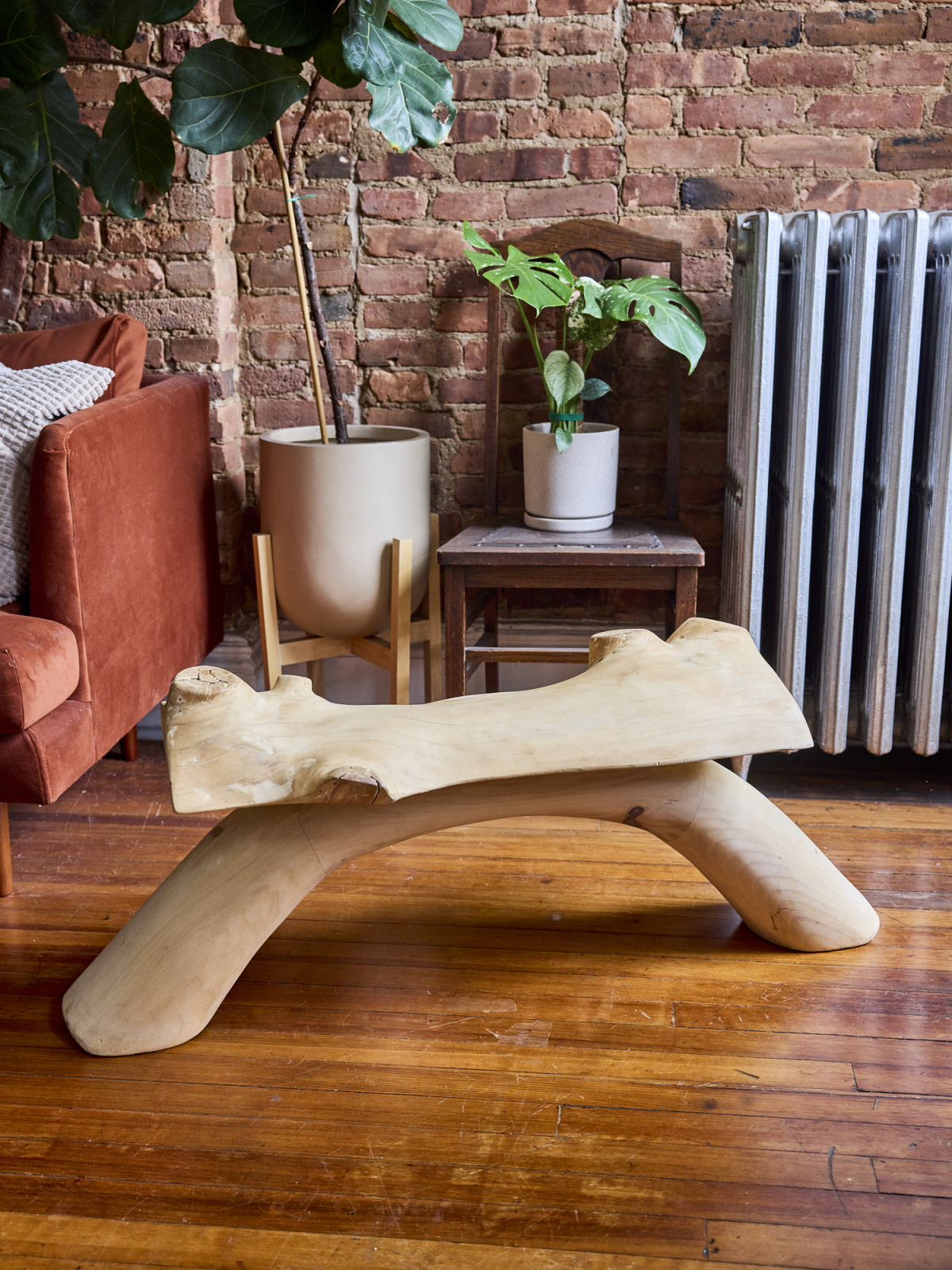
- “Tope,” 2020. Artwork by Nifemi, photos by Chris Force
I’m turning my apartment into a showroom. It’s been a journey about a year in the making. The wallpaper went up last weekend. The whole place is called Lived In. It’s a rebellion against the design industry and luxury, I suppose. It’s in my top-floor brownstone apartment in Bed-Stuy.
There’s been huge support behind the project—big brands, lots of finishes, an entirely new collection. It’ll be appointment-only launching in late October. I’m really excited. It’ll be my first New York showroom.
I’ve always struggled with having a place to show the work. Giving galleries their cut puts my prices in outer space, which I think is ridiculous. I rarely get to show people the pieces in person. My work is kind of a myth—it just appears at Milan, Design Miami, New York Design Week, then disappears.
So I’m changing that narrative. It’s hard to sell work when no one can see or touch it. Instead of some sprawling Tribeca showroom or bougie storefront, it’s just my apartment in Bed-Stuy.
At first I thought people would see the space is small and walk away. But everyone’s been excited. I gutted the whole kitchen and bathroom. I’m showing my ass because I live in this space, but that’s kind of the point of the showroom.
We’ll see what happens.
It needs to be happening more, I think. We create this illusion of how things are made and the spaces they live in, so I’m glad you can give it context.
Exactly! This could be a new way to boutique shop while also bringing the work to the community. Let clients come out to see it, but also let the community in all the time. I think it’s very exciting.
markgrattan.com, nifemiogunro.com
A version of this article originally appeared in Sixtysix Issue 15.