Begüm Tomruk’s finger traces a perfect circle, the same motion she’s made countless times over the past three years. As the design and creative director at Marantz, this gesture has become second nature, a physical manifestation of the obsession that drove her team to completely reimagine what a speaker could be.
“Everything started with this circle,” she says. “It’s a circle with 70 years of history behind it.”
The Grand Horizon speaker by Marantz didn’t begin as a grand vision. It started as a problem: How do you take something deeply rooted in Hi-Fi tradition and make it speak to both the fine art community and audiophiles? The answer would require multiple trips to Austria, hundreds of fabric samples, and a design philosophy that turned decades-old constraints into creative fuel.
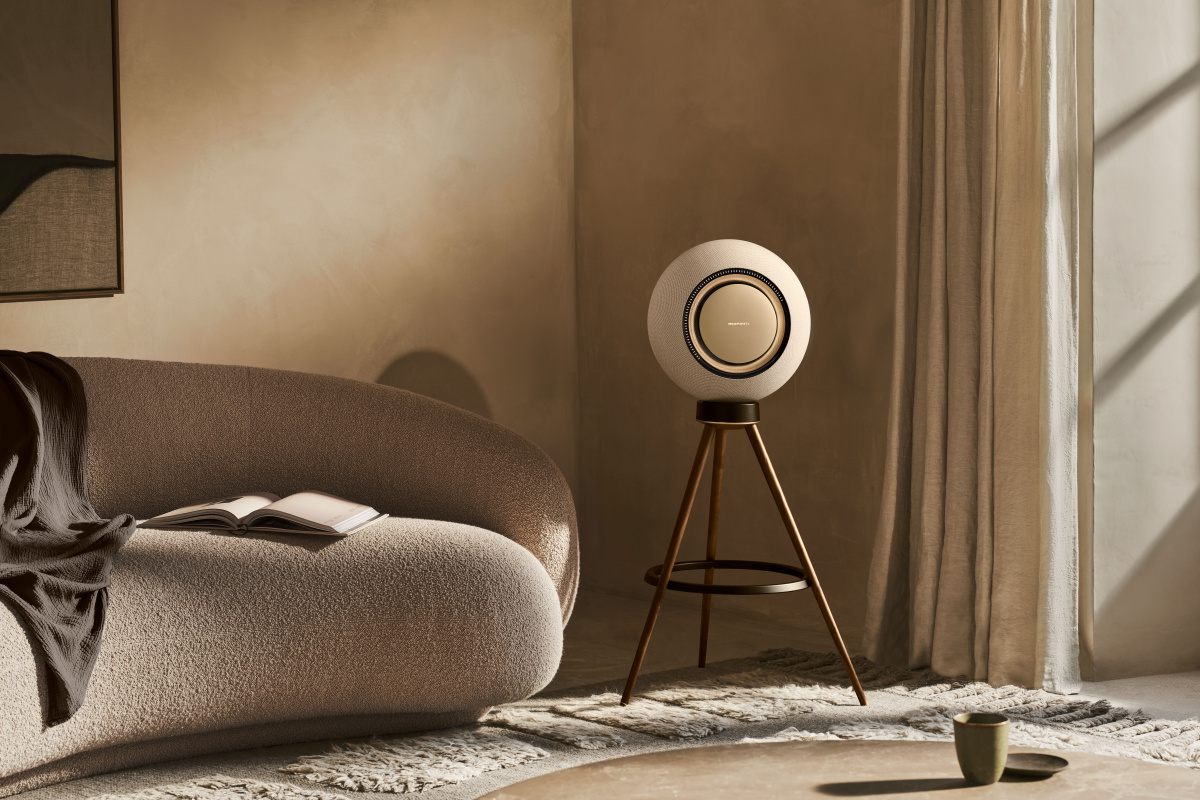
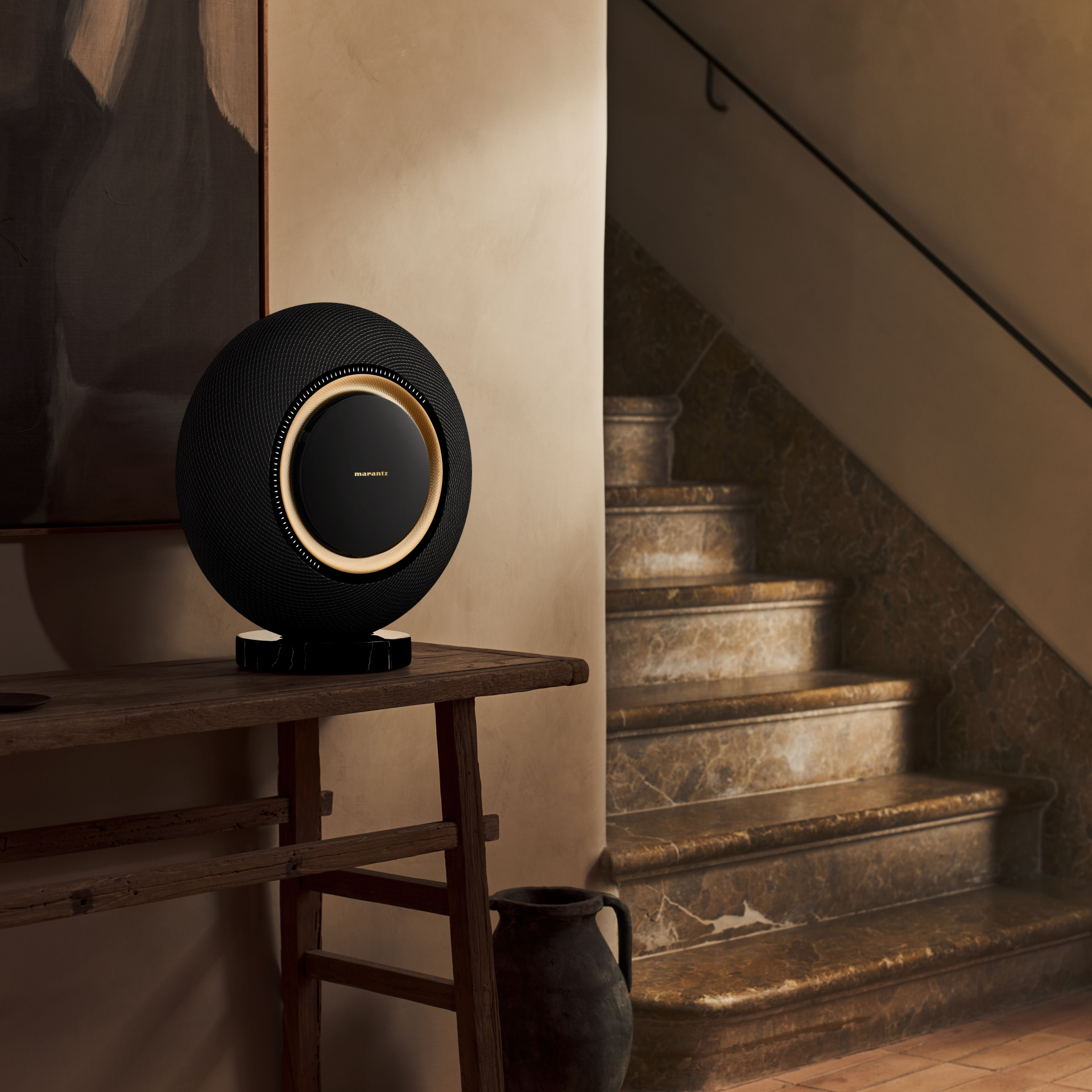
“We didn’t want this just sitting in listening rooms. It had to be seen,” Begüm says. “We wanted to create something with an artistic history combined with function. We imagined it in a spa, a wellness space, maybe on a pedestal.” Photo courtesy of Marantz
When Begüm joined the project, the wheels were already turning. The Marantz team had planted the seed of an idea for a wireless speaker that could bridge the gap between serious audio equipment and lifestyle objects that people actually want to live with.
Marantz is revered for its warm, analog sound and meticulous engineering, a legacy that began in the 1950s when founder Saul Marantz built his first preamp in his New York basement to better play classical records setting a gold standard still admired by audiophiles today.
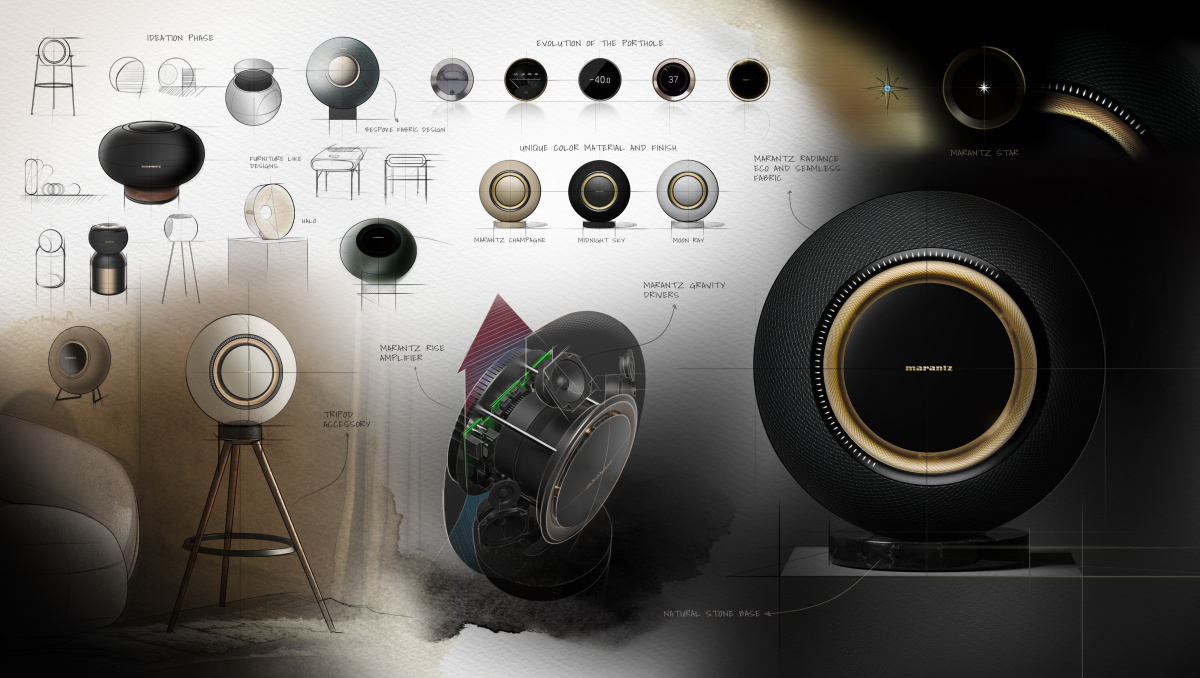
“We wanted to find a balance,” she says. “At the start we asked ourselves, ‘Who buys Horizon?’ Audiophiles know the brand. We wanted to develop a product that doesn’t need to hide in a closed listening room. It can be out in the open because it’s lifestyle-driven.” Sketches courtesy of Marantz
“We wanted to find a balance,” she says. “At the start we asked ourselves, ‘Who buys Horizon?’ Audiophiles know the brand. They might be interested, maybe not for their main listening room, but for the kitchen or entryway. We wanted to develop a product that doesn’t need to hide in a closed listening room. It can be out in the open because it’s lifestyle-driven.”
The team began by questioning form itself. What should a speaker look like when it doesn’t have to look like a speaker? They kept returning to circles. Begüm tells me a “porthole” motif has defined Marantz’s visual language for decades. Though this heritage shape could have felt limiting, it opened unexpected possibilities.
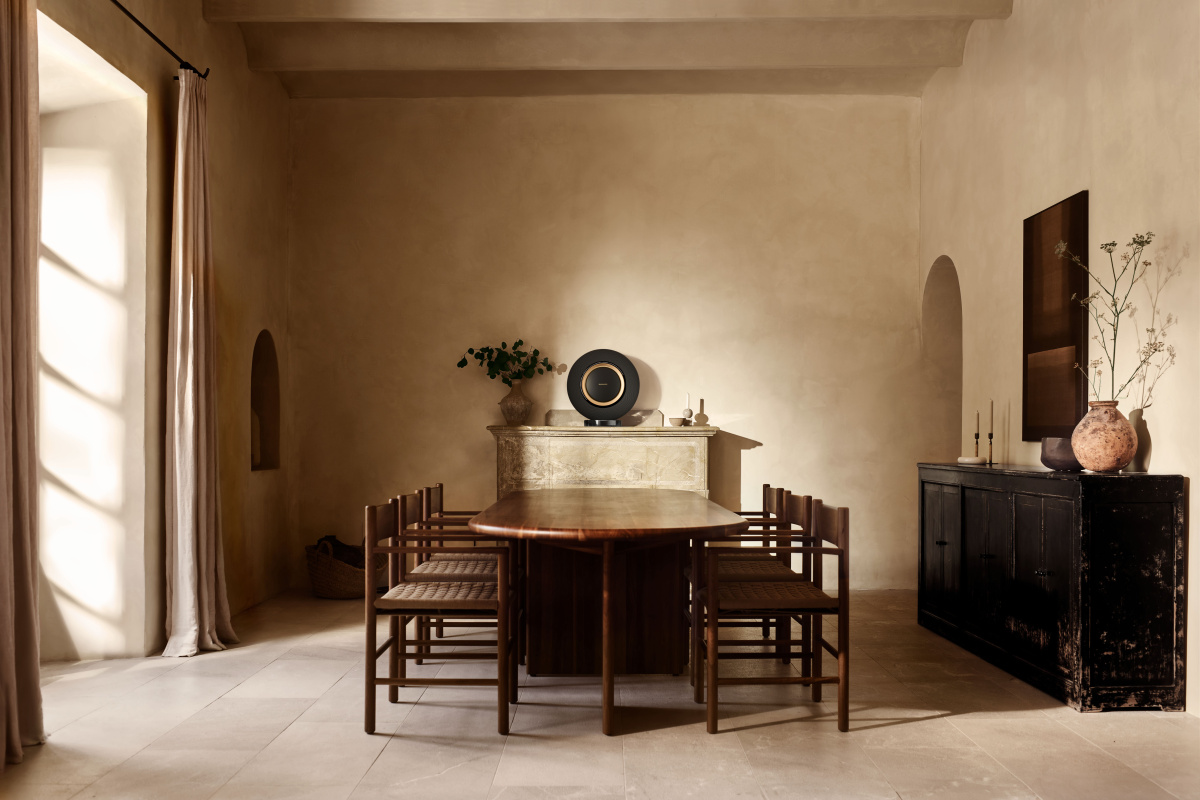
The team began by questioning form itself. What should a speaker look like when it doesn’t have to look like a speaker? They kept returning to circles. Begüm tells me a “porthole” motif has defined Marantz’s visual language for decades. Though this heritage shape could have felt limiting, it opened unexpected possibilities. Photo courtesy of Marantz
“We couldn’t imagine a cubic wireless speaker,” she says. “This form was the right one because it both stands out and blends in. It’s very easy to digest visually.”
The circular form would also create unexpected acoustic advantages. With the subwoofer positioned in the center and driver units surrounding it, even a single speaker could deliver stereo sound. The touch ring that controls volume would follow the same circular logic, making the entire product an expression of that fundamental shape.
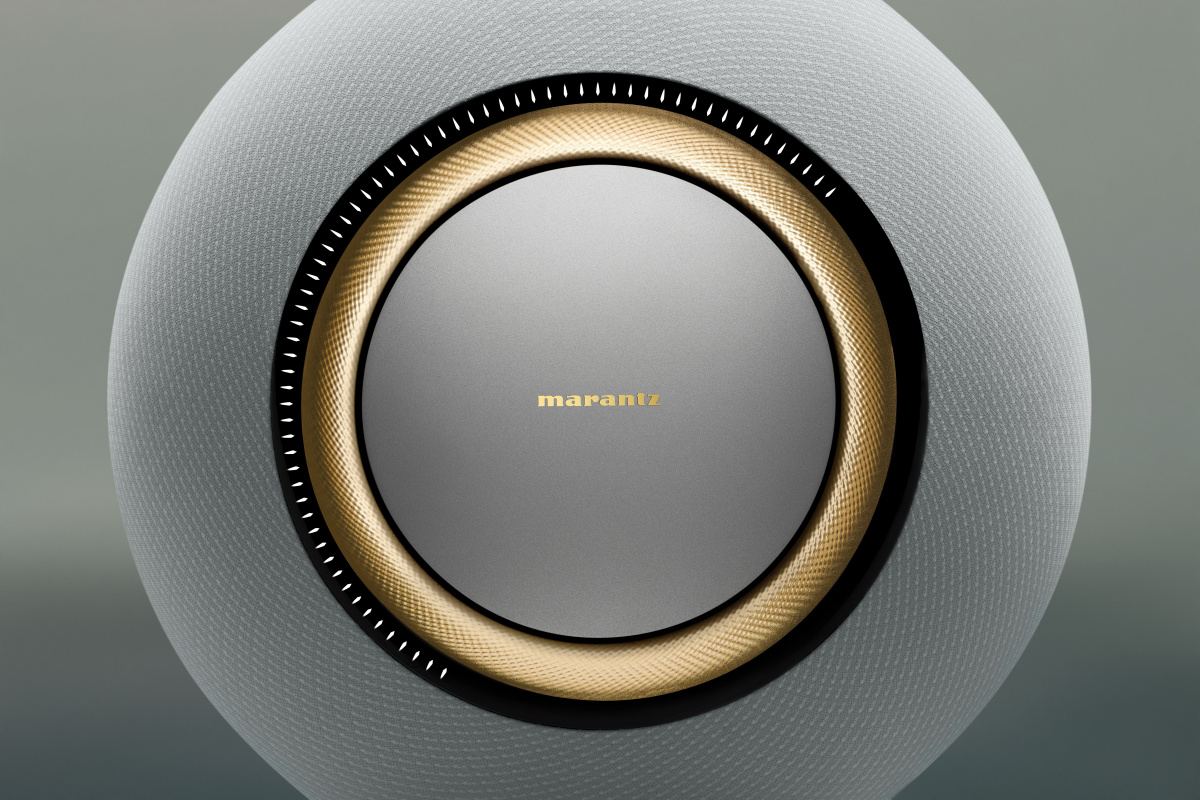
The speaker’s circular form would also create unexpected acoustic advantages. With the subwoofer positioned in the center and driver units surrounding it, even a single speaker could deliver stereo sound. The touch ring that controls volume would follow the same circular logic, making the entire product an expression of that fundamental shape. Photo courtesy of Marantz
“We didn’t want this just sitting in listening rooms. It had to be seen,” she says. “We wanted to create something with an artistic history combined with function. We imagined it in a spa, a wellness space, maybe on a pedestal in a bathroom or curated interior that matched the CMF (color, material, and finish) direction we had.”
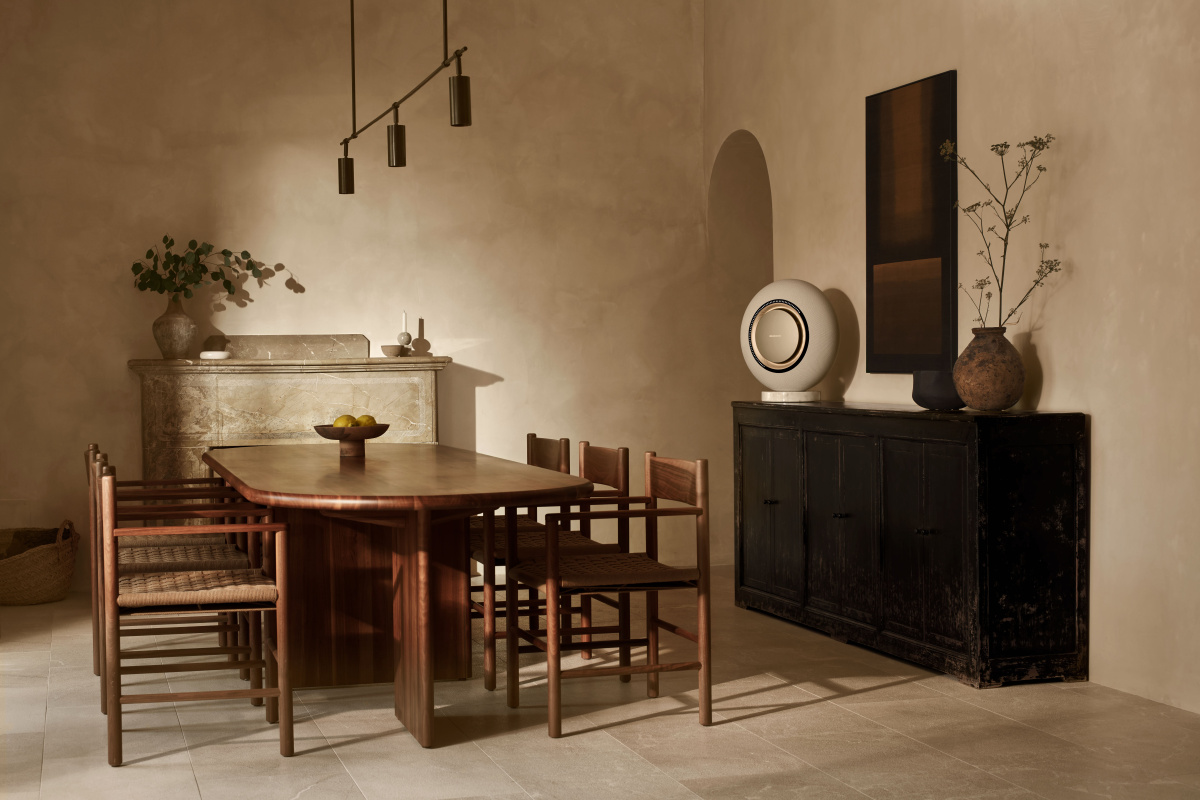
For Marantz, the circle gesture has become second nature, a physical manifestation of the obsession that drove design and creative director Begüm Tomruk’s team, in close collaboration with London-based design agency Monokoto, to completely reimagine what a speaker could be. Photo courtesy of Marantz
Making it work meant starting from scratch. Amplification, driver positioning, even the fabric pattern had to be developed specifically for the circular form. “It was a lot of work from the acoustic engineering teams,” she says. “Everything was new. It was almost like an innovation project.”
Some design details revealed themselves in boardrooms. Others emerged from repeated trips to small Austrian towns, where Begüm found herself obsessing over textile patterns that most people would never notice.
“We worked so hard on the speaker’s fabric,” she says. “I traveled to Austria a lot because that’s where the manufacturing was happening, and where we developed the pattern.”
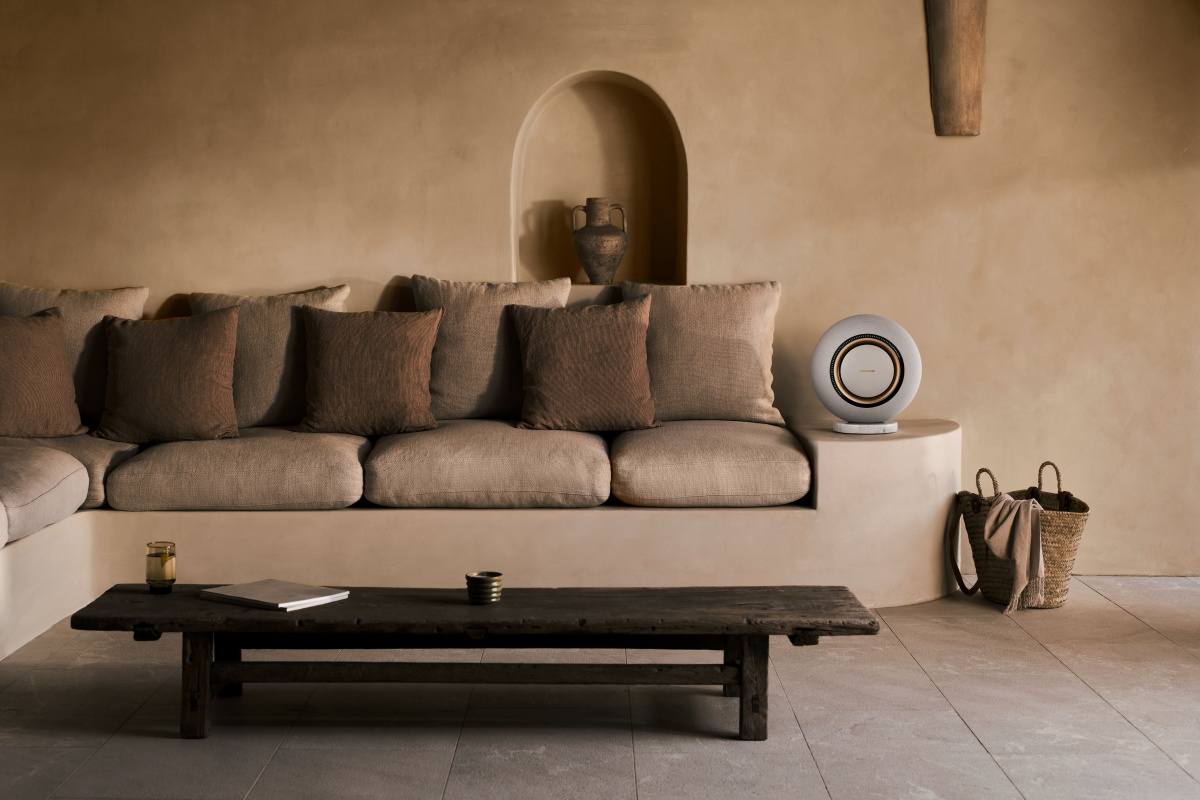
In an age where everything is app-controlled, the team also made a deliberate choice to preserve analog interaction. They decided Grand Horizon’s proximity sensor would bring the speaker to life as you approach. The touch ring would respond to your finger’s movement for volume control. The intention was to create moments of direct, tactile connection in an increasingly digital world. Photo courtesy of Marantz
The challenge was deceptively complex. The fabric had to be acoustically transparent enough not to muffle the sound, but also create visual depth and richness. “It also had to be thin enough for performance, but illusionary in a way. We wanted depth that looked rich. Getting that balance wasn’t easy.”
The solution involved incorporating gold lurex for a subtle shimmer. The pattern itself became a representation of sound—two water ripples intersecting, creating a visualization of acoustic waves. “We have that pattern in all three color options with that gold touch,” she says. “It’s super easy to assemble, but it creates this amazing tactile experience.”
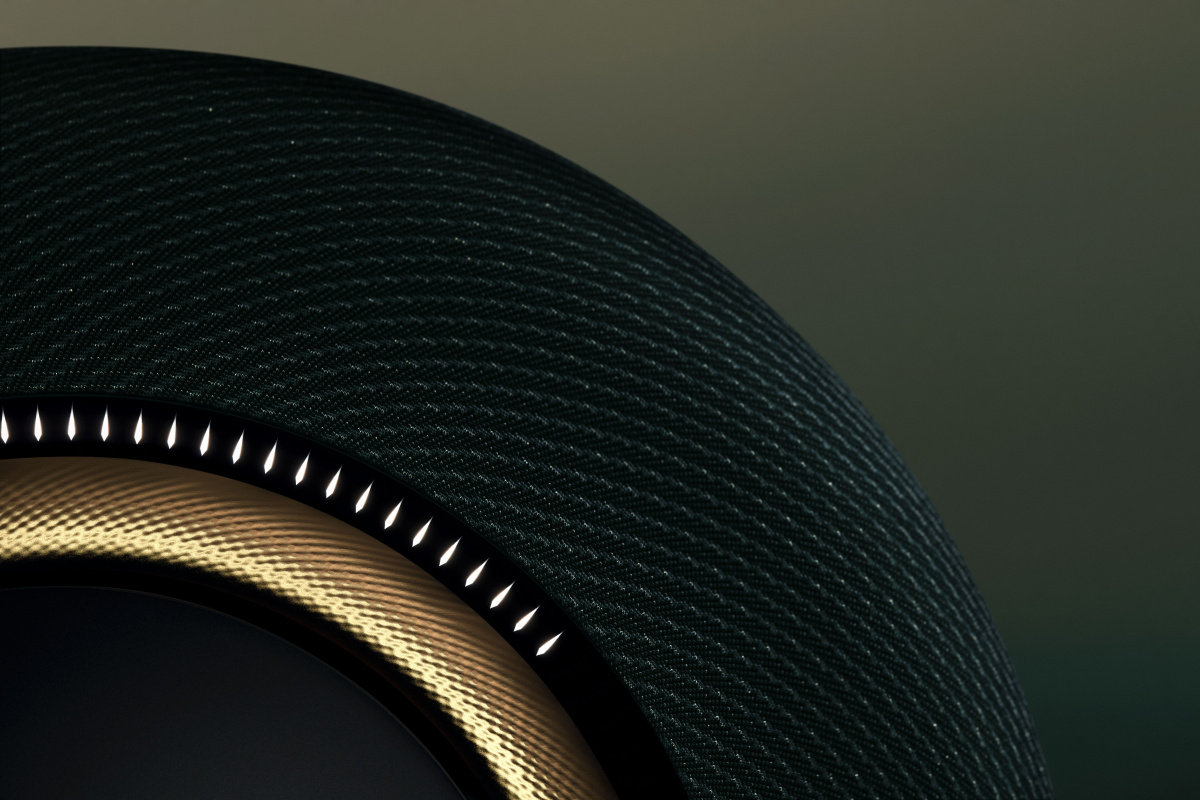
The speaker’s fabric had to be acoustically transparent enough not to muffle the sound while creating visual depth and richness. “It also had to be thin enough for performance, but illusionary in a way. We wanted depth that looked rich. Getting that balance wasn’t easy,” says Begüm. The solution involved incorporating gold lurex for a subtle shimmer. The pattern itself became a representation of sound—two water ripples intersecting, creating a visualization of acoustic waves. Photo courtesy of Marantz
Color also became its own language. Three directions emerged during development, each telling a different story about how the speaker would live in people’s homes. The process centered on understanding psychology and space.
Midnight Sky, with its black marble base and gold accents, was designed for drama and contrast. Moonray offers soft minimalism with white marble and light gray fabric. Champagne, the team’s personal favorite, connects heritage with contemporary warmth.
“That one is very well-received from hospitality,” she says. “Hotels and wellness spaces can easily place it on a wall mount and it would blend in but also stand out.”
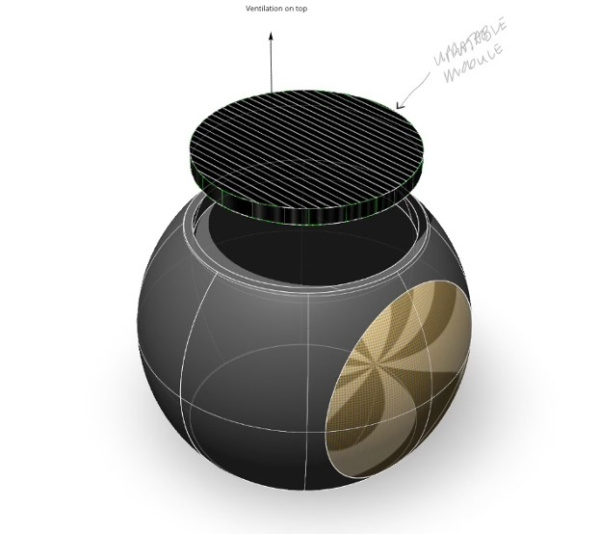
Midnight Sky, with its black marble base and gold accents, was designed for drama and contrast. Rendering courtesy of Marantz
In an age where everything is app-controlled, the team also made a deliberate choice to preserve analog interaction. They decided Grand Horizon’s proximity sensor would bring the speaker to life as you approach. The touch ring would respond to your finger’s movement for volume control. The intention was to create moments of direct, tactile connection in an increasingly digital world.
“Our team wanted to bring some analog usage, or the human touch. You don’t always have to control everything from an app.”
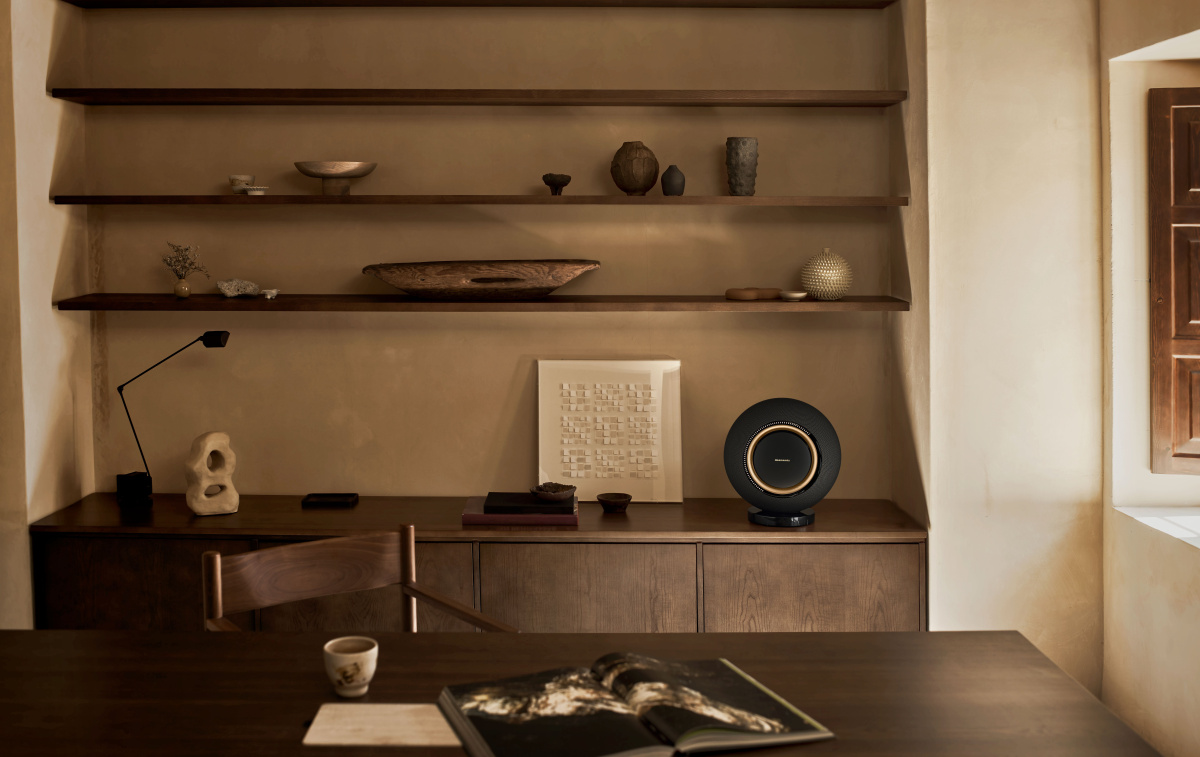
The most rewarding calls come from architects and designers who see possibilities the team never imagined. “Great sound needs to be heard by a wider audience,” she says. “Most of the young generation doesn’t know what great sound is. If they experience this, they understand.” Photo courtesy of Marantz
The speaker’s sonic identity also required its own creative process. Working with external partners, the team developed what they called “soundscapes,” consisting of three composed pieces that showcase the speaker’s full capabilities while embodying a specific sonic character. “It’s like a sonic language for Grand Horizon,” she says. “The speaker is all about warm, real sound, so the tracks were recorded with real instruments in a studio.”
Even the packaging became a designed experience. Marantz’s team created what Begüm describes as opening “a jewelry box” or, “like a flower.” The engineering process required humidity and drop tests to ensure the marble base wouldn’t shatter during shipping.
“One thing I definitely noticed is that unboxing this speaker was super nice and extremely elevated,” says Sixtysix Editor-in-Chief Chris Force. “The packaging was so nice I felt guilty throwing it out.”
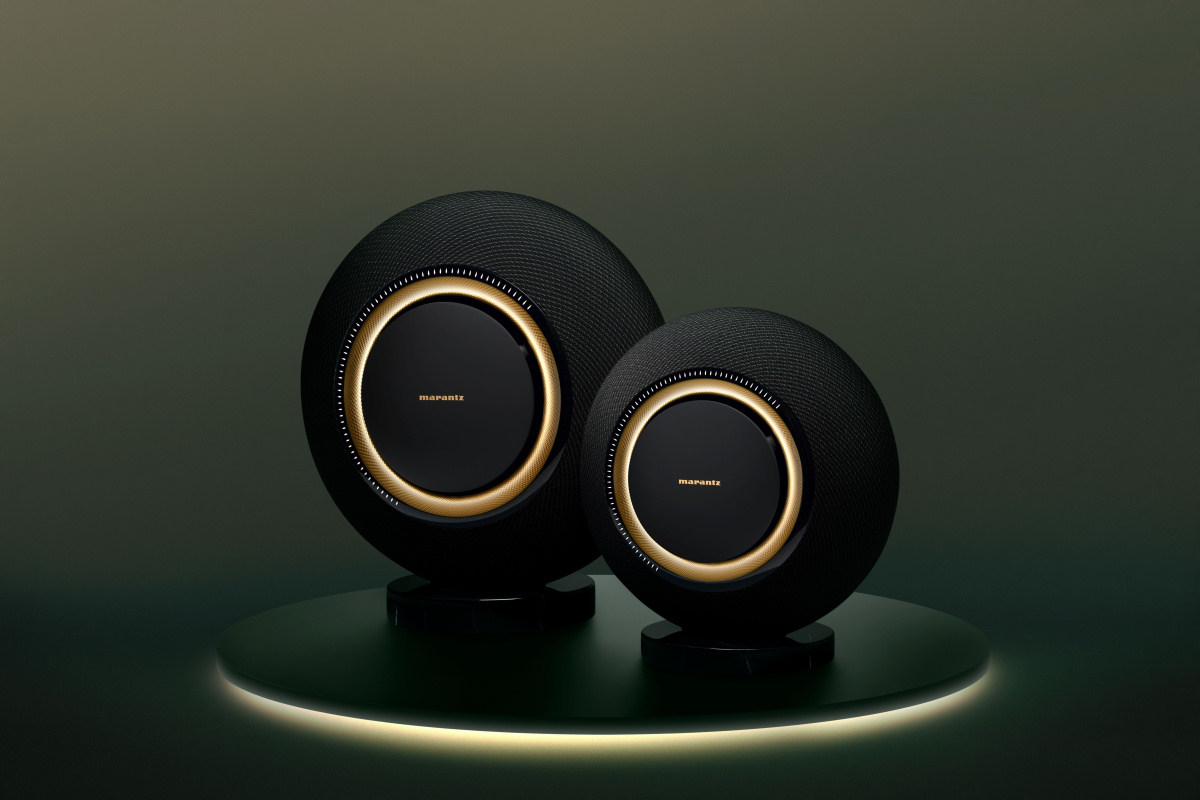
Months after launch, the team watches their creation live in the world. Begüm still uses her own Grand Horizon at home, connecting multiple units throughout her space. “I like to connect them and it’s always immersive,” she says. “You can have one in the kitchen, one in the bedroom, and have the sound surrounding you.” Photo courtesy of Marantz
“It’s a luxury product, right? But luxury isn’t only about the price point. It’s also about the experience it brings,” she says.
Months after launch, the team watches their creation live in the world. Begüm still uses her own Grand Horizon at home, connecting multiple units throughout her space. “I like to connect them and it’s always immersive,” she says. “You can have one in the kitchen, one in the bedroom, and have the sound surrounding you.”
The most rewarding calls come from architects and designers who see possibilities the team never imagined. “Great sound needs to be heard by a wider audience,” she says. “Most of the young generation doesn’t know what great sound is. If they experience this, they understand.”