For Theodore Perdios, stepping into the world of furniture design was not just about aesthetics, but storytelling. As an architect-turned-designer, he sought to infuse his debut collection with deeper meaning.
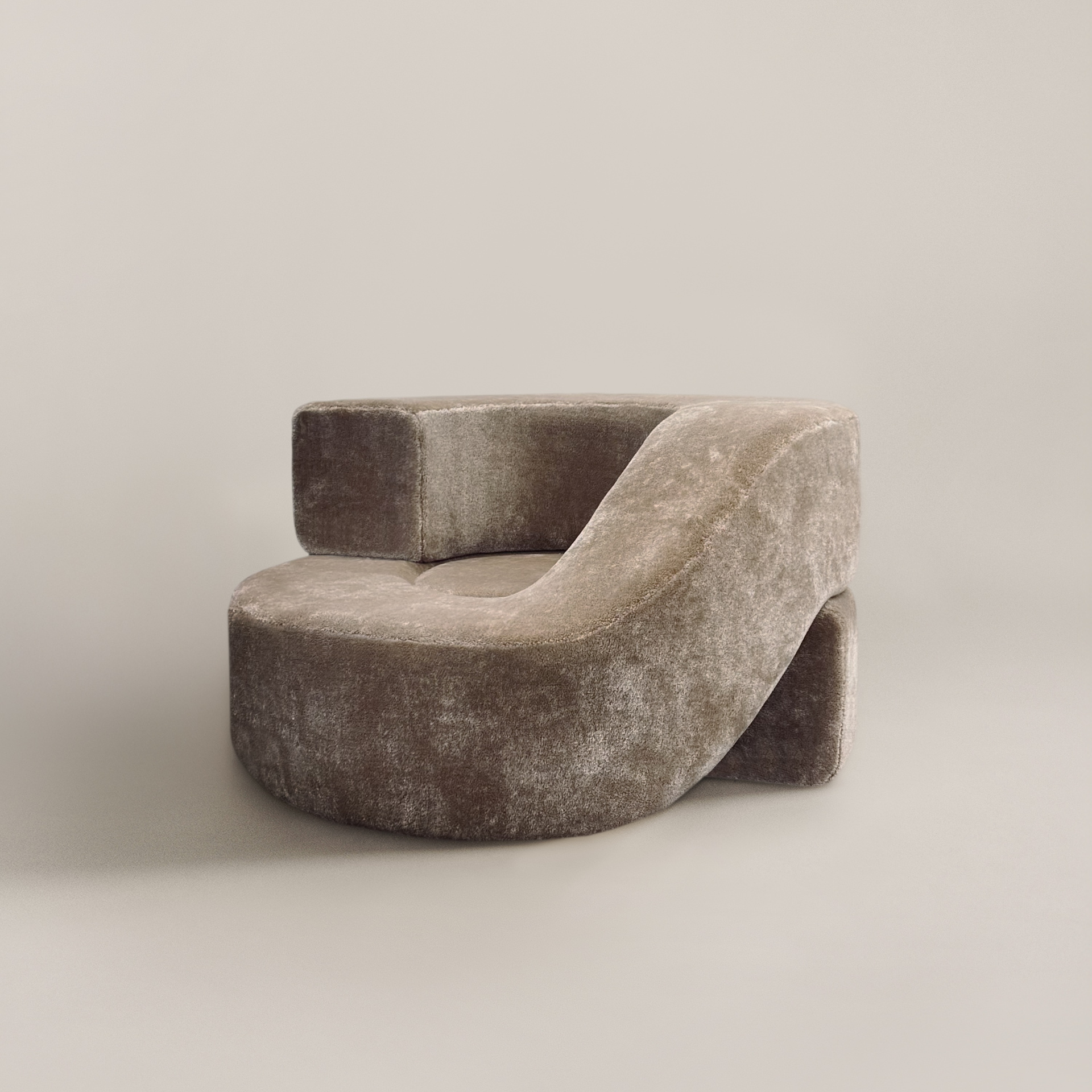
At first glance, the Lilith Chair is sculptural and enigmatic. Beyond its unconventional shape lies a layered reinterpretation of the medieval legend of Lilith, the woman who, according to certain versions of the Adam and Eve story, refused to be subservient and chose exile over submission.
“My goal was to reframe Lilith’s story into something elegant, to give her grace back,” he says. The chair’s curving silhouette mirrors a snake winding around a tree, an intentional abstraction of the serpent from the Garden of Eden.
“If you look at my piece with this story in mind, my goal was to capture that symbolism,” he says. “The central round piece represents the trunk, while the twisting form isn’t human, but a serpent.”
Rather than a symbol of deception, Theodore says the chair’s form becomes an emblem of empowerment, strength, and self-determination.
“Over time, Lilith has been consistently linked to demons, negativity, and the forbidden,” he says. “I wanted to design something that embodies this story from the Middle Ages, where Lilith becomes this feminist icon—choosing to leave paradise and step into the unknown, into what was considered the demon’s side. That was a radical idea at the time. My goal was to reframe her story into something elegant, to restore her grace.
“I don’t see Lilith as just furniture—it’s something you interact with but also contemplate.”
A version of this article originally appeared in “Nice Chairs” in Sixtysix Issue 14.