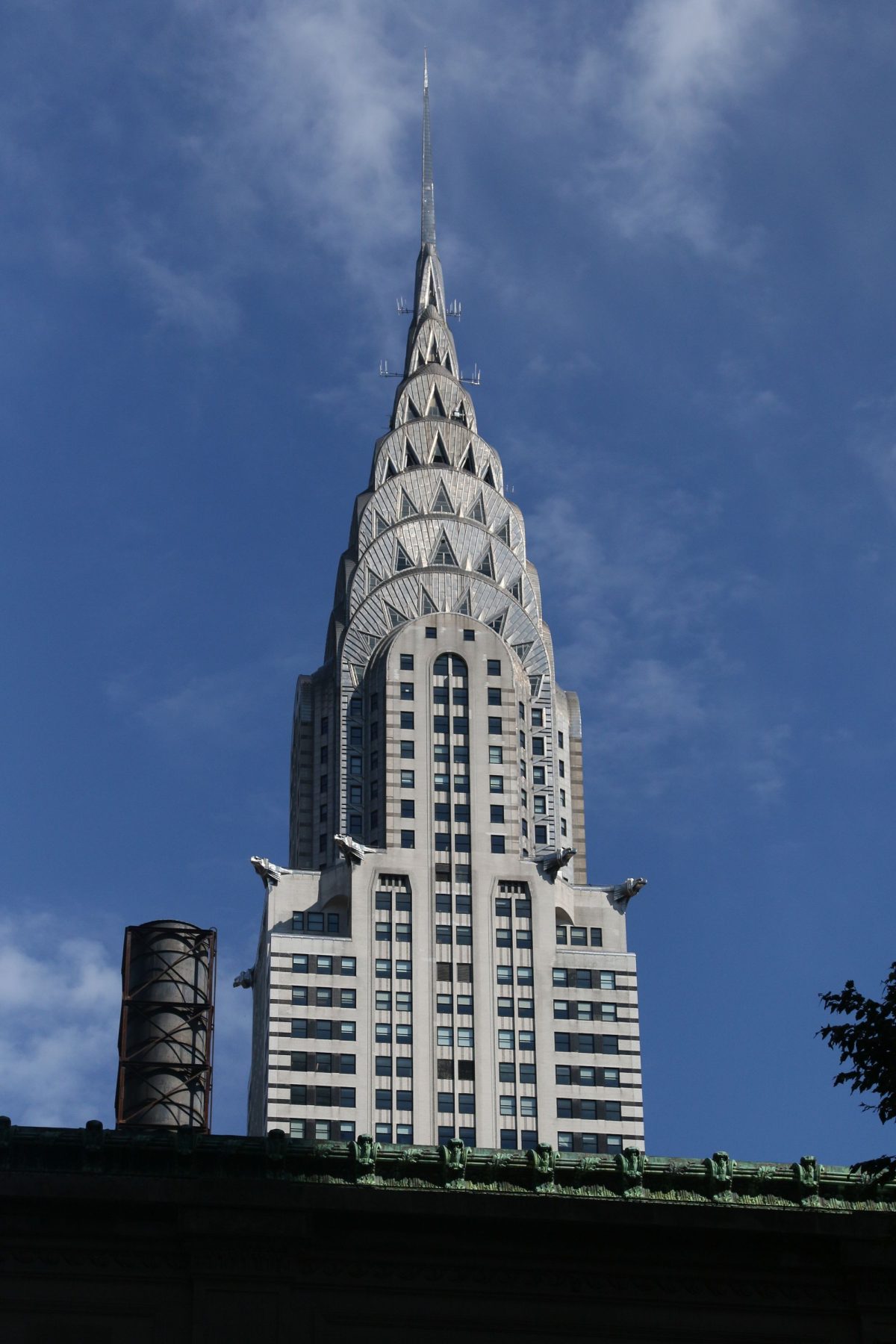
What is Art Deco? It is the decorative style that flourished between the two world wars, named for the Exposition Internationale des Arts Décoratifs et Industriels Modernes, the Paris fair that opened in April 1925. Its designers favored geometric ornament, exotic woods, lacquer and ivory, and the look spread from French furniture to American towers like the Chrysler Building.
The name came later, as a shorthand for the fair’s title. Jared Goss, writing for the Metropolitan Museum of Art, calls it a somewhat imprecise label. The style waned during the Great Depression of the 1930s, when French designers turned toward neoclassicism.
Where does the name Art Deco come from?
It comes from the 1925 fair. Its official name, Exposition Internationale des Arts Décoratifs et Industriels Modernes, translates as the International Exhibition of Modern Decorative and Industrial Arts. The modern work shown there later became known as Art Deco, after the exposition’s name.
The fair grew out of a long French campaign. Designers wanted to win back the country’s lead in luxury goods, which had slipped after Art Nouveau proved a commercial failure and Austrian and German design gained ground. The Société des Artistes Décorateurs, founded in 1900, set new standards through annual shows.
In 1912 the French government voted to sponsor an international exhibition of the decorative arts. World War I postponed it, and the fair did not open until 1925.
What was the 1925 Paris Exposition?
The exposition opened to the public on April 29, 1925, the day after a private inauguration by the president of France. It was due to close on October 25 and was extended to November 8. It stretched along both banks of the Seine, from the esplanade of Les Invalides to the entrances of the Grand Palais and the Petit Palais, and drew more than 16 million visitors.
The rules were strict. Exhibits had to be thoroughly modern, with no copies of historical styles, according to the Met’s essay on French Art Deco. Germany was not invited because of its role in the war.
The fair’s designers are on record. Pierre Patout designed the entrance on the Place de la Concorde. Edgar Brandt designed ornamental gates for the main entrance and showed Oasis, a screen in iron and copper. René Lalique built an illuminated crystal fountain that became one of the fair’s landmarks.
Not every pavilion matched the style that later took the fair’s name. Le Corbusier’s Pavillon de l’Esprit Nouveau, built of concrete, steel and glass, carried no ornament at all. Konstantin Melnikov’s Soviet pavilion was made of wood and glass, with interiors by Alexander Rodchenko.
Why did the United States skip the 1925 Paris Exposition?
The United States, France’s ally in the war, was offered a prime site and turned it down. According to the Met’s account of American modern design, officials consulted establishment figures in art and education and concluded that “there was no modern design in America.”
The country built no pavilion, but hundreds of American designers and buyers went to see the fair anyway. One was Donald Deskey, who had studied in Paris and would later oversee the interiors of Radio City Music Hall.
Who was Jacques-Émile Ruhlmann?
He was a French furniture designer, and the Met titled its 2004 retrospective of his work Ruhlmann: Genius of Art Deco. The museum writes his name Émile-Jacques Ruhlmann, and the reversed form, Jacques-Émile, is also common. He was born in Paris in 1879, the son of a decorating contractor, and took over the family business in 1907.
His pavilion at the 1925 fair, the Hôtel du Collectionneur, was meant to evoke “the imaginary villa of a rich and discerning collector,” in the Met’s words, and the museum describes it as the fair’s most admired attraction. Ruhlmann made most of its furnishings himself, and friends filled a few gaps.
One of those pieces is now in New York. A cabinet by Léon Jallot, in mahogany, palisander and marble, stood in the pavilion’s main salon, and the Met acquired it in 1925 with a gift from Edward C. Moore Jr.
Ruhlmann worked in macassar ebony, ivory, sharkskin, lacquer and rare woods. A desk he made around 1918 to 1919 has a sharkskin work surface and ivory fittings. He died in 1933, at 54.
The Met also owns his État cabinet, in macassar ebony, amaranth and ivory. Ruhlmann designed the model in 1922, and the French state bought the first one, which gave it the name (état is French for state). The Met’s variant was made in 1925 and 1926. The museum’s object record says the Met commissioned it in 1925, while a 2004 Met press release gives the year as 1926.
What is Art Deco design?
Art Deco design is decorative first. Ornament covers surfaces or makes up the whole object, and the common motifs are the human figure, animals, flowers, plants and abstract geometry. Designers reached for sharkskin, ivory and exotic woods, and for techniques such as lacquer and ceramic glazes.
The style borrowed from painting and the stage. The Met traces its sources to Fauvism, Cubism and Orphism, to the Ballets Russes and to French colonial interests. Fashion and the decorative arts overlapped, and the couturier Paul Poiret worked in both.
Specialists made the style. Jean Dunand made lacquered metal vases, and Lalique designed glass, including the Hagueneau wineglass set of 1924. François Pompon carved a marble Polar Bear around 1923 that the Met bought in 1930.
Erté drew covers for Harper’s Bazaar from 1915 to 1936. The Met’s account of the period also names the jeweler Georges Fouquet, the designers Armand-Albert Rateau and Pierre Legrain, and the firm Süe et Mare.
When was the Art Deco period?
Roughly the years between the two world wars. These are the dates that frame it:
- 1900: The Société des Artistes Décorateurs is founded.
- 1912: The French government votes to sponsor an international decorative arts exhibition.
- 1923: The Met opens its first gallery for modern design, under the curator Joseph Breck.
- 1925: The Paris exposition opens on April 29 and draws more than 16 million visitors.
- 1929: The Chrysler Building’s spire is raised into place in November.
- 1930: The Chrysler Building holds its formal opening on May 27.
- 1932: Donald Deskey oversees the interior of Radio City Music Hall.
- 1937: A new Paris exhibition turns to science and technology instead of the luxury trades.
The Met treats that 1937 fair as the end of the era. By then the style had waned during the Depression, and French design had moved toward a neoclassical “Return to Order.”
Who designed the Chrysler Building?
The architect William Van Alen. The developer William H. Reynolds started the project, and the automaker Walter P. Chrysler took it over in October 1928. Work began on October 15, 1928, and the steel frame was finished by the end of September 1929.
Van Alen kept the spire a secret. The 185-foot spire was built in five sections and assembled inside the building at the 65th floor. In November 1929 a 20-ton derrick lifted it through a fire tower at the center of the building, and it was riveted in place in about 90 minutes.
At 1,046 feet, the Chrysler Building became the tallest building in the world. It lost the title in 1931 to the Empire State Building. Tenants moved in in April 1930, and the formal opening followed on May 27, 1930.
The lobby is faced in red Moroccan marble under a ceiling mural by Edward Trumbull. Its doors, stair railings and information booth use Nirosta, a chrome-nickel steel. The New York City Landmarks Preservation Commission designated the ground-floor interior a landmark on September 12, 1978, and its designation report tells the story of the spire.
How did Art Deco come to America?
Museums brought the French work over first. At the Met, Joseph Breck used a fund that Edward C. Moore Jr. set up in 1922 to buy work by Ruhlmann, Süe et Mare, Rateau and Lalique, and in 1923 he opened the museum’s first gallery for modern design.
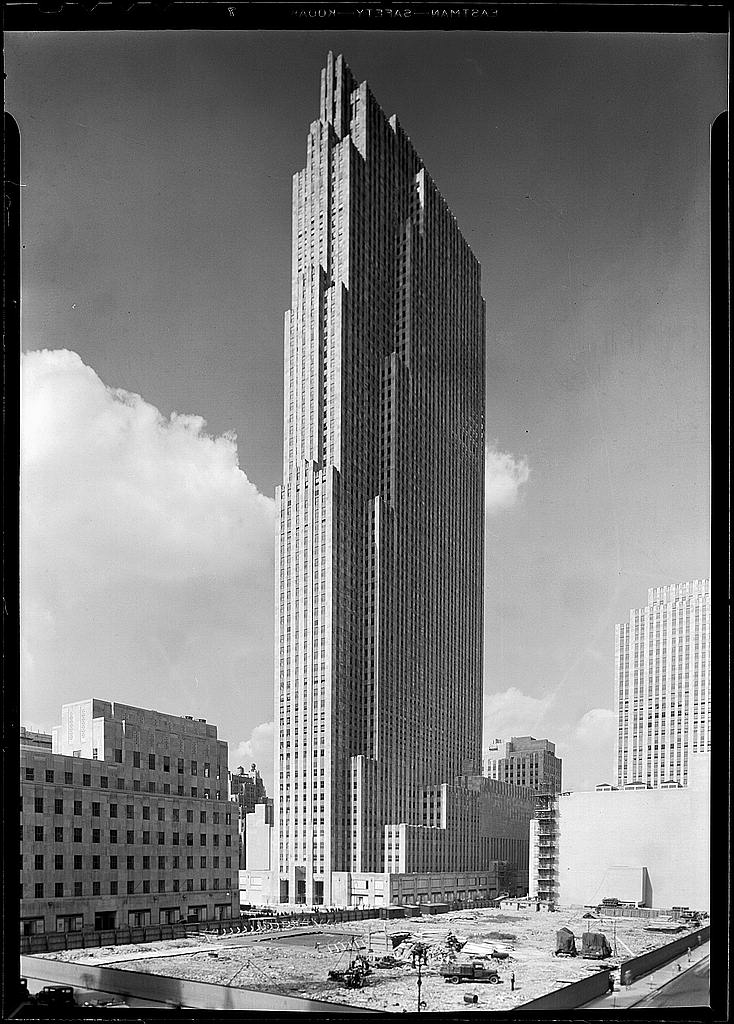
American designers then made the style their own. Paul Frankl modeled furniture such as his Skyscraper bookcase of about 1927 on the tall building, which the Met calls a “potent and uniquely American symbol of modernity.” Deskey, who had seen the 1925 fair, oversaw the 1932 interior of Radio City Music Hall, down to its Singing Women carpet.
In the 1930s American design also took up streamlining, a shape aerodynamic engineers had developed to cut air resistance. Designers applied it to planes, cars, trains and household goods. Henry Dreyfuss designed the New York Central’s 20th Century Limited, Kem Weber drew the Airline armchair around 1934, and Russel Wright’s American Modern dinnerware, introduced in 1937, sold more than 80 million pieces.
Where can you see Art Deco today?
In New York, the two key interiors are the Chrysler Building’s landmark lobby and Radio City Music Hall. The Met holds work by Ruhlmann, Jallot, Lalique and Pompon, though some of those pieces are not on view, and its online collection records them.
Chicago has its own Art Deco giant in The Mart, which Sixtysix visited to see how Gensler turned it into a home for creative offices. In Minneapolis, the Rand Tower was revamped by Gettys Group, the Chicago hospitality firm that designs spaces through stories.
How does Art Deco shape design today?
Contemporary designers still borrow from it, often in details rather than whole rooms. The furniture designer Mark Grattan lists Art Deco among his influences, with Italian design and tropical modernism. “I can’t let go of repetition,” he said in a conversation with Nifemi Ogunro for Sixtysix.
Marcel Wanders used Art Deco-inspired details as quiet nods to the building’s origins at the Kimpton BEM hotel in Budapest. Leyden Lewis points to the way the style folds Grecian, African and Egyptian sources into modernism, which is what excites him about it.
A century after the Paris fair, those habits are still in use: repetition, rare materials and ornament built from geometry. The names behind them, from Ruhlmann and Brandt to Van Alen and Deskey, are the place to start.