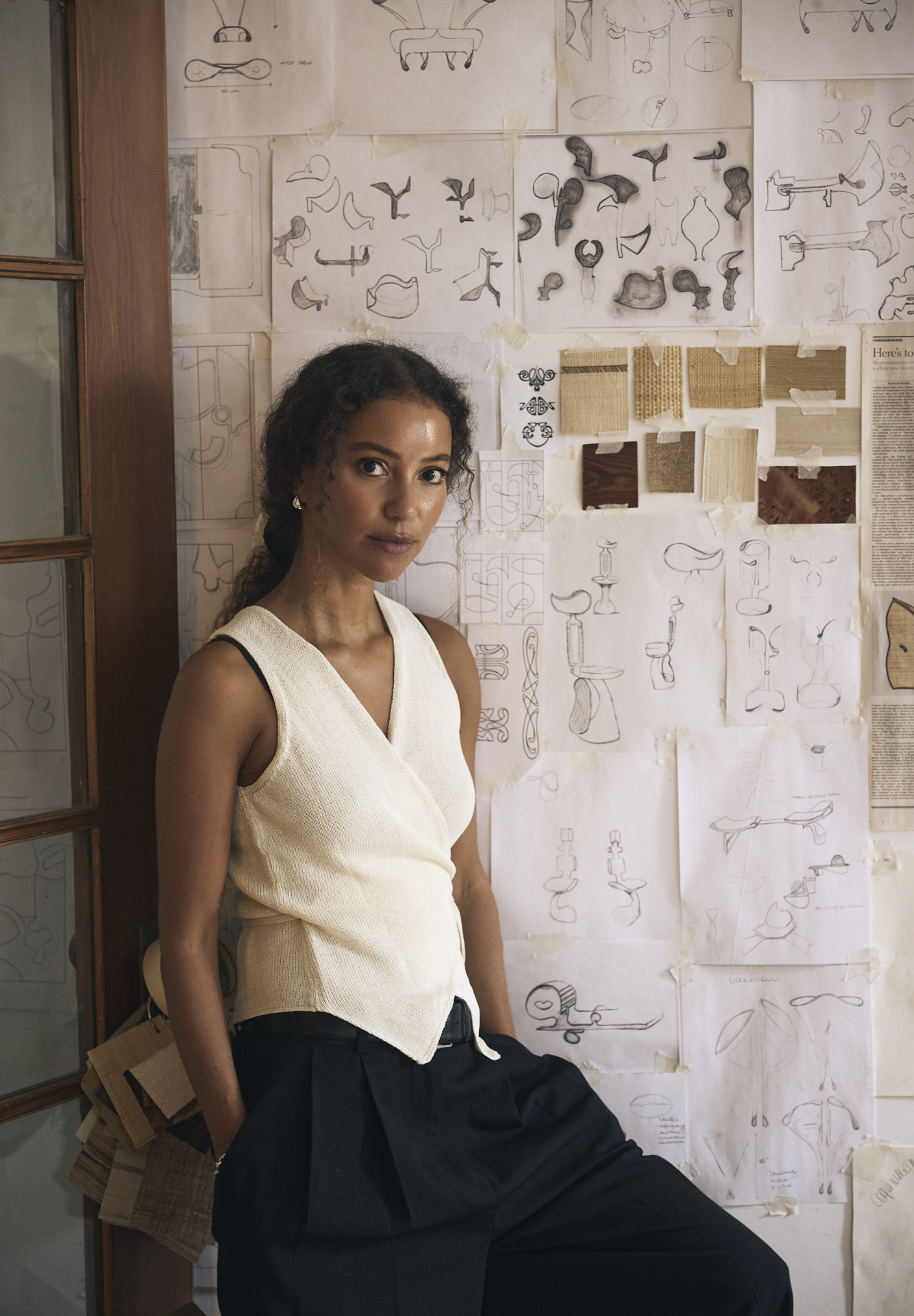
Kim Mupangilaï tells me she grew up in a small village in the province of Antwerp, “literally between the cows and the fields,” as we sip coffee in the kitchen of her Brooklyn brownstone. We’ve known each for all of five minutes, but we’ve somehow launched deep into a gossip session as if we’re old friends. She carries a disarming, relatable presence earned by having been broke, crashed on friends’ floors, and lived with that maddening mix of aimlessness and focused ambition that visits many creatives at pivotal moments.
Our conversation runs through the many serendipitous moments in her life, the most recent of which found her being courted by several A-list celebrities simultaneously, all tied to the promise of big projects and exposure (she remains skeptical). The attention feels almost inevitable given that her work now sits in the permanent collections of the Denver Art Museum, the Vitra Design Museum in Basel, and the Cooper Hewitt. Last year her Bina daybed was featured in “Objects: USA 2024,” the landmark design exhibition hosted by R & Company in New York City. She also teaches at Parsons, one of the country’s top-ranked art and design schools, helping shape the next generation of designers.
Here is her story in her own words, beginning with her Belgian upbringing.
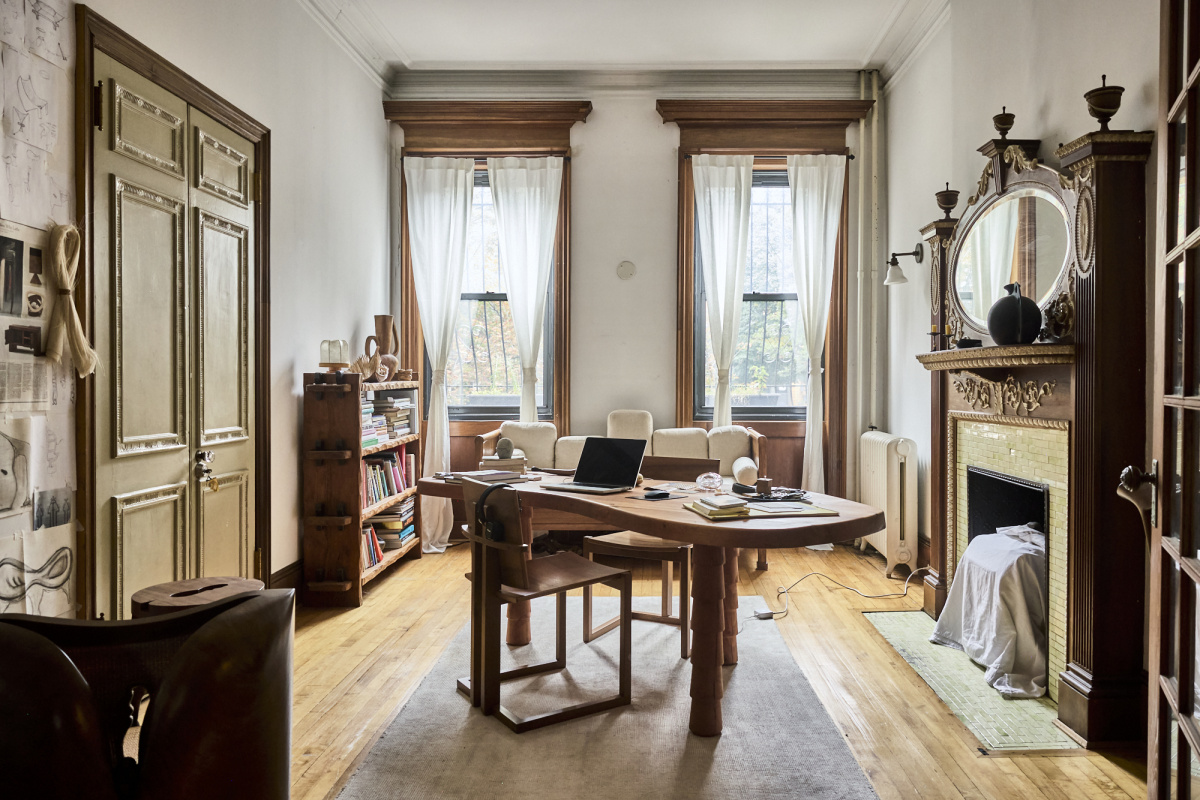
Kim’s living room blends vintage charm with sculptural presence, anchored by a desk where she sketches and meets with clients. Surrounding her are collected objects including vintage vessels, furniture, and material samples that reflect both her design sensibility and her love of found, timeless pieces.
The area I grew up in was very rural. You have a bakery, a pharmacy, and one café. We call it a half-open house, attached to one other house but with a huge yard. It was really close to the railroads, so I could always hear the train when I was little, and also super close to horse stables where I’d ride horses every week. It was very “small town village” mentality. I’d go everywhere with my bike.
My parents divorced when I was three. My dad lived in Brussels, so I lived with my mother and went to school in the Flemish, the Dutch part, of Belgium. At home with my mother I spoke Dutch, and with my father it was a mix of French and Dutch. In Belgian education everyone takes French classes a couple hours a week because Belgium is bilingual. Most people speak both or at least understand it.
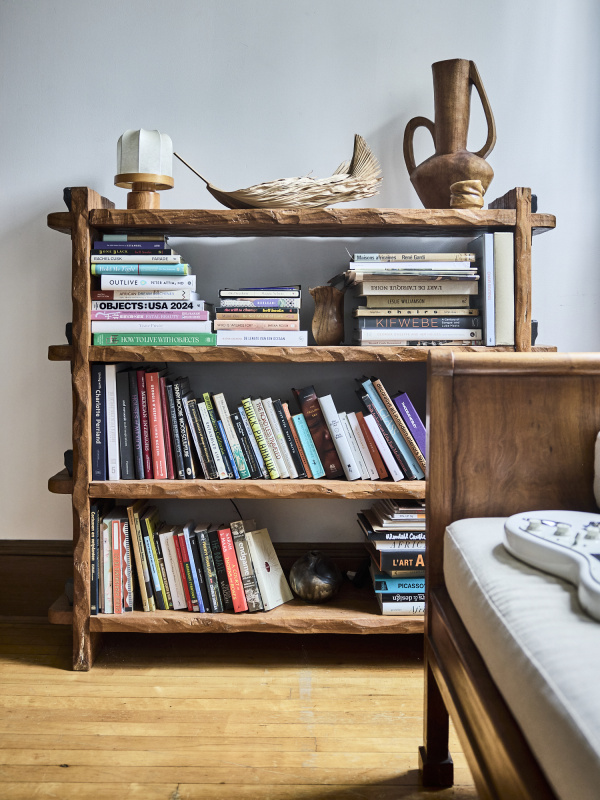
Her vintage bookshelf is a layered mix of design inspiration and personal curation, filled with design books, African artifact references, and other reading favorites. “Lots of my research comes from old African books where I can just read about artifacts and African architecture,” she says. A vintage lamp, dried palm leaf, and wooden African vase sit on top.
I went through high school and then university in Ghent, where I did a bachelor’s in graphic design. Then I had the brilliant idea of wanting to do interior architecture, thinking it would be just one more year of schooling. But obviously you have to do the full four-years and master’s program. By that time I was like, “I should have just become a doctor. Two more years and I could work in a hospital.” Afterward I knew if I went straight into my career, I would burnout before I’d actually started, so I decided to travel.
My mom supported it completely. The thing is, for school you mainly just pay for tools, books, and materials for models. The tuition payment is small. I was also working on the side as a barista and server to pay for travels and my studio. She thought the more skills, the more beneficial later in life.
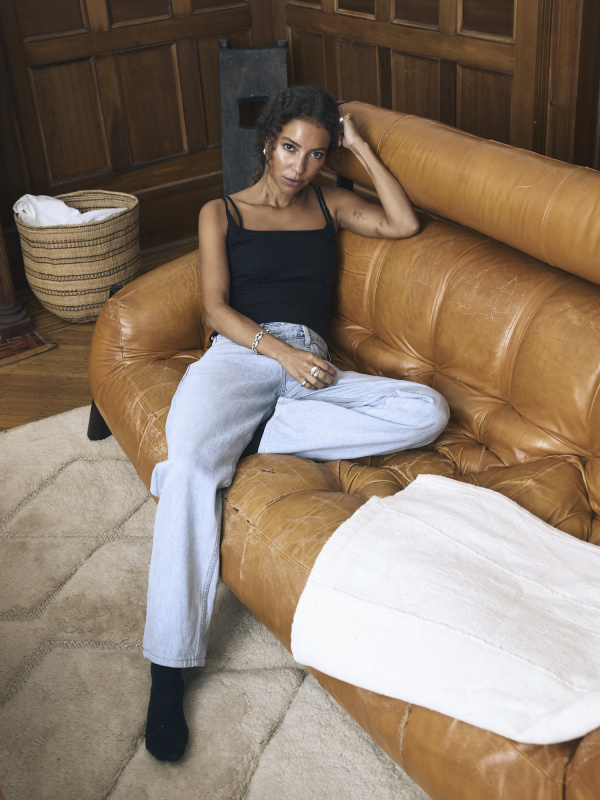
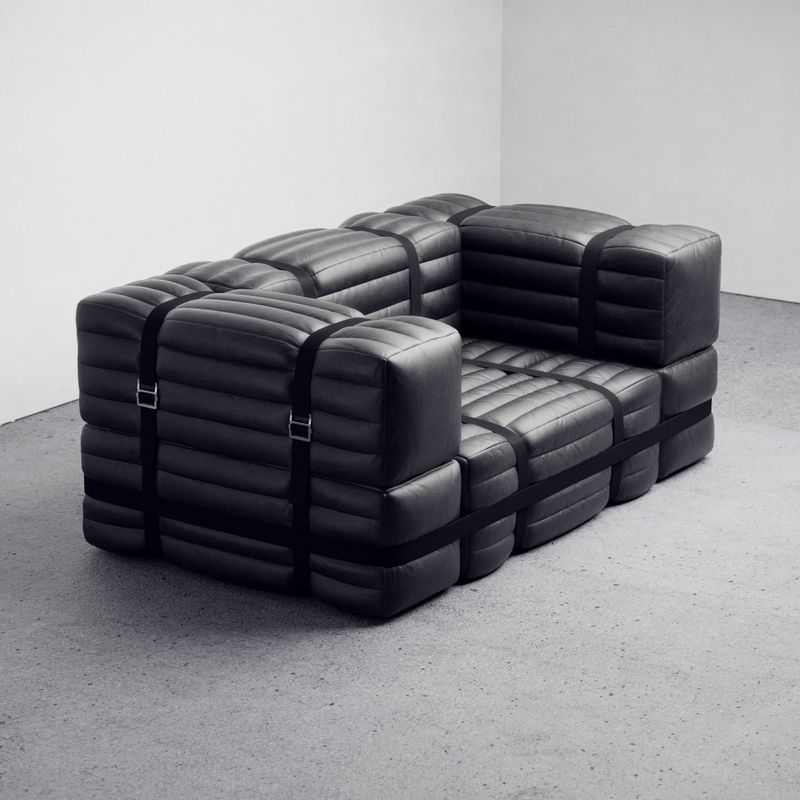
Kim’s 1970s plush French sofa by PERCIVAL LAFER is one of her favorite pieces. “The leather is so plumpy and poofy, but retains this real sculptural shape. It’s really fun.” Jeans by GOLDIE. Basic tee
I went to Australia to go backpacking solo for three months. I’d heard so many good things about it nature-wise, and I wanted to go somewhere backpacker-friendly and safe as a woman alone. I did the entire East Coast and even did a little chopper tour. I love motorcycles. On that trip I met some New Yorkers who said, “If you ever want to come to New York, you’ll always have a place to stay.” In 2017 I went there unannounced, and they let me stay.
Except it wasn’t an actual apartment. The people I was staying with had plans to transform it into a fast-casual poké restaurant on the Bowery. It was just concrete floors, no bathroom, no kitchen—just a box, a physical toilet, and a big window. They were living there too.
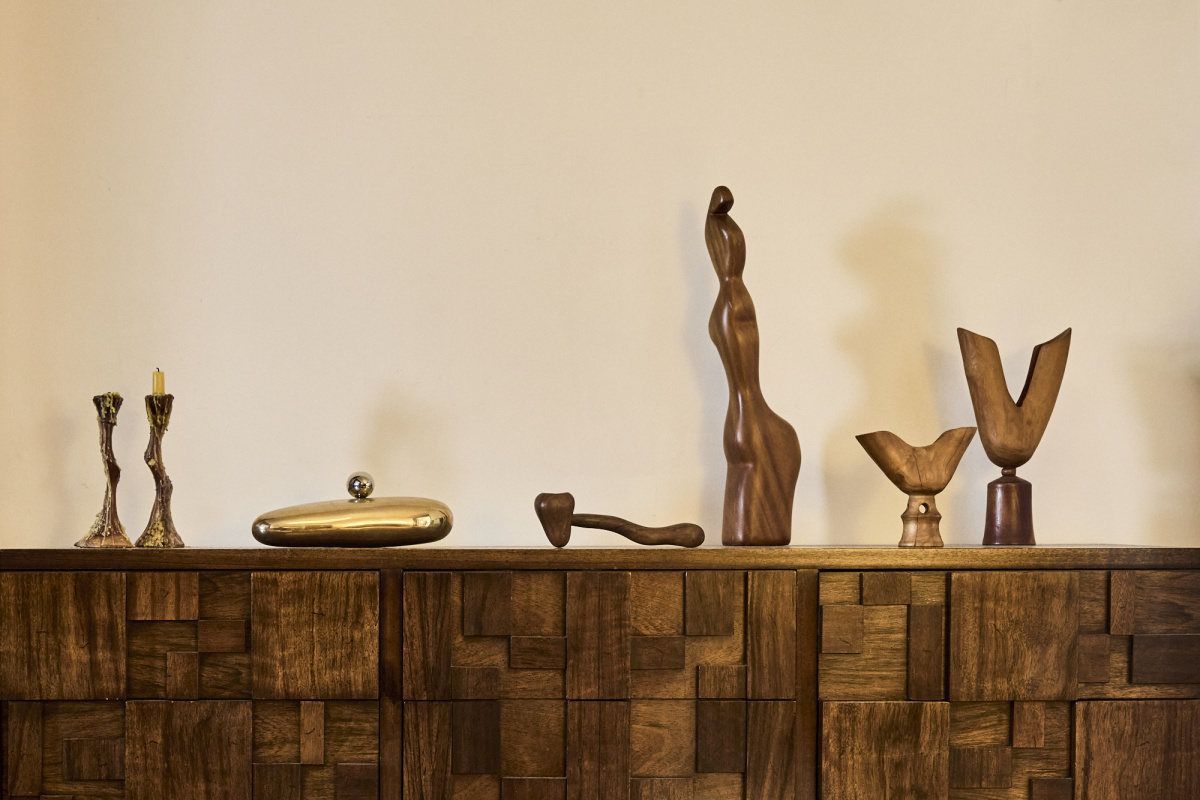
“That’s a vintage credenza by Lane. They’re known for their Brutalist-inspired block composition for the drawers and doors,” she says. Three wooden African sculptures stand to the right, while a nut-cracking tool is displayed in the middle as a single sculptural object. Brass and silver pieces provide metallic contrast alongside her turned wood candlesticks.
On the Bowery, at night you hear everything. But I wasn’t paying rent, so I got myself a membership at Equinox around the corner so I could at least shower properly and work out. That was kind of how I lived, on a mattress on the floor. The wildest thing is that on the plane to New York, I was reading a book about Basquiat talking about his old studio. At that point I didn’t know where I’d stay. I land and they’re like, “Come to 342 Bowery.” I’m in the cab and open the book again, and Basquiat is literally talking about his old studio at 342 Bowery.
I’m not religious, but I do believe in energies and that things happen for a reason. I was sleeping in the old studio of Warhol and Basquiat—this random storefront. I was like, “OK, maybe I need to be here.”
Eventually I started knocking on every door with my portfolio. I went to design fairs and fixed an internship with a Japanese architectural design firm for my visa.
-
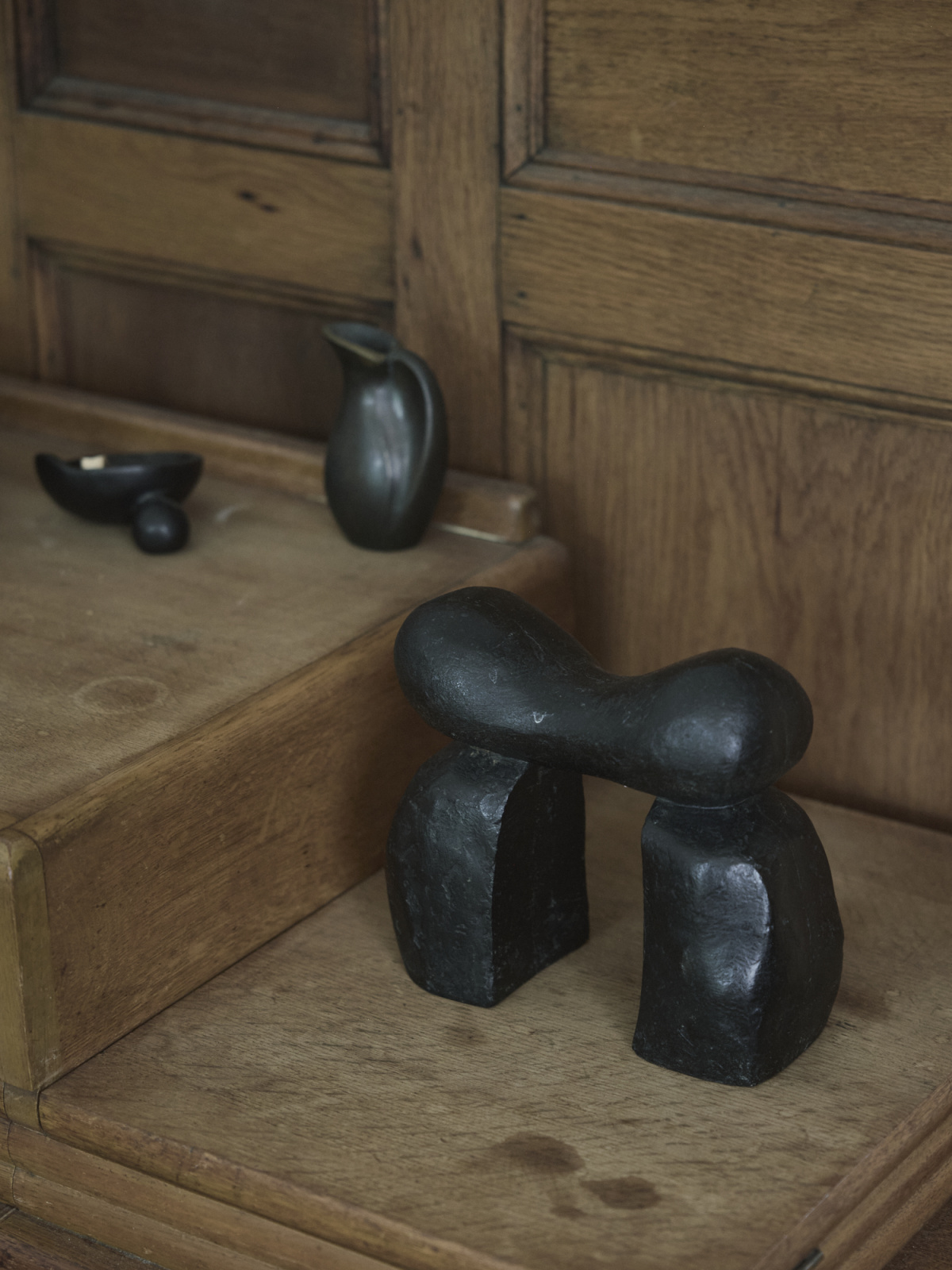
- Various sourced vintage pieces in Kim’s bedroom. The black sculpture is from the UK, and the black bowl was made by a ceramicist in Canada.
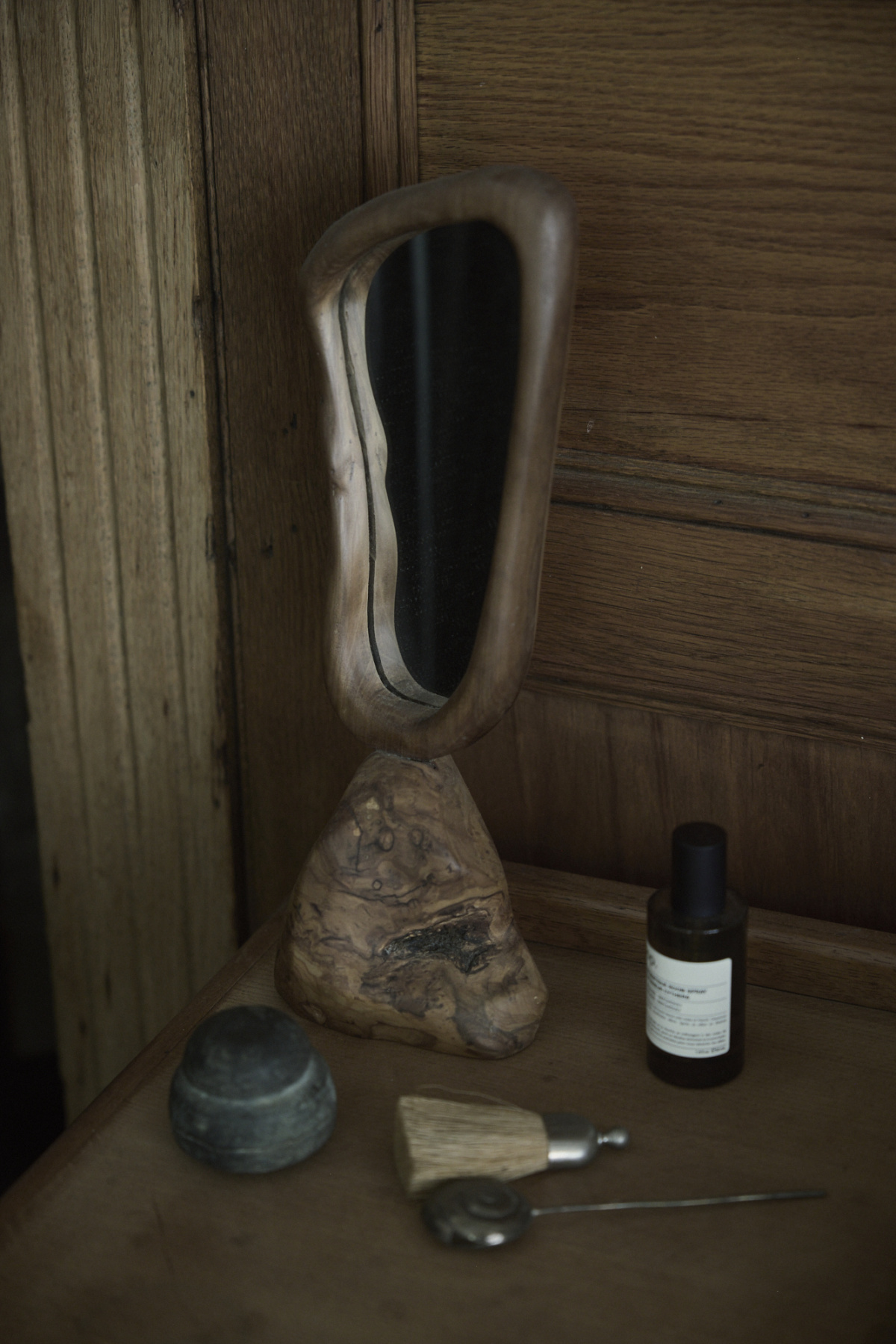
While interning those friends from the Bowery decided to open a ramen restaurant in Greenpoint, Brooklyn. They said, “Would you want to be the lead interior architect?” I was like,
“Sure—that would be my first project. I don’t know how to do feet and inches because I’m used to centimeters and meters, but OK.” I was doing that while also doing the internship simultaneously, and that opened in 2018. It’s still open. It’s called Ponyboy. I’m just happy it survived because in New York, things open and close constantly.
I was looking into an O-1 artist visa. At that time I was also dating someone who said, “If you want to stay faster, we can just get married.” We started that process but it didn’t work out.
I found another way to get a visa through sponsorship, but the pandemic put everything on pause. I could leave, but I’d jeopardize whether I could come back. I needed to stay afloat so I applied for a work permit again and that took six months.
-
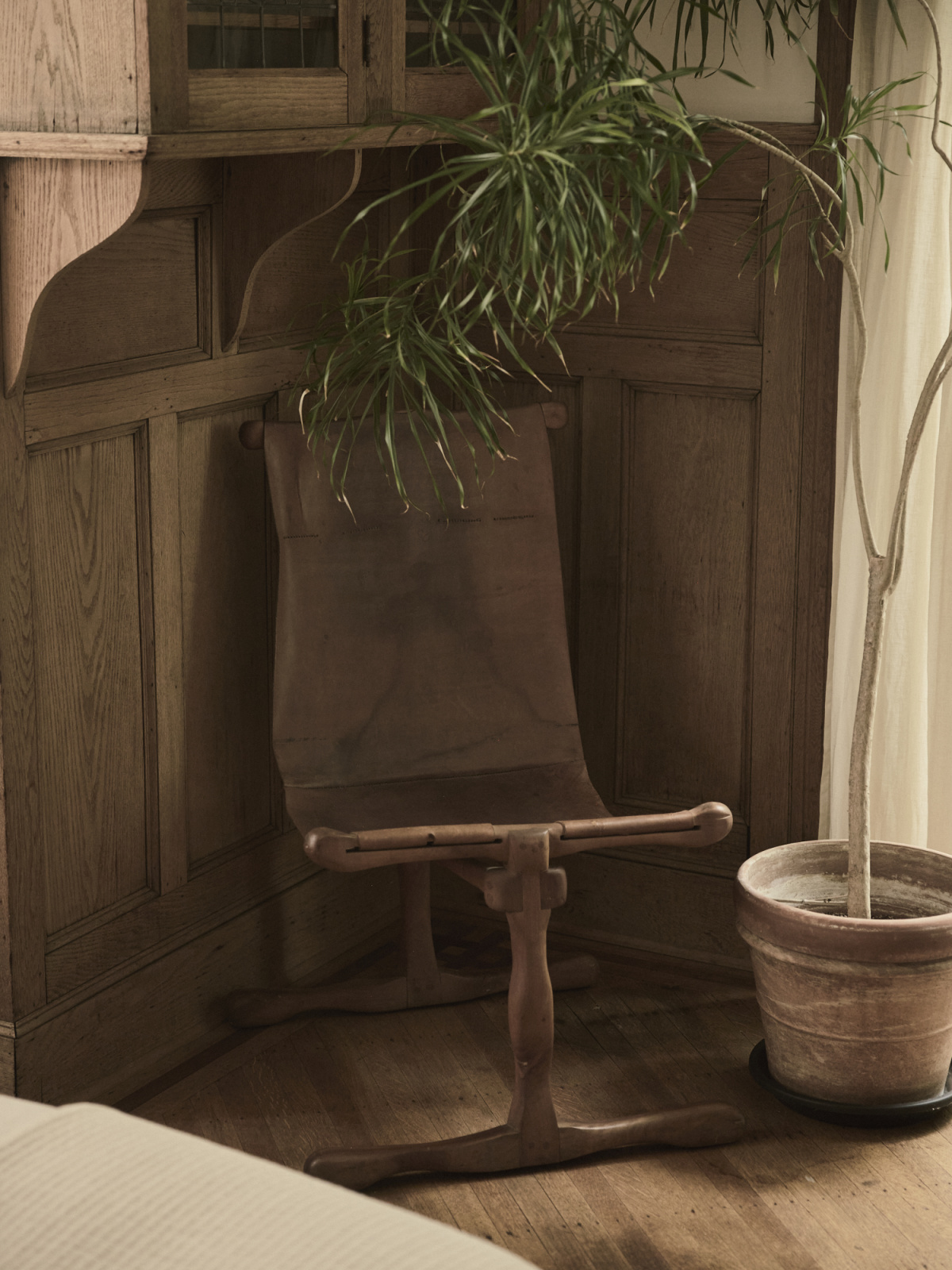
- An American vintage craft chair. “Most of the pieces in my apartment are vintage. When I was still living in Europe and when I would travel, I’d go to flea markets. If I saw something, I would bring it home with me.”
-
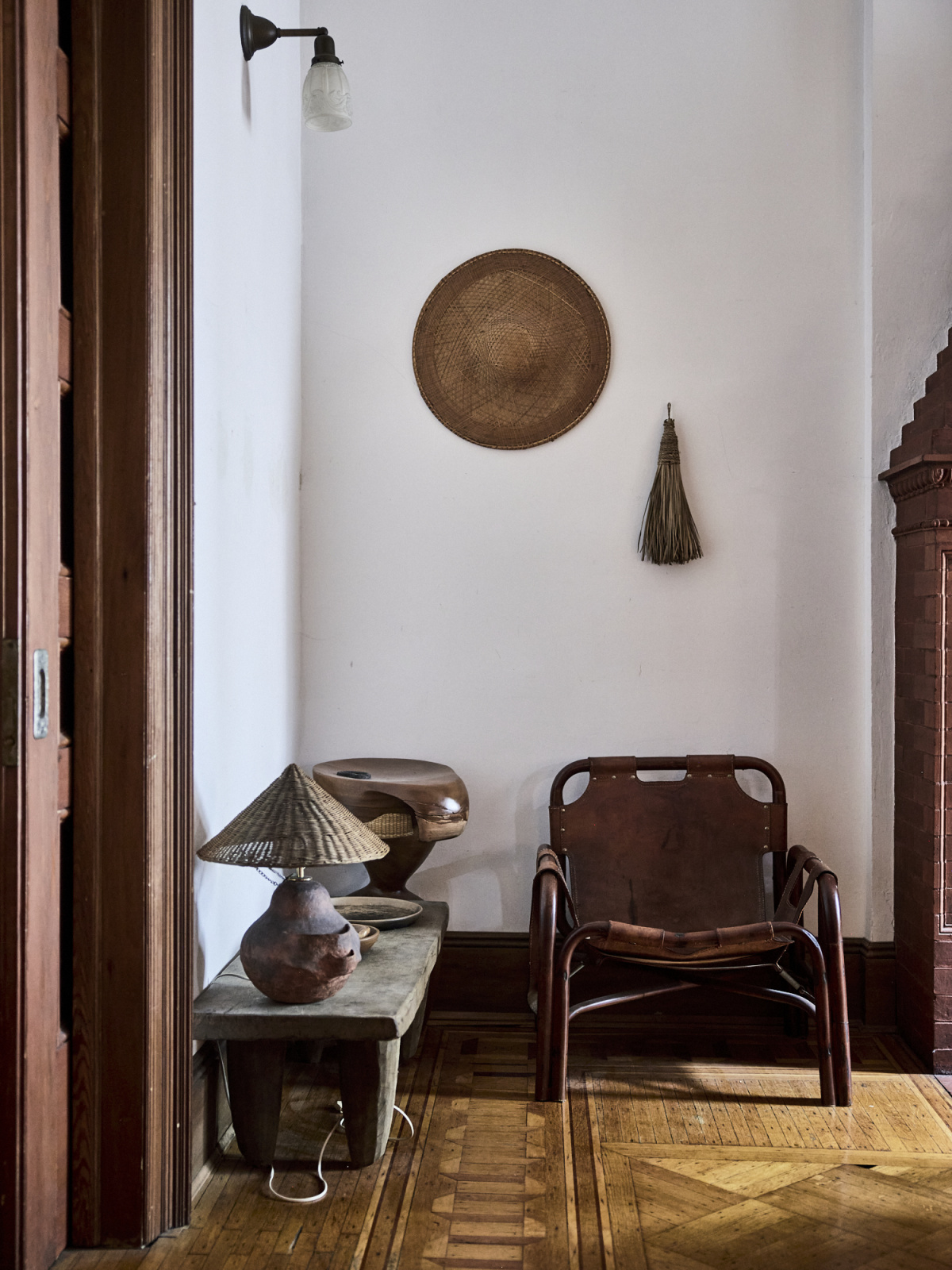
- A vintage African bench anchors the space, topped with a clay vintage lamp and chair. A prototype of one of Kim’s side tables peeks into view behind it.
I was waiting for my green card. When you file for one while waiting, you’re entitled to work—you get a work permit, but you have to apply for it. Normally it takes three to four months. During the pandemic, it took six months to a year. I had applied for an extension, and the immigration office changed it to a two-year permit for everyone. So at least that part was covered so I could work.
It feels like you’re in limbo. Can I set up a life here or not? Is it gonna be a yes or no? I’m not a person who gets homesick often, but when you’re physically not allowed to leave you feel like, “Oh fuck, if something happens to my family, if someone’s dying, I’d need to write to the government begging to leave.” God knows how long that would take. That was also a stress.
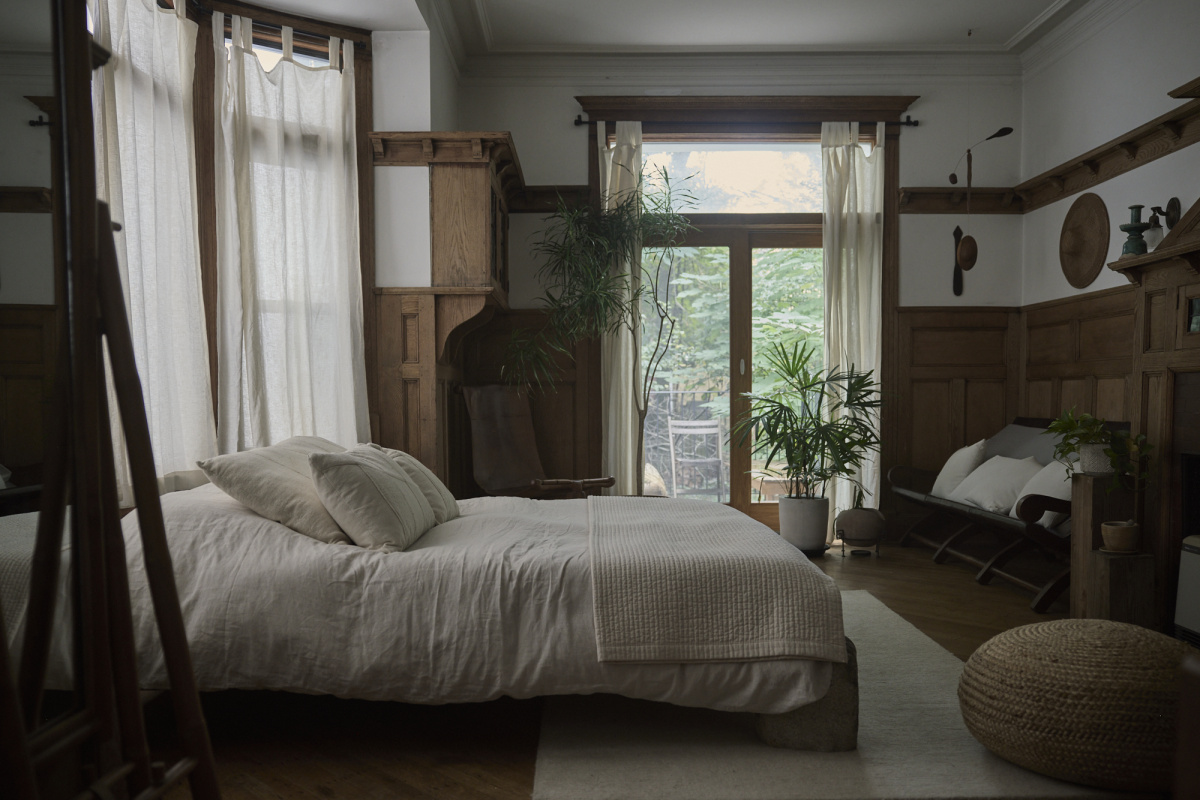
Kim’s bedroom is full of serene earth tones. “My bed is by ETHAN STEBBINS, a stone carver. The feet are stone and very heavy, and the frame is wood. It’s so beautiful,” she says. A Mexican bench sits against the wall, accompanied by a wooden mobile made by her design partner Camille Tan.
I did so much research. I was on Reddit and all the immigration apps looking at who to contact, people with power for New York State. The Senate, the mayor, the head of immigration, just to flag my case, meaning put it on top of millions. Other states go faster, but New York is so saturated. During the pandemic I think half the people were fired at immigration offices or left, so it was crawling. But eventually a letter I wrote got through.
I started working as a studio manager for a sculptor, Simone Bodmer-Turner. I did three jobs because I knew I wanted to do my own stuff like furniture, but it’s New York. You need to do multiple things to survive. She works with clay and ceramics. She blew up during the pandemic because everyone was working from home and wanted to redo their space. She went from a tiny studio shared with many people to her own studio with a team of six. I was her first employee.
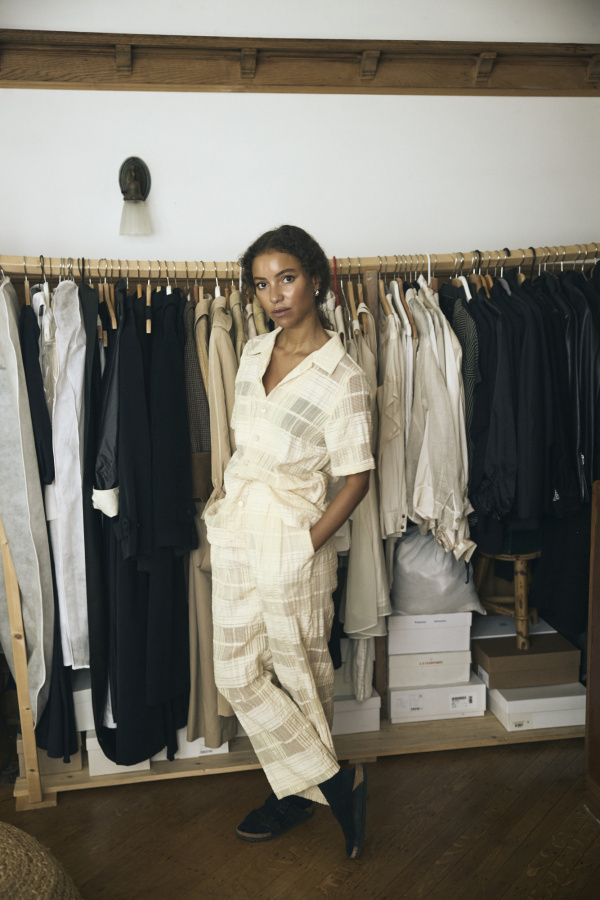
Kim wears a casual two-piece set and BIRKENSTOCKS
When the pandemic hit, a group of us creatives from all different industries got into a collective making face shields for Mount Sinai hospital. No one was working, production stopped, everything stopped. We did that for seven months, it was all creatives—tattoo artists, photographers, creative directors—we all needed money and unemployment was a whole other thing. Eight hours a day, we learned how to sew on industrial machines. It was insane.
During that time I was also showing little snippets on Instagram of a first idea for a chair, and someone from Salon 94 gallery picked up on it. They told me to talk to Stephen Markos from Superhouse Gallery. He had a corporate career but was always into art and was starting his own gallery. He believed in my story and said, “Why don’t we create your first piece for Miami Design Week?” because he was accepted into Design Miami. The piece was a room divider, and it got so much attention.
-
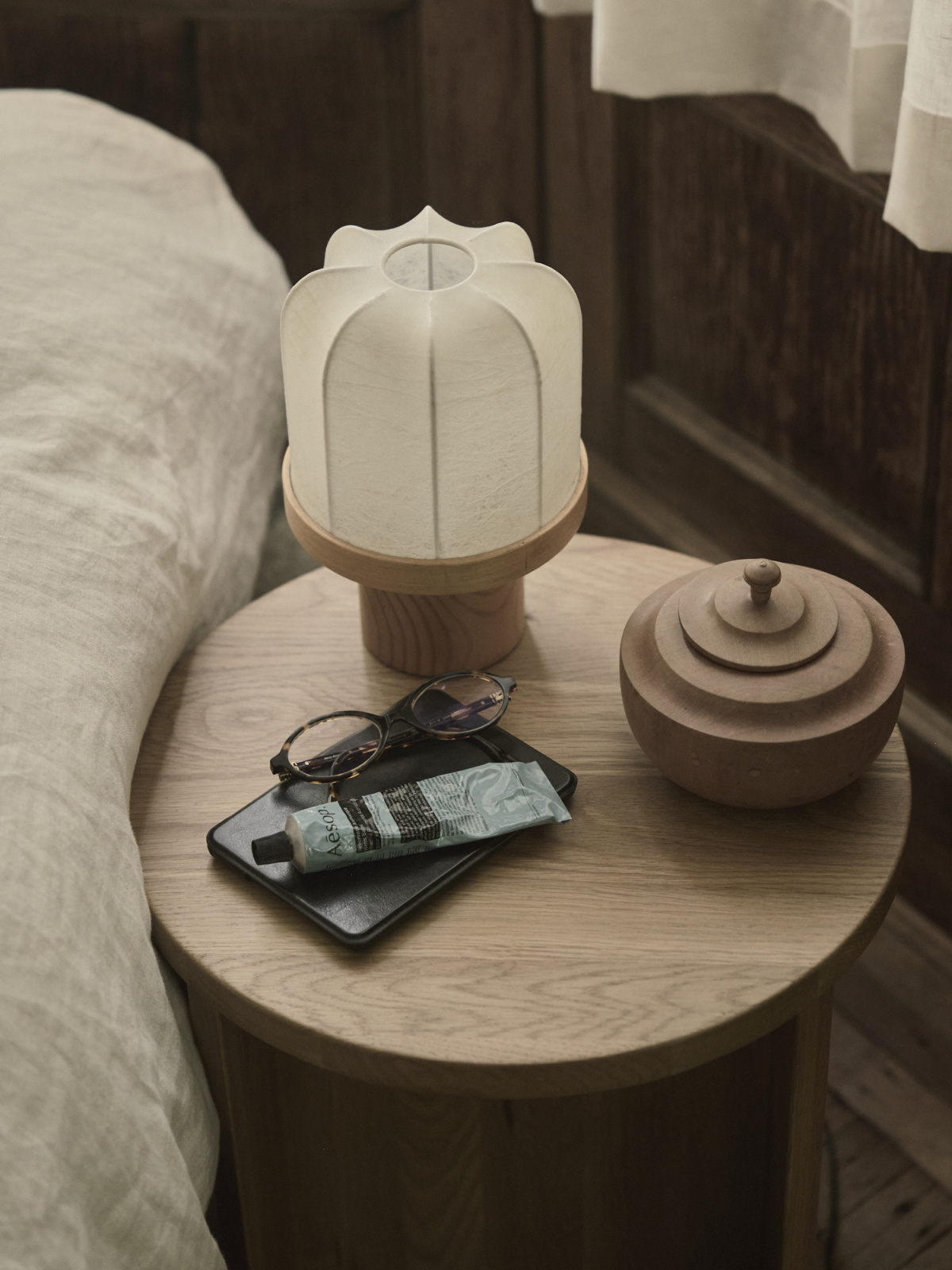
- A vintage-inspired stool-turned- side table from a Brooklyn Museum project Kim worked on sits beside her bed. A wood- turned box and vintage lamp are placed on top.
-
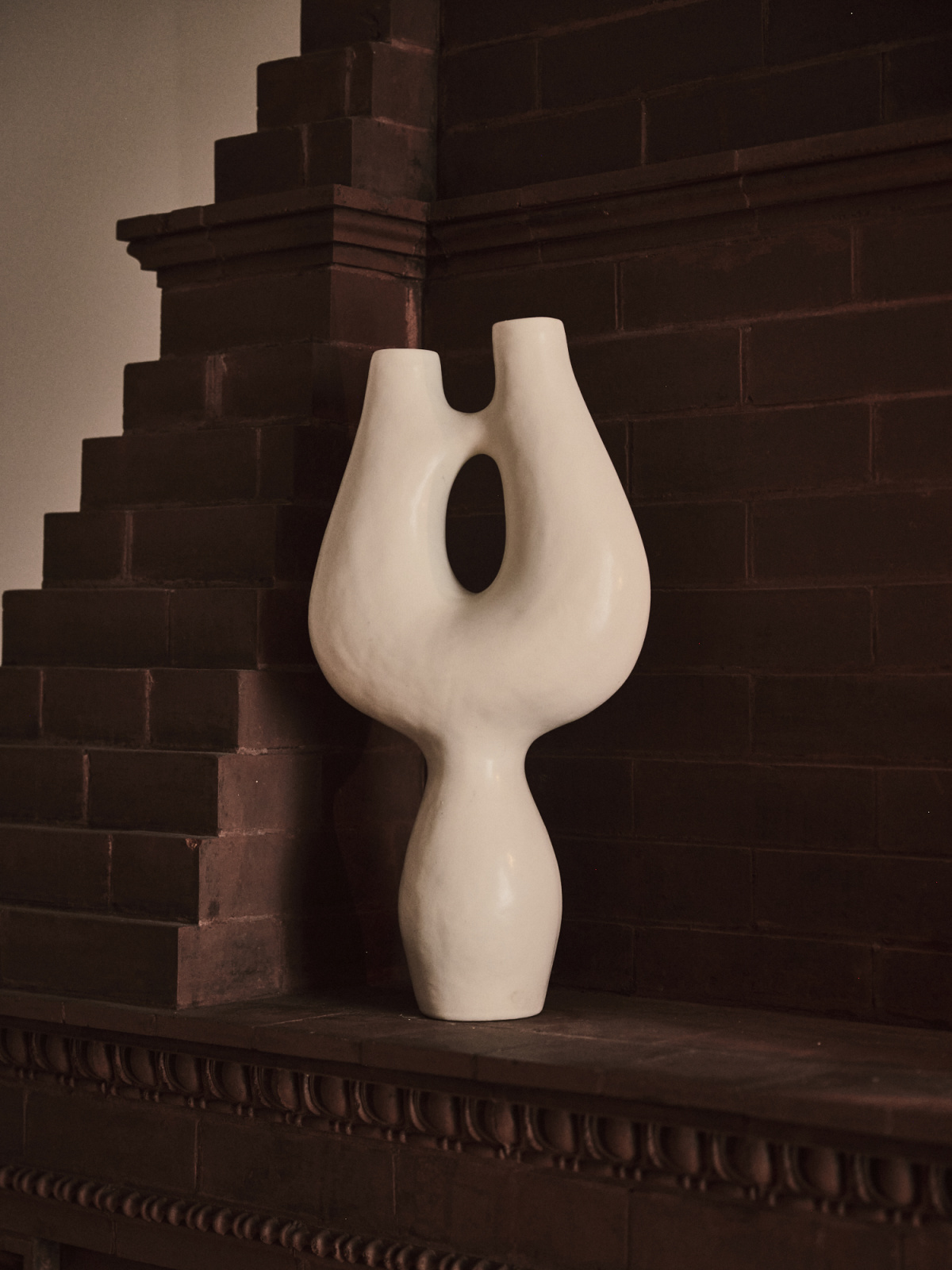
- On the fireplace, a white vessel by SIMONE BODMER-TURNER
The Denver Art Museum commissioned that piece. The original travels around the world and is currently in my gallery in Brussels. My solo show with Superhouse came a year after and that got insane attention. I showed eight or nine huge pieces. One was just in the Cooper Hewitt. The biggest piece was an armoire. I worked with a small team in Indonesia to make the pieces. I looked around New York, but unfortunately that’s not for my wallet. It’s too expensive. I had a really good friend there, and the craftsmanship in Indonesia is amazing. There are a lot of similarities with the material used in Congo, my ethnicity.
I went to Indonesia once to see how they worked and explain my stuff. For them it was a challenge because my designs are pretty wild. They weren’t used to that. It’s a very small family and we grew together through trial and error to figure it all out. It was a lot of stress, but it’s beautiful supporting locals and smaller people rather than a factory.
After that show, my first chair was acquired by the Vitra Design Museum in Basel in 2023. That was like, “OK, this is for real.”
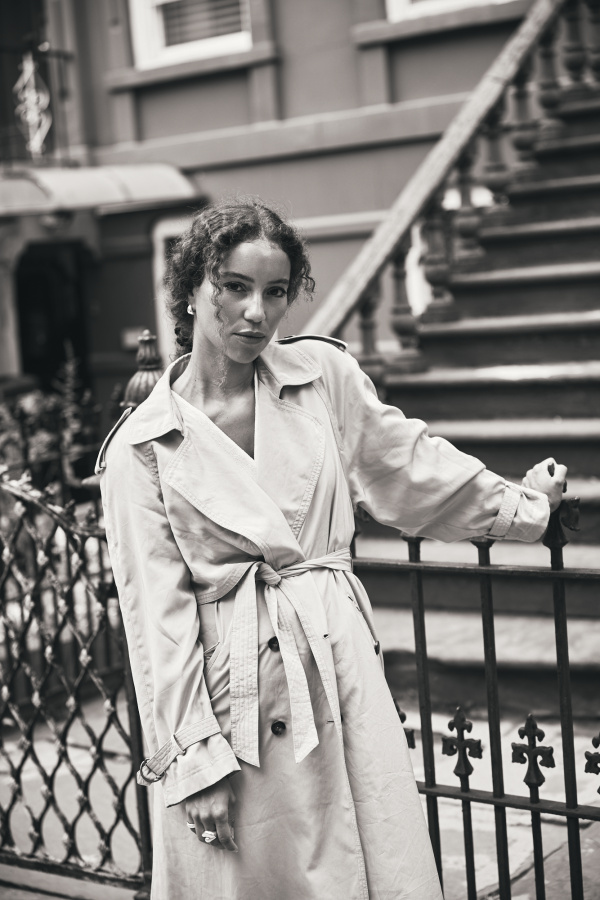
When it comes to fashion, Kim favors a mix of classic and oversized silhouettes, layering vintage basics with statement accessories. “I’m a mix between ‘70s and ‘80s,” she says.
There was an art fair in San Francisco similar to Design Miami that my gallery wanted me to exhibit in. The fair was partnering with @ART, this massive art platform on social media with 2 million followers.
When I got there, my gallery unexpectedly had me do a video interview with them. They published the following morning at 10AM, and I woke up to my phone blowing up. The video got half a million views overnight. That opened so many doors. I flew back home and had requests pouring in. There were DMs from people I never expected to hear from. I was like, “Is this real?”
I started teaching at the Parson’s School of Design in January of this year, too. For me, teaching is more than just design. The education and narrative are sometimes more important than the design itself. I want to change something for future generations when it comes to design discourse and history.
A version of this article originally appeared in Sixtysix Issue 15.