Sharon Johnston and Mark Lee’s Los Angeles-based architecture firm Johnston Marklee has built a reputation for precisely calibrated design—the renovation of Chicago’s Museum of Contemporary Art and the dramatic hillside Casa de Mont are among the highlights. Until this year they’d designed furniture only when it was permanently attached to their buildings, never as freestanding objects meant to circulate in the world.
For the duo, making that leap required the right partner. Knoll was it. When the group’s design director Jonathan Olivares reached out about a collaboration, everything fell into place.
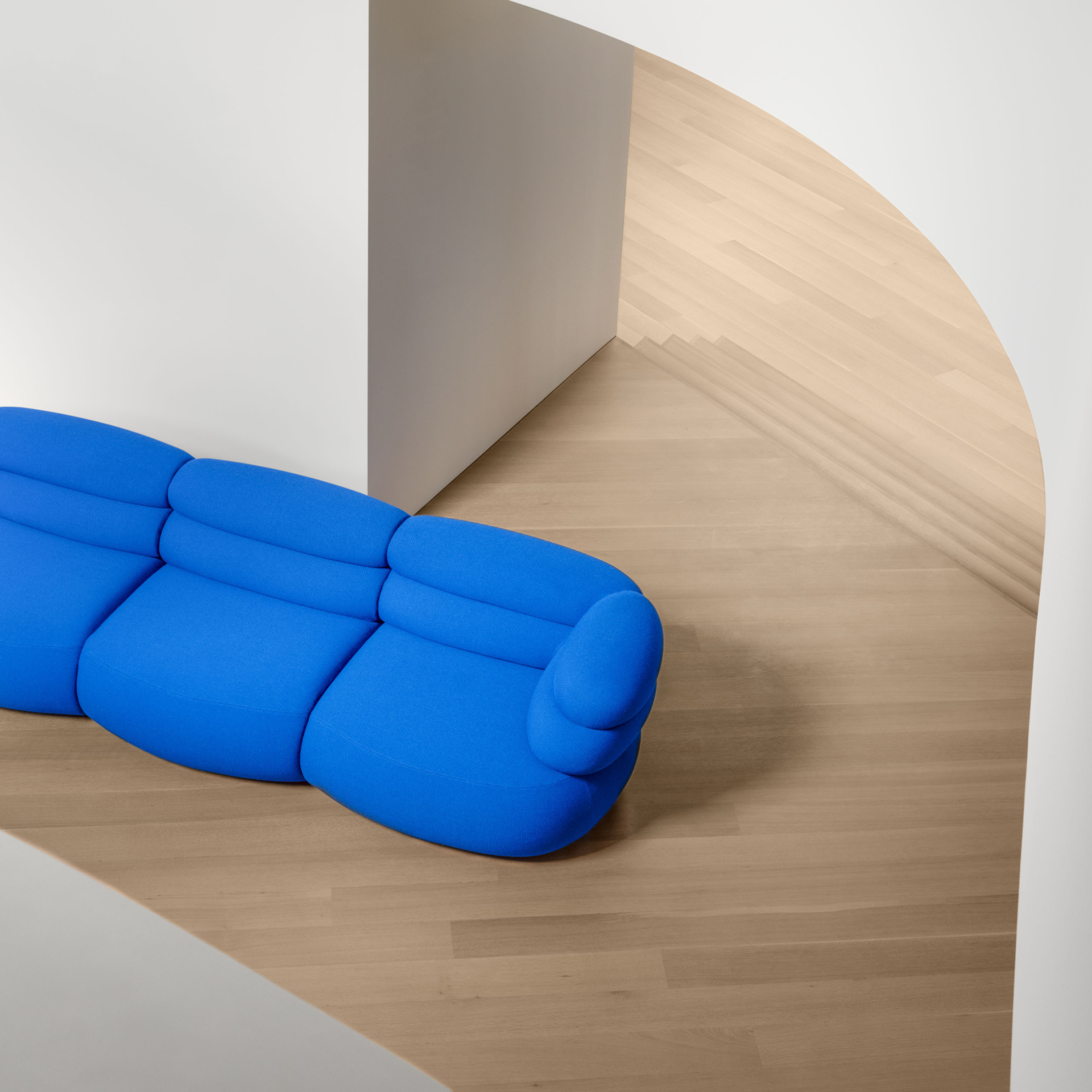
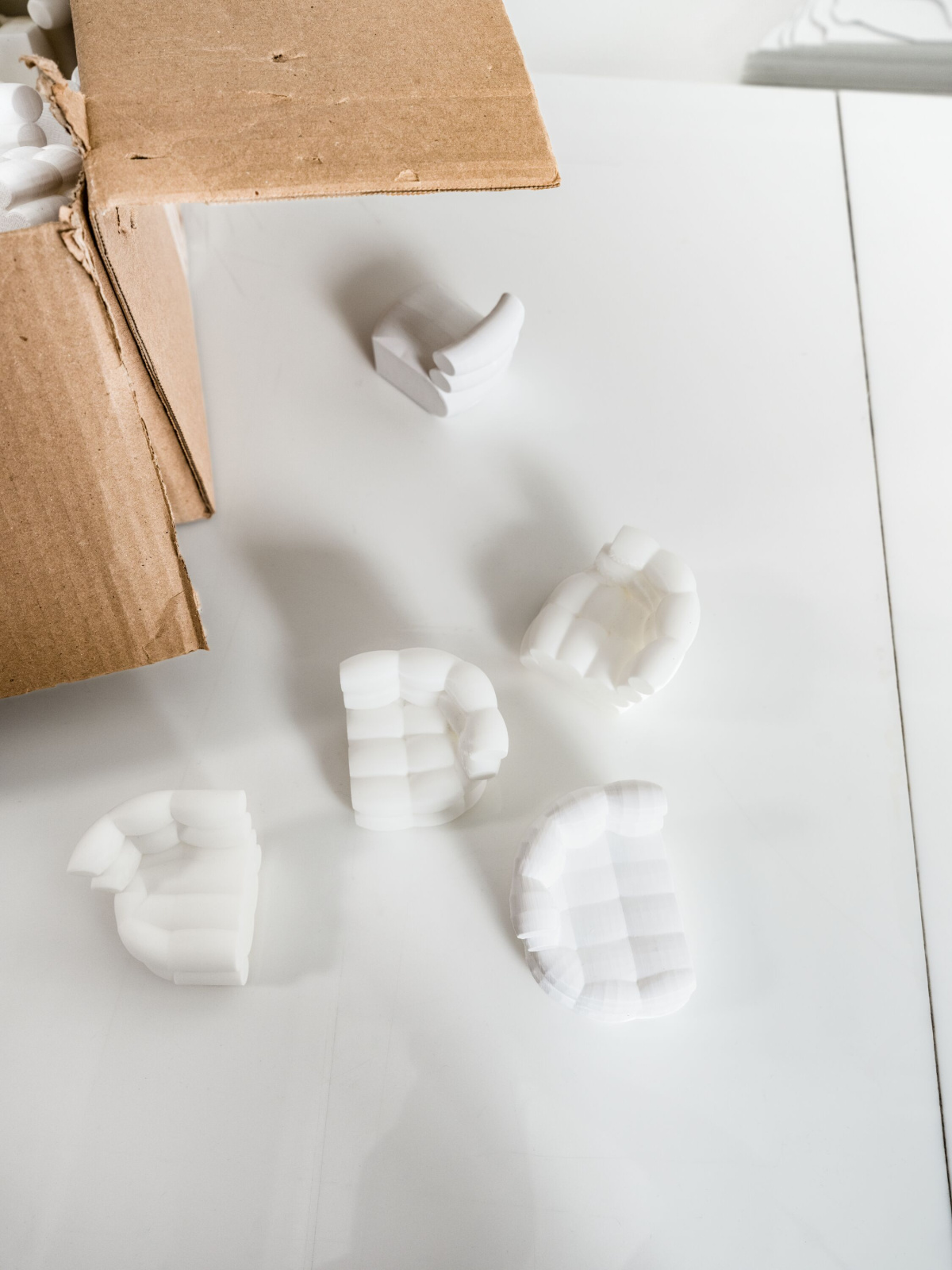
The result is the Biboni sofa, which made its US debut at this year’s Salone del Mobile. The name itself offers a clue into the design’s origin. “Biboni,” Italian for elbow macaroni, emerged from what Mark calls “the elbow problem.” Beginning with Eileen Gray’s 1920s Bibendum chair, the team studied how curved, tubular forms could bend and articulate at joints.
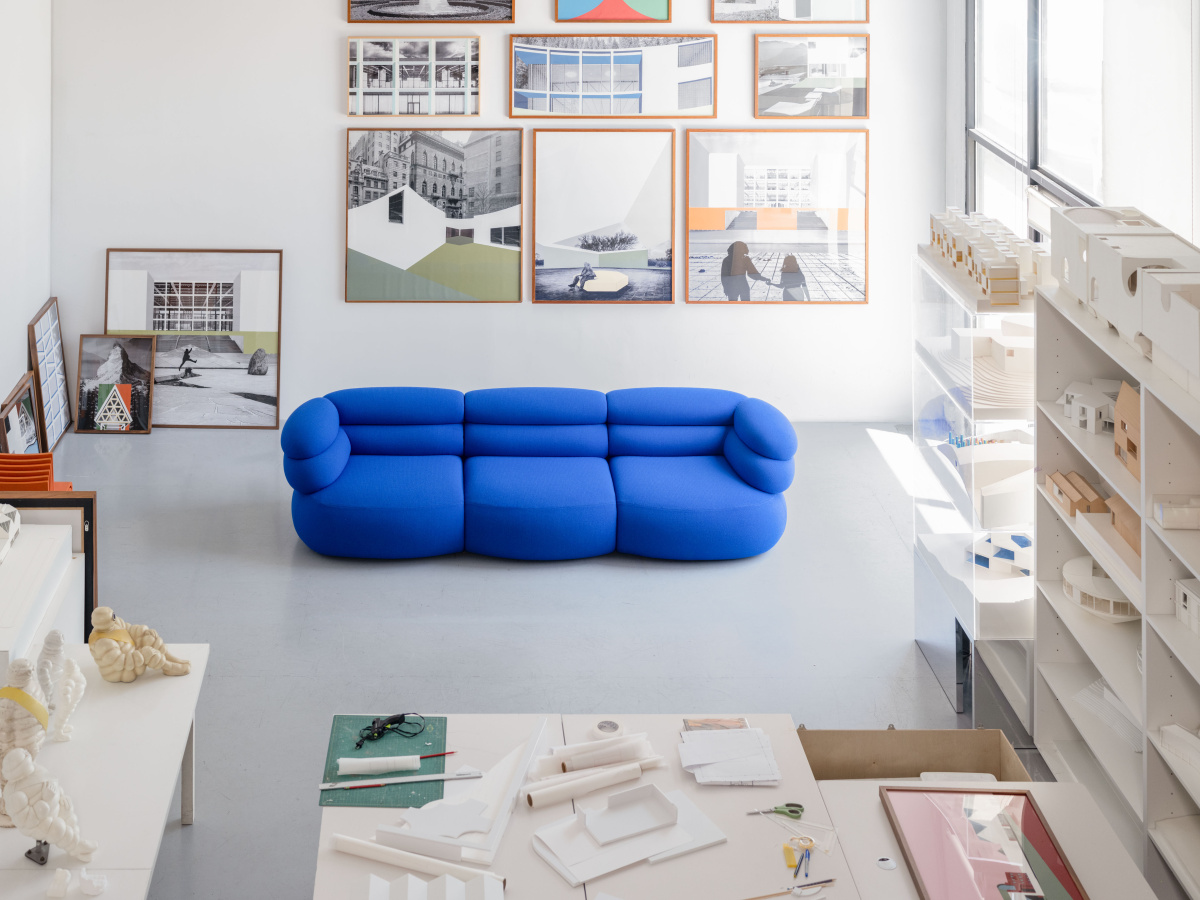
The sofa’s name comes from “biboni,” Italian for elbow macaroni, a reference to how the tubular form bends at its joints. Photo courtesy of Janna Ireland for Knoll
“When you turn a cylinder, something has to give geometrically, ” Mark says. The resulting piece, with its cushioned arms and gently reclined back, resembles both the pasta shape and bodily joints that inspired its name.
“Oftentimes sofas are pushed up against a wall and frame the space from the front,” Sharon says. “We really thought about it as being an object that is beautiful in its proportions, such that being able to see it and inhabit it on all sides. It’s friendly in the way that it encounters other pieces of furniture from other eras.”
The design brief required threading a delicate balance between historical references. On one end, the chair pulls from the upright formality of English club chairs and Chesterfield armchairs. On the other, the casual, slouchy embrace of 1970s Italian design: the Tobia Scarpa sofas, the Carlo Bartoli lounge chairs, and Mario Bellini’s curvaceous furniture.
-
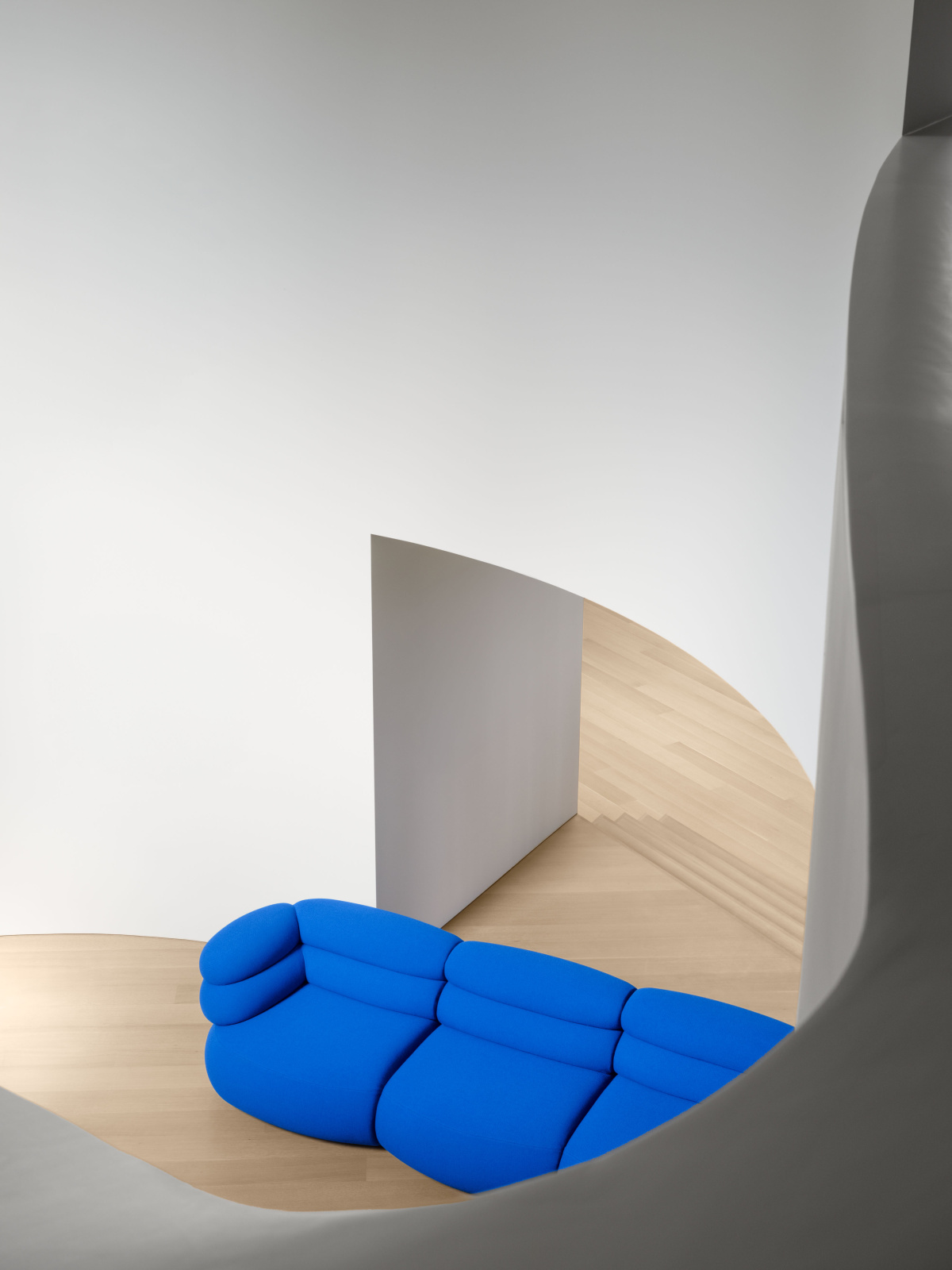
- The design balances between English club chair formality and the casual slouch of 1970s Italian furniture. Photo courtesy of Knoll
-
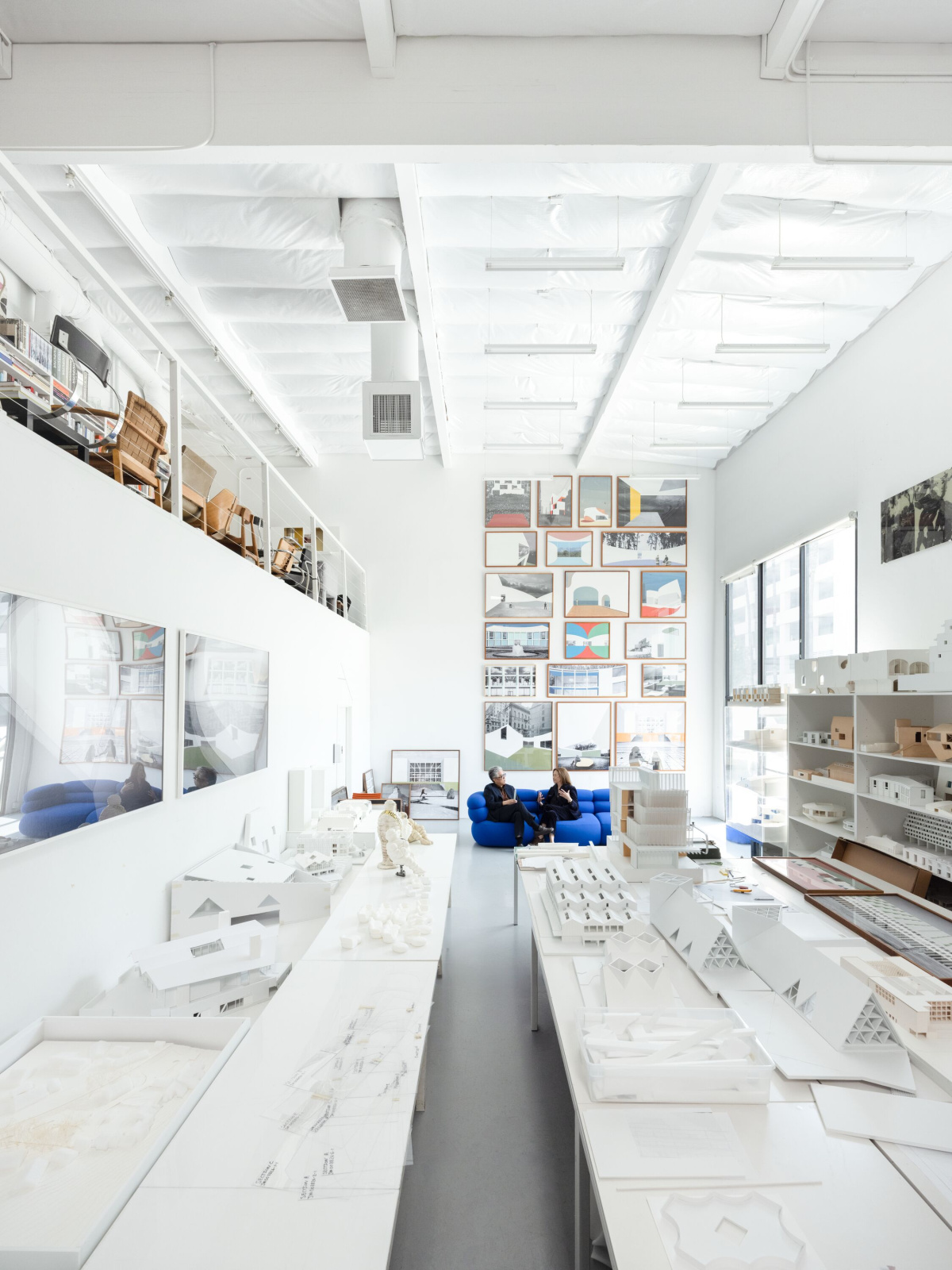
- Photo courtesy of Janna Ireland for Knoll
“We love that friendliness of the shape, but oftentimes when people sit on those sofas, we find it a little bit too slacky,” Mark says. “The Biboni aims to be friendly enough to welcome and structured enough to maintain composure. “We wanted to find something where the object looks friendly, but you can sit up slightly straighter.”
Mark also referenced a quote from British architects Peter and Alison Smithson, who observed that Bauhaus furniture was “always square in plan when you look from above, and dynamic in section.”
-
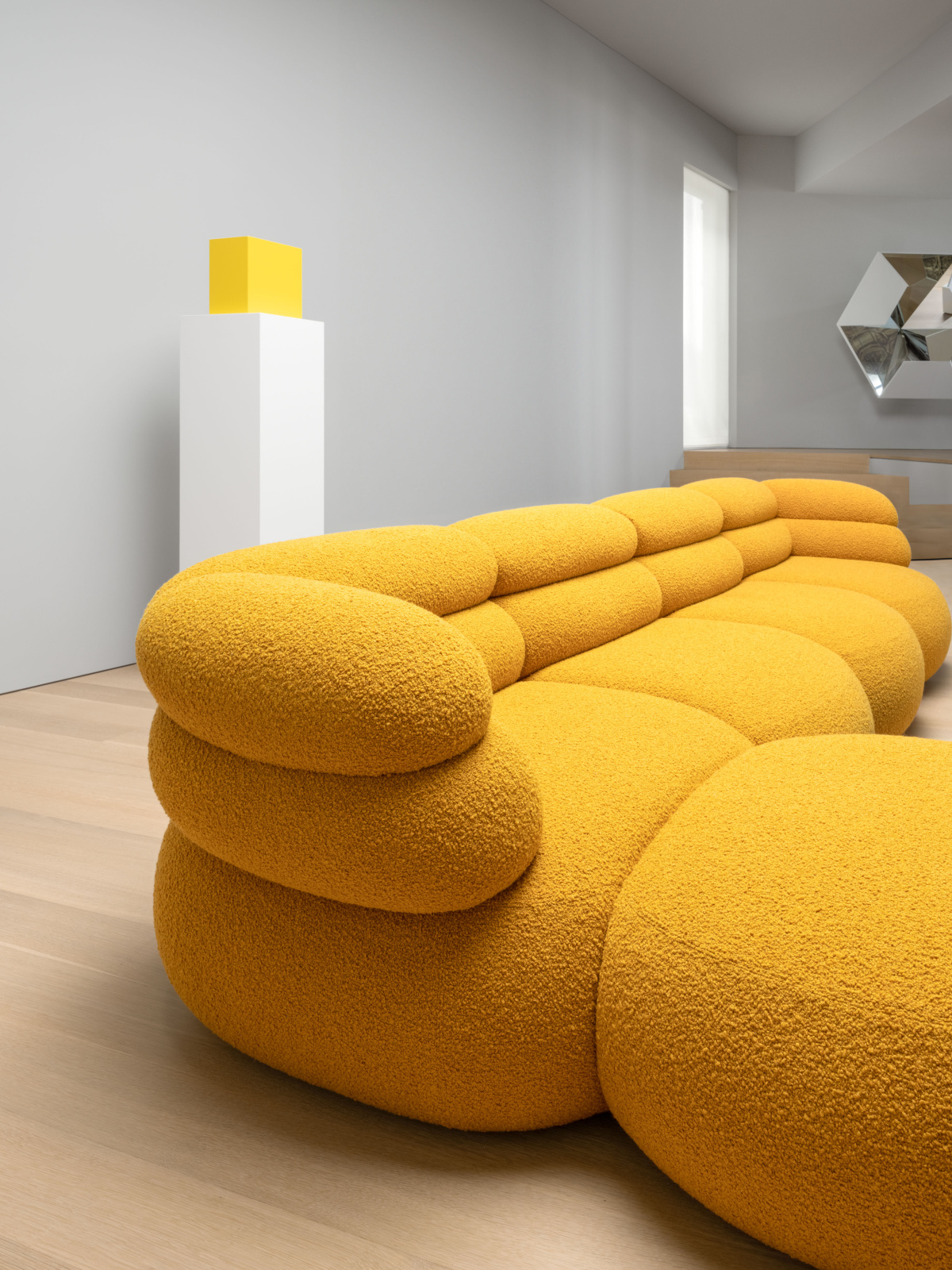
- The sofa follows a broader trend toward rounded, embracing forms in contemporary interiors, rejecting the hard edges of architectural furniture. Photo courtesy of Knoll
-
- Photo courtesy of Janna Ireland for Knoll
“They said it wasn’t until the Eames with its more curved form that furniture really started belonging to the people,” Mark says. Though the Biboni sits in the middle, neither purely architectural nor purely personal, but something that works for both body and room.
Moving from buildings to sofas also required Johnston Marklee to confront new constraints. The curves of the sofa’s joints demanded four-way stretch fabric that could bend in multiple directions without puckering or seaming.
“Finding a fabric that is flexible and stretchable in both dimensions is more limiting,” Mark says. “Because of this elbow problem, we have a complex curve that curves in both directions. To find a material that works in a convincing way took a while.”
Another surprising challenge was preventing Biboni’s dynamic form from tipping over.
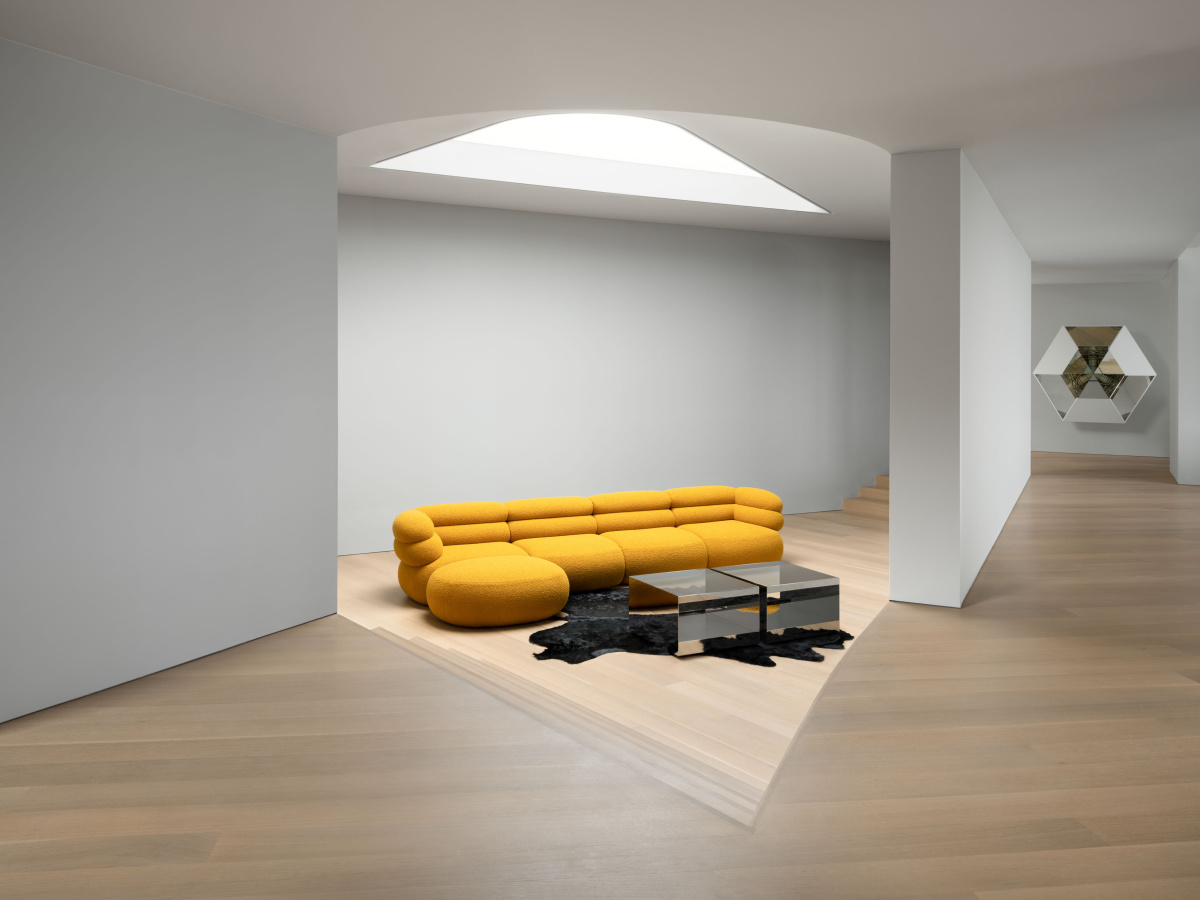
Four-way stretch fabric was essential to wrap around the sofa’s complex curves without puckering or visible seams. Photo courtesy of Knoll
“We wanted it to feel sculptural and look as if it’s leaning back, but we needed to calibrate that against the potential for someone to sit on the back and overturn it,” Sharon says. “There’s a dynamic equilibrium in its visual weight and its physical tectonic, such that it feels a little bit unstable, yet it’s very much rooted to the ground. I think those are qualities that come up often in our work. Objects are physically perceived one way but behave in another.”
The Biboni arrives at an interesting moment in furniture design, one that might be called post-mid-century-modern but still deeply connected to that era’s look and feel. It shares DNA with Eileen Gray’s 1920s tubular experiments and the sculptural Italian work of the 1970s. If there’s a style guide for the Biboni, it lives somewhere between modernism and contemporary softness.
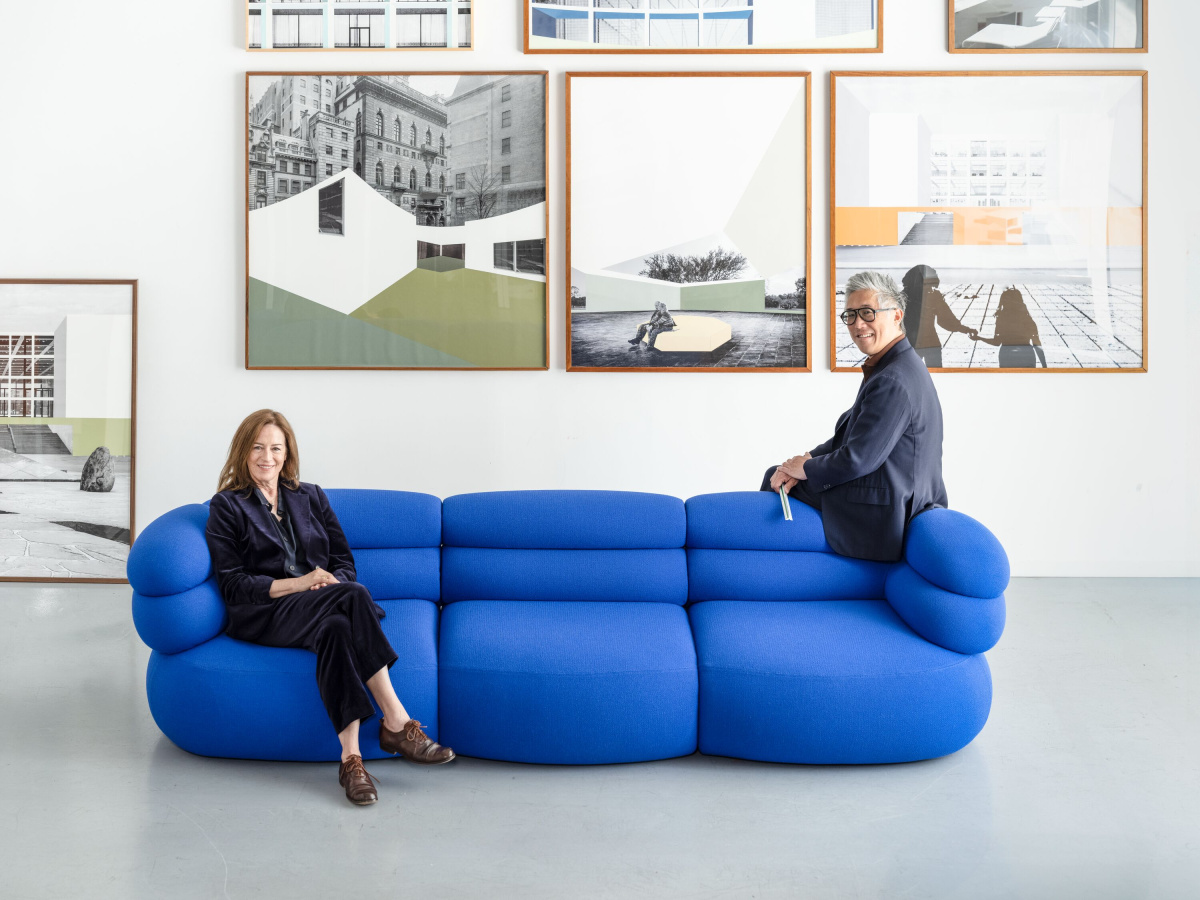
Biboni is designed to look good from all sides, not just pushed against a wall. “It’s friendly in the way that it encounters other pieces of furniture from other eras,” says Sharon Johnston. Photo of Sharon and Mark courtesy of Janna Ireland for Knoll
Biboni also follows the recent comeback of rounded furnishings in modern interiors, and the move away from hard-edged architectural furniture. It responds to the desire for pieces that photograph well on Instagram too, with its sculptural, all-sides-visible quality. Most importantly, it feels good to live with.