Photographers often shoot for a year or more to build a show. Jimmy Chin had 36 hours. He was finishing a film and a book at the same time, so the shoot had to move fast. He flew into the Bugaboo Mountains of southeastern British Columbia with Conrad Anker, his mentor and climbing partner of 25 years, and shot everything on an iPhone 18 Pro.
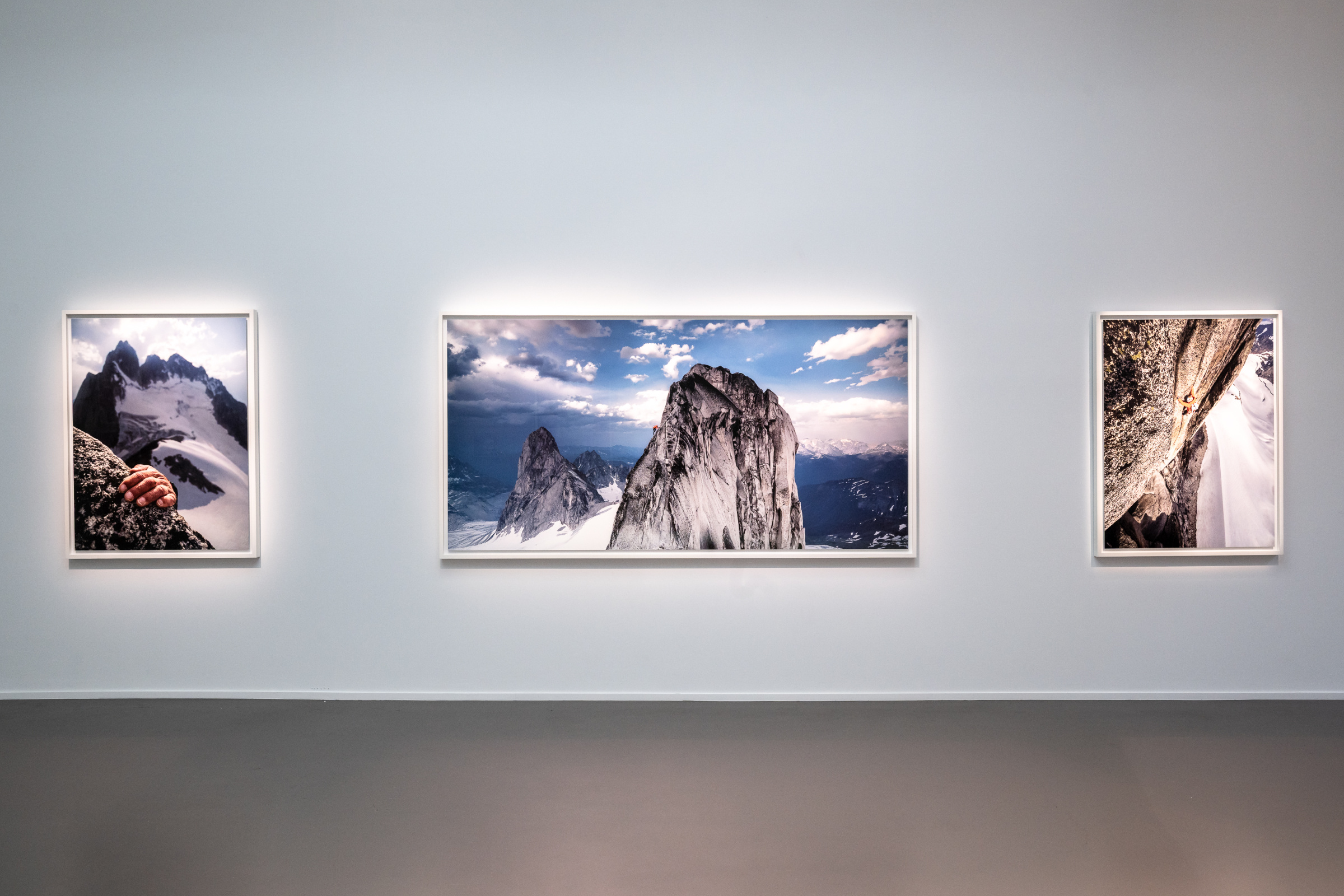
The pictures are his contribution to “What Holds Us,” Apple’s traveling exhibition of photographs shot entirely on the new phone. Kathy Ryan, the former longtime director of photography at The New York Times Magazine, curated it around three artists: Jimmy, Alex Prager, and Jack Davison. It opened in New York on September 18 and travels next to London and Shanghai.
Kathy’s partner inside Apple was Pamela Chen, the company’s chief aesthetics scientist for Camera and Photos. “I’m just a nerd, and there’s a gang of nerds that work on this camera,” she says. “I mean that in the most loving way.” Before Apple, Pamela was editorial director at Instagram and a senior photo editor at National Geographic, which is where she met Jimmy. She and Kathy set the brief together, and Pamela credits Kathy with bringing him in. “When Kathy works with an artist, every artist becomes more fully themselves. Jimmy said this himself in the gallery during one of the talks.”
The brief for the exhibition was open, all three artists worked on the same phone, and each interpreted the title their own way. “Everything that he did was what he would have done in his personal practice,” Pamela says. “It was literally the same iPhone that you or I would go to the Apple Store and buy.” Jimmy naturally choose to head back to the mountains, to a place he loves that the rest of us “mere mortals” as Pamela puts it, will never reach.
-
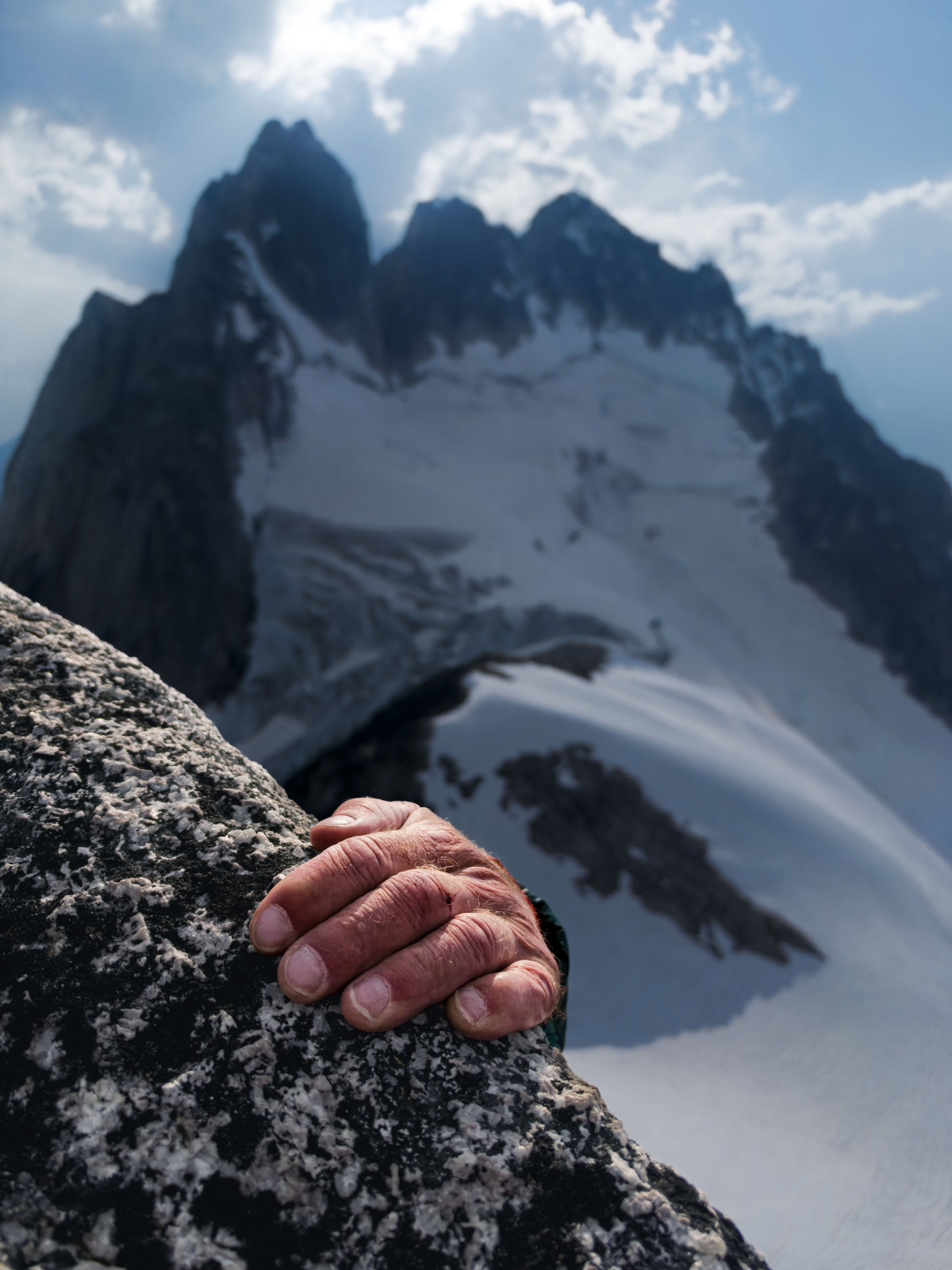
- Conrad Anker’s hand on Bugaboo granite, the frame Jimmy could only make by climbing ahead of him.
-
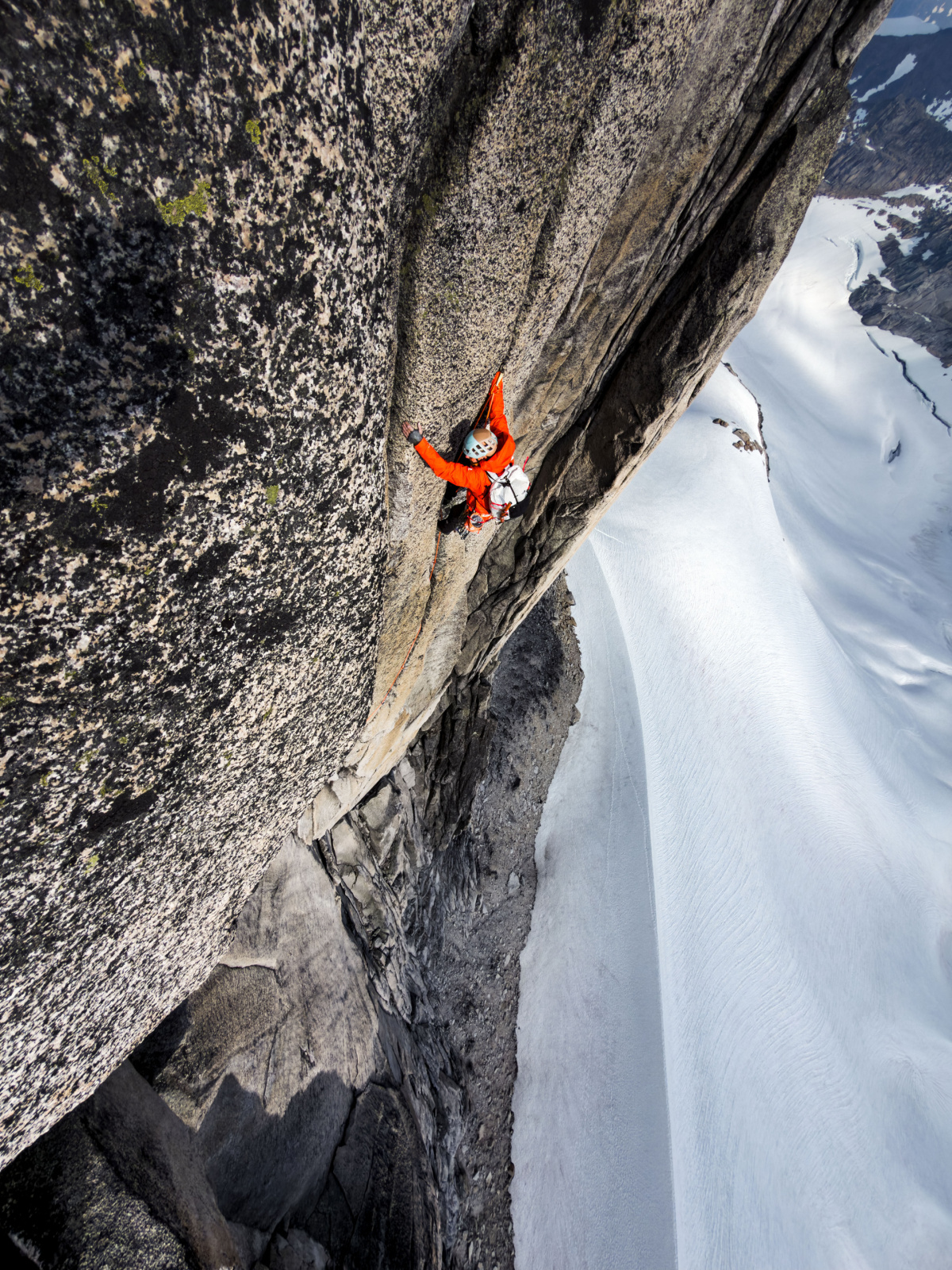
- Conrad Anker on a Bugaboo face, the snowfield falling away beneath him. The range sits inside Bugaboo Provincial Park in the Purcell Mountains.
I ask Pamela which picture anchors Jimmy’s part of the show. That’s Kathy’s call, she tells me, but when she, Kathy, and Jimmy went through the take, one frame stood out to her: Conrad’s hand gripping the rock as he climbs. “Something that’s so hard for us to imagine is that for that photograph, Jimmy has to be ahead of Conrad. He’s already scaled this mountain.” The show’s theme is connection, literal and metaphorical, and that frame is the literal version. “It’s like a treasure hunt. You pluck it out of a sea of pictures,” she says. “You have your vision, you have your skills to get you there, and then you have the tool that makes the picture in the moment. That’s the magic of photography. You can’t plan everything. You have to be open to the universe to provide.”
The film and the book Jimmy was racing to finish both arrive this fall. Everest: The Other Side, which he directed with Elizabeth Chai Vasarhelyi for National Geographic Documentary Films, follows the ski mountaineers Jim Morrison and Hilaree Nelson and their shared dream of climbing and skiing the direct north face of Everest. Making the attempt meant asking China to reopen the north side of the mountain. The film premiered at the Venice Film Festival this month and opens in US theaters October 30. The book, Rules to Live By, collects 10 conversations about what matters, with subjects including Yo-Yo Ma, Simone Biles, Yvon Chouinard, and Ridley Scott. Celadon Books publishes it September 29.
Jimmy is now 52. He spent more than 20 years on The North Face athlete team and won the Academy Award for Best Documentary Feature for Free Solo in 2019. We spoke the day before the show opened.
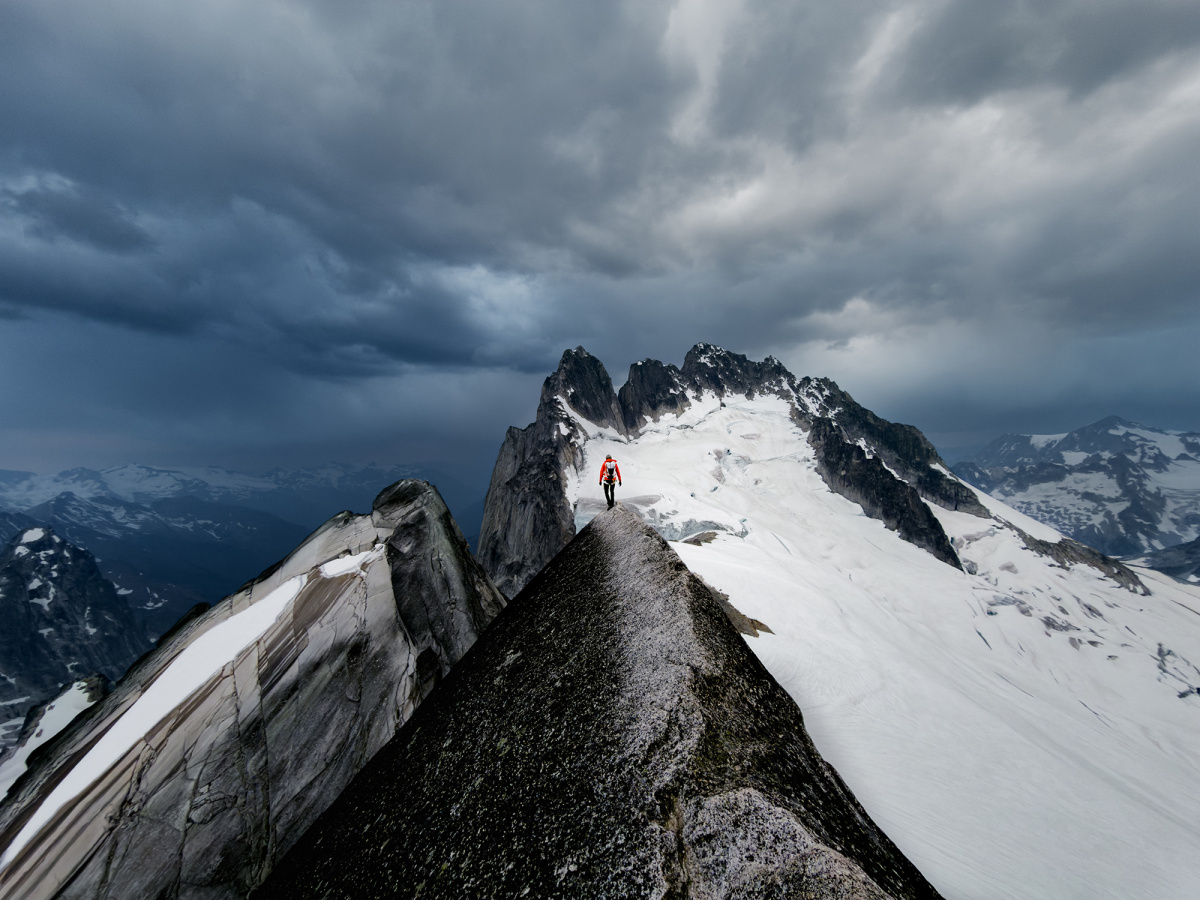
Conrad Anker walking off along the ridge, the picture Jimmy calls the main image of the show.
Your mom once told you there was no word in Chinese for what you do. Is there a word for it now? How do you answer when people ask?
I’ve decided that there isn’t really a word, and that’s better. Tying your identity to one thing is something I’ve just never found to be useful. We’re made up of all the pieces of the things that we do and the experiences we have, and I feel like that is what gives a person depth. I never want to corner myself with a particular identity. Taking all of my experiences collectively is really important in what I create, because that’s the perspective that brings the point of view my work expresses, whether that’s in film or photography or in writing. I think it’s a strength not to have a name for my job.
I’m Chinese-American, and I also grew up in a very white town. I thought having this other culture was almost a weakness, especially when there aren’t a lot of people like you around. Later in life I moved to Beijing, and the experience brought a flood of emotion and inspiration that still powers how I see and move through the world. Did you have a similar experience? Especially on the new film, working with Chinese partners?
That was an incredible experience, because there’s no way we could have pulled off the climb or this film without support from them. But what you’re talking about, I grew up in Mankato, Minnesota. We were the only Chinese family around, and I was just trying to fit in for the longest time. Like you said, I thought it was a weakness or something that I had to cover up. As I got older I found it to be a real strength, and not only a strength but something that I eventually really leaned into. Growing up living between two cultures, I felt like I was always trying to bridge a gap of understanding. And it turns out that’s what I do with my work. I’m trying to bridge this gap of understanding between what people’s perceptions are of this whole climbing community, this world of high-altitude alpinism, and what it really is. In the end you’re really just trying to connect people and share a different point of view that might contribute to somebody’s understanding of the human experience. If I can be broadening that sense of what the human experience can be, that’s something I’ve fallen into and embraced and try to express in my work, whether that’s in film or in photography or in any of the storytelling, visual, written, or motion.
This show is really about that idea. In some ways it’s a culmination of all of my collective experiences as a climber, as a visual storyteller, as a thinker, intersecting these ideas of human passion and meaning and purpose and our connection to the natural world. The mountains are a place that have given me so much life, pinnacle experiences, deep, deep friendships. And yet they’ve also taken a lot of life away from me. I wrote it in my artist statement, but nature is the great neutral teacher. It doesn’t judge one way or another. It gives life. It takes life away. It has an intrinsic value just in its own existence. I’ve always loved what happens when you intersect humans and human meaning into a place like that. So this show is trying to bring people into that mindset and experience.
It’s been an extraordinary journey to create it. Kathy and Pamela are both people I’ve worked with in the past that I really admire and respect. When they both came to me about this project, there was no way I could say no to either of them individually, and certainly not to them together. Kathy is such a legend and mentor. I’ve shot for her for The New York Times Magazine, and I’ve shot for Pamela. I’ve known her since my National Geographic days. This is really the first time I’ve been asked to just shoot a show, where I had no boundaries. Normally I shoot editorial and cover a story, or I’m shooting commercial work. I’ve never just gone out with the intention of shooting a show. At this point in my career, to be able to do that was really special.
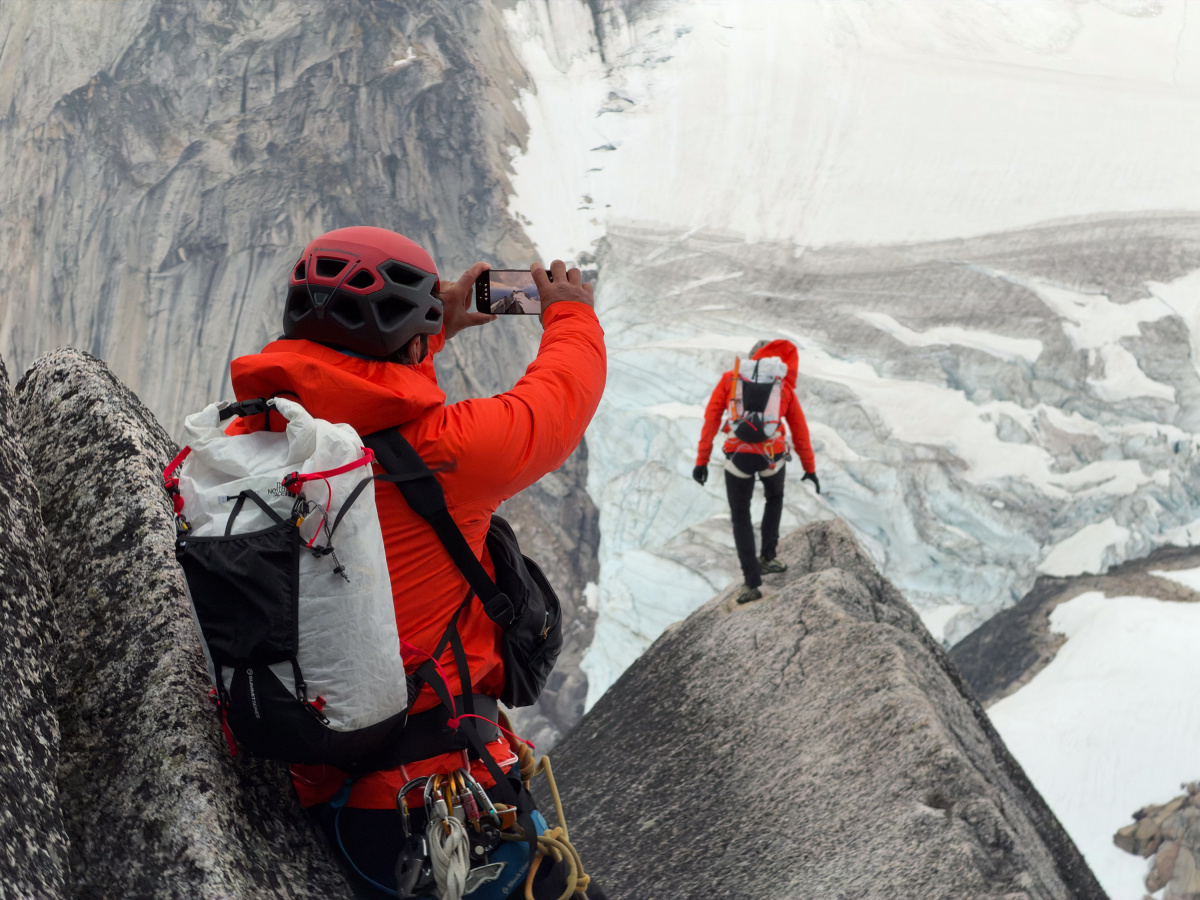
Jimmy Chin frames Conrad Anker on the ridge with the iPhone 18 Pro. Both men are longtime The North Face athletes, and Conrad led the brand’s climbing team for 26 years before stepping down in 2018.
Sports and nature are two of the things with the strongest ability to cross boundaries, and you’re right at the intersection of both. In the press materials you talk about working with the Chinese authorities as a great experience, which is not a dialogue we hear much in the Western press. What was it like working with your Chinese teams?
To film in China you have a Chinese production partner. What ended up happening is Mount Everest had been closed for many years, five years, from the COVID lockdown. We were asking them to open the mountain for our expedition and for our film project. And the north face of Everest, which is where we were filming and climbing, hadn’t been open for maybe even two decades. So it was not an insignificant ask. I’m an eternal optimist, but that seemed pretty outlandish as an ask. And we really had people in China get behind it, get behind this idea, and also get behind showcasing the beauty of the mountains there and the north side of Everest. It would not have been possible without that support.
It was an actual collaboration in a lot of ways, and I think sport and culture is an opportunity to be a bridge, to change the dialogue. Because at the end of the day we’re all human. We all have the same aspirations and dreams, and it’s easy to lose sight of that given a lot of the narratives put out in the world.
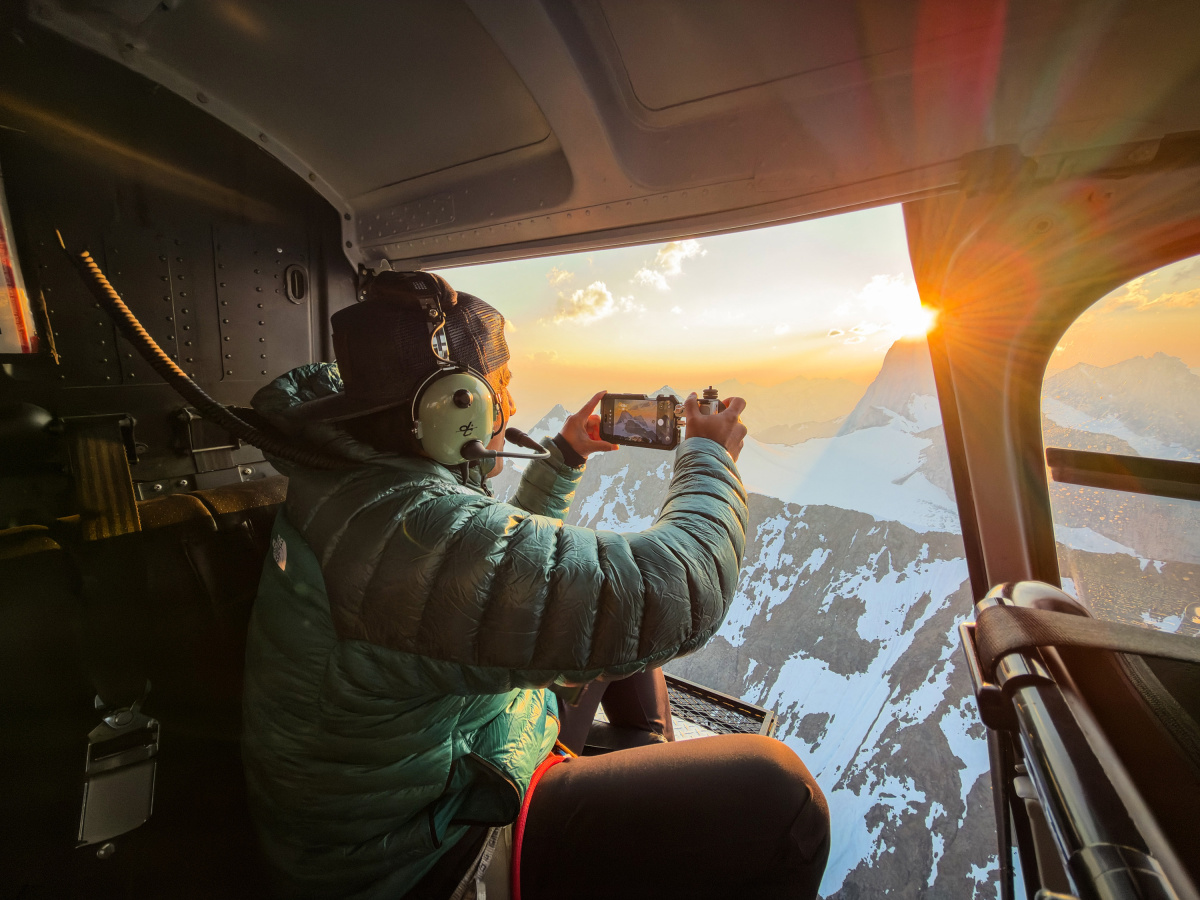
Jimmy Chin, headset on, shooting from the open door of the helicopter as it flies into the Bugaboos.
It’s a completely different story. Everyone is together in awe of this mountain, and the cultural differences are secondary.
And the film delves pretty deeply into that. Like I said, it’s about the human experience. Wherever you’re from, whatever your background is or your religious beliefs are, it’s about love and loss and grief and dreams. These are human experiences.
Coming off of that, thinking about these massive topics that are so intrinsic to your soul and your career, then translating them into a select group of images can’t have been easy. How did you start curating and cutting the show down? What was Kathy and Pamela’s involvement?
They gave me a blank canvas. They were like, here are some ideas, but we want you to interpret this idea of what holds us. It just came to me instantly. I knew exactly what I wanted to do. I wasn’t exactly sure where, but I had identified two places in my mind pretty quickly. I wanted to go to a place that held a lot of meaning for me, that I’d visited before, and I wanted to go out there with someone I had a really deep friendship with and shared experiences with in that place. So I chose to go with Conrad, who has been a mentor and climbing partner for the last 25 years. I’ve learned so much from him, and I’ve learned so much from being in the mountains. That intersection of a person and a place that has really taught me so much was something I wanted to capture.
I’ve been doing this long enough to know that I usually have some ideas I’m going for, and in the process of trying to create those images I try to leave myself open to the experience, to being present and embracing whatever Mother Nature is giving us, whether that’s the weather or the conditions and the terrain. And always making sure to look behind me. I get so focused on a shot. I’ll finish taking the shot and turn around and be like, “oh my gosh, the shot was really behind me.” From years of experience I was just really open to what I was going to bring back. I knew what I wanted the images to do and how I wanted people to feel. Over the years I’ve loosened up my process to let these things happen and find them as they happen.
“Nature is the great neutral teacher. It doesn’t judge one way or another. It gives life. It takes life away.”
I will say that shooting on the iPhone is extraordinary for that sort of process, because it really opens up how much time and space I have and how quickly I can grab something I wasn’t planning. It’s so much more spontaneous for me, and I think you can feel it in the work.
I didn’t have very much time, because I was finishing a film and finishing a book, and I knew I had about 36 hours on the ground to make it happen. A shoot like this is normally complicated. There’s a lot of logistics. I had to get into the high alpine really quickly, and I wanted a diverse set of images that would carry a show. Oftentimes people shoot for a year or more to build a show. I had 36 hours on the ground. But I like that sort of pressure. It makes me very decisive. I was just moving, capturing on the fly, and that made it a really exciting shoot. We were just moving through terrain.
I wanted to capture Conrad in his place, but I also wanted to capture these isolated details of the place, which are easy to miss, especially when you show up in a really overwhelming landscape like that. In my mind it’s a lot like life. If you don’t pay attention to the things that are beautiful and that bring you joy and meaning in your life, they’re easy to miss. It’s the same in the landscapes. When you pull them out and isolate them and look at the infinite creativity of nature, there are these moments you could never imagine or come up with. So I did want to get those moments captured, and there’s a triptych series of images of that detail. That’s part of the reason we go there. We find so much joy in seeing that beauty and creativity in nature.
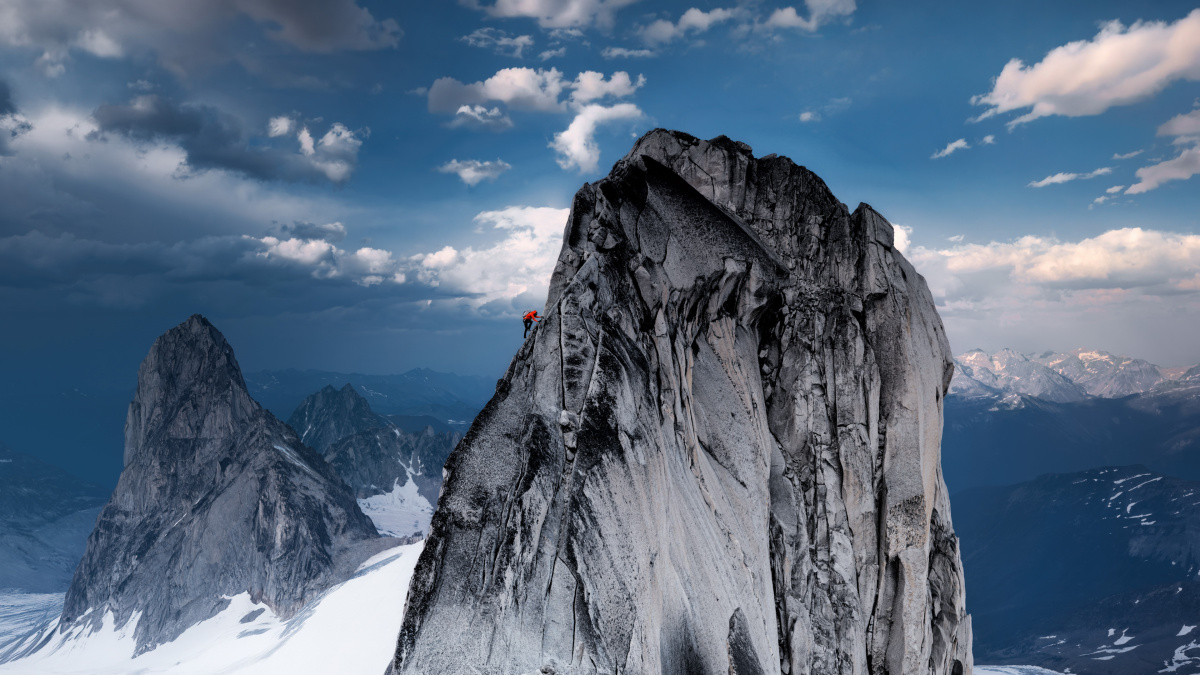
Conrad Anker, a red dot near the top of a Bugaboo spire.
When you get off the mountain and start going through the images with Kathy and Pamela, did they see anything in the pictures that you didn’t?
Our process is very similar to what I’d done with them before. I don’t tell them what my favorites are, and they don’t tell me. We each do our own pass. We’ve all been doing this for a while, so you find those intersections, the ones where everybody immediately agrees these are standouts. Then I have some where I’m like, well, I really like this, and they have a few they really like, and you start to talk through it. The main image, the one of Conrad walking across that ridge with the leading line, all these lines are leading to Conrad walking off. I don’t remember the word for it, but there’s a German word, Rückenfigur, for landscape shots where you have the back of the subject to you, because it allows you to step into their space and experience it from that point of view. That one was immediate, and one of my favorites from the shoot. Then we had the abstracts we were all trying to go through, because there were quite a few that we all liked. And then we came up with the last three.
“I’ll finish taking the shot and turn around and be like, ‘oh my gosh, the shot was really behind me.'”
Looking at the pictures of Conrad, I think most people would read them as landscapes because he’s so small in the composition. But if you think of them as portraits, you’re suddenly in this terrifying but beautiful environment, and the picture reads differently. Were you thinking of those as portraits of him, or shooting with a landscape mindset first?
I was thinking of it as a portrait of both. It’s a portrait of the landscape and it’s a portrait of Conrad, and it’s the intersection of these two, this person and this place. In a way you could say it’s truly an environmental portrait. This is how comfortable he is in that space after a lifetime of refining this craft of his, of being in the mountains and being present. It’s not just the climbing, it’s that entire sense of his being in that space. It’s so calm. He’s so familiar with it. That takes a lifetime of being in those mountains. But it is an interesting way you phrased it, because it is a portrait of Conrad.
There’s another photo where the caption talks about using the telephoto for a detail of the side of the mountain, the snow and the ice with the light perfect. It’s a photographer’s photo. You see it and right away you think, the light’s perfect, the texture is amazing. It’s funny to think about being in an environment where you’re thinking about survival and then being almost bothered by the photographer’s eye. “Oh wait, there’s a killer shot right here.” Is that ever a distraction?
I always say you’re a climber first up there, because you have to check those boxes so you don’t fall off the mountain. Climber first. But when you have refined it enough, which is why a lot of my crew on my shoots are world-class climbers, you’re so comfortable there. The more comfortable, the more efficient, the faster you can move, and that opens up the aperture for how much you can shoot. So it’s less of a distraction in that moment, because I have the space, from spending a lifetime in the mountains, to see it and to be able to capture it. It’s so ingrained in my process and who I am now, because I’ve been shooting in the mountains for over 25 years. It’s part of my process of being in the mountains and what I enjoy about it. I’ve been on so many hard expeditions, and in these moments, to have the space to shoot and capture something like that is the ultimate experience for me. One of the great experiences I can have up there.
“There’s always a cost to risking too much and risking too little.”
I’m excited to read Rules to Live By: How Extraordinary Lives Define What Really Matters, out September 29 from Celadon Books. The people you chose are fascinating, and I’m curious what Yo-Yo Ma has to say right now.
When you were talking about identity, that chapter, I was basically paraphrasing what he and I talked about. He was always like, people were always trying to put me in a box. And then when I finally realized that all of this collective experience and history and culture that I have, what some people call baggage, is what is unique about what I put out in the world. It’s that multiple perspectives that allowed him to bring out the Bach cello suites from his point of view.
In Chinese culture your 50s are often when you first become the expert, the first decade where you’re allowed to take on the role of someone who actually knows what they’re doing. The book is about what matters, and you’ve had this stretch with the film, the exhibition, and finishing the book. How are you answering that question right now, what really matters?
That’s a very big question. But in terms of the work that I do, one of the things I experience in the mountains is that it gives you so much life, but it also takes away life, and your mortality is something that you examine often. I think people tend to shy away from that, but I think it’s really important, a very important perspective to have in terms of the choices you make in your life. Like the book addresses, none of us are getting out of this alive. Examining your own mortality has been really meaningful in terms of how I make decisions and how I spend my time, because it makes you focus on what really matters. How are you going to spend your time? You can’t earn it back. It’s finite. A lot of the questions in the book revolve around that idea, because a lot of the people in it are later in their careers and have been through it. Through those experiences, to get to where they are, they’ve had to examine what matters, because there’s always a cost to risking too much and risking too little.
The question I opened with, the one about there being no word in Chinese for what Jimmy does, I put to Pamela as well. “There is not a word in Chinese to describe what I do either,” she says. “But if we could only achieve it if we could define it, then we probably wouldn’t have each found this life that suits us so well. If I were to describe what Jimmy does in Chinese, it would be this proverb: 天马行空 (tiānmǎ xíngkōng), which literally translates to ‘a sky horse flying through space,’ and evokes limitless imagination and no boundaries in any direction. That’s Jimmy Chin.”
“What Holds Us” was on view in New York September 18-20 and travels to London and Shanghai in the coming months. Everest: The Other Side opens in US theaters October 30. Rules to Live By is out September 29 from Celadon Books.