If you’ve been to Miami Art Week, you probably know the feeling of sitting in the back of a car inching along the causeway, watching your ETA slide back later and later. The battle between an overcommitted schedule and total gridlock is simply part of the Miami experience, and this year was no different. When I finally reached Pride Park, the 20th edition of Design Miami was there, steady and composed as if it had been calmly waiting the whole time.
Over the years the fair has managed to hold on to a rare sense of focus and meaning, which is part of what makes it stand out from the showy, often illogical chaos of the rest of the week. It’s the kind of scene that might have you saying, “Look, a once-famous DJ is celebrating art and culture with an international bank by eating raw fish in a pop-up library barefoot.”
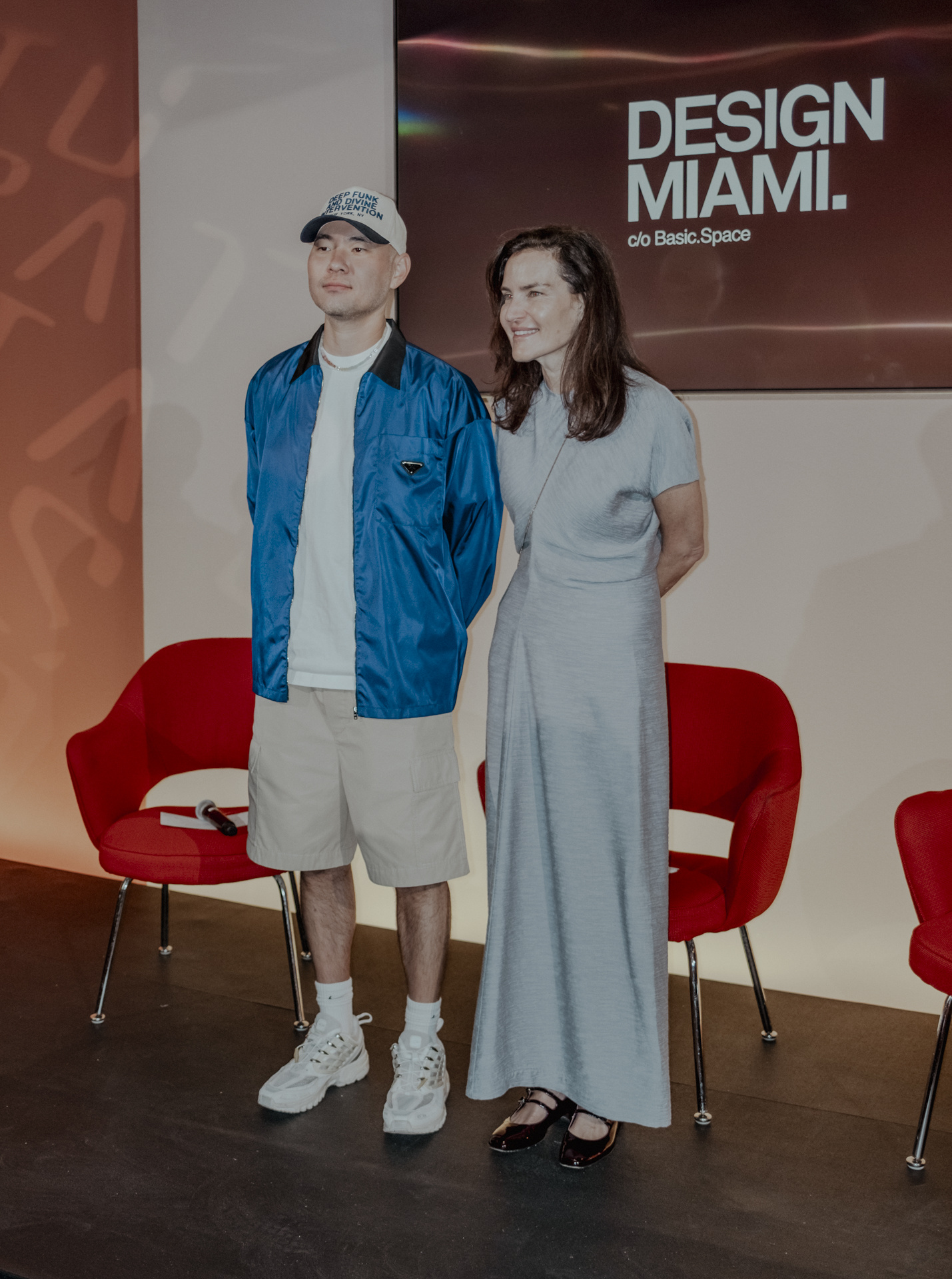
That calm might well come from the fair’s CEO, Jen Roberts, who has been steering Design Miami for the past 11 years. For someone leading one of the most important collectible design fairs in the world, Jen is relatively quiet, a somewhat shy public speaker, and maybe most surprising of all, an attentive listener. After the annual press conference, where she introduced this year’s curatorial theme, “Make Believe,” and announced a new partnership with Alserkal to bring Design Miami to Dubai in 2027, we met in the Collector’s Lounge to talk about how she arrived in this role and how she imagines the future of design.
Chris Force: Before we discuss Design Miami, lets talks about Design Miami Paris. We were talking earlier and I think Design Miami may be the only American-based design fair to take place internationally. How was the Paris show? Are you splitting your time between Paris and Miami now?
Jen Roberts: I live in Paris most of the year and come back for a few months for the shows. I’m really loving it. I feel like I have more balance than I’ve ever had. The value of the creative market in Paris, plus being exposed day in and day out to beauty, thinking, and creativity, is amazing.
I think it’s interesting because, intentionally but almost naturally, we set out to have the fairs become a reflection of their host cities. Obviously, there’s a lot of creativity that comes out of each city, but more so, if you want to create these communities and then travel, why travel if you’re not going to experience something different? You don’t want to see the same material everywhere you go.
Paris is so French, so Parisian, so elevated. It’s like haute couture design. And Miami is such a reflection of this city. The vibrancy, the multiculturalism, the fun that’s meant to be had, the contemporary aspect of it. It naturally unfolded that way. We set out with that intention, but we didn’t have a very formulaic way of how we were going to do it.
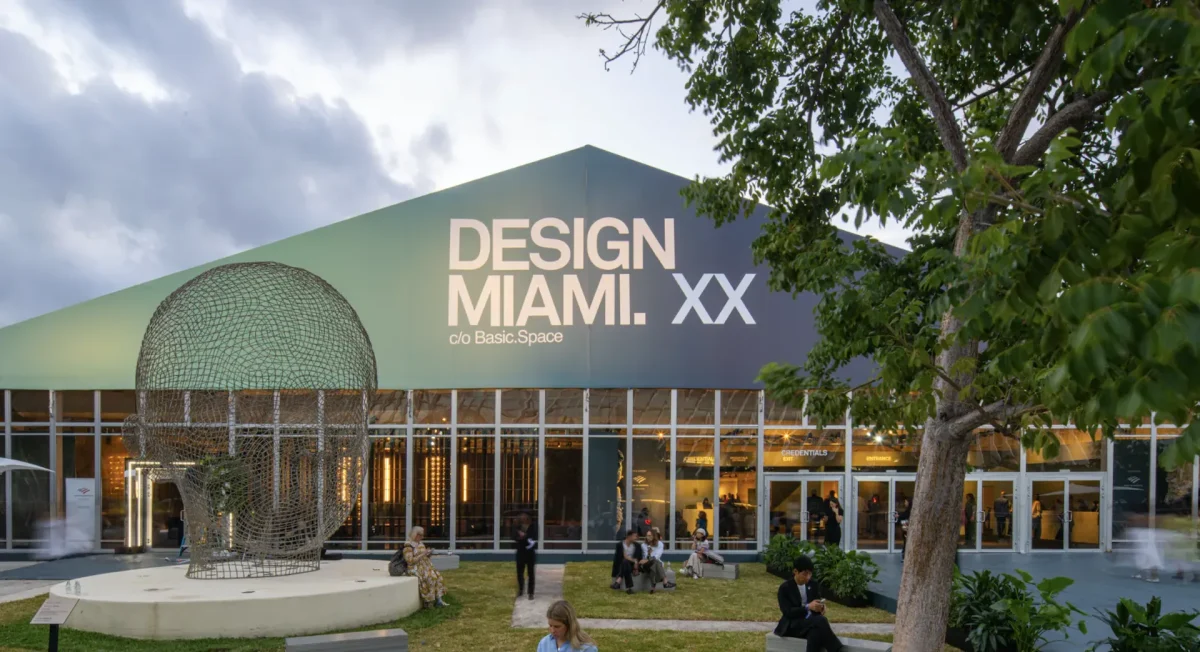
The 21st edition of Design Miami. Photo courtesy of Design Miami
You’ve been with the fair for over a decade, what do you feel has changed the most over the years and where do you think it’s headed?
I’ve followed the path of least resistance. You have to not be afraid to try new things and see where they go. We create programs, sometimes they work and sometimes they don’t.
This might be controversial, I think some people would disagree, but I think we went through this phase where the decorative arts and craft were looked down upon. They were considered pejorative words. I think we’re coming full circle.
“The sky is limitless right now. I think there’s a really bright future.” -Jen Roberts
The sky is limitless right now. I think there’s a really bright future. A lot of young people are interested in design, interested in what your home reflects about you. There’s individuality that is very desirable amongst young people today, and we’re seeing a much younger demographic coming to this show. People would rather have less but more interesting pieces than just having for the sake of having.
One of the reasons Jesse Lee, our chairman, acquired Design Miami in the merger a couple of years ago was because during COVID, he saw all these Gen Z and millennial kids stop taking selfies in the mirror and instead were taking pictures of the mirror itself and posting it.
I think there’s a real reverence for the maker, for the stories, nostalgia, and for childhood items that resonated. A lot of people say an entry point to collecting design is seeing something from your childhood elevated in your mind as a collectible because it’s shown as a collectible.
I think we’ll see a generation, which has many more decades to go, really embrace it. That mentality of “anything goes” in a way, that individuality.
How have things have changed since Jesse Lee came in? What does the future look like with him?
Frankly, he’s super smart. He has a very fresh perspective on the market in general, and he’s not afraid to try new thing, see if it works, and if it doesn’t, pivot. I like his energy. What he brings to the table reconfirms things I always thought, but maybe I was a little more fearful because I’m so indoctrinated into the market. I love his perspective.
We’ve tried other things. We might go back to LA. I’m really enjoying that kind of fresh thinking. Everyone’s like “You’re not going back?” He’s always asking, “Why do we have to do that?” Two things can be true at once. It could have been a great show, but maybe it’s too much for us in a year.
He’s really encouraged us to think differently and try new things. Basic.Space has been a great partner, and they are an incubator for a younger generation to come in. The show they just did in New York was outstanding.
I think he’s a catalyst. We’re going to see a lot of interesting change come from his perspective. I think we’ll see a lot more people understanding how he’s not being disruptive. He’s just asking the right questions.
-
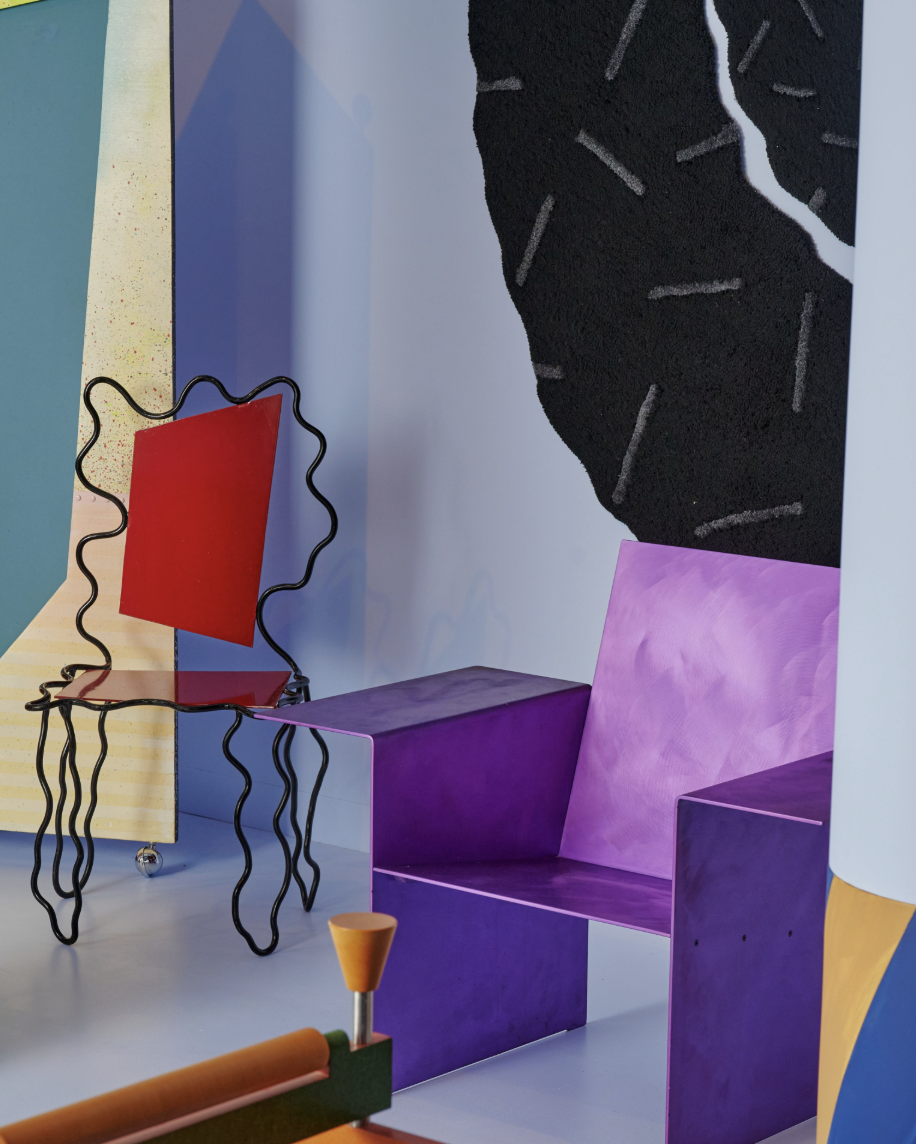
- Superhouse at Design Miami. Photo courtesy of Design Miami
-

- Katie Stout’s interactive carousel. Photo courtesy of Design Miami
Tell me about the “collectible” part of your business perspective.
We define collectible design as anything that is rare, limited edition, or prototype. When I came into the market, you were always told “buy what you like.” It wasn’t about the financial aspect. I think that sentiment still sits heavily in this market. There’s less money involved in the design world.
Of course there are pieces that sell for seven figures. But it’s a little bit more democratic in the sense that it’s people who really love the pieces that are buying them. I don’t think they’re looking to figure out, “In five years, am I going to turn this and make a big profit?” What they’re looking at is “Will it retain some of its value if I don’t want it anymore, or my kids don’t want it?” As opposed to buying or custom-making a sofa, maybe I can buy a sofa from Vladimir Kagan and I can resell it later on and it retains some of its value after I’ve used it.
The financials are very different. But then there are different things within our market too. There’s historic design and then there’s contemporary pieces. The difference with contemporary, of course, is the designer is alive and can keep making material. So historic pieces by nature are rare. Then there’s the limited edition within the contemporary, the one-of-a-kind.
It doesn’t mean that everything is automatically a collectible where it’s going to have value to somebody else if it’s contemporary. That’s not always the case. But if you put together a collection, then that collection as a whole will have interest, I think.
That lends itself to being more about buying what you love than anything else. In the historic sense, you’re buying a Frank Lloyd Wright piece that was made for a specific house. It’s a little bit different. I think we’ll figure out who the Lalannes and the Giacomettis of today are going to be in 20 years. I think there’s people like Joris Laarman, who’s doing incredible work with technology and 3D printing. Really brilliant and beautiful at once. Marc Newson might be that. There’s a lot that remains to be seen.
Do you imagine this world following a similar trajectory to what happened in the art world, where speculators come in and drastically impact the economics?
I don’t see that happening. I don’t think the structure allows for it.
One of the things about buying a painting that’s different than buying design is just the sheer volume. You can’t have that many dining tables. You might have seven homes and fill those homes with your collection, but it’s different. Today you’re finding real estate developers that develop apartment buildings with wall space in mind for art collections, but by volume, it’s a totally different thing.
If you look at the number of art galleries versus design galleries in the market, that tells the whole story.
What I do think is probably more likely is that as manufacturing continues to grow and its sort of this homogeneous IKEA, Crate & Barrel thing. I think younger generations might get a little cynical to that, especially when we’re talking about waste and the idea of supporting a creative with what you live with. That’s probably more what we’re going to see.

Underlight, an exhibit by Crosby Studios, David Franklin, and Kohler. Photo by Chris Force
How do you curate the balance between galleries or makers versus companies that are manufacturing in a more traditional way?
Both art and design are intrinsic to their brands already. Kohler has an amazing museum. It’s part of their ethos. They have their own curator. They’re very much in support of it. We need people like that.
20 years ago, there may not have been a fair trajectory for somebody coming out of design school as there is today. Today you might go and do some of these younger, smaller fairs where you can self-represent, then you might get picked up by a gallery, then you might show at Design Miami, then you might get picked up by a Kohler. Then you might become a creative director for an industrial brand. There are so many more steps you can take.
What feels like the biggest threat you deal with as CEO running an organization like this? Are there things you worry about?
We’re so focused on bringing the best experience for everybody, whether it’s the exhibitor, the attendee, or any of our partners. But that means we’re kind of in this tunnel vision often. And that scares me because you really need to have a bigger perspective of what’s happening in the world.
You can’t be stagnant and you can’t rest on your laurels. The higher you climb, the further you have to fall. You have to be humble. You’ve got to be quick. You’ve got to be smart. You don’t have to be the smartest, but you’ve got to be clever and you need to be really open-minded. The second you’re not is the second you’re in dangerous territory.
You don’t want to be irrelevant. That’s why we keep making these big moves. I think the Middle East is an amazing next step for us. We’ll do that in 2027 in partnership with Alserkal.
Have you worked there at all?
No, but I’ve been to a few over the years. I went to their first design fair, which I think was called the Downtown Dubai Show. It was basically a copy of Design Miami. The founder tried to recreate the whole thing, but it was too early and didn’t work. I went back around 2018 and it still wasn’t quite there.
I think the cities are practically unrecognizable now. But our partnership really depends on the partner. When you consider our partner, Alserkal, and the city’s demographics, especially in such an international place, it makes a lot of sense. We need to explore new frontiers. We’ve been to Paris and LA, and next we’re going to the Middle East and Korea. The goal is to find places where craftsmanship or culture is at the core and elevate that globally.
India is really interesting right now. It’s still in a nascent stage, but it’s developing fast. There are centuries of craft and amazing work there. And there are many other places like it—you just have to stay humble and keep an open mind.
I think Design Miami is the only American fair that has a global footprint. Everyone else is European doing it the other way around.
That makes me so proud. It’s really a big deal. And I think art and design have the ability to make a lot of change. I couldn’t do this if I didn’t believe that. It’s not just about commerce.
If we could come up with programs that create positive change and I can feel good about it, that would be ideal for me.
How many people work full-time on this?
Nine people. We’re really small, actually. It’s a great team.

Conie Vallese’s installation for Fendi at Design Miami 2025. Photo by Jeanne Canto courtesy of Design Miami
What are some of your favorite other design fairs or shows? You must try to keep an eye on everything you can.
Beatrice Galilee from The World Around. It’s a nonprofit dedicated to architecture. She used to be a curator at MAD and she does some great talks. I love architecture.
Mostly what I really enjoy is exploration on my own. Going to studios, meeting new galleries, traveling to see architecture, traveling to new places to meet different creatives.
I’ve never been to Zona Maco. I’d love to do that. I’d like to go to São Paulo for SP-Arte and to Rio for ArtRio. I love all the shows in Paris. I love going to Fondation Louis Vuitton for shows. I love going to Musée des Arts Décoratifs too. I still go to (TEFAF) Maastricht too. It’s probably the show I enjoy the most, but not so much for seeing design. I like to go and see old manuscripts. Everything you see is amazing.
I like to go to Salon in New York, which I helped with in the early years. It’s really beautiful, a great show. I like to go to PAD in London.
What are a few of your favorites from this year’s Design Miami?
I love Conie Vallese’s chairs. I think they’re gorgeous. I love Galerie kreo. I love Magen H, too, the chaperone desk is amazing.