When German artist Moreno Schweikle first arrived at the Campana Brothers’ studio in São Paulo over a decade ago, he couldn’t speak Portuguese and the craftsmen couldn’t speak English. Instead, they communicated through Phil Collins songs and the language of materials. It was there in that studio where seamstresses worked alongside metalworkers that Moreno discovered an approach to design that would shape his career, driven by a deep trust in what materials themselves want to become.
Artist and designer Humberto Campana has spent five decades building one of Latin America’s most influential design practices. Trained as a lawyer and self-taught as a designer, he and his late brother Fernando transformed discarded materials into furniture that blurred design and art. Moreno, who studied at Design Academy Eindhoven, has built his own practice around a similar philosophy, transforming industrial objects like water coolers and park benches into sculptural works.
In this conversation, the two artists explore the anxiety of making work they don’t yet understand, why mistakes matter, and how transformation remains at the heart of everything they do.
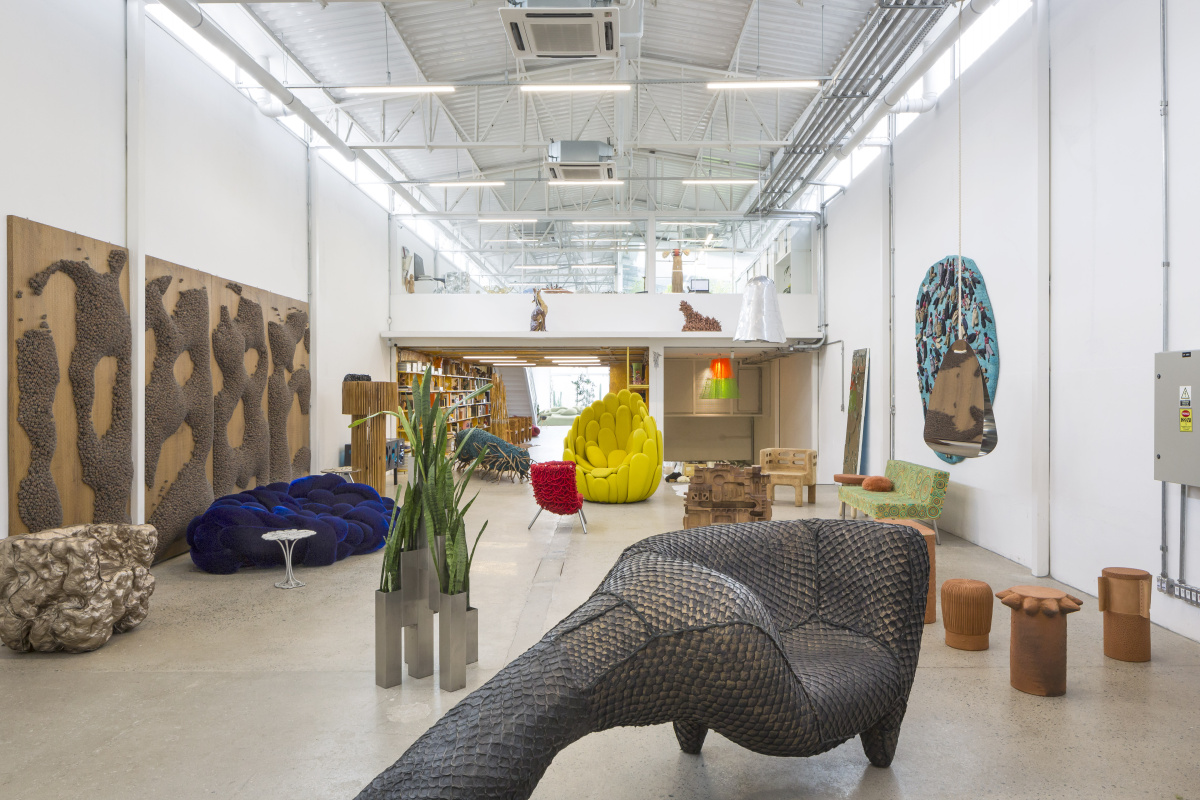
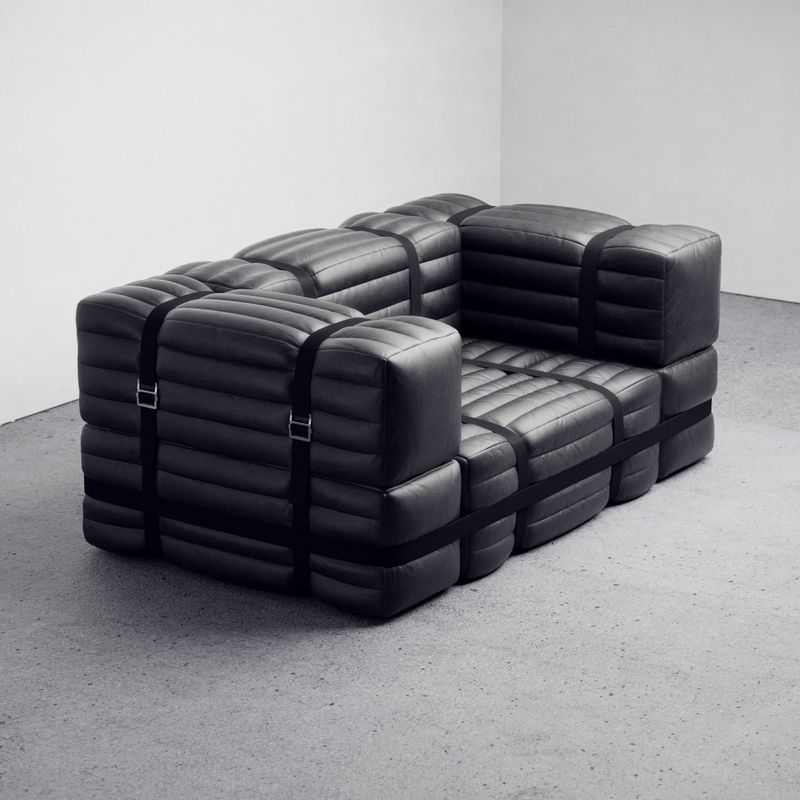
Estudio Campana. Photo courtesy of Humberto Campana
Moreno Schweikle: I’m so happy to reconnect with you, Humberto. It’s been a while since we saw each other. I think it was two years ago in Milan.
Humberto Campana: It was before the pandemic for sure. You’re such a great creator. I’ve been watching your work and accomplishments.
Thank you! Though it’s been years since I worked in your studio, I remember it very well. It was during my studies at Design Academy in the Netherlands. I always followed you and Fernando’s work. I was amazed by your playfulness and ability to work in different scales—furniture projects, sculpture, and ephemeral or time-based installations.
I remember arriving at your old studio in Santa Cecilia. Although it’s in São Paulo, a massive city, it felt so villagey, familiar, and local. I’d never worked in a professional design studio before. It felt like such an ideal setup you’ve created; having the studio separated in two floors, one where people worked on proposals and administration, and then downstairs the artisans, seamstresses and blacksmiths working hands on.
I immediately started working with the seamstresses on material experiments and producing work. Everything was such an accumulation of impressions. I didn’t speak Portuguese and the craftsmen weren’t fluent in English, I remember we would communicate through our taste in music, each putting on tracks. One of the seamstresses loved Phil Collins, so when thinking back about the studio time his music is on my mind.
I was struck to see first hand that such an accomplished studio still works so intuitively. I loved that. The way of thinking through material, not imposing ideas too early but letting the material properties speak was fascinating to observe.
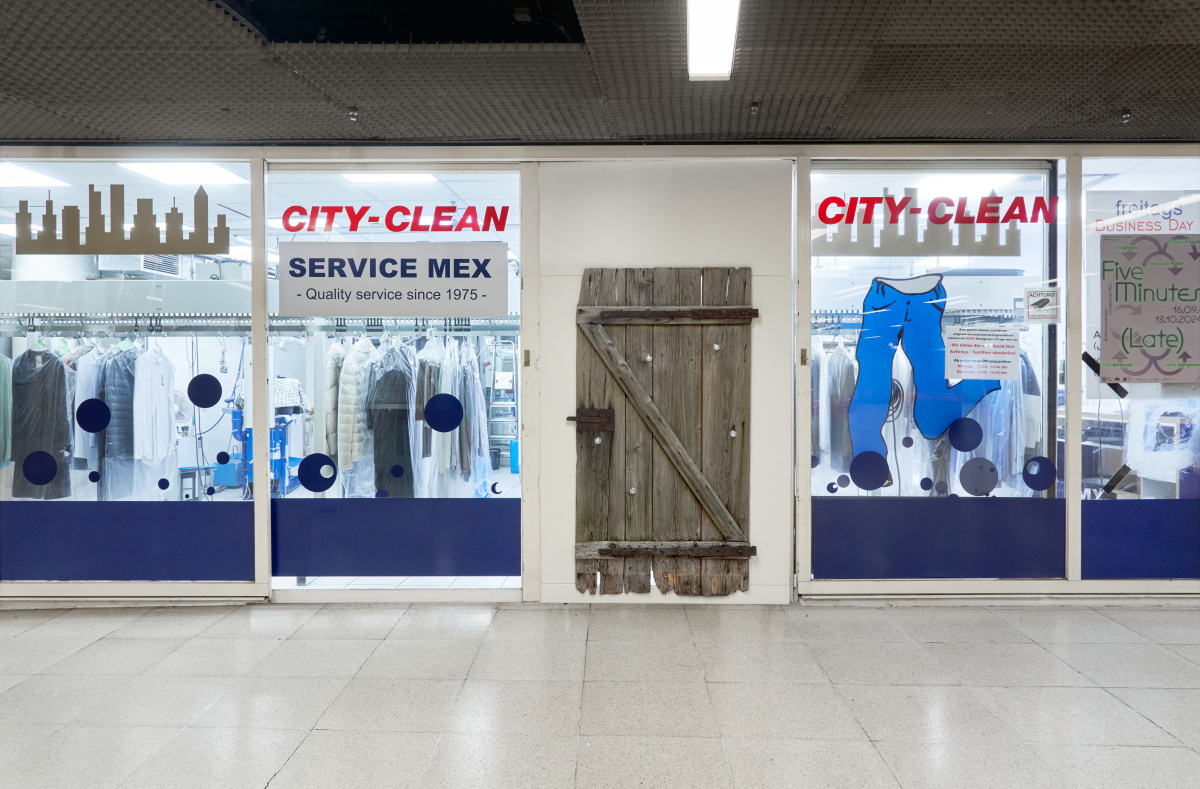
“Fitting (B-Ebene),” 2024. Part of the “Five Minutes Late” Group show in Frankfort, Germany. Photo courtesy of Moreno Schweikle
From my side, I admired how quickly you got into the spirit of working hands-on. I noticed your talent right away. Sometimes we have interns and you don’t know how their careers will develop, but I remember talking with Fernando about how you were going to be one of the masters. And now you are.
You’re doing work completely different from the mainstream. It’s very important not to follow the mainstream or sell out easily. You keep your concepts and ideas very strong. That’s what I remember about you.
I remember taking photos of some plants down the street from the studio. Somebody had woven fabric into them. I showed you the photos and you immediately said, “Ah, good eye. This is an interesting material combination.”
I remember our shared sensibility for everyday objects and accessible mundane materials. That’s why it was easy for me to connect to the spirit of the studio. I love working hands-on, considering materials as not just a means to and end, but rather being guided by them to develop a shape.
Material is the DNA of our work. For me, the greatest importance is transforming something that doesn’t necessarily have value into gold. Materials always challenge me, so I like the idea of dominating them. It’s important to get it in my hands and begin a relationship with it until one day it becomes clear what it will be transformed into.
The material drives me to a new dialogue, a new vocabulary, a new narrative. From there I can renew my ideas and creativity. I completely trust the material to allow me to step into the future.
It’s similar for me. I’m always intrigued by objects and phenomenon that are part of a general consciousness but sometimes not acknowledged. It’s an intuitive approach.
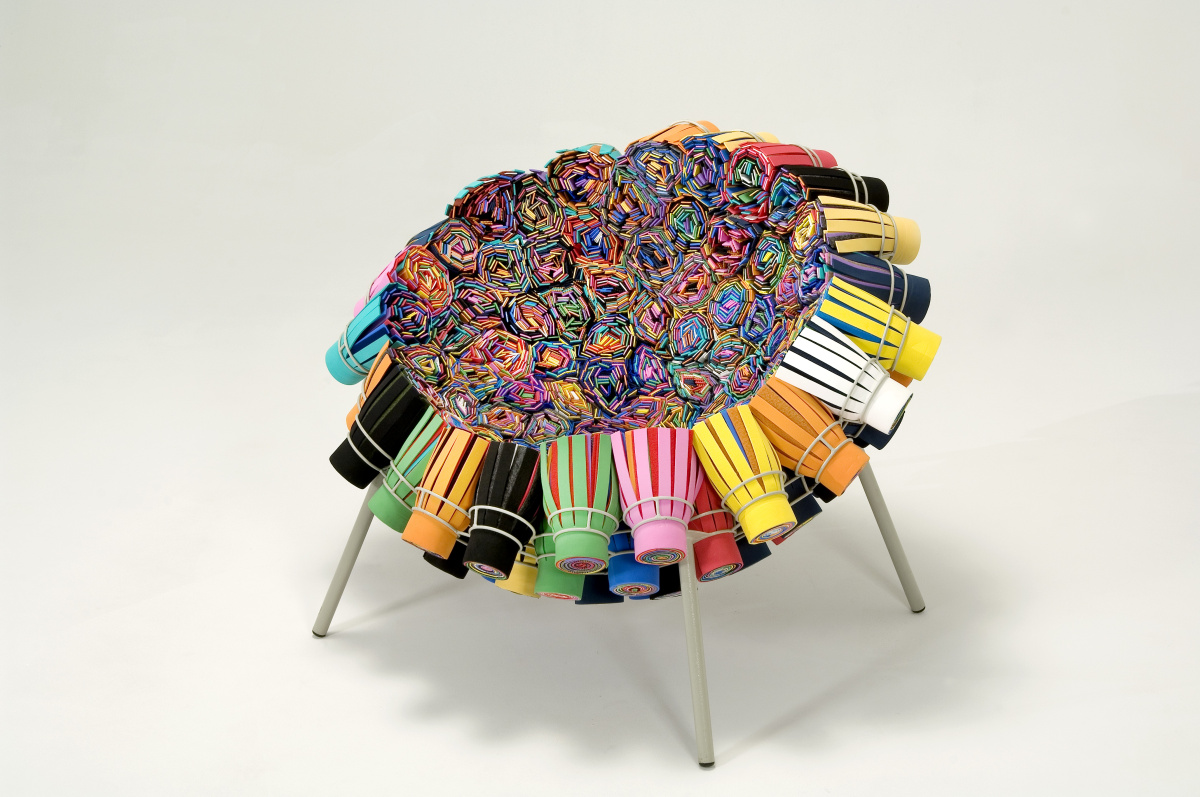
“Sushi-IV,” courtesy of Estudio Campana. Photo by Calazans Estudio
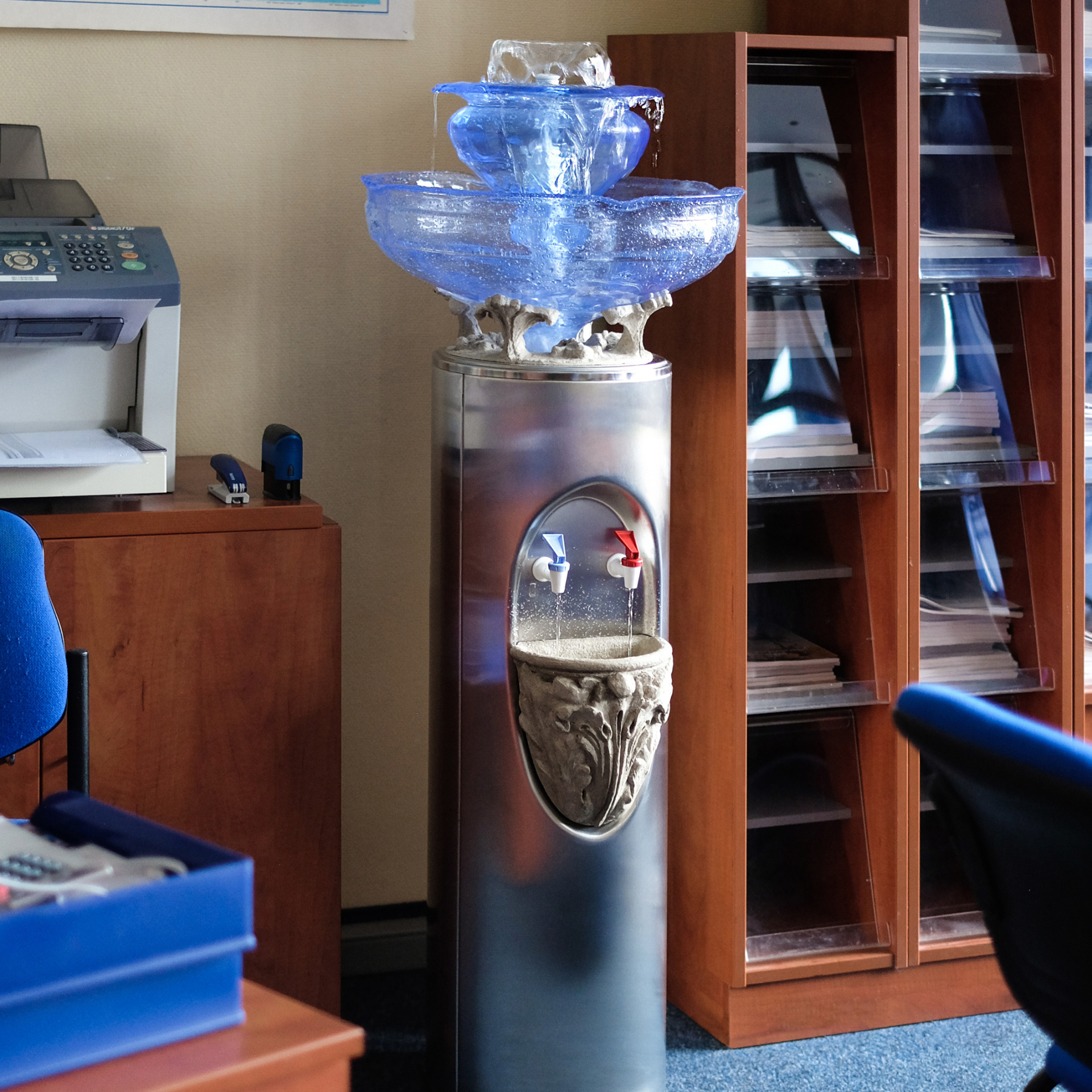
For instance, with the water cooler sculptures I’m doing, I was intrigued because they contain water—something everybody is fascinated by to some extend—but they’re seemingly modern design doesn’t reflect that appreciation. They’re so standardized that they’re not really “seen” anymore. You don’t recognize them, but they still hold and important place in offices and places where people gather. I’m intrigued by these basic connections people have, and then I develop from there and look into the history.
In your work, you often look into Brazilian culture and the history of materials. I look into these anonymous design languages that seem to have no clear author. Through modification like introducing ornaments or changing the shape, I try to reveal the layered histories of that object, amping up the volume on certain aspects of them.
I like to think that every material is in fluctuation all the time. In your case, something very industrial becomes personal through modification. Then maybe you use it for a client project and it becomes global again. I really love and sympathize with this movement from global to personal to widespread again.
I love the water coolers you create. The first time I saw one, I thought, “Wow, what is this? It’s so strange.” I didn’t know whether I liked it or not, which was good because I couldn’t understand it at first. That was amazing. The more I looked at it, the more I saw its beauty.
There’s also poetry and tenderness in it because water isn’t just a drink, it’s a place. It holds meaning for me, like those fountains in Rome where you grab water in the streets.
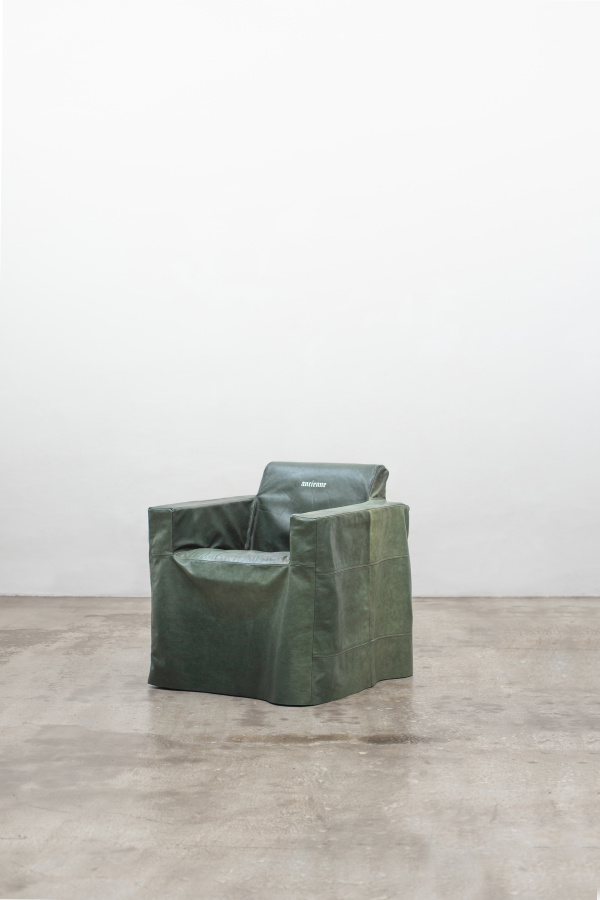
“Ageism (idée/ancienne),” 2025. Found chair, aged leather, silver. Photo courtesy of Moreno Schweikle
Sometimes when I make a Spring Cooler, I don’t know if I per se like it myself. It’s conflicting to mix an industrial shape language with ornaments from Rome or neoclassical times. The clash is a bit absurd, but it’s important to me that you can still see the new invention and the office water cooler in the work. It’s like a double-exposed photograph where you see both at the same time, the future and the past. These mixing of logics always make for surprising discoveries.
Sometimes I create pieces I don’t like, but I think that’s a good thing. Today I’m working on an armchair and I don’t know whether I like it. But at the end of the day I tell myself, “Please go ahead. Maybe you’re making a big mistake that isn’t good, but go and do it.” I just need to get the piece in front of my eyes and try to understand it.
I’m also realizing that how I feel about my work changes over the years. Sometimes I start seeing things in a work two or three years later when I look back, which at the time I didn’t intended or saw. How is that for you? Is it similar?
Yes. There are some pieces I’m very ashamed to have created. I’m trying to hide them. I’m not sure what I had in mind back then, but they’re there. They’re part of the process to get another step further. It’s important to make mistakes.
I think exhibiting all the time, when possible, is so valuable. Sometimes you create a work and realize you’ve found something new, but you’ll only be able to fully realize it in the next project. We have these in-between objects that represent something new but aren’t fully formed yet.
For me, it’s profound because I have a long career of 42 years. I constantly watch which step I should take next. When you belong to the mainstream, you need to keep renovating yourself to avoid falling into easy formulas. It’s difficult because as time passes, you gain experience but face new questions: How do you renew yourself? Why are you creating?
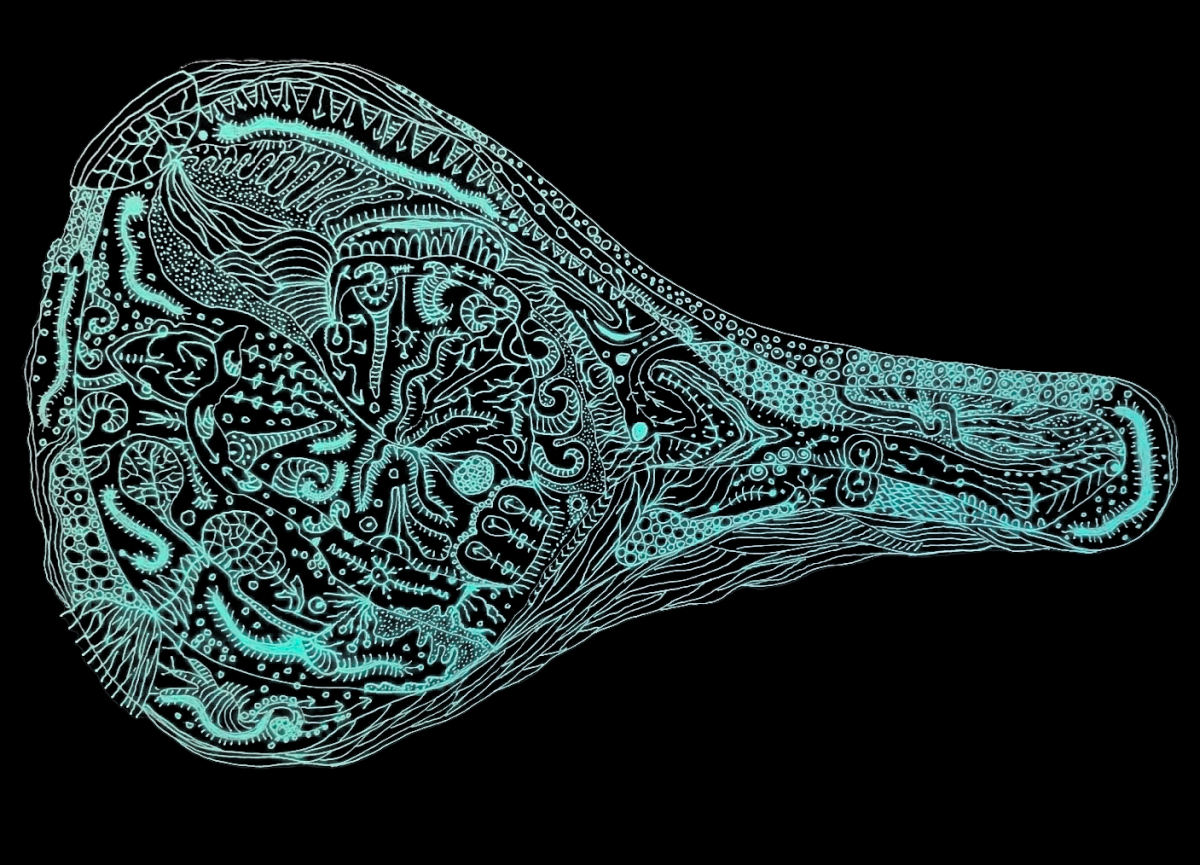
“Desenho,” 2024 by Humberto Campana
Every day people are doing things I did in the past, so why should I repeat them? I suffer a lot because I demand of myself not to repeat. It’s not easy. I look for other ways to work. Nowadays I’m creating furniture, but my passion is art, drawings, sculptures, and installations. In art you can be completely crazy with no function, it’s open. Then I bring those experiences back to design with something new.
Function is such an interesting thing. It can limit you, but it also creates opportunities for engagement. I love furniture because people can look at it and think about the concept, but when they sit in it, they experience it with their senses. In a space, you’re creating a situation. The work becomes less about looking at it like a painting and more about creating experiences.
We need to open doors for other ways to use furniture. Today, the function of design is about much more than utility. Everything has already been made. You need to open other doors, other perceptions. Like the fountains you create—it’s another way to approach something very simple or basic and transform it into something precious.
I can imagine it’s challenging not to repeat yourself when you’ve been working for decades and developed a language. Through your success, people ask for the same things, but you don’t want to repeat.
For me it’s almost the opposite. I’m at the beginning of my career and love doing different projects, but sometimes I wonder if people understand or are confused by how many different things I do. But it’s probably good to scatter the work everywhere, right? Otherwise you’re known for one thing, and I’m always scared I can only do this trick once.
I’ve done so many different things, different stories. It’s how I found to renew myself.
You mentioned that your passion is also in drawing and art. I remember seeing many sketches at the studio. When does drawing come into your process? Is it always at the beginning or throughout?
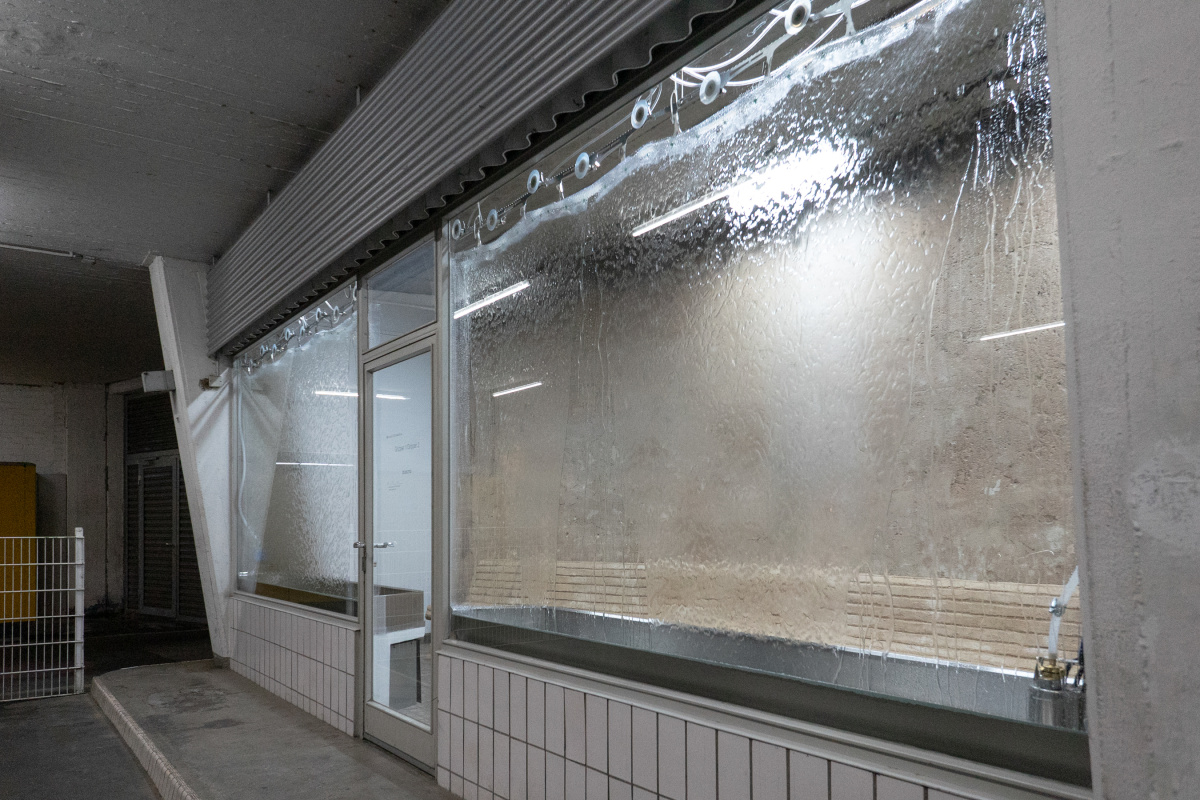
Inside “Gripper 1/Gripper 2,” (above), Moreno Schweikle proposes two custom-made interventions that are extensions of the building’s unique typology. The manufacturing process of these interventions consists of the breaking up of past and present cultural molecules in order to recombine and repurpose them as synthetic culture.
It evolved. This happened after Fernando passed away. At the end of his life, he made beautiful drawings with a metallic pen on black paper. I didn’t want to lose that, so I kept the practice.
Now I create a daily diary of my moods. Every day I make drawings of cells, microorganisms, biology—very complex forms that I imagine. It’s my brain, and I try to express all my complexity because it’s so difficult to manage that I need to put it in drawings. This saves me from myself, from my madness. It helps because when you want to create something like a chair, it takes time. Someone is making it, and the waiting causes anxiety. Drawing really helps me.
It’s beautiful to see that they’re about cells and transformation or mutation. This gesture is in all your work, I think. That something is moving, that it is one thing but also something else at the same time.
I have no control. I start with something, then let my brain show me the way. I don’t try to control it. I just go, make mistakes. Maybe it will be silly or boring, but I keep going. Then I look at the mistake and find beauty in it. The mistake drives me to new lines and new directions. It’s strange but good. This is new for me. I’ve been doing this since Fernando passed away.
It’s beautiful that you keep this in your practice, and that drawing is still part of the whole process.
It’s a new way to explore. What I like about what I do is that ultimately, I’m looking for freedom. I don’t want to get stuck in a box. Am I a designer or an artist? In the beginning, my colleagues laughed at me. In the nineties it was minimalism, and people would look at me like, “What is this?”
I suffered a lot because I would have loved to be considered a designer. But nowadays, I don’t care. This is amazing because I’m totally free to explore. I like to work with fashion, jewelry, sculpture, whatever. I learn.
I also struggle with these definitions—is it sculpture, art, or design? I think practices like yours historically made it possible for my generation to move more freely. Nowadays it’s more normal to be an artist and also apply your work to commercial clients. It’s not forbidden anymore, there’s less hierarchy. I love that because it’s intrinsically in my interest. Design is beautiful because it’s about how the world is made, but sometimes art is nice because you can detach from it, contemplate it, and then bring it back into the world. These processes interest me.
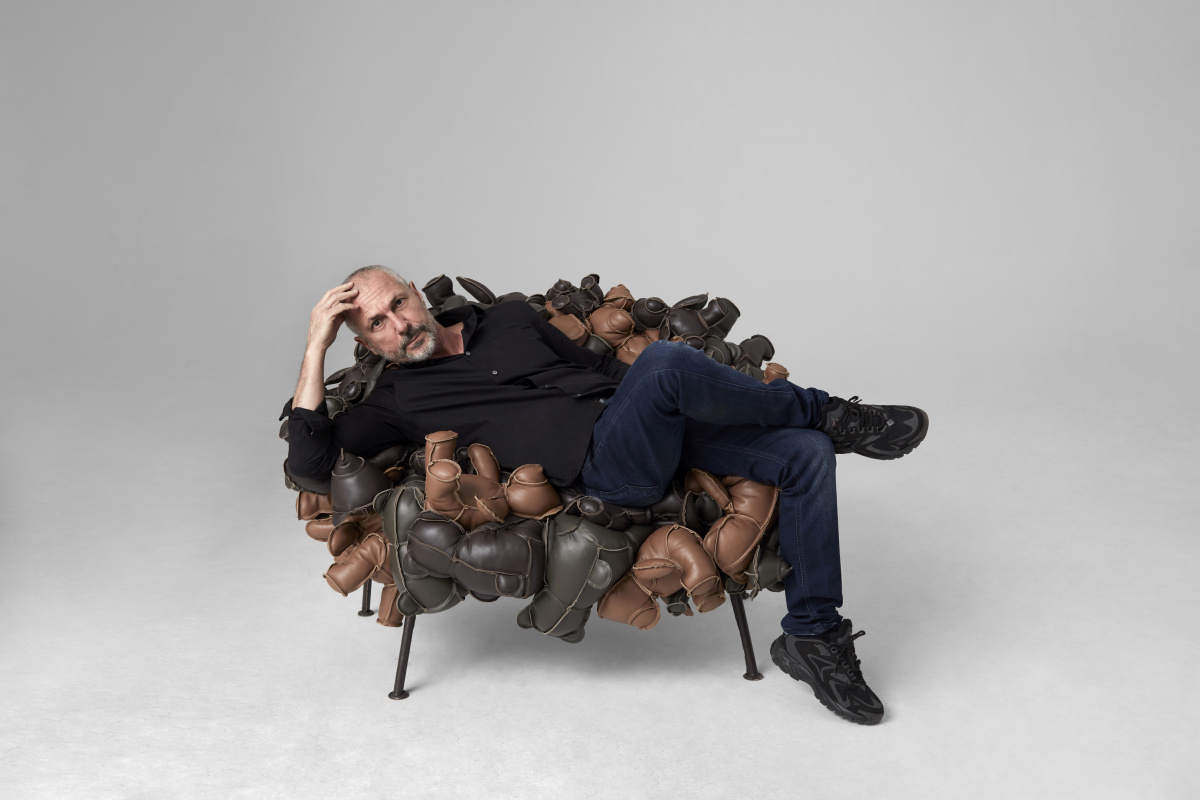
Humberto seated in his Teddy Bear chair. Photo courtesy of Humberto Campana
Fernando and I inherited land in the countryside, and I felt the need to explore other environments like the landscape. Now I’m working on a foundation in the countryside of São Paulo to educate people about the environment.
I grew up in a beautiful woodland area in the ‘50s. Now it’s just a green desert of sugar cane. I felt it was important to educate people, to create something that attracts people to discuss nature, the environment, design, and to maintain disappearing traditions. I’m bringing all these elements into this foundation.
I’d love to invite you one day to create a piece there. Maybe a fountain. It’s something I want to leave to my community.
It’s great that you’re doing this outside the city. It changes your perspective when you’re somewhere without so much distraction, where you have a different kind of focus.
I felt something important. I was blessed to be who I am, and now it’s time to give back. It’s another way to express my concerns about sustainability and the planet. I’m very worried nowadays when the forests are burning, all the things happening on the planet—in Brazil it’s the worst.
Brazilians think they have endless resources. We have the Amazon, so let’s cut trees, waste water, pollute the rivers. Brazilians still lack environmental education. In São Paulo, there’s no public system to recycle because Brazilians think this is a continent with unlimited resources. But the water is drying, we have no rain anymore.
In a few years it’s going to be a crisis if we keep cutting the rainforests. This is how I find hope. I need to believe in something to maintain my sanity, despite knowing I’m a bit crazy. I try to find a way to do something good.
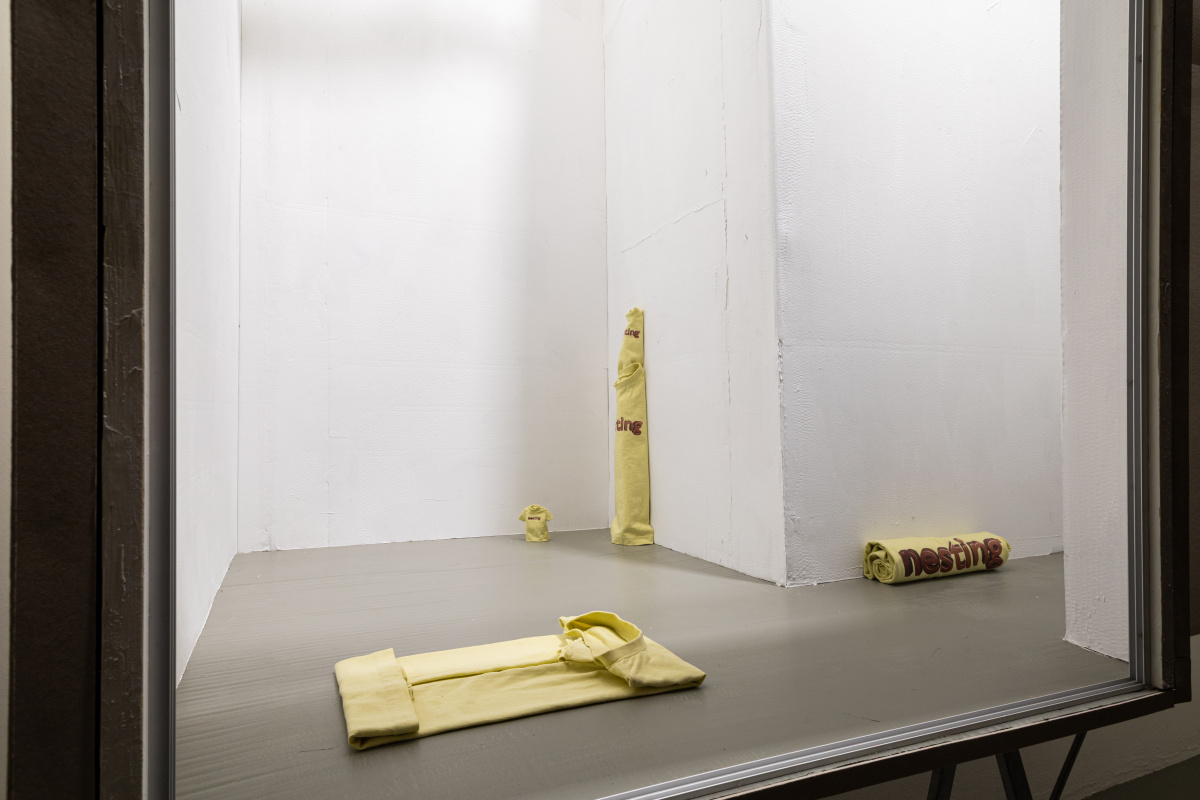
Above: “Nesting,” 2025. Photo courtesy of Moreno Schweikle
Through design or art, you can experience systems that are collapsing or becoming more fragile through something other than talking or reading. So much environmental reading feels dooming and creates hysteria and fear, which clouds the mind. I love working with water because you have this intrinsic connection to it. I don’t say “water is scarce,” but through installations where people can feel the presence, the pressure, and the value of it.
It’s something you can’t deny. It’s not like a painting or sculpture that’s about taste or culture. It’s intrinsic to everyone. Feeling that through projects is super effective. I love that your practice has this social dimension. I’d love to see it at some point.
Working with nature teaches you a lot. Sometimes I plant trees that don’t suit the area, but it’s a learning process. I feel like a shy child learning again.
Working with water, I’ve never made anything that doesn’t leak. It’s always the same no matter what. I use a lot of 3D printing and milling which are seemingly perfect processes. But even when I try to fully control it, water does whatever it wants. When I finish something, there’s always another week or two where I’m trying to dominate these natural forces. But it’s never really possible. It’s frustrating.
Water has no limits! That’s the difference between you and me. We both approach objects with poetry and storytelling, but you’re rational. You read, you understand. Me? I’m like a volcano. I don’t know why I’m doing something, I just know I have to do it.
This is our difference, but in the end we arrive at the same place. We have the same way of doing things. It’s beautiful, I think.
It’s so true. I had the same thought about how our processes are similar or different. You go through this emotional and impulsive process without knowing what’s going to happen. I’m more analytical, but I work with similar inspirations.
For you, it’s Brazilian heritage and vocabulary. For me, it’s rational industrial products—water coolers, office chairs, park benches that are super anonymous and controlled. Products from my context of living in Germany and the Netherlands, places that are all about control. But we both arrive at objects that show something poetic, that reveal the layers and expressive potential of these objects.
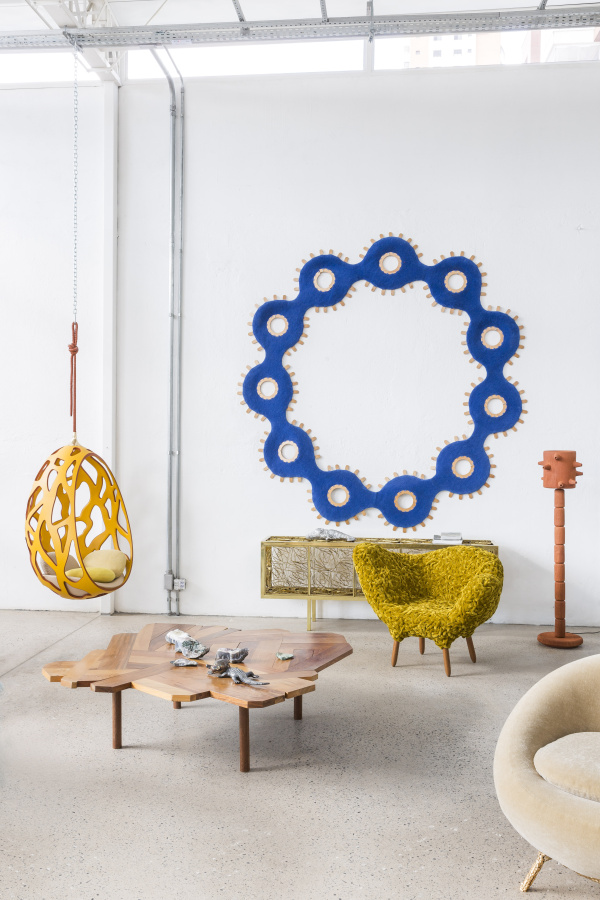
Estudio Campana. Photo courtesy of Humberto Campana
I’d love to collaborate with you. I love working with young people because they show us other possibilities, other languages, and other universes.
There are so many possibilities. We’re both people who need to see the material, to be hands-on. What if we pushed our design languages and made something ephemeral? An installation that exists for a period of time and then disappears?
You’re dealing with nature, processes, recycling, and repurposing materials, and I do the same. We both love transformation.
I’d like to work on something that lasts but doesn’t stay. I imagine working with plants because they’re ephemeral. You plant a seed, it grows, it lasts but it’s ephemeral at the same time. Imagine constructing a pavilion with plants and water, with walls or space, and creating something very beautiful and poetic in the center.
The other day I was at a company—I’m working on a public fountain and they do 3D printing, not just with plastic but also stone and clay. Now they’re printing with fertilizer. They print baskets that house plants, and over a couple of months, the fertilizer dissolves while the plant sets roots and grows.
I have the pleasure of making my first public installation, a fountain in Cologne, Germany. I was asked to create a public fountain behind a restaurant in a small park. My approach is to work with stone and juxtapose a historic stone basin I bought from a stonemason, carved in the traditional subtractive way that’s been done for hundreds of years. This basin holds the water.
I’m fascinated by stones. One month ago, I created a garden with stones and covered a park building with terracotta clay mesh on stainless steel. The idea is that over time, plants and seeds will grow there and create small microbiomes.
In the area where I’m creating this foundation, there are lots of stones, so I use them for seating and add metal elements. I asked people who make fences to create pieces. I’m dealing with precarity and scarcity for the park, which is good because it brings creative solutions without spending much money.
It’s economically logical but also the most unique because the techniques are unique to the place. These crafts belong there.
What made you say yes to an outdoor installation? Is this something you’ve always wanted to do?
Most of my work was autonomous—furniture, sculptures, mobile things. But last year I had the chance to work in a gallery. The gallerist gave me freedom to do a room-filling installation. The guy who commissioned me saw that work and realized I could work at that scale.
For me it was eye-opening because I have the ambition to work larger, but also realized it’s a way to be inside the work. You’re not looking at it anymore, like you sit in a furniture piece. It’s such a productive way to think and work.
Everything leads to something else.