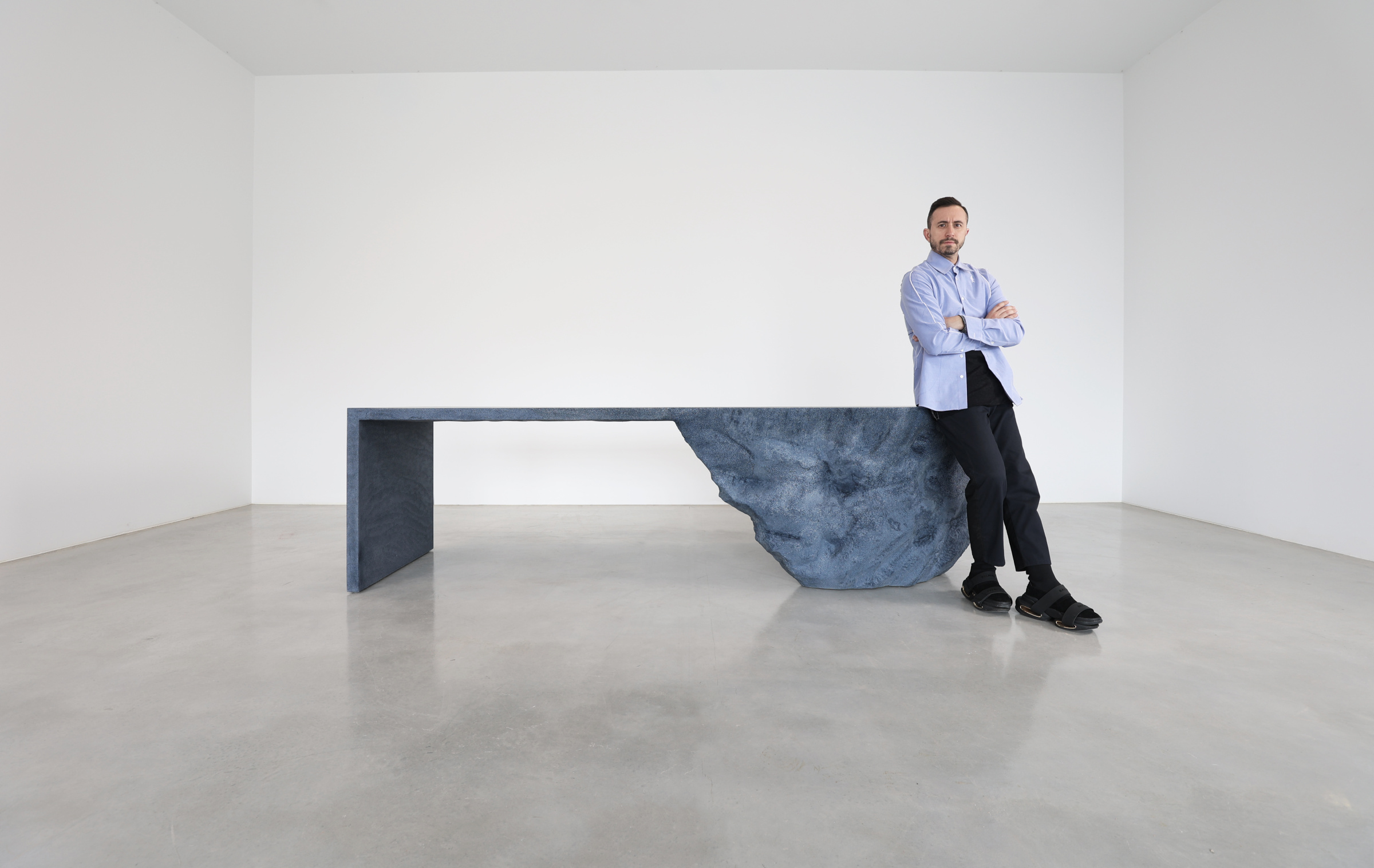
Designer Fernando Mastrangelo works from a studio in Hudson, New York, where his DRIFT series continues to develop as a body of work shaped by both material process and the surrounding landscape, sitting between sculpture and design without fully settling into either category.
DRIFT begins with hand-shaped forms that set the scale and direction of each piece. These are then translated into molds, allowing the work to move from a single object into a system that can be repeated while still allowing small variations to remain. The material process is central to the series, according to Fernando. Sand, salt, silica, crushed glass, and similar materials are layered until they form both structure and surface at the same time.
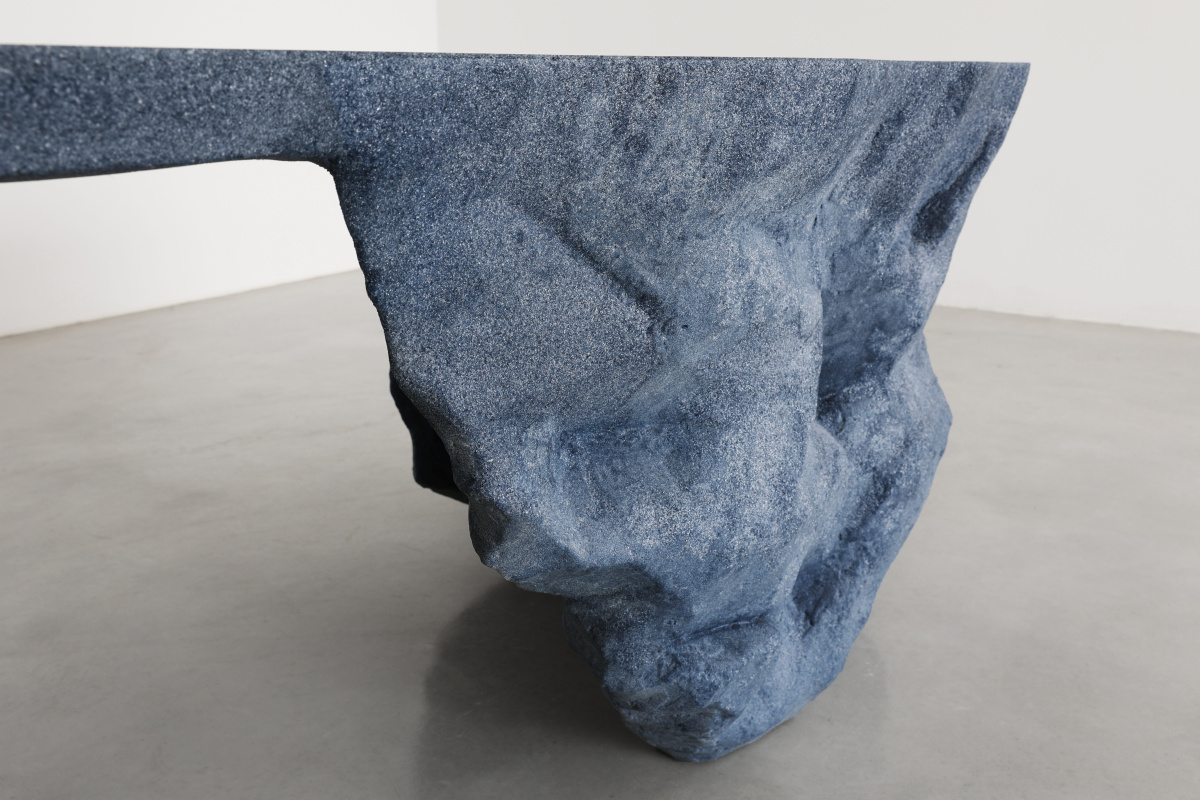
“The process is highly tactile,” Fernando says. “The materials are layered, packed, and shaped by hand. While some technical steps may involve digital tools or structural planning, the final object is always defined by the hand.”
Time plays an important role in how the work develops. Each piece moves through casting, curing, sanding, and finishing, with every stage slowly shaping both the form and the surface. Small differences build up over time, so no two works resolve in exactly the same way.
“I see the work existing between sculpture and design,” he says. “It draws from minimalism in its use of form, but it moves beyond that by introducing material richness and narrative.”
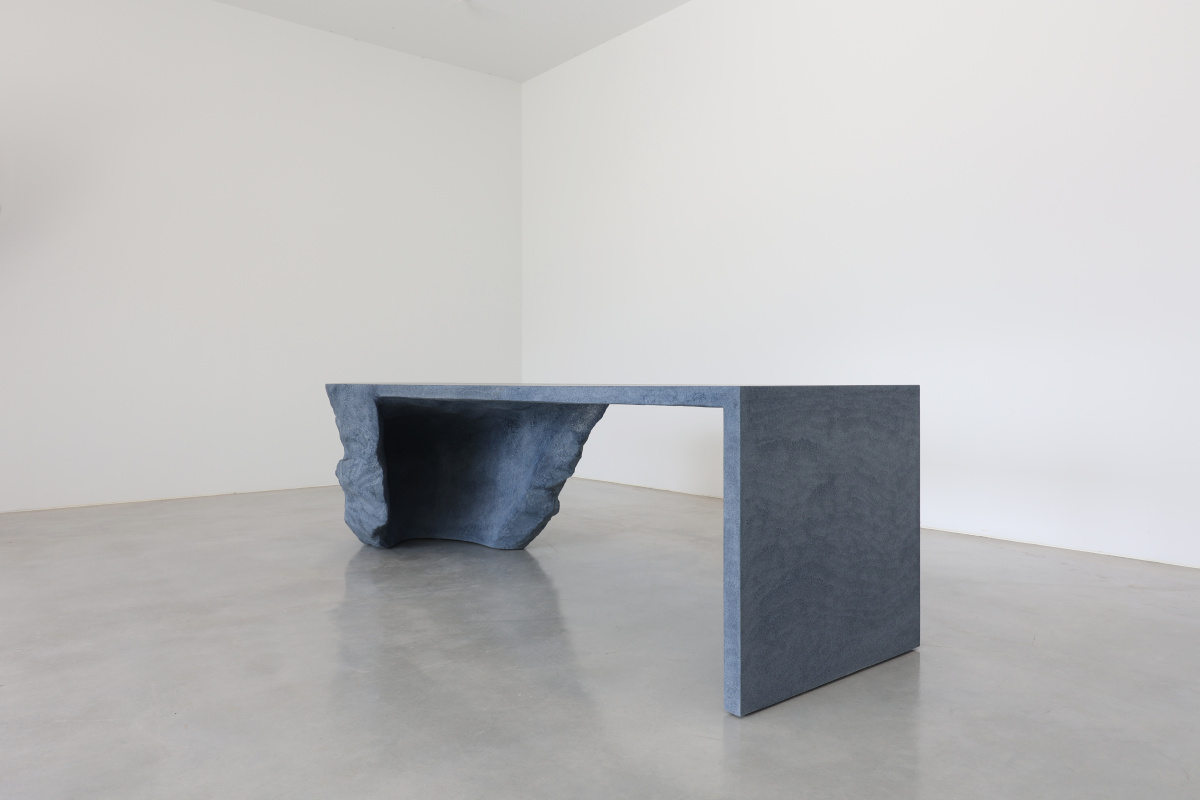
DRIFT is thematically shaped by how natural systems behave over time, especially erosion, sediment, and pressure, translated into studio processes that try to hold those forces in a controlled state. In the studio, these ideas are slowed down and made physical. Natural processes are compressed into fixed forms, but the sense of movement is still present in the surface. Each piece becomes a record of that process, holding both control and unpredictability at the same time.
DRIFT is produced in limited editions and developed in collaboration with collectors, designers, and architects through the studio.